It’s one of those questions that never gets old, no matter how many times scientists revisit it. Are we alone? Is there something out there, even something microscopic, that breathes, grows, or survives on a world orbiting a distant star?
A new wave of exoplanet research is pushing that question closer to a real answer than ever before. Astrophysicists are homing in on specific planetary conditions that could make alien life not just possible, but genuinely plausible. What they’re finding is both surprising and a little humbling. Let’s dive in.
The Exoplanet That Has Scientists Talking
Honestly, not every exoplanet discovery causes a stir in the scientific community. Most are either too hot, too cold, too gaseous, or simply too far away to matter much. This one is different.
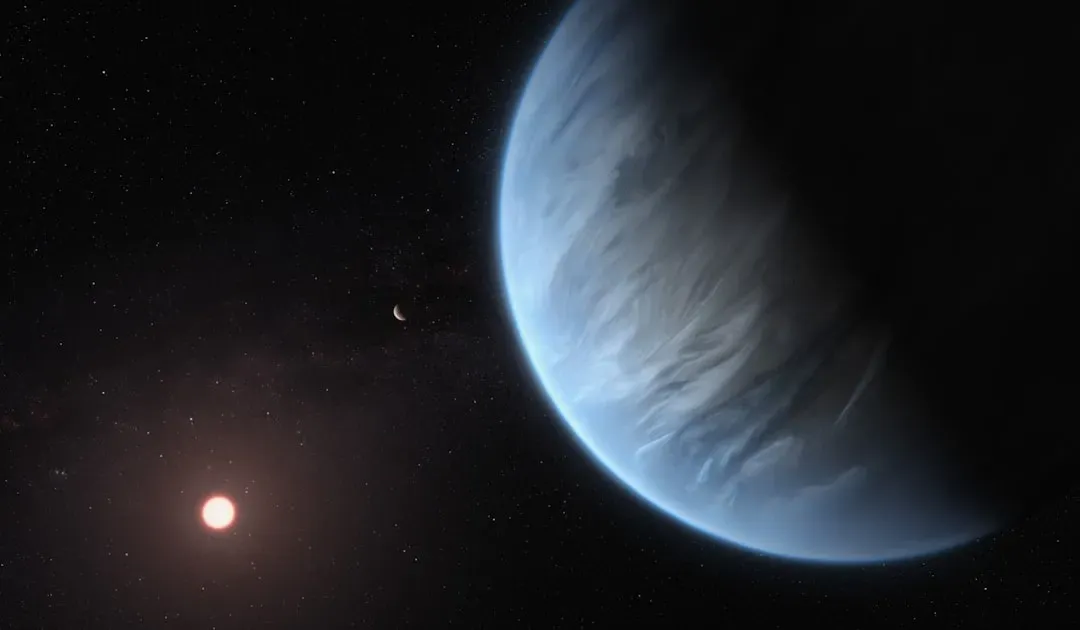
Researchers have been closely studying an exoplanet with characteristics that tick multiple boxes in the search for habitable conditions. The planet sits within what scientists call the “habitable zone,” that sweet spot around a star where liquid water could theoretically exist on a surface. Think of it like the porridge in Goldilocks – not too hot, not too cold.
What makes this particular world stand out is the combination of factors at play simultaneously. It’s not just location. It’s the chemistry, the atmosphere, and the structure of the planet working together in ways that feel almost deliberate.
What Astrophysicists Are Actually Looking For
Here’s the thing about searching for alien life – it’s not like scanning the sky with binoculars hoping to spot a flying saucer. Scientists look for chemical signals, atmospheric compositions, and surface conditions that suggest biology could function.
Water is still the big one. Liquid water remains the cornerstone of every serious habitability model, simply because every life form we’ve ever encountered relies on it. Beyond water, researchers are also scanning for biosignatures, chemical markers in a planet’s atmosphere that living organisms tend to produce.
Oxygen, methane, and carbon dioxide in specific combinations are among the most telling signals. When those gases appear in unusual ratios that can’t easily be explained by geology alone, that’s when things get genuinely exciting for astrophysicists.
The Vital Clues Hidden in a Planet’s Atmosphere
Atmospheric analysis is arguably the most powerful tool in the modern exoplanet toolkit. Using telescopes like the James Webb Space Telescope, scientists can now break apart the light filtering through a distant planet’s atmosphere and read its chemical fingerprint.
This technique, called transmission spectroscopy, is a bit like holding a prism up to a flashlight and watching a rainbow appear. Except instead of colors, you’re reading molecular signatures that could tell you whether something biological is happening millions of light years away. That’s genuinely mind-bending when you sit with it for a moment.
For the exoplanet currently under study, early atmospheric data has returned results that researchers describe as “intriguing.” That’s scientist language for “we can’t explain this yet, and that’s exciting.”
Why This Discovery Could Be a Turning Point
Let’s be real: the history of astrobiology is full of moments that seemed revolutionary and then faded into background noise. Remember the excitement over Mars in the 1990s? Still, this feels different, and here’s why.
The tools available to scientists today are incomparably more sophisticated than anything available even a decade ago. The James Webb Space Telescope alone has fundamentally changed what’s observable from our position in the cosmos. Paired with advanced data modeling and machine learning, researchers can now process atmospheric data with a level of precision that was previously unthinkable.
Astrophysicists are being cautious, as they should be. Extraordinary claims require extraordinary evidence. Yet the conversation has shifted from “could life exist elsewhere” to “here are the specific conditions we need to confirm it does.” That’s a meaningful leap.
The Role of Stellar Activity in All of This
A planet doesn’t exist in isolation. Its host star matters enormously, and this is a factor that sometimes gets glossed over in popular science coverage. A star that’s too volatile, too prone to violent flares, can strip away an atmosphere in geological blinks of an eye.
The star hosting this particular exoplanet appears to be relatively stable, which is a critical checkbox. Stable stellar radiation allows a planet to hold onto its atmosphere over billions of years, which is roughly the timescale biology needs to get going. Life on Earth didn’t appear overnight, after all – it took vast stretches of time that most humans genuinely cannot conceptualize.
Researchers note that the interplay between stellar activity and planetary magnetic fields is another area of active investigation. A strong magnetic field can act like a shield, deflecting harmful radiation and preserving the conditions life might need to emerge and persist.
What Makes This Different From Past Discoveries
Skeptics will point out, fairly, that we’ve been here before. Planets announced with great fanfare often fail to hold up under deeper scrutiny. It’s worth acknowledging that. Science corrects itself, and that’s actually one of its strengths.
What separates this moment is the convergence of multiple independent lines of evidence pointing in the same direction. It’s not just one instrument suggesting something unusual. Multiple observations, using different methods, are producing consistent results. That kind of convergence is what scientists live for.
I think the most honest thing to say is that we still don’t know. The data is promising, genuinely promising, but confirmation of alien life would be the single most significant discovery in human history. That bar demands patience and rigor, not rushed conclusions.
What Comes Next in the Search
Follow-up observations are already being planned. Scientists want to build a more complete picture of this exoplanet’s atmospheric chemistry over time, watching for seasonal or cyclical changes that could suggest biological activity rather than purely geological processes.
New telescopes coming online in the next few years will add even more resolution to these studies. The Extremely Large Telescope, currently under construction in Chile, promises observational capabilities that could dramatically sharpen our understanding of distant worlds within the next decade.
The pace of discovery in exoplanet science is honestly breathtaking right now. What felt like science fiction twenty years ago is now a working scientific discipline with dedicated instruments, international collaborations, and peer-reviewed results landing every few months.
A Question That Changes Everything
Few discoveries in human history would carry the philosophical weight of confirmed extraterrestrial life. It would reshape how we understand our place in the universe, how we think about biology, and perhaps even how we see each other down here on Earth.
The evidence is building, carefully and methodically, the way good science always does. Astrophysicists are not claiming victory. They’re doing something harder and more honest – they’re following the data, wherever it leads. What do you think: does the universe hold life beyond our planet, or are we uniquely alone in the vast cosmic dark? Drop your thoughts in the comments below.