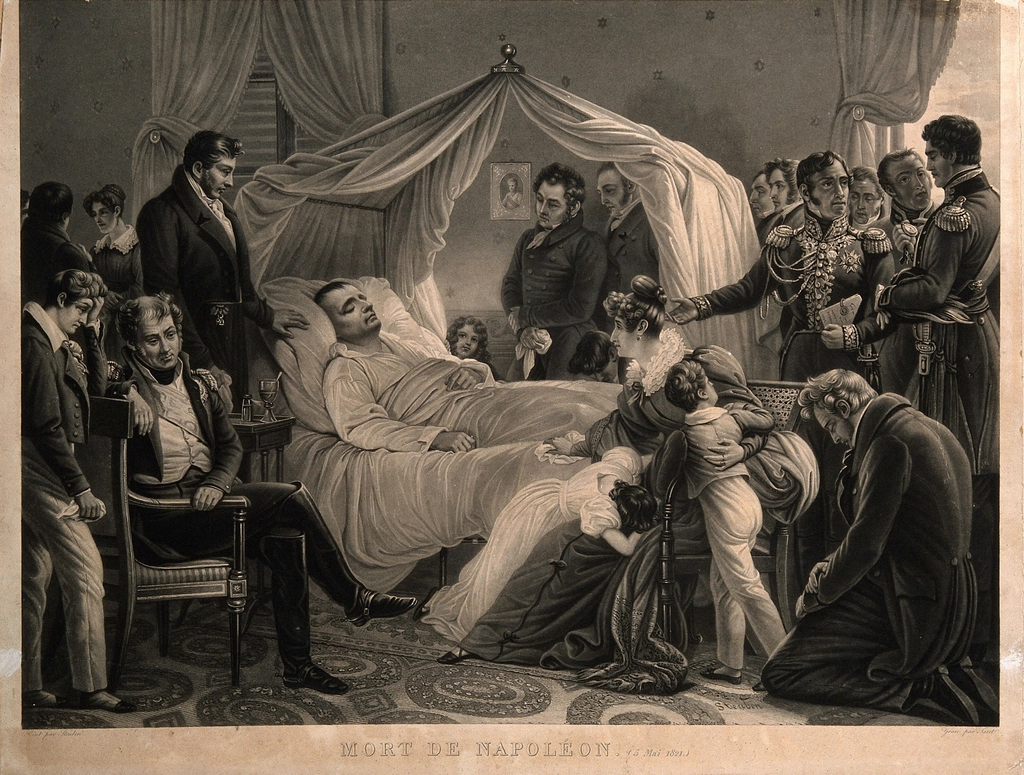
Imagine waking up tomorrow and finding out that somewhere, in a hidden layer of reality, another version of you made completely different choices and is living with the consequences. That sounds like a late-night sci‑fi movie plot, but over the last few years, some of the strangest experiments in quantum physics have pushed serious scientists to ask whether something like this could actually be true. The quantum realm has always been weird, but the latest work is forcing a brutal question: is our universe just one branch of a far bigger multiverse?
Physicists are famously cautious, and nobody is hanging a sign on the lab door saying “Parallel Universes Proven.” But several lines of research are converging in a way that makes the multiverse idea harder and harder to ignore. From delayed‑choice experiments to quantum computers behaving like tiny universe simulators, the evidence is stacking up that reality doesn’t work the way our everyday intuition insists it should. And once you accept that, the door to parallel worlds stops looking like fantasy and starts looking like unfinished science.
The Quantum Weirdness That Started It All
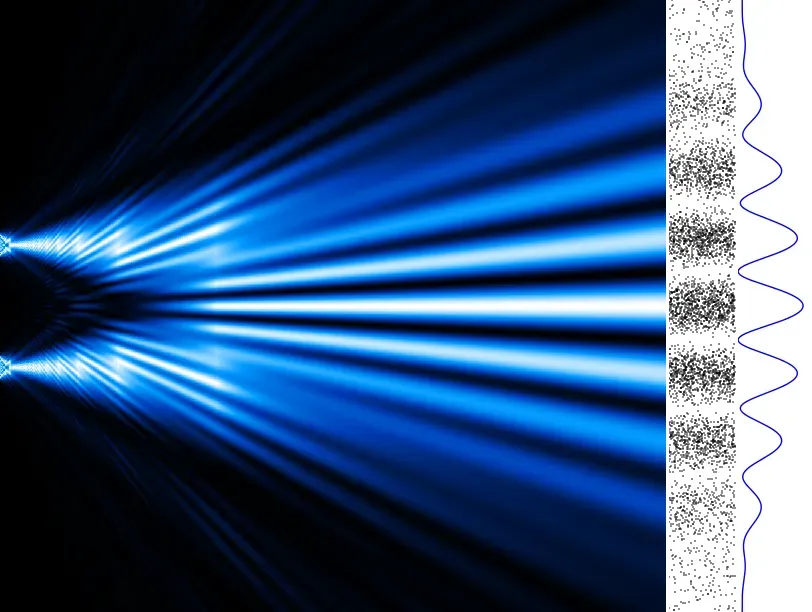
The story really kicks off with a deceptively simple question: is light a particle or a wave? In classic double‑slit experiments, a single photon fired at a barrier with two slits can behave like a spread‑out wave, interfering with itself, creating patterns that only make sense if it somehow went through both slits at once. But when you measure which slit it passes through, it suddenly behaves like a neat little particle again. That should be impossible under any normal picture of reality.
For decades, physicists tried to live with this contradiction by saying quantum objects exist in “superpositions” until they’re measured. It sounds fancy, but it’s basically saying “it’s in many states at once, don’t ask too many questions.” The weird part is that your decision to measure seems to reach backwards and change what was “true” before. That’s what started people seriously wondering whether all possible outcomes might actually happen in different, branching realities that never again interact. Instead of one photon choosing, the universe itself splits to accommodate every possibility.
Many Worlds: The Once‑Crazy Idea That Won’t Go Away
Back in the late nineteen fifties, the physicist Hugh Everett suggested that every quantum event doesn’t collapse into a single outcome but instead splits reality into multiple branches where every outcome exists. At the time, the idea was treated as wild, almost philosophical excess, something polite physicists didn’t bring up at conferences. But Everett’s core point was brutally simple: the equations of quantum theory never say anything about collapse; they only describe smooth, branching evolution.
Fast‑forward to today, and a surprising number of working physicists quietly admit that the many‑worlds interpretation is the cleanest way to make sense of the math. It demands no mysterious “measurement magic,” just a ruthless acceptance that what we call “the universe” is only one slice of a much bigger reality. When modern experiments line up with the predictions of quantum theory again and again – without ever needing a special collapse rule – Everett’s picture starts to feel less like a crazy detour and more like the road we tried too hard not to see.
Delayed‑Choice and Quantum Eraser Experiments: Messing With Causality
Some of the most unsettling evidence comes from delayed‑choice and quantum eraser experiments, where scientists decide how to measure a particle only after it has already passed through the experimental setup. In these setups, the interference pattern – the hallmark of wave‑like behavior – can appear or disappear depending on a choice seemingly made too late to influence anything. It’s like writing the end of a story after the book has already been printed, and somehow the pages rearrange themselves.
One way to stay sane is to accept that the particle never had one single, definite history at all. In a many‑worlds picture, there are branches where it went through one path and branches where it went through another, and your final measurement just tells you which branch you’re in. Instead of causality being broken, it’s your assumption of a single, shared storyline that fails. The experiments don’t carve “parallel universes” into stone, but they ruthlessly undermine any worldview where there’s only one fixed past for everyone and everything.
Quantum Computers as Tiny Multiverse Machines
Quantum computers add another layer of strangeness to the discussion. When a quantum processor tackles a problem, it manipulates qubits that can sit in superpositions of many states at once, exploring a vast space of possibilities in parallel. From the outside, it often looks like the machine somehow “tried” many paths simultaneously and then interfered them together to reveal a useful answer. Under a many‑worlds lens, that’s almost literally what’s happening.
Some researchers have argued that quantum algorithms only really make sense if you imagine parallel branches where different computations unfold and then recombine. In that view, a quantum computer is not just a faster calculator but a controlled way of steering through a branching structure of realities. Even if you don’t buy that story fully, the fact that these machines work, and work in exactly the spooky ways the theory predicts, is a massive vote of confidence in the underlying mathematics that also gives rise to the multiverse picture.
Cosmic Clues: Inflation, Bubbles, and the Larger Multiverse
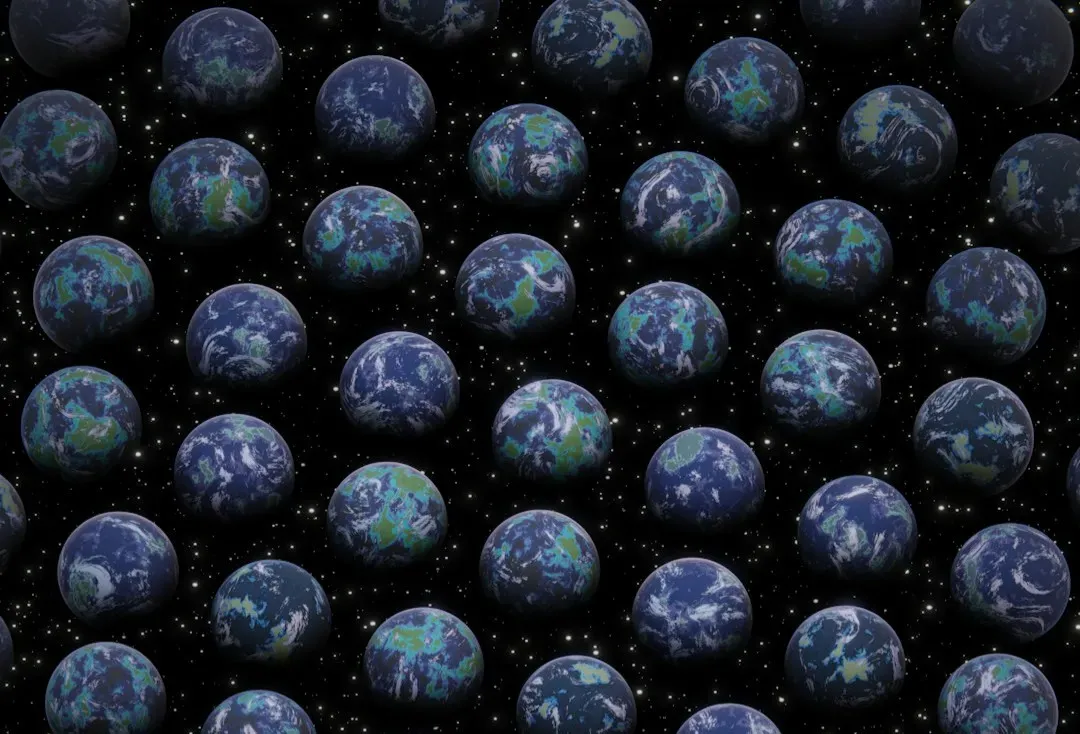
The idea of parallel universes doesn’t just live in cramped basement labs; it reaches all the way out into the cosmos. Modern cosmology suggests that our universe likely underwent a period of explosive expansion called inflation shortly after the Big Bang. In many versions of inflation theory, this process doesn’t just happen once and stop – it continues in different regions, constantly bubbling off new “pocket universes” with different physical conditions. Our universe would be just one bubble in an endless cosmic foam.
While we can’t directly see those other bubbles, the math that describes inflation does a disturbingly good job matching what we do observe, like the subtle patterns in the cosmic microwave background. Some models even suggest that quantum fluctuations during inflation could seed different laws of physics or different values of fundamental constants in each pocket. That paints a picture where the quantum multiverse from particle physics and the cosmological multiverse from inflation are not competing stories, but two overlapping chapters of the same, much larger book.
New Experiments Pushing From “Interpretation” Toward “Reality”
In the last decade, experiments have gotten uncomfortably precise about testing the limits of quantum theory. Loophole‑free Bell tests have shown that no local hidden‑variable picture – where particles secretly carry pre‑agreed instructions – can explain the correlations we see. More recently, extended versions of these tests, sometimes called Wigner’s friend–type experiments, have suggested that even different observers might disagree about what “actually happened,” yet still be consistent within quantum rules. That idea sounds insane if there’s only one universe, but it’s a natural, almost boring consequence if reality is constantly branching.
On top of that, researchers are building ever‑larger quantum systems that stay coherent for longer, from massive molecules to tiny mechanical oscillators. Each time we scale up without hitting a hard boundary where quantum effects “turn off,” the old hope that classical reality will eventually reassert itself gets weaker. It doesn’t prove parallel universes the way a photograph proves a sunset, but it keeps stripping away alternatives that tried to keep everything on a single, definite track.
What Parallel Universes Would Mean for Us
If parallel universes are real in the many‑worlds sense, then every quantum event that could have happened somewhere, did happen in some branch. That includes your life choices, your lucky escapes, and your worst fears. In one branch, you took that risky job; in another, you stayed put. On the surface, that sounds like it drains meaning from our decisions – if everything happens somewhere, why bother? But that reaction misses something important about how we actually live.
We only ever experience one branch, the one we’re in right now. From your perspective, your choices still carve the only path you’ll ever walk, even if other versions of you are walking other roads you’ll never see. Personally, I find that strangely comforting: the universe might be unimaginably vast and branching, but your little slice of it is still painfully real, with consequences that matter. The quantum realm might be crowded with other realities, but the story you’re living is still yours alone.