
Have you ever stopped to question the reality of what you see? Most of us assume our eyes are faithful reporters, capturing the world exactly as it exists. Yet here’s a fascinating truth that might shake that confidence a bit: the color purple doesn’t actually exist in the physical world. While you admire a lavender field or a regal amethyst, your brain is performing an incredible trick, conjuring up a hue that has no place on the light spectrum.
This isn’t some fringe theory or philosophical debate. It’s grounded in neuroscience and physics, and honestly, it’s one of those discoveries that makes you wonder what else your brain might be inventing without telling you. So let’s dive into why purple is essentially a beautiful lie your mind tells you, and why that’s actually pretty remarkable.
Purple Isn’t in the Rainbow, and That’s Your First Clue

When you look at a rainbow, you might notice there’s no purple in it – there is no P in ROYGBIV. Red, orange, yellow, green, blue, indigo, and violet are all there, but purple is conspicuously absent. Violet has something purple doesn’t: its own wavelength of light. Think about that for a second.
Every color you see in a naturally occurring rainbow corresponds to a specific wavelength on the electromagnetic spectrum. Violet sits at one extreme end, with shorter wavelengths. Red occupies the opposite end, with longer wavelengths. Violet is a real spectral color, while purple is fake and exists only as a mix of red and blue light.
Your Brain Bends Reality into a Circle
Here’s where things get really wild. Red and violet wavelengths are two opposite extremes on the spectrum, with the shortest wavelength detection made by your S cones (violet light) having no overlap with the longest wavelength detection made by your L cones (red light). When both of these wavelengths hit your eyes simultaneously, your brain faces a dilemma.
To compensate, the brain bends the spectrum into a circle, making the two extremes meet at purple. Essentially, your mind takes a linear scale and curves it, forcing red and blue to become neighbors even though they’re opposites. The brain takes the visible spectrum – usually a straight line – and bends it into a circle, putting blue and red next to each other. It’s a workaround, a neurological compromise.
The Science Behind Cone Cells and Color Perception
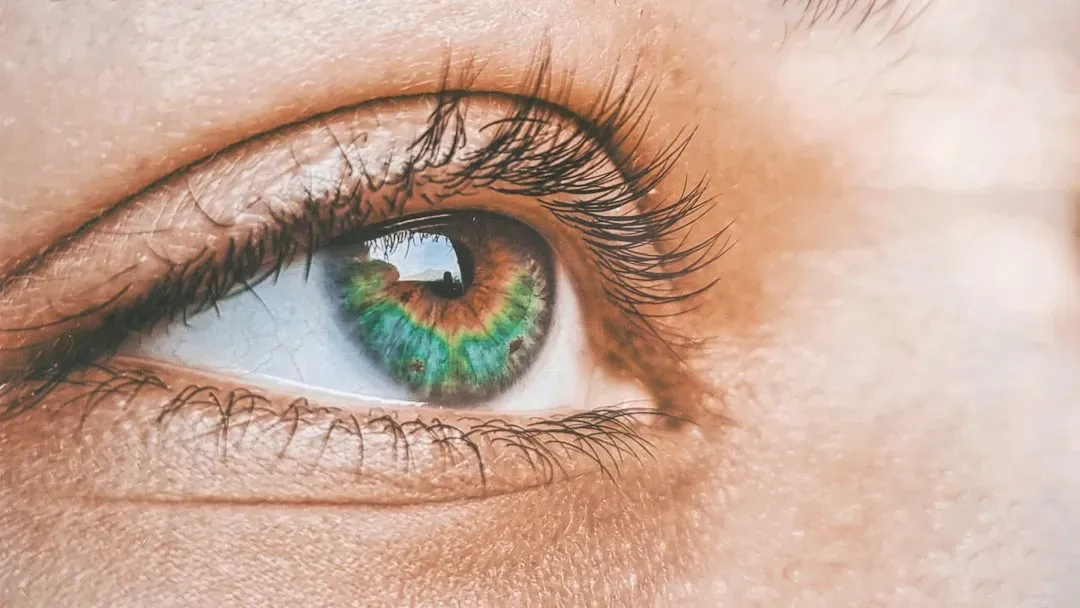
Let’s talk about the machinery behind this illusion. Our perception of color involves specialized receptors at the back of our eyeballs, called cones, that detect visible light, and human eyes have three types of cones: long wave, mid wave and short wave, each sensitive to particular wavelengths. Long-wavelength cones pick up reds, mid-wavelength cones detect greens, and short-wavelength cones respond to blues.
When light hits our eyeballs, these three receptors take in information about the light and their respective wavelengths and send electrical signals to the brain, which then takes that information and makes an average deduction of what it’s seeing. When adjacent cones fire together, you get colors like yellow or teal. Purple, though, breaks all the rules.
Purple Is a Nonspectral Color
Neuroscientists call purple a “nonspectral color,” meaning it only exists because of how our brains process conflicting input. Purple is a nonspectral color that the brain creates to make sense of confusing information. Other colors blend naturally because their wavelengths sit near each other on the spectrum.
Purple defies that logic. Purple is a mix of red (long) and blue (short) wavelengths, and seeing something that’s purple stimulates both short- and long-wavelength cones, which confuses the brain. There’s no actual wavelength that sits between red and blue because they’re at opposite ends. Your brain simply invents purple to fill the gap.
Violet and Purple Are Not the Same Thing

This is a crucial distinction that trips people up. Despite what you may have come to believe, violet is not purple. Violet exists on the visible light spectrum with a measurable wavelength, typically around 380 to 450 nanometers. It’s the color you actually see in a rainbow, sitting right next to ultraviolet light.
Purple, on the other hand, is what you perceive when your eyes detect both red and blue light at the same time. Violet sits at the extreme end of the visible spectrum and is physically measurable, while purple is not. So when you’re looking at a purple flower or a purple shirt, you’re not seeing a single wavelength – you’re seeing your brain’s creative solution to a sensory puzzle.
How Your Brain Fills in the Visual Gap
When short-wavelength (blue) and long-wavelength (red) cones are stimulated, your brain “makes something that’s actually not out there in the world”. It’s honestly a bit unsettling when you think about it. When the brain encounters these wavelengths, it ends up bending this linear visible spectrum into a circle, bringing red and blue together to make purple and magenta, even though that’s not what light is really doing.
This mental trick is remarkably consistent across most people, which is why we can all agree on what “purple” looks like even though it’s technically a hallucination. Your brain doesn’t ask permission or inform you of this workaround – it just does it automatically, seamlessly filling in a color that physics says shouldn’t exist.
We Only See a Tiny Fraction of Light

The visible light spectrum detectable by human eyes makes up only a small fraction of wavelengths (0.0035%, to be exact), and those colors are made available to us by millions of densely packed photoreceptor cells known as cones, which respond to light hitting our retina, allowing us to see colors that have wavelengths between 350 to 750 nanometers. Beyond that narrow window lies ultraviolet, infrared, X-rays, and countless other forms of electromagnetic radiation we can’t perceive.
Within that sliver of visibility, your brain performs constant calculations to interpret wavelength combinations. Purple is just the most obvious example of your brain taking creative liberties. In a sense, it’s a reminder that our perception of reality is always filtered, interpreted, and sometimes outright invented by our neural machinery.
All Colors Are Brain-Made, But Purple Is Special

Let’s be real here: all colors are made up by the brain, according to visual scientists. No wavelength of light inherently “is” blue or red – those are labels our brains assign to different frequencies. All colors are brain-made, and the world “out there” is just light at different wavelengths, with our cones and brains turning those invisible signals into a colorful reality.
Still, purple stands out because it doesn’t even pretend to correspond to a real wavelength. Purple gives the illusion more vividly than other colors. It’s the brain’s boldest fabrication, a color that exists purely as a mental construct. That makes it both fascinating and slightly eerie – proof that perception and reality are not the same thing.
Purple’s Cultural and Historical Significance

Despite being technically imaginary, purple has earned a rich reputation as the color of royalty, nobility, power, luxury, devotion, mystery, and magic. Purple has fascinated humans for millennia, partly because it’s rare in nature and hard to reproduce, with Tyrian purple, made from sea snails, being so costly that only royalty could afford it. Thousands of snails were needed to produce even a small amount of dye.
Purple has been culturally significant throughout history, symbolizing power and wealth in ancient Rome and inspiring mysticism in spiritual traditions. Today, it’s associated with creativity, individuality, and social movements. The irony? This prestigious color doesn’t even technically exist outside our minds.
What This Means About Perception and Reality
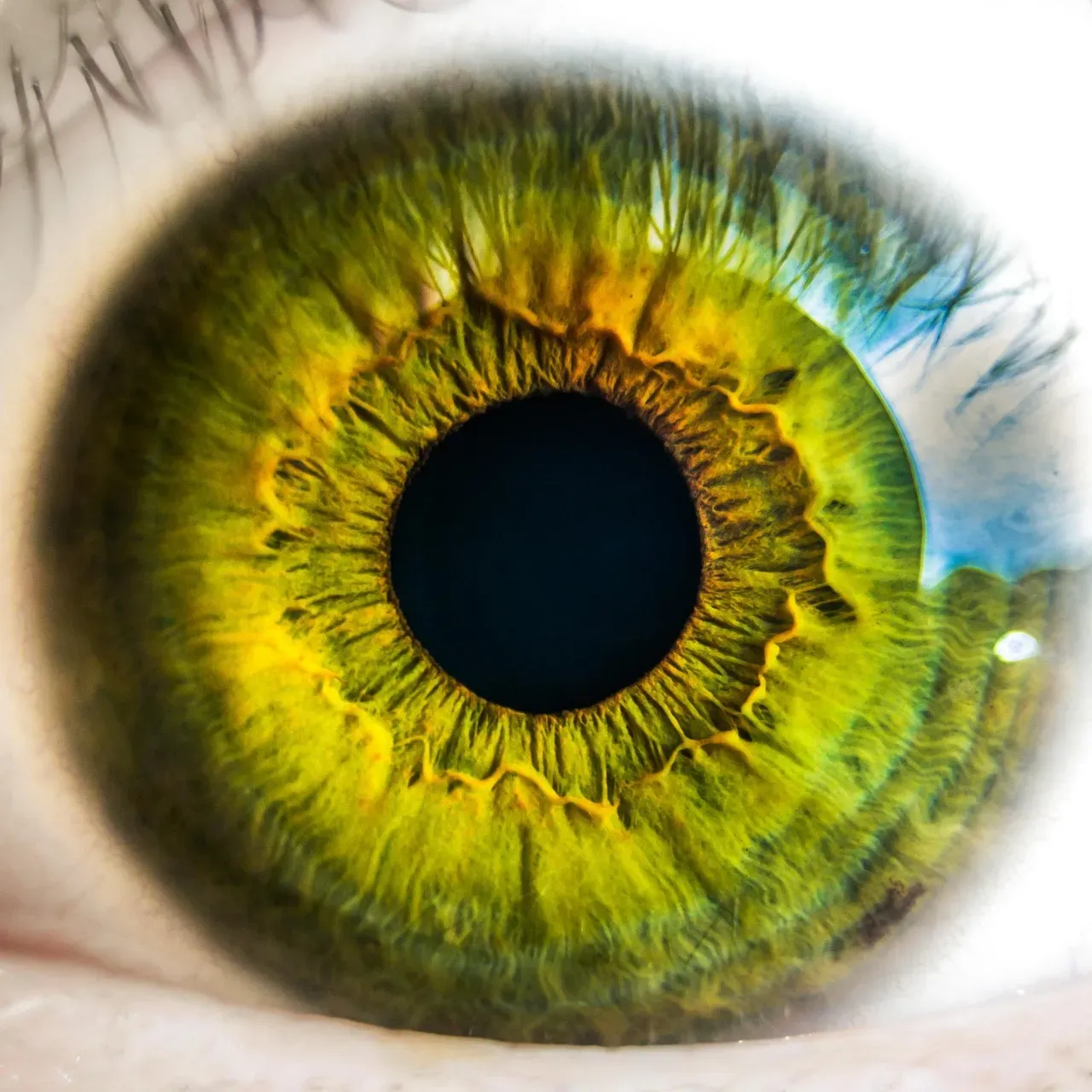
Purple is evidence that it is not only about physics, but also about perception, with raw wavelengths of light passing through your brain, and the brain interpreting them into something meaningful. Each brain and each eye is a little different, so we all exist in different color worlds. The purple you see might not be exactly the same as the purple someone else perceives.
This discovery challenges the assumption that our senses provide objective truth. Purple is a fascinating example of how the brain creates something beautiful when faced with a systems error. It’s a creative solution to a problem that shouldn’t exist, and it works so well that most people never question it.
The Beautiful Illusion We All Share
It’s an illusion of physics and neuroscience that makes us think we see a nonspectral color. Yet this illusion has inspired art, fashion, religion, and culture for thousands of years. Without your brain, purple would not exist at all. It’s a pigment of our imagination in the most literal sense.
Honestly, I find this more enchanting than unsettling. The fact that your brain can invent an entire color just to make sense of confusing input speaks to the incredible flexibility and creativity of human perception. Purple may not be “real” in a physical sense, but it’s undeniably real in terms of human experience. And maybe that’s what matters most.
So next time you spot a purple sunset or admire a violet flower, remember: you’re witnessing a magic trick performed by your own mind. It’s not deception – it’s just your brain doing what it does best, turning raw data into something meaningful, beautiful, and utterly convincing. What do you think – does knowing the truth change the way you see purple, or does it make the color even more remarkable?