If you have ever stared at the ocean and felt that strange tug of curiosity, you are not alone. Beneath those waves lie places that once echoed with market cries, temple songs, and the everyday noise of lives that disappeared without leaving a neat explanation in your history books. Sunken streets, toppled columns, and drowned temples quietly raise a disturbing question: how much of the human story are you actually missing?
When you dive into the evidence for underwater cities around the world, you step into a zone where archaeology, geology, myth, and speculation collide. Some sites are clearly human-built towns that sank as coasts shifted; others may be natural formations shaped and reused by people. Either way, these places force you to rethink simple timelines and tidy narratives about when complex societies emerged, traded, and collapsed. The sea has not just swallowed ruins; it has swallowed context – and you are only now starting to pull fragments back.
1. Pavlopetri, Greece: The Oldest Planned Underwater Town
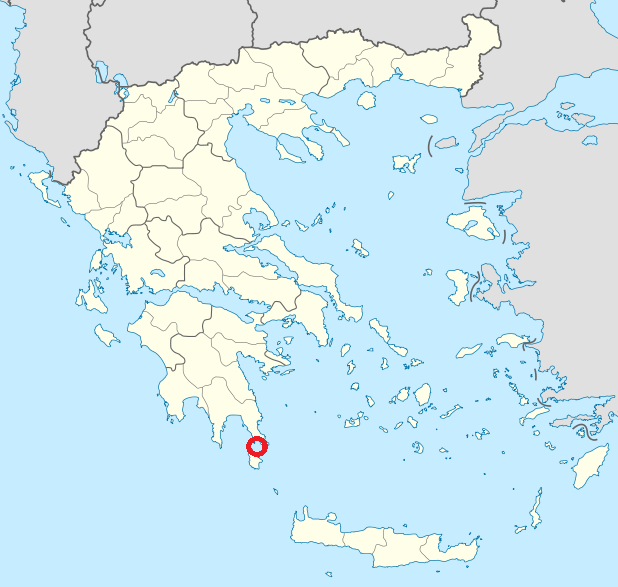
Off the coast of southern Laconia in Greece, just a few meters below turquoise water, you find Pavlopetri, often described as the world’s oldest known submerged town. Here, you can trace streets, rectangular houses, courtyards, even tombs – an entire urban plan still visible on the seabed. Archaeological work suggests the town was active in the Bronze Age, likely starting around the third millennium BCE, which means you are looking at a coastal community that thrived more than four thousand years ago.
What really challenges your sense of history is how organized Pavlopetri appears. You are not dealing with a handful of huts washed away by bad luck, but with a town laid out in blocks across an area roughly the size of several football fields. Evidence of pottery and trade goods hints that people here were plugged into wider Aegean networks long before many textbook “classic” civilizations reached their peak. When you realize how much of that early coastal world is now underwater, you start to wonder how many Pavlopetris never got mapped at all.
2. Thonis-Heracleion, Egypt: Egypt’s Lost Gateway to the Mediterranean
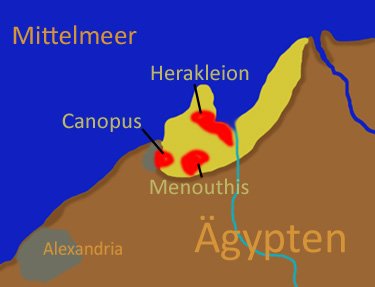
Imagine sailing toward ancient Egypt and, before you ever reached the Nile’s great cities, having to pass through a bustling port where officials checked your cargo and priests watched for the favor of the gods. That port existed: the twin-name city of Thonis-Heracleion once guarded the Canopic mouth of the Nile and served as a critical gateway for Greek ships entering Egypt. Today, it rests beneath the waters of Aboukir Bay, its giant statues and temple ruins lying on the seabed like a frozen moment of collapse.
For centuries, Thonis-Heracleion survived only as a name in old texts, leaving you to assume that scribes had exaggerated or misremembered. Then underwater archaeologists in the early 2000s started pulling up colossal statues, temple foundations, ritual objects, and more than a hundred shipwrecks clustered around the drowned port. The sheer scale of the finds tells you this was no minor harbor; it was a major economic and religious powerhouse that simply vanished from the surface record. When a city central to international trade can disappear so completely that people doubt it ever existed, you have to accept that your historical picture of the ancient Mediterranean is missing entire chapters.
3. Dwarka, India: Mythic City or Early Coastal Hub?
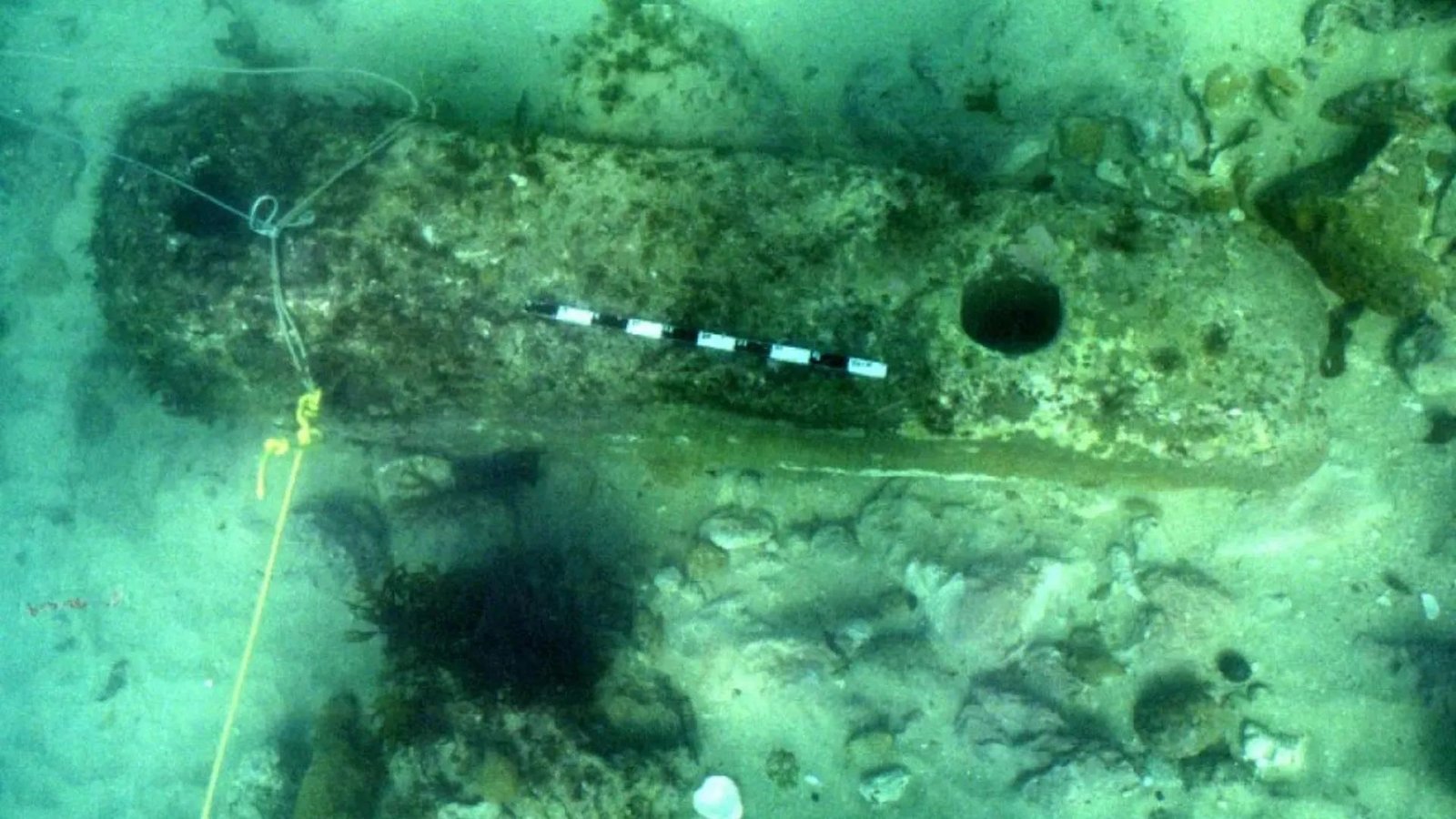
Off the coast of Gujarat in western India, underwater surveys have revealed stone structures, walls, and possible street layouts that some researchers associate with the legendary city of Dwarka, tied to stories of the deity Krishna. In Hindu tradition, Dwarka is described as a spectacular coastal city that eventually sank beneath the sea, and it is tempting for you to draw a straight line from myth to sonar scan. The underwater finds, combined with evidence of long-term coastal occupation around the modern city of Dwarka, suggest a deep history of settlement that predates many later kingdoms.
The mystery for you is how far to go with that link between story and stone. Marine archaeology has identified man-made structures and artifacts that point to significant human activity, possibly several thousand years old, but dating underwater remains is tough work, and sea-level changes further complicate the picture. You are left in an uncomfortable, fascinating middle ground: on one side, epic tales of a divine city swallowed by the ocean; on the other, real submerged ruins that prove early, complex life along this coast. The uncertain overlap between them invites you to ask how many myths might be distorted memories of real places erased by rising seas.
4. Yonaguni Monument, Japan: Natural Formation or Sunken Architecture?
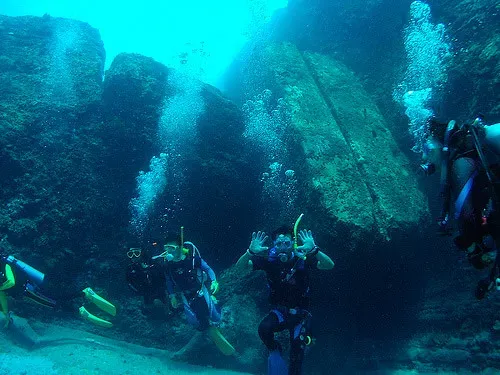
If you ever dive off Yonaguni Island in Japan’s far southwest, you meet one of the most argued-over underwater sites on Earth. At around twenty to thirty meters down, you encounter massive stone terraces, sharp-edged platforms, and step-like levels that look uncannily like a stepped pyramid or a ceremonial plaza. Some researchers argue that you are seeing the remains of a man-made complex that sank when sea levels rose at the end of the last ice age; others insist you are just looking at naturally fractured sandstone sculpted by waves and currents.
This debate matters because it pushes you to confront how quickly your brain jumps from pattern to meaning. Your eyes recognize right angles, flat planes, and repeated steps, and your mind immediately supplies “architecture” and “civilization,” especially when you hear suggestions that the structure might be thousands of years older than any known large-scale Japanese monument. Yet geological processes can also carve eerie regularity into rock. Whether Yonaguni is mostly natural, partly modified, or fully constructed, it forces you to admit that some underwater landscapes blur the line between geology and archaeology so thoroughly that your standard timelines start to wobble.
5. Baiae, Italy: The Roman Resort That Slipped Under the Sea
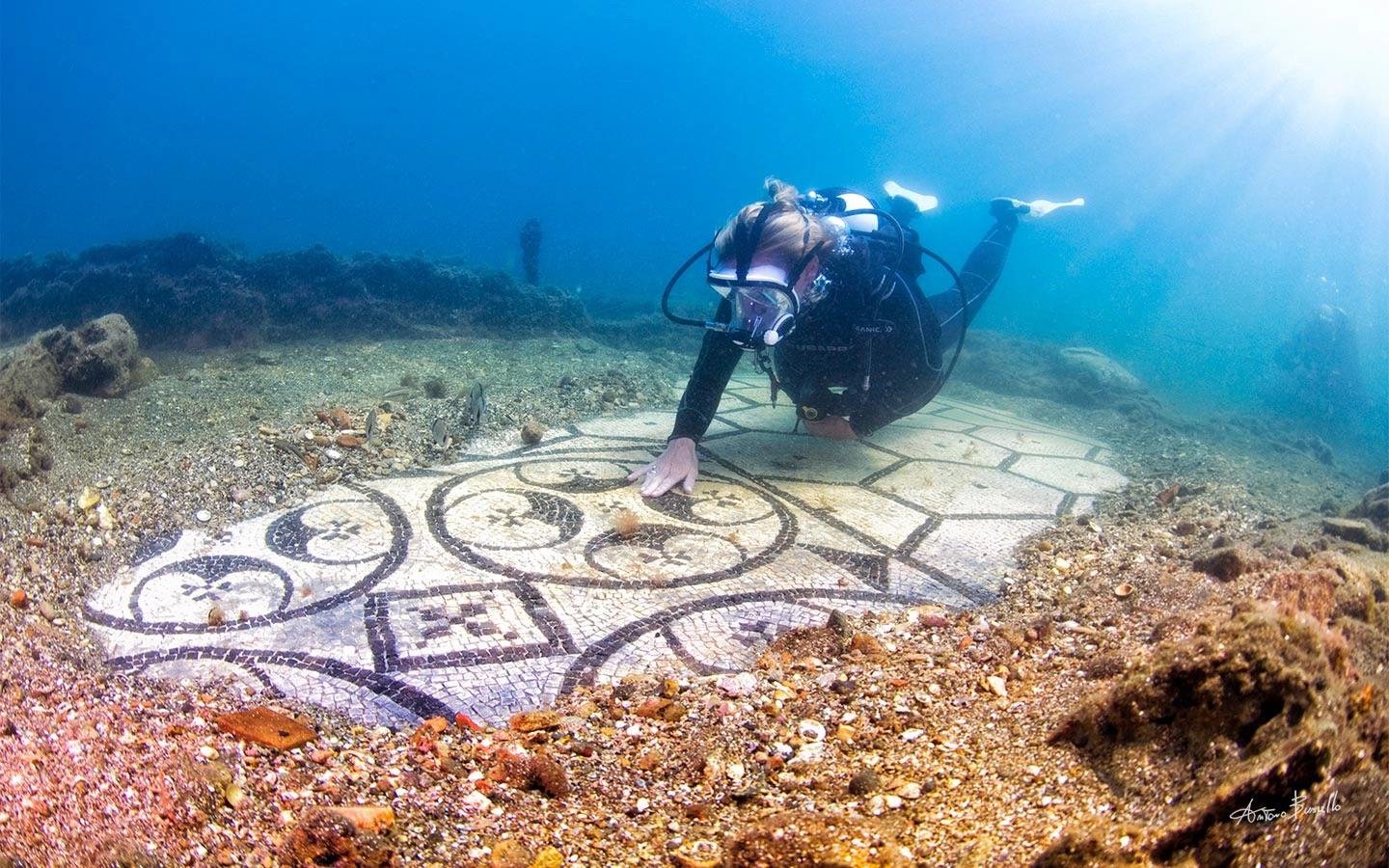
North of Naples, the Romans built Baiae, a lavish seaside resort where the empire’s elite soaked in hot springs, relaxed in villas, and enjoyed what you might think of as an ancient version of a luxury spa town. Over time, parts of the shoreline literally sank as volcanic activity caused the land to subside. Today, much of that glamorous Roman world lies underwater in what is now a marine archaeological park, complete with submerged mosaics, columns, and villa foundations you can visit by glass-bottom boat or scuba gear.
Baiae does not by being older than expected, but by showing you how fragile the historical record is along active coasts. You know Romans existed; you can read their letters. Yet even here, entire neighborhoods slipped below sea level and had to be rediscovered by divers and underwater surveys. If a well-documented civilization like Rome can lose entire streets and palatial complexes this way, you have to imagine how many earlier, less recorded societies lost everything to the same creeping processes. Baiae is like a warning label from the past, telling you that parts of your own coastal cities could one day be someone else’s submerged puzzle.
6. Atlit-Yam, Israel: A Neolithic Village Frozen in Time
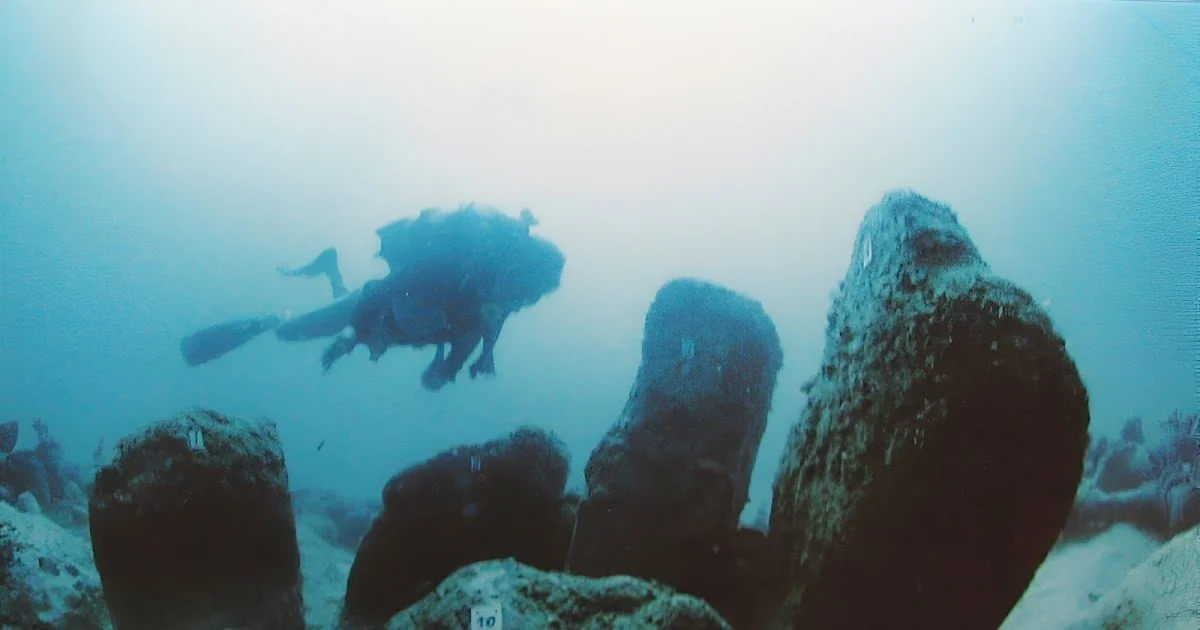
Off the coast of modern Israel, beneath shallow Mediterranean waters, lies Atlit-Yam, a remarkably well-preserved prehistoric settlement. Here you can see stone house foundations, wells, and even a ring of upright stones that may have been part of some ritual space, all dating back to the Neolithic period, several thousand years before classical civilizations. Because the site was gradually submerged as sea levels rose after the last ice age, organic remains such as human skeletons and plant material have survived in a way that is rare on land.
Atlit-Yam challenges your sense of when complex, organized communities emerged along coasts. You are used to thinking of stone circles and advanced farming as mostly inland phenomena, but this village shows that early agricultural societies also embraced the sea, building permanent homes right on the shoreline. When you consider that many of the world’s first farming communities likely preferred river mouths and fertile coasts, the existence of Atlit-Yam implies that a large portion of the evidence for those early experiments in settled life now lies offshore. In other words, your current map of Neolithic life might just be the surviving half of a story whose coastal chapters are drowned.
7. The Sunken Quarters of Port Royal, Jamaica: A City Caught Mid-Fall
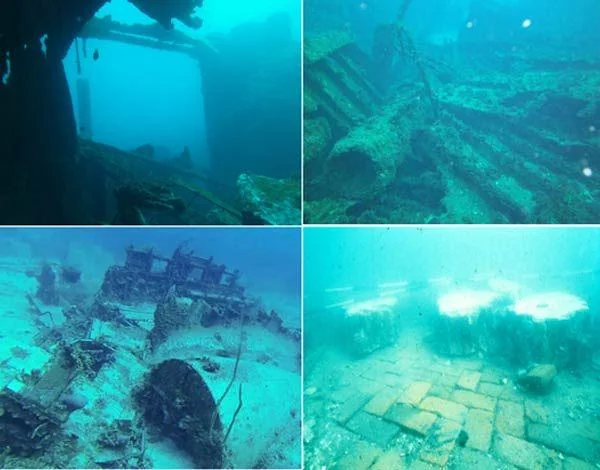
When you think of Port Royal, you probably imagine pirates, rum, and chaotic taverns, and you are not far off. In the seventeenth century, this Jamaican port was a notorious hub of trade and privateering, until a massive earthquake in 1692 caused entire sections of the city to liquefy and slide into the sea. Unlike the slow submergence you see in some ancient sites, Port Royal’s underwater ruins capture a sudden disaster, with streets and buildings frozen at the moment of collapse.
For you, Port Royal is a rare case where written history, geology, and underwater archaeology line up. You have eyewitness accounts of the quake and tsunami, church records, and now detailed surveys of submerged streets and structures lying several meters underwater. This alignment matters because it gives you a kind of calibration: you see exactly how a lively coastal city can vanish in minutes and then be covered by sediment and waves. Once you grasp that, it becomes easier to imagine how earlier, less documented ports around the world could have gone through similar catastrophes, leaving behind underwater ruins that later generations interpret as mysterious or out of place in the historical timeline.
8. The Submerged Ruins at Olous, Crete: A City on the Edge
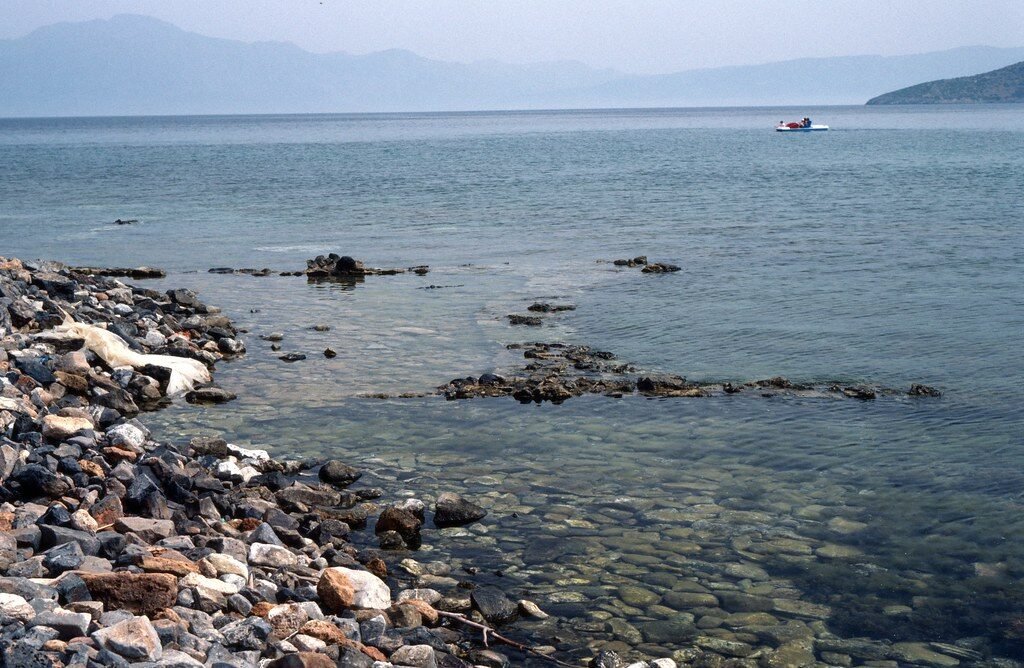
Along the coast of eastern Crete, near the modern resort of Elounda, you can peer down into clear, shallow water and see masonry, walls, and other remains from the ancient city of Olous. Historical sources confirm that Olous existed, but what you see underwater today is a patchwork of collapsed structures and shoreline that has shifted over centuries due to tectonic activity and gradual sea-level rise. From the surface, the ruins almost look staged, as if someone gently laid an old city at the bottom of a swimming pool for you to inspect.
Olous does not overturn your chronological tables, but it complicates how you think about the survival of coastal cultures in the ancient Aegean. This was a city engaged in trade and regional politics, and yet much of what it once was now lies just out of casual reach, accessible only if you are willing to dive in or study detailed surveys. When you put Olous alongside Pavlopetri and other submerged sites, you start to see a pattern: ancient people consistently built right at the water’s edge, chasing trade and fertile land, while the sea slowly took back those spaces. That repeated story quietly undermines any idea that today’s coastlines – and the archaeological record you base history on – are stable or complete.
Conclusion: What These Drowned Cities Really Say About Your History
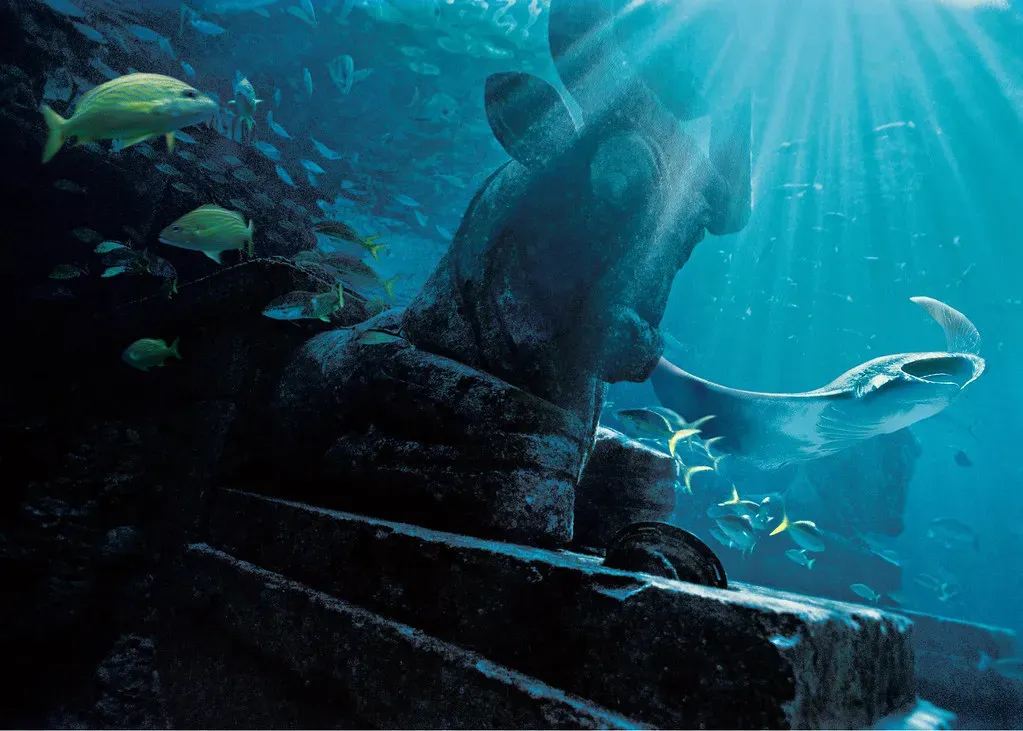
When you step back from these eight places, a common thread emerges: coastlines move, seas rise or fall, land sinks or shakes, and your tidy historical record simply cannot keep up. Pavlopetri, Thonis-Heracleion, Dwarka’s offshore ruins, Yonaguni’s terraces, Baiae, Atlit-Yam, Port Royal, and Olous all show you that major human stories can slide out of sight while myths, half-remembered names, or nothing at all remain on the surface. You are dealing with a past shaped as much by geology and climate as by kings, merchants, and farmers.
These underwater cities do not prove secret super civilizations or rewrite every timeline, but they absolutely force you to loosen your grip on the idea that the surviving record is the whole story. Every time you hear of a new discovery below the waves, you are really being reminded of how young and partial your knowledge is. The next time you look out at the ocean, it might be worth asking yourself: if this much has already been found under such a small portion of the sea, how many more forgotten cities are still hiding just beyond the edge of what you think you know?