If you think horror movies are wild, wait until you meet the real monsters living thousands of feet below the waves. Down there, sunlight never arrives, pressure would crush a submarine, and yet life has evolved into forms so strange you’d swear they were from another planet. You are only just beginning to glimpse them through remote cameras and deep-diving robots, and every new clip seems to raise more questions than it answers.
What makes these creatures so gripping is not just how they look, but how little you actually know about them. Many have only been filmed a handful of times. Some are known from blurry footage or a few specimens pulled up by accident. You can describe their bodies, guess at their habits, but the big questions – how they live, hunt, reproduce, migrate – are still mostly blank spaces on the map. As you go through each one, imagine you are the researcher watching a single strange animal drift past your camera in the dark, knowing it might be years before you ever see another.
1. Giant Squid – The Legendary Phantom Finally on Camera
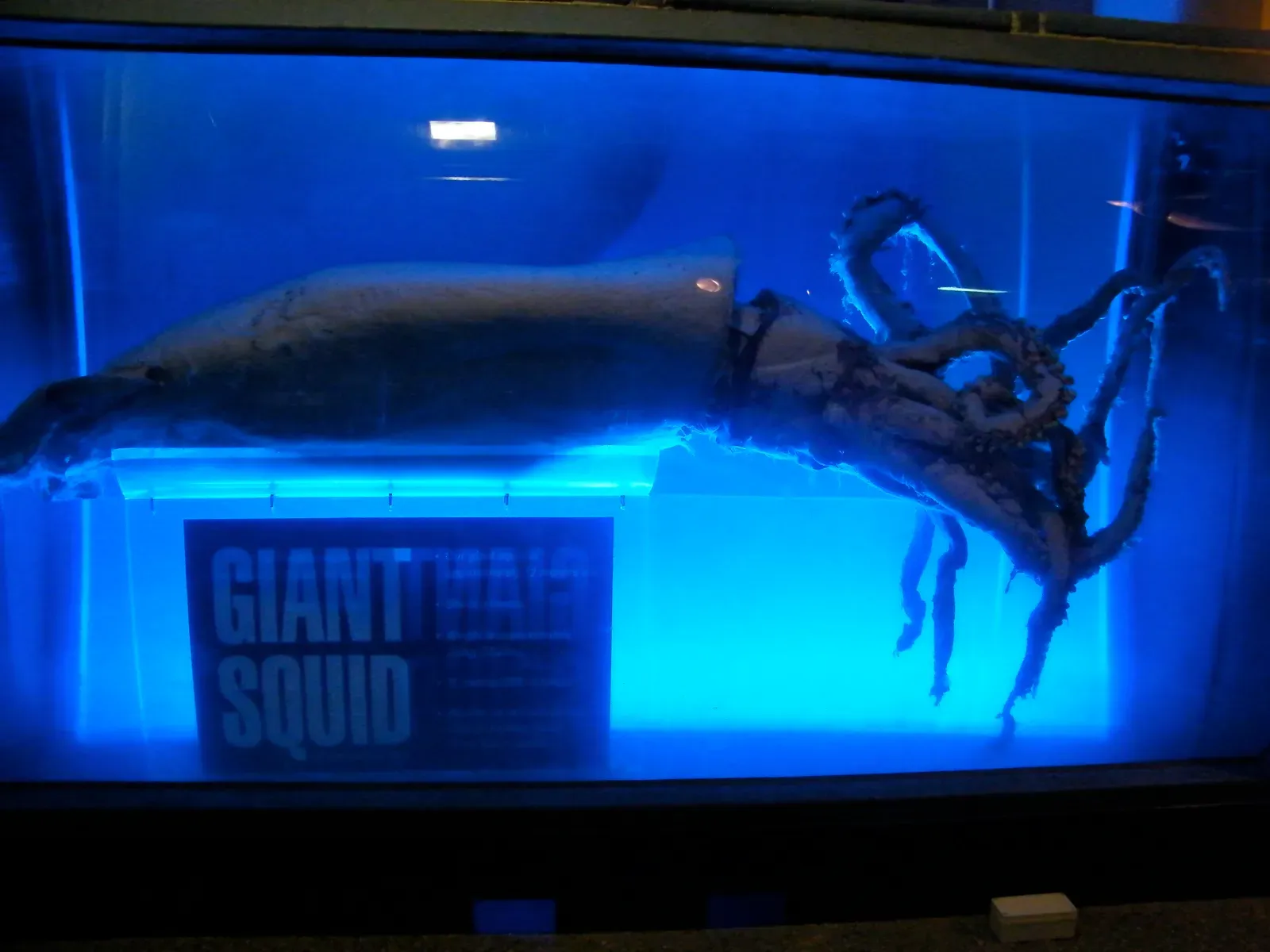
Uploaded by mgiganteus, CC BY-SA 2.0)
You grew up with stories of a tentacled monster dragging ships under, and for a long time, the giant squid (Architeuthis dux) might as well have been a sea dragon. For centuries, sailors only had washed-up carcasses and sucker-scarred sperm whales as proof something huge was out there. Now you have rare deep-sea footage and specimens measuring several meters long, with eyes larger than dinner plates and tentacles built to latch onto anything unlucky enough to pass within reach. Even so, considering their potential total length rivaling a school bus, you’ve still only scratched the surface of their biology.
What makes the giant squid so mysterious is how little you know despite its size. You rarely see it alive in its natural habitat; most of what you have comes from stranded animals or pieces found in whale stomachs. You are still debating how fast it can swim, how actively it hunts, and where it breeds in the open ocean. In many ways, it remains a ghost – huge, unmistakable, and yet almost never seen – reminding you that even the biggest animals can vanish into the deep if they choose.
2. Bigfin Squid – The Deep’s Most Alien Silhouette
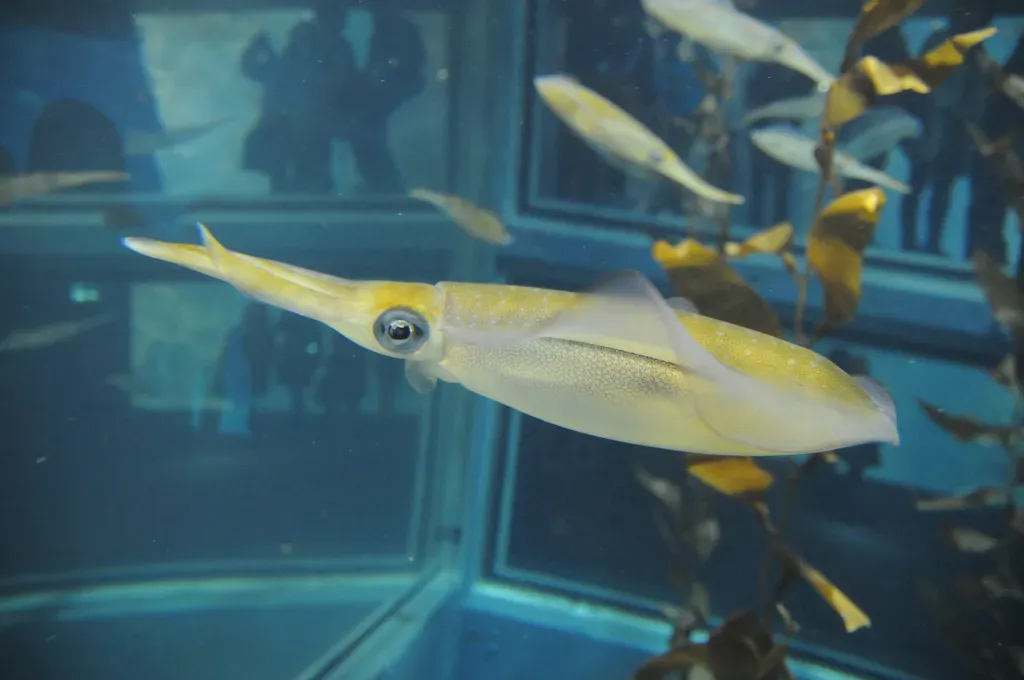
If there’s one creature that genuinely looks like a special effect, it’s the bigfin squid, a group of deep-sea squids with arms so long and thin they trail like ghostly puppet strings. When you watch footage, you see a small body hovering calmly in the black water while incredibly elongated arms and tentacles dangle straight down, sometimes estimated to stretch many times the length of the mantle. Each limb seems jointed at an odd angle, so the whole animal looks like it has elbows made of shadow. You instinctively feel you’re looking at something you were never meant to see.
Scientists only recognized adult bigfin squid from video in the early twenty‑first century, long after juveniles had puzzled researchers who could not imagine what they would grow into. You still do not know how many species exist, where they reproduce, or what their full size range might be. You can only guess at their hunting strategy – perhaps drifting with arms spread wide to snare tiny animals – because no one has ever watched them feed in detail. For now, every new sighting is a small event, another grain of knowledge about an animal that seems designed specifically to defy your expectations of what a squid should look like.
3. Barreleye Fish – The Transparent-Headed Stargazer
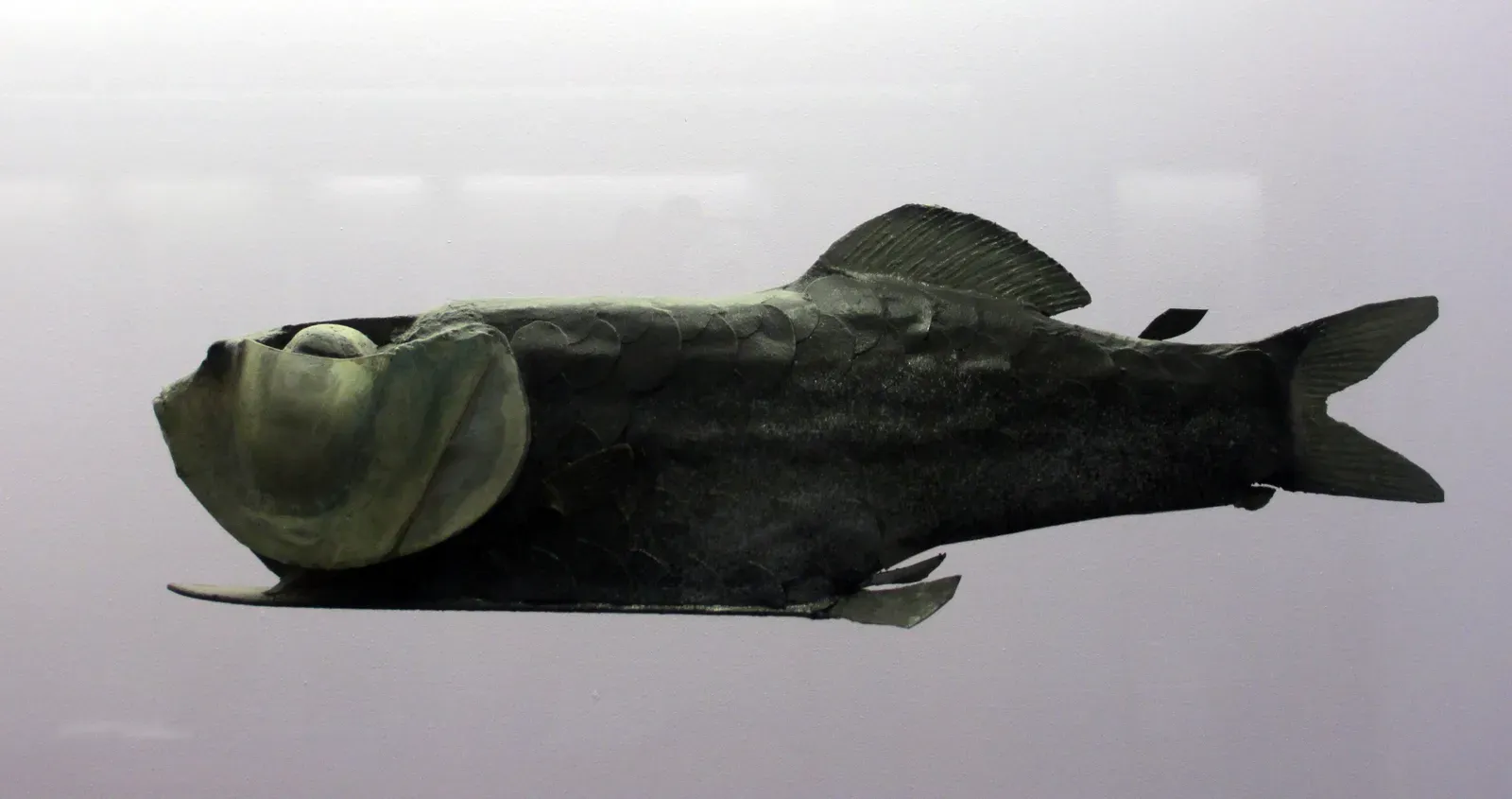
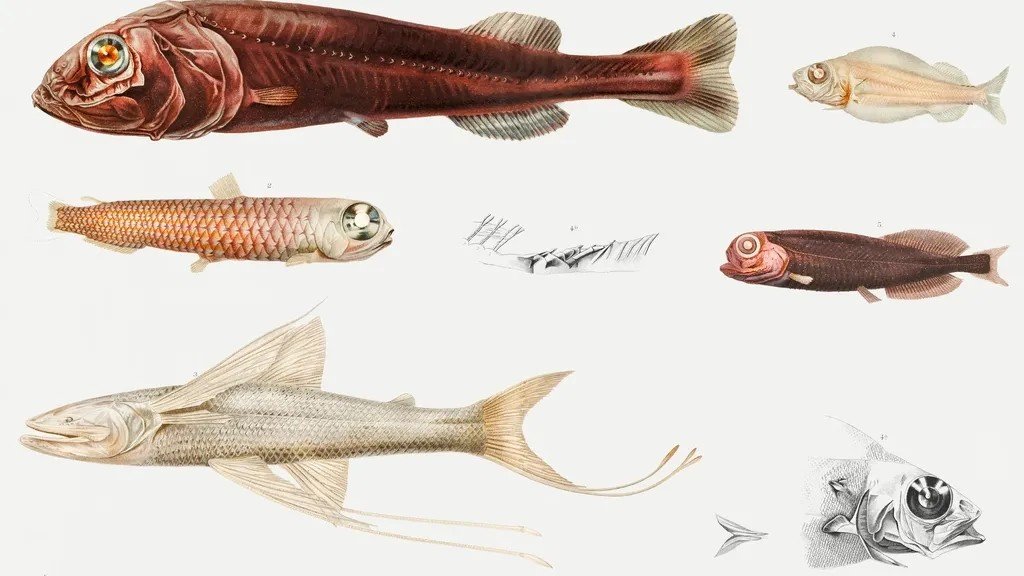
The first time you see a barreleye fish (Macropinna microstoma), your brain practically short-circuits. Its head is clear like a soap bubble, and its tubular green eyes sit inside that transparent dome, pointing straight up through its own skull. For years, drawings showed its eyes looking forward, because researchers simply misread what they were seeing. Only with high‑definition video did you learn that those eyes can swivel: up to scan for prey silhouetted against faint light, then forward to snag the meal. You are watching a fish that turned its own head into a periscope.
Even with this breakthrough, you still know shockingly little about its day‑to‑day life. You suspect it often hovers below drifting stinging colonies called siphonophores and carefully steals bits of captured prey, protected by that fluid‑filled shield of a head. But you do not know how common it really is, how far it migrates daily, or how it chooses mates in the darkness. Every short video clip raises more questions: How does it avoid predators? Does that transparent dome heal after injuries? You are left piecing together its story from a few precious encounters in a volume of ocean large enough to swallow all the world’s mountains.
4. Vampire Squid – Survivor of the Oxygen-Starved Depths
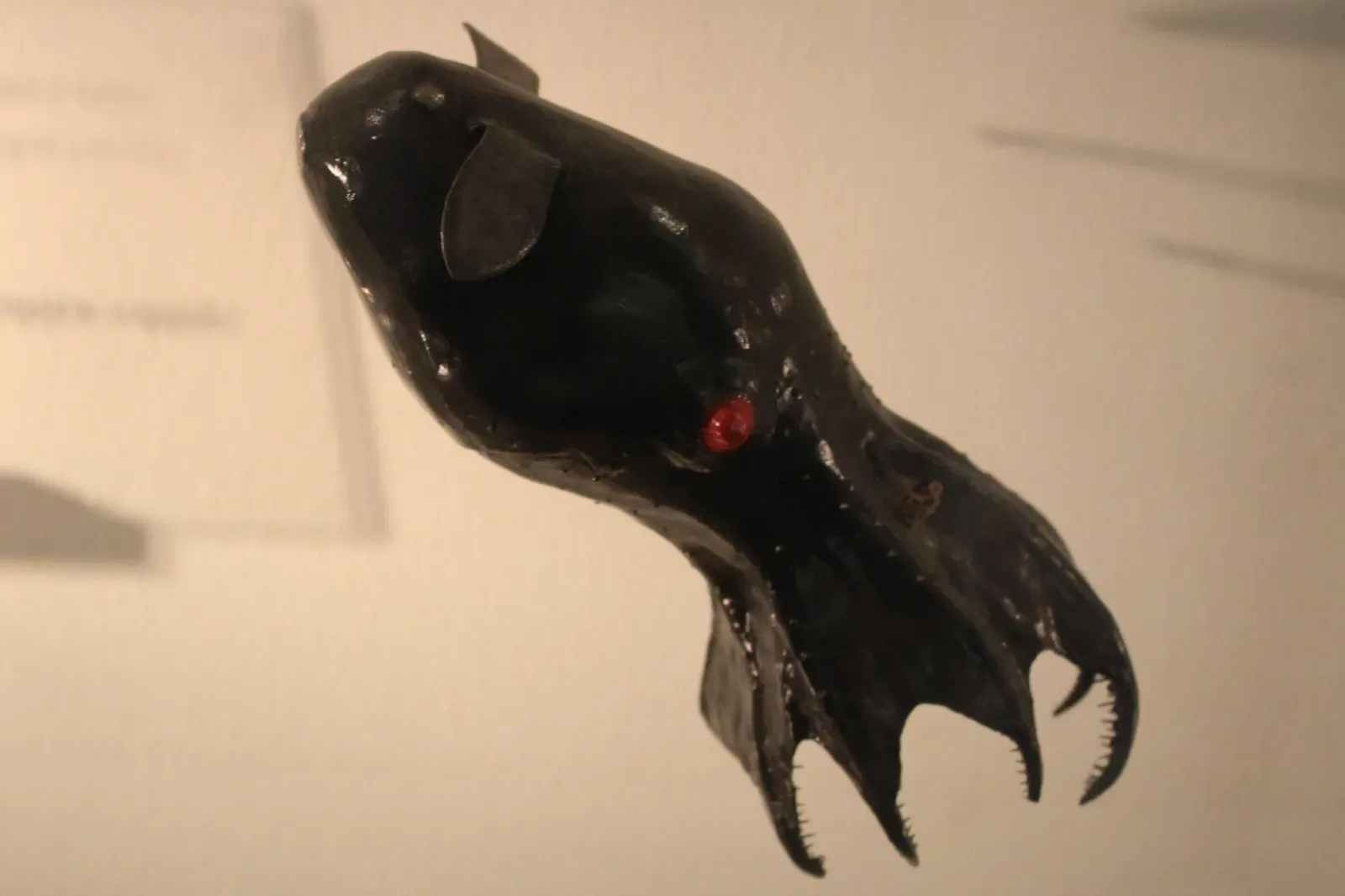
With a name that literally translates to “vampire squid from hell,” you might expect this animal to be a ruthless predator. Instead, when you finally meet Vampyroteuthis infernalis, you discover something stranger: a small, soft‑bodied cephalopod with a dark cloak of webbed arms, glowing organs, and some of the biggest eyes relative to body size in the animal kingdom. It lives in some of the lowest‑oxygen zones of the ocean, where most other animals would suffocate, yet it drifts along calmly, apparently unbothered by conditions that would kill you in minutes. It is less a monster and more a quiet master of a deadly niche.
Instead of tearing into live prey, the vampire squid appears to feed mostly on “marine snow” – bits of dead plankton, mucus, and other particles slowly raining down from above. It uses long, sticky filaments to collect this organic dust, a lifestyle completely different from the hunting behavior you expect from squid relatives. Still, you are not certain how it reproduces, how long it lives, or how it copes as climate change alters oxygen levels in the deep sea. This creature shows you that surviving in the abyss is not just about fangs and speed; sometimes it is about patience, frugality, and an almost eerie ability to live where others simply cannot.
5. Goblin Shark – A Living Fossil with a Spring-Loaded Jaw
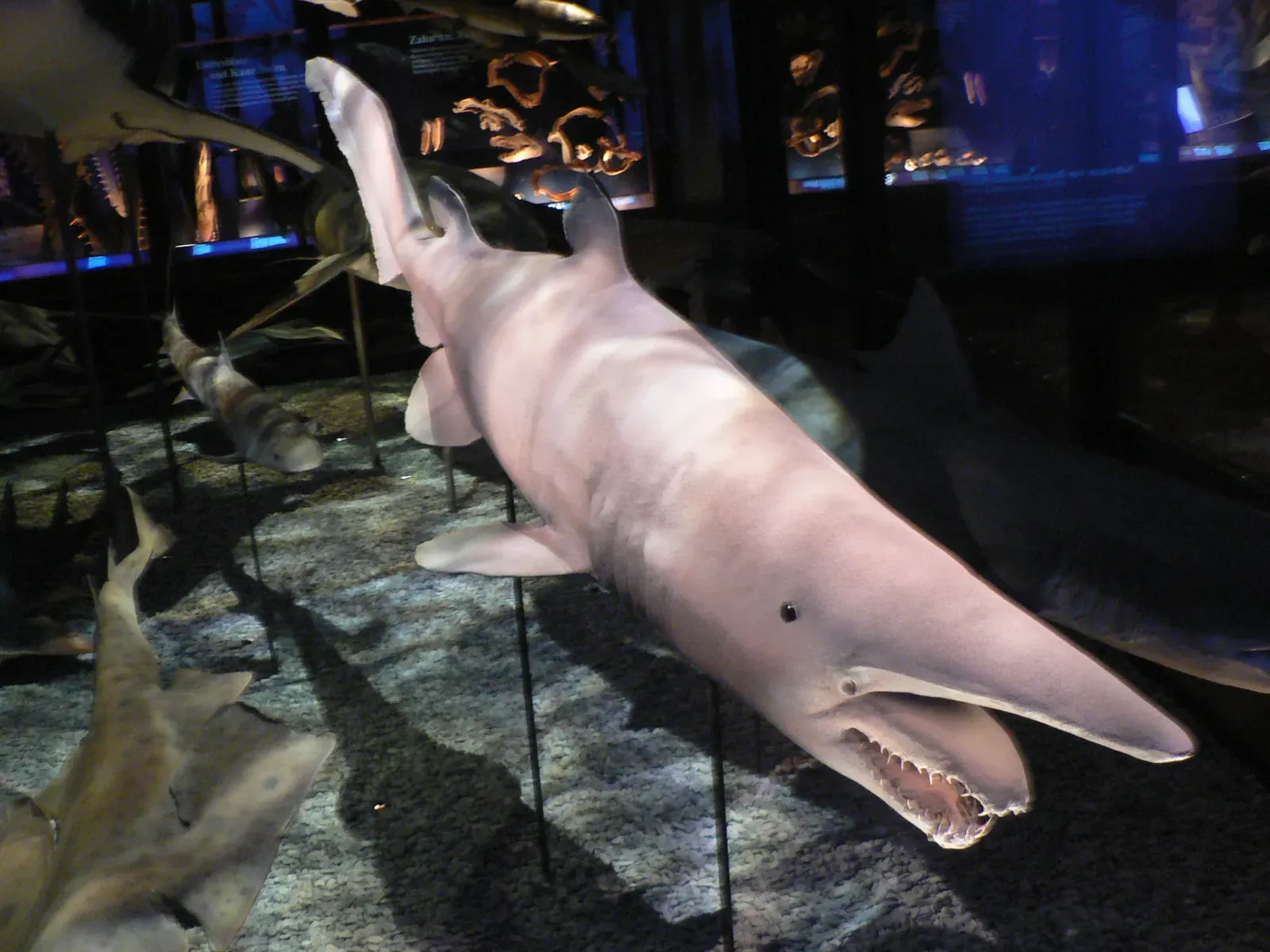
When you first see a goblin shark (Mitsukurina owstoni), you might think someone stretched a regular shark in a photo editor. It has a long, flattened snout, pale pink skin, and a jaw that can shoot out from its face like a mechanical trap. This “living fossil” comes from an ancient shark lineage, and it looks the part, as if it missed several memos about modern fish design. Video recordings of goblin sharks lunging at prey show the jaw snapping forward in a fraction of a second, turning a slow-looking animal into a sudden, nightmarish ambush predator.
Yet for all its terrifying appearance, you hardly ever see this species alive. Most individuals are caught accidentally in deep nets or longlines, and you still have only rough estimates of how deep they usually swim or how many exist worldwide. You suspect they use electroreception – sensing tiny electric fields – to find buried or slow-moving prey in the darkness, but their full diet remains under study. You do not know where they mate or give birth, how far they travel, or how vulnerable they are to deep‑sea fishing and mining. The goblin shark is a reminder that some of the ocean’s strangest animals are also some of its most data‑poor mysteries.
6. Deep-Sea Anglerfish – Lures, Lanterns, and Living Attachments
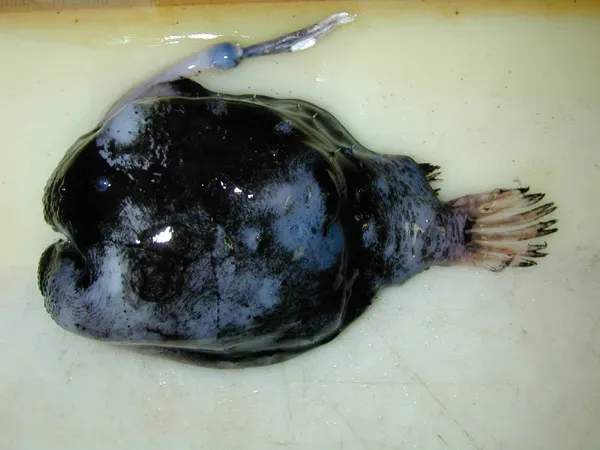
If you imagine the classic deep‑sea monster, you are probably picturing an anglerfish. You can recognize that oversized head, the jagged teeth, and the glowing lure dangling right in front of its mouth like a sinister fishing rod. In the lightless mid‑water zones, many anglerfish species use bioluminescent bacteria in that lure to draw in curious prey, then snap their jaws shut before the victim even realizes there is a body attached. That single adaptation – using light as bait – is such an elegant hack for a world without sunlight that you almost have to admire it.
But the truly shocking part comes when you look at how some deep‑sea anglerfish reproduce. In certain species, a tiny male will bite onto a much larger female and gradually fuse with her body, sharing blood and becoming little more than a permanent sperm source. You still do not fully understand the chemistry that allows two individuals to merge without triggering immune rejection, or how often this fusion happens in the wild. You rarely see mating behavior directly, because these fish live far below where normal research ships can easily linger. The result is a creature you can film up close and still not fully comprehend, especially when it comes to the most basic questions of family life.
7. Giant Phantom Jelly – A Drifting Sheet of Living Shadow
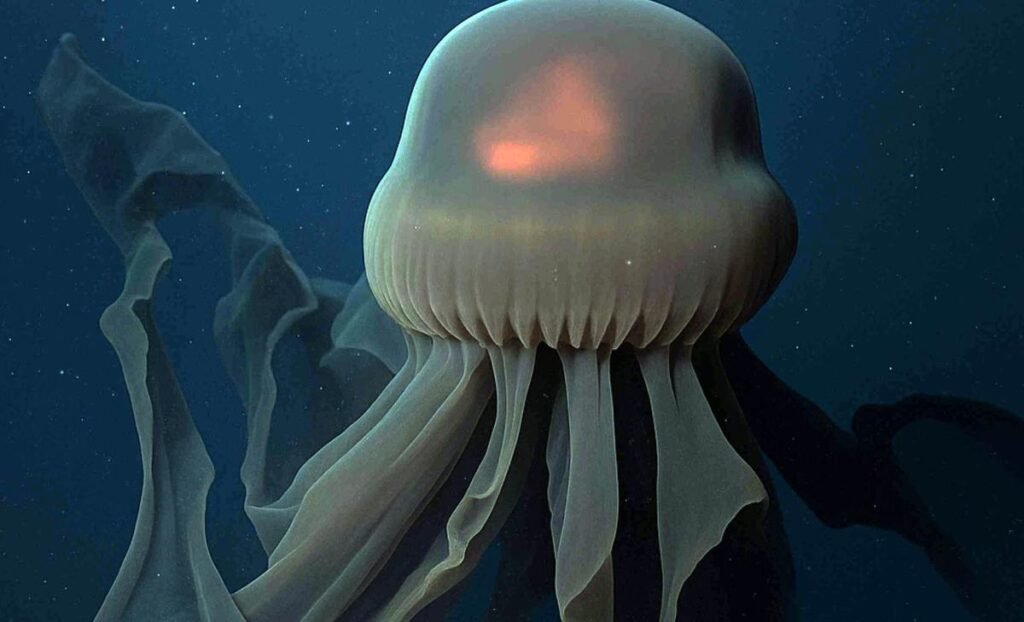
Imagine you are watching a deep‑sea robot crawl through the dark, and suddenly a vast, reddish veil glides into view. That is how scientists often meet the giant phantom jelly (Stygiomedusa gigantea), a huge deep‑sea jellyfish with a bell that can span several meters and four long, thick oral arms streaming beneath it. Instead of fragile tentacles, it has those muscular ribbons, which may help it envelop and trap larger prey. In the robot’s lights, it looks like a torn flag drifting in slow motion through endless night, half solid and half ghost.
Despite its size and global distribution in deep waters, you have only recorded this species a few dozen times on camera. You are still uncertain how fast it grows, what exactly it prefers to eat, and how many individuals the global population might include. In some videos, small fish shelter among its arms, hinting at a complex relationship you barely understand. Because you so rarely see it alive, every new encounter offers fresh clues: a different swimming pattern, a new depth record, an unexpected behavior. For now, the giant phantom jelly remains one of the most dramatic reminders that enormous animals can still hide almost completely from your view.
Conclusion – The Ocean’s Dark Reminders
When you step back from these seven creatures, you start to realize just how thin your layer of understanding really is. You live on a planet dominated by ocean, yet the deep remains less mapped than the surfaces of some planets and moons. Each of these animals – whether it is a transparent‑headed fish, a jaw‑shooting shark, or a phantom jelly the size of a room – shows you a different way life has bent the rules to survive in cold, crushing darkness. You are not just looking at curiosities; you are looking at blueprints for coping with extremes you can barely imagine.
As deep‑sea mining, warming waters, and declining oxygen levels creep into even these remote zones, you are making decisions that affect creatures you still do not fully understand. More advanced robots, quieter cameras, and better genetic tools will help you fill in the gaps, but there is a real chance some mysteries will disappear before you solve them. Maybe that is part of the deep sea’s power: it reminds you that the world is bigger, stranger, and more secretive than your daily life suggests. When you think about that next stretch of uncharted black water on a map, which of these incredible beings do you picture gliding through it, unseen just beyond the light?