You think you live in a solid, predictable world: blue sky, familiar stars, the same comforting Moon. Then you zoom out, just a little, and the universe starts to look less like a calm night sky and more like a fever dream written in physics. Once you start digging into what really happens out there, your everyday sense of reality begins to feel way too small.
In the next few minutes, you’re going to meet six cosmic phenomena that quietly break almost every common-sense rule you rely on. You’ll see objects that freeze time at their surface, places where space expands faster than light, and stars so dense a teaspoon of their material outweighs a mountain. By the end, you may look up at the night sky and feel both very tiny and strangely empowered – because you finally know just how weird the universe you live in really is.
1. Black Holes: Where Space And Time Fall Off A Cliff
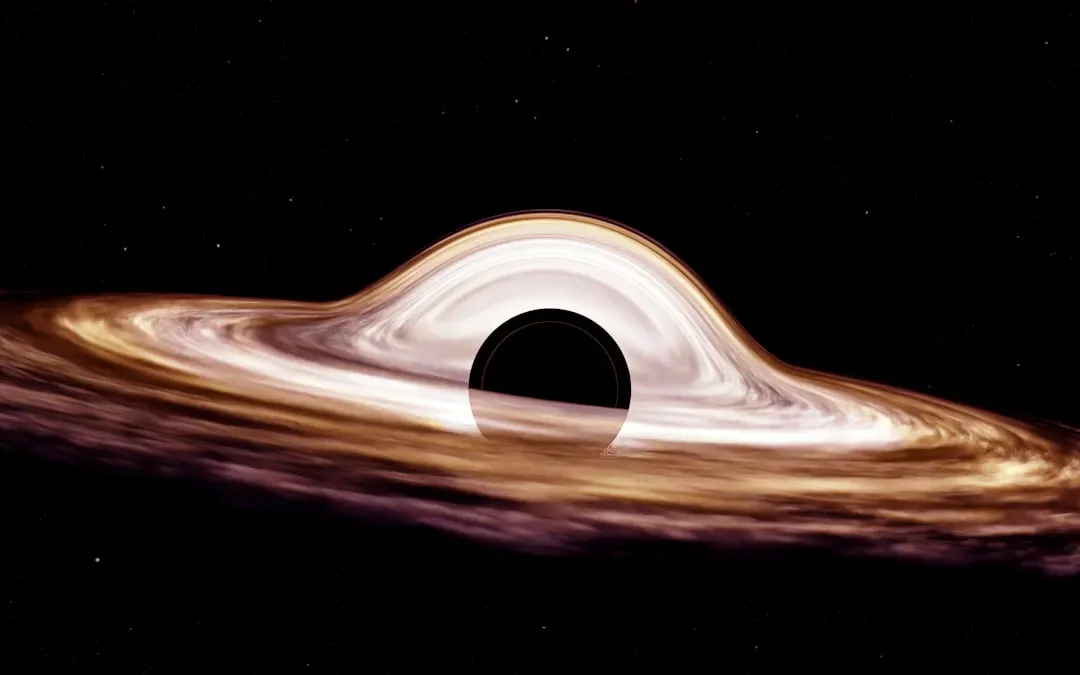
Imagine walking toward a cliff, but instead of falling over the edge, you watch time itself slow to a crawl. That’s essentially what happens around a black hole. A black hole is a region of space where mass has been crushed into such a compact volume that the escape velocity exceeds the speed of light, which means not even light can get out once it crosses the boundary called the event horizon. From your perspective, if you watched an object fall toward that horizon, you’d see it slow down, dim, and almost freeze in place, as if time for it just stopped.
What really twists your sense of reality is that the rules of gravity you’re used to on Earth are taken to a brutal extreme near a black hole. If you ever fell in feet first, the gravity pulling on your feet would be far stronger than on your head, stretching you in a process scientists casually nickname spaghettification. On top of that, time runs slower for you in strong gravity compared with someone far away, so in principle you could fall toward a black hole and experience minutes while the outside universe races ahead by years. You’re living in the same universe, but near a black hole, time itself becomes flexible and personal.
2. Neutron Stars: Teaspoons That Outweigh Mountains
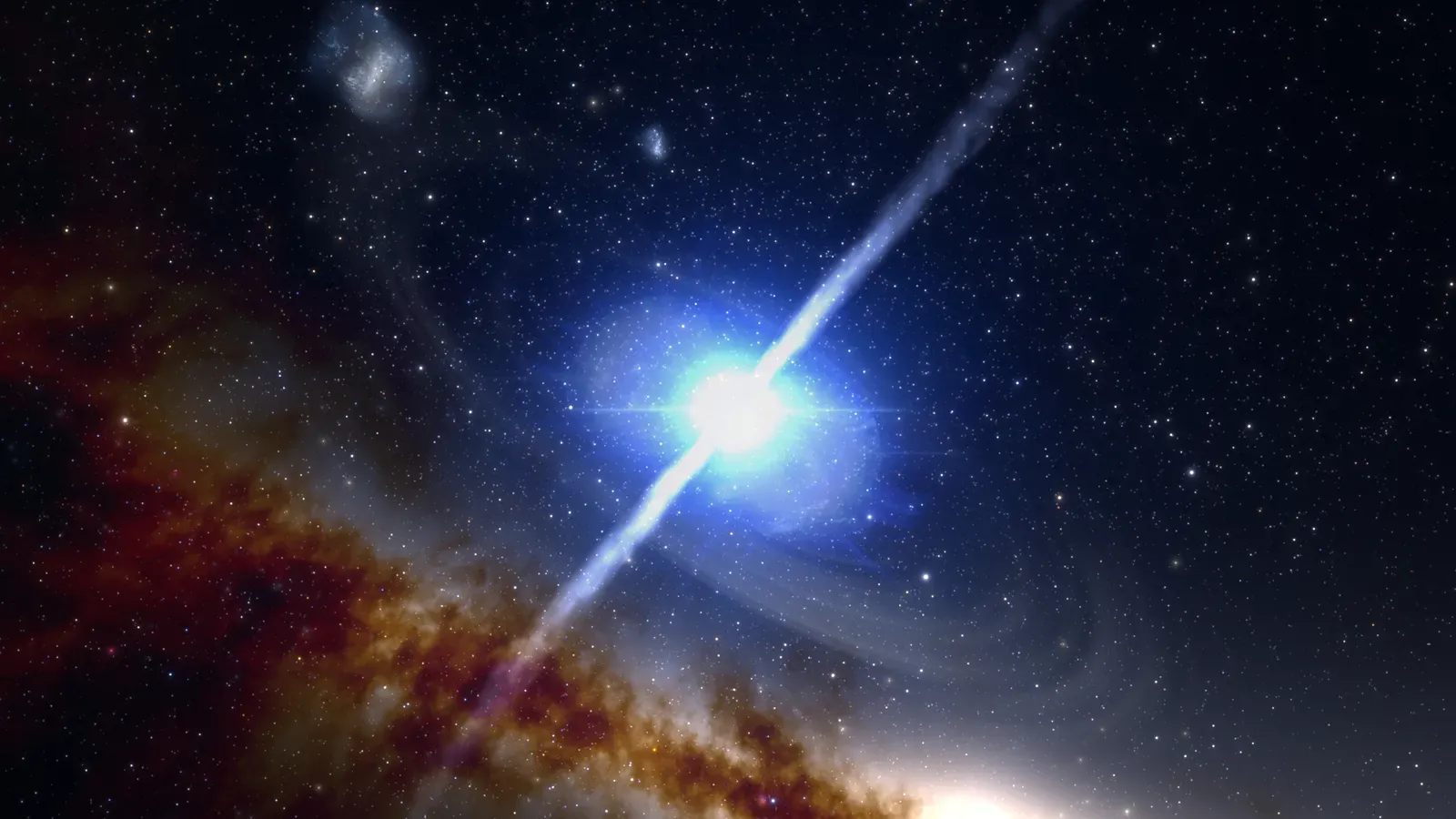
Take a star several times more massive than the Sun, let it die in a supernova explosion, and you can be left with one of the strangest objects you’ll ever hear about: a neutron star. You can think of it as the collapsed core of the star, crammed into a sphere only about the size of a city. If you could somehow scoop up a teaspoon of neutron-star matter and bring it to Earth, that tiny amount would weigh as much as a huge mountain range. You’re used to thinking of solids as dense – iron, lead, maybe even a gold bar – but neutron-star matter makes all of that feel like fluffy foam.
Inside a neutron star, gravity is so intense that atoms are crushed and electrons are forced into protons, turning the matter into a sea of neutrons packed shoulder to shoulder. The surface gravity would be hundreds of billions of times stronger than Earth’s; if you tried to jump, you wouldn’t get a millimeter off the surface before being slammed back down. Many neutron stars spin at dizzying speeds, sometimes hundreds of times per second, beaming radiation like cosmic lighthouses. When you realize that a dead star the size of a city can outmass the Sun and spin faster than a blender, it becomes hard to keep calling your everyday idea of “solid” or “heavy” even remotely accurate.
3. Gravitational Lensing: Cosmic Mirages In The Fabric Of Space
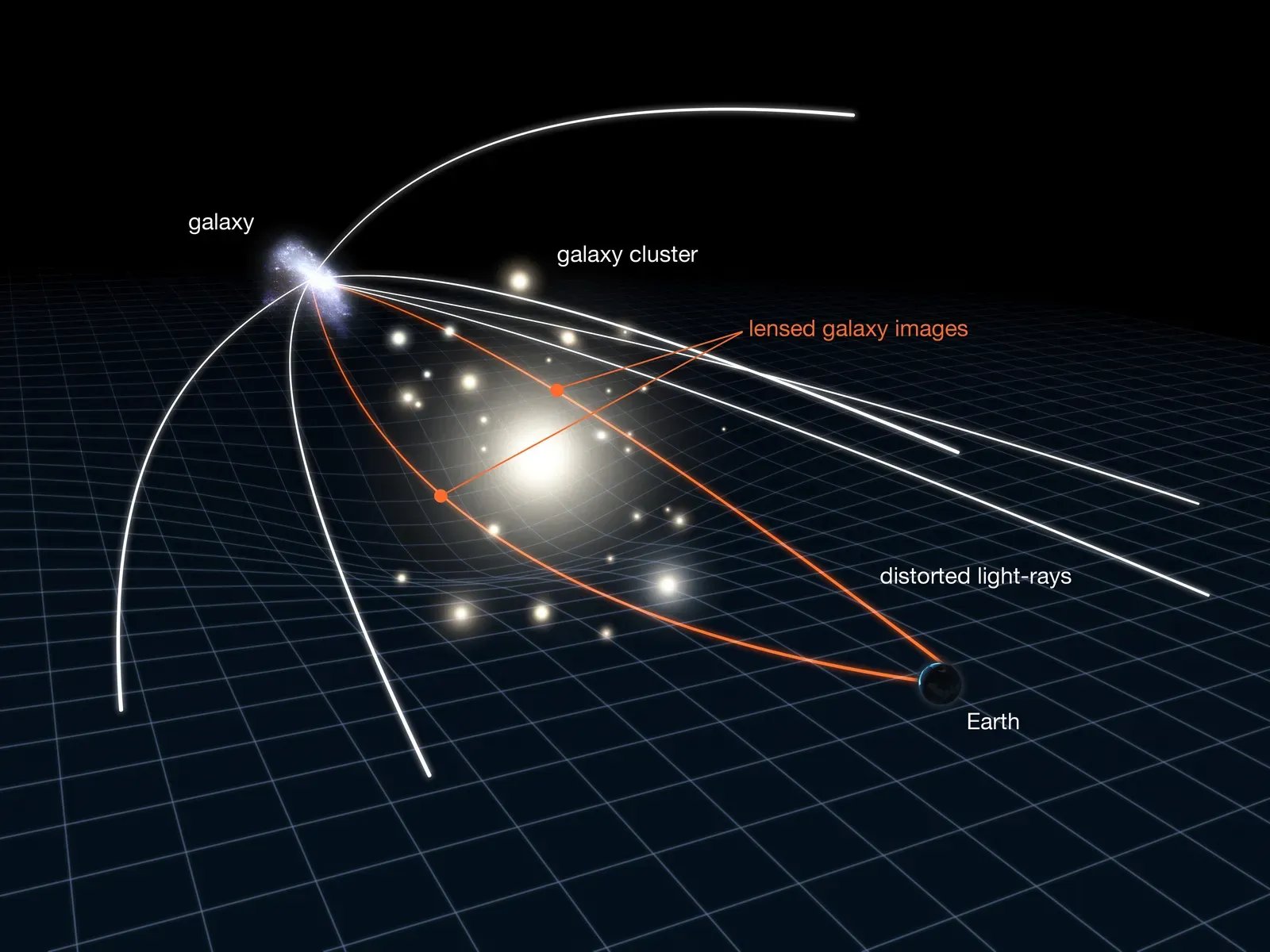
If you’ve ever seen heat shimmer on a road, making distant cars look bent or duplicated, you already have an intuitive sense for gravitational lensing – just swap hot air for warped spacetime. Massive objects like galaxies and galaxy clusters bend the space around them, and light follows those curves. When light from a more distant galaxy passes near that mass, you see a distorted, magnified, or even multiple-image version of the background object. To your eyes, it looks like reality itself has been stretched and copied across the sky.
What makes this really wild is that you can use these cosmic mirages to “see” invisible matter. You live in a universe where most of the mass is dark matter, which doesn’t emit or absorb light in any way your eyes or telescopes can directly detect. But dark matter still has gravity, so it still bends light. By studying gravitational lensing, astronomers can map out dark matter like you might infer the shape of a glass from the way it distorts what’s behind it. You’re peeking at an invisible skeleton of the cosmos, using the universe’s own warped funhouse mirrors as your guide.
4. Quantum Vacuum: Empty Space That Isn’t Really Empty
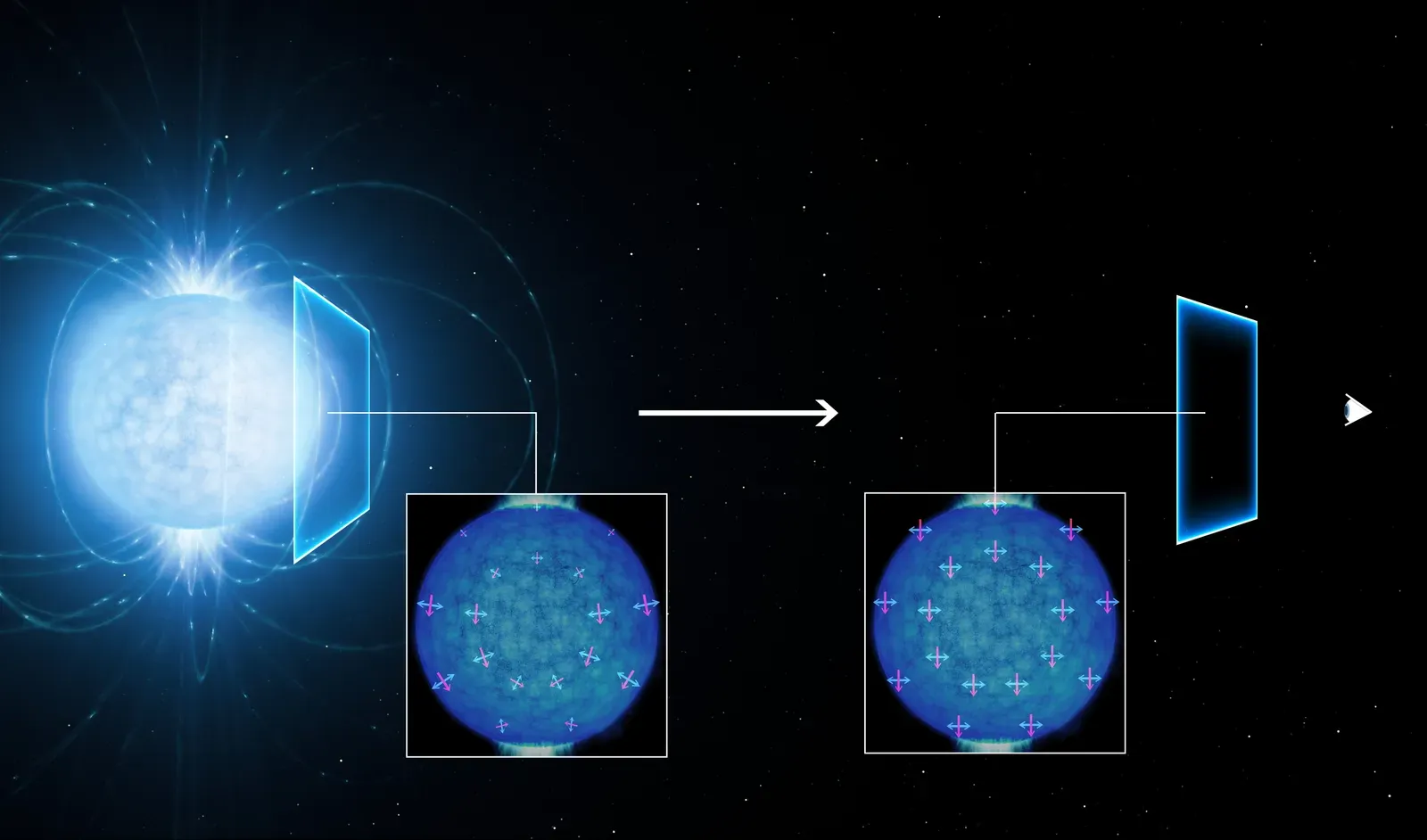
You’ve probably thought of “nothing” as, well, nothing – pure emptiness with no particles, no light, no action. But at quantum scales, the vacuum of space refuses to sit still. Even in what you’d call empty space, quantum fields are constantly fluctuating, spawning pairs of particles and antiparticles that briefly appear and then annihilate each other. From your everyday perspective, it’s as if your living room were totally silent, but if you zoomed in enough, you’d find the air humming with countless tiny conversations you never noticed.
These restless quantum jitters aren’t just abstract theory; they show up in measurable effects. For example, if you place two uncharged metallic plates very close together in a vacuum, the quantum fluctuations of the electromagnetic field between them are slightly different from outside, creating a tiny but real force that nudges the plates together. On cosmic scales, the energy of the vacuum seems to act like a mysterious pressure that accelerates the expansion of the universe, often linked to what you hear called dark energy. So when you look up at a dark patch of sky and think you’re seeing emptiness, you’re actually staring at a seething sea of unseen activity shaping the fate of everything.
5. Cosmic Inflation And The Multiverse Question
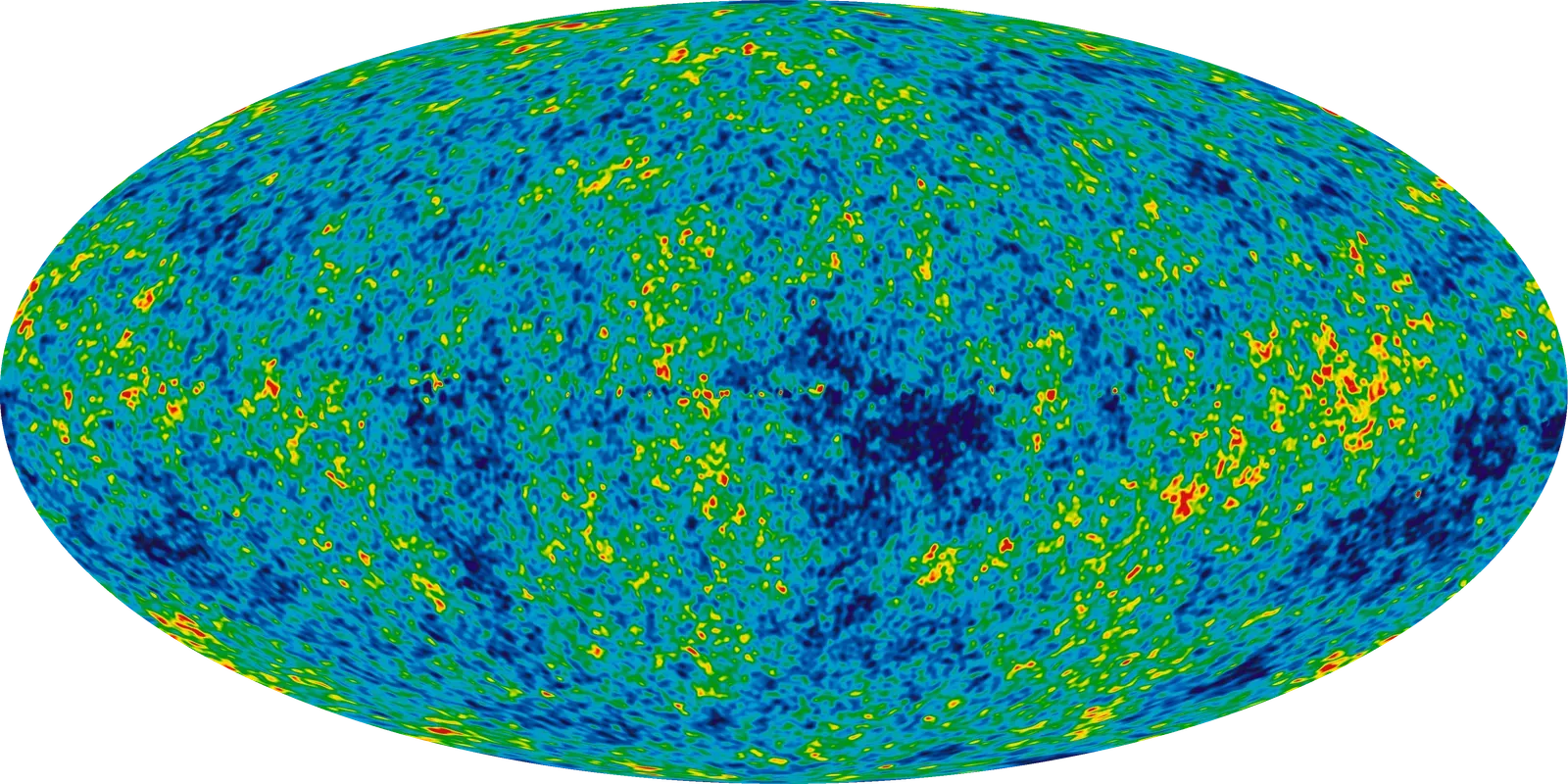
When you think about the Big Bang, you might imagine a huge explosion at some point in space. The reality is stranger: space itself expanded, and according to the idea of cosmic inflation, it did so at an absurdly fast rate in the earliest instant of the universe’s history. For a tiny fraction of a second, the universe may have blown up in size faster than light could cross it, stretching any initial irregularities almost completely flat. That’s why, when you look at the cosmic microwave background – the afterglow of the Big Bang – you see a universe that’s surprisingly smooth and uniform on large scales.
Here’s where your sense of reality really starts to bend: some versions of inflation suggest that your observable universe is just one bubble in a much larger, possibly infinite cosmic foam. In this picture, inflation never ended everywhere; it stopped in pockets that became universes like yours, while continuing beyond them. You could be living in a tiny island of reality, with other island-universes forever out of reach, each with its own properties and histories. You will probably never test that directly, but even taking the possibility seriously forces you to admit that your entire visible universe might be just a small local patch of something far bigger and stranger.
6. Entangled Particles: Spooky Connections Across Space
Entanglement sounds like science fiction until you realize it’s been demonstrated repeatedly in laboratories on Earth. When two particles become entangled, their properties are linked in such a way that if you measure one, you instantly know the corresponding property of the other, no matter how far apart they are. It’s not that information travels faster than light; instead, the whole system has to be described as a single quantum state that only snaps into definite values when you measure it. From your everyday viewpoint, it feels like two coins tossed miles apart somehow always land on matching sides the moment you look.
This weird connection isn’t just a party trick; it sits at the heart of technologies that researchers are working on right now, like quantum computing and quantum communication. In a sense, entanglement tells you that reality does not break down neatly into separate, independent pieces the way your intuition suggests. Things that were once together can remain linked in a way no classical picture can really capture. When you accept that a decision you make in one place can be perfectly correlated with an outcome far away, purely because of how a shared quantum state was set up, your usual sense of locality and cause-and-effect starts to feel incomplete.
Conclusion: Living In A Universe That Refuses To Be Ordinary
When you step back and take all of this in – black holes freezing time, neutron stars crushing matter, space bending light, vacuum boiling with activity, universes budding off other universes, and particles whispering to each other across vast distances – you realize your daily experience is just a very gentle corner of a wildly non-intuitive reality. You move through a world where the floor feels solid and time feels steady, but that’s only because you’re not usually close to an event horizon or staring directly at the afterglow of the Big Bang. The deeper you look, the more the universe shrugs off your expectations and follows its own bizarre but consistent rules.
Here’s the twist: instead of making you feel lost, these cosmic oddities can give you a strange sense of belonging. You’re not separate from this weird universe – you’re a small piece of it that has become aware enough to ask questions about how it works. The atoms in your body were forged in stars and shaped by the same physics that governs black holes and quantum foam. So the next time you look up at the night sky, you might find yourself wondering less whether the universe makes sense and more whether your own idea of “normal” was ever big enough to hold it. Which of these phenomena changes your idea of reality the most?