If someone told you that everything you see, touch, and feel might be a kind of cosmic projection, you’d probably roll your eyes. Yet that is more or less what a serious group of physicists has been exploring for decades: the idea that the universe could be holographic at its deepest level. You still live in what feels like a solid, three‑dimensional world, but underneath it all, reality might be written on a distant, lower‑dimensional “screen.”
This does not mean you are living in a cheap sci‑fi simulation or that your life is fake. Instead, it means the ultimate bookkeeping of reality – the information that defines every particle and every event – might be stored in a way that is very different from how you experience it. Once you lean into that possibility, everyday questions like “Where are you?” or “What is space?” suddenly feel a lot less simple than they used to.
What Scientists Actually Mean by a “Hologram”

When you hear “hologram,” you probably picture a floating 3D image in a movie or a fancy concert effect. In physics, though, a hologram is something deeper: you create a three‑dimensional illusion from information stored on a two‑dimensional surface. In the lab, a real optical hologram encodes the light pattern of an object onto a flat plate; when you shine light through it, you get a 3D image that seems to hover in space.
The holographic universe idea scales that up to a mind‑bending level. Imagine that every bit of information about your entire 3D universe – galaxies, people, coffee mugs, everything – is somehow encoded on a distant two‑dimensional boundary. What you experience as a solid, three‑dimensional reality would then be like the 3D image from that plate: completely real to you, but ultimately arising from a deeper 2D description. In that sense, you are not a cardboard cutout; you are more like the “image” in a very elaborate, very physical cosmic hologram.
How Black Holes First Hinted at a Holographic Universe
You might be wondering why anyone would take such an extreme idea seriously. A big part of the story starts with black holes, those regions of space where gravity is so intense that not even light can escape. When physicists worked out how much information a black hole can hold, they discovered something shocking: the information capacity seems to scale with the area of its surface, not with its volume.
That is totally opposite to your everyday intuition. If you fill a box with books, the information you can cram in depends on the box’s volume, not the size of its walls. Yet with black holes, the “information content” appears to be written on the event horizon, the two‑dimensional surface around the hole. That strange result suggested a radical idea: maybe any region of space is fundamentally described by information on its boundary. From there, the leap to a holographic universe stopped looking like wild fantasy and started to feel like a serious, if unsettling, possibility.
Enter the Holographic Principle: Reality as Information on a Boundary
From the black hole puzzle grew what many physicists now call the holographic principle. In simple terms, it says that the deepest description of a region of space can be given by information living on its boundary, like a cosmic version of a storage drive that sits on the edge instead of inside. If you take that seriously, then your familiar three‑dimensional world could be the “decoded” version of data that is fundamentally two‑dimensional.
You can think of it a bit like a high‑resolution video game running on a flat chip. The game feels like a 3D world to the characters inside it, but the core information lives on a 2D circuit board. In the holographic principle, your universe might be like that: the fundamental “code” lives on a far‑off surface, while your 3D reality is the rich, emergent experience built from that code. You are still real, your emotions are still real, but the bookkeeping underneath might be much stranger than your senses let on.
Where String Theory and Quantum Gravity Step In
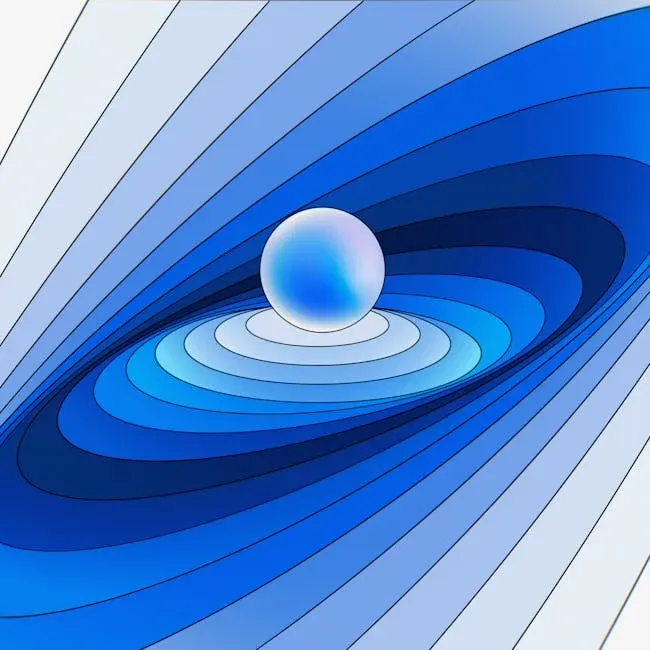
To see how this idea becomes more than just a metaphor, you have to step into the world of string theory and quantum gravity. String theory tries to describe all particles and forces as tiny vibrating strings, and in one famous result, physicists found a precise example where a universe with gravity is mathematically equivalent to a universe without gravity living on its boundary. In other words, a full 3D world with gravity can be described by a 2D theory on its edge.
For you, this matters because it is not just poetic language; it is an explicit mathematical duality. In that framework, every event in the “bulk” 3D space has a counterpart in the “boundary” 2D theory, and vice versa. The upshot is that gravity, spacetime, and maybe even the flow of time itself could emerge from more basic, non‑gravitational physics living on a lower‑dimensional surface. You are effectively living in the bulk side of a deep equation whose other side looks very different from anything your senses evolved to understand.
Did the Early Universe Leave Holographic Fingerprints?
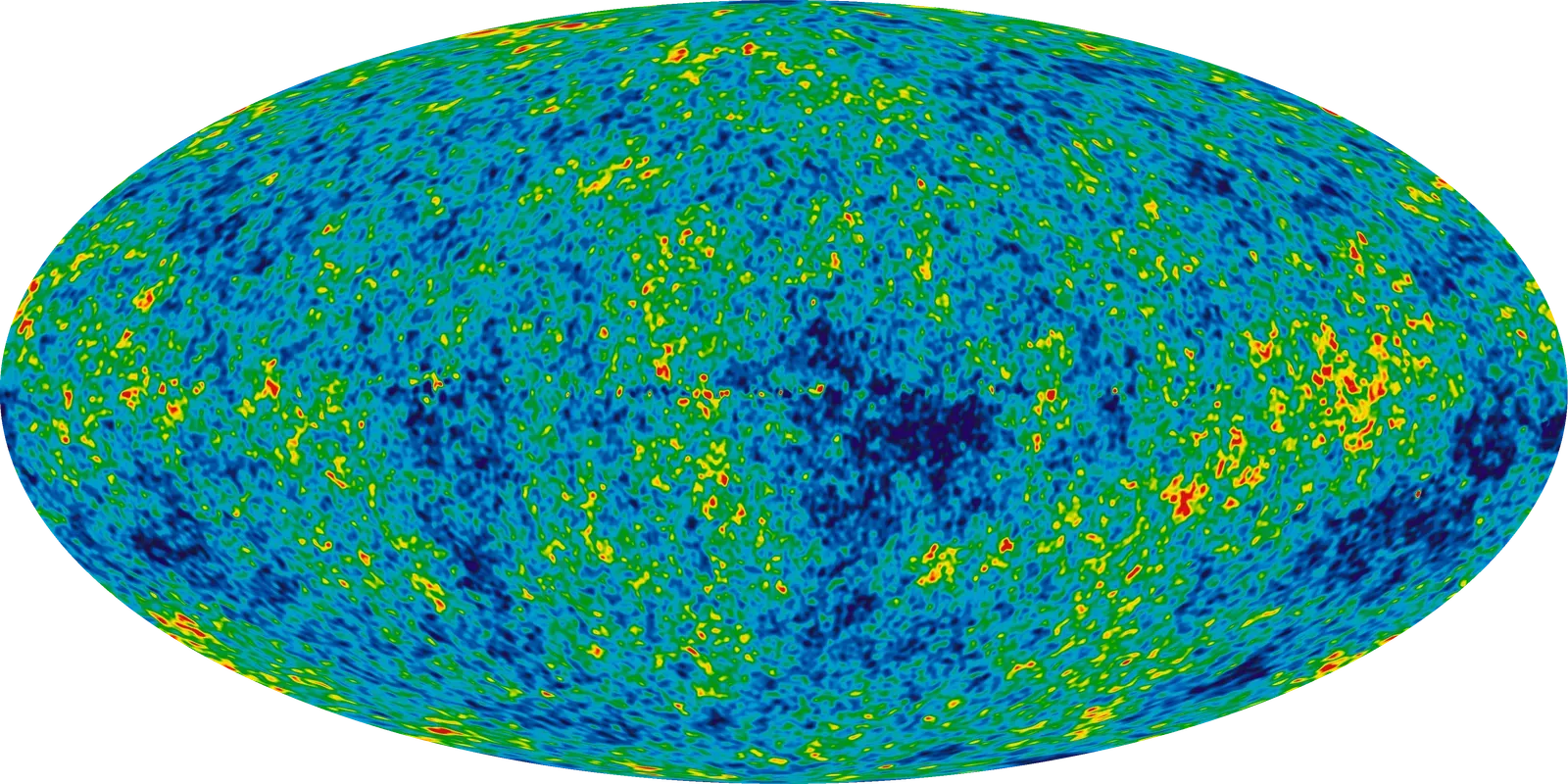
If the universe is holographic, you would expect that at least some traces of that structure might be visible in the oldest light you can observe: the cosmic microwave background. This faint afterglow from the early universe is like a baby picture of reality, carrying subtle patterns and fluctuations that cosmologists study in extreme detail. A few research groups have tried to see whether certain holographic models match those patterns as well as, or even better than, the standard cosmological picture.
So far, you are looking at intriguing hints rather than slam‑dunk evidence. Some analyses have suggested that a holographic description of the early universe can reproduce many of the observed features of that ancient light. Others have pushed back, arguing that the conventional model already fits the data extremely well and that the holographic tweaks are not clearly better. For now, you should treat talk of “proof” with real caution: the data are rich, but the interpretations are subtle, and the universe is not handing out easy answers.
What This Means for Space, Time, and Your Everyday Intuition
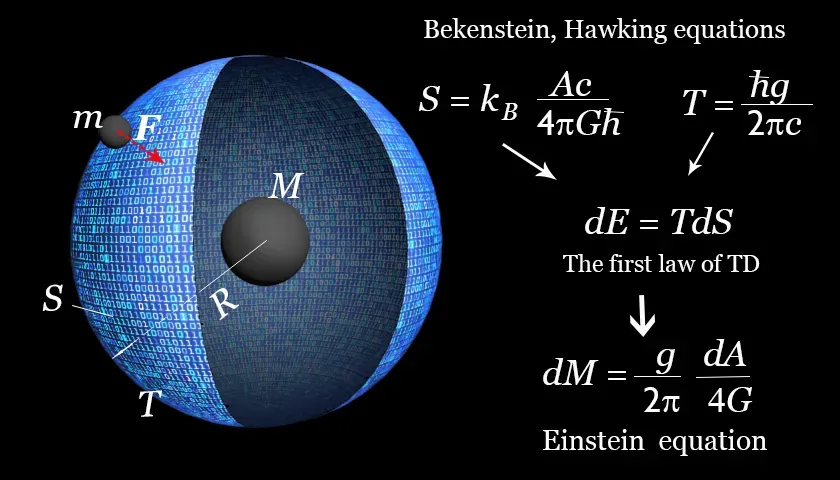
If the holographic principle turns out to be right in some deep way, it forces you to rethink what space and time actually are. Instead of being the hard stage on which physics plays out, spacetime could be more like a woven fabric emerging from underlying threads of information and quantum entanglement. In that picture, distances, volumes, and even the flow of time might be emergent properties, not the fundamental ingredients of the universe.
That sounds abstract, but it touches how you see yourself. You think of yourself as a body moving through a three‑dimensional world over time, yet at a foundational level, you might be a kind of pattern in a vast informational structure. It is like realizing that the character in a novel is really a pattern in ink on paper or pixels on a screen; the story is still meaningful, but its true form is different from how it feels inside the plot. Your memories, relationships, and choices would still matter, but the canvas they play out on could be far stranger than your everyday experience suggests.
How a Holographic Universe Differs From a Computer Simulation
It is tempting to mash the holographic universe idea together with the popular “we’re living in a simulation” story, but they are not the same thing. A simulation argument says that your entire reality is being run on some external computer by advanced beings, like characters inside an ultra‑high‑end video game. The holographic principle, by contrast, is about how the laws of physics themselves might be organized; it does not require any programmer, external machine, or hidden civilization pressing “start.”
In a holographic universe, the “hardware” and “software” are just different ways of talking about fundamental physics. You are not some fake avatar in somebody else’s entertainment; you are a real participant in a universe whose underlying description happens to use fewer spatial dimensions than you experience. If anything, the holographic picture preserves the seriousness of your reality while pointing out that your usual mental picture of space, time, and information is probably too simple. You are not trapped in a cosmic prank; you are living in a genuinely strange, but still very real, cosmos.
How You Can Make Sense of All This Without a Physics Degree
Faced with ideas like this, it is easy to feel that unless you can plow through advanced equations, you have nothing meaningful to say or think. But you do not need to master string theory to appreciate what is at stake. At its heart, the holographic universe story is about how information, gravity, and quantum mechanics fit together, and how limited your day‑to‑day intuition can be when it tries to make sense of the cosmos.
You can treat it as a kind of mental stretching exercise. When you let yourself imagine that your 3D world might arise from a 2D description, you start to see how flexible the connection is between what is fundamental and what is experienced. Just as a song can live as vibrations in air, lines on sheet music, or a digital file, the universe itself might admit multiple, equally valid descriptions. Thinking that way does not make you an expert, but it does make you a more curious, humble participant in a universe that keeps refusing to fit inside simple stories.
So, Is the Universe Really a Hologram? A Grounded Conclusion
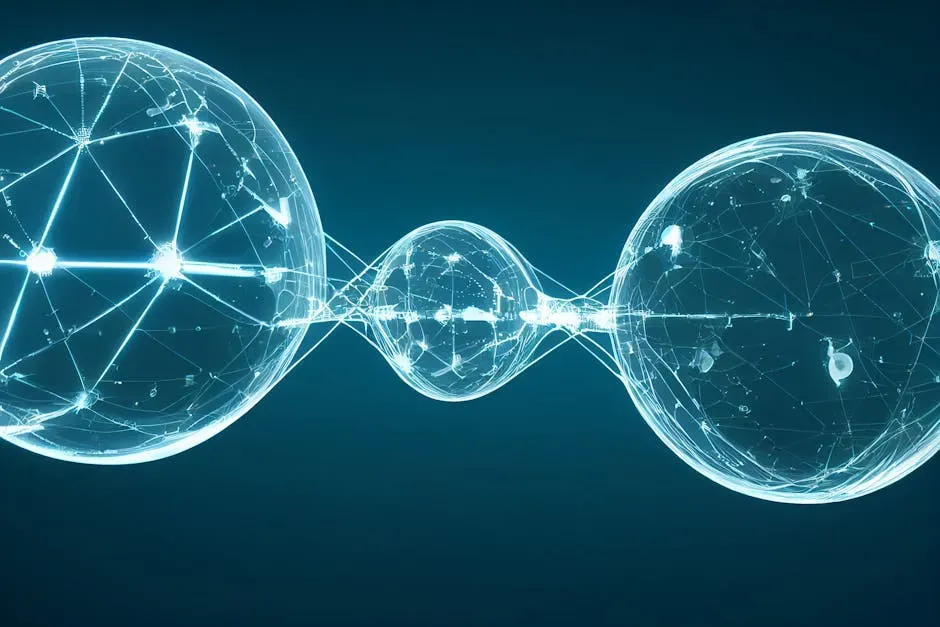
When you hear that scientists say the universe might be a hologram, you should read the word “might” in big, bold letters. There is serious mathematical work and real physical motivation behind the holographic principle, especially from black holes and quantum gravity, but there is not a clear‑cut experimental verdict yet. Right now, it is best to see it as one of the most compelling attempts to solve deep puzzles about gravity, quantum mechanics, and information, not as a settled description of your everyday world.
Still, even as a possibility, it changes how you can think about reality. It nudges you to question whether space and time are as basic as they seem, and whether everything you are is ultimately a pattern of information written in a way you are not built to see. You do not have to pick a side today, but you can carry the question with you the next time you stare at the night sky: if the universe really is a hologram, what does that say about your place in it – and would you have guessed it could be that strange?