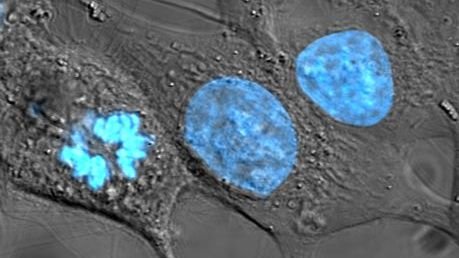

You carry around a hidden universe inside you that you never see. Right now, as you read this, armies of cells are racing around, nanoscopic machines are spinning, and tiny chemical signals are shaping how you feel, think, and heal. You look in the mirror and see one body, but under a microscope, you’re more like a bustling galaxy made of living, moving parts.
When you zoom in far enough, your body stops looking familiar and starts looking like science fiction. You find structures that behave like high-tech engines, defense systems that act smarter than most video games, and quiet little caretakers that keep your brain from burning out. Once you know they’re there, it’s hard not to feel a little awe every time you think about your heartbeat, your thoughts, or even a tiny paper cut.
1. Mitochondria: Your Microscopic Power Plants
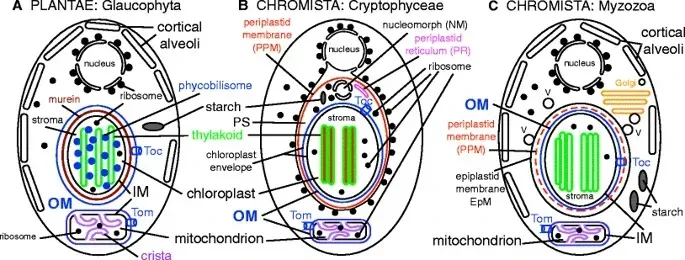
Inside almost every one of your cells, you’ve got hundreds or even thousands of tiny structures called mitochondria quietly keeping you alive. You can think of them as your personal fleet of power plants, constantly turning the food you eat and the oxygen you breathe into usable energy. Every time you blink, take a step, send a text, or form a memory, mitochondria are paying the energy bill behind the scenes.
They do this by running a kind of miniature assembly line on their folded inner membranes, passing along electrons in a finely tuned chain and using that process to make ATP, the main energy currency your cells spend. What’s wild is that mitochondria have their own DNA and were originally free-living bacteria that your ancient ancestor cells once absorbed. In a very real sense, you are powered by former microbes that became permanent roommates, and without their microscopic hustle, you’d be out of energy in seconds.
2. Cilia: Microscopic Hair That Quietly Keep You Alive
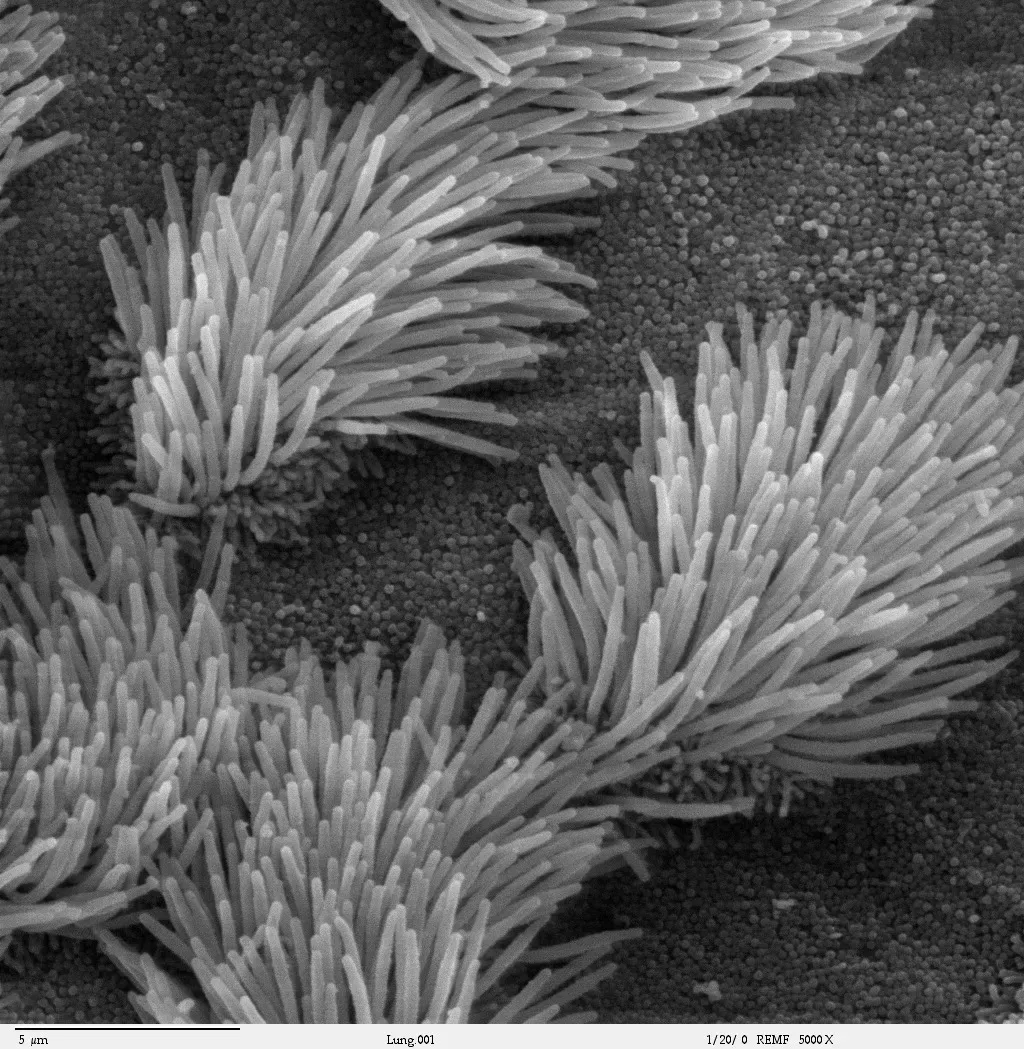
If you could shrink down and walk along your airways, you’d see forests of tiny hair-like structures called cilia waving in precise, coordinated patterns. These cilia line your respiratory tract and move in a rhythm that looks almost like synchronized swimming, sweeping mucus and trapped dust or microbes up and out of your lungs. Every breath you take brings in microscopic threats, and your cilia are the quiet janitors that keep the place clean.
You also rely on specialized cilia in your inner ear to help you hear and keep your balance. These sensory cilia bend in response to sound waves or movement and convert that bending into electrical signals your brain understands as noise or position. When these tiny structures are damaged or genetically faulty, you can end up with recurring lung infections, hearing problems, or dizziness. You almost never think about cilia, but they are working nonstop, like invisible caretakers, to keep your inner world in order.
3. Synapses: Microscopic Bridges That Make You “You”
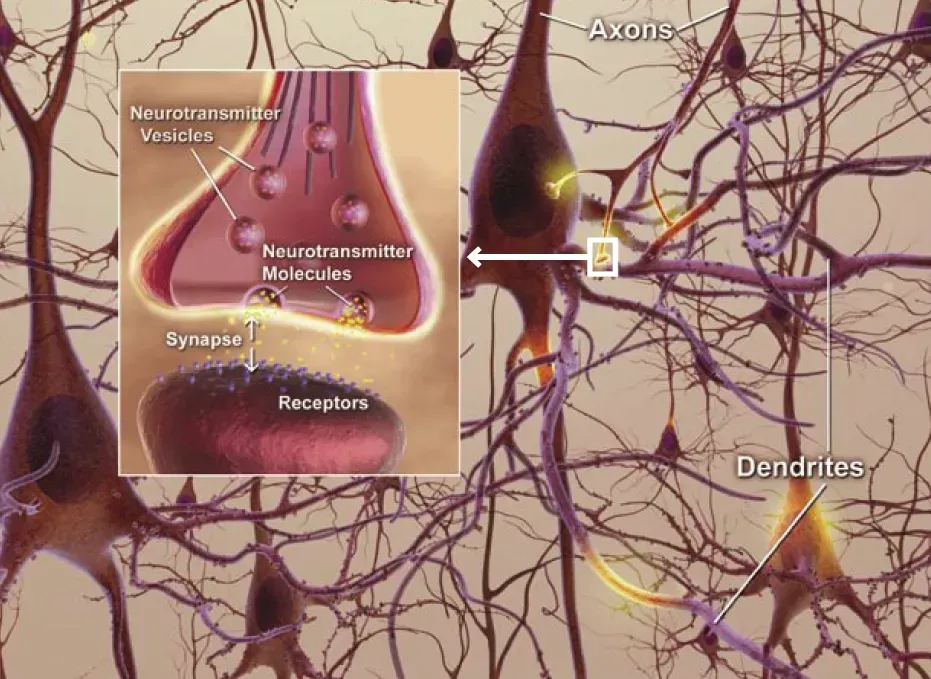
Your thoughts, memories, habits, and feelings all rely on structures you’ll never see with the naked eye: synapses. A synapse is the tiny gap where one nerve cell passes a signal to the next using chemical messengers called neurotransmitters. Each neuron in your brain can form thousands of these connections, and altogether you’re looking at trillions of synapses buzzing with activity every moment you’re awake and even while you sleep.
When you learn a new skill or remember a special moment, you’re actually changing synapses – some are strengthened, some are weakened, and some new ones are formed. This process, called synaptic plasticity, is the reason you can improve at playing an instrument, pick up a new language, or recover abilities after a brain injury. At a microscopic level, tiny changes in receptor numbers, shapes, and positioning at these junctions slowly sculpt who you are. The idea that your entire personality and life story rests on unimaginably small gaps between cells is both unsettling and incredibly beautiful.
4. Microvilli: Your Nutrient-Absorbing Velvet Carpet
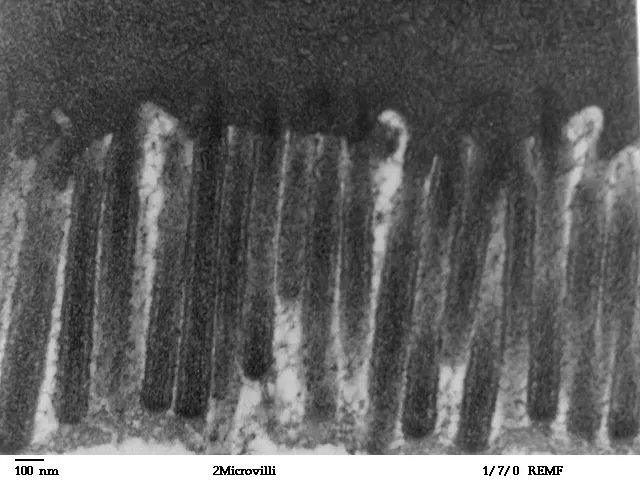
Every time you eat, you probably think about flavor, fullness, or maybe calories, but you almost never think about how the nutrients actually get into your body. For that, you rely on microvilli: countless tiny finger-like projections that cover the surface of your small intestine. Under the microscope, they look like a dense velvet carpet, massively increasing the surface area so your body can pull in vitamins, sugars, fats, and amino acids efficiently.
Each microvillus is packed with enzymes and transporters that help break down and ferry nutrients into your bloodstream. If you flattened out all of the folds, villi, and microvilli in your intestines, you’d get an area comparable to a small apartment, all dedicated to absorbing what you need to stay alive. When microvilli are damaged, as happens in certain digestive diseases, you can feel exhausted, lose weight unintentionally, or become deficient in key nutrients. So the next time you enjoy a meal, remember there’s an unseen microscopic landscape working hard to turn that food into fuel.
5. The Glycocalyx: Your Invisible Protective “Sugar Coat”
![5. The Glycocalyx: Your Invisible Protective “Sugar Coat” ([1], CC BY-SA 3.0)](https://nvmwebsites-budwg5g9avh3epea.z03.azurefd.net/dws/c50e821d9ce229b0a571566979622baf.webp)
Covering the outer surface of many of your cells is a delicate, gel-like coating called the glycocalyx, made up of sugars attached to proteins and fats. You can think of it as a microscopic forest of sugar chains that gives each cell a kind of chemical identity card. This sugar coat helps cells recognize each other, stick in the right places, and avoid unwanted contact, a bit like name tags at a huge, crowded event so everyone knows who’s who.
In your blood vessels, the glycocalyx acts like a protective cushion between flowing blood and the vessel wall, helping to regulate inflammation, clotting, and the movement of substances in and out of the bloodstream. When this layer is damaged by things like chronic high blood sugar, severe infections, or long-term inflammation, your vessels can become more fragile and reactive. You rarely hear about the glycocalyx, yet it quietly influences how well your circulation, immune responses, and even organ health hold up over time. It’s a reminder that sometimes the most important shields you have are the ones you never see.
Conclusion: A Hidden Universe Inside You
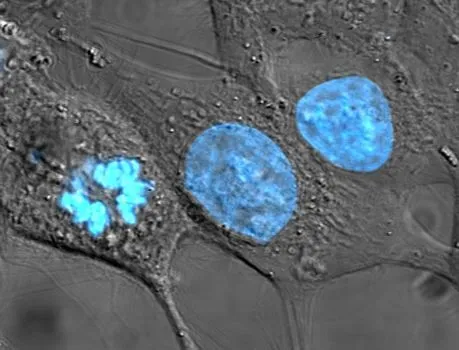
When you zoom in on your own biology, you stop being just “a person” and start looking like an entire ecosystem built from microscopic wonders. Mitochondria keep the lights on, cilia clean and sense your world, synapses weave your thoughts, microvilli feed you at a cellular level, and the glycocalyx shields and organizes your cells. None of these structures ever show up in the mirror, but they decide how much energy you feel, how clearly you think, how well you fight off illness, and how gracefully you age.
Knowing they exist changes how you see yourself: you’re not simply one body, you’re millions of tiny players working in breathtaking coordination every second. It can make everyday choices – like sleep, food, movement, and stress – feel less abstract, because you know exactly what you’re protecting down at the microscopic level. Next time you feel ordinary, remember the hidden engineering operating just under your skin. If you could peer into your own cells for five minutes, do you think you’d ever take your body for granted again?