
Imagine waking up one morning and realizing that the way you experience reality, remember your past, make decisions, and even feel like “you” is not what you thought it was. Modern neuroscience has quietly been rewriting the story of the human brain, and a lot of what you grew up believing is either incomplete or completely off. When you really let these discoveries sink in, it does something strange: you start to question not just how your brain works, but how you live your life day to day.
As you read through these five discoveries, try to notice what happens in your own mind. You may catch yourself arguing, resisting, or having an instant “that’s so true” reaction. That, in itself, is your brain updating its own internal model. You are about to see that your brain is less like a hard-wired machine and more like a living, changing story engine that never stops rewriting who you are.
Your Brain Constantly Rewrites Your Memories
You were probably taught to think of memory like a mental photo album, where your brain stores snapshots of your life and pulls them out unchanged whenever you remember them. In reality, your memory works more like a creative writer doing revisions every time you open the file. Each time you recall a moment, your brain actively reconstructs the memory using bits of stored information plus your current mood, beliefs, and expectations. Then it saves this updated version back again, which means the memory you feel so sure about may already be a polished remix rather than an untouched original.
Once you grasp this, arguments about “who remembered it right” start to look very different. You and someone else can both feel absolutely certain about the same event and still be wrong in different ways. You are not lying; your brain is just doing what it naturally does, stitching together a coherent story. This is why writing things down, keeping journals, or using photos as anchors can help you stay closer to what actually happened. You are not preserving a perfect truth, but you are giving your brain more raw material to reconstruct the past with fewer unintentional edits.
Your Attention Is Much More Limited Than You Think

You probably feel like you are taking in the world in a rich, continuous stream, but your brain is actually doing something far more selective and ruthless. At any given moment, your senses are bombarding you with far more information than you could ever consciously handle, so your brain throws most of it away and focuses on a tiny slice. You only notice what your brain has decided is important based on your goals, fears, habits, and expectations. This filtering is so aggressive that you can literally look straight at something and not see it if your attention is locked onto something else.
When you understand this, distractions stop feeling like minor annoyances and start looking more like quiet sabotage. If you are constantly checking your phone, juggling tabs, or half-listening, your brain never gets a chance to give anything full attention, and the quality of your thinking drops. On the other hand, when you deliberately narrow your focus – turning off notifications, closing extra windows, even just putting your phone in another room – you are not being dramatic; you are giving your brain the conditions it needs to do deep, meaningful work. You cannot expand your attention much, but you can fiercely protect the little bit you have.
Your Brain Changes Itself Throughout Your Life
You might have heard people say that young brains are flexible and older brains are stuck in their ways, but that is only a half-truth. Your brain remains capable of changing its structure and wiring throughout your entire life, a property called neuroplasticity. Whenever you learn a new skill, repeat a habit, or even shift how you think about something, you are literally shaping the connections between your brain cells. Some connections are strengthened, some are weakened, and over time your brain’s physical layout comes to reflect what you do and think most often.
Once you really take this in, excuses like “that is just how I am” start to lose some of their power. If you practice worrying, your brain gets better at worrying; if you practice gratitude, problem solving, or playing an instrument, it gets better at those instead. This does not mean change is effortless or instant – far from it – but it does mean your brain is not fixed in stone at any age. When you repeat small, consistent behaviors, you are not just building habits; you are carving new pathways in your own nervous system, turning your chosen patterns into your new default setting.
Your Emotions Drive More Decisions Than Logic Does

You probably like to think of yourself as a mostly rational person who occasionally gets emotional. The reality is almost the reverse: your emotional systems are constantly shaping your decisions, and your rational brain often shows up afterward to explain and justify what you already felt like doing. Your brain evolved to keep you alive first and to make you feel logically consistent only later, so it gives strong, fast priority to signals like fear, desire, and social approval. Even in situations where you believe you are being purely analytical, subtle emotional cues are nudging you toward certain choices.
When you recognize this, you can stop pretending that more facts alone will always change your mind or someone else’s. If your body is tense, your heart is racing, or you feel socially threatened, your brain is going to tilt your thinking whether you like it or not. Instead of fighting this, you can work with it by first calming your nervous system – breathing more slowly, moving your body, or taking a break – and then revisiting the decision. You will often find that once your emotional storm eases, your perspective shifts and options you could not see before start to feel obvious and even simple.
Your Sense of “Self” Is a Story Your Brain Keeps Updating

You walk around feeling like there is a solid, unchanging “you” inside your head, watching your life unfold like a movie. Neuroscience suggests something more strange and, in a way, more liberating: your sense of self is more like a story your brain continually tells to tie together your memories, feelings, and actions. Different networks in your brain light up when you think about your past, your future, or how others see you, and together they create the experience of a single, continuous person. But this story is always being revised as you have new experiences and adopt new beliefs.
Seeing yourself this way can be uncomfortable at first – like finding out the ground under your feet is more flexible than you thought – but it also opens a doorway. If your brain is telling a story about who you are, you are not stuck with one permanent script. You can start to question old labels, experiment with new roles, and notice which stories you keep repeating that make you feel small or stuck. By changing what you focus on, how you talk to yourself, and the actions you practice, you invite your brain to rewrite the character of “you,” not as an act of pretending, but as a natural extension of how it already works.
Your Brain Predicts the World Before You Even Notice It
You might assume that your brain simply receives information from your senses and then reacts to it, like a computer processing input after it arrives. In reality, your brain spends a surprising amount of energy predicting what is going to happen next and then checking whether those predictions are right. It constantly guesses what you are about to see, hear, and feel and then fills in gaps so your experience feels smooth and continuous. This is why you can read messy handwriting, understand a muffled sentence, or quickly recognize a friend’s face in a crowd even when you only glimpse part of it.
This predictive style of processing has a powerful side effect: you do not just see the world as it is; you see it as your brain expects it to be. If you walk into a situation convinced it will be hostile, your brain is primed to notice every tiny sign of threat and overlook anything safe or kind. The same goes for expecting failure, rejection, or boredom. When you deliberately shift your expectations – by imagining a better outcome, rehearsing a different interpretation, or choosing a more generous assumption – you are not being naive; you are feeding your prediction engine different starting points. Over time, this can change not just how you feel, but what you actually notice and how you respond in real situations.
Conclusion: Let These Discoveries Change How You Use Your Mind
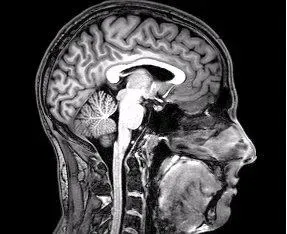
Once you know that your memories are fluid, your attention is limited, your brain keeps changing, your emotions steer more than you realize, your self is a story, and your mind is predicting ahead of reality, it becomes hard to keep living on autopilot. You start to see how many of your “fixed” traits are really well-practiced patterns and how many of your “facts” about yourself are just familiar narratives your brain has rehearsed for years. Instead of feeling like an exposed flaw, this can become a quiet source of power, because it means you are not as stuck as you might have feared.
You can choose to protect your attention like a scarce resource, to practice the thoughts and habits you want your brain to wire in, and to question the stories that make you smaller than you need to be. You will still be biased, emotional, and gloriously human, but now you know more about the machine behind the curtain. The real shift happens not when you learn these discoveries, but when you start making small, consistent choices that take them seriously. So now that you know how differently your brain really works, what will you do with that knowledge the next time you catch your mind in action?