If you’ve ever stared at a clock and suddenly felt that time was somehow strange, slippery, or even unreal, you’re not alone. The deeper you dig into what time actually is, the more the solid ground of everyday experience crumbles under your feet. Physics, philosophy, and neuroscience have all tried to pin time down, but every time they get close, the concept seems to twist away like smoke.
In your daily life, time feels obvious: seconds tick by, days pass, birthdays come and go. But beneath that familiar flow lies a maze of unanswered questions. You’re about to walk into that maze. Some of these questions might never be fully solved, at least not with the tools you have today, but exploring them changes how you see reality itself. Ready to feel your brain stretch?
1. Is Time Actually Real, Or Just a Mental Illusion?
You probably treat time as something out there in the world, like mountains or oceans: a real dimension that exists whether you notice it or not. But many scientists and philosophers argue that what you call “time” might be more like a mental organizing tool, a way your brain strings together events so your life makes sense. Your memories give you a feeling of past, and your expectations give you a sense of future, but you never directly experience anything except a constantly changing “now.”
When you look closely, you realize you never hold a past event in your hand or walk into a future event like a room. You only reconstruct them in your mind. Some physicists suggest that the universe’s deepest laws do not actually require a flowing time at all; instead, they describe static relationships between things. In that picture, your sense of time passing could be similar to how a movie projector turns still frames into motion – except the projector is your brain, stitching together snapshots of reality into a story that feels like a continuous flow.
2. Why Does Time Only Seem To Flow Forward?
Every morning you wake up with the same basic expectation: time will move forward. You remember yesterday but not tomorrow; you get older instead of younger; coffee cools down instead of heating itself up on the table. This one-way direction is often called the “arrow of time,” and you instinctively trust it. But when you zoom down to the level of atoms and fundamental particles, the basic laws of physics do not clearly prefer past over future.
So where does the arrow come from? One leading idea connects it to entropy, a measure of disorder. You live in a universe that started in a very low-entropy, highly ordered state, and it has been sliding toward higher entropy ever since. That sliding gives you the feeling of things aging, breaking, and spreading out. But you still face a deep mystery: why did the universe begin in such an improbably ordered state in the first place? Until you can answer that, the one-way flow of time remains more of a giant question mark than a closed case.
3. Is The Past Still “There” Somewhere?

Think about a childhood memory: a birthday, a school hallway, a friend’s face. Intuitively, you feel that moment is gone, erased from the universe except for traces in your brain and a few fading photos. But some interpretations of physics suggest a much stranger picture: past, present, and future could all coexist in a four-dimensional “block universe,” where every event is like a location in spacetime, permanently etched into reality. In that view, your life is not a line being drawn in real time but a whole path that already exists.
If that’s true, what you call “now” is just the slice of spacetime your consciousness is currently focused on, like a flashlight beam scanning along a fixed road. The past would still be “there,” just not accessible to you, and so would your future. This idea clashes with your everyday sense of freedom and change, and it raises troubling questions: if your whole timeline is already laid out, are you really choosing anything? Or are you simply experiencing what is already written, one moment at a time?
4. Does The Future Already Exist, Or Is It Truly Open?

You probably feel like the future is a realm of possibilities, not a completed script. You make decisions, change your mind, and imagine different outcomes as if they are all still up for grabs. Yet some mathematical models of spacetime treat the future as just another region, as fixed as the past. That clashes with your everyday sense of uncertainty and with the way you talk about chance, risk, and hope.
On the other hand, quantum physics tells you that, at microscopic scales, outcomes genuinely seem undetermined until they happen. Some interpretations say there’s real randomness, others suggest that all possible outcomes play out in different branches of reality. Either way, you’re left with a haunting question: when you stand at a crossroads in your life, are you shaping the future in that moment, or simply stepping into a part of the universe that already exists beyond your view?
5. Why Do You Experience Time So Differently From Clocks?

Think back to a boring meeting or a long queue at the airport; every minute felt inflated, as if the clock were mocking you. Then remember a great night with friends or a thrilling trip, and it seemed to be over in a blink. Your brain clearly tracks time in a way that bends and warps depending on emotion, attention, and context. Meanwhile, the clock on the wall just ticks away steadily, cold and indifferent to your mood.
Neuroscience has uncovered some clues: your sense of duration seems connected to how much information your brain is processing and how intensely you focus on something. Highly detailed, emotionally charged experiences tend to feel longer in memory, even if they felt fast in the moment. But there is no single “time center” in your brain, no master clock you can point to. Instead, you rely on a messy patchwork of systems that estimate when things happen and how long they last. That’s why your inner time and physical time so often disagree, and why science still cannot give you a complete theory of subjective time.
6. What Actually Happens At The Beginning Of Time?
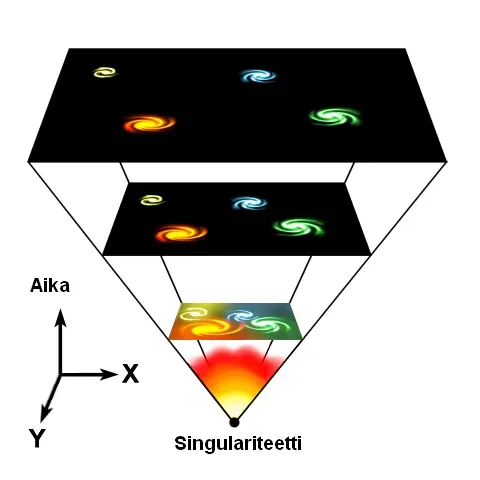
When you hear about the Big Bang, you might picture an explosion in empty space, a cosmic firework starting from a single point. But that image is misleading. According to modern cosmology, the Big Bang was not an explosion in space; it was the rapid expansion of space itself. Go back roughly thirteen and a half billion years in the math, and densities and temperatures rise toward extremes that current theories cannot fully handle. At some point, your equations simply give up.
You can talk about fractions of a second after the Big Bang with some confidence, but the question of what, if anything, came “before” that is still wide open. Did time itself begin with the Big Bang, making the phrase “before time started” as meaningless as “north of the North Pole”? Or did your universe emerge from a previous phase, a bounce, or a larger multiverse? Right now, you do not have direct data about those earliest instants, only speculative models. The true origin of time may remain hidden behind a horizon you can never see past.
7. Why Do Gravity And Quantum Physics Treat Time So Differently?

In your daily world, time feels unified and smooth, but your best physical theories slice it up in incompatible ways. Einstein’s theory of relativity treats time as part of a flexible spacetime fabric that bends around massive objects. There, time can slow down or speed up depending on how fast you move or how strong gravity is. Atomic clocks flown on planes or placed on mountains really do tick at slightly different rates, proving that time is not universal.
Quantum mechanics, which rules the microscopic world, often sneaks time into its equations as an external background parameter, something that just steadily flows while particles dance and interact. When you try to merge these two frameworks into a single theory of quantum gravity, their different attitudes toward time crash into each other. Some proposals even suggest that time itself might vanish from the deepest equations, emerging only at larger scales like a statistical mirage. Until you can reconcile these views, your understanding of time is split right down the middle.
8. Can You Really Travel Through Time?
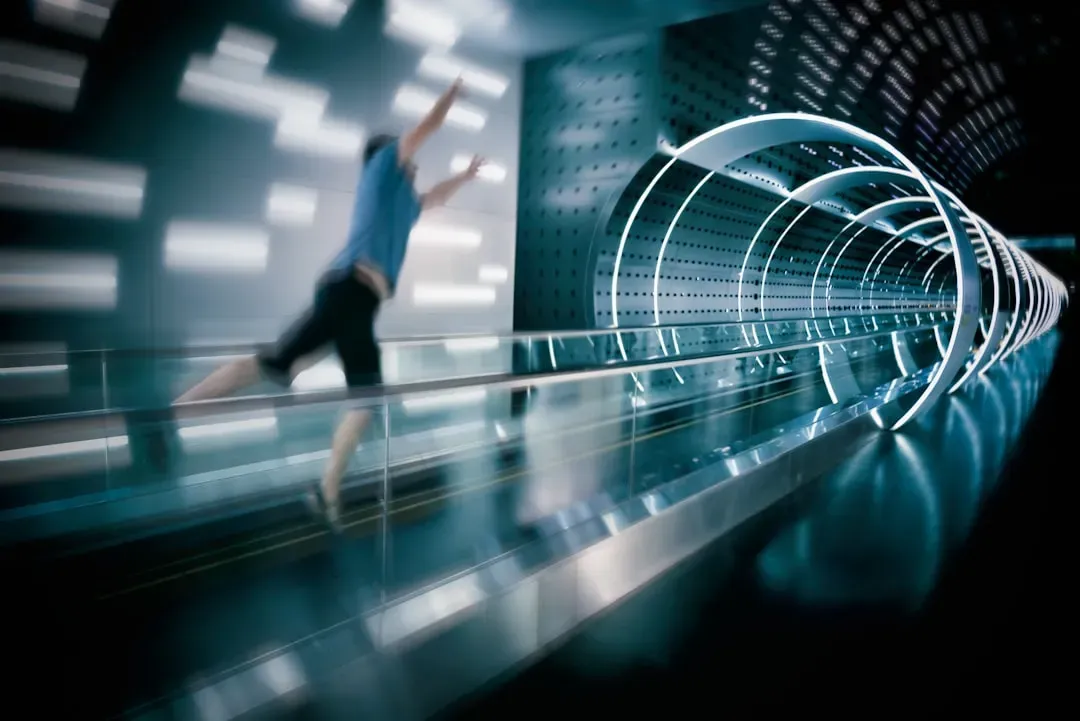
Stories about time travel are everywhere, from novels and movies to late-night conversations that get way too intense. Physics does give you some tantalizing hints that time travel, at least in principle, might not be completely impossible. Traveling to the future is actually straightforward: if you move at speeds close to light or spend time near a very strong gravitational field, relativity predicts that less time passes for you than for people far away. In that sense, astronauts on high-speed journeys would “jump” into the future compared to those who stayed home.
Traveling to the past, though, is where things get seriously strange. Certain theoretical solutions to Einstein’s equations allow for closed time loops, where you could in theory return to an earlier moment. But these scenarios come with paradoxes, like the classic situation where you prevent your own grandparents from meeting. Some researchers argue that physics would somehow protect consistency, blocking paradoxical trips, while others think the required conditions are impossible in the real universe. As of now, you have no experimental evidence that backward time travel is more than a mathematical curiosity.
9. Is There A Smallest Possible Unit Of Time?

When you divide a second into smaller and smaller fractions, it feels like you could keep going forever: milliseconds, microseconds, nanoseconds, down and down without end. But some ideas in theoretical physics suggest there might be a fundamental limit, a shortest possible “tick” called the Planck time. This interval is incredibly tiny, far beyond anything you can currently measure, and it arises when you combine constants from quantum mechanics and gravity into one timescale.
If time really comes in tiny, indivisible chunks, then your picture of a continuous flow would only be an approximation, sort of like a digital screen that looks smooth at a distance but turns pixelated up close. However, you do not yet have experiments that directly probe such extreme scales, and alternative theories imagine time remaining continuous even at the deepest level. Until you can test this realm, the question of whether there is a smallest unit of time remains one of the biggest unknowns hiding in the smallest possible place.
10. Why Do Conscious Moments Feel Like A Moving “Now”?
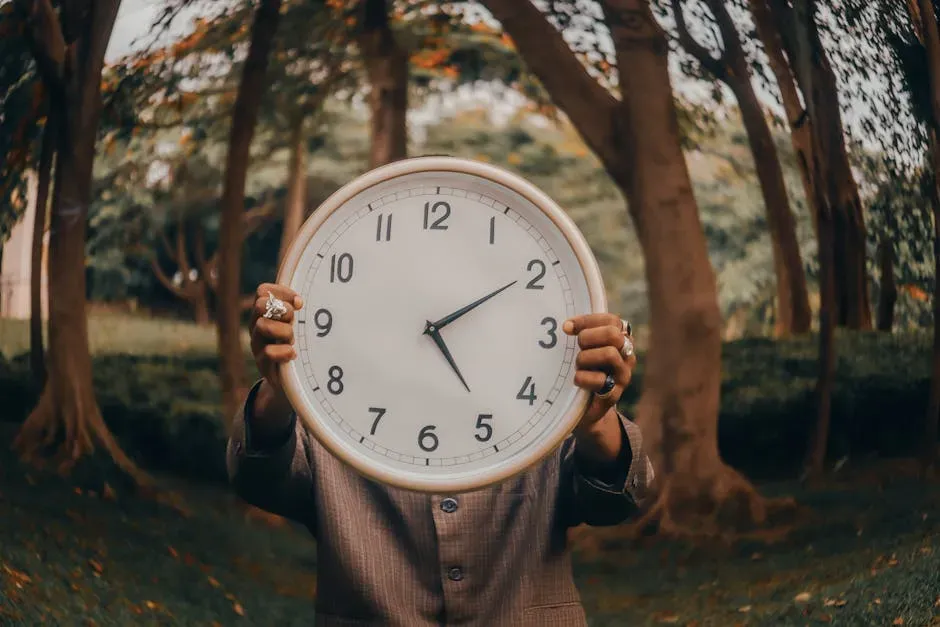
You live your entire life inside what feels like a sliding window of awareness, a constantly updating “now” that absorbs new sights, sounds, and thoughts every moment. Physically, your brain is just processing electrical signals and chemical reactions spread across space and time. Yet from the inside, you experience a unified present, a sense that reality is unfolding in real time. That simple feeling might be one of the deepest puzzles of all.
Some neuroscientists think your brain stitches together events over short intervals, smoothing them into a coherent present, the way a film editor blends frames into a scene. Others emphasize feedback loops and prediction: your brain is always guessing what will happen next and updating those guesses, and that dance of expectation and correction becomes your experience of the “now.” But there is still no agreed explanation for how subjective time arises from physical processes. You can describe the mechanics, but the raw feeling of living through time – the sense that moments come and go – is still something science struggles even to define clearly, let alone fully explain.
Conclusion: Living With The Mystery Of Time

When you pull all these questions together, you start to see how fragile your everyday sense of time really is. You walk around believing that time is simple: it flows forward, clocks measure it, and your memories sit behind you while your future waits ahead. Yet the more you learn, the more that picture frays. You discover that physics does not fully agree on what time is, that your brain bends time into strange shapes, and that the origin, direction, and even existence of time as an independent thing are still up for debate.
Instead of settling everything, science has turned time into one of the most profound mysteries you can explore. And maybe that is the real gift here: you get to live inside a phenomenon that the sharpest minds still do not completely understand. Next time you glance at a clock or feel a moment stretch or vanish, you might sense just a bit of that cosmic strangeness underneath the routine. Now that you’ve peeked behind the curtain, how will you look at your own hours and days from here on out?