
Most people assume science has already solved the universe’s biggest riddles – that somewhere in a lab, a formula explains everything from starlight to human biology. That assumption is wrong, and the deeper you dig, the stranger it gets.
Signals with no source. Stars that dim for no reason. Genetic material that shouldn’t exist. These aren’t fringe theories – they’re peer-reviewed, published, and still unresolved. Here’s what the world’s top scientists actually say about the 22 discoveries that continue to break their models, and just wait until you get to the one about sugar pills.
#1 – The Wow! Signal That Refuses to Die
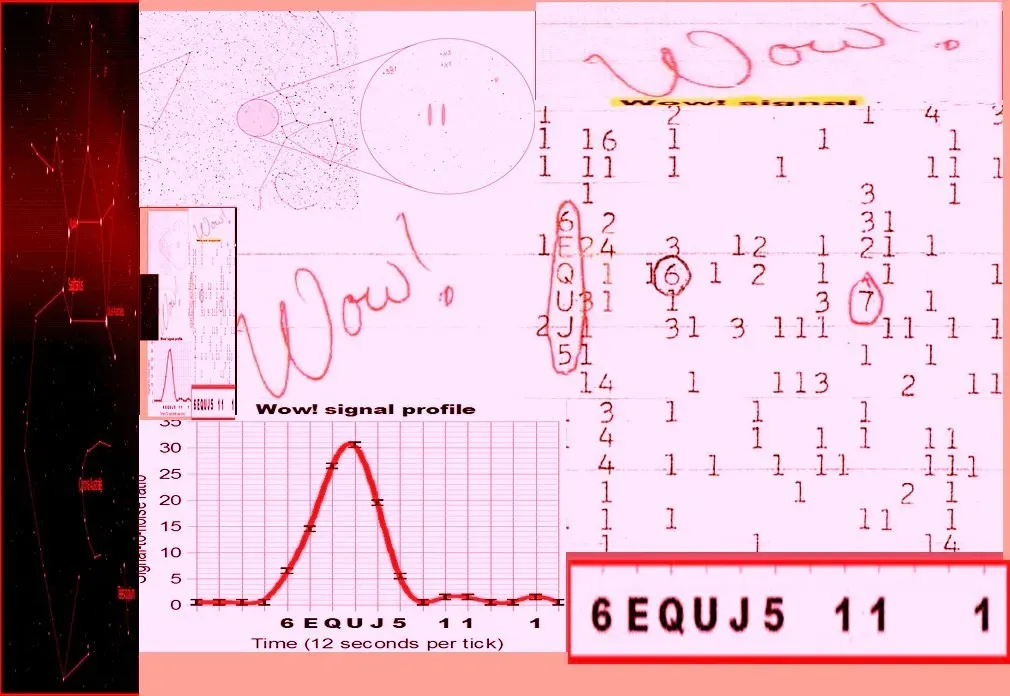
In 1977, a radio telescope in Ohio picked up something that still hasn’t been fully explained nearly five decades later.
For 72 seconds, the Big Ear Radio Telescope picked up a burst of radio waves that matched every expectation of what an extraterrestrial transmission might look like. Detected by Jerry Ehman, a researcher at Ohio State University’s Big Ear facility, the signal arrived on a specific frequency, 1420 megahertz, the same wavelength scientists theorize advanced civilizations would use for communication. The telescope never picked up anything like it again during its entire operational life.
Wow!
Jerry Ehman, circled in red on the original signal printout
Most people don’t realize that a 2024 study tried to pin the signal on a natural cosmic event instead of aliens. Lead author Abel Méndez, director of the Planetary Habitability Laboratory at the University of Puerto Rico, for many years dismissed the Wow! signal as a mere instrumental glitch, but after scrutinizing several somewhat Wow!-like signals found unexpectedly in archival data, he and his colleagues now suspect the famous yawp was caused by a very rare kind of astrophysical anarchy. Even the researcher pushing the new theory admits the details are “still pretty scant.” And if a single radio blip can rattle astronomers for fifty years, wait until you see what one flickering star did to them.
#2 – Tabby’s Star and Its Impossible Dimming

A single star 1,500 light-years away briefly convinced serious scientists they might have found an alien megastructure.
KIC 8462852 occasionally dims by as much as 20 percent, suggesting that there is some material in orbit around this star that blocks its light, and for various reasons, it’s obvious that this material is not simply a planet. That’s an enormous drop – a Jupiter-size planet would cause only about a one percent drop in brightness. The scale of the dimming was so extreme that the SETI Institute pointed its radio dishes directly at the star to check for artificial signals.
Turns out, the leading explanation now involves clouds of dust rather than alien engineering. After years of speculation involving scenarios ranging from comet storms to alien megastructures, scientists proposed dust, in an entirely new way, as the likely culprit. But researchers admit that’s still “a bit mysterious,” and long-term dimming trends stretching back over a century remain only partially explained. Some astronomers still haven’t ruled out that nothing is blocking the star at all – it may simply brighten and dim on its own. Dust clouds are one thing. What flew past Earth in 2017 was a whole different kind of unsettling.
#3 – ‘Oumuamua, the Visitor From Another Star
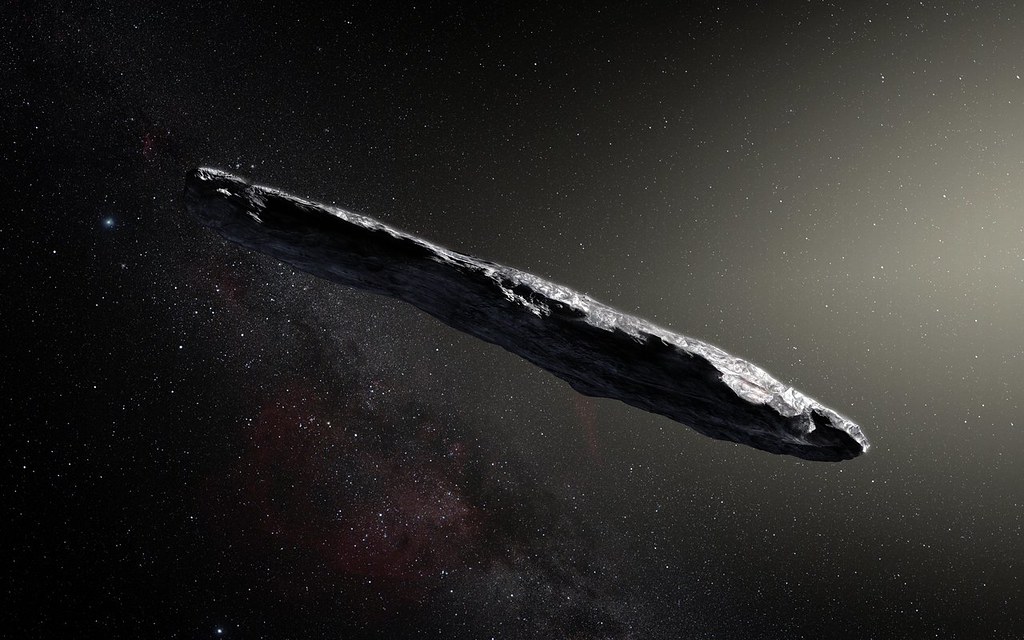
In 2017, something flew through our solar system that didn’t behave like anything astronomers had ever tracked before.
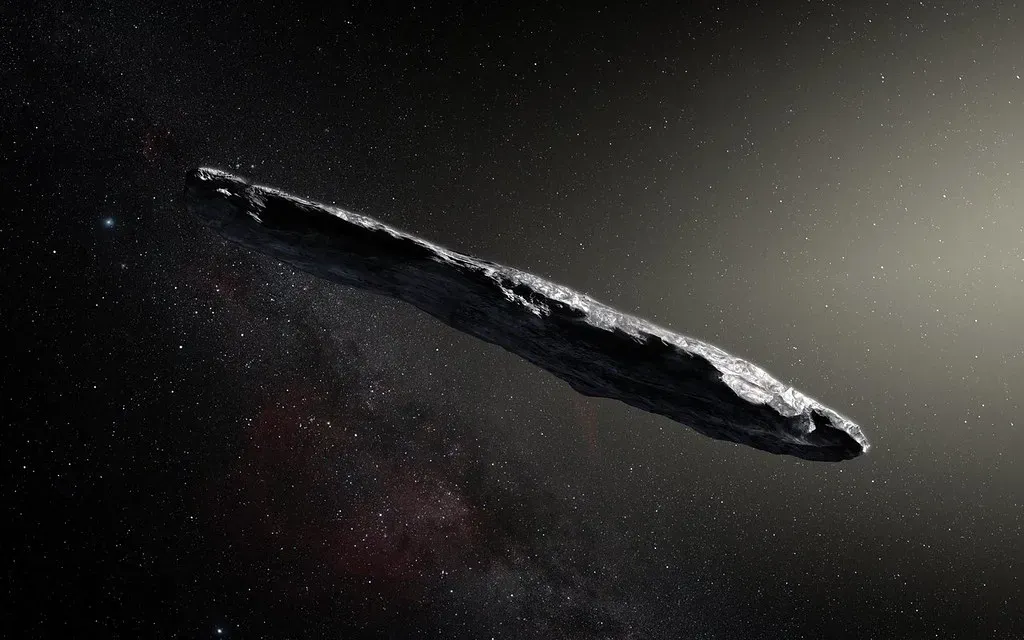
The object known as ‘Oumuamua was traveling too fast, 196,000 mph, to have originated in our solar system, while comets and asteroids from within our solar system move at a typical average of just 12 miles per second. It didn’t grow a comet tail, and it accelerated in a way gravity alone couldn’t explain. Most people don’t realize scientists seriously debated whether it might be artificial technology before settling on natural explanations.
One team proposed that cosmic rays had turned up to 30% of the object’s water ice into trapped hydrogen, which would have vented out as it neared the Sun and given it an unexpected push. Another group at Arizona State suggested it was a fragment of a Pluto-like planet from another solar system entirely. Neither theory has been confirmed. We still don’t know for sure what ‘Oumuamua was. At least ‘Oumuamua had the decency to leave. This next mystery has been sitting in a museum case for over a century, gears and all.
#4 – The Ancient Computer That Shouldn’t Exist

Pulled from a shipwreck in 1901, a corroded lump of bronze turned out to be more advanced than anything else built for the next 1,000 years.
The Antikythera Mechanism is the most sophisticated mechanism that survives from antiquity, and for a thousand years after the fall of the Roman Empire, no workshop or lone genius produced anything as complex. Constructed some 2,000 years ago, its complex and intricate design still baffles researchers despite over a century of study. Modern CT scans revealed dozens of interlocking gears that track the sun, moon, and planets with startling precision.
Fast Facts
- Recovered in 1901 from a Roman-era shipwreck off the Greek island of Antikythera
- Contains dozens of interlocking bronze gears, some smaller than a coin
- Believed to have been built roughly 2,000 years ago
- Designed to track the sun, moon, and known planets with remarkable precision
- Only one has ever been discovered, despite ancient writings hinting at similar devices
Secretly, though, nobody agrees on who actually used it or why. Only one such device has ever been discovered, and that has fueled intense scholarly interest, with some proposing it was used by court astrologers while others believe it may have served educational or demonstrative purposes. One 2025 study even suggested the device jammed constantly and may have functioned more like a novelty toy than a working scientific tool. More than half the mechanism is still missing, likely resting at the bottom of the sea. Machines built by hand are confusing enough. Try measuring the entire universe and getting two different answers depending on how you look.
#5 – The Universe Is Expanding at Two Different Speeds
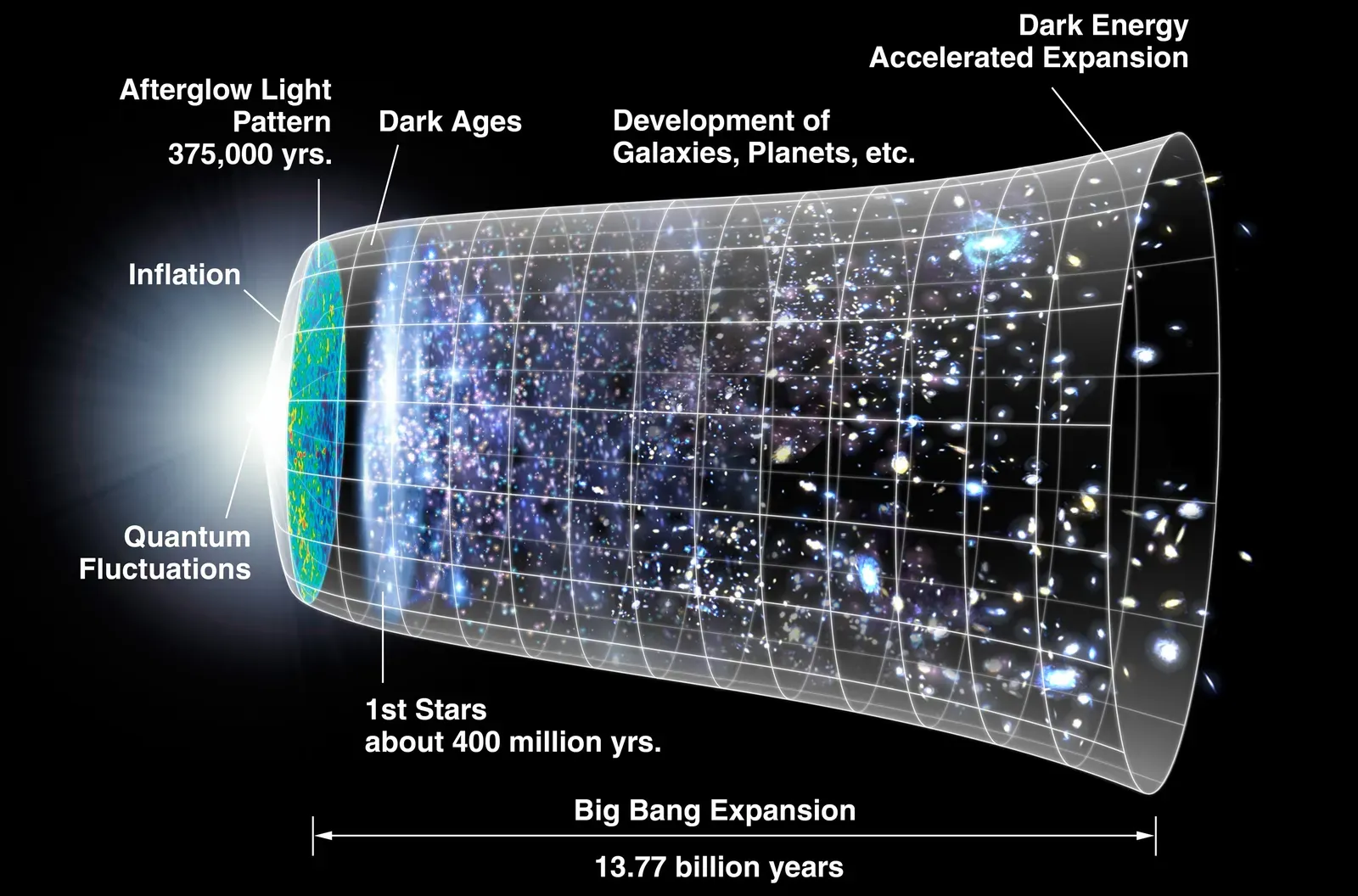
Cosmologists measuring the exact same universe are getting two different answers, and neither side is backing down.
Scientists disagree about the rate of the expansion, a problem known as the “Hubble tension,” which results from a disagreement between two methods used to measure the Hubble constant. The direct method yields a value of roughly 73 km/s per megaparsec, while the indirect method using the cosmic microwave background yields around 67 km/s per megaparsec. That may sound like a rounding error, but in cosmology, it’s a five-sigma crisis.
Experts now openly call it the “Hubble crisis” rather than a tension. Worsening these woes, dark energy – thought to be causing the universe’s expansion to accelerate – may actually be changing over time, which only aggravates the Hubble tension. New missions like Euclid are gathering independent data to referee the fight, but as of the most recent reports, the Hubble Tension remains the most significant puzzle in cosmology. At least the universe’s expansion rate is something we can measure, even if we disagree on the number. Most of what makes up the universe, we can’t even see.
#6 – Dark Matter Has Never Been Directly Seen
Roughly 27% of the universe is made of something no instrument on Earth has ever detected directly.
Scientists know dark matter exists because galaxies rotate far too fast to hold themselves together with only the visible matter they contain. Without an invisible scaffolding of extra mass, spiral galaxies like our own would have flung their outer stars into deep space billions of years ago. Yet every underground detector built to catch a dark matter particle colliding with normal matter has come back empty.
Most people don’t realize entire mountains have been hollowed out for this search. Labs in Italy, China, and the United States have buried ultra-sensitive detectors deep underground to shield them from cosmic radiation, hoping to catch a single flicker of contact. Some physicists now wonder if dark matter isn’t a particle at all, but a sign that our gravity equations themselves are wrong at galactic scales. Neither camp has produced a knockout argument. Invisible matter is one puzzle. An entire galaxy full of silence is another.
#7 – The Fermi Paradox: Where Is Everybody?
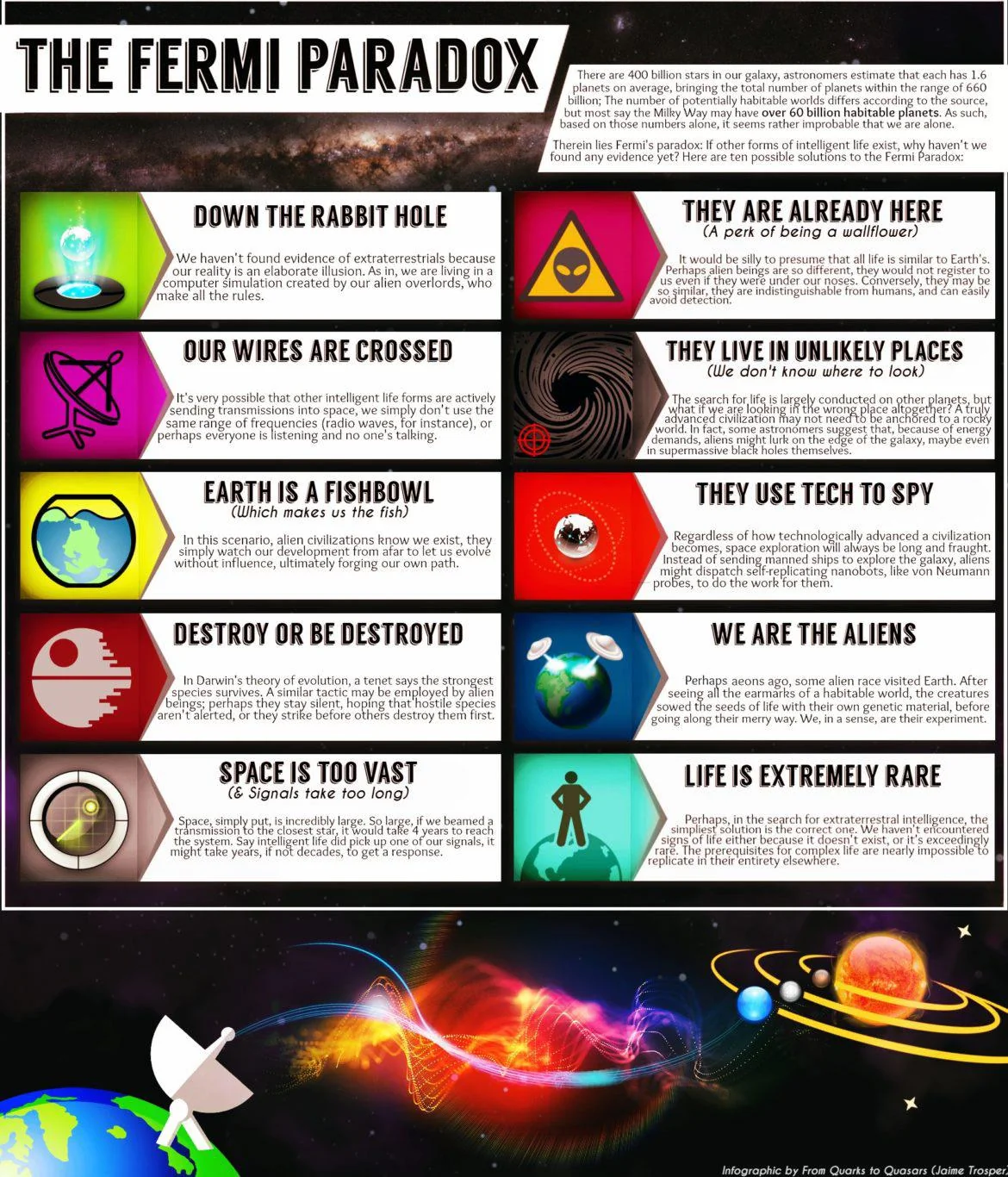
With hundreds of billions of stars in our galaxy alone, basic math says the universe should be loud with alien civilizations. It isn’t.
The math is straightforward: even a slow-moving civilization spreading at a fraction of the speed of light could colonize the entire Milky Way in a few million years, a blink of an eye on cosmic timescales. Given how old the galaxy is, some civilization should have already done it. Instead, every survey of the sky has come back silent.
Truth is, physicists have proposed dozens of explanations, and none satisfy everyone. Maybe intelligent life is rarer than we think. Maybe civilizations destroy themselves before reaching the stars. Maybe they’re out there, simply uninterested in contacting a species still burning fossil fuels. This unresolved gap between probability and observation remains one of the most debated open questions in modern astrobiology. Empty skies are eerie. An entire branch of humanity hiding in our own DNA is somehow eerier.
#8 – Humans Are Part Denisovan, and We Barely Understand Them

An entire branch of the human family tree was identified almost entirely from a single finger bone and a few teeth.
Denisovans were a mysterious hominin group discovered through DNA extracted from fossil fragments in a Siberian cave, and scientists still don’t have a complete skeleton to study. What they do know is startling: modern populations in Papua New Guinea and parts of Southeast Asia carry measurable percentages of Denisovan DNA, inherited from ancient interbreeding events.
Most people don’t realize this ancient DNA still actively affects human biology today. Certain Denisovan gene variants have been linked to high-altitude adaptation in Tibetan populations, immune system responses, and fat metabolism. Researchers are still trying to map exactly how many separate interbreeding events occurred and where. A species science can barely picture is still quietly shaping human biology across multiple continents. Ancient genes are one kind of hidden history. Antarctica is hiding something far more visible – and far more red.
#9 – Antarctica’s Blood-Red Waterfall

A glacier in one of the coldest, most lifeless places on Earth bleeds a waterfall the color of rust.
Blood Falls flows from beneath Taylor Glacier in Antarctica, staining the ice a deep crimson red. For decades, researchers assumed the color came from red algae, but that theory eventually collapsed under closer inspection. The real explanation turned out to be even stranger: a sealed, oxygen-free lake trapped beneath the glacier for roughly two million years.
Secretly, that trapped lake is packed with microbial life that survives without sunlight or oxygen, using iron and sulfur compounds to stay alive instead. When the iron-rich water hits the open air, it rusts almost instantly, producing the waterfall’s shocking color. Scientists studying this ecosystem now use it as a working model for how life might survive in similarly sealed, sunless environments on icy moons like Europa. A bleeding glacier is strange enough. A single subatomic particle wobbling wrong might be even stranger.
#10 – A Tiny Particle That Might Break Physics
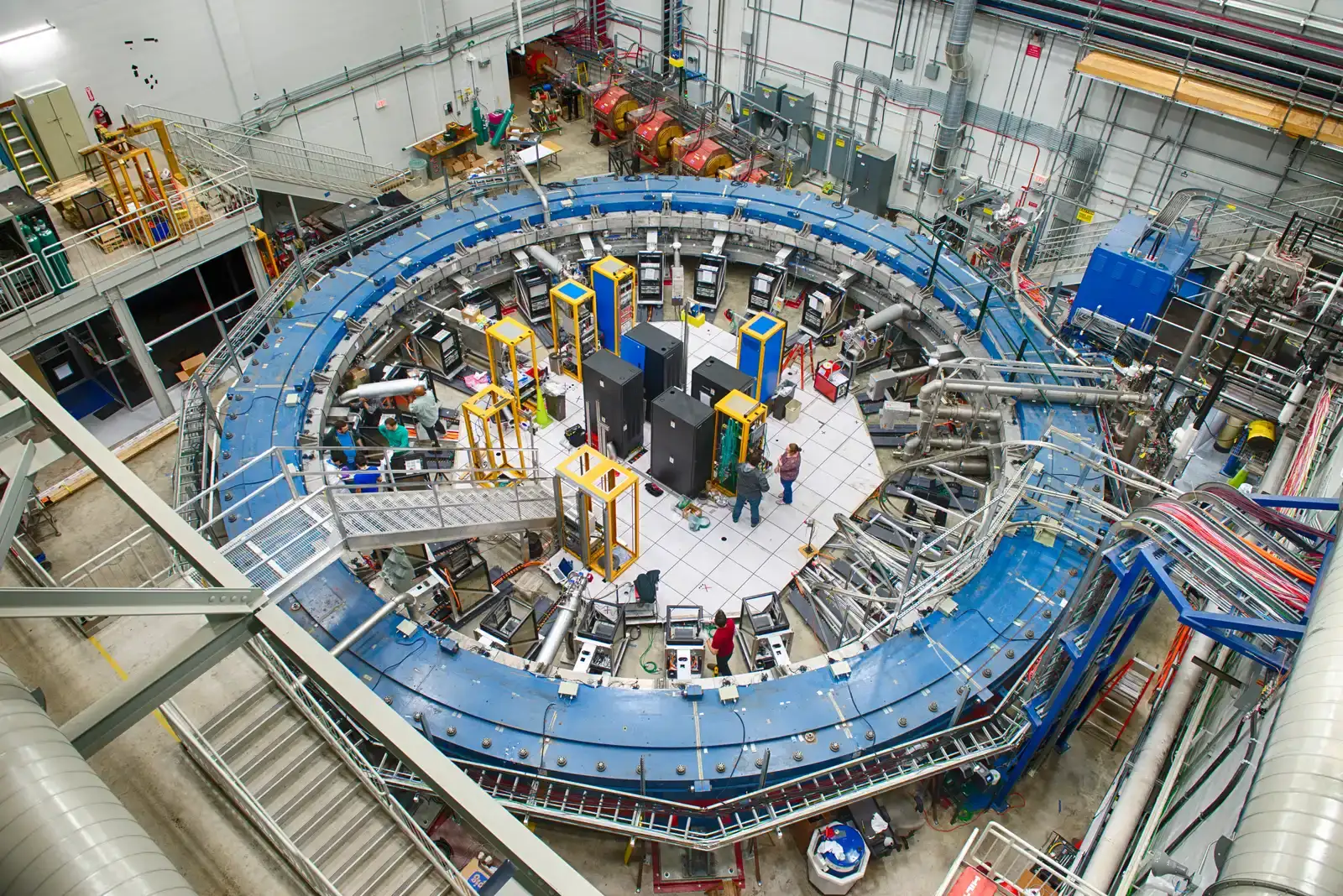
In 2021, physicists announced that a subatomic particle called the muon was behaving in a way the Standard Model of physics didn’t predict.
Muons act like heavier cousins of electrons, and when placed in a magnetic field, they wobble at a very specific, calculable rate. Fermilab’s g-2 experiment measured that wobble with extraordinary precision and found it didn’t quite match theoretical predictions. If confirmed, this discrepancy would mean an entirely new, undiscovered particle or force is quietly influencing the muon.
Experts were initially electrified, calling it a potential crack in the Standard Model itself, the framework that has explained particle physics for fifty years. But newer theoretical calculations have muddied the picture, with some theory groups now producing predictions that align more closely with the experimental result. The tension between competing calculations hasn’t been resolved, leaving physicists split on whether new physics is truly hiding in the data. If a tiny particle can spook physicists, imagine what one of the sky’s brightest stars did when it started going dark.
#11 – Betelgeuse’s Sudden, Mysterious Dimming
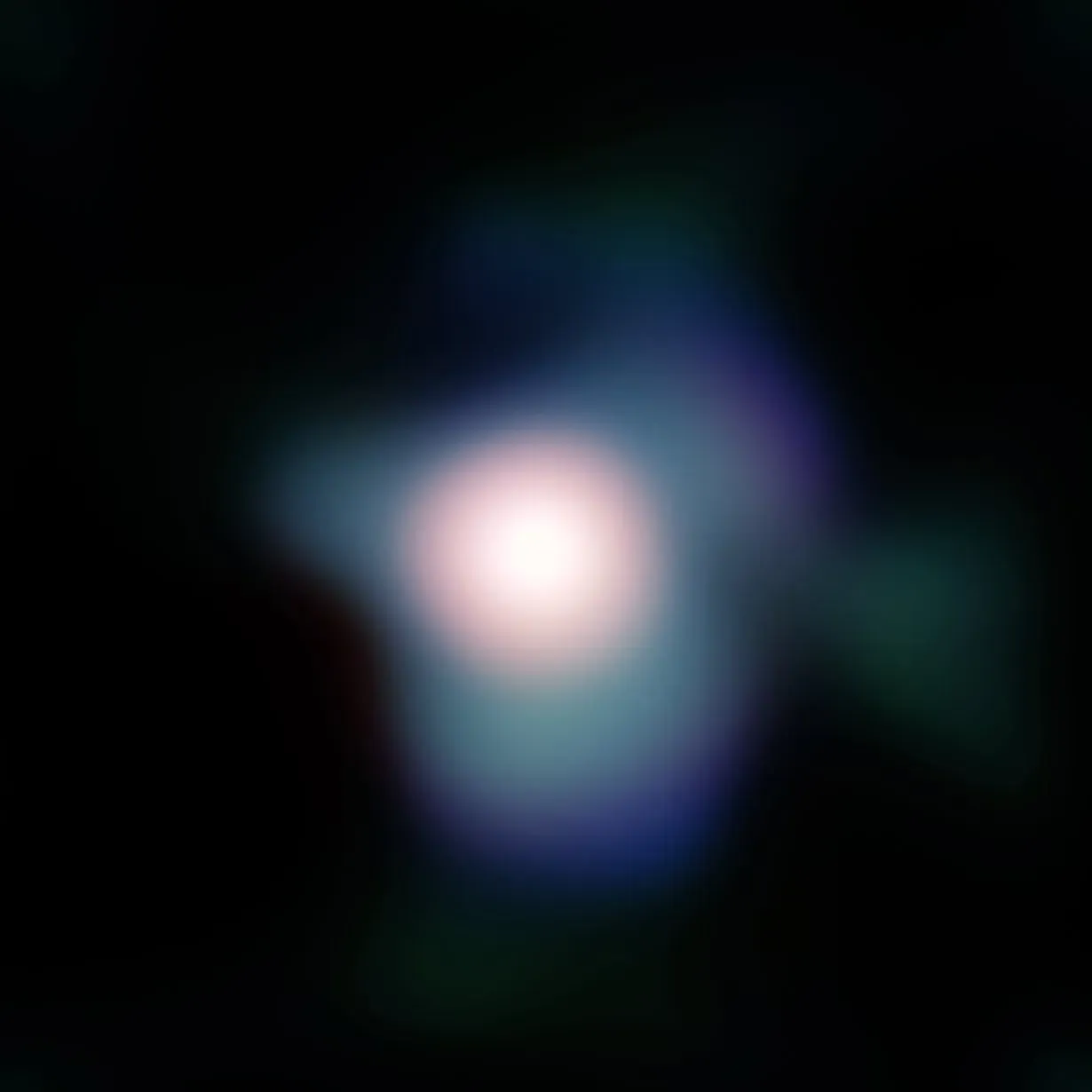
In late 2019, one of the brightest, most famous stars in the night sky suddenly and dramatically dimmed, and social media immediately assumed it was about to explode.
Betelgeuse, the red supergiant marking Orion’s shoulder, lost more than a third of its normal brightness over just a few months, an event so visible that amateur stargazers noticed it with the naked eye. Because Betelgeuse is a massive star nearing the end of its life, the dimming immediately sparked speculation that it was collapsing into a supernova.
At a Glance
- Betelgeuse sits several hundred light-years from Earth in the constellation Orion
- The star is so enormous it could engulf much of our inner solar system if it replaced the sun
- Its 2019-2020 dimming event was visible to the naked eye without any telescope
- Astronomers now refer to the episode as the “Great Dimming”
- Nobody can predict exactly when Betelgeuse will actually go supernova
Turns out, most astronomers now believe a giant cloud of stellar dust, ejected from the star’s own surface, temporarily blocked our view. Combined with a natural dip in the star’s pulsation cycle, the two effects stacked to create the dramatic dimming. Betelgeuse has since returned to something close to normal brightness, but the exact mechanism behind that dust ejection remains only loosely understood. Astronomers admit they still can’t predict exactly when Betelgeuse will actually go supernova. Betelgeuse dimmed and came back. What scientists found in the clouds of Venus hasn’t gone away so easily.
#12 – A Possible Sign of Life in Venus’s Clouds
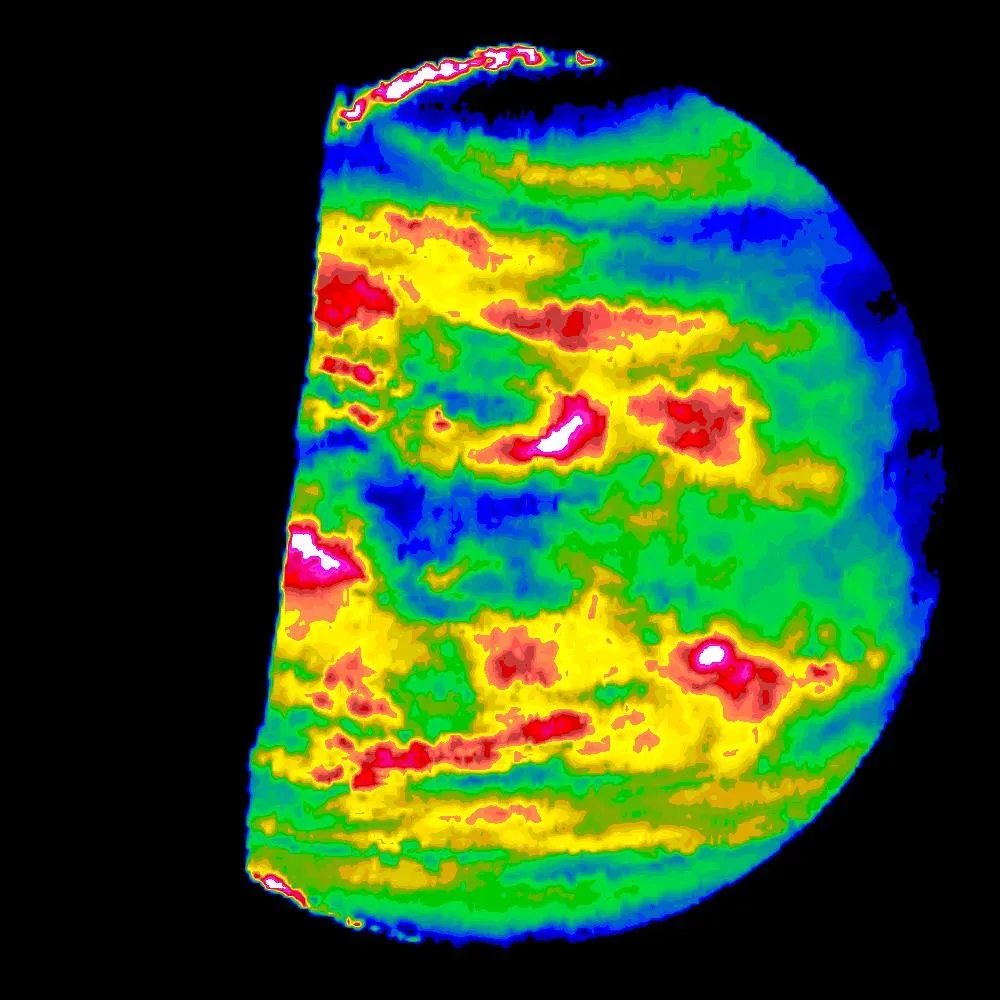
In 2020, a team of astronomers detected a gas in the atmosphere of Venus that, on Earth, is produced almost exclusively by living organisms.
Phosphine was spotted high in Venus’s cloud layer, a discovery that stunned researchers because Venus’s surface is a hellish 900 degrees Fahrenheit, hot enough to melt lead. The clouds themselves, however, sit at a much cooler altitude, leading some scientists to float the idea that microbial life could theoretically survive there.
Most people don’t realize the finding has been fiercely disputed ever since. Multiple follow-up studies failed to reproduce the original detection, while others found lower concentrations of the gas than first reported. No non-biological process has fully explained how phosphine could form and persist in Venus’s harsh, sulfuric-acid atmosphere. The debate over whether Venus’s clouds harbor life, or simply an unexplained chemical quirk, remains unsettled among planetary scientists. Venus keeps its secrets close to the surface. Whatever’s sending signals from billions of light-years away isn’t nearly as shy.
#13 – Radio Bursts From Billions of Light-Years Away
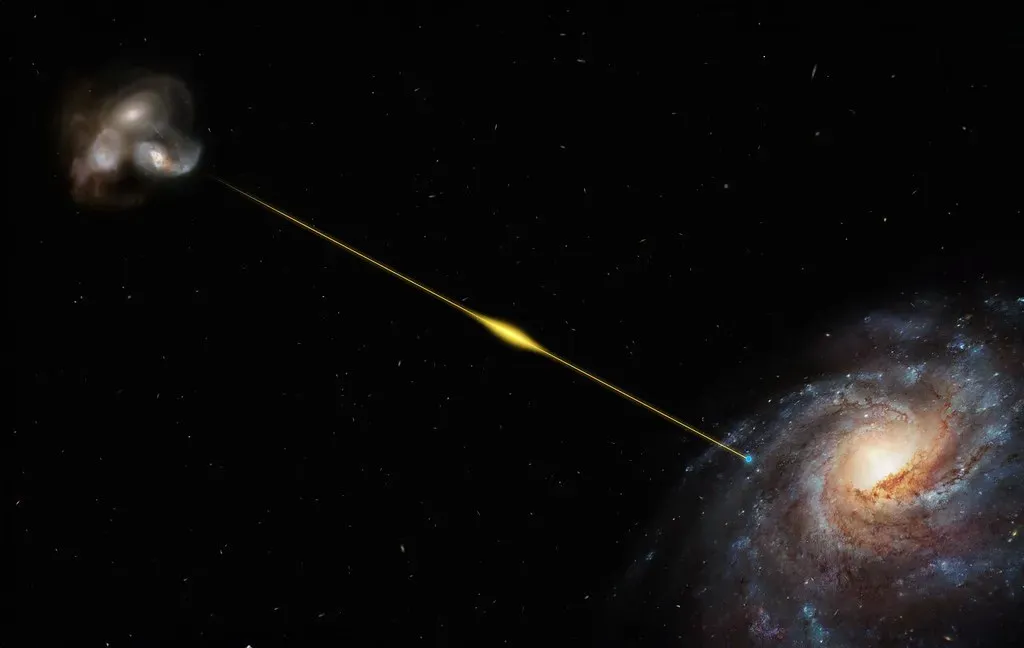
Somewhere out in deep space, something is firing off millisecond-long bursts of radio energy powerful enough to outshine entire galaxies, and it keeps happening on a schedule nobody expected.
Fast radio bursts, or FRBs, were first detected in 2007 and initially dismissed by some as instrument glitches. That changed once multiple observatories confirmed real, repeating signals coming from sources billions of light-years away, releasing more energy in a millisecond than the sun produces in days.
Most people don’t realize one particular burst, FRB 121102, repeats on an irregular cycle that scientists still can’t fully model. Magnetars, the ultra-dense, hyper-magnetized remains of collapsed stars, are the current leading suspect behind these bursts. But magnetars alone don’t neatly explain every observed burst pattern, and some FRBs show polarization and timing quirks that don’t fit the standard model cleanly. Researchers now believe multiple, different phenomena may be producing what looks like a single mystery. Radio bursts travel across galaxies to reach us. This next survivor doesn’t need to travel anywhere to shock scientists – it just needs to be launched into space and left for dead.
#14 – The Animal That Survives the Vacuum of Space

A creature smaller than a grain of rice was launched into the vacuum of space, exposed to lethal radiation, and simply woke back up.
Tardigrades, sometimes called water bears, were sent into low Earth orbit in a 2007 European Space Agency experiment and exposed directly to the vacuum of space and unfiltered solar radiation. When researchers rehydrated them back on Earth, a significant portion survived and went on to reproduce normally.
Most people don’t realize tardigrades achieve this by essentially shutting down their own biology. They enter a state called cryptobiosis, replacing nearly all the water in their cells with a protective protein that vitrifies their internal structures into a glass-like state. This halts metabolism almost entirely, allowing them to endure extreme cold, dehydration, and radiation that would destroy virtually any other animal. Scientists still don’t fully understand every mechanism behind this survival trick, and are studying tardigrade proteins for potential use in preserving human cells and vaccines. Tardigrades cheat death by shutting down. One jellyfish appears to have skipped death entirely.
#15 – The Jellyfish That Can Reverse Its Own Aging

One species of jellyfish appears to have found a loophole around death itself, and biologists still don’t fully understand how it pulls this off.
Turritopsis dohrnii, often nicknamed the “immortal jellyfish,” can respond to injury, starvation, or environmental stress by reverting its adult cells back into an earlier, juvenile polyp stage. In effect, the animal restarts its own life cycle rather than dying, a form of biological time travel that doesn’t exist anywhere else in the animal kingdom in quite the same way.
Secretly, this isn’t a party trick, it happens through a real, documented cellular process called transdifferentiation, where mature cells change identity entirely. Researchers studying the jellyfish’s genome have found unusual patterns in genes related to DNA repair and cell replication, but no one has fully cracked how these genes coordinate to reverse aging on command. Some biologists are now studying the species for clues relevant to human aging and regenerative medicine. An immortal jellyfish is strange enough. Somehow, an entire continent went unnoticed for even longer.
#16 – The Continent Hiding Under the Pacific Ocean

Beneath the waves near New Zealand sits an entire continent that spent most of human history completely unrecognized.
Zealandia spans roughly 1.9 million square miles, nearly the size of India, yet almost 94% of it sits submerged under the Pacific Ocean. It wasn’t formally classified as a continent by geologists until 2017, despite New Zealand and New Caledonia sitting directly on top of visible fragments of it the entire time.
Quick Compare
- Total size: roughly 1.9 million square miles, comparable to India
- Visible above water: only a small fraction, mainly New Zealand and New Caledonia
- Officially classified as a continent: 2017
- Broke away from the supercontinent Gondwana: around 80 million years ago
Most people don’t realize an entire landmass this large could go unrecognized for so long. Zealandia broke away from the ancient supercontinent Gondwana around 80 million years ago and then gradually sank beneath the ocean over tens of millions of years, a process geologists still don’t fully understand. Researchers are still mapping its full extent and boundaries, and debating exactly what geological definition should even qualify a submerged landmass as a true continent. A hidden continent is one blind spot. It turns out most of your own DNA was hiding in plain sight too.
#17 – Most of Your DNA Isn’t for Making You

For decades, scientists assumed most of the human genome was leftover evolutionary junk with no real function. That assumption has been quietly falling apart.
Only around 1 to 2% of human DNA directly codes for proteins, the building blocks scientists once considered the “important” part of the genome. The rest was long labeled “junk DNA,” dismissed as evolutionary debris accumulated over millions of years without any real purpose.
Turns out, researchers have since discovered that huge portions of this non-coding DNA actually regulate when, where, and how strongly other genes get switched on and off. Some sections produce functional RNA molecules instead of proteins, quietly directing cellular processes scientists are still mapping out gene by gene. The full function of the human genome remains far from completely understood, and some researchers still argue over how much of it is truly functional versus genuinely inert. Human DNA quietly does more than we thought. One sea creature takes that idea and rewrites its own rulebook completely.
#18 – The Octopus That Rewrites Its Own Genetic Code

Most animals treat their DNA instructions as fixed. Octopuses apparently didn’t get that memo.
Octopuses and their relatives use a process called RNA editing far more extensively than almost any other animal on Earth, allowing them to alter genetic instructions after DNA has already been transcribed, rather than through slow, traditional evolutionary mutation. This gives them the ability to fine-tune proteins, particularly in their nervous systems, in near real time.
Most people don’t realize this trait comes at a real evolutionary cost. Because so much genetic flexibility is diverted into RNA editing, octopus genomes show unusually low rates of standard DNA mutation and evolutionary change elsewhere. Scientists studying octopus neurons believe this editing ability may explain their startling intelligence and adaptability, but the full evolutionary trade-off behind this strange genetic strategy is still being investigated. It remains one of the strangest genetic strategies discovered in any animal group. If an octopus can edit its own genes, what’s out there editing the motion of entire galaxies?
#19 – Something Massive Is Pulling Our Entire Galaxy
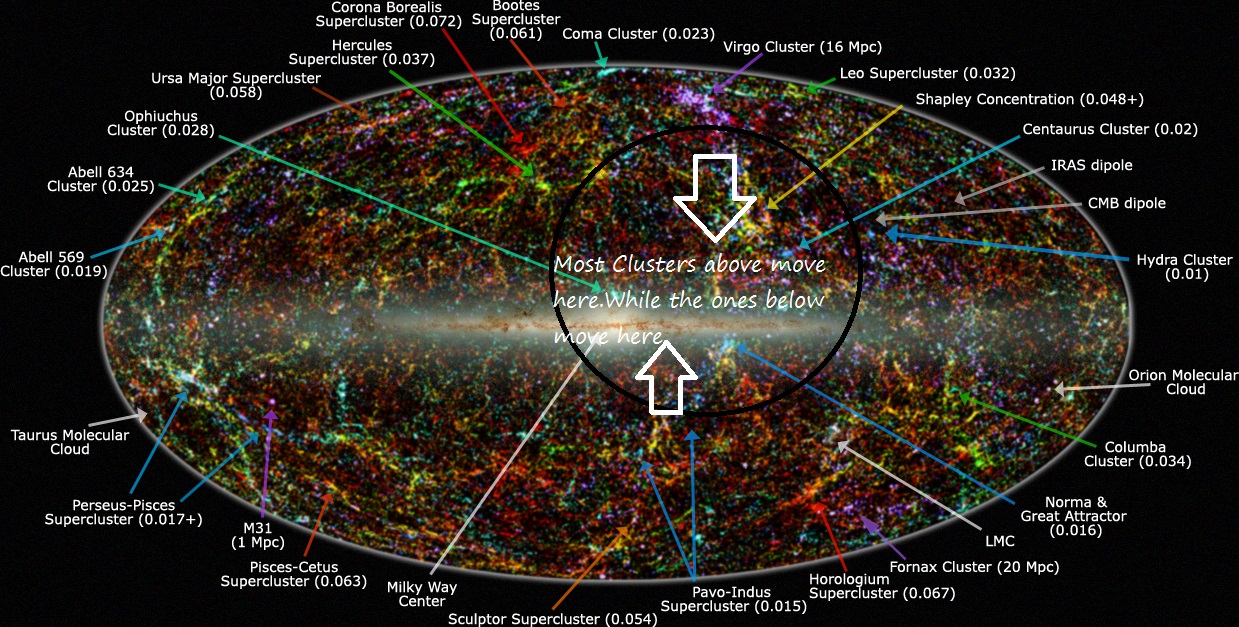
Our galaxy, along with thousands of others, is being pulled toward something scientists can’t directly see because it’s hidden behind our own galaxy’s disk.
The Great Attractor is a massive gravitational anomaly located roughly 150 million light-years away, tugging our entire Local Group of galaxies, including the Milky Way, toward it at hundreds of kilometers per second. Astronomers can measure its gravitational pull clearly through the motion of surrounding galaxies, yet directly observing it is nearly impossible.
Secretly, the reason we can’t see it clearly is embarrassingly simple: it sits directly behind the crowded, dust-filled center of our own galaxy, a region astronomers call the “Zone of Avoidance.” Using X-ray and infrared telescopes that can peer through galactic dust, researchers have identified a supercluster of galaxies in that region, but debate continues over whether this fully accounts for the Great Attractor’s total gravitational pull. Some researchers suspect an even larger structure lies beyond it. Some mysteries are current. This next one has been sitting inside a T. rex bone for 68 million years.
#20 – Dinosaur Soft Tissue That Shouldn’t Have Survived

In 2005, a paleontologist cracked open a 68-million-year-old Tyrannosaurus rex bone and found something that wasn’t supposed to exist anymore: soft, flexible tissue.
Standard science holds that soft tissue like blood vessels and collagen fibers should completely break down within a few hundred thousand years, making their survival across tens of millions of years seem almost impossible. Yet researchers extracted what appeared to be flexible, stretchy structures resembling blood vessels from inside the fossilized bone, along with structures resembling red blood cells.
Most people don’t realize this discovery has been repeated in other dinosaur fossils since, ruling out a one-time contamination fluke. Some scientists propose that iron molecules released from decaying blood cells act as a natural preservative, cross-linking proteins and effectively “fixing” tissue in place, similar to how embalming works. Other researchers remain skeptical, arguing more testing is needed before firmly ruling out contamination from modern biological material. Either explanation would rewrite assumptions about how long biological material can theoretically survive. Ancient soft tissue defies expectations of decay. This next discovery defies expectations of physics itself.
#21 – The Cosmic Ray Too Powerful to Exist

In 1991, a detector in Utah recorded a single subatomic particle slamming into Earth’s atmosphere with an amount of energy that shouldn’t have been physically possible.
Nicknamed the “Oh-My-God particle,” this ultra-high-energy cosmic ray struck with roughly the same kinetic energy as a fastball baseball, an absurd amount of energy for a single subatomic particle. According to known physics, particles traveling this fast over long cosmic distances should lose energy by colliding with the cosmic microwave background before ever reaching Earth.
Worth Knowing
- Detected in 1991 by the Fly’s Eye detector in Dugway, Utah
- Carried roughly the kinetic energy of a thrown fastball, packed into one subatomic particle
- Nicknamed the “Oh-My-God particle” by the stunned research team
- Similar ultra-high-energy particles have since turned up at the Telescope Array, but their sources remain unidentified
Truth is, scientists still don’t know what could have accelerated a single particle to that scale, or what specific cosmic source produced it. No supernova, black hole, or known cosmic accelerator identified so far seems powerful enough to explain it convincingly. Similar ultra-high-energy particles have been detected since, at facilities like the Telescope Array in Utah, but their exact origins remain unidentified. Physicists still consider this one of the most extreme unsolved puzzles in cosmic ray research. That particle broke the rules of physics. This last one breaks the rules of medicine – and it’s happening in hospitals right now.
#22 – Sugar Pills That Actually Heal People

Give someone a pill with zero active medicine in it, tell them it will help, and in a shocking number of cases, their body responds as though it’s real medicine. Nobody fully understands why.
The placebo effect has been documented for decades across pain management, depression, Parkinson’s disease symptoms, and even measurable changes in brain chemistry and immune markers, not just subjective feelings of improvement. Brain imaging studies have shown placebo treatments trigger real, measurable releases of natural painkillers called endorphins.
Most people don’t realize placebos can work even when patients are explicitly told they’re receiving a placebo, a phenomenon researchers call “open-label placebo” effect. This suggests the ritual of treatment itself, expectation, and the patient-provider relationship trigger real biological changes independent of belief in deception. Despite decades of research, scientists still can’t fully map the precise neurological pathway connecting expectation to physical healing, making it one of medicine’s most consistently reproducible yet stubbornly unexplained phenomena.
The Bottom Line

If there’s one thing this list proves, it’s that certainty in science is often overstated. From a 2,000-year-old bronze computer to a jellyfish that dodges death, these 22 discoveries show that the universe is still handing researchers homework they haven’t finished. Some mysteries, like Tabby’s Star, are inching toward resolution. Others, like the Wow! Signal and the Great Attractor, remain stubbornly open.
Personally, the most unsettling one isn’t the cosmic stuff – it’s the placebo effect, because it proves human biology can be manipulated by belief alone, and medicine still can’t explain exactly how. Which one of these do you think will get solved first, and which one do you think we’ll never crack? Drop your pick in the comments.