You probably sensed it already: 2026 feels like the year the curtain slipped. Not in one dramatic reveal, but in dozens of small, almost begrudging government admissions scattered across press releases, buried reports, and heavily redacted PDFs. If you know where to look, you can see a clear pattern emerging: secrecy is still alive and well, but the pressure to explain at least some of what has been hidden is finally winning small battles. Instead of the cinematic “we are not alone” speech people imagine, what you actually get is far messier: partial declassifications, dry legal language, and statistics that quietly confirm what used to be labeled conspiracy theories or “misinformation.” As you walk through these eighteen discoveries, you’ll notice something important: you are not being handed the whole truth, but you are finally being given enough pieces to understand the shape of the puzzle. The question is whether you’re willing to connect them.
1. Foreign Hackers Really Did Have the Capability to Hit Election Infrastructure
In 2026, you finally saw officials put in writing what many cybersecurity researchers had warned you about for years: hostile governments had the technical ability to probe and potentially compromise parts of U.S. election infrastructure. A declassified national intelligence memorandum, released by the Director of National Intelligence, acknowledged that Iranian and Chinese actors had developed access routes, tools, and opportunities that went far beyond random nuisance-level hacking. It did not claim every vote had been changed, but it ripped away the comfortable idea that election systems were simply “air-gapped and safe” by default.
When you read it closely, the document forces you to live with nuance. You are told that election outcomes were not proven to be altered, yet you also learn that reconnaissance, credential theft, and access to related systems really did happen. Instead of clean reassurance, you get something more unsettling and more honest: sophisticated adversaries tested your defenses, sometimes got inside the outer walls, and were limited more by their strategic choices than by your technical invulnerability. That shifts the conversation – from “nothing happened” to “we got lucky, and we might not next time.”
2. Mass Surveillance Statistics Quietly Confirmed the Scale You Suspected
Each year, intelligence agencies in the United States have to publish a statistical transparency report about their use of powerful surveillance tools, and the 2026 release about the previous year finally spelled out numbers you probably assumed but had never seen laid out so bluntly. You learned that the number of searches of communications involving people inside the United States – under authorities originally sold as foreign-focused – reached into the many thousands. It was not a Hollywood spy grid reading every text in real time, but it was far broader and more routine than public talking points had suggested.
You also saw, tucked into footnotes and “methodology” sections, how elastic terms like “target,” “query,” and “selector” can be. That matters to you because each definition determines whose messages, cloud backups, or phone records can be swept up when someone else is the nominal target. The declassified numbers did not give you names or specific stories, but they confirmed something you may have felt in your gut: the line between foreign intelligence collection and domestic exposure is much thinner, and far more porous, than slogans about privacy-safe surveillance ever admit out loud.
3. UAP Files Are Being Declassified Without Answering the Question You Care About Most

If you grew up hearing whispers about UFOs and classified hangars in the desert, 2026 probably felt like a strange mix of vindication and frustration. Political pressure and an executive order pushed defense and intelligence agencies to expand the declassification and public release of files about what the government now calls unidentified anomalous phenomena. You got confirmation that there are decades of radar tracks, cockpit videos, incident reports, and technical assessments that were kept from you under national security justifications.
But here’s the catch you have to live with: the new declassifications still stop short of saying anything definitive about non-human life. Instead, you are invited to examine patterns of strange aerial behavior, sensor glitches, and advanced-looking maneuvers that official analysts often describe as “unresolved” or “inconclusive.” In practice, that means you have to accept a difficult truth – your government has been studying unexplained phenomena more seriously and more quietly than publicly admitted, yet even now it is only willing to concede mystery, not meaning. The curtain lifts just enough to show you that there really is a backstage.
4. Declassified Internal Reviews Exposed Costly Cyber Sloppiness Inside Agencies
One of the more humbling things you saw in 2026 did not involve spies or exotic tech at all – it involved smartphones. As oversight bodies released declassified passages from audits of how federal employees use unclassified mobile devices, you got a window into just how casually data risk can be created. You learned about weak password habits, unauthorized apps, and poor separation between personal and work communications, all inside agencies that publicly lecture you about cyber hygiene.
These disclosures matter because they force you to reconsider where the real vulnerability lies. Instead of imagining a single, impenetrable “government system,” you see millions of small, human-sized cracks: a text sent over the wrong network, a cloud sync that should have been disabled, a device taken on a trip where it never should have been powered on. When those patterns appear in declassified reports, you can no longer comfort yourself with the idea that risks live only on your side of the screen. The same messy digital habits you wrestle with are alive inside the institutions that hold some of your most sensitive data.
5. Redacted Transcripts Revealed How Often Officials Dodged Congress Behind Closed Doors
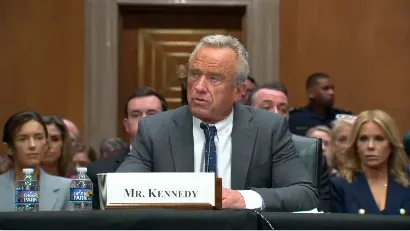
When oversight committees released declassified interview transcripts in 2026, you got to peek behind the veneer of smooth testimony. Stripped of classification markings but still dotted with redactions, these documents showed you how frequently senior officials leaned on vague wording, selective memory, and procedural excuses to avoid direct answers – even in supposedly no‑nonsense closed sessions. The evasions mirrored what you see in public hearings, just with more technical jargon and legal hedging.
For you, this matters less because of the specific personalities involved and more because of what it reveals about the culture of accountability. You are told that congressional oversight is a strong check on secret programs, yet the declassified back‑and‑forths make it clear that even informed lawmakers struggle to pry out basic facts. Reading those exchanges, you start to understand why so many issues – from surveillance to covert operations – drift for years without clear public resolution. The secrecy is not just in the documents; it is in the habits of speech.
6. Governments Admitted There Is No Magic Deadline for Full UFO Disclosure
If you follow online discussions, you’ve probably seen claims that some law forces the U.S. government to “release all UFO secrets by 2026.” Declassified legal analyses and official fact‑checks pushed into the open this year finally admitted what careful readers already knew: there is no single, automatic deadline that dumps every classified UAP file onto your lap. Instead, you live in a maze of overlapping statutes, executive orders, archival rules, and case‑by‑case reviews that create pressure but not a guaranteed flood.
This is not the dramatic admission some people wanted, but it is an important one for you to absorb. Rather than pinning your hopes on a cinematic countdown, you have to understand disclosure as a grinding, bureaucratic process where advocates push, agencies resist, and compromises emerge in the form of partial declassifications. That reality check may feel deflating, but it also empowers you: instead of waiting passively for a mythical deadline, you can focus on real levers – FOIA requests, legislative reforms, and public scrutiny – that actually move the needle.
7. Archival Declassifications Show How Often “National Security” Meant Political Embarrassment
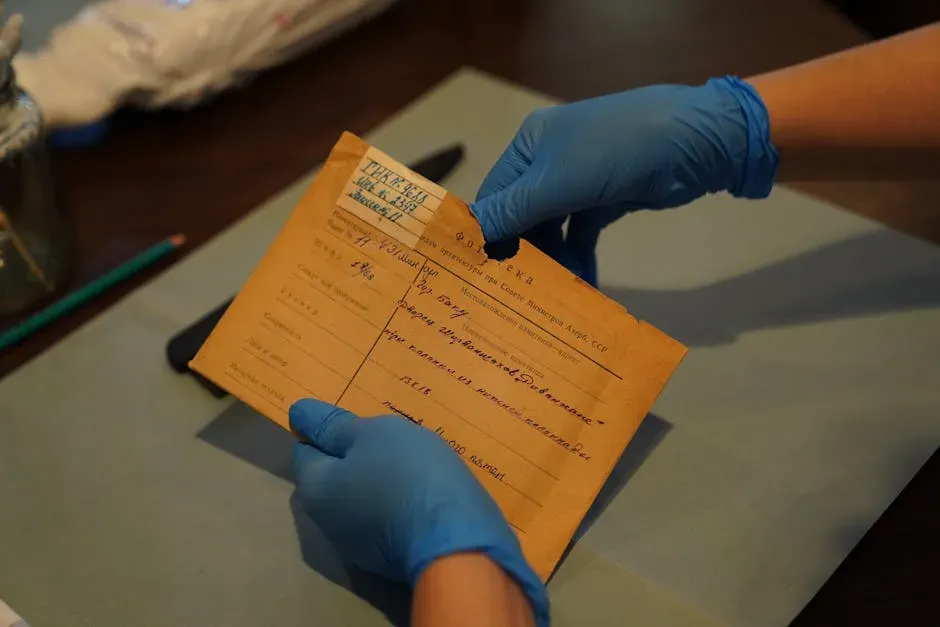
As the National Archives continued its scheduled declassification of older records, 2026 gave you a fresh wave of Cold War and post‑9/11 documents to sift through. When you do, you keep running into the same pattern: memos that were once stamped as highly sensitive turn out, in hindsight, to be more about avoiding political blowback than protecting genuine military secrets. You see cables fretting about bad optics, drafts of talking points, and frank assessments of failed policies that would have embarrassed leaders if released at the time.
These old files matter to your present because they offer you a kind of X‑ray into how classification has really been used. You discover that “national security” was sometimes a shield for fragile egos, policy miscalculations, or bureaucratic turf wars. Once you see that in historical releases, it becomes much harder to take every modern secrecy claim at face value. You are not being asked to reject all classification, but you are being invited to ask sharper questions about whose interests are truly being protected.
8. Declassified Cyber Threat Assessments Finally Named AI Systems as Strategic Targets
By 2026, you already knew that artificial intelligence was reshaping everything from search engines to weapons systems. What declassified portions of national security assessments added this year was a blunt confirmation that advanced AI models and infrastructure themselves have become strategic targets in international competition. You saw adversarial attempts to steal model weights, poison training data, or compromise cloud environments described not as hypotheticals, but as real, observed campaigns.
This shift forces you to see AI not just as a tool you use, but as an asset nation‑states fight over. The declassified language paints a picture where control over powerful models is treated almost like control over a new kind of energy source or encryption standard. For you, that admission changes the stakes in debates over open‑source AI, export controls, and “sovereign AI” projects. You are no longer speculating about whether governments care; you have it in writing that they see advanced AI the way they once saw satellites and code‑breaking machines.
9. Intelligence Files Acknowledged Systematic Online Manipulation Campaigns Against You
For years, you’ve heard vague references to “foreign disinformation” on social media. Declassified intelligence reports made public in 2026 finally supplied concrete, technical detail that turns those buzzwords into something you can clearly picture. You read about fake news sites seeded with real‑looking bylines, botnets tuned to amplify anger, and persona accounts cultivated over months before being turned toward political influence or social division.
What hits you hardest is the scale and patience described in those documents. Instead of sloppy one‑off troll posts, you see multi‑year campaigns that quietly map your grievances, your fears, and your media habits – and then weaponize them. When governments declassify this material, they are tacitly admitting that you have been playing tug‑of‑war with unseen actors every time you scroll your feed. The admission does not magically solve the problem, but it does give you the one thing you always needed: proof that your sense of being manipulated was not just paranoia.
10. Quiet Declassifications Confirmed Energy Infrastructure Is Far More Hackable Than Advertised
Buried in technical annexes and sector‑specific risk reports, 2026 declassifications about critical infrastructure cyber threats gave you a sobering picture of how fragile modern life really is. You learned that test exercises and real‑world intrusions had shown foreign actors probing not just flashy targets like national grids, but also smaller, less protected systems – regional substations, water treatment control panels, and pipeline monitoring devices. Some of those systems were running outdated software you would never tolerate on your personal laptop.
For you, the implication is clear: the lights stay on and the taps keep flowing not because the systems are invulnerable, but because adversaries have chosen not to go further – for now. When that reality appears in declassified form, it strips away the illusion that cyber defense is a solved problem handled quietly in the background. Instead, you are confronted with a more mature understanding: resilience is a moving target, and your society is perpetually one serious miscalculation away from cascading disruptions.
11. Historical Covert Action Records Show How Often “Plausible Deniability” Failed

As more Cold War and early post‑Cold War covert action records crossed their mandatory declassification thresholds in 2026, you got a rare chance to see how operations were evaluated inside the system that designed them. What jumps out at you is how often internal after‑action reports conceded that “plausible deniability” did not actually persuade foreign publics, local populations, or even allied governments. In many cases, everyone suspected who was really behind events, even if they lacked courtroom‑level proof.
For you, this matters because it reframes the way you think about modern deniability games – covert cyber operations, opaque drone strikes, or gray‑zone political meddling. The newly available documents show a recurring lesson that officials themselves noted in private: secrecy can delay accountability, but it rarely erases suspicion. When you read that in black‑and‑white assessments written decades ago, it becomes easier to see through similar narratives today and to understand that the world is often operating on widely shared but officially unacknowledged truths.
12. Declassified Internal Guidance Clarified How Classification Is Supposed to End
If you have ever wondered how something stops being secret, 2026 gave you more clarity than usual. Declassified training materials and guidance documents produced under modern executive orders were released in redacted form, explaining to government personnel how to mark, review, and ultimately declassify information. You saw specific criteria laid out: when continued secrecy would no longer protect sources or methods, when age makes risk negligible, and when public interest should tip the scales toward release.
Reading those rules, you can finally see the gap between theory and practice. On paper, there is a clear system meant to ensure that secrecy is temporary and revisited. In reality, as you compare that guidance to slow, grudging releases, you realize how much depends on culture, resources, and sheer bureaucratic will. The declassified manuals offer you a standard by which you can judge future behavior: whenever you are told something must remain classified forever, you now know that even the internal rule book treats that as the rare exception, not the norm.
13. Newly Available Counterintelligence Files Acknowledged Insider Threats in Sensitive Labs
Another quiet but important admission in 2026 came through declassified portions of counterintelligence reviews focused on research labs and advanced technology programs. You learned that theft of data, designs, and prototypes by insiders – sometimes witting, sometimes careless – was not a fringe concern but a recurring theme. Cases that had once been summarized only as “loss of controlled information” were now described in more concrete terms, including how foreign services cultivated or exploited individuals inside key facilities.
For you, this forces a subtle shift in how you picture espionage. Instead of imagining only trench‑coat agents in dark alleys, you are confronted with something more ordinary and more unsettling: grad students tempted by foreign funding, contractors juggling multiple loyalties, or staff who underestimate the value of the files they are copying. The declassifications do not give you every name or every location, but they make one thing clear – you live in a world where the boundary between open science and national security is constantly tested from the inside.
14. Official Records Finally Described How Deepfake Threats Are Viewed at the State Level

You have probably seen striking examples of deepfake audio or video online and wondered how seriously governments take the risk. In 2026, declassified excerpts from threat assessments and strategy documents finally spelled it out in official terms. You learned that intelligence and homeland security agencies now treat synthetic media as a core destabilization tool – something that can be used to trigger unrest, sow confusion during crises, or undermine trust in any evidence you are shown afterward.
These documents speak directly to you because they describe not just technical detection efforts, but also the psychological battlefield you inhabit. They acknowledge that once your confidence in authentic video and audio is eroded, opportunists can weaponize that doubt: real recordings can be dismissed as fake, and fake ones can be framed as real. The declassified language makes it plain that this is not a futuristic issue waiting in the wings; it is a present‑day vulnerability shaping how you experience news, emergencies, and even your own memories of public events.
15. Statistical Reports Admitted How Often Data About You Is Shared Across Agencies

Through declassified and newly unredacted sections of annual transparency reports, 2026 quietly filled in a blank you might have guessed about: how frequently your data moves between government entities once it has been collected. You saw numbers and categories for how many times law enforcement, intelligence, and regulatory bodies queried shared databases holding communications metadata, financial reports, travel records, and more. The figures were carefully caveated, but they told you that inter‑agency sharing is not a rare exception – it is routine.
For you, that admission reframes debates about each individual collection program. Even if you are assured that a particular dataset is limited in scope, you now know it can become more powerful once combined with others in a cross‑agency environment. The declassified statistics turn an abstract worry into something quantifiable enough to force policy questions: how easily should different organizations be able to pull your information off the same shelf, and how long should it stay there waiting for a future investigation that may never come?
16. Historical Public Health Files Showed How Candid Internal Risk Assessments Really Were
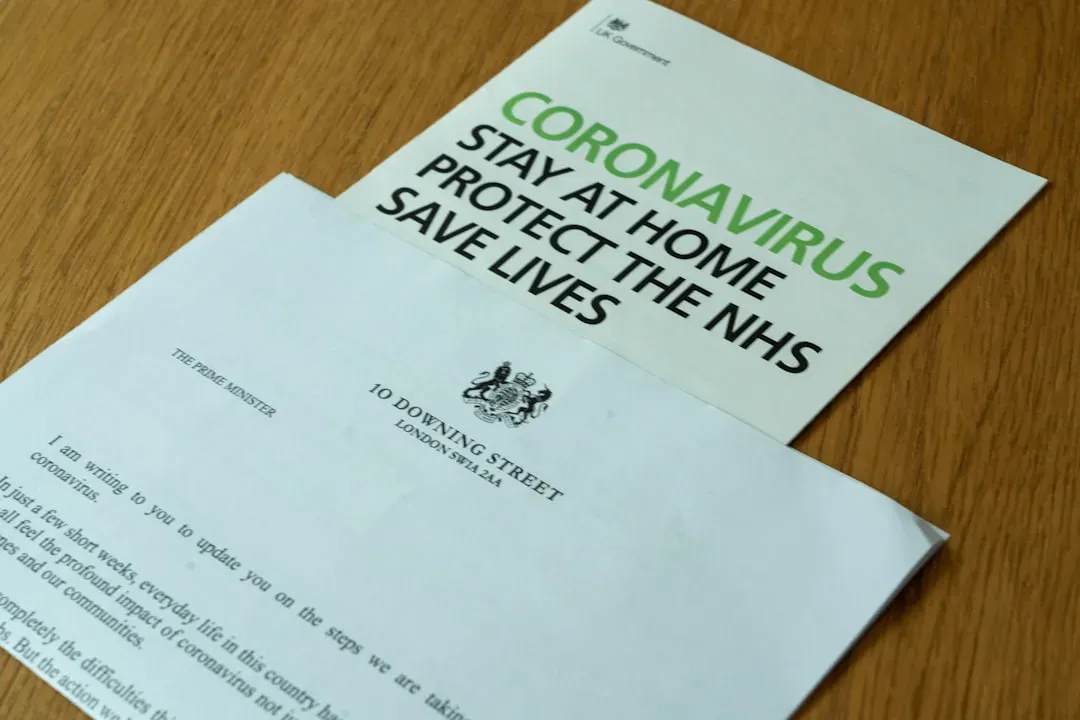
When older public health and biodefense records hit their declassification dates in 2026, you got an unusually candid look at how officials talked behind closed doors during past outbreaks. Unlike the carefully measured public statements you remember from those eras, the internal memos often described worst‑case scenarios, deep uncertainty about transmission, and blunt critiques of coordination failures. You saw risk matrices that were never shown to you at the time, even though they shaped decisions that affected your daily life.
These releases give you an emotional jolt because they confirm two competing truths at once. On one hand, they show that many experts took threats more seriously and earlier than public messaging suggested. On the other, they reveal how fear of panic, economic disruption, or political backlash led to selective communication. Knowing that, you are better equipped to interpret future crises: you can assume that the internal conversation is more alarmed, more complex, and more contested than what reaches the podium, and you can push for transparency without ignoring the genuine dilemmas decision‑makers face.
17. Declassified Space and Satellite Records Exposed Near‑Misses You Never Heard About

You probably think of space as majestic and quiet, but declassified fragments of military and civil space situational awareness reports in 2026 painted a much more chaotic picture. You learned that satellites critical to communications, navigation, and weather forecasting have experienced close passes, unannounced maneuvers by foreign spacecraft, and debris incidents that came far closer to disaster than anyone admitted at the time. Many of those events were buried under technical jargon in specialized bulletins, only emerging now when the details were downgraded in sensitivity.
For you, these near‑miss stories land with surprising force. They show you that the infrastructure you rely on – GPS for directions, satellite links for financial transactions, orbital imaging for climate monitoring – depends on a crowded, contested environment where misunderstandings or miscalculations could have cascading effects. Once those realities are acknowledged in declassified documents, you can no longer think of space as a distant abstraction. It becomes another fragile layer of your everyday life, managed by human beings who are just as fallible as those down here.
18. Quiet Releases Confirmed That “Total Transparency” on Secrets Will Never Arrive
Perhaps the most sobering declassification‑related discovery you face in 2026 is not about any single topic, but about the structure of secrecy itself. As you read through newly public executive orders, oversight reviews, and internal memos on classification policy, you encounter a recurring confession: some categories of information are explicitly meant to remain hidden indefinitely. The language is careful, but unmistakable – certain sources, methods, and strategic capabilities are judged so sensitive that their full details are never intended for you, your children, or even your grandchildren.
That admission forces you to adjust your expectations. You can, and should, fight for more openness, better oversight, and honest statistical reporting; the declassifications of 2026 prove that pressure works. But you also have to recognize that there will never be a moment when someone hands you every secret file and turns out the lights on classification. Instead, you will always live in the tension between what you can know and what is deliberately kept from you, and your task is to narrow that gap whenever you can without pretending it will disappear.
Conclusion: Learning to Live With Partial Truths – and Still Push for More
When you step back from these eighteen discoveries, a pattern comes into focus: governments did not suddenly become generous with secrets in 2026, but they were pushed, cornered, and occasionally persuaded into admitting more than they would have preferred. You saw confirmations that foreign hackers reached closer to your elections than you were told, that surveillance and data sharing work at scales rarely acknowledged, that unexplained aerial phenomena have been treated far more seriously behind the scenes, and that your critical infrastructure is less sturdy than public reassurance implies. None of these revelations give you a complete picture, but together they demolish the idea that official narratives are tidy and complete.
For you, the real takeaway is not to sink into cynicism, but to sharpen your sense of how power and secrecy interact. Declassification is not a gift; it is usually a response to legal deadlines, investigative pressure, or public demand. That means your curiosity, your skepticism, and your willingness to read the dry, redacted documents actually matter. The world you live in will probably always contain shadows, but every time you insist on seeing just a little more clearly, you shift the balance. Knowing that, what hidden page are you most determined to see turned next?