The universe has always fascinated humanity with its mysteries and grandeur. While we marvel at the stars and galaxies, there is an intriguing question that looms in the scientific community and the curious minds of the public alike: how will the universe ultimately meet its end? In this article, we explore 14 scientifically hypothesized ways the universe could end, each revealing more about the cosmic ballet of existence.
1. The Big Freeze

The Big Freeze, also known as heat death, is one of the most popularly discussed ends for the universe. As the universe continues to expand, it will eventually reach a state where galaxies, stars, and planets are so far apart that they no longer interact. Over an unimaginable span of time, all thermal activity will cease, and the universe will drift into a silent, frozen state.
2. The Big Crunch

Contrasting the Big Freeze, the Big Crunch suggests that the universe’s expansion will eventually reverse. Gravity could overcome the expansion, causing the universe to implode on itself. All matter would collapse into a singularity, potentially giving rise to a new Big Bang and a cyclical universe.
3. The Big Rip

The Big Rip theory suggests that the universe’s expansion might accelerate to the point where it tears apart the very fabric of space-time. Galaxies, stars, planets—and eventually atomic particles—would be ripped apart, leading to a catastrophic end.
4. Vacuum Decay

Vacuum decay posits that a bubble of lower-energy vacuum could form and expand at the speed of light, devouring everything in its path. This concept arises from quantum field theory, where our current universe might be in a ‘false vacuum’ state, susceptible to ‘popping’ into a true vacuum.
5. The Big Slurp

The Big Slurp is similar to vacuum decay but focuses on a specific kind of particle known as the Higgs boson found in the Large Hadron Collider experiments. If the Higgs boson value causes instability, it could result in a catastrophic chain reaction.
6. The Great Contraction
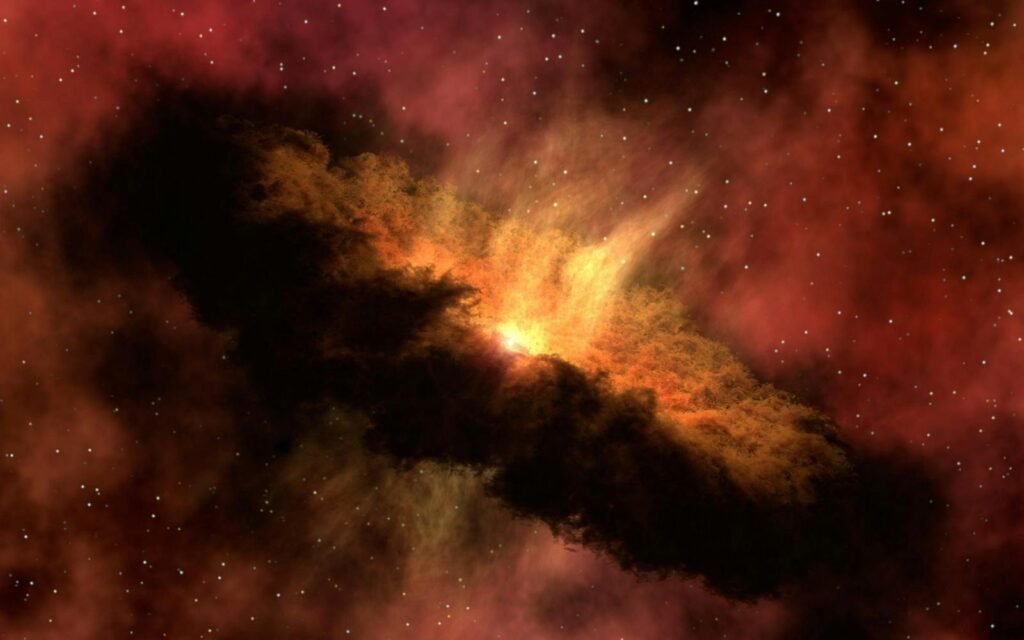
This hypothesis suggests that the universe could compact into another dense singularity, akin to the Big Bang. Unlike the Big Crunch, this contraction could lead to a refashioning of the universe into something possibly unrecognizable.
7. Black Hole Dominance
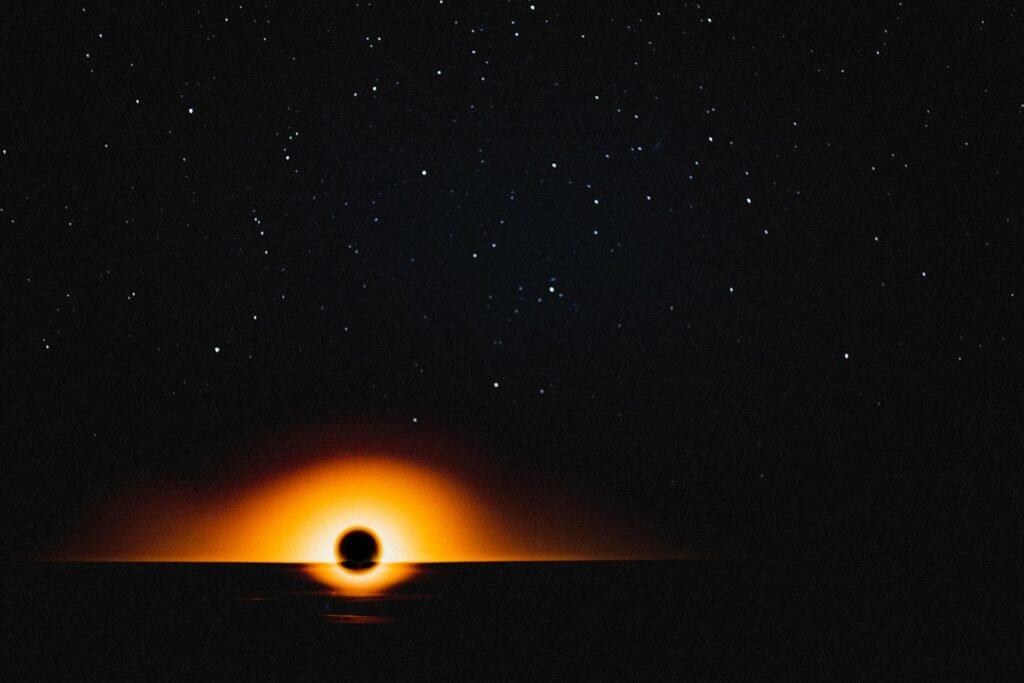
In a universe dominated by black holes, these cosmic giants could consume all matter. Over trillions of years, as black holes merge and grow, they could suck in galaxies, stars, and planets, slowly erasing the universe as we know it.
8. Proton Decay

Proton decay is a theoretical prediction that suggests all matter could eventually disintegrate into radiation. Although not yet observed, if true, it would mean all solid matter in the universe slowly dissolves over time.
9. The Big Bounce

The Big Bounce proposes an oscillating universe model where the universe undergoes endless cycles of expansion and contraction, never truly ending but constantly renewing itself after each collapse.
10. Dark Energy Dominance

Dark energy, which is thought to make up about 70% of the universe, might play a critical role in its fate. Its mysterious properties could either cause a gradual dissipation of the universe’s contents or a violent end through runaway expansion.
11. Eternal Inflation

Eternal inflation suggests new universes constantly form through ‘bubbles’ within the ever-expanding multiverse. Our universe could be one of many, and while it ceases to exist, others continue to form.
12. Entropy Increase

As the universe expands, entropy, or disorder, continues to increase. Eventually, it will reach a maximum level where no energy is usable, leading to a lifeless state with no structure or energy left to sustain processes.
13. Cosmic Collisions

Galaxy collisions are common, but on a larger scale, entire universes might collide. These cosmic collisions could merge universes or annihilate them, creating new environments in the resulting aftermath.
14. Quantum Fluctuations

Quantum fluctuations offer a microscopic end, where small changes at the quantum level accumulate to cause significant macroscopic effects, perhaps even triggering scenarios like the Big Freeze or Big Crunch.
The universe’s end remains one of the most profound mysteries in science. Each hypothesis offers not just a potential conclusion, but a deeper glimpse into the complex nature of the cosmos. While we are far from definitive answers, exploring these theories reminds us of the universe’s vastness and our quest to understand our place within it.