
Most people picture the ocean’s depths as empty, silent, and lifeless. Turns out, it’s the opposite. Below 3,000 feet, where sunlight has never once touched the water, scientists have documented creatures with transparent skulls, glowing mucus, and mating rituals that would make a horror screenwriter blush.
These aren’t movie monsters. They’re real, documented, and swimming right now in the dark. Here’s what marine biologists actually say about the ocean’s strangest residents – and why most of us have never even heard their names.
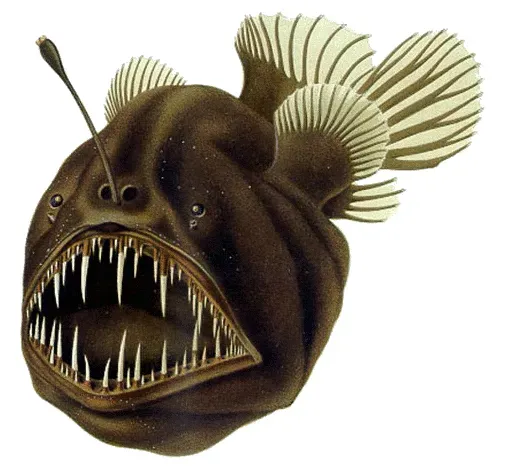
#1 – The Deep-Sea Anglerfish’s Mating Ritual Is Genuinely Disturbing
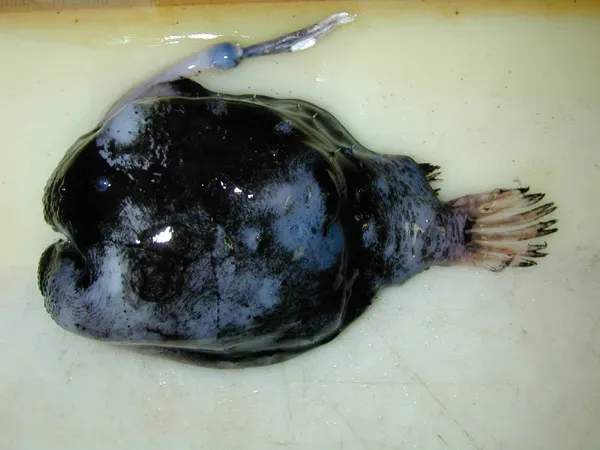
The anglerfish’s glowing lure gets all the attention, but its love life is the truly shocking part.
In the pitch-black deep, finding a mate is nearly impossible, so evolution took a shortcut. A tiny male anglerfish fuses its tissues to a more massive female during mating, allowing the two to share not only sperm but even blood and skin. These are the only animals known to mate this way, essentially becoming permanent, parasitic partners. Over time, his circulatory system can even merge with hers, allowing him to provide sperm on demand while receiving nutrients from her body.
In some species, it gets even stranger. Multiple males can attach to the same female at once, like living reproductive appendages. Scientists only recently figured out why the male’s body doesn’t get rejected by her immune system. Some species lack key genes involved in the body’s immune response, which may make fusion without deadly consequences possible. Compared to what’s coming next, though, the anglerfish’s love life is almost quaint.
#2 – The Vampire Squid Doesn’t Drink Blood, But It Does Something Weirder
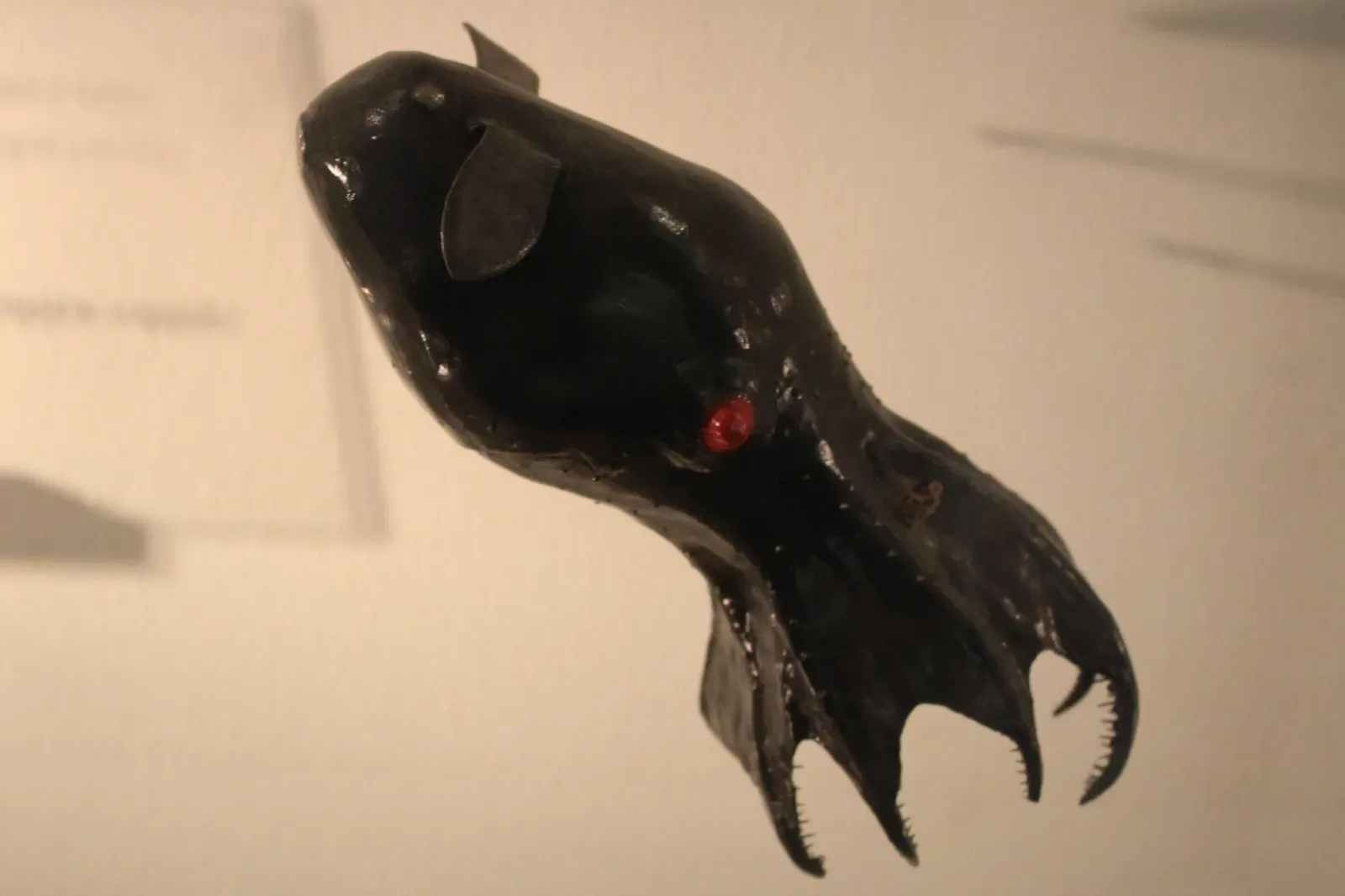
Despite the terrifying name, this creature isn’t a predator at all – it’s basically a deep-sea recycling unit.
Despite its name, the vampire squid is not a bloodsucker; instead, its name derives from its dark coloration and the cape-like webbing between its arms, which gives it an eerie, otherworldly appearance. Most people assume it hunts. It actually doesn’t. Unlike many of its more aggressive relatives, the vampire squid is a detritivore. It feeds on marine snow, the slow drift of decaying particles falling from above. It’s less “Dracula” and more “deep-sea janitor.”
Its defense mechanism is arguably its best trick. If highly agitated, it may eject a sticky cloud of bioluminescent mucus containing innumerable orbs of blue light from the arm tips. This luminous barrage, which may last nearly 10 minutes, would presumably serve to dazzle would-be predators and allow the vampire squid to disappear into the blackness without the need to swim far. It’s essentially fighting off attackers with a glowing smoke bomb. As dramatic as that sounds, the next creature’s survival trick is even harder to believe.
#3 – The Giant Isopod Can Survive Five Years Without Eating
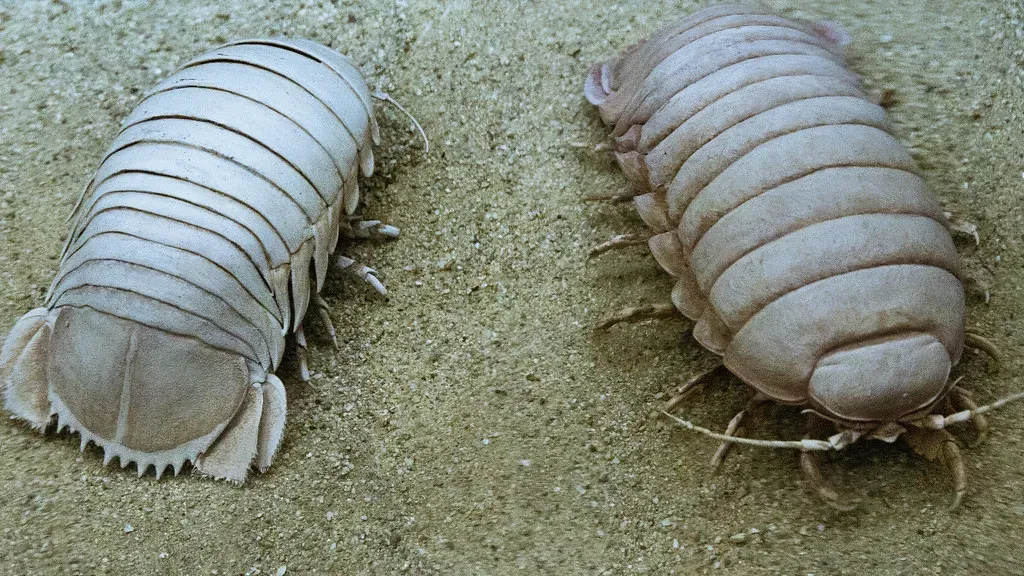
This oversized pill bug shouldn’t exist by the normal rules of biology, and scientists just figured out why.
Food in the deep sea arrives in scraps, sometimes with years between meals. Most animals would shrink to cope. Giant isopods do the opposite. Like the ominous giant squid, giant isopods are a classic example of deep-sea gigantism, a tendency for animals living in deep, cold environments to grow much larger than their shallow-water relatives. This phenomenon is often linked to low temperatures, scarce food resources, and slower metabolisms. One captive isopod at a Japanese aquarium went 5 years and 43 days without eating a single meal – among the longest fasting periods ever recorded in an animal.
Researchers recently found the genetic trick behind it. The genetic code of the deep-sea isopods included a couple copies of ND1, a metabolic gene that originally came from a bacterium, which hopped from the bacterium into an ancestral isopod’s genetic instructions more than 16 million years ago. That stolen gene appears to throttle their metabolism to a crawl in cold water. Combined with a stomach that fills up to two-thirds of the body cavity, the isopod basically built itself a biological hibernation system.
Fast Facts
- Went 5 years and 43 days without a single meal in captivity
- Deep-sea gigantism lets it grow far larger than shallow-water relatives
- Carries a metabolism-slowing gene borrowed from bacteria over 16 million years ago
- Its stomach can fill up to two-thirds of its entire body cavity
If fasting for years sounds strange, wait until you see what’s hiding inside the next fish’s head.
#4 – The Barreleye Fish’s Head Is Literally See-Through
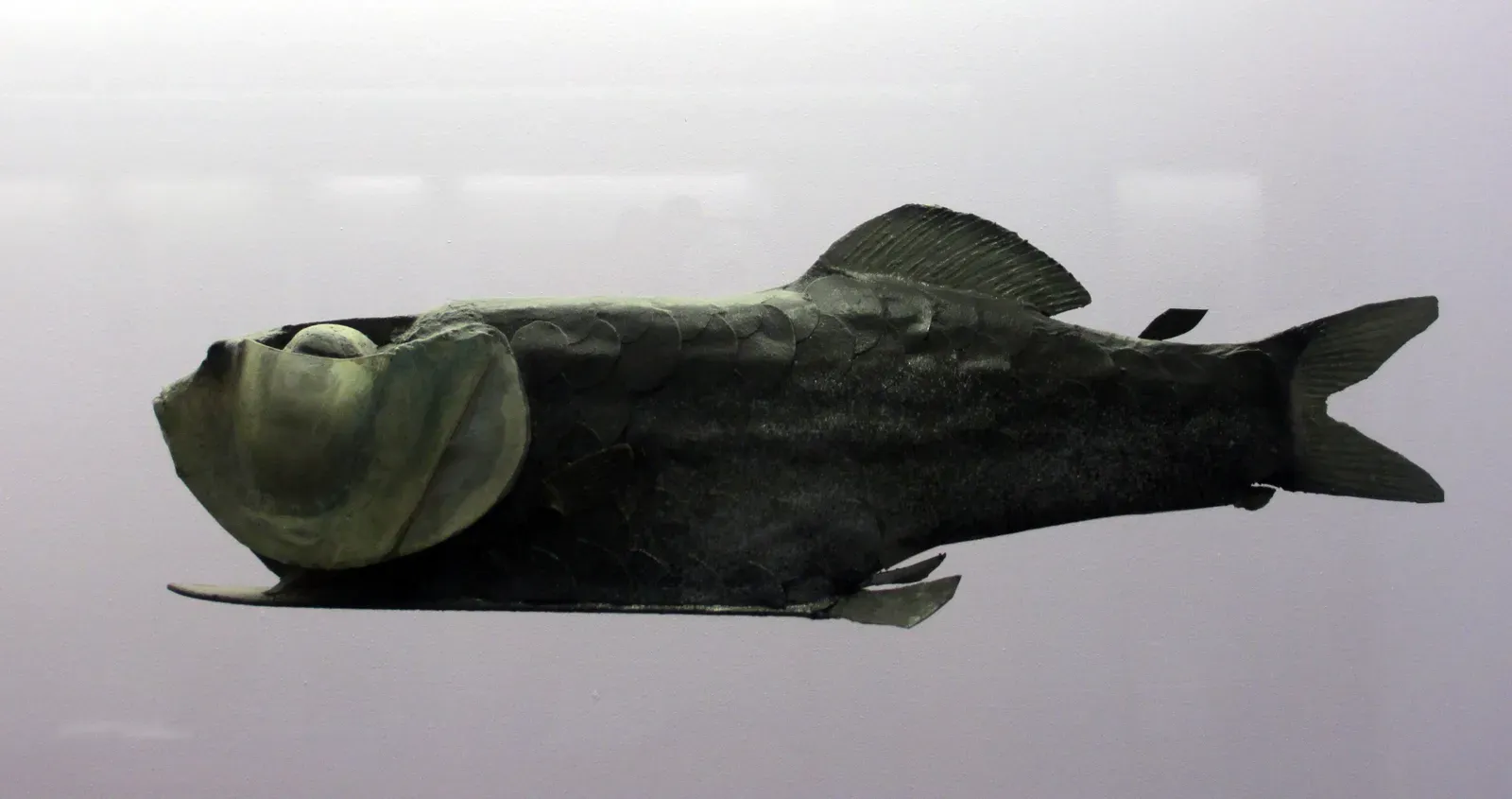
Most fish hide their brains behind bone. This one just doesn’t bother.
It has an eerie transparent skull that looks like a diving helmet and is the only animal on Earth to have eyes under its skin inside its head. You can actually see its brain and nerve endings through the dome, according to researchers who’ve studied preserved specimens. For decades, scientists assumed the fish’s tubular green eyes were frozen in place, staring permanently upward.
That assumption turned out to be wrong. In 2009, MBARI researchers discovered that the barreleye can actually rotate its eyes towards the front so it can see its food while eating. Even stranger, the dark spots on its face that look like eyes aren’t eyes at all – the two spots above the fish’s mouth are more like human nostrils, olfactory organs used for smell. Sightings remain incredibly rare: across more than three decades of deep-sea research and over 5,600 dives, MBARI’s remotely operated vehicles had only encountered this fish nine times as of 2022. That transparent skull is bizarre enough, but the next entry solved an entirely different survival puzzle.
#5 – The Yeti Crab Grows Its Own Food Farm on Its Claws
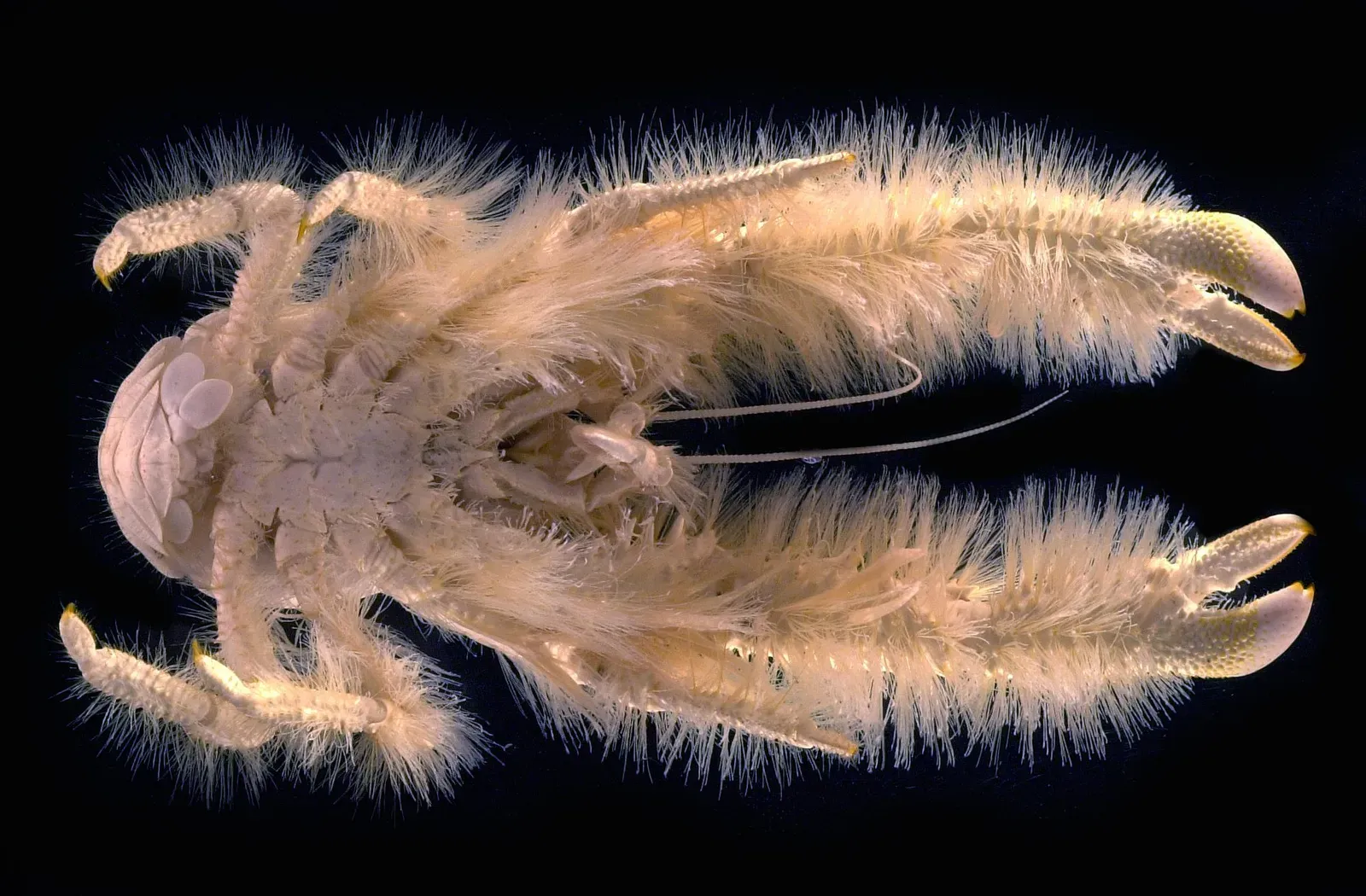
This blind, deathly pale crab doesn’t hunt for dinner. It cultivates it.
Living near scalding hydrothermal vents where sunlight never reaches, the yeti crab solved the food problem in the strangest way imaginable. Its most astonishing feature isn’t its appearance but its agriculture. The long, feather-like setae covering its claws and arms are colonized by dense mats of chemosynthetic bacteria. It’s essentially wearing a garden on its hands. By waving their hairy claws through the plumes of oxygen, methane, and hydrogen sulfide emanating from the vents, they harvest the bacteria growing there.
Life at the vents is a razor’s edge, literally. The habitable zone in which yeti crabs can survive is dangerously small – too close to the vents and they will instantly fry, too far and they can die of hypothermia. To cope, they pack together in staggering numbers, sometimes as many as 700 crabs in a single square meter near a vent. And because its highly reduced eyes mean it is thought to be completely or mostly blind, this entire farming operation happens without the crab ever seeing what it’s growing. Farming bacteria blind is one thing. Flying through the abyss like a cartoon character is another.
#6 – The Dumbo Octopus Flaps Its Way Through the Abyss Like a Cartoon
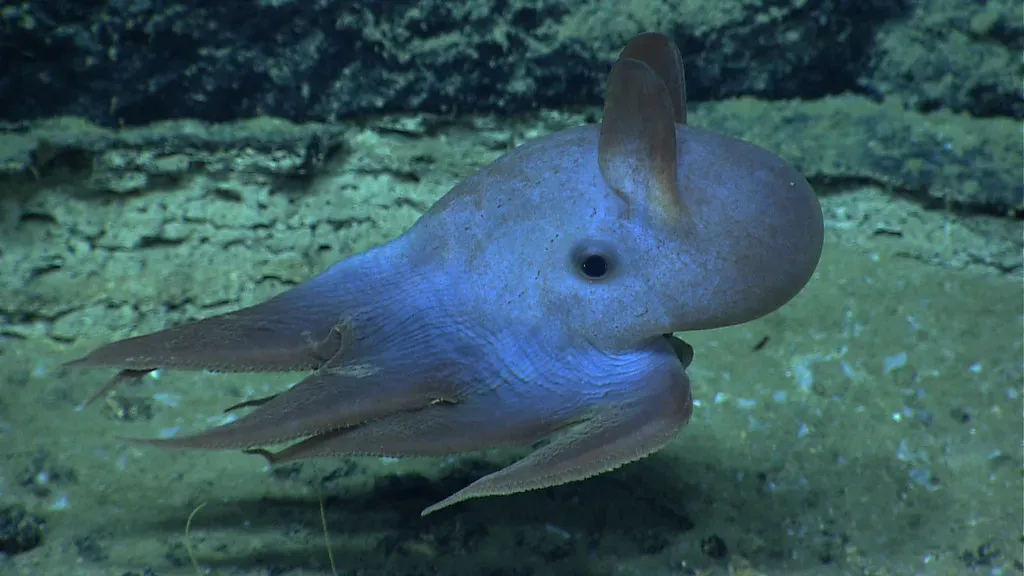
Named after a Disney elephant for a reason, this octopus doesn’t crawl or jet through the water like its relatives – it flies.
Living deeper than almost any other octopus species, sometimes over 13,000 feet down, the dumbo octopus has ear-like fins on its head that flap gently to propel it through the water column. Most people don’t realize it barely uses its arms for swimming at all. Instead, it hovers just above the seafloor, using those fins as its primary engine, a strategy that conserves precious energy in a place where meals are scarce and swimming fast simply isn’t worth the calories.
Unlike shallow-water octopuses that ink, camouflage, and squeeze through tight crevices to escape predators, the dumbo octopus lives in a world with fewer threats and slower predators, so it doesn’t need those dramatic defenses. It swallows prey whole rather than tearing it apart, and it’s one of the few cephalopods that doesn’t rely on speed or deception to survive. Experts consider it one of the most energy-efficient hunters in the entire deep sea. That gentle flapping is nothing like what comes next – this one strikes like a trap.
#7 – The Goblin Shark’s Jaw Shoots Out Like a Spring-Loaded Trap
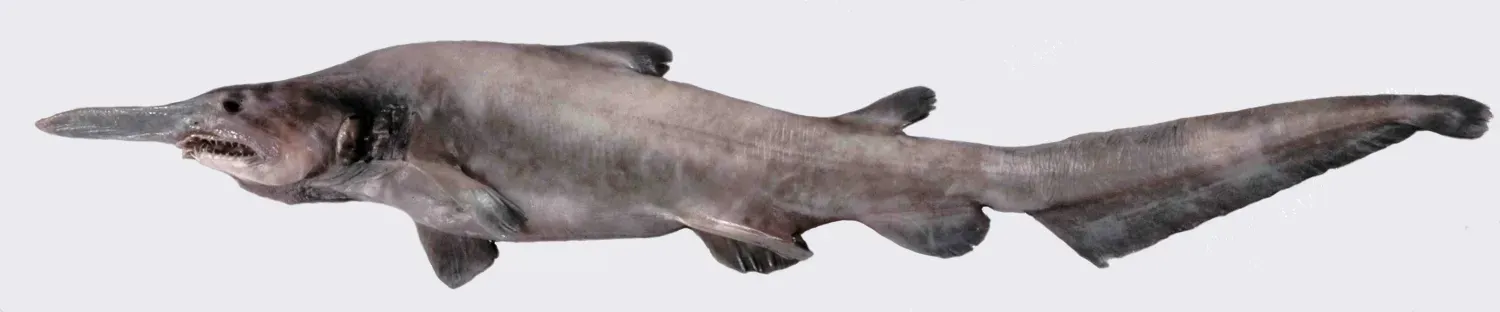
If there’s one deep-sea animal that looks genuinely unsettling, most marine biologists point to this one first.
The goblin shark has a long, flat, blade-like snout that looks almost decorative until it strikes. When prey gets close, its jaw doesn’t just open – it launches forward on elastic ligaments, extending well beyond the face before snapping shut around the victim. This slingshot-jaw mechanism is virtually unique among sharks, and researchers believe it evolved specifically for ambushing fast, slippery prey in total darkness where the shark can’t rely on speed to catch anything.
Its pink, almost translucent skin isn’t a fluke either – it’s caused by blood vessels visible through thin, unpigmented flesh, since camouflage color is pointless in a lightless environment. Fossil relatives of the goblin shark stretch back over 100 million years, earning it the nickname “living fossil” among paleontologists. Despite its fearsome appearance, it’s a slow, sluggish swimmer that relies entirely on ambush and stealth rather than pursuit.
Why It Stands Out
- Jaw launches forward on elastic ligaments, a mechanism unique among sharks
- Pink, near-translucent skin comes from visible blood vessels, not pigment
- Fossil relatives date back more than 100 million years, earning “living fossil” status
- Despite the terrifying bite, it’s a slow swimmer that relies on ambush, not speed
As unsettling as that jaw is, the next creature is the one that inspired centuries of sailor legends.
#8 – The Giant Squid Has Eyes the Size of Dinner Plates
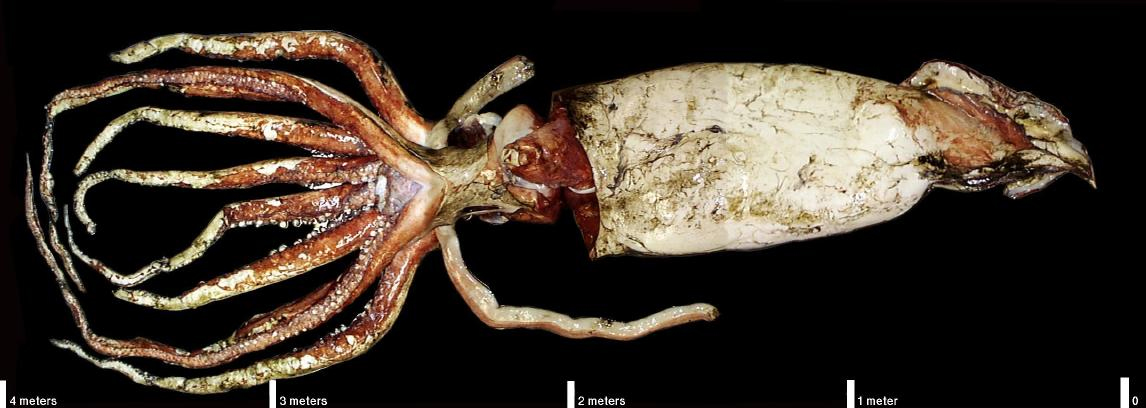
For centuries, sailors described a monster from the deep. Turns out, they weren’t entirely wrong.
The giant squid remained essentially mythical until the 2000s, when researchers finally captured footage of a living specimen in its natural habitat. Its eyes are the largest in the entire animal kingdom, evolved to capture every last photon of light in the crushing darkness thousands of feet down. Scientists believe those massive eyes help the squid detect the faint bioluminescent glow of approaching predators, particularly sperm whales, giving it precious seconds to react before an attack.
Most people don’t realize the giant squid’s real threat isn’t its size – it’s the sucker-lined tentacles ringed with sharp, rotating hooks that leave scars on sperm whales decades after an encounter. Specimens have been recovered measuring over 40 feet long, though most of that length comes from two extraordinarily long feeding tentacles rather than the main body. For decades, everything scientists knew about this animal came from carcasses and stomach contents. Even those dinner-plate eyes can’t compete with the next animal’s stomach.
#9 – The Gulper Eel Can Swallow Prey Bigger Than Itself
![#9 - The Gulper Eel Can Swallow Prey Bigger Than Itself ([1], CC BY 3.0)](https://nvmwebsites-budwg5g9avh3epea.z03.azurefd.net/dws/5e14cad9110ac3571a055ccafd36eb92.webp)
This eel looks less like a fish and more like a mistake – and that’s exactly the point.
The gulper eel, sometimes called the pelican eel, has a head that’s almost entirely mouth, attached to a long, thin, whip-like tail. Its stomach is so elastic that it can expand to swallow prey significantly larger than its own body, an adaptation that makes perfect sense once you consider how rarely food shows up this deep. Rather than hunting constantly, it can afford to wait, then gorge, whenever something finally drifts within reach.
Its tail even ends in a small light-producing organ, believed to lure curious prey close enough to strike. Because meals are so unpredictable at these depths, many experts argue the gulper eel’s “all mouth” design is actually a smarter survival strategy than the sleek, fast-swimming predators we’re used to seeing near the surface. It trades speed and elegance for the simple ability to never miss an opportunity. That elastic stomach is impressive, but the next shark barely evolved at all.
#10 – The Frilled Shark Looks Like It Swam Out of the Jurassic Period
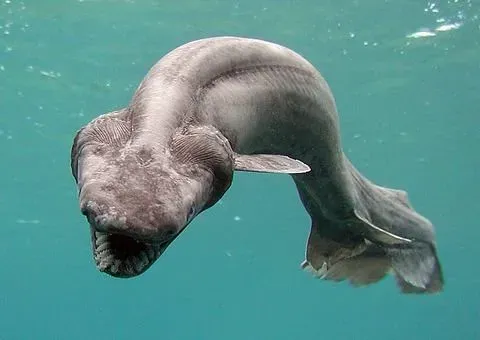
Most sharks evolved dramatically over millions of years. This one barely bothered.
The frilled shark has changed so little from its ancient ancestors that scientists frequently call it a living fossil, with a body plan that traces back roughly 80 million years. Its long, eel-like body and frilled gill slits give it an almost reptilian appearance, and its mouth is lined with rows of small, needle-like, backward-curving teeth designed to snag soft-bodied prey like squid, making escape nearly impossible once caught.
Unlike most modern sharks that give birth relatively quickly, the frilled shark has one of the longest gestation periods of any vertebrate on Earth, believed to stretch beyond three years. That extraordinarily slow reproductive pace, paired with life in a food-scarce environment, means frilled shark populations grow and recover incredibly slowly. Many marine biologists now argue this ancient survivor may be more vulnerable to deep-sea trawling and habitat disruption than almost any other shark species alive today. As ancient as that shark is, the next creature might be even harder to actually witness alive.
#11 – The Colossal Squid Is Heavier Than the Giant Squid, But Almost Never Seen
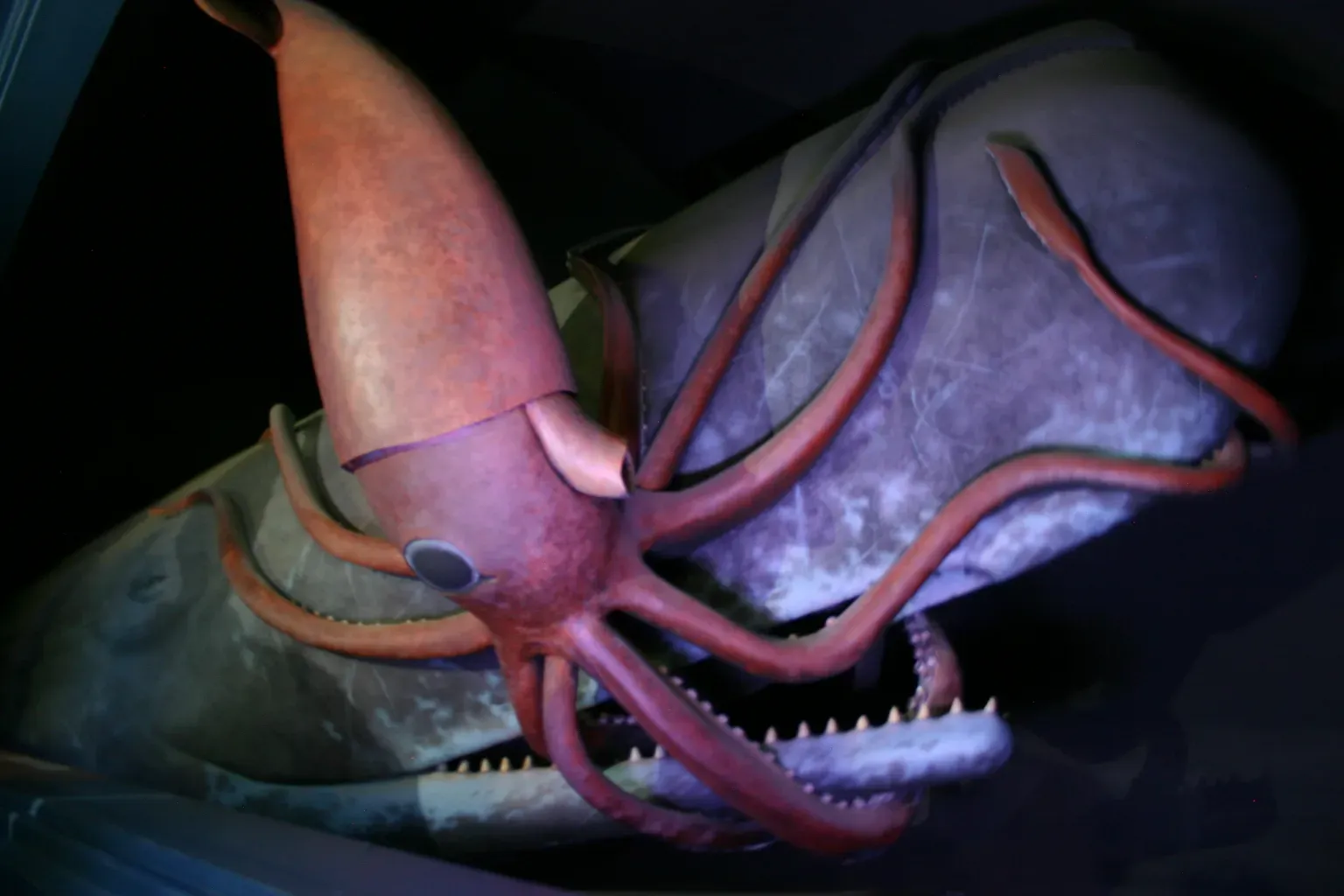
There’s a bigger, heavier cousin lurking even deeper than the giant squid, and it’s rarely ever spotted alive.
The colossal squid, found in the frigid waters around Antarctica, is considered the heaviest invertebrate on the planet, with some specimens estimated to weigh several hundred kilograms. Unlike the giant squid’s simple hooked suckers, the colossal squid’s tentacles are lined with rotating hooks, some with sharp swiveling points, making it one of the most formidably armed hunters in the entire ocean. Most people have never even heard of it, purely because live encounters are almost nonexistent.
Its eyes are believed to be the largest of any animal that has ever existed, an adaptation thought to help it detect the bioluminescent glow of sperm whales hunting nearby in total darkness. Nearly everything scientists know about this animal comes from remains found in the stomachs of whales or from a handful of accidentally caught specimens. It remains one of the least-observed large animals on Earth, despite its record-breaking size.
Quick Compare
- Giant squid: over 40 feet long, simple hooked suckers, first filmed alive in the 2000s
- Colossal squid: heavier overall, rotating swiveling hooks, almost never seen alive
- Both rely on massive eyes to detect sperm whales hunting nearby in the dark
- Most colossal squid knowledge comes from whale stomachs, not live sightings
Size isn’t everything, though. Pound for pound, the next fish might be the deep sea’s most brutal hunter.
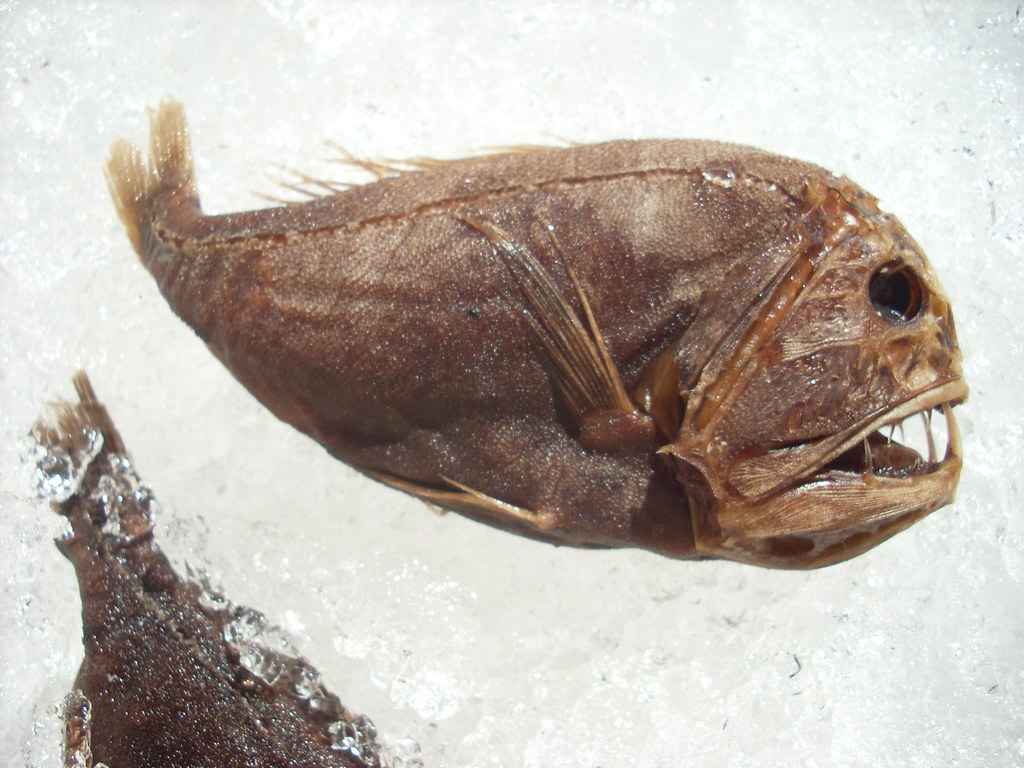
#12 – The Fangtooth Fish Has the Largest Teeth of Any Fish, Relative to Its Body
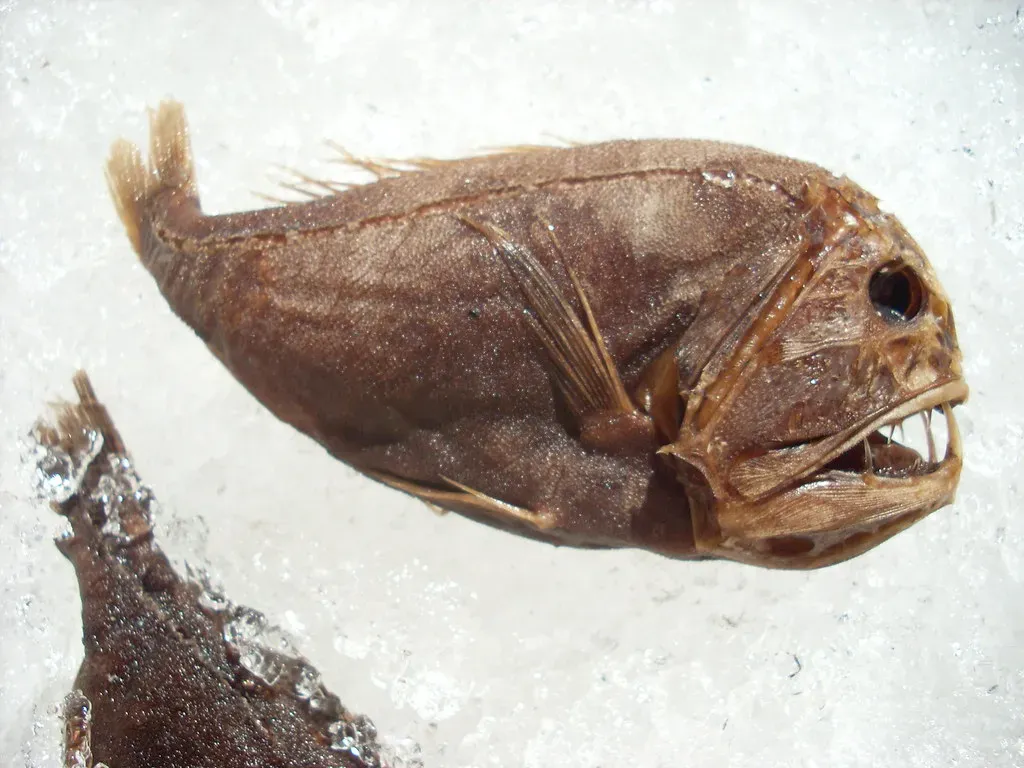
Don’t let its small size fool you. Pound for pound, this fish may be the most heavily armed hunter in the ocean.
The fangtooth’s teeth are so disproportionately large that the fish actually has small pockets on either side of its brain just to accommodate its jaw closing completely. Despite its terrifying appearance, the fangtooth typically only grows to about six inches long, making it one of the clearest examples in nature of “bigger doesn’t mean scarier.” Its bite-to-body-size ratio is considered among the most extreme of any fish species known to science.
Its dark, almost armor-plated skin and heavy build help it survive in some of the deepest, coldest layers of the ocean, sometimes reaching depths beyond 16,000 feet. Because prey is so unpredictable at those depths, the fangtooth is built to seize almost anything that comes near and never let go, rather than being a selective hunter. Its intimidating look is essentially a survival necessity rather than a hunting luxury. Teeth are one kind of weapon. The next creature doesn’t need any at all.
#13 – The Zombie Worm Eats Whale Bones From the Inside Out
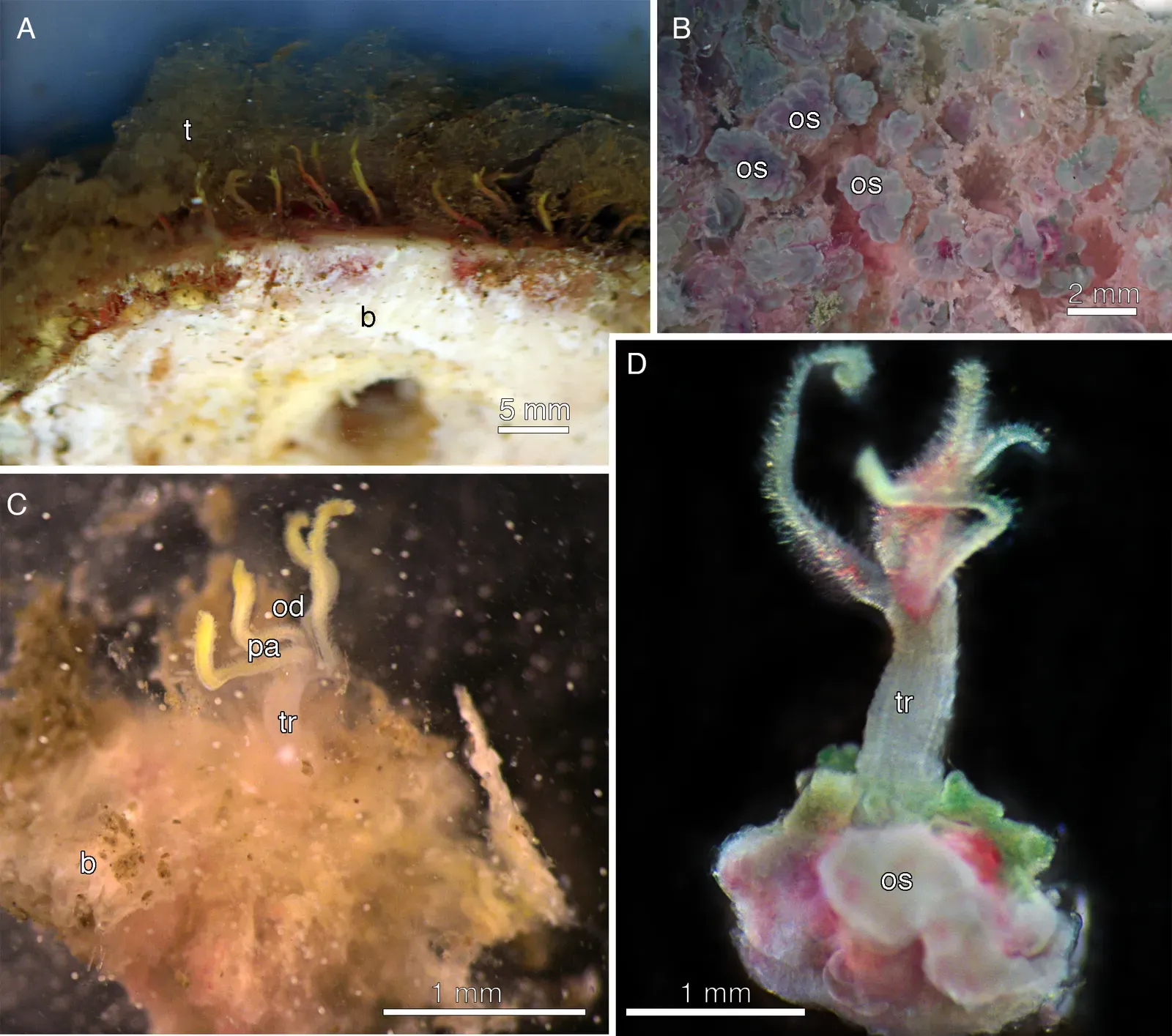
This one sounds fictional, but it’s very real, and honestly a little disturbing.
Zombie worms, scientifically known as Osedax, have no mouth, no stomach, and no digestive system in the traditional sense. Instead, they bore microscopic root-like structures directly into whale bones that have sunk to the seafloor, using symbiotic bacteria living inside their tissue to break down the fats and oils trapped within the bone. They essentially digest whale skeletons from the inside, using bacteria as an internal outsourced stomach.
Whale falls, the carcasses of dead whales that sink to the deep seafloor, can support entire zombie worm colonies for years or even decades, creating a slow-motion ecosystem that thrives long after the whale itself has died. Only female zombie worms grow to a visible, noticeable size; the males remain microscopic and live inside the female’s body for their entire lives. Many researchers consider whale falls one of the most important, least-understood ecosystems in the deep ocean.
Worth Knowing
- No mouth, stomach, or digestive system in the traditional sense
- Relies on symbiotic bacteria to break down fats trapped in whale bone
- A single whale fall can sustain a colony for years or even decades
- Only females grow to visible size; males stay microscopic inside her body
After something that eats bones, this last entry feels almost gentle – almost.
#14 – The Sea Pig Might Be the Most Common Animal You’ve Never Heard Of
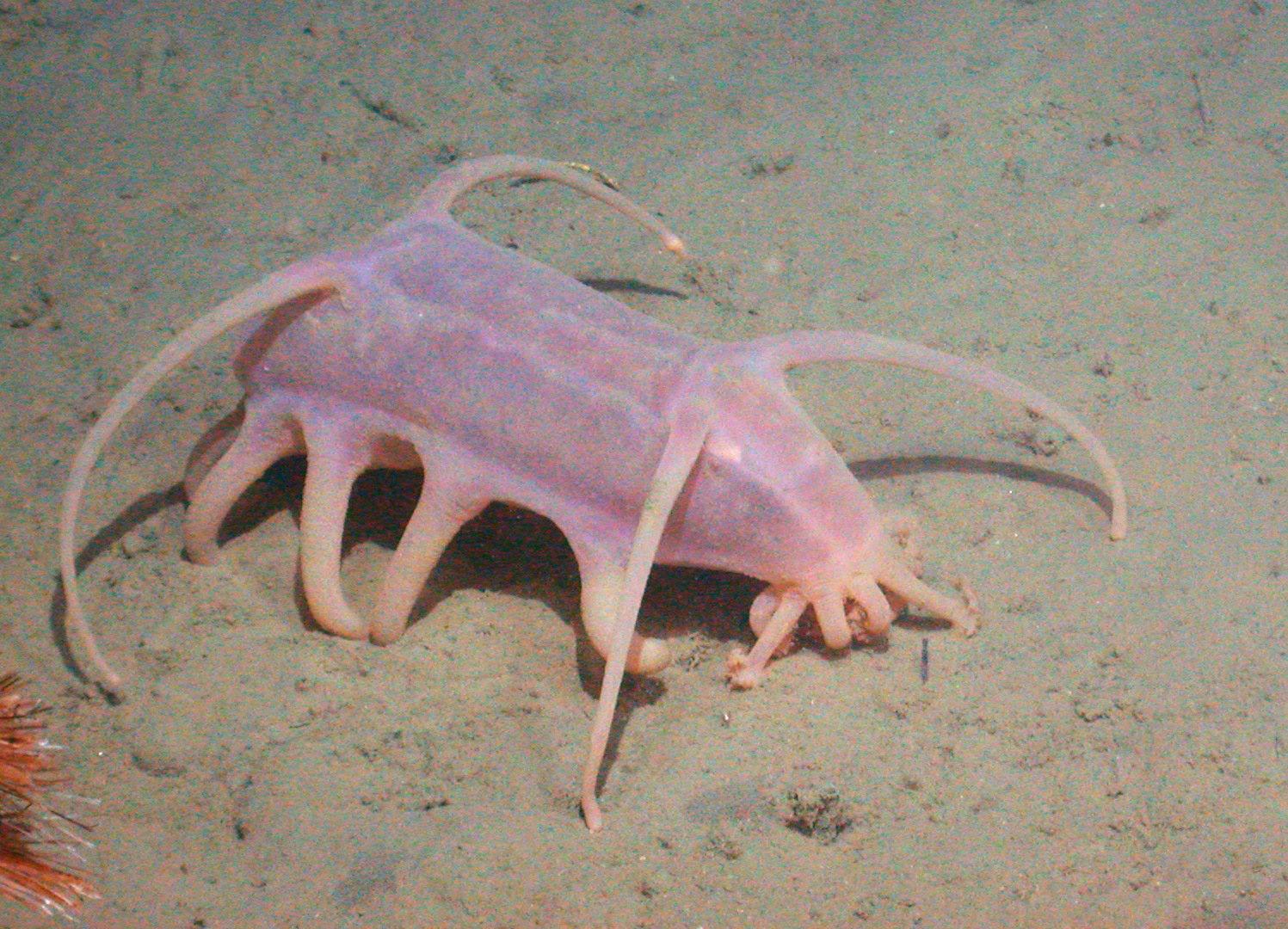
Nobody expects the deep sea’s most abundant creature to look this ridiculous, but here we are.
Sea pigs are a type of deep-sea cucumber that walk across the seafloor on inflated, translucent tube feet, giving them an oddly bloated, almost cartoonish appearance. They gather in massive numbers around whale falls and other nutrient-rich patches, sometimes forming the single most abundant large animal population in entire stretches of abyssal seafloor. Despite being everywhere in the deep sea, most people have never even heard the name.
They feed by shoveling mud into their mouths and digesting the organic material within it, essentially eating dirt for a living. Their translucent bodies and slow, waddling movement have made them internet-famous in recent years, often mistaken for some kind of alien organism rather than a relative of the common sea cucumber. Many oceanographers now argue that “weird” doesn’t always mean rare, and the sea pig is proof that the strangest-looking animals can also be the most successful ones on Earth.
The Bottom Line
Here’s the truth most people never consider: the deep sea isn’t some rare, distant frontier – it’s the majority of our planet, and we’ve barely scratched its surface.
From glowing mucus bombs to whale-bone-eating worms, these 14 creatures prove that “alien life” doesn’t require another planet. It’s already down here, thriving in total darkness, and most of it was only documented in the last few decades.
What strikes me most isn’t the horror-movie biology – it’s how casually these animals solved problems we’d consider impossible. No light, no food, no warmth, and they built entire lifestyles around the absence of everything we assume life needs. The ocean’s floor is stranger, and far less explored, than most of us will ever really grasp – and that should be humbling, not just fascinating.