
For decades, “ancient high-tech” carvings got laughed straight out of serious academic rooms. Aliens, time travelers, lost civilizations – the usual suspects showed up, and museums rolled their eyes on cue. Professors sighed, wrote dismissive footnotes, and moved on.
Except something has quietly shifted. Behind closed conference doors and in dry, careful journals, a strange thing kept happening: specialists took a second look at old, mocked images – this time with better lighting, 3D scanning, and less defensive pride. Fourteen of these carvings have now built up enough scholarly unease that even the skeptics can’t fully wave them away anymore. Here’s exactly what they found, and why the old “just decorative” explanation stopped being good enough.
#1 – The “Helicopter” Relief at Abydos
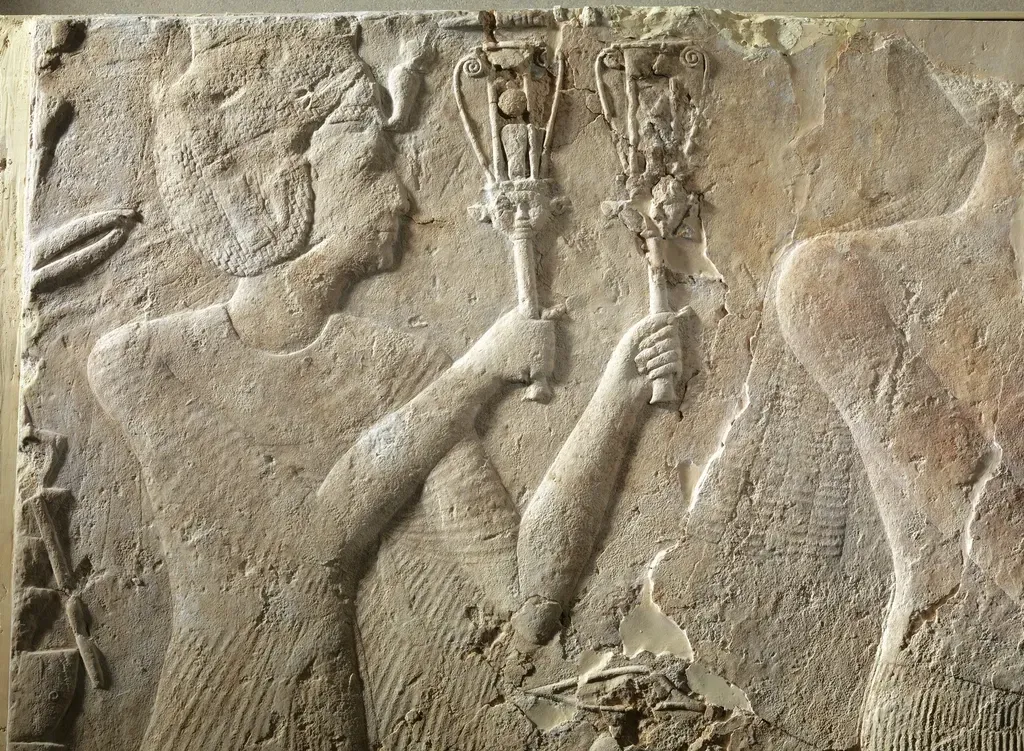
Some carvings get dragged into every fringe documentary ever made, and this is the poster child. In the Temple of Seti I at Abydos, a weathered relief above a doorway famously appears to show a helicopter, a submarine, and a modern aircraft, all lined up in tidy profile. Even sober Egyptologists now admit, off the record and on it, that the resemblance is “disturbingly on the nose.”
The real explanation is quieter but still fascinating: plaster analysis suggests overlapping hieroglyphs from two different inscriptions, eroded and re-cut over centuries until they accidentally spelled out shapes our modern brains desperately want to read as machinery. Chisel marks confirm later edits happened. Scholars no longer call this “crank bait” – instead, they treat it as proof that ancient artisans, purely by accident, can create visual coincidences that look like tomorrow’s technology.
#2 – The Scythian “Goggles” That Look Like Welding Gear

Burial finds from the Scythian nomads of the Eurasian steppe include metal-and-leather face guards that look spookily like modern welding goggles or snowmobile visors. Old catalog notes filed them away as “ceremonial masks,” the museum equivalent of a shrug. But conservators doing careful reconstructions noticed something the old labels missed.
These pieces were built to sit tightly over the eyes and nose – function first, ritual a distant second. The leading theory now is glare protection, from sun, snow, or the fires used in metalworking and horse handling. Historians increasingly describe them as early problem-solving design rather than pure symbolism, which quietly challenges the idea that pre-industrial cultures never thought like engineers.
#3 – The Antikythera Mechanism’s Misleading Shipwreck Reliefs

The Antikythera mechanism itself is real, working technology – an ancient Greek analog computer pulled from a shipwreck. But decorative relief fragments recovered near it raised a separate, quieter question. Some show complex gear-like rosettes and toothed circular motifs that early scholars dismissed as generic ornament.
Fast Facts
- Recovered in 1901 from a shipwreck near the Greek island of Antikythera
- Dated to roughly 150-100 BCE, making the device over 2,000 years old
- Contains more than 30 hand-cut bronze gears inside a wooden case
- Tracked lunar phases, eclipses, and even the four-year Olympic cycle
Now that the mechanism is fully accepted as genuine, those same reliefs are getting reread with fresh eyes. Once you already know a precision gear train sat in that exact cargo, it’s not much of a leap to see the carved rosettes as stylized nods to real gearing and mechanical dials. That doesn’t mean secret computers were everywhere in the ancient world – it means Greek visual culture likely encoded tech imagery far more often than anyone assumed.
#4 – Khmer Reliefs That Seem to Show Bicycle Chains

Angkor’s temples are famous for sweeping religious scenes, not engineering diagrams. Yet on a handful of lintels, researchers noticed linked, repeating oval shapes wrapped around wheel-like forms – uncannily close to a chain-and-sprocket system. Early catalogs shrugged them off as floral borders, nothing more.
Digital tracing and 3D scanning tell a different story: the spacing and interlocking are unusually regular, closer to mechanical drafting than to lotus vines. Nobody is claiming medieval bicycles in Southeast Asia. But Khmer architects were genuine mechanical geniuses in water management, and some historians now argue these “chains” are simplified references to rotating lifting devices or waterwheels – a schematic memory of machinery, hidden in plain sight on a temple wall.
#5 – The “Lightbulb” at Dendera

If you’ve seen one “ancient tech” meme, it’s probably this one. Inside the Hathor Temple complex, a relief shows a large bulging oval held by a figure, connected by a curling shape to a rectangular object – endlessly compared online to a glass bulb, filament, and power cable. Egyptologists have long, and correctly, read it as a lotus flower emitting a snake, a creation symbol tied to the inscriptions around it.
What’s actually changed is the tone. Art historians now openly concede the composition is visually almost indistinguishable from a bulb-and-cable to a modern, tech-trained eye. Rather than mocking the comparison, recent publications use Dendera as a textbook case of pareidolia: proof that symbolic art can accidentally mimic machinery it never intended to show, simply because our own era has trained us to see wires and filaments everywhere.
#6 – Medieval Watermill Carvings That Anticipate Industrial Gear Trains

Western Europe genuinely had machines centuries before the Industrial Revolution – watermills, clockworks, bell mechanisms. What’s surprising is how explicit some 12th- to 14th-century stone carvings are about multi-stage gear systems that weren’t even fully written down in engineering treatises until much later. Church capitals in France and England show intermeshing cogs, vertical shafts, and cam-like protrusions carved with real precision.
For decades these got the vague label “symbolic representations of work.” Now, working alongside historians of technology, art historians are matching individual carvings to plausible real mechanisms – grain mills geared to drive bellows, vertical shafts moving power between floors. In several cases the tooth counts and angles align with feasible mechanical ratios, which is a long way past casual decoration.
#7 – Indian Temple Panels That Resemble Crankshafts

Some of the most intriguing “proto-machinery” images come from medieval Indian temples in the Deccan and Tamil regions. On certain mandapa pillars, carved cylindrical rods with offset lobes and connected yokes look, to modern engineers, exactly like crankshafts and connecting rods. Traditionally these were filed under “floral columns” or “musical pillars” and left there.
Quick Compare
- Old reading: A purely ornamental “musical pillar,” admired for craftsmanship alone
- New reading: A possible schematic of a crankshaft-and-connecting-rod mechanism
- Supporting context: India’s long documented history of water-lifting devices and sugarcane presses
- Missing piece: No matching metal crankshaft has ever been recovered from the period
India’s documented history of sophisticated water-lifting devices, sugarcane presses, and textile machinery makes the newer reading harder to dismiss. Several historians now argue these carved forms may be schematic nods to reciprocating mechanisms used in mills or irrigation, worked into temple art where patrons wanted to flaunt worldly prosperity alongside divine favor. Nobody has found a matching metal crankshaft yet – but the repeated offset-lobe geometry is hard to explain away as random ornament.
#8 – The Nazca Reliefs with Apparent Pulley Blocks

Peru’s Nazca culture is famous for its geoglyphs, but lesser-known carved and modeled figures nearby show workers handling ropes that run over block-like shapes with central grooves. These were originally filed as generic “load-lifting scenes,” a label vague enough to avoid any real debate.
3D scanning changed that. The grooves and side cheeks match exactly what you’d expect from primitive pulley blocks, even though the textbook version of history has real pulleys arriving much later. Some archaeologists now propose simple wooden or stone pulleys were used in construction and depicted in ritual art, then simply rotted away without leaving physical proof. Respectable journals now list the pulley reading as one plausible option among several – a real shift from outright ridicule.
#9 – Chinese Tomb Reliefs That Look Like Belt Drives

In certain Han-era and later Chinese tombs, carved stone panels show workshop scenes with artisans standing beside large wheels connected by long, looping bands. For years these were vaguely described as “spinners” or “grain tools,” a label that didn’t ask any hard questions.
Historians of Chinese technology noticed the artists had bothered to carve very specific details:
- Parallel shafts sitting at different heights.
- A continuous band looping over both wheels with consistent thickness.
That’s exactly how a flat belt drive works. Nobody claims a full industrial transmission line existed in Han China, but it’s now widely accepted that belt-driven machines for silk reeling and grinding were more advanced, and more precisely recorded in stone, than anyone previously gave them credit for.
#10 – Gothic Astronomical Motifs That Double as Gear Schematics

High Gothic cathedrals are packed with zodiac signs and cosmic imagery, but some of those “stars and circles” now look suspiciously like astronomical clockwork diagrams once you know the history. On several Central European façades, 13th-century carved medallions show concentric circles with toothed outer edges linked to smaller circles by radial bars. Guides called them “symbolic heavens” for generations.
Recent dating pushes some of these reliefs a few decades earlier than the first documented monumental clocks, which is where things get interesting. Clock historians argue they may represent early, experimental equatorium or geared-astrolabe concepts, passed along by itinerant scholars and instrument makers before any physical device existed in a cathedral tower. It’s a rare, genuinely strange case where stone art may have preserved an invention’s sketch stage before the invention itself.
#11 – Mesoamerican Ballcourt Panels with Ratchet-Like Details

Mesoamerican ballcourts already obsess over rules, scoring, and ritual drama. On carved panels flanking some courts, archaeologists have spotted stepped and notched elements attached to circular motifs that a few mechanical engineers compare to primitive ratchets or escapements. Older art histories called them “decorative steps” or “stylized hills” and left it there.
Worth Knowing
- More than 1,500 ballcourts have been documented across Mesoamerica
- The oldest known ballcourt, at Paso de la Amada in Chiapas, dates back roughly 3,670 years
- Ballcourt carvings routinely blended sport, ritual, and political messaging in a single panel
- No physical ratchet tool from the era has ever been recovered to confirm the mechanical reading
A better grasp of Mesoamerican engineering – especially in waterworks and calendrical devices – has people revisiting these engravings. The notches appear in regular sequences, and at one site they line up with a player’s hand on a carved “handle,” suggesting a turning motion rather than a static landscape. No actual ratchet tool has ever been found from this period, so the evidence stays thin – but “possible mechanical symbolism” is now a serious line item in the interpretive debate, not a punchline.
#12 – Assyrian Reliefs and the “Impossible” Screw Pump

Neo-Assyrian palace reliefs from sites like Nineveh are a goldmine of ancient technology: chariots, siege engines, and more. In a few riverine garden scenes, scholars have long noted workers operating what look like inclined tubes with internal spirals, attached to crank-like handles. For over a century, catalogues dodged the obvious comparison to the Archimedes screw pump, supposedly invented centuries later in Hellenistic Greece.
Interdisciplinary teams recently revisited these reliefs with sharper photography and physical modeling, and their verdict is uncomfortable for the textbook timeline: at least some Assyrian carvings are consistent with a screw-based water-lifting device, well before Archimedes. That doesn’t make the Greek attribution fake – inventions get reinvented all the time. But it does wreck the tidy story of one genius, one moment, one origin point.
#13 – Renaissance Annunciation Scenes Hiding Proto-Telescopes

Several late-16th-century religious paintings and carved altarpieces from Italy and the Low Countries include odd cylindrical objects with lenses or caps, tucked on shelves or being examined by scholars in the background. For years these were blandly cataloged as “scroll cases” or “spyglasses,” with dates that awkwardly predate the accepted invention of the telescope by a few years.
As scholars tightened the dating on both the artworks and the earliest documented telescopes, the overlap became hard to ignore. Some art historians now argue plainly that craftsmen and natural philosophers were tinkering with lens-based tubes well before any single “official” invention announcement. The carvings and painted details effectively document a gray zone of prototyping that the written record barely mentions – a reminder that art often catches technology mid-birth, not neatly after the fact.
#14 – The Baghdad “Battery” Vessels and Their Carved Echoes
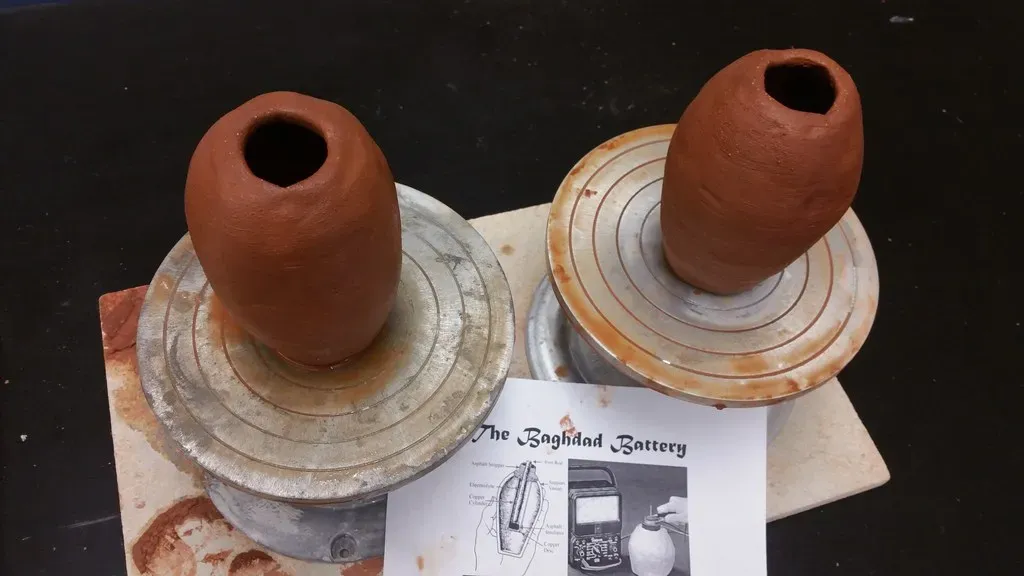
The so-called Baghdad Battery – ceramic jars with bitumen stoppers and metal parts from Parthian or Sassanid Iraq – has swung wildly between fringe fame and academic embarrassment. On their own, the jars are ambiguous. What actually shifted the tone in academic circles was a set of stone and relief depictions of similar jar-and-rod assemblies, long dismissed as generic storage scenes.
At a Glance
- Discovered in 1936 at Khujut Rabu, a village near Baghdad, Iraq
- A clay jar roughly 13 cm tall holds a copper cylinder and an iron rod, sealed together with bitumen
- Dated to the Parthian or early Sasanian period, roughly 250 BCE to 224 CE
- Modern replicas filled with vinegar or another acidic liquid have produced up to 1.1 to 1.4 volts
When conservators compared those carvings to the actual excavated vessels, the matches in proportion and detail became hard to shrug off. Nobody credible claims proof of ancient electric devices. But in the last two decades, more publications openly concede that some elites could plausibly have used simple galvanic cells for plating or ritual “magic” tricks, and that visual culture may have recorded these as recognizable, standardized objects rather than random pottery. That single admission reopened a century-old debate that most scholars thought was long closed.
The Bottom Line

Across all fourteen carvings, the pattern is almost boring – and that’s exactly why it’s worth taking seriously. Most don’t prove lost civilizations or secret time travelers. They prove something messier and, honestly, more interesting: our timelines for when machines were imagined, prototyped, and visually recorded are far less clean than the textbooks pretend.
Art historians, once aggressively skeptical for good reason, are now quietly admitting that some “decorative” motifs really do map onto gear trains, belt drives, screw pumps, and experimental instruments. My honest read? Scholars spent so long reacting against bad TV and wild theories that they threw out a few genuinely suggestive cases along with the nonsense. Better dating, better imaging, and less academic pride are finally rehabilitating them – not as smoking guns, but as stone and plaster snapshots of technology hiding in the shadows of history, waiting for someone to stop laughing long enough to look closely.
Which one convinces you, and which one still smells like wishful thinking? Argue it out in the comments.