Most people assume a “perfectly aligned ancient temple” means mystical energy lines, lost civilizations, or aliens with laser levels. The real story is weirder than that, and honestly more impressive. Survey-grade laser scans and satellite data keep turning up alignments so tight that they outpace what historians assumed these builders were even capable of measuring.
No lasers, no spacecraft, no shortcuts. Just centuries of patient sky-watching, ropes, stakes, and a level of geometric obsession that modern architects are still trying to explain away. Here are eleven temples where the numbers finally got too precise to dismiss as coincidence.
#11 – Abu Simbel, Egypt: A Sunbeam That Hits Twice A Year
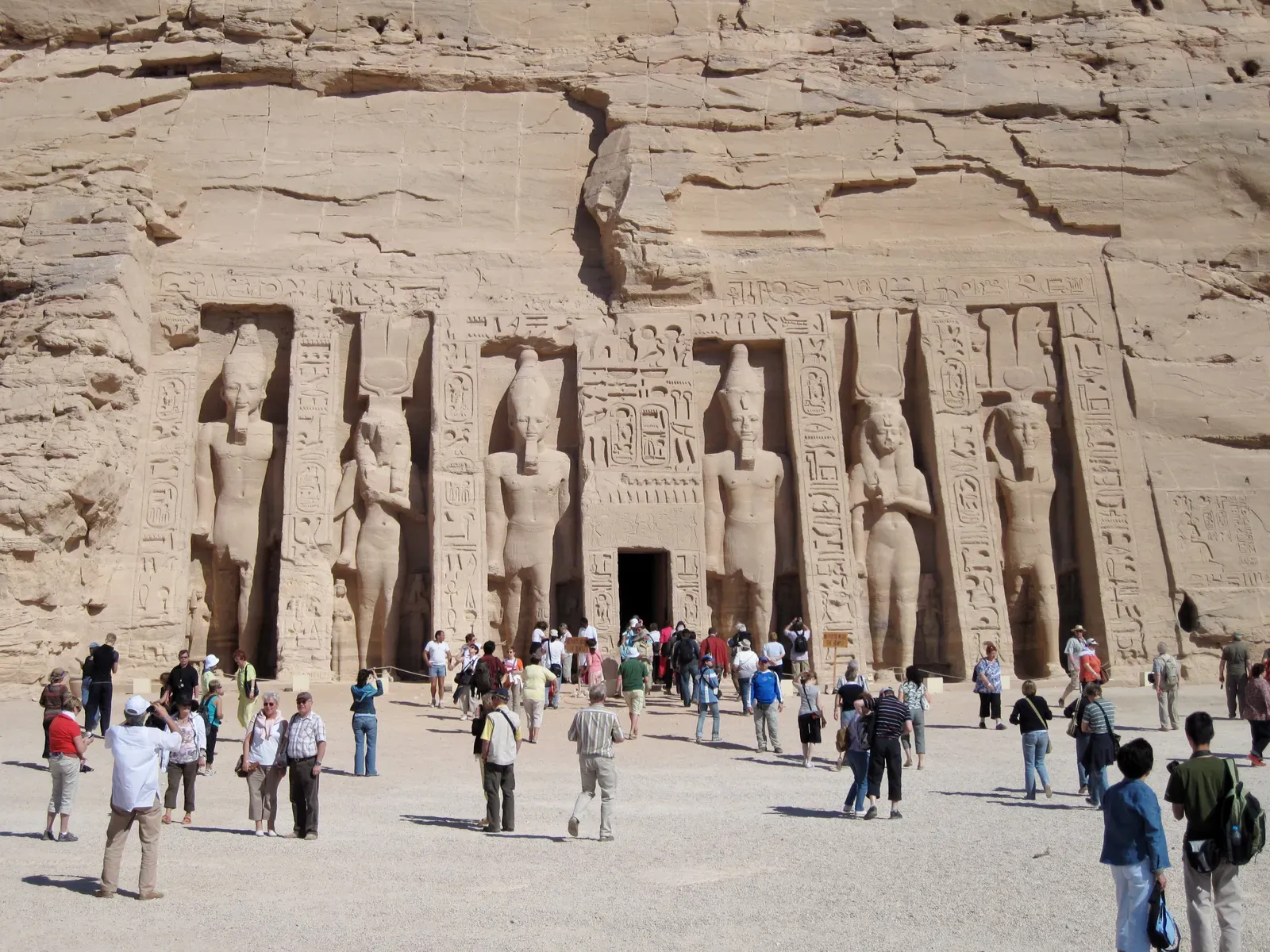
Architects used to file this under “happy coincidence.” The data no longer lets them. Carved into a cliffside in the 13th century BCE for Ramesses II, the Great Temple at Abu Simbel is angled so the rising sun travels 60 meters into solid rock and lands directly on three of four seated gods, on two specific mornings each year. The fourth figure, Ptah, god of the underworld, stays deliberately in shadow. Modern laser scans confirm the beam is narrow enough that a shift of a few degrees would have missed the statues entirely.
What really unsettles designers is the sequencing problem. Someone had to nail that alignment before a single block was carved away, using nothing but repeated horizon observations and simple sighting tools, with zero room for a redo once the chisels started. When engineers relocated the entire complex in the 1960s to save it from the Aswan High Dam floodwaters, they threw modern surveying equipment at the problem and still struggled to reproduce that same twice-yearly effect.
#10 – Borobudur, Indonesia: A Stone Mandala With Stellar Symmetry
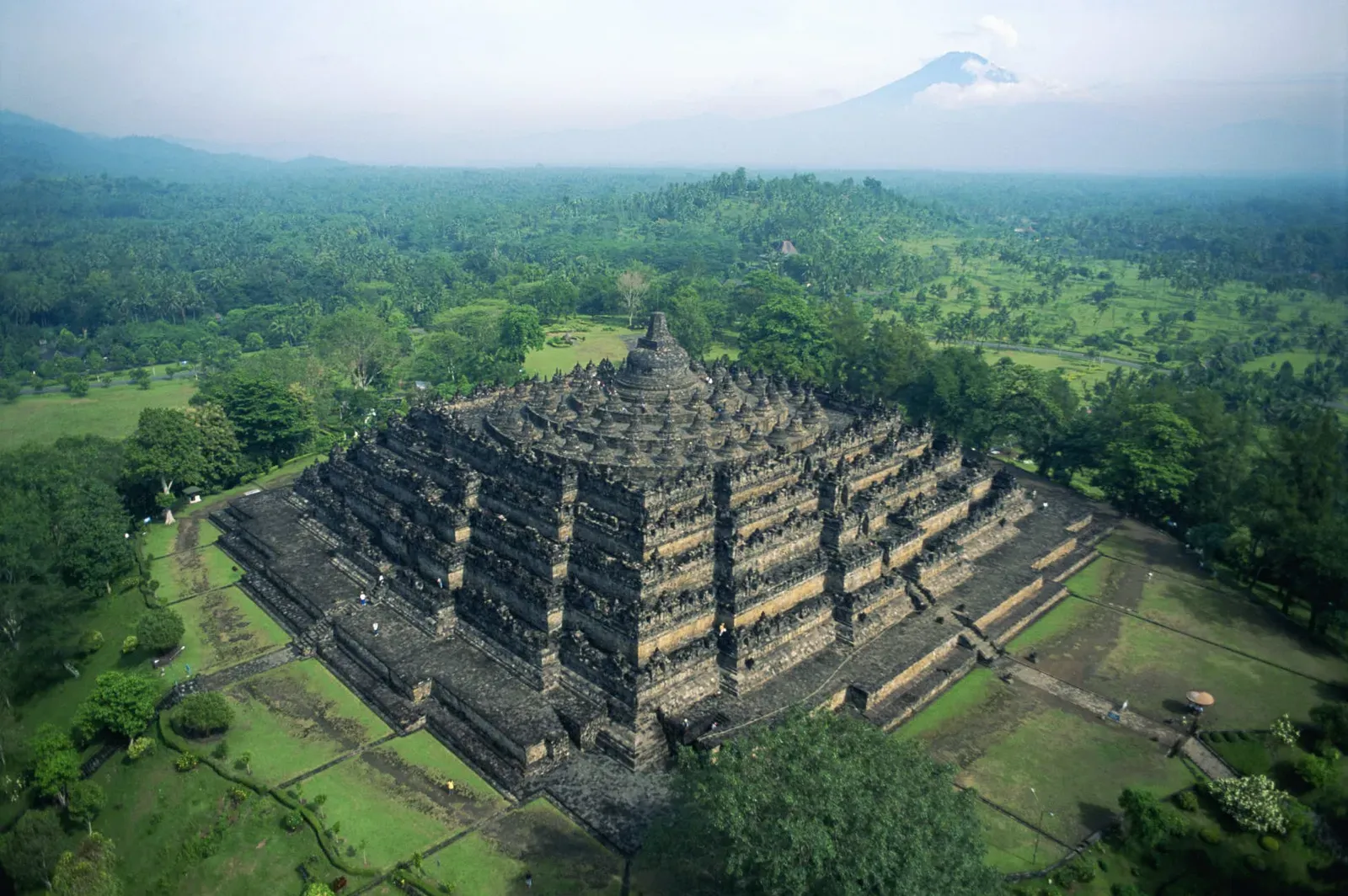
From ground level it just looks like an enormous Buddhist monument. From above, and under a measuring tape, it turns into something else entirely. Borobudur, built around the 8th to 9th centuries CE on a Javanese hilltop, is laid out as a stepped mandala whose central axis lines up with the cardinal directions to within a fraction of a degree. There were no metal theodolites involved, no compasses as we know them, just a volcanic slope and builders who refused to be off by even a little.
The deeper you look, the stranger it gets. The proportional relationships between the terraces and the central stupa repeat at multiple scales, almost like someone applied the same design formula over and over, long before anyone had a word for “algorithm.” Geologists have also found hidden retaining walls the builders used to compensate for uneven ground, yet the cardinal alignment never wavers. Tourists see pretty symmetry; engineers see a surveying feat that should not have come out this clean for the period.
Fast Facts
- Built during the 8th and 9th centuries CE under the Syailendra dynasty
- Assembled from more than two million interlocking andesite stone blocks with no mortar
- Structured as nine stacked platforms: six square terraces topped by three circular ones
- A 1977 survey uncovered a repeating 4:6:9 ratio built into the temple’s proportions
#9 – Temple Of Karnak, Egypt: A Corridor That Tracks The Midwinter Sun
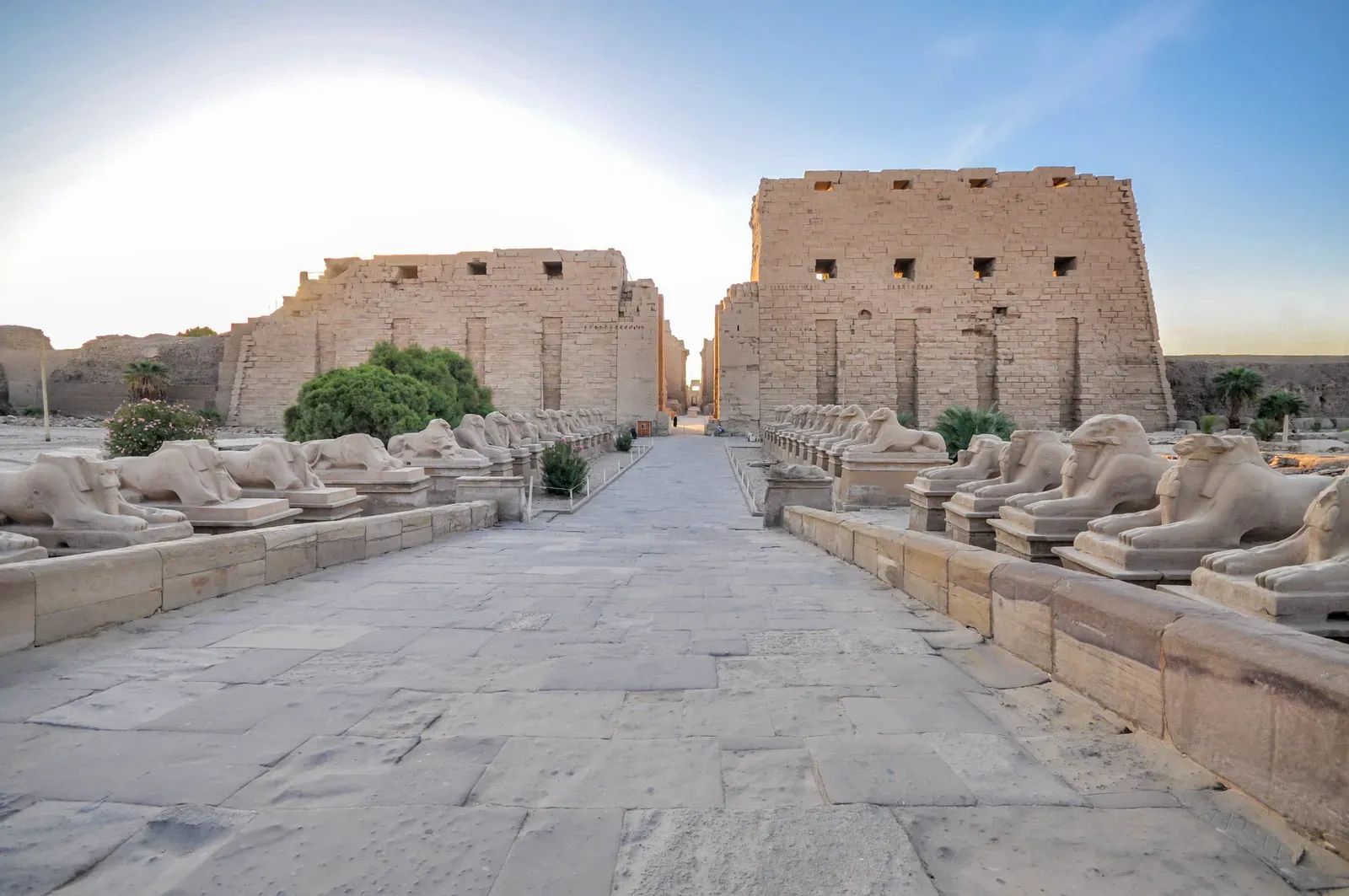
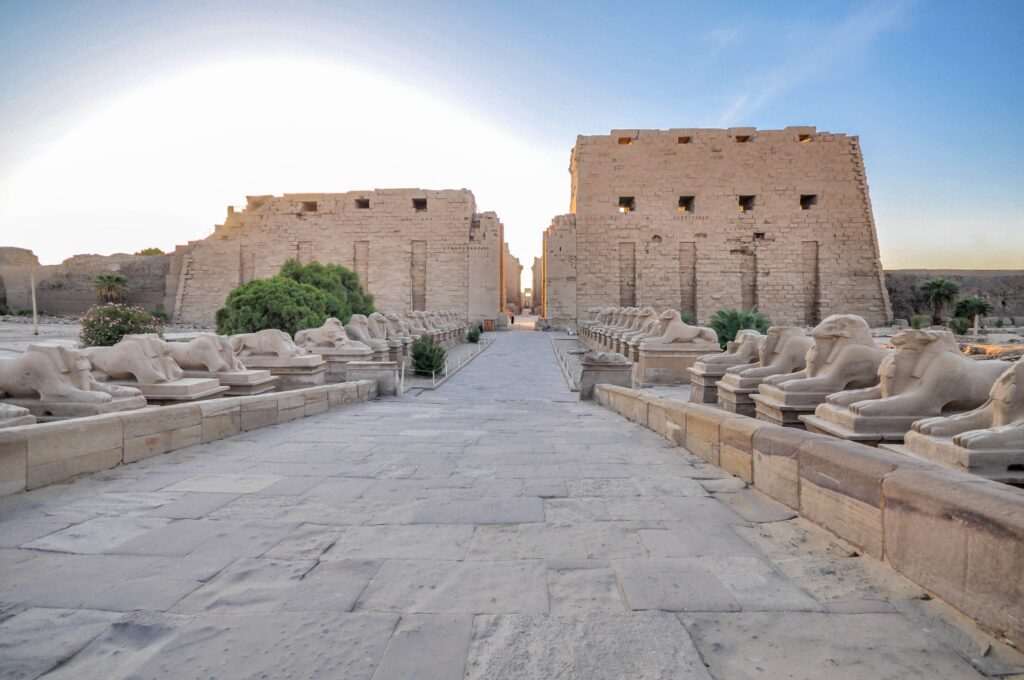
Most visitors remember the forest of columns. Surveyors remember the numbers. The Temple of Amun-Ra at Karnak isn’t one building but a sprawling, centuries-long project, yet the main axis of the Great Temple is angled so precisely that midwinter sunrise sends light straight down the central corridor and into the sanctuary at dawn. That alone would be impressive for a single build. Karnak had multiple pharaohs adding courts and pylons over hundreds of years, each with their own agendas, and the line still holds.
Laser measurements have confirmed the longitudinal axis stays locked onto that solar event with an angular deviation small enough to rival some 19th-century observatories. To pull that off, generation after generation had to preserve a baseline survey older than their own grandparents, in stone, with almost no drift. This was an era of ropes, stakes, and eyeballs, not GPS. Guidebooks still sell Karnak as a religious center, but a growing number of architects quietly file it under “ancient precision instrument.”
#8 – Angkor Wat, Cambodia: A Temple That Doubles As A Solar Calendar

Angkor Wat gets hyped as the world’s largest religious monument. What gets far less attention is how accurate it is. Built in the early 12th century CE, this temple faces west, which was already unusual for its time. At the spring and autumn equinoxes, observers on the causeway watch the rising sun crown the central tower almost dead-on, an alignment sharp enough that a single degree of error would ruin the effect completely.
Recent studies have gone further, showing that key dimensions, like the lengths of the galleries, quietly encode astronomical cycles in meters of stone. Architects reviewing high-resolution satellite imagery now admit the plan is too coherent to be accidental; the moat, towers, and causeways sit on a grid tying celestial events to exact sightlines and doorways. Most mainstream travel write-ups still call it “symbolic” rather than “measured,” maybe because admitting the precision means admitting an advanced surveying culture nobody gave them credit for.
#7 – Machu Picchu’s Sun Temple, Peru: Windows Tuned To Solstices

Everyone comes for the view. Almost nobody realizes how tuned the stonework actually is to the sky. Within Machu Picchu, the semi-circular Temple of the Sun wraps around a carved rock outcrop, its two trapezoidal windows positioned so that the June and December solstice sunrises fall directly into those openings, lighting interior niches and casting shadows across carved markers with unsettling accuracy.
For a site perched on a ridge at 2,400 meters, wrapped in shifting mist and irregular terrain, that kind of celestial fine-tuning is not trivial. Modern architects who’ve tried modeling the horizon with current software still struggle to match the Inca builders’ accuracy without years of observation logs. Machu Picchu also sits on a landslide-prone mountain spine, yet its core structures remain plumb and aligned within tight tolerances after centuries of seismic activity, which is why structural engineers now use it as a textbook example of pre-modern seismic and astronomical integration.
Worth Knowing
- Machu Picchu was built around 1450 CE under the Inca emperor Pachacuti
- The citadel sits roughly 2,400 meters above sea level on a narrow mountain ridge
- The Temple of the Sun’s curved wall follows the natural contour of a granite outcrop
- The site stayed largely unknown outside the region until its rediscovery in 1911
#6 – The Parthenon, Greece: Subtle Curves And Near-Perfect Orientation
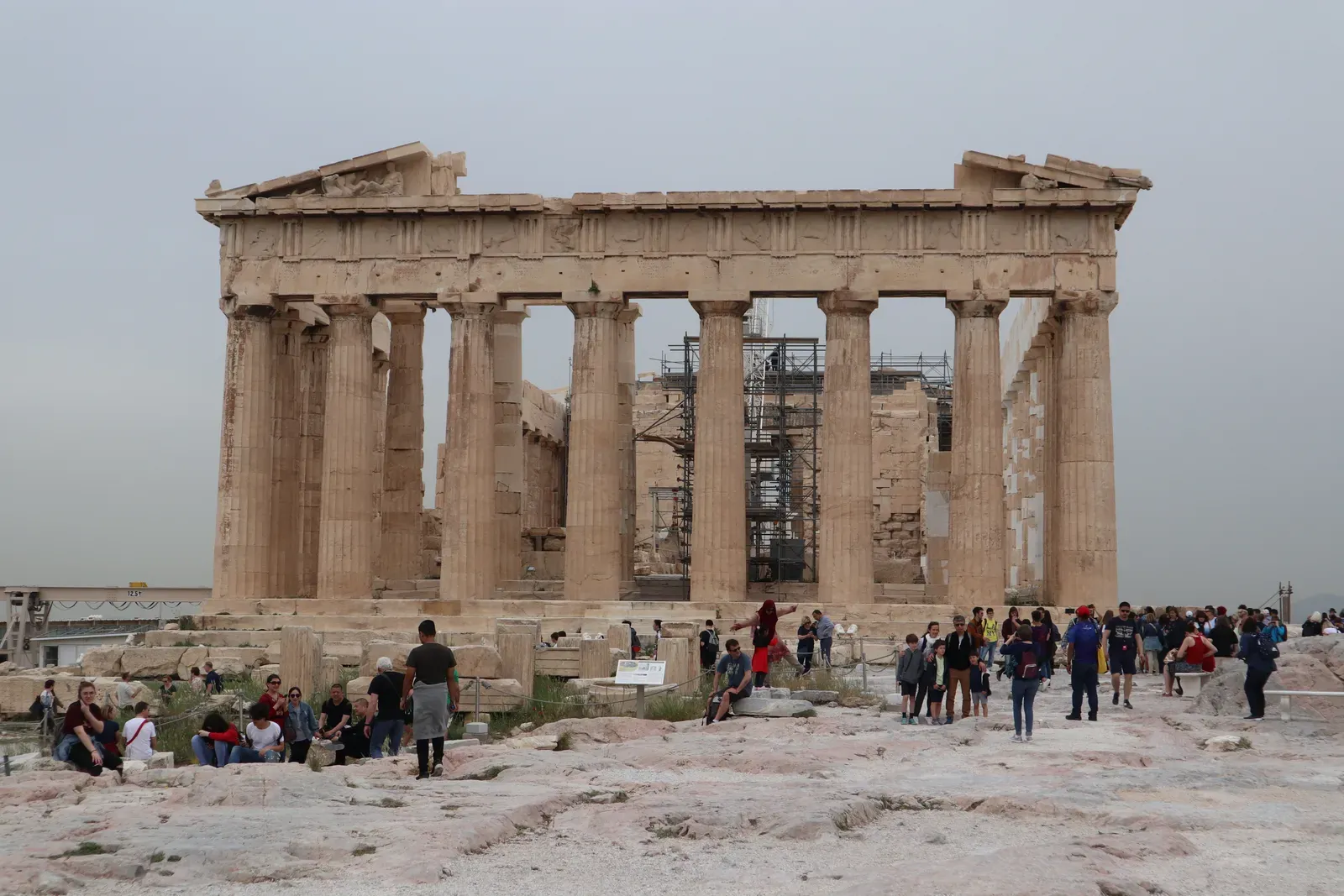
People think of the Parthenon as “just” a beautiful old building. The geometry underneath is a lot meaner than that. Completed in the 5th century BCE, it sits on the Athenian Acropolis with its long sides running almost exactly east to west. The real jaw-dropper for architects is the combination of that orientation with micro-corrections: the floor curves slightly, the columns lean inward, and the corner columns are thicker, all deliberate fixes for optical illusions and structural stress, measured in millimeters across a 70-meter span.
When survey teams digitized the ruin, they found deviations from “ideal” geometry so small they would challenge 19th-century stonecutters, let alone masons working with bronze tools in the 5th century BCE. That east-west bias also reflects a working knowledge of solar paths; on certain days, sunlight enters in predictable sheets that illuminate the inner chamber. Historians used to frame Greek temples as mostly decorative. Plenty of architects now admit the Parthenon is essentially an analog parametric model, executed entirely by hand.
#5 – Chichén Itzá’s El Castillo, Mexico: A Pyramid That Animates The Equinox
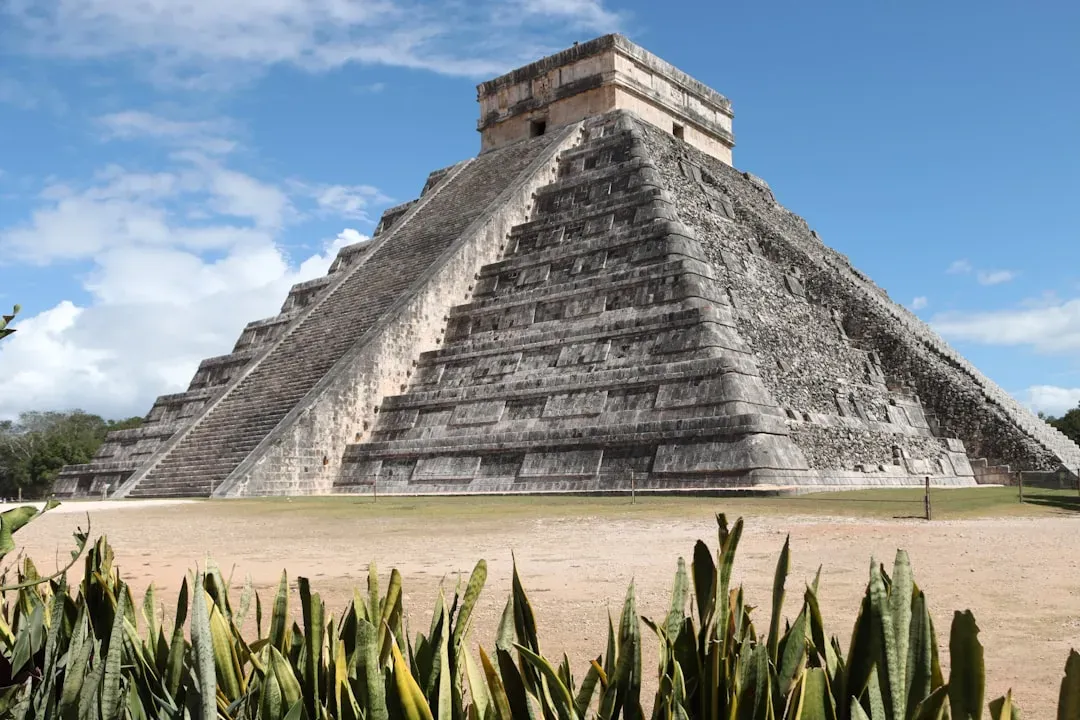
If a modern architect pitched this as a light-and-shadow show, clients would assume it was CGI. El Castillo, the step pyramid at Chichén Itzá, is famous for the “serpent” that crawls down its staircase during equinox sunsets. As the sun drops to just the right angle, triangular shadows cast by the terraces create the illusion of a snake’s body sliding down to meet the carved serpent head waiting at the base, and it only works if the pyramid’s orientation, stair pitch, and terrace dimensions all cooperate within very tight angular tolerances.
What often gets glossed over is that this isn’t a one-off party trick. The building’s 365 steps and four sides encode the solar year, while the serpent illusion is tuned to a narrow window of days around the equinox. Architects who’ve digitally modeled the structure admit that a small error in rotational alignment or terrace depth would have broken the illusion entirely, especially given how low the tropical sun sits on the horizon. Calling this “symbolic” badly undersells the math it took to pull off.
#4 – Göbekli Tepe, Türkiye: Prehistoric Pillars And Stellar Lines
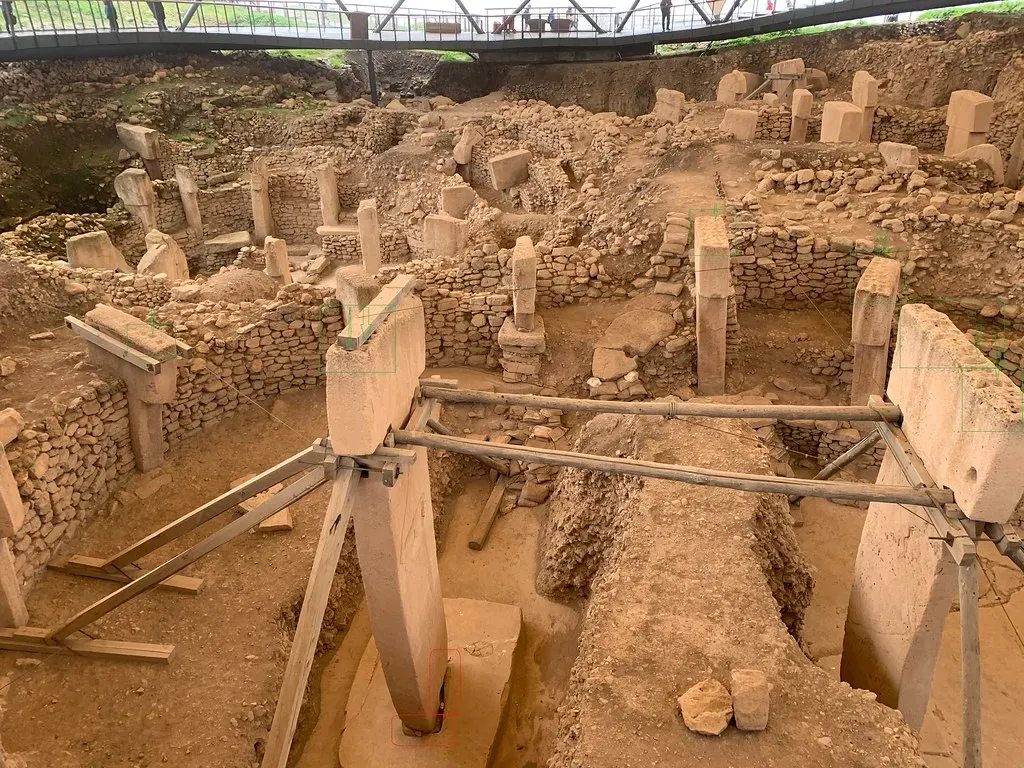
This is where the timeline really starts bothering the professionals. Göbekli Tepe dates back roughly 9,600 to 8,000 BCE, long before metal tools, writing, or pottery existed in the region. Several circular enclosures of massive T-shaped pillars are arranged with consistent orientations that correlate with specific stars and constellations visible at the time, once precession is corrected for. We are talking about hunter-gatherers moving multi-ton stones into alignments that repeatedly point to the same parts of the sky.
The evidence here is more debated than Karnak or Giza, and responsible scholars are right to stay cautious. But even conservative surveys acknowledge that the repeated cardinal and stellar tendencies across separate, unconnected enclosures are statistically hard to write off as random noise. For architects, the “impossible precision” isn’t only about degrees; it’s about the observing culture required to notice and preserve those reference points across generations with no written records. If these orientations hold up, they push sophisticated site planning back thousands of years earlier than most design histories still teach.
At A Glance
- Dates back roughly 9,600 to 8,000 BCE, predating pottery, writing, and metal tools
- Features T-shaped limestone pillars, some standing several meters tall and weighing multiple tons
- Built by hunter-gatherer communities, centuries before agriculture took hold in the region
- Named a UNESCO World Heritage Site in 2018
#3 – Newgrange, Ireland: A Stone Age Tunnel That Catches One Sunrise
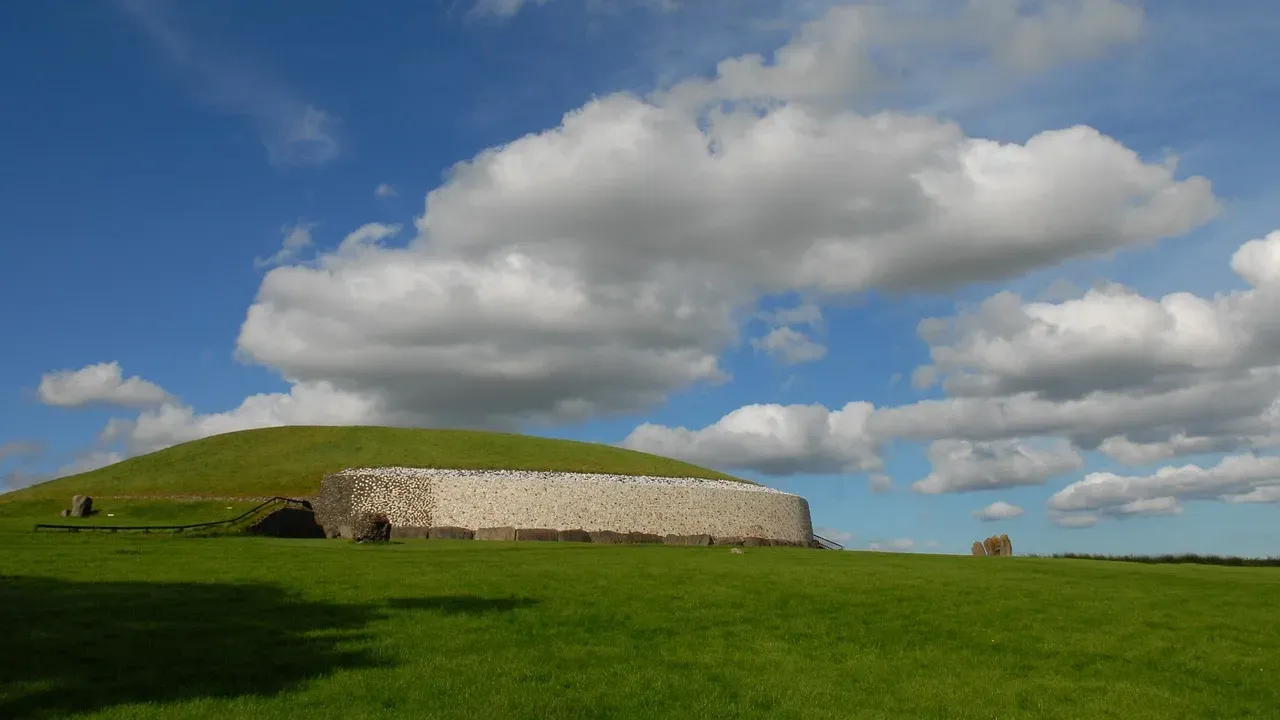
This one shouldn’t work as well as it does. And yet it does, down to the minute. Newgrange, a Neolithic passage tomb built around 3,200 BCE, contains a narrow 19-meter passage leading to a central chamber. Above the entrance sits a small opening called a roof box, built specifically to let winter solstice sunrise travel the full length of the passage and light up the chamber floor, still happening today within a tight window on just a few mornings a year.
Correct for 5,000 years of axial precession and shifting atmospheric conditions, and the original hit was likely even tighter than what visitors see now. Architects examining the stonework note the passage slopes upward just enough to guide the light, while massive interlocking roof slabs have resisted collapse for five millennia. Stone Age builders, using only stone tools, laid out a tunnel this straight, this level, and this cosmically tuned, which has quietly forced a lot of people to retire the phrase “primitive engineering.”
#2 – The Pantheon, Rome: A Concrete Sphere That Tracks Time
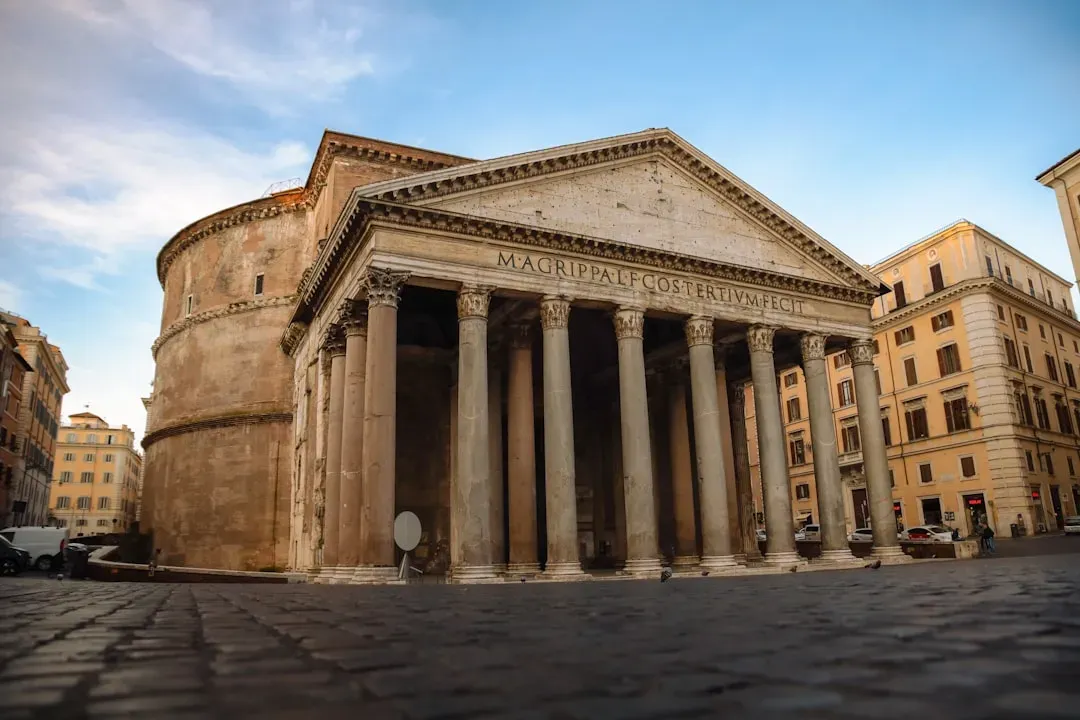
Most people go for the Instagram shot of the oculus. Engineers go for the math behind it. The Pantheon’s dome, completed around 125 CE, is still the largest unreinforced concrete dome on Earth, but the alignment is where it gets genuinely strange. The building is rotated so the oculus, the central opening at the top, acts as a moving spotlight on interior features throughout the year, and on dates like April 21, traditionally tied to Rome’s founding, the sunbeam floods the entrance in a way that feels choreographed rather than accidental.
What unnerves modern architects is how deliberately the interior seems built around that beam’s path. The dome forms an almost perfect sphere that could fit inside the rotunda’s cylinder, with coffers and niches placed exactly where the light is meant to fall. High-precision surveys show deviations from perfect radial symmetry that are minute, which is remarkable for poured concrete pushing two thousand years old. This isn’t just nice lighting design; it’s a concrete instrument marking cosmic cycles and civic myth at the same time.
#1 – The Giza Pyramids And Sphinx Complex, Egypt: Alignments That Won’t Go Away
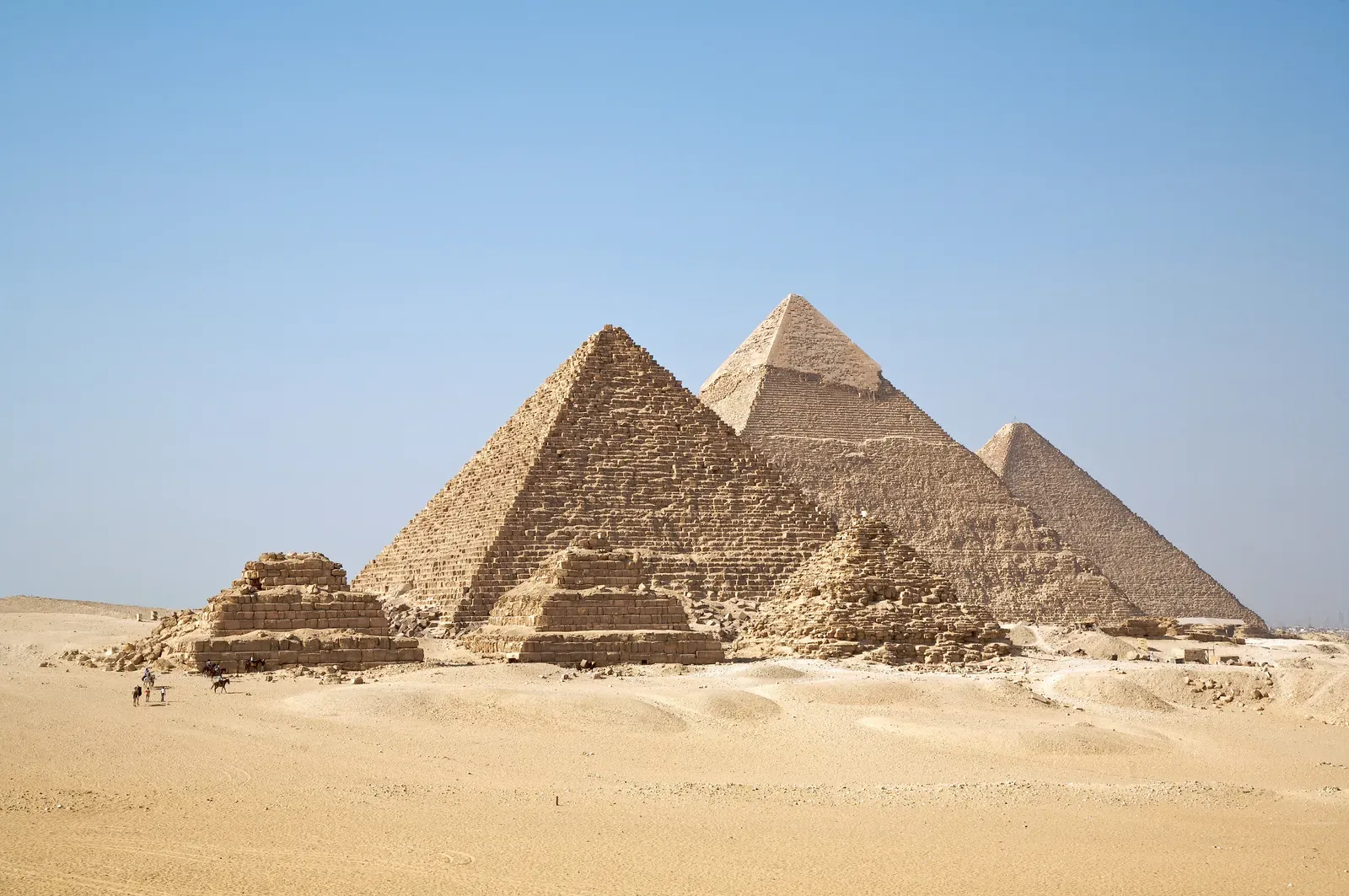
This is the site that keeps showing up in arguments, and not always for good reasons. Strip away the wild theories, and what’s left is still uncomfortable for a lot of architects. The Great Pyramid’s sides are aligned to true north with an error of only a few arcminutes, making it one of the most accurately oriented large structures ever built. Its base deviates from a perfect square by mere centimeters over 230 meters, on a 4th-dynasty project built around 2,500 BCE with copper tools and no magnetic compasses.
“…an accuracy of better than four minutes of arc, or one-fifteenth of one degree.”
Glen Dash, archaeologist and engineer
Widen the lens and it gets stranger. The three main pyramids form a skewed diagonal that some studies argue relates to specific stars in Orion’s belt, while the Sphinx and surrounding temples show repeated cardinal tendencies and solar sightlines, particularly at equinox and solstice sunrises. Serious scholars debate the astronomical specifics, and they should keep doing that. But the measured cardinal and geometric accuracy of Giza isn’t up for debate anymore. It’s sitting right there in the data, and it forces a blunt conclusion: whatever methods these builders used, they were far more precise, and far more obsessed with alignment, than twentieth-century textbooks ever gave them credit for.
Across continents and thousands of years, these temples share an awkward truth: they are better measured, better aligned, and more deliberately tuned to the sky than most modern people are comfortable admitting. Not because anyone showed up with blueprints from space, but because our own cultures spent a century underestimating what ancient eyes, hands, and patient observation could actually achieve. Where older narratives saw “rough symbolism,” survey-grade tools now reveal deliberate solar beams, stellar corridors, and cardinal grids nailed to within fractions of a degree.
Here’s the part that actually bothers me: plenty of guidebooks and school texts still soft-pedal all this as “coincidental” or “merely ritual,” even after the measurements came back. At some point that stops looking like caution and starts looking like a refusal to update the story. Ancient builders weren’t mystics fumbling around in the dark. They were data-driven observers who happened to work in stone instead of spreadsheets, and it’s long past time the history books said so.