Every so often, archaeology runs into a brick wall. We dig something up, we can hold it in our hands, we can even test its chemistry in a lab – and yet, we still have no idea how ancient craftspeople actually made it. The missing piece often isn’t the object itself, but the space around it: the workshop, the tools, the heat, the smells, the rhythm of human hands doing the same thing a thousand times.
Only when modern researchers roll up their sleeves and rebuild those lost workshops – brick by brick, furnace by furnace, tool by tool – do some of these mysteries crack open. Experimental archaeology, as dry as the term sounds, can feel more like detective work mixed with time travel.
What follows are thirteen fascinating objects whose manufacturing secrets only came into focus after researchers stopped guessing on paper and started recreating the ancient workspaces in real life. Some of these stories are surprisingly high-tech, others almost heartbreakingly simple – and all of them remind us how much human skill can vanish when a workshop falls silent.
#1: Damascus Steel Blades and the Reborn Forge
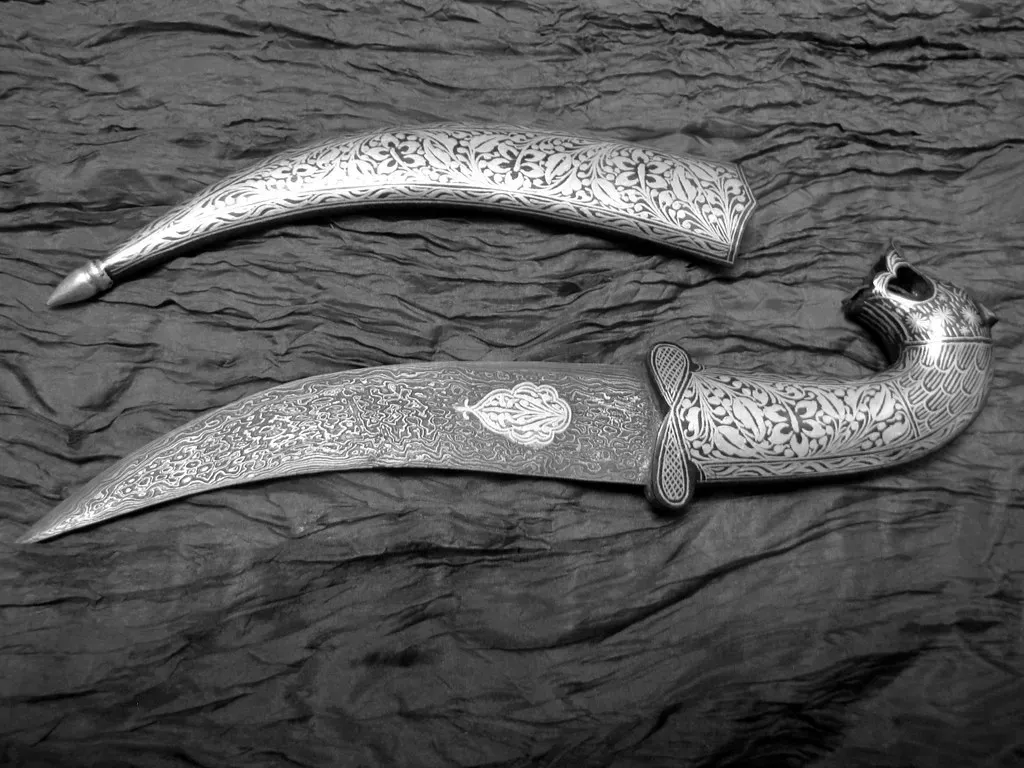
Few objects have attracted more myth than Damascus steel blades – those rippling, water-like patterns and the legends of swords that could slice a silk scarf in mid-air. For a long time, scientists could analyze the blades’ composition, but they still could not reliably reproduce the exact material using modern steelmaking alone. The missing piece turned out to be not just chemistry, but craft embedded in a specific type of workshop.
Experimental blacksmiths and materials scientists began rebuilding historical-style forges, using charcoal-fired furnaces, reconstructed bellows, and crucibles based on archaeological finds from the Near East and India. By recreating the entire workflow – smelting small ingots, cycling the temperature, and repeatedly forging and cooling – they discovered that tiny shifts in temperature and carbon absorption created the distinctive microstructures inside the steel. Modern steel plants could hit the target composition, but the traditional workshop’s rhythm of heating and hammering was the real secret sauce.
Some key lessons only emerged once full workshops were rebuilt and used for lengthy experiments:
- The fuel type and air flow in old-style furnaces subtly changed the carbon content in ways modern gas furnaces did not.
- Forging sequences – the number of folds, the order of heats, and intentional rest periods – altered the internal patterning of the metal.
- Even tool marks on anvils and hammers helped researchers understand how blades were worked and finished.
It turned out that the “mystery” of Damascus steel wasn’t some magical lost ingredient, but a system of tools, temperatures, and timing that only made sense when the ancient workshop environment came back to life. In a purely modern lab, the secret stayed stubbornly out of reach.
#2: Roman Concrete and the Recreated Lime Kiln
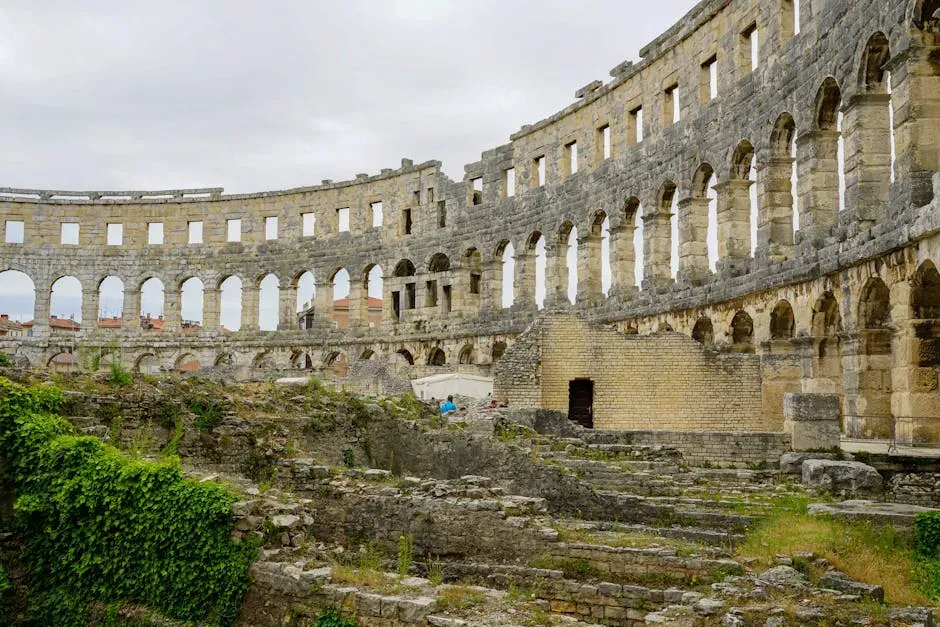
Roman harbors, aqueducts, and sea walls have survived for nearly two thousand years, often outlasting modern concrete poured just decades ago. Scientists long knew the Romans used volcanic ash and lime, but that recipe alone couldn’t explain the material’s self-healing and extraordinary durability, especially in seawater.
The real breakthrough came when researchers began reconstructing Roman-style lime kilns and mixing facilities rather than just tinkering with formulas on a bench. In rebuilt kilns, limestone was burned at fluctuating temperatures using wood, not the very stable heat of modern industrial burners. This produced lime clasts – partially reacted lumps – that, when mixed with volcanic ash and aggregate, became reactive sites for long-term mineral growth inside the concrete.
- Firing conditions in traditional kilns created lime with a heterogeneous structure, not the uniform product of modern plants.
- Hand mixing and layering in reconstructed workshops mimicked how larger and smaller particles were distributed in Roman building sites.
- Exposure tests in reconstructed basins helped show how seawater interacted with the material over time.
Without spending years running replica kilns and pouring concrete blocks using historically plausible methods, this interaction between workshop, recipe, and environment would have stayed hidden. Roman concrete’s endurance isn’t just about what went into the mix – it is about how an entire production chain, from quarry to kiln to mixing pit, was organized.
#3: The Antikythera Mechanism and a Rebuilt Bronze Workshop
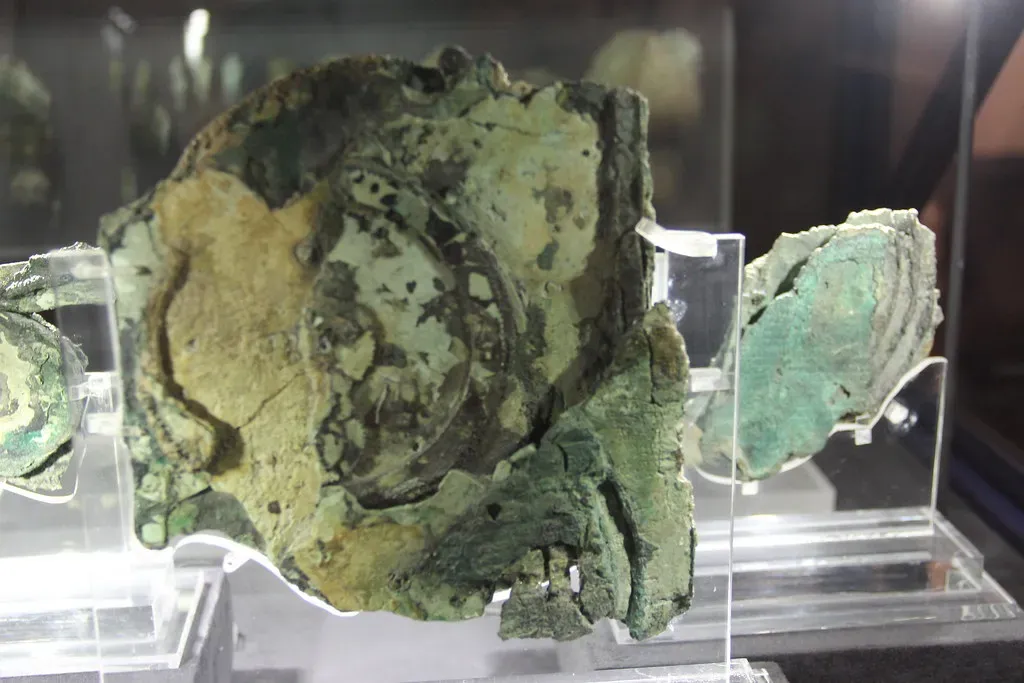
The Antikythera mechanism is often called the world’s first known analog computer, a dense tangle of bronze gears recovered from a shipwreck off Greece. For decades, historians could model the gear trains on paper and simulate their function with software, but that was very different from understanding how ancient craftsmen machined those gears with the tools they actually had.
To bridge that gap, some researchers and skilled metalworkers reconstructed ancient Greek bronze workshops, complete with simple lathes, files, saws, casting molds, and abrasives that would have been available around the second century BCE. Instead of using modern machine tools, they set themselves the challenge: could these precise gears, with fine teeth and minimal wobble, be manufactured in a plausible time frame using period technology?
The results were eye-opening. By rebuilding the workshop, they learned that:
- Wax models and multi-part molds allowed surprisingly precise casting of blank gears before hand-finishing.
- Hand-powered lathes, if tuned and supported correctly, could achieve fine tolerances previously thought impossible.
- Specialized jigs and templates likely guided the regular spacing of gear teeth.
What looked almost impossibly advanced on a museum mount became more believable when seen through the daily routines of a skilled bronze workshop. The ancient artisans were not cheating with unknown machines; they were pushing familiar tools to their absolute limit, something you only realize when you try to stand behind their rebuilt workbenches.
#4: Viking Pattern-Welded Swords and the Longhouse Smithy
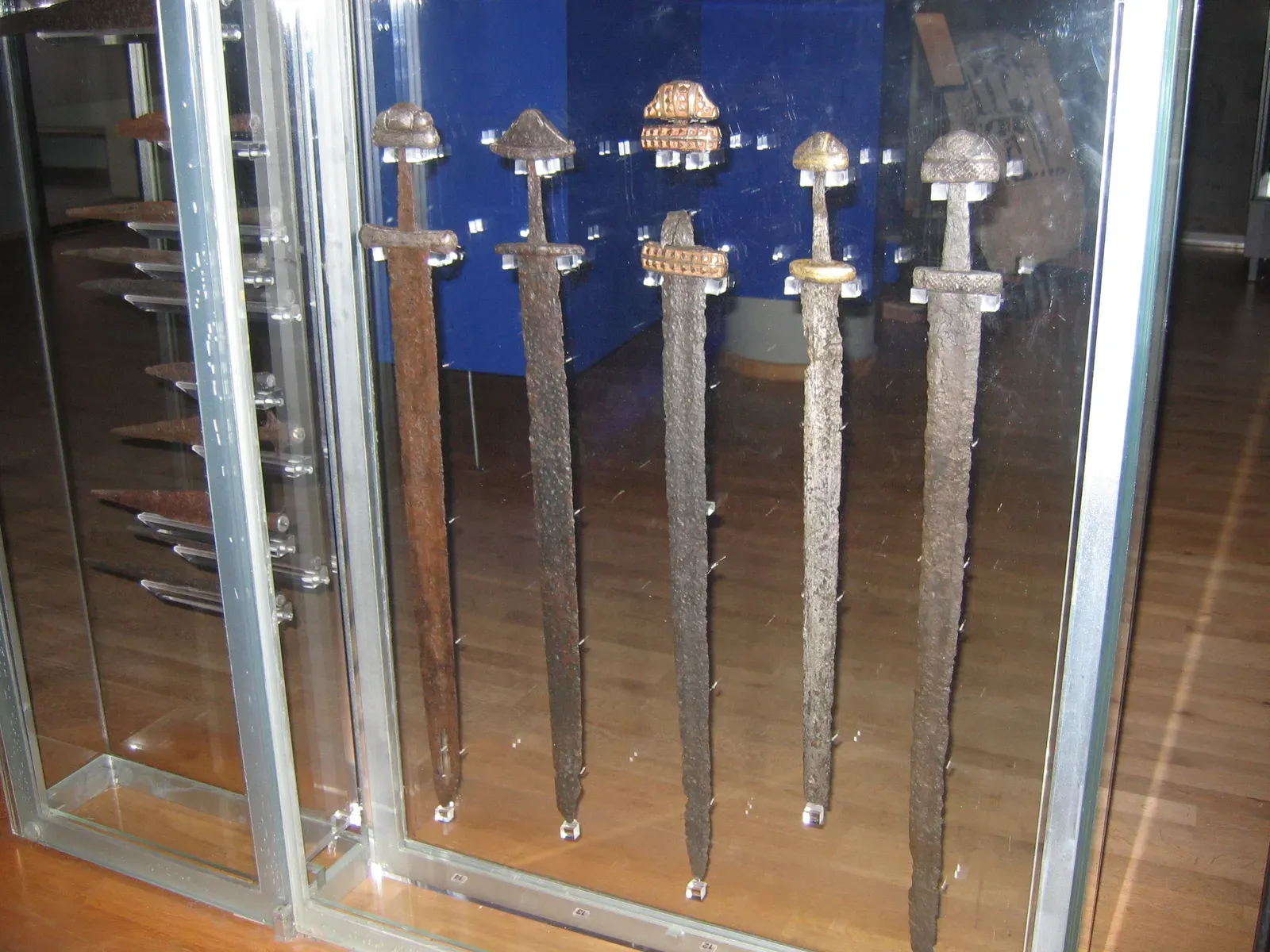
Viking-age swords often show intricate patterns in their blades, a result of pattern welding – twisting and forge-welding bars of different iron and steel grades. Archaeologists knew in theory how pattern welding worked, but there were many open questions: how many people were needed at the hearth, how long did a blade take, and which exact heating cycles were practical in a world without thermometers?
To get answers, experimental archaeologists reconstructed full Viking smithies inside longhouse-style buildings, using turf walls, open hearths, and reconstructed bellows. They paid attention to air flow, light levels, and even the type of charcoal and bog iron, aiming to reproduce as much of the original context as possible. Working in these spaces, smiths quickly realized that some textbook descriptions of blade-making were simply unrealistic once you had to handle the physical strain and timing of real forging.
Several practical insights only emerged in the rebuilt workshops:
- Controlling the color of the metal by eye, in a dim interior, dictated working speeds and weld quality.
- Teams of two or three workers, rather than a lone smith, proved essential for the largest and most complex blades.
- Waste patterns, slag deposits, and broken test bars in the recreated smithy closely matched archaeological layers from real sites.
These experiments did not just reverse-engineer an object; they reconstructed a social and physical system around the forge. Understanding Viking blades meant understanding the choreography of people, heat, and tools in a smoky, noisy building – something no lab sample can capture on its own.
#5: Bronze Age Bell Beakers and the Reimagined Pottery Hut
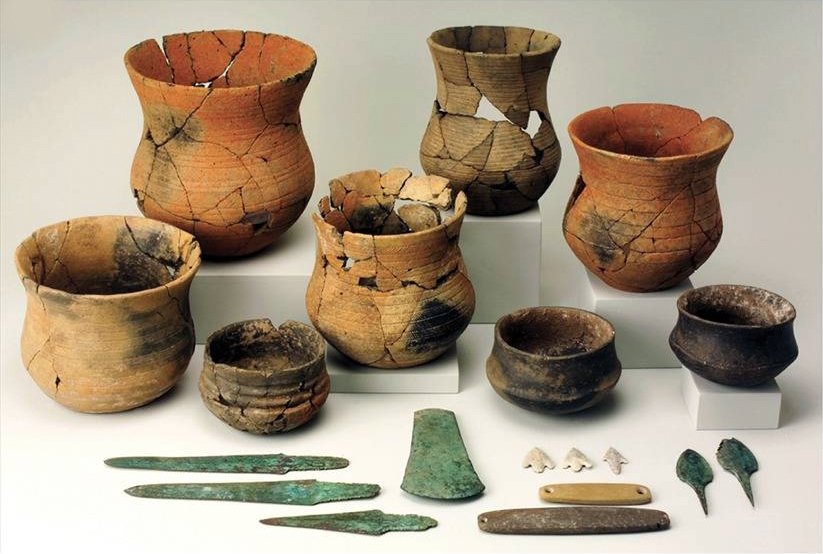
Bell Beaker pottery, with its finely incised decoration and consistent firing, spread widely across prehistoric Europe. The vessels themselves are well known, but how potters in relatively simple settlements maintained such quality standards remained murky. Kiln remains are often fragmentary, and written instructions, of course, do not exist.
To explore the problem, teams rebuilt small-scale pottery workshops based on excavated post holes, firing pits, and tool fragments. They used hand-dug clay, primitive burnishing stones, and open or semi-closed firing structures that matched the archaeological footprint. The goal was not just to throw pretty pots, but to see how many failures, how much fuel, and how many people a community needed to maintain a steady output of Bell Beaker-style ceramics.
Several important patterns only emerged from these full-scale reconstructions:
- Maintaining a narrow temperature window with open firing required constant, skilled tending, suggesting dedicated craft specialists.
- Clay preparation methods, including long kneading and removal of larger inclusions by hand, were crucial to achieving thin, even walls.
- The placement of pots relative to each other in the firing area dramatically affected survival rates, explaining clustered breakage seen in digs.
The reconstructed workshops showed that Bell Beaker vessels were not casual weekend crafts. They demanded significant labor organization and knowledge passed down through practice, not diagrams. Only by living with smoke, cracked pots, and piles of discarded shards did that reality fully emerge.
#6: Medieval Stained Glass Windows and the Monastic Glasshouse

Walking into a medieval cathedral, it is easy to be overwhelmed by the color and complexity of the stained glass windows. Conservators have long studied the chemistry of the glass and pigments, yet there were persistent gaps in understanding exactly how medieval glaziers controlled color, clarity, and bubble content with relatively crude equipment.
Rebuilt glasshouses, modeled on monastic or urban workshops, changed the picture. Researchers constructed wood-fired furnaces, mixed sand and plant ash in reconstructed crucibles, and practiced glassblowing and sheet formation with tools based on period illustrations and finds. Working in such spaces proved that small, repeated adjustments to furnace temperature and batch composition, guided only by visual cues, could produce remarkably consistent colored glass over many firing cycles.
These workshops highlighted several subtle but crucial aspects:
- Impurities in sand and ash, once considered defects, were actually part of the signature look of specific regions.
- Cycle timing – when glassworkers chose to work their material versus reheat it – affected flow lines and internal stresses visible today.
- On-site adjustments, like adding colorants to already molten glass, helped fine-tune hues beyond the base recipe.
From the outside, a stained-glass window might seem like a static piece of art. In a reconstructed glasshouse, it becomes the end point of a balancing act between fuel, flame, ingredients, and human judgment – all of which had to be rediscovered in a living workshop, not just under a microscope.
#7: Japanese Tatara Steel (Tamahagane) and the Revived Smelting Hall
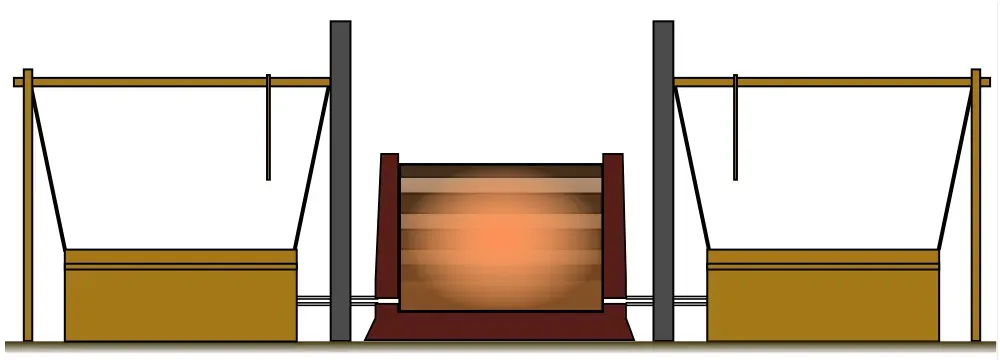
Traditional Japanese swords depend on a special steel called tamahagane, produced in a clay furnace known as a tatara. By the twentieth century, only a few tatara masters remained, and much of the knowledge was at risk of disappearing. When researchers and craftspeople set out to understand this process in detail, they didn’t start in a lab; they rebuilt the entire smelting hall.
Full-scale tatara reconstructions used clay walls, iron sand, and charcoal, operated continuously for days while teams shoveled fuel and ore. Temperature monitoring relied primarily on flame color and experience, mirroring older practices. Only by running these furnaces for extended campaigns did it become clear how sensitive the output was to small shifts in air flow, ore composition, and fueling rhythm.
Rebuilding the workshop clarified several points that were otherwise speculative:
- The layout of the smelting hall influenced how workers coordinated around the furnace, affecting consistency of the charge.
- Waste slag paths and pits around the tatara site matched patterns seen in historical remains, confirming operational timelines.
- The resulting steel blocks contained varied carbon zones that swordsmiths could later exploit, something best appreciated in real, hefty blooms, not theoretical models.
The revived tatara showed that the material properties of tamahagane cannot be divorced from the smelting hall as a social and physical space. Understanding the steel meant understanding the workshop as a living organism that breathed air and ate fuel in a very particular way.
#8: Bronze Mirrors of Ancient China and the Lost Foundry Floor
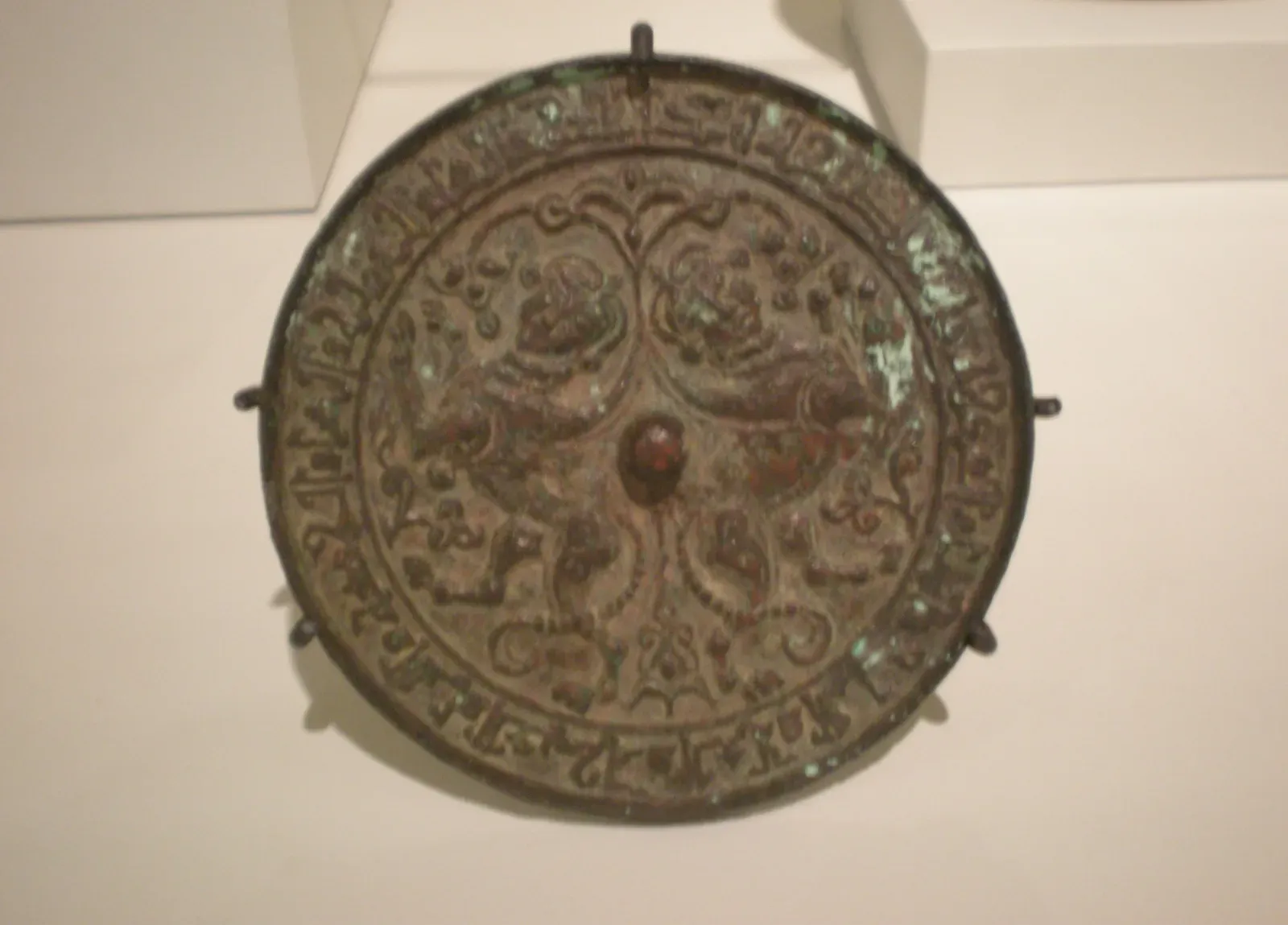
Highly polished bronze mirrors from ancient China look almost unnervingly modern, with smooth, reflective surfaces and intricate relief designs on the back. Scholars could analyze alloy compositions and identify casting methods, but long-standing debates persisted about casting versus finishing, and how workshops achieved such smoothness before modern abrasives existed.
To tackle these questions, experimental teams recreated bronze foundries using excavated furnace remains, mold fragments, and tool analogues from tombs and workshops. They cast mirror blanks using similar clay molds and bronze compositions, then tested different combinations of grinding stones, metallic abrasives, and polishing pastes. Rebuilding the entire foundry space, including the layout of furnaces, casting pits, and finishing benches, allowed them to iterate realistically on what a working production line might have looked like.
Some important conclusions only made sense in that context:
- Sequential casting and finishing stations made more sense than a single multi-purpose area, which matched wear patterns on excavated floors.
- Natural mineral abrasives, when used skillfully in multiple stages, could achieve a near-mirror finish previously thought to require modern compounds.
- Tool marks on surviving mirrors corresponded closely to patterns produced in the reconstructed workshop, confirming suspected polishing sequences.
On paper, it was easy to underestimate how much simple tools could achieve. On a reconstructed foundry floor, with bronze dust in the air and workers hunched over spinning blanks, the level of refinement suddenly felt much more plausible – and less like an unexplained leap in technology.
#9: Egyptian Blue Pigment and the Recreated Color Workshop

Egyptian blue is one of the earliest synthetic pigments, a striking, long-lasting blue used on statues, tombs, and wall paintings. Chemists have long known that it is a calcium copper silicate produced at high temperatures, but how ancient artisans managed this synthesis reliably, using simple furnaces and raw materials, remained an open question.
Experimental archaeologists built small color workshops, complete with hearths, grinding areas, and storage vessels based on scenes in tomb paintings and archaeological remains. They mixed crushed quartz, copper compounds, lime, and alkalis, then fired these mixtures in reconstructed kilns with carefully controlled but primitive air supply. Adjusting fuel type, stacking order, and vessel shapes turned out to be the difference between a dull, glassy mass and the vivid, granular blue valued by ancient painters.
Working in the recreated workshops revealed several practical constraints and tricks:
- Batch size mattered; too large a mass led to uneven heating and poor pigment development.
- Regrinding and refiring partially successful batches was not just possible but likely a routine part of production.
- The organization of the workspace – where grinding happened relative to the furnace – influenced cross-contamination with other colors.
The story of Egyptian blue is not just about inventing a recipe; it is about inventing a reliable, repeatable workshop practice. You only see that dimension fully when you stand in front of a clay furnace, sweating, trying not to ruin yet another batch of painstakingly prepared pigment.
#10: Celtic La Tène Fibulae and the Rebuilt Metalworking Shed
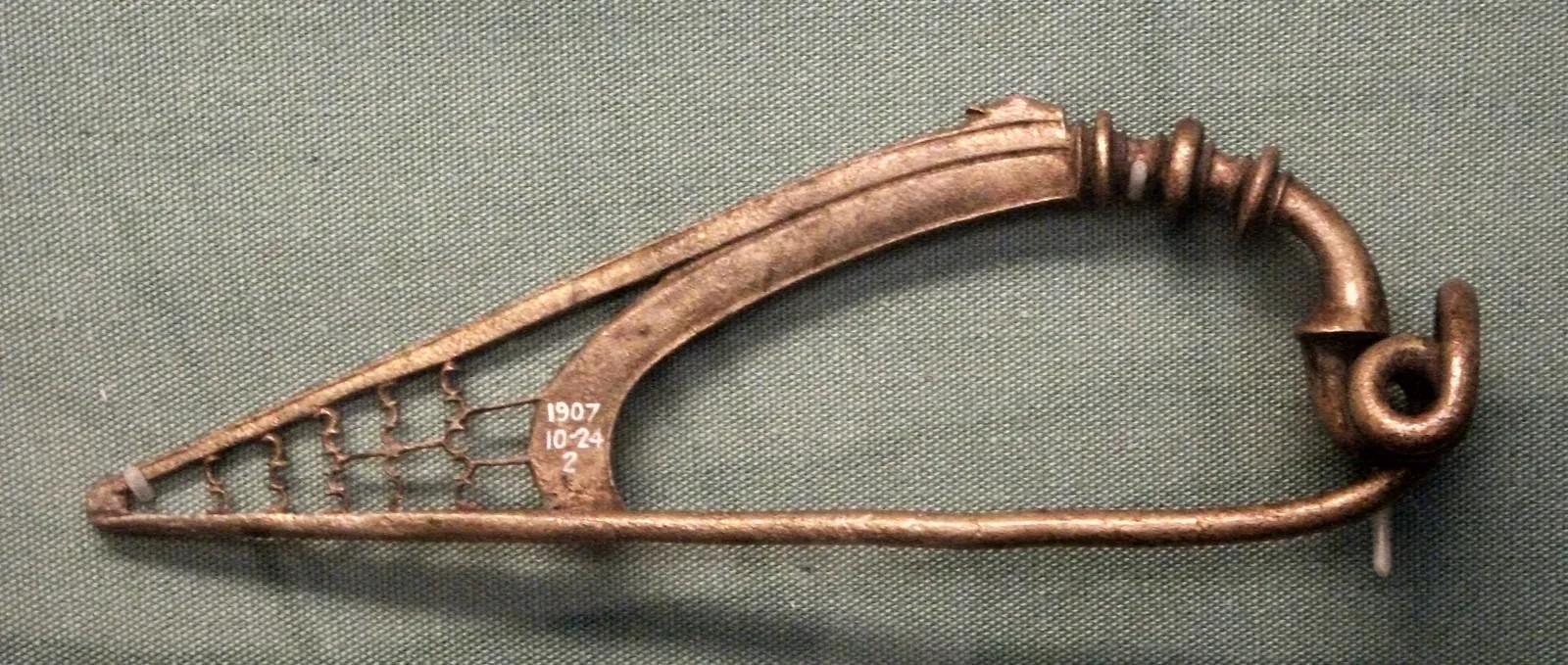
La Tène–style fibulae, the ornate brooches associated with Iron Age Celtic cultures, combine complex shapes, spring mechanisms, and fine decoration in bronze and iron. Archaeologists could describe their forms and even infer casting versus forging steps, but some of the trickier aspects – like achieving strong yet flexible pin springs – were difficult to explain without assuming tools or techniques that had never been found.
Reconstructed metalworking sheds, based on excavated post-hole patterns and slag deposits, allowed researchers to experiment with plausible furnace sizes, anvils, and hand tools. By deliberately limiting themselves to what could fit in such a building and what could be made with locally available materials, they tested different sequences for casting, bending, and heat-treating the fibula components.
This hands-on approach led to several useful insights:
- The orientation of workbenches relative to the hearth affected how quickly pieces cooled, which mattered for delicate spring-tempering.
- Some decorative features were best added directly after casting, while the metal was still relatively soft, rather than as a separate engraving step.
- Breakage rates during reconstruction matched stress points seen on archaeological fibulae, validating certain manufacturing hypotheses.
In other words, the metalworking shed itself – its scale, its tool storage, its heating options – silently dictated what types of brooch design were viable. The objects only became fully understandable when seen as the natural output of a particular workshop ecosystem.
#11: Medieval Chainmail and the Recreated Armourer’s Shop

At a glance, medieval chainmail looks straightforward: lots of interlinked metal rings. Yet when historians tried to calculate how long it would take to make a full shirt using naive assumptions, the numbers were staggering, raising questions about whether our understanding of production methods, division of labor, and workshop layout was off.
To test these ideas, experimental teams rebuilt armourers’ shops, complete with wire-drawing benches, anvils, rivet tools, and storage for partial components. They tried organizing production much as a medieval guild workshop might have done: some workers drawing wire, others coiling and cutting rings, others setting and riveting them. Working in historically sized spaces with era-appropriate tools forced a rethinking of which tasks could be efficiently combined and which needed specialist attention.
From these reconstructions, several patterns emerged:
- Mass production of rings in batches, stored in labeled containers, dramatically reduced the time to assemble a final garment.
- Tool ergonomics and bench height, when copied from period illustrations, helped workers maintain speed and precision over long days.
- Waste metal, offcuts, and worn-out tools accumulated in predictable patterns, aligning well with debris fields found in real armourers’ quarters.
Suddenly, producing chainmail on a scale large enough to outfit armies looked demanding but plausible. The key was not a magical tool or lost method; it was the choreography of a busy shop floor, something that only becomes obvious when you rebuild that floor and put people to work on it.
#12: Prehistoric Flint Blades and the Recreated Knapping Area
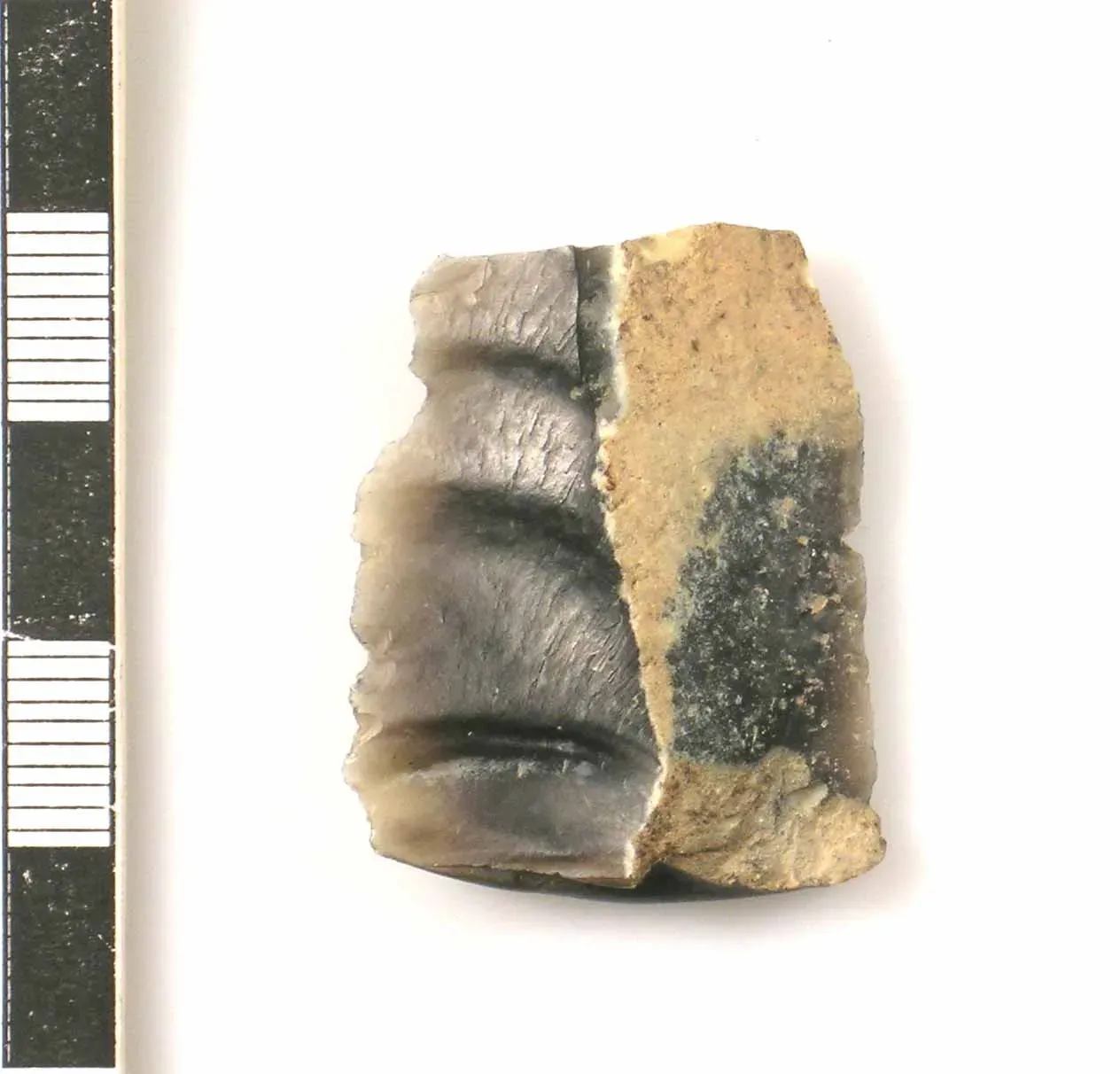
Some prehistoric flint blades are shockingly thin and regular, rivaling modern razor blades in sharpness. For a long time, descriptions of how they were made focused mainly on hand techniques: striking angles, support grips, and percussion styles. What often got ignored was the workshop environment itself – where knappers sat, how they stored raw material, and how waste was managed.
Rebuilding knapping areas outdoors and in shelter-like spaces, based on lithic scatter patterns from archaeological sites, gave researchers a better sense of the operational sequence. They arranged flint cores, hammerstones, antler billets, and finished tools as the excavations suggested, then tried producing blade series under similar spatial constraints. It quickly became apparent that posture, seating, and the direction of light played a role in flake control, details that tend not to show up in neat line drawings.
These reconstructed areas revealed practical dimensions of flintworking:
- Dedicated waste zones allowed knappers to avoid stepping on sharp debris, increasing efficiency and reducing injury.
- Using specific stone platforms or logs as supports, as implied by wear marks, improved repeatability of blows.
- Apprentice areas, with simpler cores and more shattered pieces, showed how skill might have been taught and scaled within a community.
In a sense, the flint blade itself is just the final snapshot. The workshop reconstruction acts like a time-lapse video, showing the hundreds of small decisions and physical constraints behind that deceptively simple edge.
#13: Medieval Printed Books and the Reconstructed Print Shop
![#13: Medieval Printed Books and the Reconstructed Print Shop (Dictionnaire encyclopédique Trousset (Trousset encyclopedia), Paris, 1886 - 1891. Scan from [1], Public domain)](https://nvmwebsites-budwg5g9avh3epea.z03.azurefd.net/dws/12a9f5ae9d08bb30c616e3fe2ac30813.webp)
We often think the story of early printing is mostly about movable type and ink formulas. Yet some of the biggest mysteries about early printed books involved more mundane questions: how printers aligned pages so well, how quickly they could work, and how they managed quality control without modern measuring devices.
Rebuilt print shops, modeled on surviving descriptions and illustrations, provided missing context. Researchers installed hand presses, type cases, composing sticks, and paper-drying racks in spaces sized like historical workshops. They then ran full print jobs of facsimile texts, tracking misprints, paper waste, and the physical strain on workers over long days. The constraints of the shop – its light, its spatial bottlenecks, its storage – turned out to influence everything from font choice to page layout.
From these recreated environments, a more nuanced picture emerged:
- Standardized layouts and type sizes were not just aesthetic choices but practical responses to the reach and strength of human arms on the press.
- Ink consistency had to be tuned to the humidity and temperature of the workshop; there was no universal recipe.
- Division of labor between compositors, press operators, and correctors was essential to keeping error rates manageable at scale.
When you stand in a reconstructed print shop, surrounded by the thud of the press and the smell of ink, a printed book stops looking like a miracle of genius and starts looking like a brutally practical solution to the question of how to get words on paper, day after day.
Conclusion: Why Rebuilding Workshops Still Matters
All these stories point to an uncomfortable truth: if you try to understand the past only with modern labs and computer models, you will miss things. Objects like Damascus blades, Roman concrete blocks, or Egyptian blue pigments look like isolated marvels when displayed in glass cases. Once you rebuild the workshops that produced them, they suddenly make sense as the natural outcome of messy, physical, sometimes exhausting workflows.
Personally, I find that shift almost humbling. It is tempting to imagine that older cultures had secret tricks or lost knowledge that we, with all our technology, can never fully reach. Rebuilt workshops suggest something slightly different and, to me, more interesting: that much of what we call mystery is really just unfamiliar skill, learned slowly by people who spent their lives watching the color of a flame or the sound of a hammer blow.
There is also a sharper implication. When modern industries automate and streamline, we risk losing not only old objects but the craft ecosystems that made them possible. Once those workshop habits vanish, recovering them can take decades of experimental archaeology and a surprising amount of sweat. So perhaps the real lesson is this: if we care about how things are made today, we should document our workshops as carefully as we excavate ancient ones. After all, which of our everyday objects will puzzle people so much that they’ll feel compelled to rebuild an entire factory just to understand them?