Every now and then, archaeologists pull something out of the ground that makes metalworkers shake their heads and say: that should not have been possible there, at that time, with that ore. These metal objects are not alien tech or magic relics, but they are quietly shocking examples of how far ancient and historic societies pushed metallurgy beyond what their local raw materials could naturally offer.
In this article, we are going to look at twelve real metal objects or object groups where the alloy, purity, or technique goes well beyond what nearby ores could produce on their own. Sometimes the answer is long-distance trade. Sometimes it is very clever refining. And sometimes, honestly, we still do not fully know. That is exactly what makes them so compelling.
As you read, notice a pattern: whenever humans really want a certain color, strength, or symbolic metal, they find a way to hack the periodic table with whatever they have. These are the pieces that tell that story in metal, not myth.
#1 The Uluburun Shipwreck’s Exotic Copper Ingots
Imagine a Bronze Age ship around the fourteenth century BCE, sinking off what is now the coast of Turkey, loaded with more than ten tons of copper in neat oxhide-shaped ingots. When researchers sampled the metal, it did not match the chemistry of local Anatolian ore bodies at all. Instead, isotopic signatures strongly pointed to copper mined in Cyprus, far across the sea, then refined to a purity the coastal communities could never have achieved just by smelting whatever ore sat in the nearest hillside.
The metal in those ingots was not only unusually pure for its time but also remarkably consistent, hinting at centralized, specialized smelting far from the wreck site. For the coastal communities near Uluburun, local copper ores tended to be mixed with arsenic and other impurities. Yet the ship’s cargo showed copper refined cleanly enough to be ideal for predictable bronze alloying. That means whoever sank with that ship was moving metal that had already been engineered beyond local geological limits.
What makes this even more striking is that the ingots were clearly designed for redistribution: standardized size, recognizable shape, and composition controlled enough that smiths could reliably turn them into tools, weapons, and luxury items. In other words, the Uluburun cargo is evidence that alloy quality was being designed at a regional scale, not just whatever came out of the nearest furnace. For farmers and craftsmen along that coast, this imported copper would have been a technological upgrade that no local ore could match on its own.
- Local Anatolian copper ores were often impure and variable.
- Uluburun ingots show consistent, high-purity copper from distant Cypriot sources.
- The shipwreck proves alloy design and metal quality were part of large-scale trade planning.
#2 The Hoxne Hoard’s High-Purity Late Roman Gold
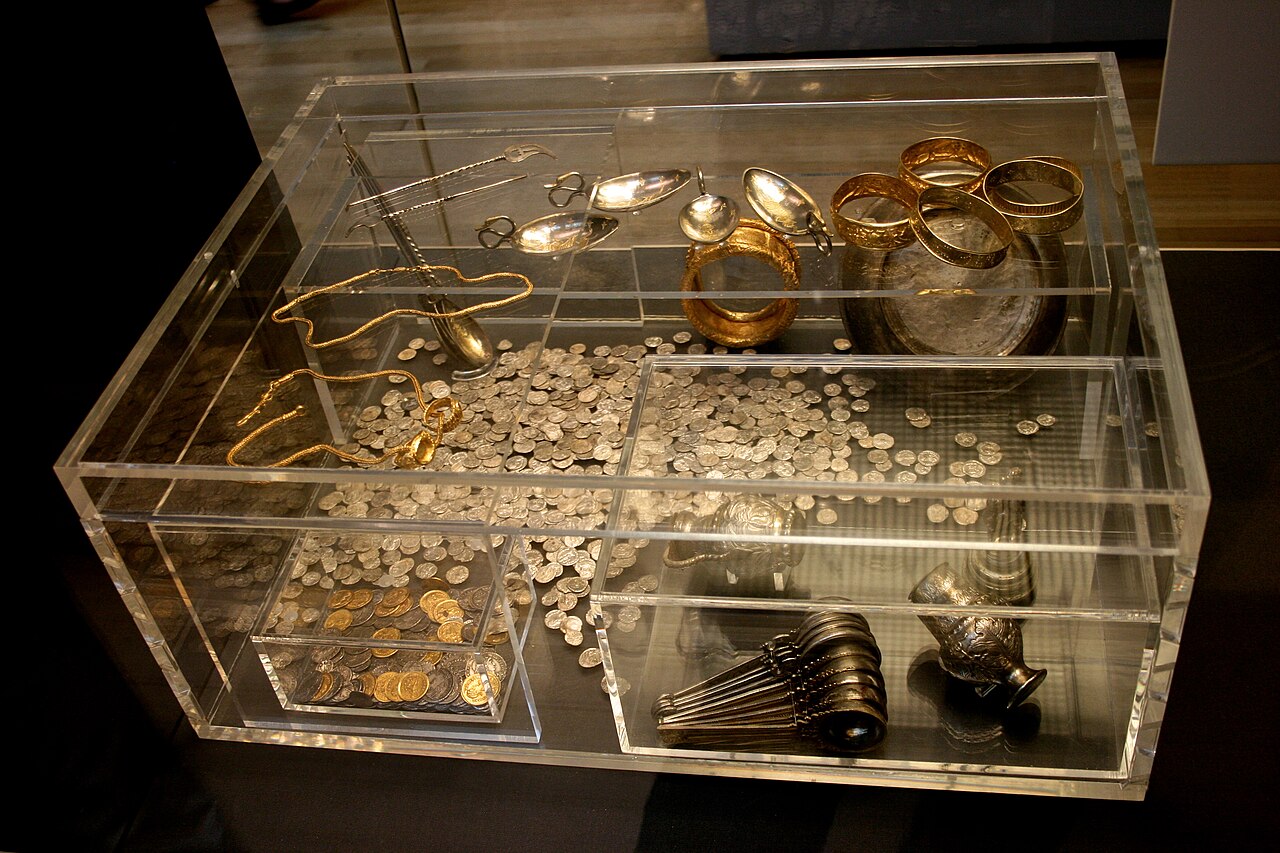
The famous Hoxne Hoard in England, buried in the fifth century CE and discovered in 1992, included hundreds of gold objects: bracelets, necklaces, coins, and other finely worked pieces. The gold in many of these items has a purity level that simply does not match the typical alluvial or hard-rock gold that could be found in Britain itself. Local British gold was usually mixed with silver and traces of copper, creating natural electrum. But the Hoxne pieces show repeated evidence of refined, deliberately alloyed gold that had clearly been processed beyond the state of local ore.
Metallurgical analyses suggest that much of the gold in late Roman Britain was recycled from older imperial coins and objects, systematically refined, and then alloyed again to hit very narrow compositional targets. That kind of control hints at sophisticated cupellation and refining techniques, plus access to gold originally mined in areas like the Balkans, Anatolia, or even further afield. None of that chemistry makes sense if you imagine a Romano-British smith just panning a local stream and hammering out whatever came out of the pan.
What you have, instead, is a kind of late Roman financial and technological ghost: long after the Empire’s political grip weakened, its refined, standardized gold was still circulating in provincial workshops. The hoard buried in an English field carries the fingerprint of distant mines and central refineries. It shows that even as imperial administration crumbled, the material legacy of carefully engineered gold alloys outlasted the institutions that created them.
#3 Tutankhamun’s Dagger Forged From Meteoric Iron
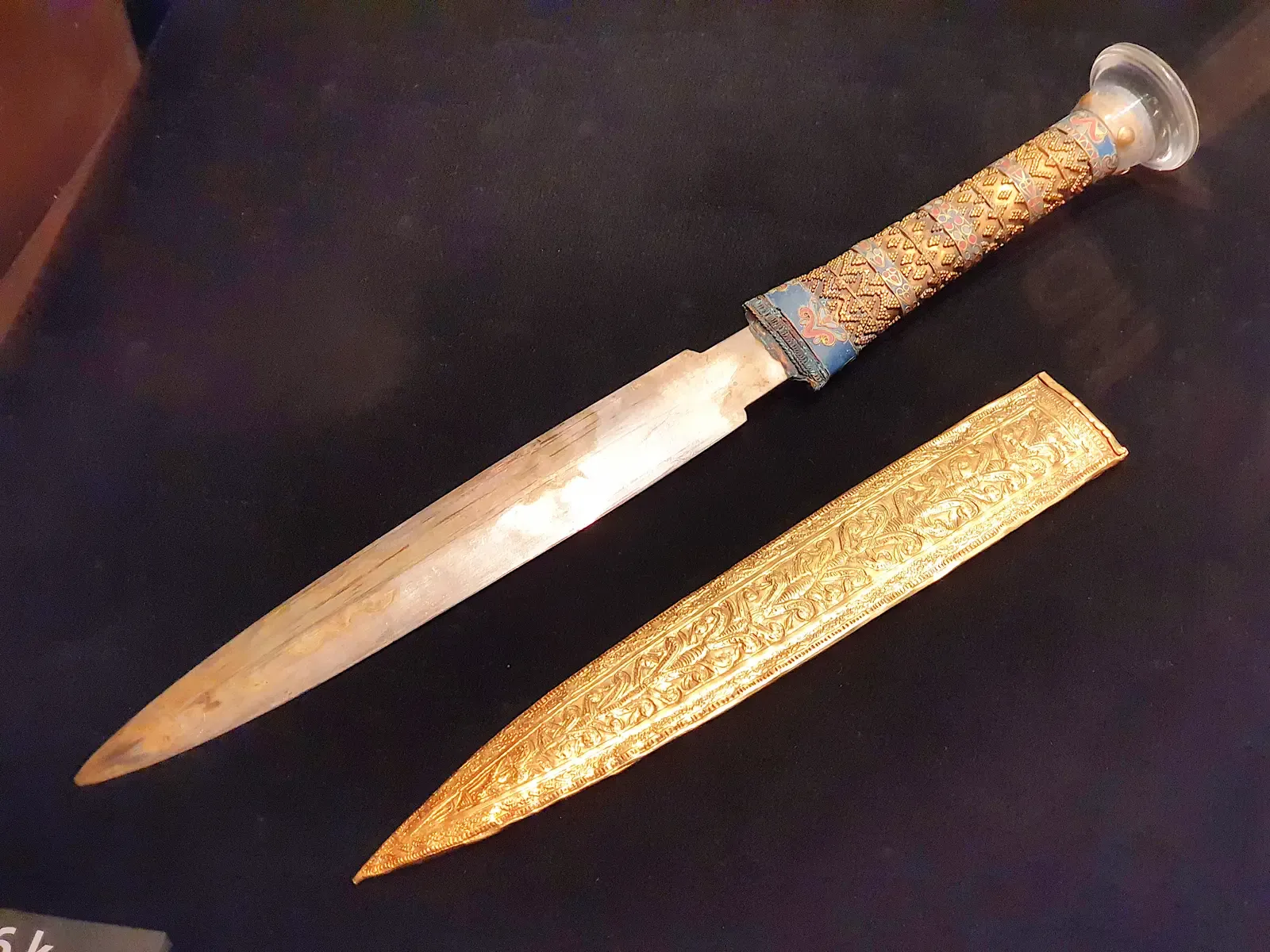
One of the most famous metal objects on the planet is also one of the strangest: a dagger placed in the tomb of Tutankhamun in the fourteenth century BCE, with a blade made of iron that should not even have existed in Egypt at that level of quality. Egypt at that time was a bronze culture. Native iron smelting had not yet taken off, and most accessible iron came either as low-grade bloom or as rare meteoritic lumps. But when scientists analyzed the dagger’s blade in detail, its high nickel and cobalt content pointed very clearly to an extraterrestrial source.
Local Egyptian ores could not have produced this composition. Terrestrial iron ores are overwhelmingly lower in nickel, while iron meteorites naturally carry that iron-nickel signature. The dagger, then, is an alloy beyond what regional geology and known technology could deliver. Somebody took a difficult, stubborn piece of meteorite and turned it into an elite weapon suitable for a pharaoh, long before true ironworking was common in the Nile Valley.
Even more intriguing, the craftsmanship is excellent: homogeneous metal, careful shaping, and a refined finish. That suggests specialized smiths who knew they were dealing with a rare and symbolic material and were willing to experiment with forging and annealing methods very unlike typical bronze work. In simple terms, they hacked alien iron into a prestige object that quietly foreshadowed the coming Iron Age.
- The dagger’s blade contains high nickel and cobalt, typical of iron meteorites.
- Egypt at the time did not have the technology to smelt such high-quality iron from ore.
- This single object shows early mastery of a rare, non-local metallic resource.
#4 The Delhi Iron Pillar’s Corrosion-Resistant Wrought Iron
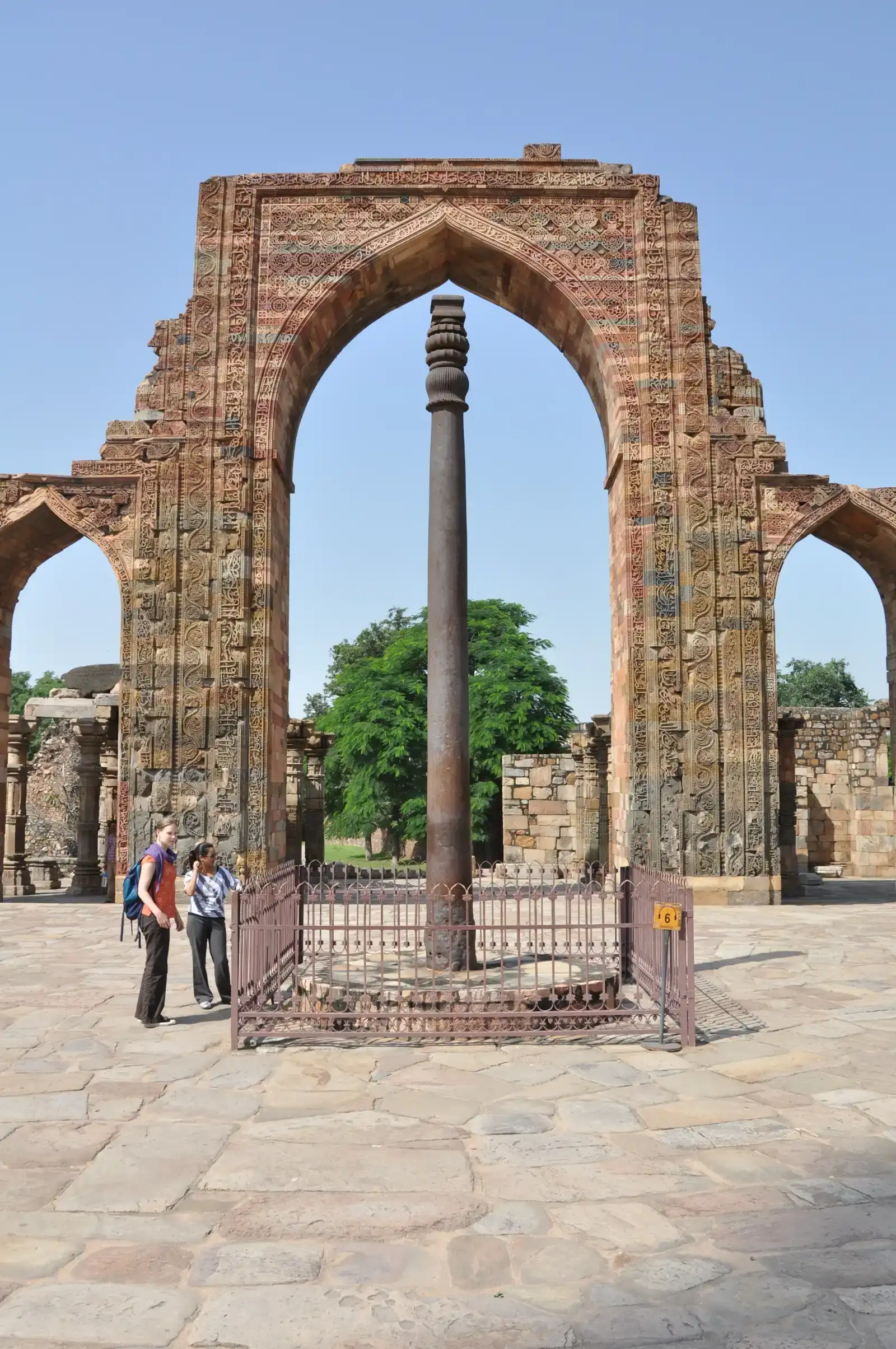
The famous Iron Pillar of Delhi, standing more than seven meters tall and weighing several tons, is often treated in popular culture as if it were an unsolved mystery. In reality, we understand a lot about how it was made, but it still represents an object whose quality exceeds what local ore alone could naturally give. Erected roughly in the early first millennium CE, its wrought iron is remarkably pure and shows a very low content of sulfur and other unwanted impurities, something not typical of average Indian iron deposits smelted in simple bloomeries.
The reason the pillar has survived with relatively little corrosion is a combination of that unusually clean iron, residual slag distributed in specific patterns, and the gradual formation of a protective phosphate-rich film on the surface. That film, in turn, is linked to the phosphorus content in the metal, which required ores and smelting conditions that were intentionally chosen and controlled. In other words, someone did not just scoop up local ore and hope for the best; they deliberately engineered a combination of ore and furnace practice to produce a metal with long-term stability.
From a modern perspective, the pillar is a kind of early materials science experiment that accidentally lasted more than a millennium. Local ore could have produced dirty, short-lived iron, but what we see is an object whose composition reflects learned experience and a clear desire for durability. It is not mystical; it is the result of people stubbornly pushing their ironworking beyond the limitations of what the nearby rock wanted to give them.
#5 The Moche Silver-Copper-Gold Alloys of Ancient Peru
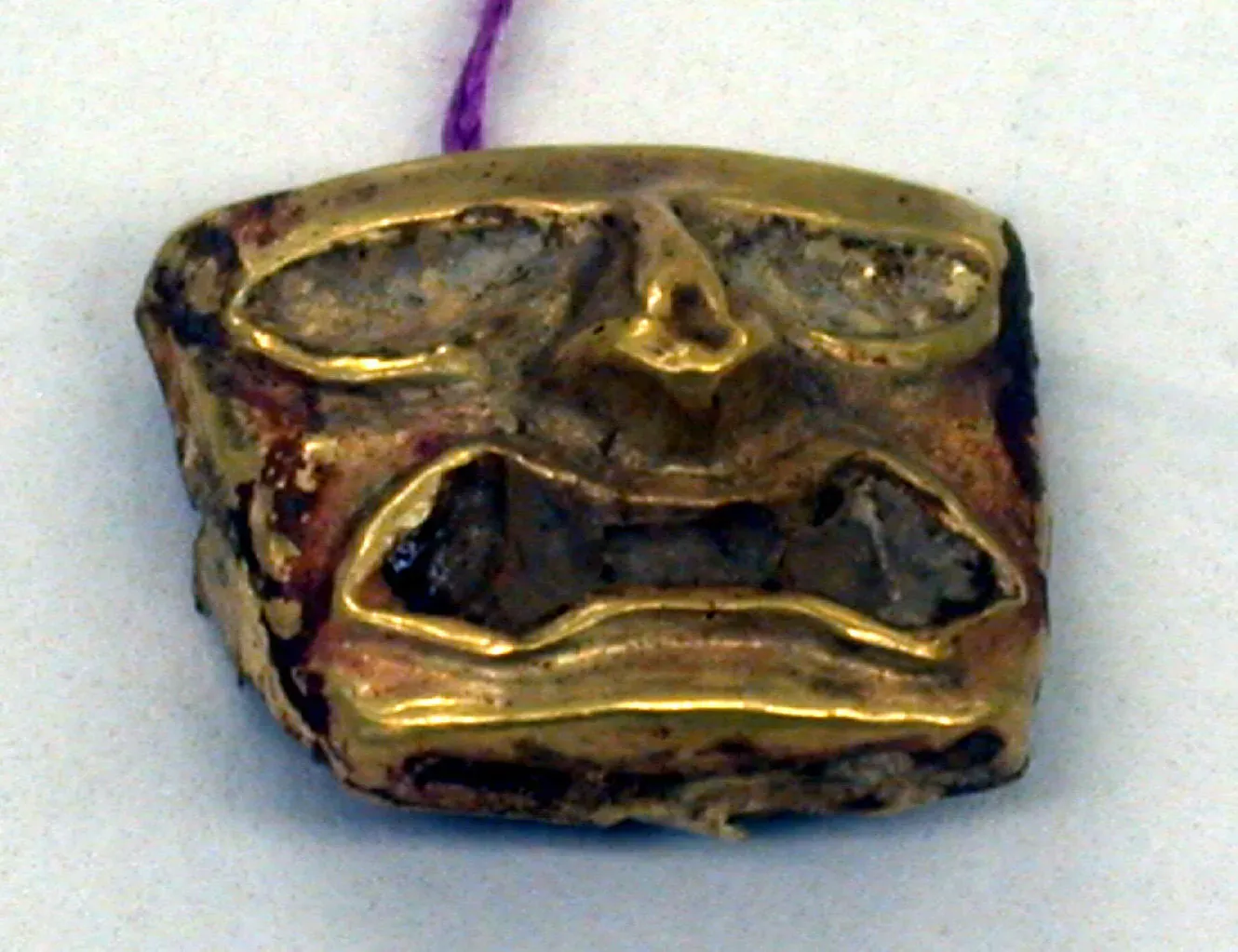
On the north coast of Peru, the Moche civilization produced elaborate metal ornaments between about the first and eighth centuries CE. Many of these pieces – nose ornaments, headdresses, ritual knives – look like solid gold or silver at first glance. But when metallurgists started cutting tiny samples and running analyses, they found complex alloys that simply do not mirror the natural compositions of local ore deposits. Instead, they saw deliberately balanced mixtures of gold, silver, and copper, often with surface treatments that changed color without changing bulk composition.
Local Andean ores certainly contained these metals, but usually in messy combinations with lead, arsenic, and other elements. The Moche seem to have used sophisticated processes such as depletion gilding and controlled heating to pull one metal to the surface visually, even when the underlying alloy contained plenty of cheaper copper. That means the final aesthetic effect could be golden, while the bulk alloy was a carefully tuned, non-natural mix – a clear case of metal properties engineered beyond what geology alone hands you.
What is striking is how systematically this was done. Across multiple sites and burials, researchers find similar alloy recipes recurring, suggesting shared knowledge and deliberate design rather than random trial. The Moche were not passively reflecting the ore around them; they were using it as raw feedstock for metallurgical experiments that let them stretch precious metals further, adjust hardness, and control color in ways that local, raw ore simply could not provide on its own.
- Moche objects often contain planned ratios of gold, silver, and copper.
- Surface treatments create a golden or silvery appearance over complex inner alloys.
- The chemistry diverges strongly from unprocessed local ore, proving high-level refinement and design.
#6 The Benin Bronzes’ Non-Local Brass Alloys
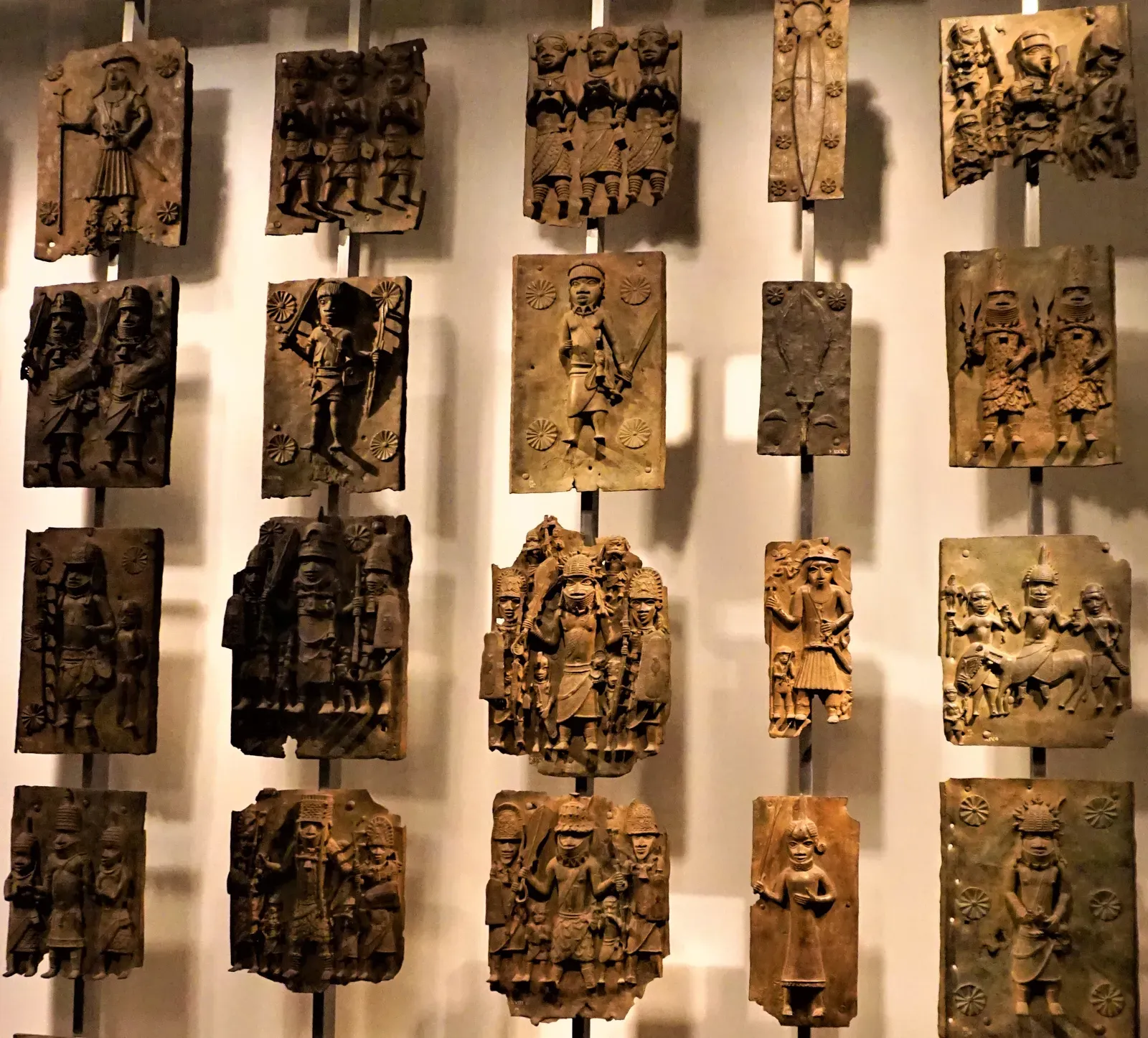
The so-called Benin Bronzes of West Africa, produced by the Kingdom of Benin (in present-day Nigeria) from roughly the thirteenth century onward, are mostly made not of true bronze but of brass – copper alloyed with zinc. The local ore geology in the immediate region, however, does not naturally provide the kind of zinc-rich materials needed for these compositions. Studies of their chemistry have shown that many of the brass alloys contain trace elements and zinc levels pointing to imported European manillas (copper-based currency ingots) and other non-local sources.
Essentially, the royal casters of Benin were melting down foreign trade metal that had already been alloyed or refined beyond what their own mineral deposits could yield. By the time it reached their crucibles, it was already a product of European smelting and refining technologies. The artists then remelted, modified, and cast it into incredibly detailed plaques, heads, and reliefs, preserving a record of court life in metal whose very nature reflects a global supply chain.
This is one of those cases where “beyond local ore” is almost literal: the alloy itself comes from ores that were dug up an ocean away. Yet what makes the objects special is how the Benin craftsmen took this foreign metal and turned it into something that is culturally and artistically theirs. The chemical profile tells a story of trade and colonial entanglement that the art style itself cannot, layering a geopolitical narrative into the alloy.
#7 The Scandinavian Viking-Ulfberht Blades
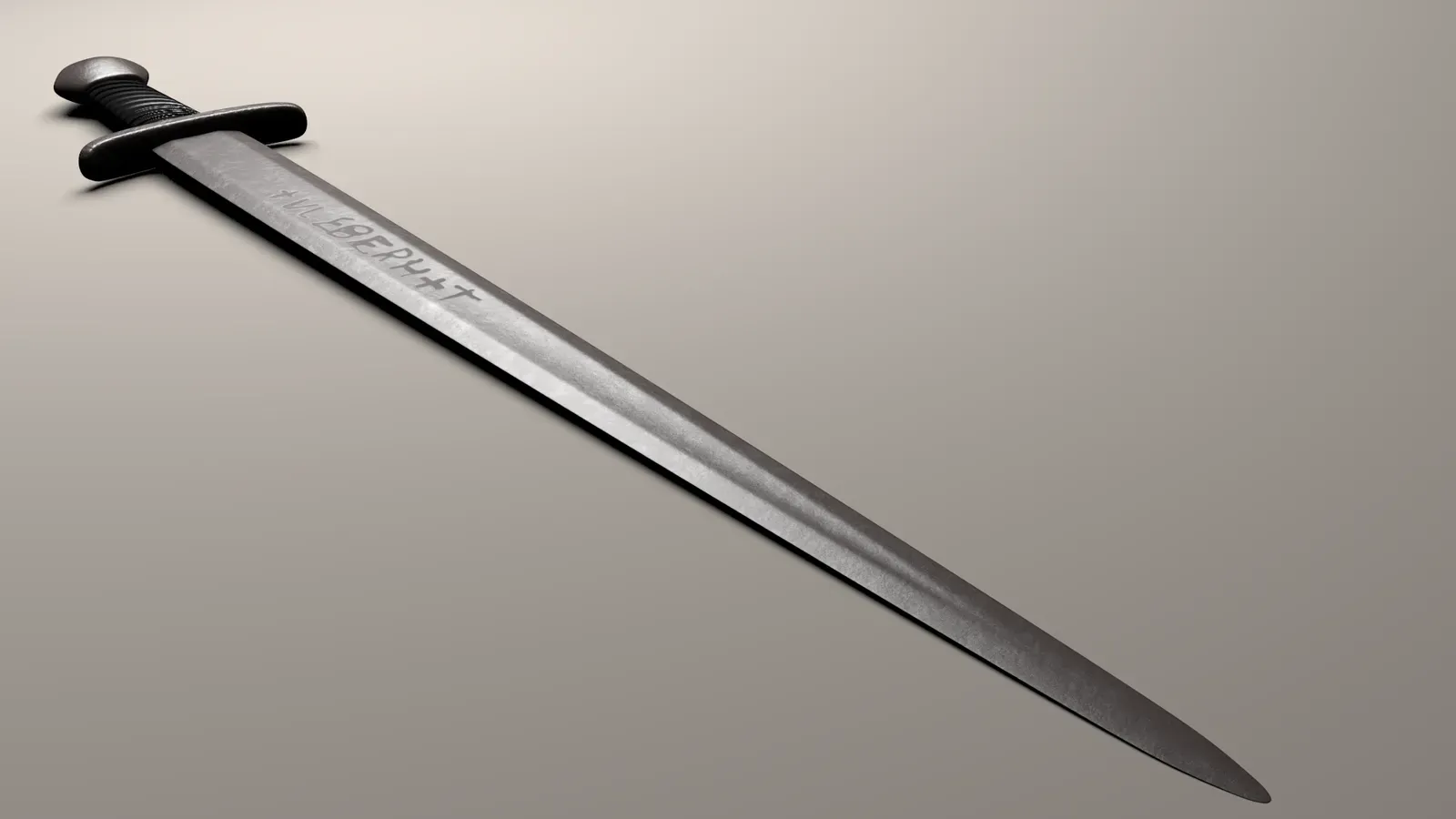
Among Viking-age swords, a subset inscribed with the name “Ulfberht” (or variants of it) has become famous for surprisingly high-quality steel. When modern metallurgists examined broken examples, they found a carbon steel that, in some cases, approached the homogeneity and low slag content of much later crucible steels. Scandinavian bog ores and simple bloomery furnaces normally produce relatively low-carbon, impurity-ridden iron. Yet these blades often show steel that is more uniform and higher in carbon than local technology could typically manage on its own.
One widely discussed explanation is that the raw material for some Ulfberht blades actually came from Central Asian or Middle Eastern crucible steel traditions, such as Indian wootz or similar high-carbon products. In that scenario, Scandinavian smiths were re-forging imported, pre-alloyed steel cakes that were already far better than what local ore and furnaces could yield. Even when the source was not wootz in the strict sense, the chemical fingerprints still point to non-local ores and advanced refining elsewhere.
Whatever the exact origin, the key point is this: certain Viking elites were wielding swords whose metallurgical performance relied on a transcontinental pipeline of superior material. On the surface, these weapons look like typical northern European swords. On the microscopic level, they are riding on the backs of distant ore bodies and foreign metallurgical genius, alloyed beyond anything the fjords and forests could have produced alone.
- Some Ulfberht blades show steel quality unusual for bloomery-based Scandinavia.
- Isotopic and structural evidence suggests imported high-carbon steel as feedstock.
- The swords are local in style but global in material origin and alloy sophistication.
#8 The Early Chinese High-Tin Bronze Mirrors
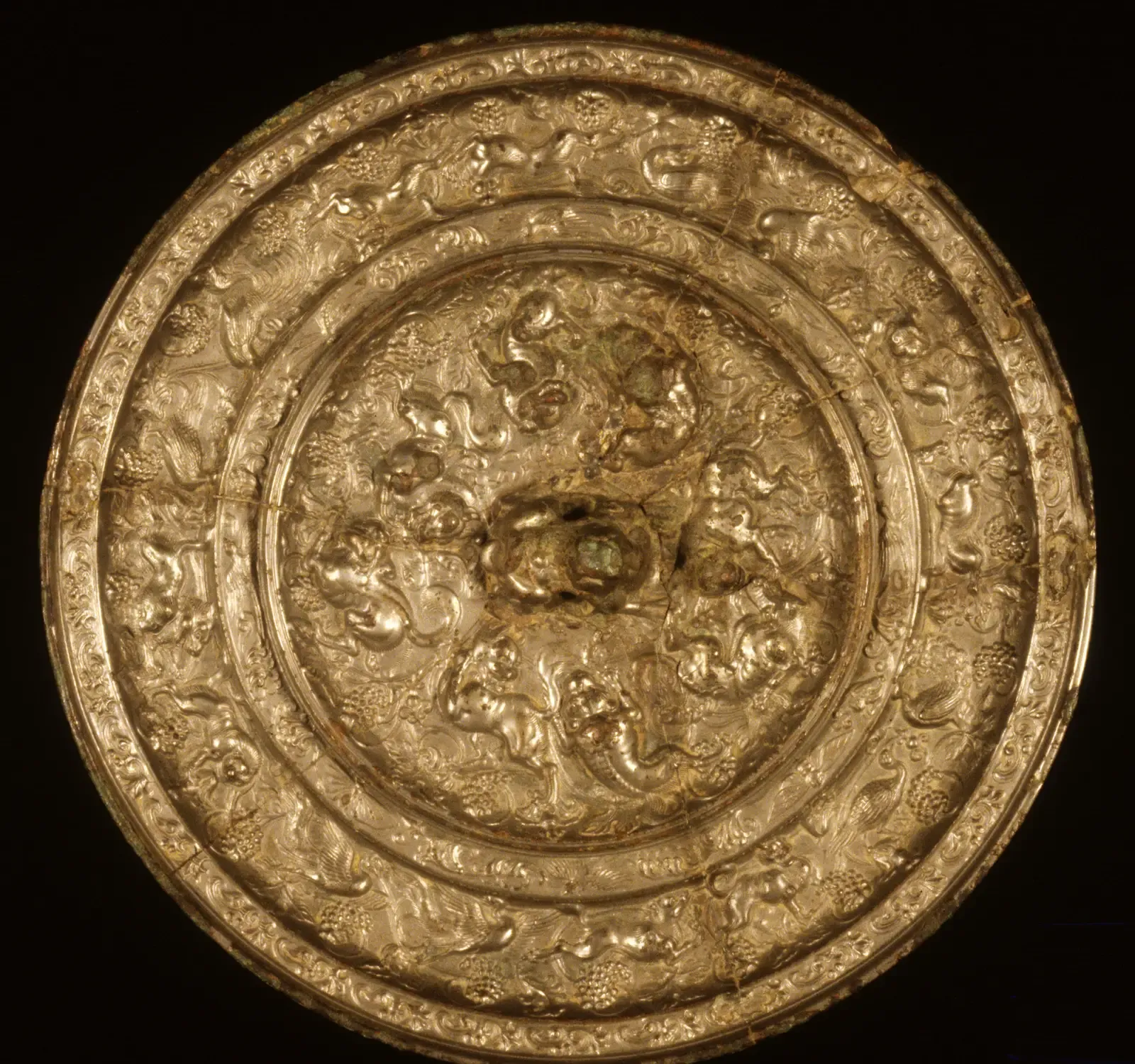
Ancient China produced bronze mirrors with remarkably high tin contents, often well above what nearby copper-tin ore bodies would conveniently provide in a single natural recipe. Many Han dynasty and earlier mirrors are made with bronzes that have more tin than would be ideal for most weapons or tools, giving them a silvery sheen and excellent casting properties for fine designs. But this also means that smiths and foundries were deliberately adding tin at levels far beyond what local mixed ores delivered in the furnace.
Tin is relatively rare and geographically patchy. To create these high-tin bronzes, Chinese metalworkers needed concentrated tin sources, likely brought in through complex trade routes from the south and southwest. They then used this tin not just to make metal harder, but to tailor its reflection, sound when tapped, and even ritual symbolism. The resulting alloys frequently bear no resemblance to the standard ratios you would get from smelting a local copper deposit with incidental tin; they are over-engineered by design.
This choice came with trade-offs: high-tin bronzes are more brittle, so they are poor for edged blades but excellent for rigid, finely decorated surfaces. The fact that whole industries committed to that choice tells you that aesthetic and ritual priorities were powerful enough to justify the effort of importing tin and bending the alloy far beyond natural local limits. The mirrors on a noble’s dressing table were quiet testimony to a large, invisible network of miners and traders.
#9 Medieval Islamic Crucible Steel Blades (The so‑called “Damascus” Steel)
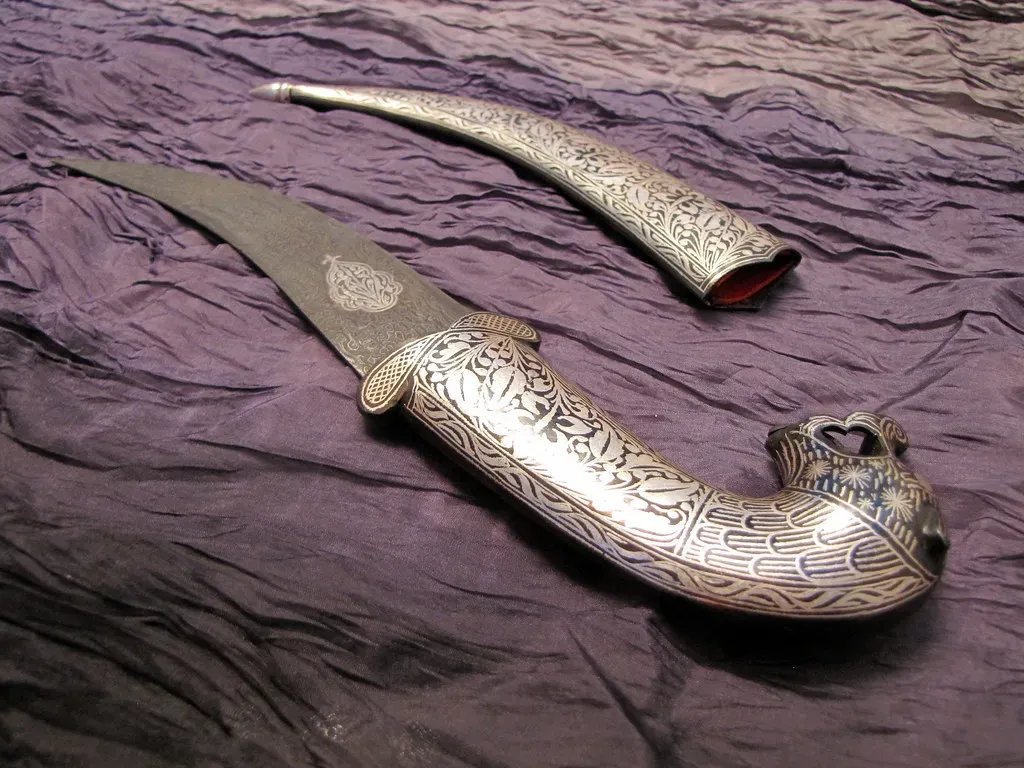
Those beautifully patterned blades often lumped together under the popular label of “Damascus steel” were typically made from crucible steel produced in India, Central Asia, and Persia and then forged and finished in various workshops. Local ore bodies in many of the cities where such blades were traded and sold could not yield this material directly. Instead, steelmakers smelted selected iron ores in closed crucibles with carbon-rich material, creating ingots whose composition and impurity profile were carefully engineered.
The result was a steel with relatively high carbon and controlled levels of trace elements like vanadium and molybdenum, contributing to the famous watered patterns and mechanical properties. This was not just melted ore; it was ore plus charcoal plus flux, thermally cycled until the metal reached a homogeneity impossible in simple bloomery operations. Cities that became famous for these blades were often working with imported ingots already alloyed and refined beyond what their local rocks could give them.
When you hold one of these blades in a museum today, you are looking at an object whose performance depends on decisions made hundreds of kilometers away in mining regions and crucible shops. Local smiths then imposed their own artistry on the shape and patterning, but they were relying on an engineered material that encoded distant geology and specialized know-how. It is a textbook example of how metallurgy can separate the location of ore from the place of final object creation.
- Crucible steels used hand-picked ores, carbon, and flux in sealed vessels.
- Many famed blades were forged far from the mines that supplied their metal.
- The distinctive patterns depend on controlled impurities, not random local ore mixes.
#10 The Norse Greenland Bronze and Iron From Imported Scrap

In the Norse settlements of Greenland, archaeologists have found bronze and iron artifacts that do not neatly match the limited local mineral resources. Greenland has some iron-bearing rocks and bog iron, but large, consistent metal supplies would have been hard to maintain. Yet analyses of certain Greenlandic finds show alloy compositions close to Scandinavian or European sources, including brass and bronze types not easily produced from local ores alone.
The most plausible explanation is that Norse settlers were bringing metal with them – broken tools, leftover ingots, and scrap – and then reworking these into new objects. In some cases, the alloy chemistry suggests recycling of European trade goods or church fittings, which already contained carefully balanced amounts of copper, tin, and zinc. Local ore in Greenland simply could not replicate these exact compositions, especially when tin and zinc sources were practically nonexistent on-site.
You can picture a blacksmith in a marginal Norse farmstead, hoarding every fragment of imported metal, melting it in small crucibles, and carefully casting or forging it into nails, rivets, or small tools. The final artifacts may look simple, but their alloys are ghosts of distant mines and smelters in Norway, Britain, or continental Europe. In an environment where local geology offered thin pickings, alloyed metal became a kind of condensed civilization that people physically carried across the Atlantic.
#11 The Bronze Age Arsenical Copper of the Caucasus and Anatolia
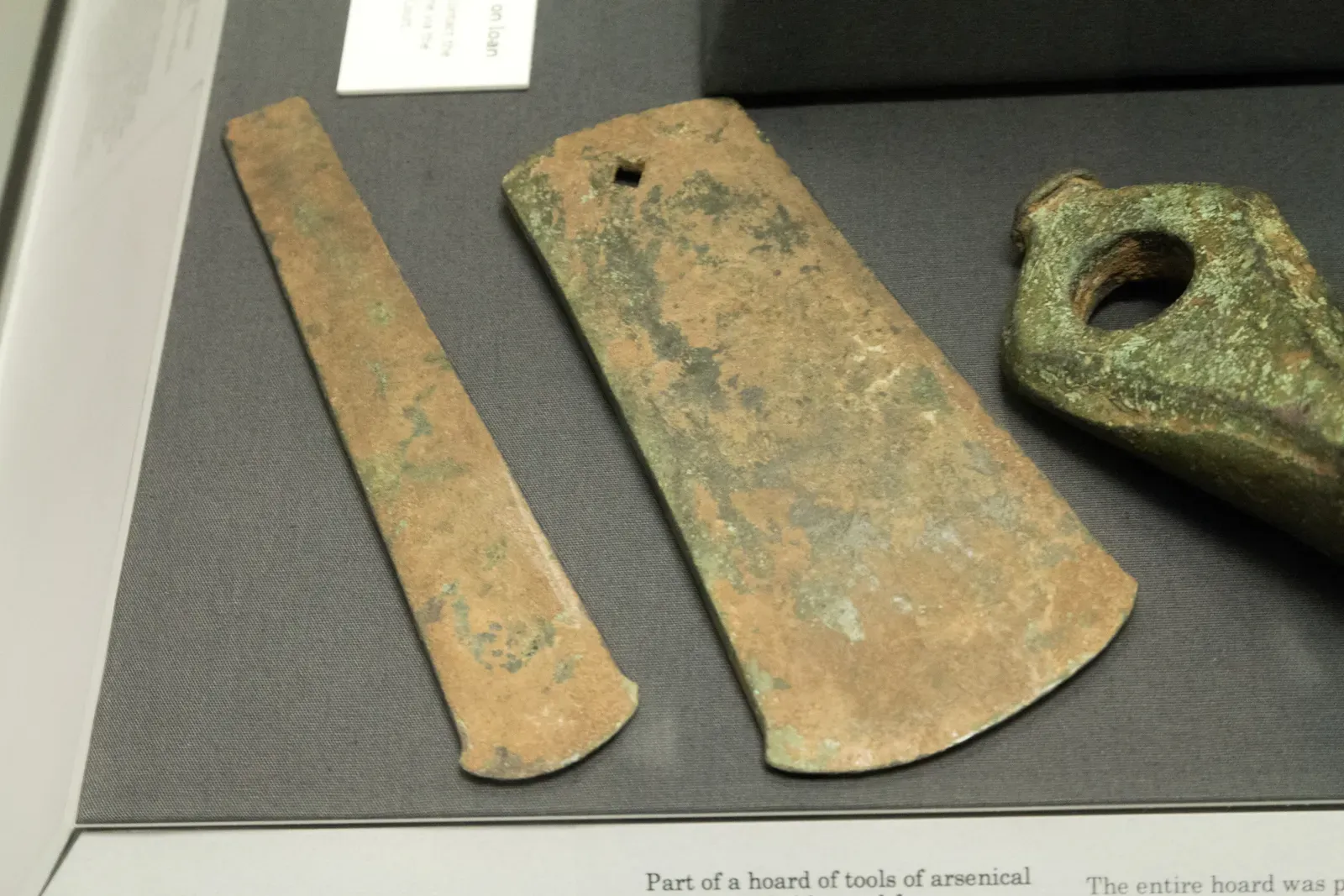
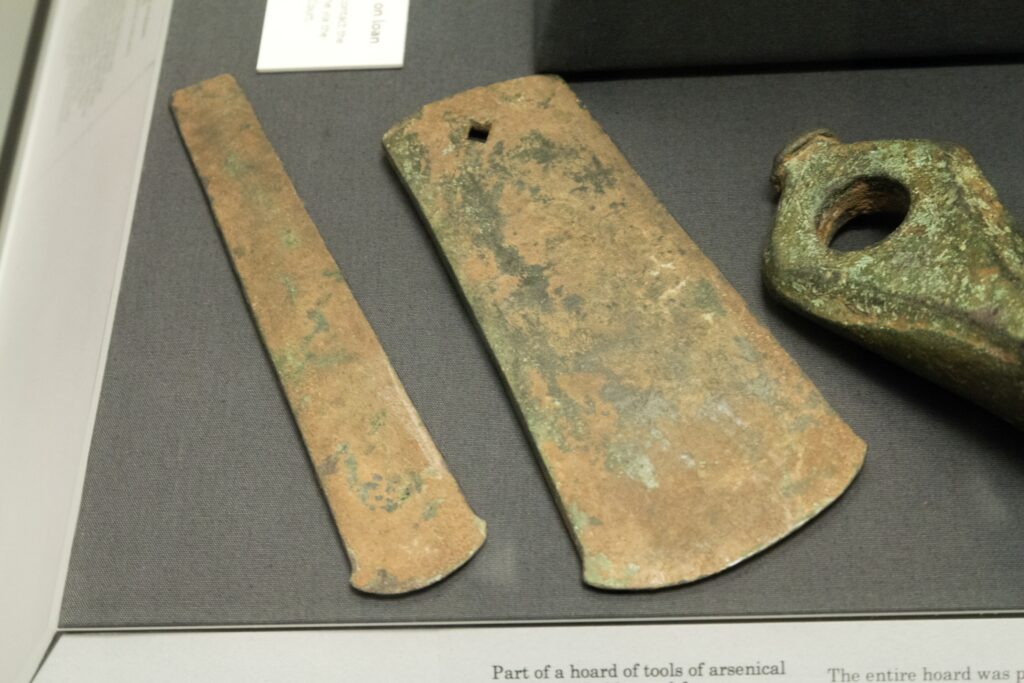
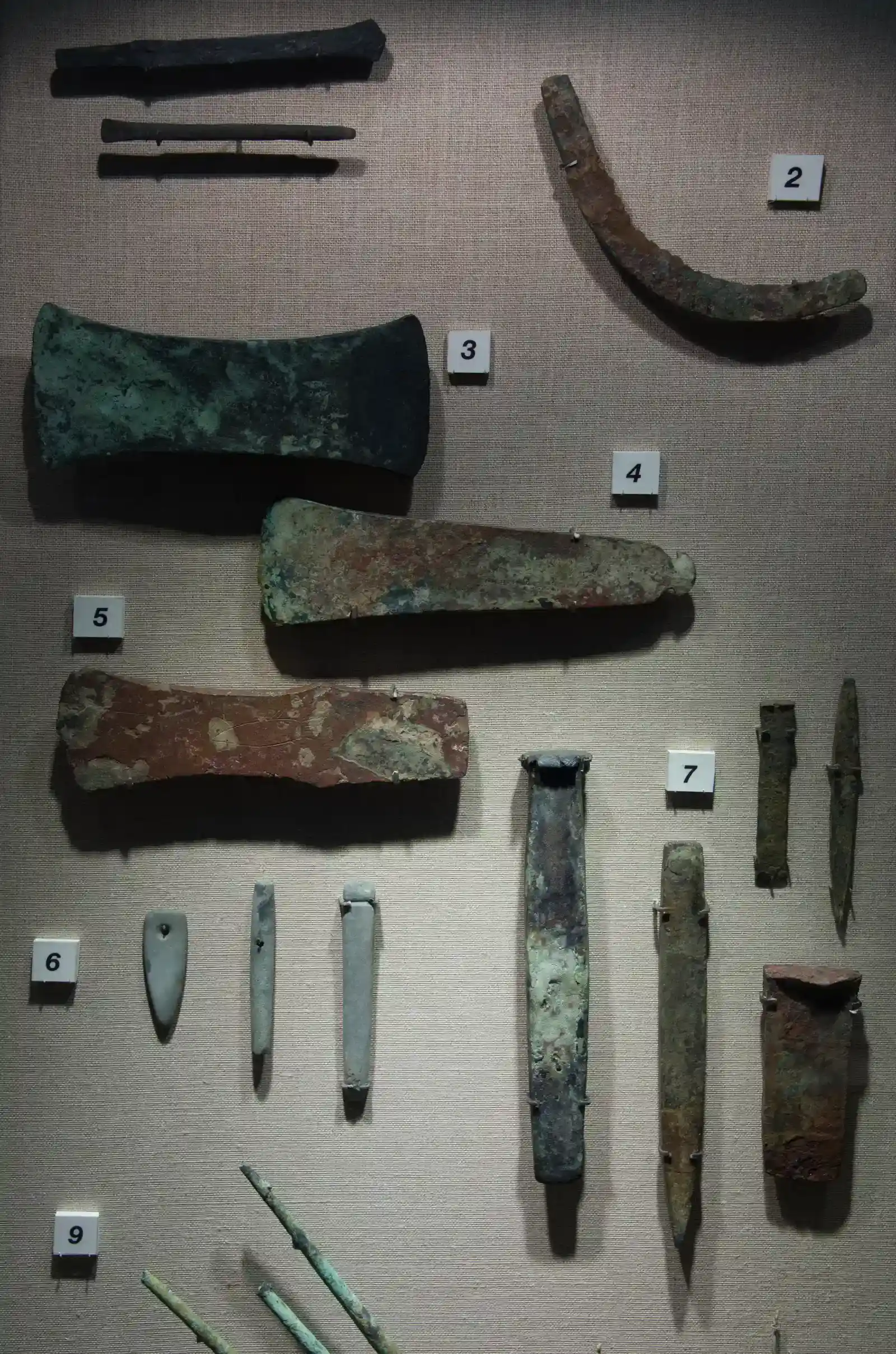
Some of the earliest high-arsenic copper objects from the Caucasus and Anatolia show arsenic levels too elevated and controlled to be explained merely by chance smelting of mixed ores. Local copper deposits often contain small amounts of arsenic or other metals, but analyses of certain tools, weapons, and ornaments reveal arsenic concentrations that look intentional: high enough to harden and brighten the copper, yet not so high as to make it catastrophically brittle. That kind of sweet spot usually does not come straight out of a random rock.
Experimental work suggests that smiths were mixing ores or adding arsenic-rich minerals such as realgar or orpiment to copper in a deliberate effort to tailor hardness and color. Over time, this would have allowed them to design alloys that were tougher and more visually striking than plain native copper. In several archaeological contexts, the distribution of arsenic-rich objects does not line up with the immediate geology, implying that people were moving ore or semi-processed metal around specifically to hit these target alloy ranges.
Of course, smiths of the time did not have a periodic table pinned to the shop wall. They learned through feel, fracture patterns, and color, gradually discovering that certain ore mixes gave better blades even if the local hillside did not naturally mirror those proportions. The resulting arsenical coppers are early examples of metal compositions that break free from the statistical average of local ore and become something closer to intentional design.
- Arsenic levels in many objects cluster around functional, non-random ranges.
- Local ore alone often cannot explain these consistent concentrations.
- People were already engineering properties like hardness and luster through alloying choices.
#12 Prehistoric European Gold Objects With Non-Local Signatures
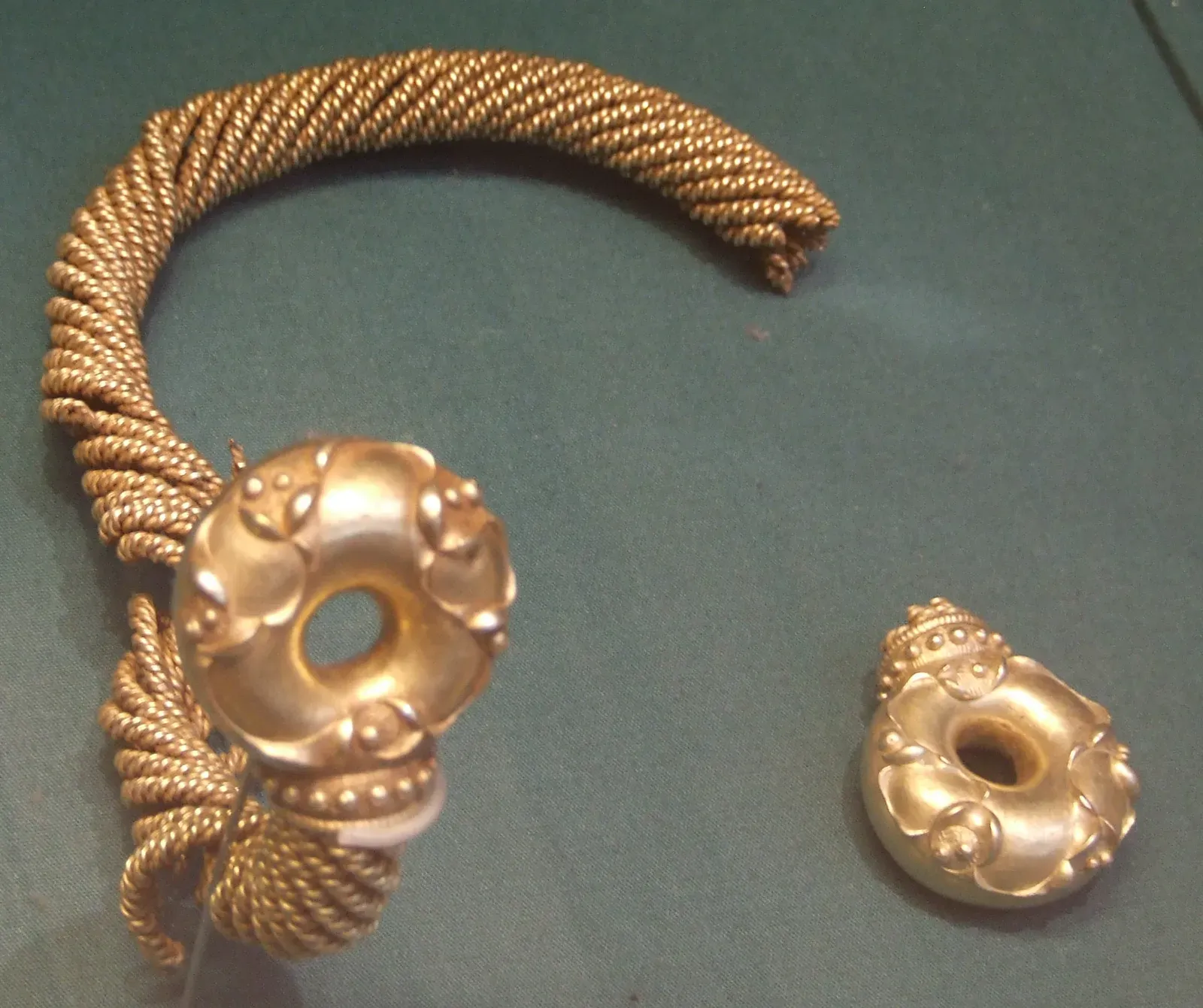
Across Bronze Age Europe, from Ireland to the Balkans, archaeologists have uncovered gold torcs, discs, and sheet ornaments whose chemical and isotopic signatures do not match the nearest known gold sources. Local rivers and quartz veins often produce naturally alloyed gold with characteristic ratios of silver and trace elements. Yet many prestigious objects show patterns indicating that the metal was either heavily refined, deliberately blended from multiple sources, or imported outright from distant mining districts.
In some cases, the gold is unusually pure, far beyond what alluvial panning yields without advanced refining. In others, the silver content is tuned to adjust color or working properties in ways that diverge from any single local deposit. This points to a level of gold management that goes well beyond simply using whatever flakes you can gather nearby. Metallurgists, merchants, and elites were evidently moving gold around, melting and re-alloying it to meet aesthetic or symbolic standards that the earth beneath their feet did not naturally provide.
What I find personally fascinating is how this turns seemingly simple objects – like a smooth gold neck ring – into maps of invisible connections. Behind that one torc might be mines in Iberia, workshops in central Europe, and final deposition thousands of kilometers away. The local soil may be poor in gold, yet the grave goods gleam because people stitched together a network of ore bodies, refining steps, and alloy tweaks that ultimately break the link between what is underfoot and what is worn on the body.
Conclusion: When Metal Stops Being Local and Becomes Human
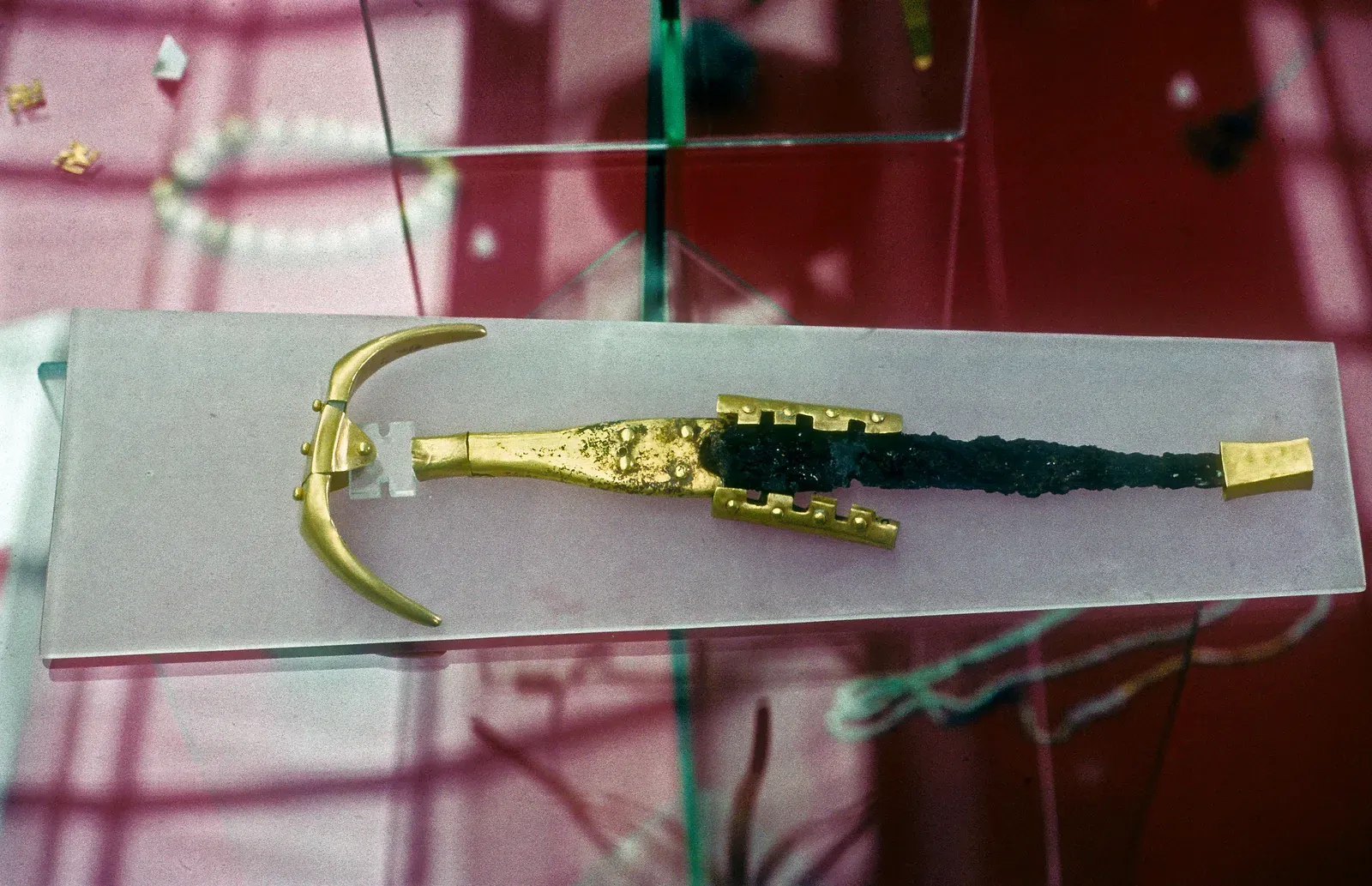
Looking across these twelve examples, a pattern jumps out: the more a society cares about what metal can do for it – whether as a weapon, a symbol, a luxury, or a sacred tool – the less it accepts the limits of local ore. From Tutankhamun’s meteoritic iron dagger to Delhi’s rust-resistant pillar and the Benin brass plaques, the most memorable objects are the ones where people refused to be boxed in by whatever their own geology offered. They traded, refined, blended, and experimented until the metal served human purposes, not the other way around.
It is easy to romanticize this and pretend it is all mystery, but the truth is more interesting: most of these cases are about stubborn, clever tinkering plus long-distance exchange. No single valley in England can explain Hoxne’s gold. No one Greenland fjord can explain Norse brass. And no single Anatolian hillside can explain arsenic levels tuned like a primitive materials science lab. These objects remind us that technology has always been about cheating your local environment with shared knowledge and imported stuff.
In a way, our modern reliance on rare-earth elements, global supply chains, and hyper-pure alloys is just a louder, faster version of what these smiths and traders were already doing thousands of years ago. They were already living in a world where the best metal for the job almost never came from next door. The only real difference today is scale. When you look at these twelve objects, which do you think tells the bigger story: the ore in the rock, or the humans who refused to accept that rock as the last word?