Imagine turning on a tap a hundred years from now and water still flows, even though nobody has checked a filter, paid a bill, or tightened a single bolt. It sounds impossible in our subscription-everything world, but some water systems really do keep working with little to no human attention. They are not magic, and they are not miracles. They are what you get when simple physics, smart design, and nature itself do the heavy lifting.
In a time when even your fridge wants a software update, there’s something quietly thrilling about a system that just works. No maintenance contracts, no remote monitoring, no app. You set it up right once, and gravity, rock, and sky look after the rest. Of course, nothing in the real world is truly immortal, but some systems get so close that, for a human lifetime, they might as well be.
Let’s walk through 11 types of water systems that can, in the right conditions, function for decades with essentially no maintenance at all. Some are as old as civilization, some live in remote villages, and some might be hiding right under your feet. A few are surprisingly high-tech in principle, but stripped down so far that there’s almost nothing left to break.
#1 Gravity-Fed Spring Systems Hidden in the Hills
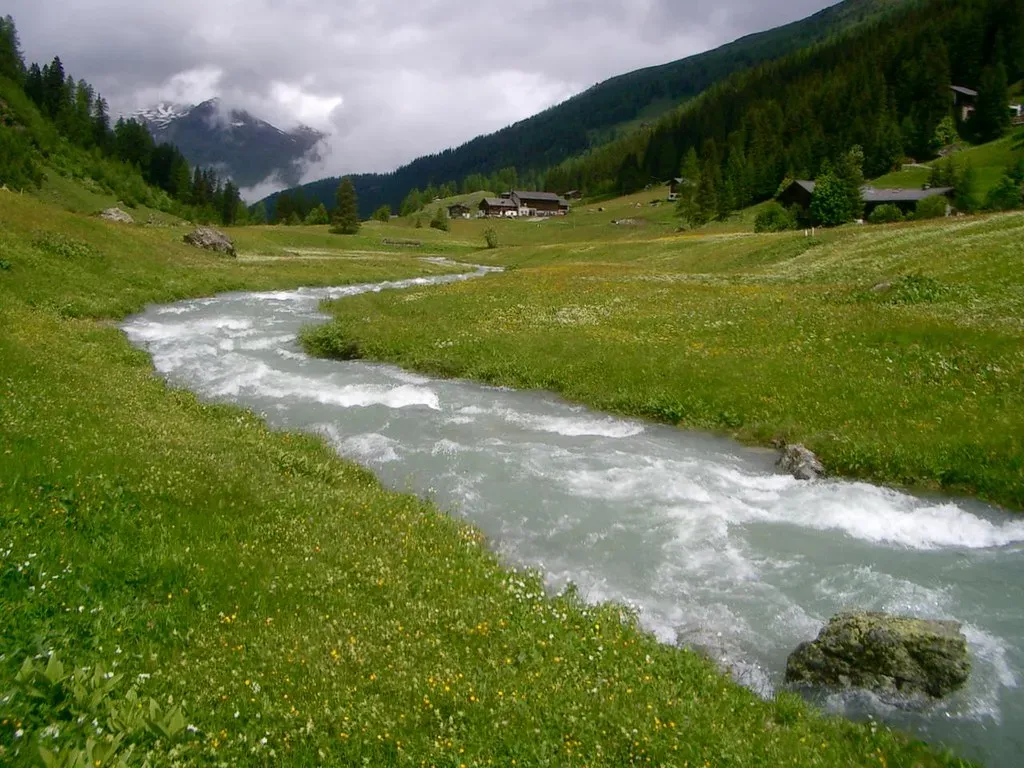
Think of a mountain spring feeding a village down below: no pumps, no electricity, just a pipe and a steady trickle of cold water. Gravity-fed spring systems are probably the closest thing we have to a “set it and forget it” water supply. When the source is clean and protected, water simply flows downhill forever, nudged only by elevation and basic hydraulic pressure.
The magic is in the simplicity. A small collection box or spring box is placed where groundwater naturally emerges, often sealed under rock or concrete to keep out animals and debris. From there, a single buried pipe carries water down to homes or communal taps. No moving parts, no filters to swap, no tanks to scrub. As long as the spring itself is stable and the pipe is not physically damaged, the system just runs.
Where these systems really shine is in rural or mountainous regions where topography does most of the engineering. Villages in the Alps, Andes, Himalayas and Appalachians have used versions of this setup for generations. The main threats are human: logging, road construction, or contamination near the catchment area. But in pristine catchments with stable geology, you can find gravity-fed spring lines that have not been touched in decades and still deliver drinkable water day after day.
#2 Ancient Gravity Aqueducts That Just Keep Going
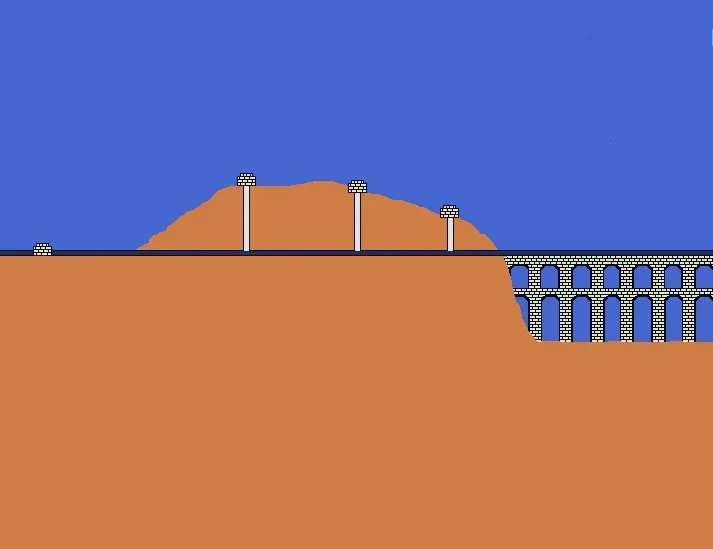
It’s slightly mind-bending that some of the most durable water systems on Earth were built long before modern engineering degrees existed. Ancient gravity aqueducts, carved into rock or built with stone channels, still carry water in parts of Europe, the Middle East, and Asia. Many of them have never seen a pump, a sensor, or a maintenance crew in living memory.
The key is that they were overbuilt and undercomplicated. Engineers in ancient Rome, Persia, and other civilizations used gentle, carefully calculated slopes so water glided along instead of racing and eroding. They aligned channels along contours of hillsides, tunneled when they had to, and protected the channels from direct sunlight and contamination where possible. Once those stone or masonry channels were in place, water simply followed the path of least resistance for centuries.
In some mountain regions today, similar “heritage” channels still irrigate fields the way they did hundreds of years ago. Local communities might occasionally clear vegetation or fix a breach after a landslide, but many smaller side channels are left alone for years without collapsing. You can walk along one of these lines and watch water flowing as if time forgot it, a continuous low-tech service that shrugs at the idea of planned obsolescence.
#3 Underground Qanats: Desert Lifelines That Run Themselves
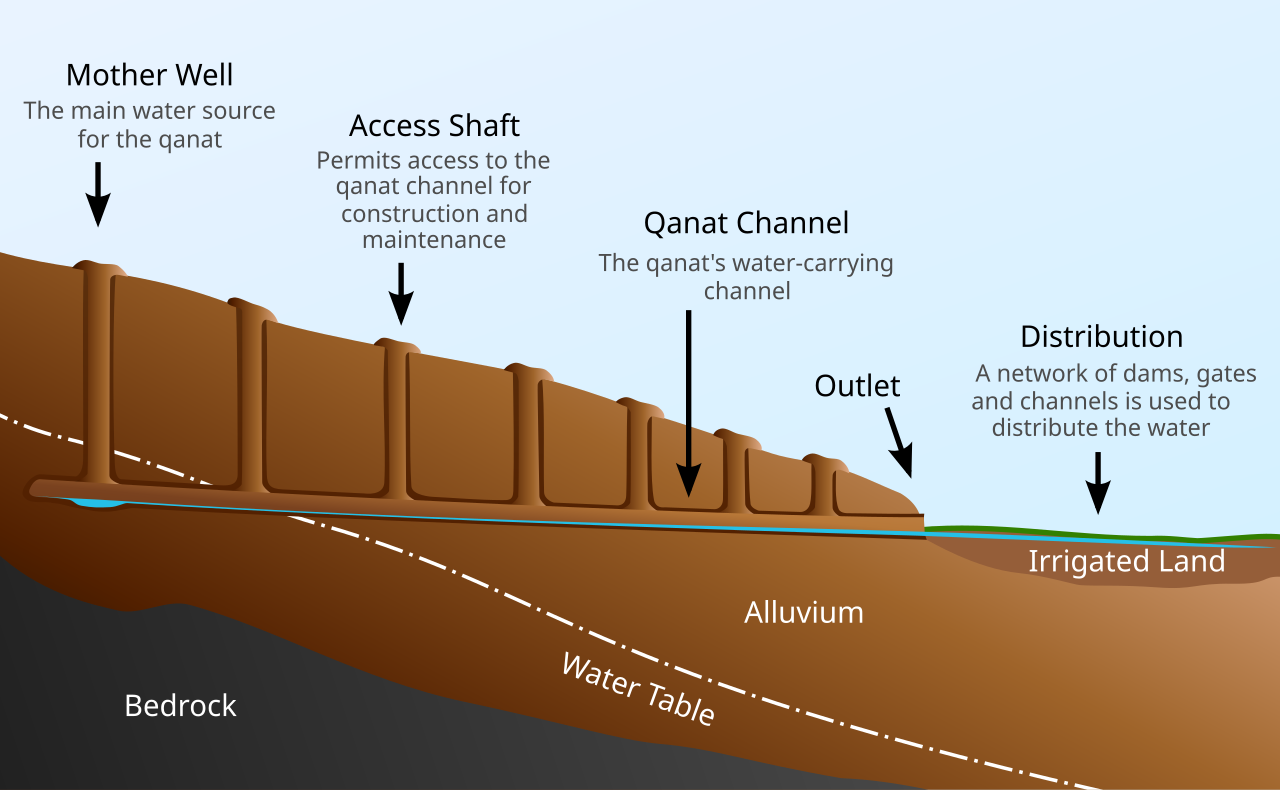
If gravity aqueducts are impressive, underground qanats are downright astonishing. Developed in arid regions like Iran, North Africa, and parts of Central Asia, qanats are gently sloping tunnels that tap groundwater at higher elevations and carry it, entirely underground, to distant farms and settlements. Some qanats still flowing today were dug well over a thousand years ago.
Because they are buried, qanats avoid evaporation losses that destroy surface canals in hot, dry climates. They also stay cooler and cleaner, and they are naturally pressurized just enough by the slope to keep water moving without stirring up sediment. Vertical shafts along the tunnel allowed workers to remove soil during construction, but once finished, the entire system can run for generations with barely any human touch.
In many cases, traditional communities have maintained only minimal oversight: a periodic check of access shafts, and maybe the occasional repair if a section collapses. But there are also abandoned or semi-forgotten qanats where the water still appears reliably at the outlet because the geology is stable and the tunnel is deep in solid rock. To a modern eye, they look like an impossible cheat code for living in the desert, but really they are just gravity, geology, and patience working together in the dark.
#4 Deep Artesian Wells That Flow Without Pumps
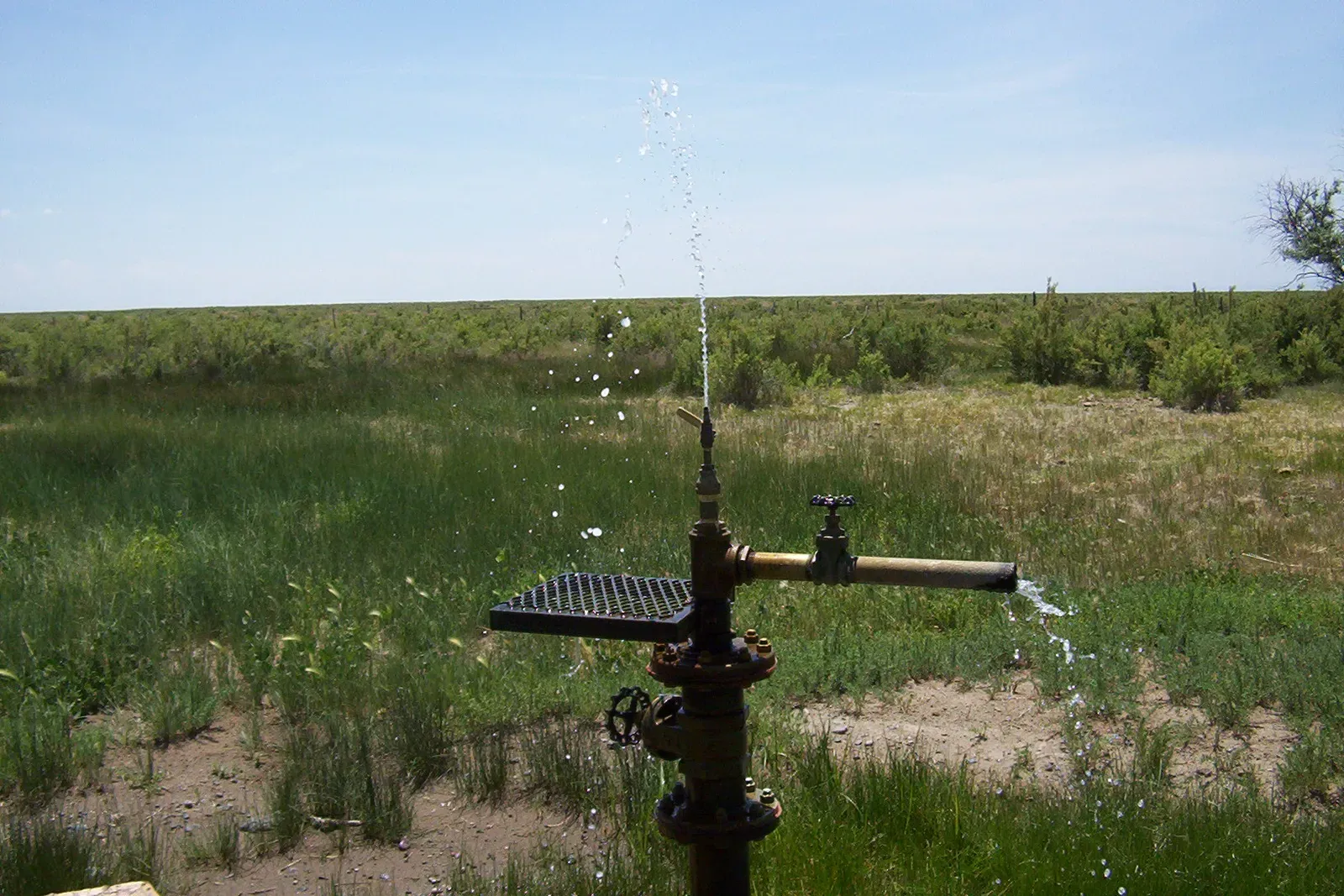
Now picture drilling deep into a pressurized aquifer and having water surge to the surface on its own. That is the essence of an artesian well. In some geological setups, the water-bearing layer is trapped between impermeable rock layers at higher elevations. When you tap into it at a lower point, the internal pressure is enough to push water upward without any mechanical help.
In its purest form, a flowing artesian well can keep running with practically no maintenance: no pump to fail, no power to cut, and often no treatment if the aquifer is naturally protected and the water emerges clean. Traditional examples have been used to water livestock, fill small ponds, or supply homesteads quietly and continuously. The well casing is essentially the only human-made component, and if this was installed in stable ground, it can last for many decades.
The trade-off is that geology is in charge, not us. If the aquifer pressure drops because of overuse elsewhere, the flow can slow or stop. If the water is naturally high in minerals, it might deposit scale inside pipes over long periods. But in regions where extraction is light and rock layers are consistent, flowing artesian wells can feel almost supernatural: you open a pipe to the right depth in the right place, and water just arrives, year after year, without a single moving part involved.
#5 Roof Rainwater Harvesting With Simple First-Flush
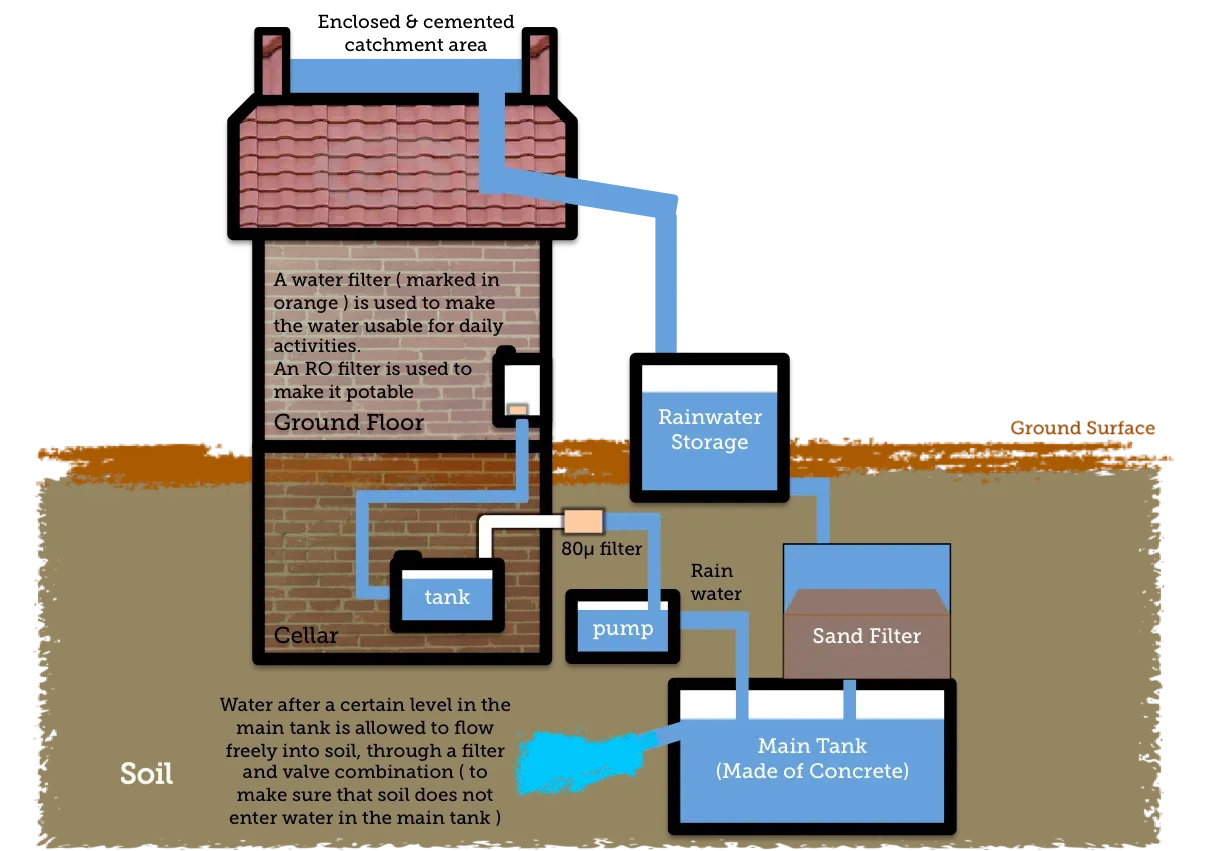
When people think about rainwater harvesting, they often imagine complex tanks full of filters, pumps, and valves waiting to clog or fail. But the simplest roof rainwater systems can operate with almost no maintenance, especially when they are not being used as a primary drinking water source. A roof, a gutter, a downpipe, and a sealed storage tank can quietly accumulate thousands of liters of water a year under the right sky.
The trick to keeping such systems as “no maintenance” as possible is to strip them down. One very basic approach uses a small first-flush diverter to discard the initial dirty runoff after a dry period and then lets the cleaner rain fill the main tank. With a covered, opaque tank and a calm inlet, sediment naturally settles, and the water can remain surprisingly clear and usable for irrigation, flushing toilets, or even, with minimal additional treatment at the point of use, drinking.
In mild climates where freezing is rare and roofs are not choked by overhanging trees, these setups can run for years with only occasional, optional cleaning. Some households never bother to open the tank at all unless there is an obvious problem, and they still get usable water every rainy season. It is not a luxury city water system, but it is stubbornly resilient, quietly turning every downpour into stored potential with hardly any human fuss.
#6 Simple Sand Dams That Recharge Groundwater Invisibly
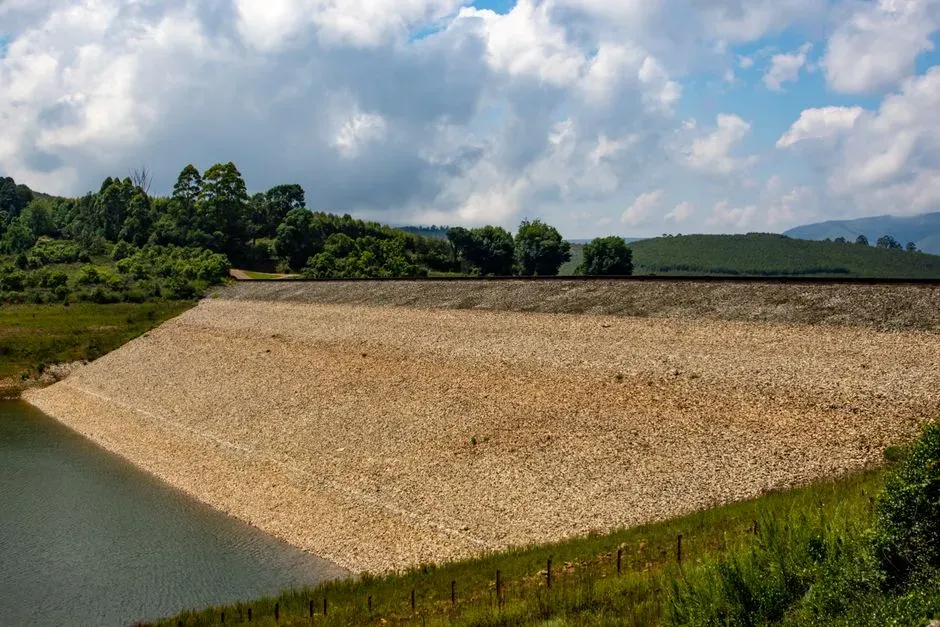
Sand dams look deceptively unimpressive: just a low concrete or stone wall across a seasonal streambed in a dryland region. But once the floods come, they trap large amounts of sand upstream. Hidden within that sand is a huge volume of water stored in the pore spaces, protected from evaporation and contamination. Over a few seasons, a once-barren gully becomes a shallow underground reservoir.
The beauty of sand dams is how much they rely on the river itself to do the work. Human involvement is basically to build a sturdy wall in the right spot and then step back. Floodwaters move the sand, sort it, and pack it, while water percolates and stays locked in place long after the surface flow has vanished. Local communities can later scoop water from shallow wells or small hand-dug holes in the sand with very little infrastructure to maintain.
Well-designed sand dams are often praised for their low maintenance, and that reputation is mostly deserved. They have no moving parts, no pumps, and no delicate filters. Yes, extreme flood events or poor siting can damage them, but many sit quietly in remote catchments doing their job year after year without anyone paying much attention. The system is not a piece of equipment; it is a modified landscape, and landscapes do not submit maintenance tickets.
#7 Natural Wetland Filtration: Letting Plants Do the Work
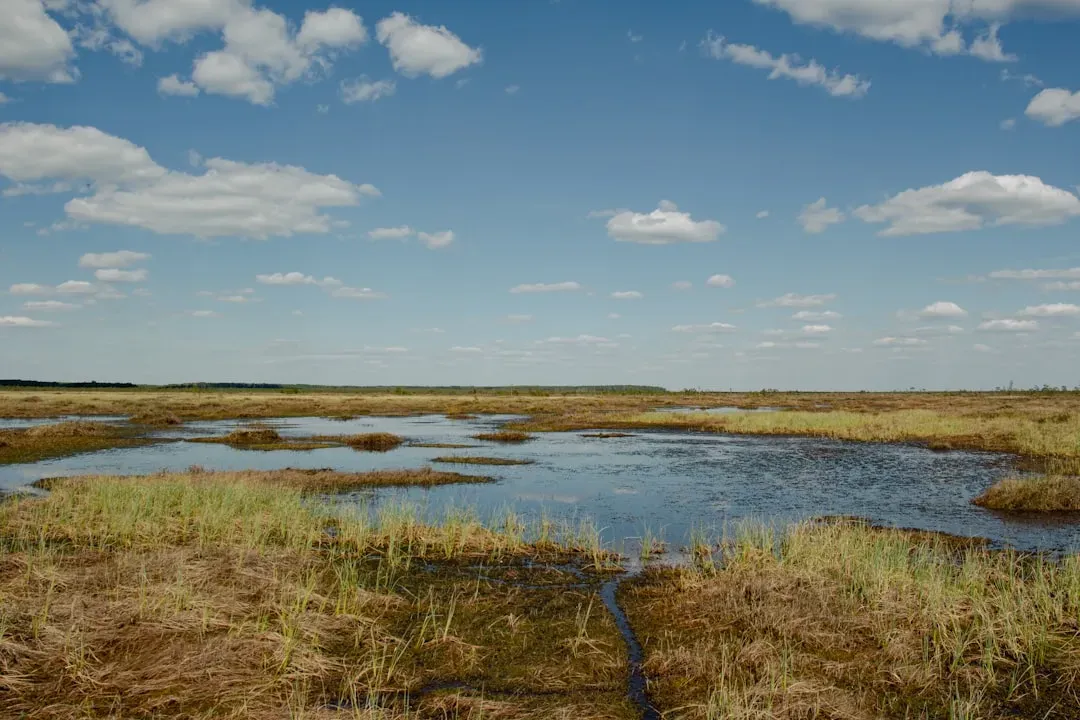
Long before anyone marketed an “eco filter,” wetlands were quietly acting as nature’s water treatment plants. When water moves slowly through marshes, reed beds, and peat bogs, sediments settle, nutrients are absorbed, and microbes living on plant roots break down organic contaminants. This process is so effective that many modern engineers deliberately design “constructed wetlands” that mimic it.
Here’s where it gets interesting: if a wetland system is designed in a robust, low-intensity way, it can operate for years with almost no human intervention. Plants grow back on their own, root systems self-renew, and the soil profile gradually adapts to the type of water it receives. Unlike mechanical filters that clog in days or weeks without cleaning, a well-sized wetland spreads the load over a living matrix that regenerates continuously.
- Slow flow allows particles to settle naturally.
- Plants and microbes absorb or transform many pollutants.
- There are no pumps, cartridges, or moving pieces to maintain.
Of course, if you overload a wetland with industrial waste or extreme volumes, it will eventually fail. But for modest, consistent flows of relatively low-strength wastewater or runoff, a natural or constructed wetland can quietly polish water quality for a very long time with only incidental, minimal human involvement. In many rural settings, people simply trust “the marsh” downstream without ever saying they have a water treatment plant there.
#8 Self-Regulating Springs and Seeps in Stable Watersheds
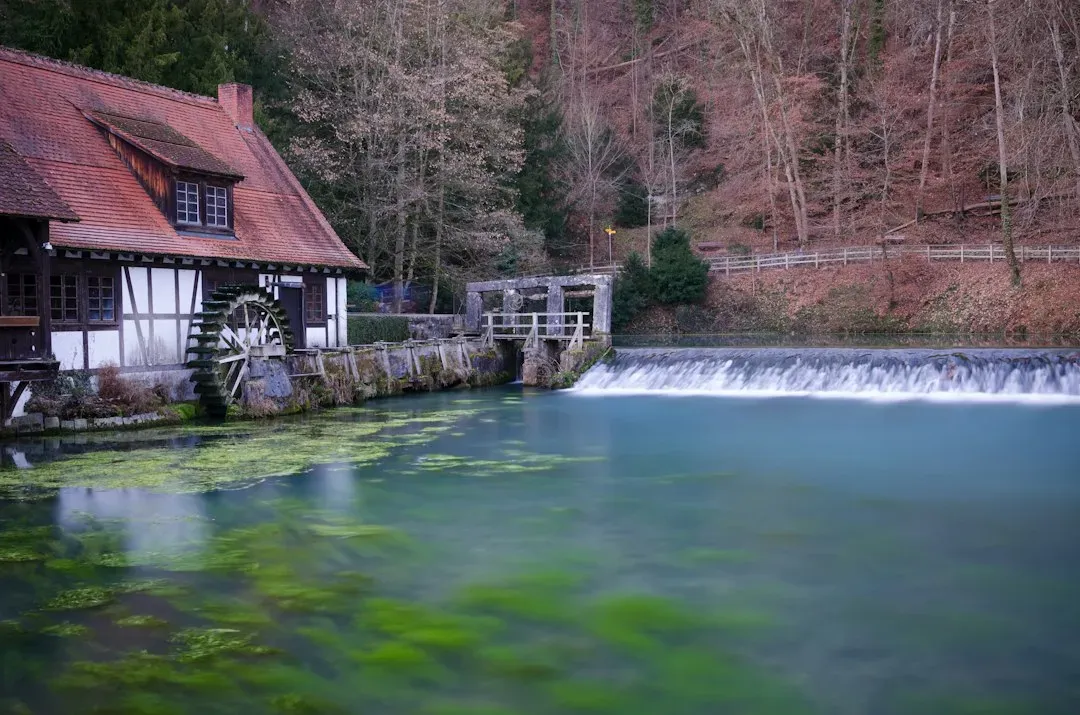
Some of the most dependable water sources in the world seem, at first glance, almost too simple to mention: natural springs and seeps emerging from stable rock. In certain mountain or karst landscapes, water infiltrates slowly over wide areas and reappears at lower points as steady, year-round flows. No pipes, no tanks, no catchment structures. Just an opening in rock where clear water pours out day after day.
What makes these springs “low maintenance” is that the entire system is geological and hydrological rather than mechanical. The surrounding watershed acts as a giant, self-cleaning filter. Soil and rock layers remove most suspended solids. The long travel time underground can kill or greatly reduce many microbes. The source is often protected by its relative inaccessibility, surrounded by cliffs, forests, or steep slopes that discourage livestock and heavy human activity.
In some regions, local residents simply place a stone trough, a hollowed log, or a short open channel under the spring and call it good. They never chlorinate, they never flush pipes, and some do not even think of it as infrastructure at all. Is that always advisable from a modern health standpoint? Not necessarily. But in practice, there are countless remote springs that have served as “no-maintenance water systems” for generations and are likely to keep doing so as long as the surrounding environment stays intact.
#9 Biosand Filters Built Like Tiny Concrete Tanks
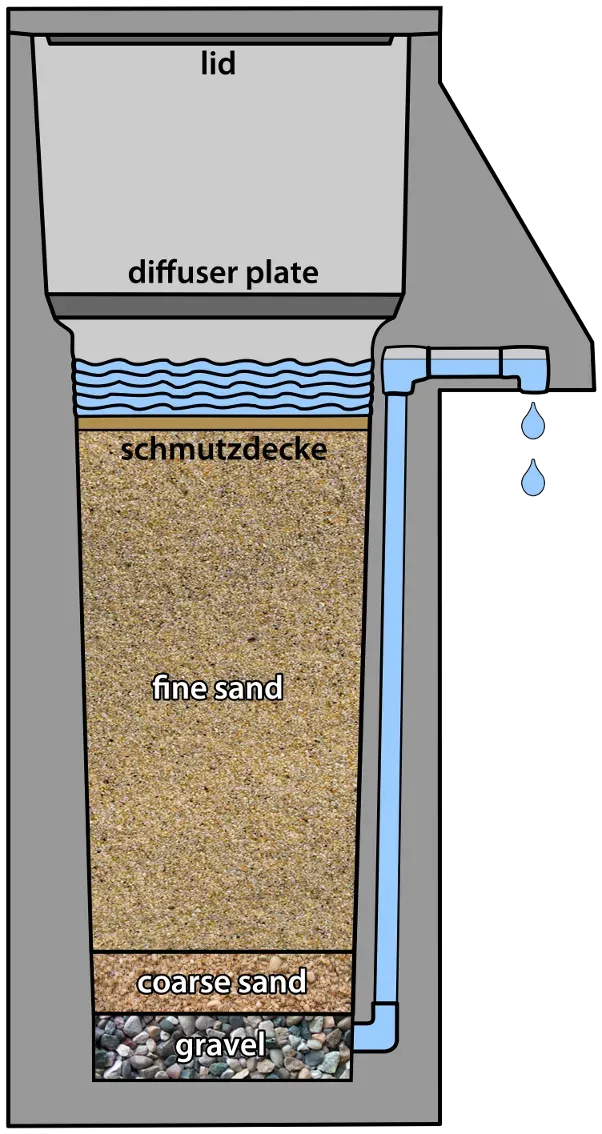
Among household-scale systems, biosand filters are one of the most intriguing. At first glance, they look like nothing more than squat concrete boxes filled with layers of carefully sized sand and gravel. Water is poured in at the top, trickles down slowly, and emerges clearer and safer at the outlet. There is no electricity involved, and once the system matures, there is remarkably little for the user to do.
Over the first days and weeks, a thin biological layer develops on the surface of the sand. This living film helps trap and digest many of the pathogens and organic particles in the water. Provided that the user does not constantly stir or dig into the sand, the filter can continue to perform well for many months to years with very minimal attention. Some designs recommend only the rare, gentle “swirl and dump” cleaning if flow becomes too slow, but many families never reach that point under moderate use.
- No moving parts, just gravity and granular media.
- The biological layer renews itself naturally.
- The concrete shell can last decades if not physically damaged.
To be completely fair, calling biosand filters absolutely maintenance-free is a stretch, because user behavior still matters. However, the amount of active maintenance required is so low that, compared with cartridge filters or UV systems, they sit firmly in the “almost no maintenance” category. For many rural households, they are effectively a nearly automatic water treatment device: fill at the top, collect at the bottom, and trust the sand and microbes in between.
#10 Household Ceramic Pot Filters That Just Sit There
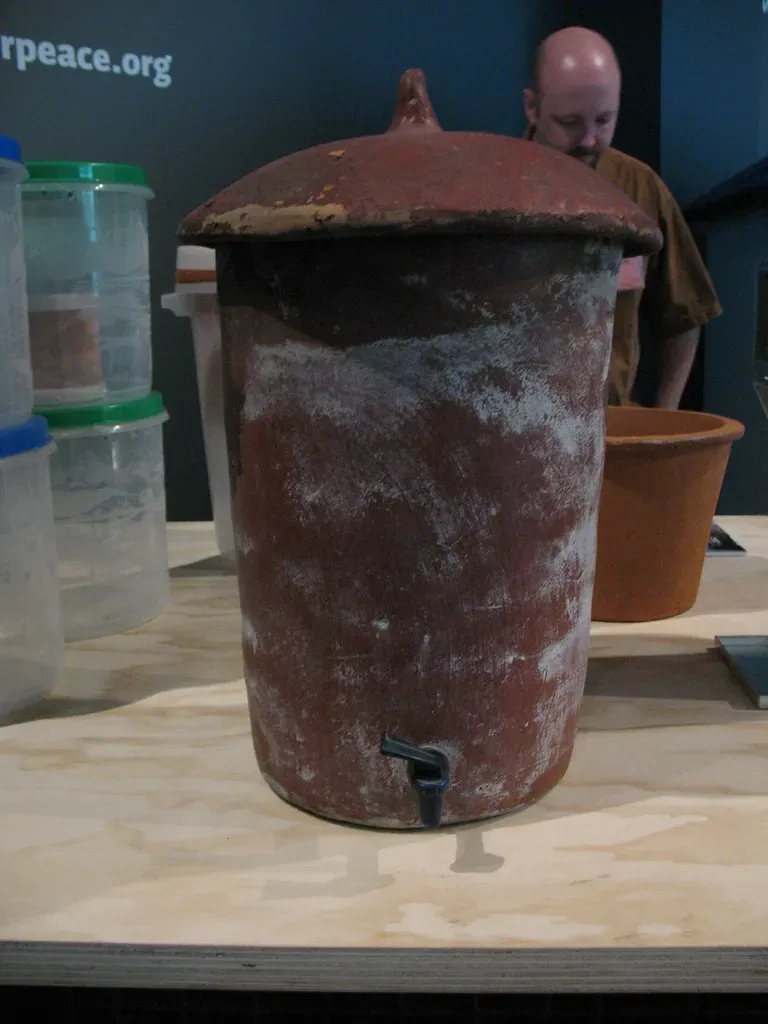
Ceramic pot filters are another quiet workhorse in the world of low-tech water treatment. They are usually shaped like a clay flowerpot, sometimes impregnated with silver compounds to inhibit microbial growth. The pot sits inside a plastic or metal container. Users pour raw water into the ceramic pot, and clean water slowly seeps through the microscopic pores into the storage chamber below.
What stands out is how inert and simple the system is. There are no moving parts, no power cords, and no electronics. As long as the user does not crack the ceramic element, it can keep filtering for a very long time. Flow rate may slow gradually as particles accumulate in the pores, but occasional gentle brushing of the surface is usually the only intervention needed. In many households, months go by between any sort of “maintenance moment.”
Over many years, the ceramic will eventually wear or clog permanently, and then the filter needs replacement. But compared with modern multi-stage filters requiring frequent cartridge changes, this is glacially slow. In remote areas where supply chains are unreliable, the fact that a single ceramic pot can quietly do its job for years with almost no fuss is a major advantage. It is the water equivalent of an old, purely mechanical watch: slow, steady, and mostly unconcerned with your attention span.
#11 Passive Solar Still and Condensation Setups
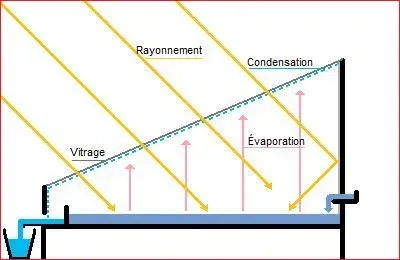
The last category is a bit different, because it often looks like a DIY science project: passive solar stills and condensation-based water collectors. The principle is simple. You place salty or dirty water in a shallow pan or pit, cover it with a transparent surface like glass or clear plastic, and let the sun heat it up. Water vapor rises, condenses on the underside of the cover, and drips into a clean collection trough. No pumps, no membranes, just sunlight and slow evaporation.
These systems are rarely fast, and they are not glamorous. But where they shine is their almost total lack of moving parts or consumables. Once you build a robust, sealed enclosure and angle it correctly, there is very little to adjust. In dry, sunny climates, such stills can produce small but reliable amounts of very pure water day after day with almost no attention needed.
- Sunlight provides all the energy; there is no grid dependency.
- The condensed water is distilled, removing salts and most contaminants.
- The main failure modes are physical damage and neglect, not complex breakdowns.
Similarly, some fog or dew collection systems use passive meshes or surfaces to capture airborne moisture. Again, they rely on simple physics: air cools, water condenses, drops run down into a trough. While periodic cleaning can improve performance, basic function can continue even if nobody touches the system for long stretches. It is slow water, but it is water that shows up every morning like clockwork, simply because the climate cooperates.
Conclusion: The Quiet Power of Systems That Do Not Need You
Looking across these 11 water systems, a pattern emerges that is impossible to ignore. The more a design hands control over to gravity, geology, biology, and sunlight, the less it depends on you showing up with tools, apps, or spare parts. The systems that come closest to “no maintenance at all” are the ones that accept natural limits, run slowly, and avoid fragile complexity. It is not that humans did nothing; it is that we had the humility to let nature keep doing most of the work afterward.
Personally, I find that both comforting and slightly humbling. We live in a world where water is too often treated like a product of technology rather than a cycle we tap into. Yet a spring flowing out of rock or a century-old channel carrying meltwater to a field quietly proves that we are not as indispensable as we like to imagine. These systems remind us that the smartest engineering sometimes looks almost invisible, and that “boring” solutions often outlive the latest high-tech marvels.
Does this mean we should abandon modern treatment plants, digital monitoring, or emergency repairs? Of course not. But it does suggest a different question to ask when we design water systems: how much can we hand back to gravity and ecosystems so that, if people walk away for a while, the water still flows? When you picture resilience in your own life, is it the flashy gadget or the quiet mountain spring that comes to mind?