For most of history, materials science felt almost… settled. Steel, glass, rubber, concrete – we knew the classics and thought we understood the rules. Then the twenty–first century arrived and quietly tore up the rulebook. Suddenly we had materials that remember shapes, conduct without resistance, deform like liquids but stay solid, and even hide things from waves like a real‑life invisibility cloak. In every case, people noticed something weird first, then spent years or decades struggling to explain it. Only in the 2000s and 2010s did the theory finally catch up with the experiments. That gap between “this works” and “we finally understand why” is where a lot of today’s most exciting science lives. What follows is a tour through 13 such materials. Some you’ve heard of, others you almost certainly haven’t. All of them forced scientists to rethink what matter can do – and in more than a few cases, the explanation turned out to be stranger than the original mystery. —
#1 Graphene: The Flat Wonder That Shouldn’t Exist

On paper, graphene sounds like a joke: a sheet of carbon only one atom thick, stronger than steel, transparent like glass, and able to conduct electricity better than copper. For most of the twentieth century, textbooks claimed that such a perfectly two‑dimensional crystal simply could not exist in a stable form. Thermal fluctuations, the theory went, would quickly crumple it into oblivion.
That is why the isolation of graphene in the mid‑2000s was not just surprising, it was borderline embarrassing for theory. Experiments showed that graphene was real, robust, and had wild properties: massless “Dirac” electrons, gigantic electron mobility, and weird quantum effects that popped up even at room temperature. The question was no longer whether graphene existed, but how on Earth it was managing to stay intact and behave so differently from ordinary conductors.
The explanation that emerged in this century is subtle. Graphene is not perfectly flat: at the atomic scale it ripples, like a slightly crumpled sheet of paper. Those tiny out‑of‑plane undulations relieve the instabilities that would otherwise destroy a perfectly flat 2D lattice. At the same time, the honeycomb structure of carbon atoms gives electrons a special band structure with cone‑shaped energy levels, so they behave like relativistic particles that travel incredibly fast with very little scattering. In other words, graphene works because it is just imperfect enough to be stable, and just symmetric enough to give electrons almost magical freedom.
What started as a “scotch‑tape trick” with graphite ended up forcing physicists to rewrite how they think about two‑dimensional crystals. Today, graphene sits at the foundation of an entire field of 2D materials, from molybdenum disulfide to hexagonal boron nitride. The real shift was not just discovering the material, but finally understanding why a one‑atom‑thick sheet can be stable in our messy, hot, three‑dimensional world.
—
#2 Quasicrystals: The Forbidden Symmetry Finally Makes Sense
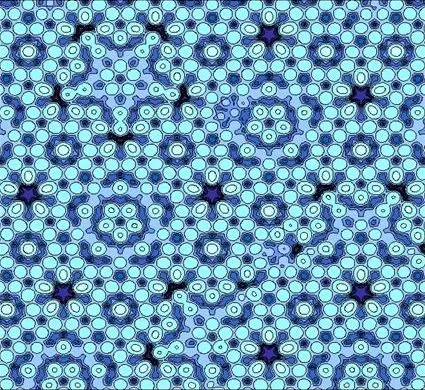
When quasicrystals were first discovered in the 1980s, they broke a fundamental rule of crystallography: solids, it was said, could not have five‑fold rotational symmetry like a regular pentagon. Yet here were metallic alloys whose atomic patterns produced sharp diffraction peaks, just like crystals, but with “forbidden” symmetries. For years, scientists could describe the patterns mathematically, but the deep physical explanation of their stability and formation lagged behind.
Only in the past couple of decades has a more satisfying picture emerged. The key insight is that quasicrystals can be understood as projections of higher‑dimensional periodic lattices into three‑dimensional space. Instead of repeating in ordinary space, their order lives in an abstract higher dimension, which gives rise to the strange but precise tilings we see. Advances in computational modeling and electron microscopy in the 2000s and 2010s finally let researchers map out real quasicrystalline structures in detail and test those higher‑dimensional models against experiment.
Even more surprising, natural quasicrystals were discovered in meteorite samples, along with high‑pressure phases created in lab shock experiments mimicking asteroid impacts. That shifted quasicrystals from “mathematical curiosities” to “materials that can form under extreme but real conditions.” Researchers could then connect their unusual properties – low friction, unusual thermal conductivity, and chemical stability – to the way their quasi‑periodic atomic arrangements frustrate ordinary dislocation motion.
It took this century’s combination of theory, computation, and nanoscale imaging to move quasicrystals from mystery objects to a coherent class of materials. We now know they are not exceptions to the rules of order – they are examples of a broader, deeper kind of order that the older rules simply failed to imagine.
—
#3 High‑Temperature Superconductors: From Puzzling Magic to Correlated Electrons
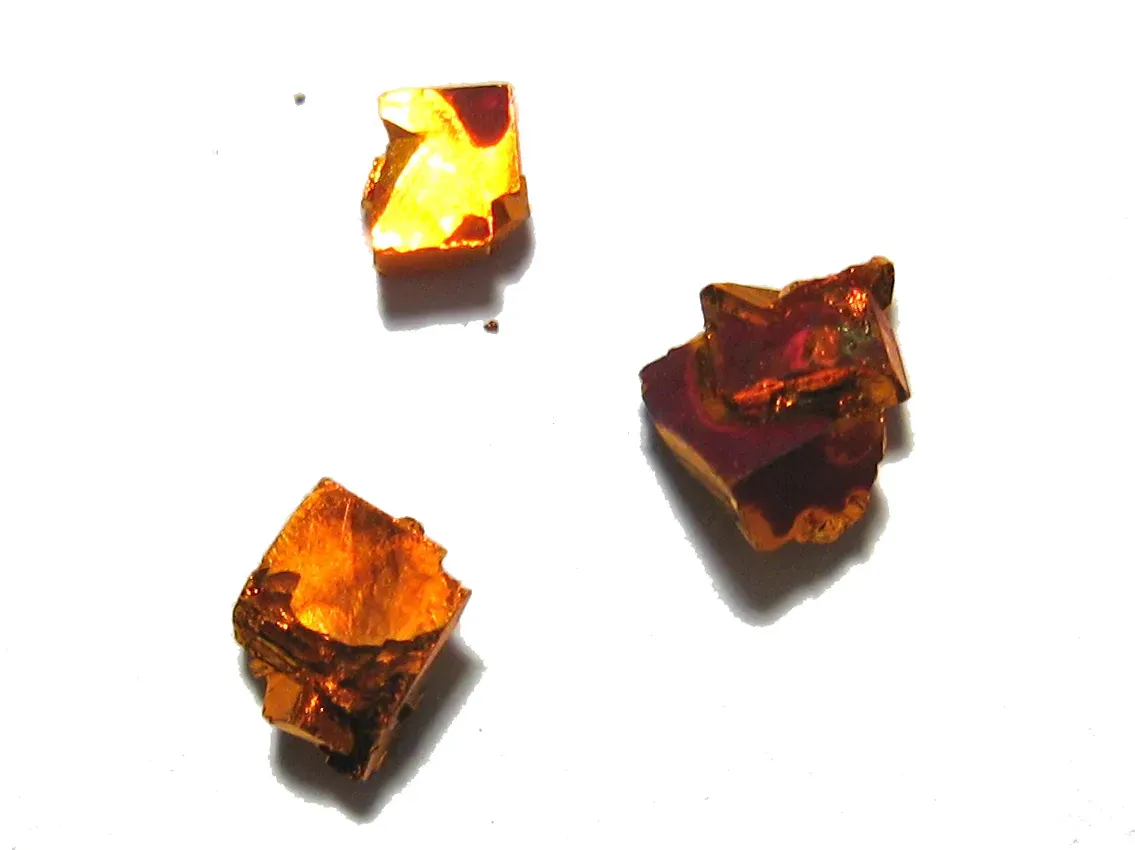
Superconductors that work only near absolute zero are impressive, but at least the theory behind them – conventional electron pairing mediated by lattice vibrations – is well established. High‑temperature superconductors, discovered in the late twentieth century, were different. Copper‑oxide ceramics that conduct with zero resistance at temperatures reachable with cheap liquid nitrogen had phase diagrams and behaviors that refused to fit the old theories. For decades, they were the poster child of “we see it, but we don’t really know why.”
Over the last twenty years, progress has finally accelerated. Techniques like angle‑resolved photoemission spectroscopy and scanning tunneling microscopy have mapped how electrons move and pair up in these materials with incredible resolution. What has emerged is a picture driven by strong electronic correlations – electrons that cannot be treated as nearly independent particles, but instead behave like a collective, dancing in lockstep in ways that are deeply quantum and highly sensitive to doping and temperature.
Researchers have uncovered strange metallic phases, pseudogaps, and competing orders that sit right next to superconductivity in the phase diagram. Rather than a single, clean mechanism, high‑temperature superconductivity now looks like the result of a delicate balance between magnetism, charge order, and lattice effects. Modern theoretical frameworks, such as those using Hubbard models and sophisticated numerical techniques, finally explain many of the exotic features that were once just experimental puzzles.
We still do not have a single sentence that captures high‑temperature superconductivity the way older theory did for conventional materials, and in my view that is a good thing. The explanation is no longer “magic ceramic” but an intricate landscape of correlated electron behavior that we can now calculate, predict, and engineer much better than even twenty years ago.
—
#4 Metallic Glasses: Solids That Freeze Like Liquids
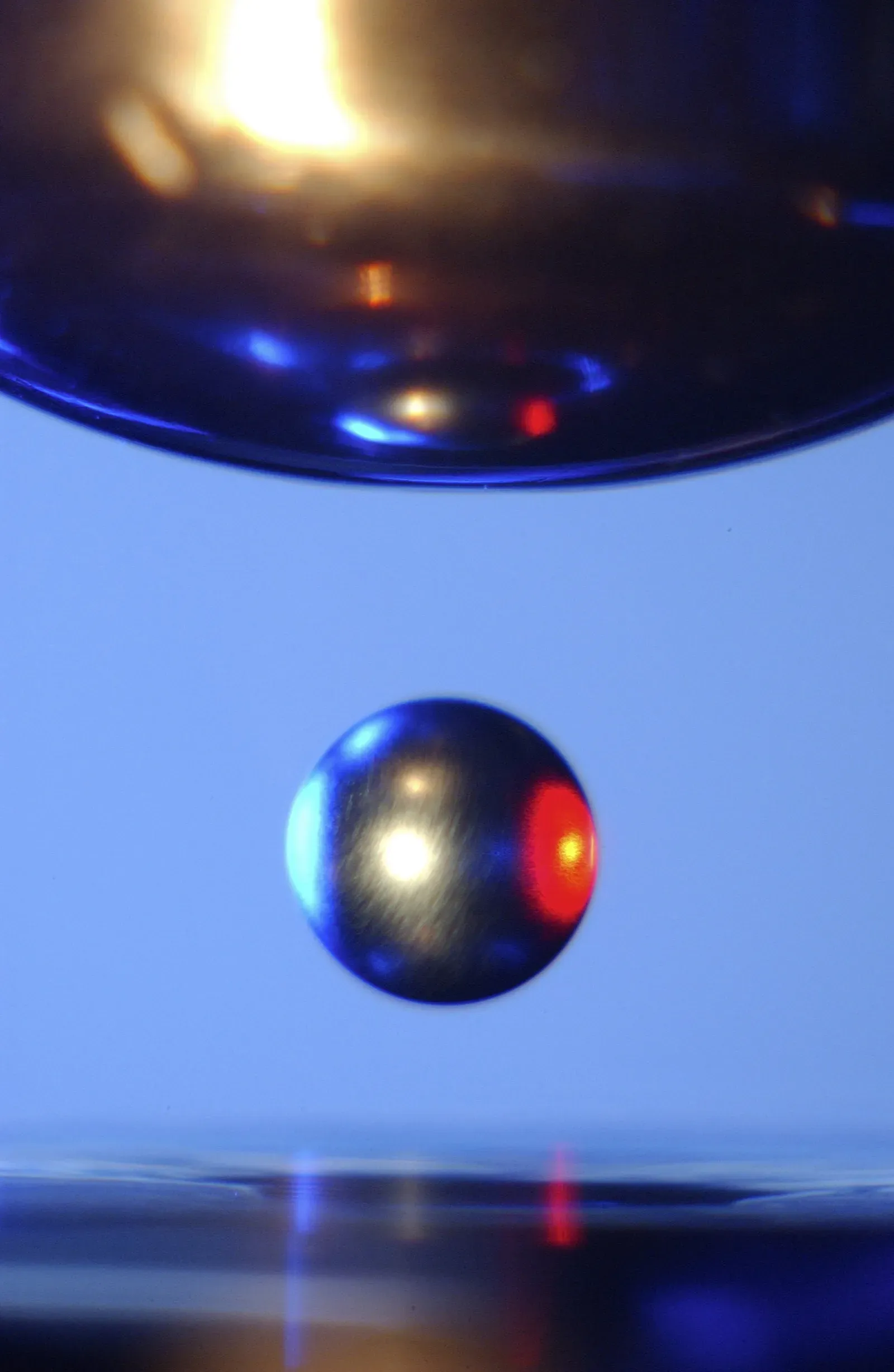
Metallic glasses look like metals but break like glass, which is already strange. They are formed by cooling molten alloys so quickly that atoms do not have time to line up into a crystal. For a long time, engineers loved their high strength and elasticity but had only hand‑wavy ideas about why certain alloy compositions formed glasses easily while others stubbornly crystallized. “Good glass formers” were found mostly by trial and error.
In this century, advances in computer simulations and synchrotron‑based experiments have finally illuminated their inner life. Rather than being completely random, metallic glasses contain regions of short‑range order – clusters of atoms that pack together in energetically favorable ways, like icosahedra – but those clusters cannot tile space periodically. This frustration between locally preferred structures and global packing is what allows a disordered solid to form instead of a crystal.
Researchers have also mapped how these internal structures rearrange under stress. Instead of moving dislocations along crystal planes, metallic glasses yield via localized shear transformation zones: tiny regions where atoms collectively shuffle. When many such zones line up, you get shear bands, which explain the sudden, sometimes catastrophic way these materials can fail. Understanding these mechanisms has led to strategies like nano‑scale structuring and compositional tweaks to improve toughness.
It is a bit like trying to explain why some people’s bookshelves stay messy in a very particular way: there is hidden logic in the chaos. Only with the tools developed in the 2000s and 2010s did we finally get a physics‑based recipe for designing metallic glasses, moving from artisanal discovery to something closer to predictable engineering.
—
#5 Shape‑Memory Alloys: Why Metals “Remember” Their Shape

Shape‑memory alloys – metals that bend and then snap back to a preset shape when heated – have been demo‑worthy curiosities for decades. Dental wires, stents, eyeglass frames, and actuators all use this trick. But despite widespread use, the microscopic explanation of their behavior, especially the reversibility and fatigue resistance, was frustratingly incomplete until this century.
At the core is a solid‑state phase transformation called martensitic transformation, where the crystal structure changes shape without atoms having to diffuse long distances. That part was known. The modern understanding digs into how interfaces, defects, and twin boundaries move during cycling, and why some compositions tolerate millions of reversals while others crack after a few hundred. High‑resolution imaging and phase‑field modeling in the 2000s and 2010s made it possible to watch these transformations in action.
Researchers discovered that the most reliable shape‑memory behavior comes from “self‑accommodating” patterns of variants – different orientations of the low‑temperature phase that tile together so the overall strain is minimized. Alloys with carefully tuned compositions and processing route the transformation along paths that avoid accumulating too much internal stress. That is why modern nickel‑titanium components vastly outperform earlier cousins, even though they all rely on ostensibly the same phenomenon.
In short, the story shifted from “this metal has a magic temperature switch” to “this crystal lattice is choreographed down to the nanometer.” That detailed choreography, only properly mapped in the last couple of decades, is what finally explains how a wire can appear to “remember” the exact geometry it had before you mangled it.
—
#6 Aerogels: The Solid Smoke With Superpowers

Aerogels look unreal: translucent, feather‑light blocks that are mostly empty space yet somehow solid enough to pick up. They were first made in the twentieth century, but the reasons behind their bizarre mix of stiffness, transparency, and thermal insulation only became clear as characterization tools and fractal theories matured in the 2000s.
Structurally, aerogels are networks of tiny clusters connected in a highly porous, almost lace‑like framework. You can think of them as a frozen foam where the “soap film” is made of silica, carbon, or even metal oxides only a few nanometers thick. This creates an enormous internal surface area and an open structure that scatters heat‑carrying phonons and light in complex ways.
Modern modeling has shown that many aerogels have fractal geometry over a wide range of length scales, which explains their counterintuitive combination of low density and relatively high stiffness. Meanwhile, measurements of how heat flows through these intricate networks helped explain why aerogels can be such extraordinary thermal insulators despite being made from materials like silica, which normally conduct heat much better.
Some of the key insights that really crystallized this century include:
- The role of nanometer‑scale “necks” between particles in controlling mechanical strength.
- How pore size distributions govern both acoustic and thermal transport.
- Why small tweaks in drying and aging processes completely change transparency and brittleness.
As someone who once held a piece of silica aerogel and felt like I was grabbing a fragment of solid cloud, I find it oddly satisfying that the math behind that feeling is now well worked out.
—
#7 Topological Insulators: Conducting Edges, Insulating Hearts
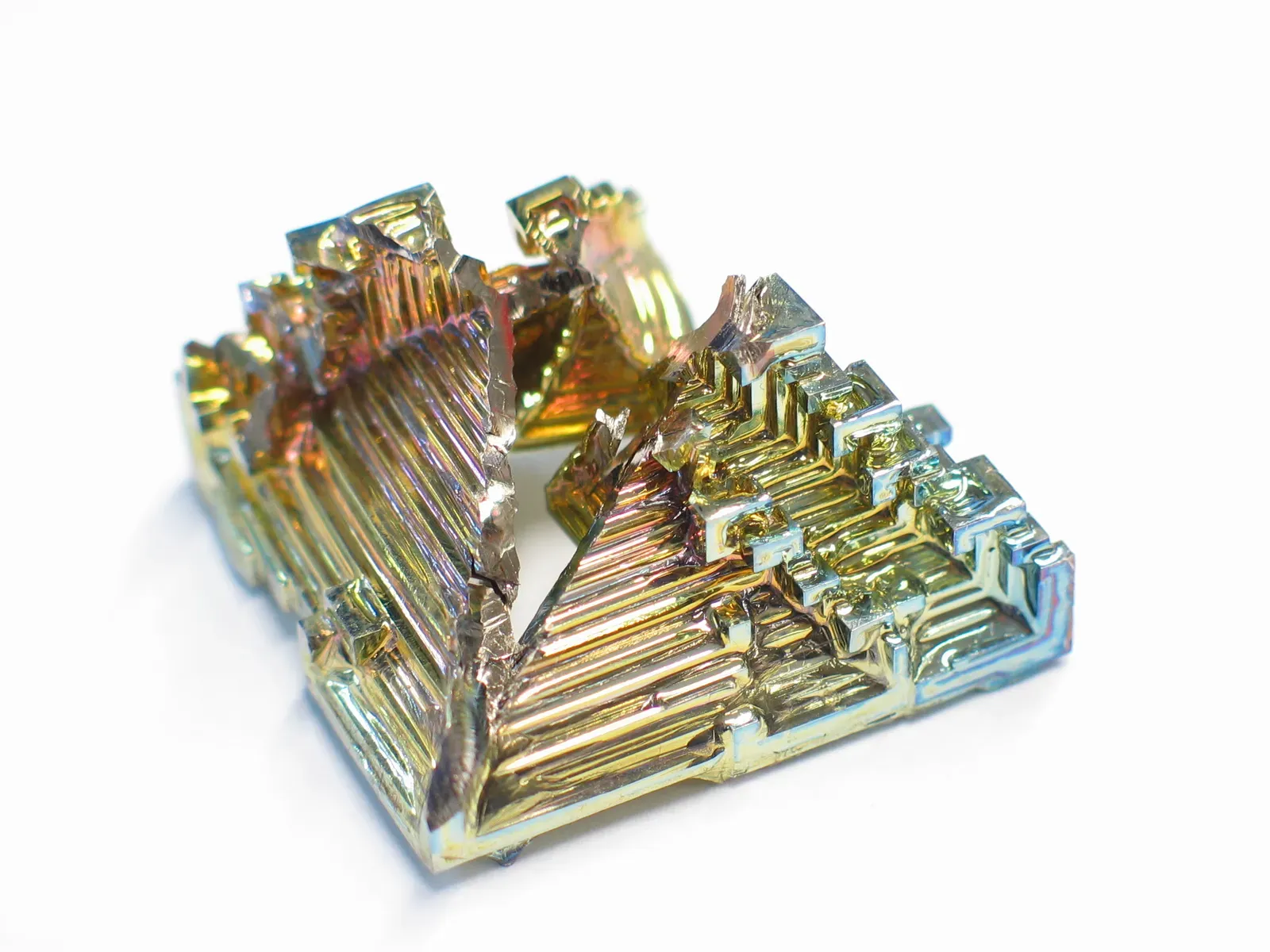
Topological insulators are the kind of material that sounds like science fiction until you dig into the math. In their bulk they behave as insulators, but on their surfaces or edges they host conducting states that are astonishingly robust, surviving disorder, impurities, and roughness that would wipe out ordinary electronic behavior. They were predicted and then discovered only in the late 2000s, and it took the 2010s to really explain what is going on in physical terms.
The explanation comes from topology, a branch of mathematics that cares about global properties that cannot be changed by smooth deformations. In these materials, the electronic band structure has a topological “twist” characterized by certain invariants. As a result, you cannot go from the insulating bulk to the vacuum outside without creating states that bridge the energy gap – the surface states. It is a bit like saying that if you twist a rubber band before gluing the ends, you cannot remove the twist without cutting it; the twist is topological, not local.
What only really came into focus this century is how spin‑orbit coupling and time‑reversal symmetry work together to lock electron spin and momentum on these conducting surfaces. This gives rise to exotic transport properties and potential applications in low‑power electronics and quantum computing. Experiments using angle‑resolved photoemission and transport measurements directly visualized these Dirac‑like surface states and confirmed their resilience to defects.
We went, in less than two decades, from having no examples of such materials to having an entire periodic‑table‑spanning zoo of three‑dimensional and two‑dimensional topological insulators, semimetals, and superconductors. The astonishing part is that their strange properties are not a bug of some complicated crystal, but a feature guaranteed by how the electrons’ wavefunctions are knotted together in momentum space.
—
#8 Perovskite Solar Materials: Why They Got Efficient So Fast

Perovskite solar cells came almost out of nowhere. In barely more than a decade, their efficiency went from laughable to rivaling established silicon, which took the better part of half a century to reach similar numbers. For a while, the meteoric rise felt like a fluke. How could these soft, defect‑ridden crystals made from cheap elements and processed in a beaker suddenly outperform meticulously engineered silicon wafers?
This century’s research has revealed several interconnected explanations. Hybrid perovskites, which often combine organic and inorganic components, have remarkable defect tolerance: many common defects do not introduce deep electronic traps. In plainer language, the material can be somewhat messy at the atomic level without brutally punishing the charge carriers. Their crystal structure also leads to strong light absorption and long carrier diffusion lengths, so photons are efficiently harvested and the resulting electrons and holes can travel surprising distances before recombining.
Another piece of the puzzle lies in their dynamic lattice. At room temperature, ions and organic molecules within the perovskite jiggle and reorient constantly. This motion screens charges and smooths out potential energy landscapes, which helps reduce the likelihood that electrons get stuck. For a long time, this kind of dynamic disorder was thought to be a liability, but the twenty‑first‑century view is more nuanced: in perovskites, it seems to be part of what makes them perform so well.
To summarize some of what we now understand:
- They absorb light extremely strongly across the visible spectrum.
- They tolerate many defects that would kill performance in traditional semiconductors.
- Their soft, mobile lattice actually helps shield charge carriers from some scattering and recombination pathways.
There is still a long way to go on stability, but at least the “how on earth are they this good?” question finally has solid answers instead of just awe.
—
#9 Bulk Metallic Hydrogen Claims vs. Superhydrides: The Real Superconducting Story
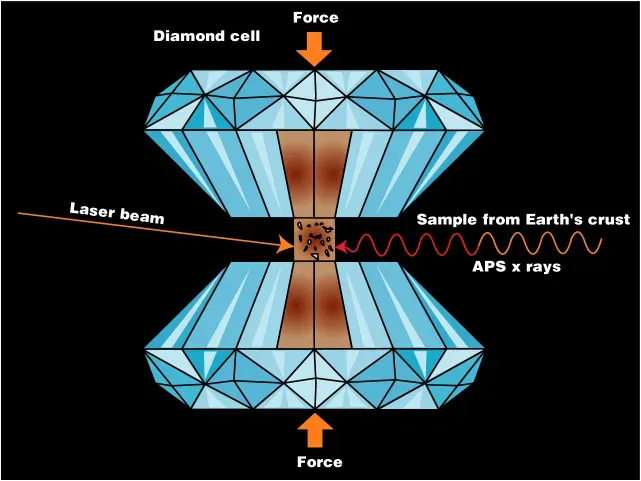
For decades, metallic hydrogen – hydrogen squeezed so hard it becomes a metal – was the white whale of high‑pressure physics. It was predicted to be a room‑temperature superconductor, a kind of perfect conductor realized in the simplest possible element. Over the years, various claimed observations created headlines, but the evidence was thin and controversial, and our understanding of how hydrogen and hydrogen‑rich materials behave at megabar pressures was murky.
What actually crystallized in the 2010s and 2020s was a different, more grounded story: hydrogen‑rich superhydrides of heavier elements, such as lanthanum and yttrium, showing superconductivity at temperatures warmer than a winter night – though still under crushing pressures. Detailed ab initio calculations and high‑pressure experiments finally converged to explain why these compounds could host very strong electron‑phonon coupling, elevating their superconducting transition temperatures far above those of classic materials.
Instead of a simple picture of “pure hydrogen conducts perfectly if you squeeze it enough,” we now have a more sophisticated view in which heavy atoms act like scaffolding, holding hydrogen in dense arrangements that are metallic and strongly coupled. Modern computational materials design, which matured only this century, has been crucial in predicting which compositions and structures should work before anyone tries to synthesize them in a diamond anvil cell.
Personally, I find this trajectory much more satisfying than a single dramatic claim about metallic hydrogen. The materials we now understand are reproducible, theoretically grounded, and part of a coherent pattern. Even if truly stable metallic hydrogen remains elusive, the explanation of why these hydrogen‑rich materials do what they do has genuinely come of age in the last twenty years.
—
#10 Self‑Healing Polymers: Plastics That Stitch Themselves Back Together

The idea of a plastic that heals its own cracks sounds like marketing hype. Early demonstrations in the late twentieth century often relied on microcapsules of glue embedded in a material, which burst when a crack formed. Clever, but not really the same as a material that intrinsically repairs itself. Only in the 2000s and 2010s did we see genuine self‑healing polymers whose underlying chemistry could be properly explained and tuned.
The modern understanding revolves around reversible bonds and supramolecular interactions. Instead of relying only on permanent covalent links, these polymers incorporate bonds that can break and reform under the right conditions – hydrogen bonds, metal‑ligand coordination, dynamic covalent bonds, or even “host‑guest” interactions between molecular building blocks. When the material is damaged, these reversible connections reconfigure, slowly stitching the network back together at the cut or crack interface.
What was missing until recently was a coherent framework that connected molecular design to macroscopic healing behavior. This century’s work has linked things like bond lifetime, association strength, and network architecture to healing speed, required temperature, and mechanical robustness. In short, we now have design rules instead of just cool demos. Some systems even heal at room temperature and can be cycled repeatedly without catastrophic fatigue.
A few of the big lessons that have emerged:
- Too weak an interaction, and healing is fast but the material is mushy.
- Too strong, and the polymer is tough but cannot rearrange to heal.
- Hierarchical networks, mixing different kinds of reversible bonds, can balance toughness with reparability.
We have gone from “wouldn’t it be neat if plastic could heal?” to a fairly detailed science of how to make it do exactly that, which is a quiet but profound shift.
—
#11 Metamaterials: Engineered Invisibility and Negative Refraction
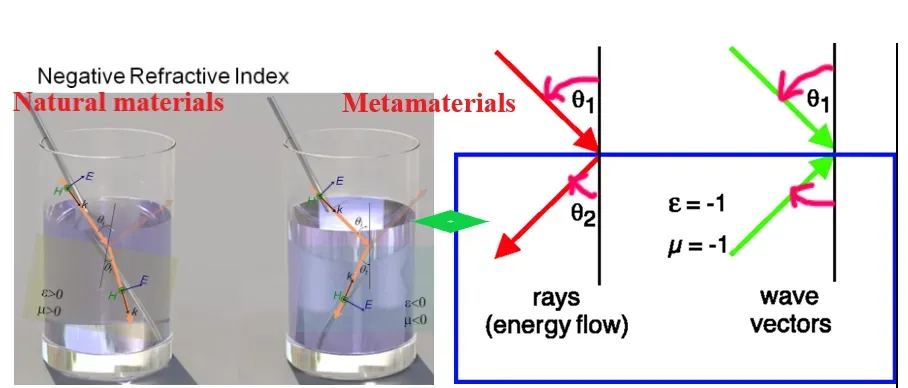
Metamaterials are not defined by what they are made from, but by how they are structured. Arrays of tiny resonators, split‑ring structures, or carefully patterned dielectrics can give rise to effective properties no natural material has, like negative refractive index or cloaking from specific waves. The first spectacular demonstrations around the turn of the century triggered headlines about invisibility cloaks, but the full explanation of how and why these composites behave the way they do only settled in afterward.
The trick is that when the structural features are much smaller than the wavelength of interest, waves “see” the material as a homogeneous medium with effective parameters. By adjusting the geometry, orientation, and spacing of the building blocks, engineers can tune the effective permittivity and permeability, sometimes even making them negative. In that regime, light or other waves bend the “wrong” way at interfaces, creating lenses that beat diffraction limits or cloaks that guide waves around objects.
Over the last two decades, researchers have developed powerful homogenization theories and numerical tools to predict metamaterial behavior from first principles. At the same time, advances in nanofabrication and 3D printing have allowed real‑world structures to approach the idealized designs used in simulations. The understanding has matured from hand‑waving analogies to electrical circuits to rigorous, frequency‑dependent models that agree closely with experiments.
As the field has diversified into acoustic, seismic, and even mechanical metamaterials, one big lesson stands out: exotic properties emerge not from exotic substances, but from the collective response of very ordinary constituents arranged in very precise patterns. That is a twenty‑first‑century way of thinking about materials: less about chemistry alone, more about structure across scales.
—
#12 Shear‑Thickening Suspensions: Liquids That Turn Solid Under Impact
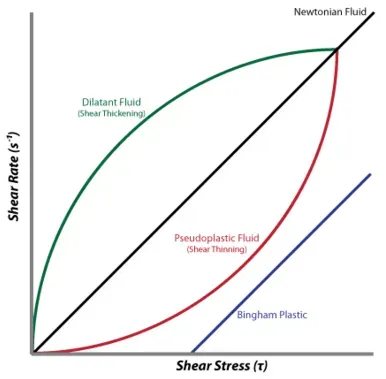
If you have ever seen someone run across a tub of cornstarch and water without sinking, you have met a shear‑thickening fluid. At low stress it flows like a liquid; hit it hard enough and it suddenly feels like a solid. This behavior was known anecdotally and even exploited in some industrial slurries, but the microscopic explanation remained fuzzy: people talked about “jamming” and “particle clusters” without a clear, predictive theory.
In the last fifteen or so years, high‑speed imaging, rheology, and simulation work have converged on a much sharper picture. In dense suspensions of solid particles in a liquid, frictional contacts between particles become crucial at high shear rates. At low stress, hydrodynamic forces keep particles apart, lubricating their motion. As the stress rises, particles are pushed into direct contact and friction takes over, causing the suspension to suddenly resist flow.
This transition from a lubrication‑dominated to a friction‑dominated regime can be abrupt, producing the dramatic, almost switch‑like thickening seen in famous videos. Models that incorporate stress‑dependent contact networks now reproduce experimental curves and even predict under what conditions a suspension will shear‑thicken or shear‑thin. The once‑mysterious behavior is increasingly something engineers can design around rather than fear or simply exploit blindly.
From my perspective, shear‑thickening fluids are a perfect example of how a kitchen‑table curiosity pushed scientists toward better theories. We now understand that:
- Particle size, shape, and surface chemistry control when and how thickening kicks in.
- The suspending liquid’s viscosity sets the baseline, but the real action is in particle–particle forces.
- Close to jamming, tiny changes in concentration can flip a system from benign to violently thickening.
What looked like a one‑line party trick has turned into a well‑developed branch of soft‑matter physics this century.
—
#13 Ultra‑Black Materials: Surfaces That Swallow Nearly All Light

Black paint is one thing; ultra‑black materials are something else entirely. These are surfaces engineered so that they reflect almost no incoming light, making three‑dimensional objects look like flat voids. Early versions appeared at the end of the twentieth century, but only in the 2000s and 2010s did the physical explanations for their extreme light‑trapping behavior really solidify, together with methods to measure just how black they are.
The key is not the chemical composition so much as the micro‑ and nano‑structure. Many ultra‑black materials rely on dense forests of carbon nanotubes, vertically aligned so that incoming photons bounce around inside the array, getting absorbed after multiple reflections instead of bouncing back out. Others use etched, porous surfaces that gradually change the refractive index from air to bulk material, minimizing reflection at the interface and funneling light into absorbing regions.
What this century added was precise optical modeling that links specific structural motifs to absorption spectra across wavelengths, as well as better fabrication techniques to realize those motifs reproducibly. Researchers learned how to tune nanotube length, density, and alignment to maximize light trapping, and how to characterize reflectance down to incredibly low levels. The result is not just artists’ toys, but functional coatings for telescopes, sensors, and space instruments where stray light can ruin measurements.
I still remember seeing photos of objects coated in one of these ultra‑black materials and feeling my brain protest: it looked like someone had cut a hole in reality. The fact that we can now explain that unsettling effect in terms of controlled nano‑geometry and wave optics does not make it less eerie – it just makes it a triumph of twenty‑first‑century materials understanding.
—
Conclusion: A Century That Turned “Weird Materials” Into A New Normal
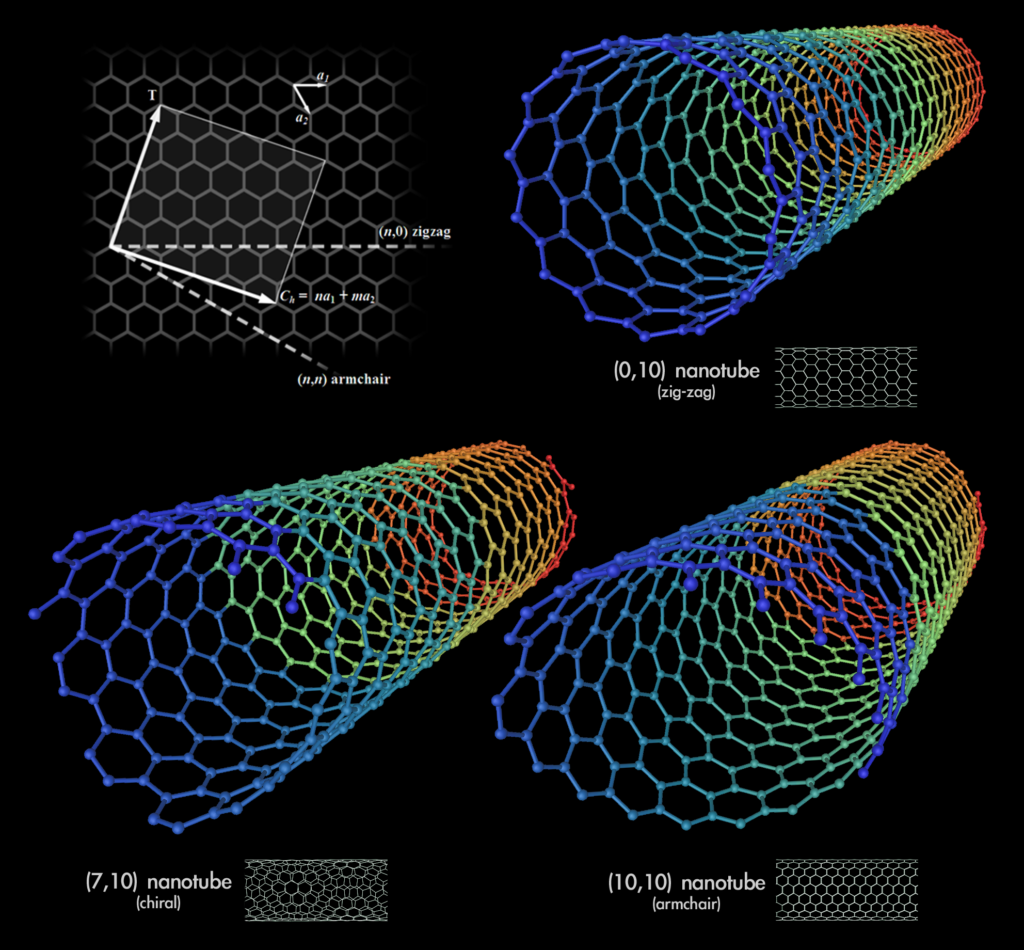
![Conclusion: A Century That Turned “Weird Materials” Into A New Normal (Originally from en.wikipedia; description page is (was) here23:30, 1 February 2006 Mstroeck 2024x1846 (2,043,648 bytes) (A diagram showing the types of carbon nanotubes. (Created by Michael Ströck (mstroeck) on February 1, 2006. Released under the GFDL). The (n,m) nanotube naming scheme can be thought of as a vector (Ch) in an infinite graphene sheet that describes how to)
22:49, 1 February 2006 Mstroeck 1986x1756 (2,027,400 bytes) (A diagram showing the types of [[:en:carbon nanotubes]]. (Created by Michael Ströck (mstroeck) on February 1, 2006. Released under the GFDL). The (n,m) nanotube naming scheme can be thought of as a vector (Ch) in an infinite graphene sheet that describes ho)
22:40, 1 February 2006 Mstroeck 1986x1756 (1,989,910 bytes) (A diagram showing the types of carbon nanotubes. (Created by Michael Ströck (mstroeck) on February 1, 2006. Released under the GFDL). The (n,m) nanotube naming scheme can be thought of as a vector (Ch) in an infinite graphene sheet that describes how to)
Version of 22:51, 1 July 2007 uploaded on behalf of en:User:Ma Baker. Lucasbfr 22:56, 1 July 2007 (UTC), CC BY-SA 3.0)](https://nvmwebsites-budwg5g9avh3epea.z03.azurefd.net/dws/306a90c5b7e380149e554cdf6f70a112.webp)
What ties these thirteen stories together is not just clever chemistry or better microscopes. It is the shift from a world where materials were mostly discovered first and explained much later, to one where explanation, prediction, and design are tightly woven together. Graphene, quasicrystals, shape‑memory alloys, metamaterials – in each case, the surprising behavior came first and embarrassed our existing theories. Only with the tools, computation, and mathematical language that matured in the 2000s and 2010s did those properties make deep sense.
Personally, I think the most radical change is psychological. We no longer assume that the periodic table and a few crystal structures define what is possible. Instead, we treat matter as a playground for topology, frustration, dynamic bonds, and hierarchy across scales. That mindset is why materials that once seemed like outliers – ultra‑black coatings, self‑healing plastics, topological insulators – now feel like the leading edge of a broader, more flexible understanding of what solids and liquids can be.
Of course, there are still mysteries: unconventional superconductors that refuse to fit neatly into current theories, exotic quantum phases waiting to be stabilized, bio‑inspired materials that blur the line between living and inert. But if this century has shown anything so far, it is that today’s inexplicable behavior is often tomorrow’s textbook example. The fun part is watching that gap close in real time – and trying to guess which “impossible” material will be the next one we finally explain. If you had to bet, which weird material would you put your money on?