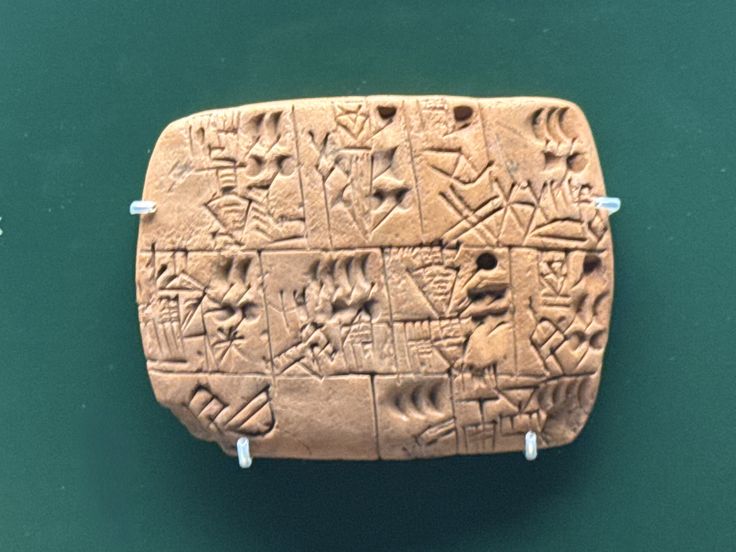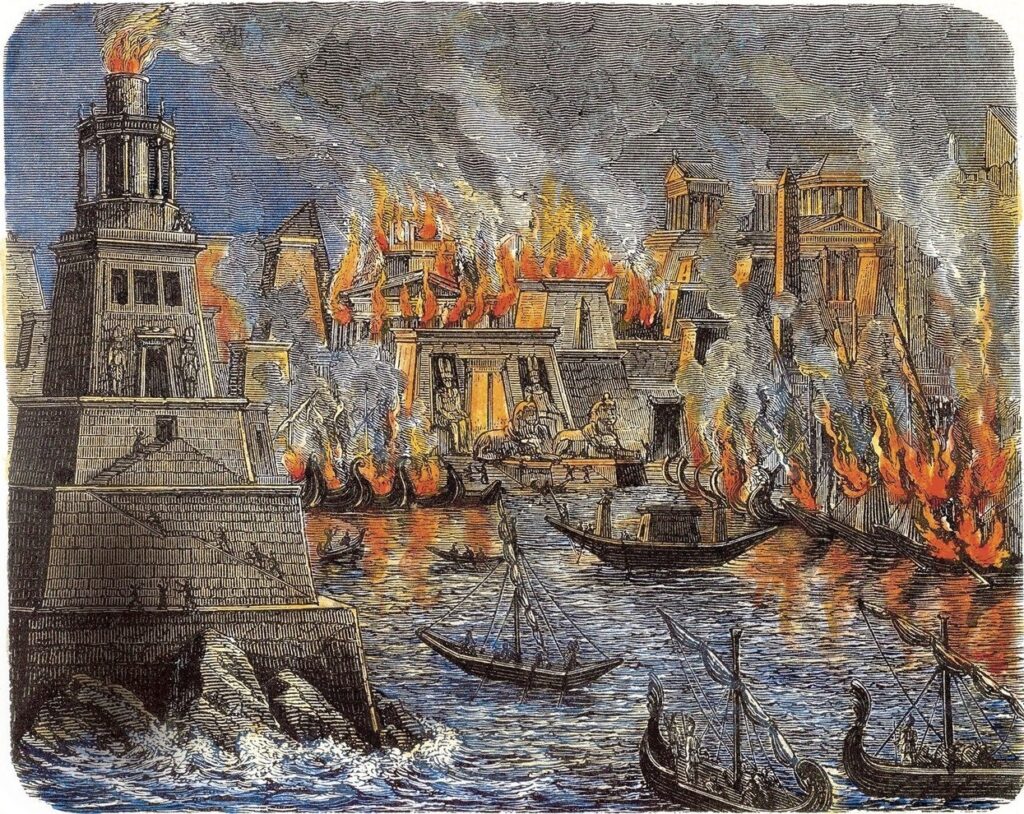

You probably think you know the story of lost libraries. Alexandria burned, maybe Baghdad too, and that’s the tragedy, right? Wrong – that’s just the tip of a much colder iceberg.
The real history is stranger and far more unsettling: dozens of libraries across the ancient and medieval world didn’t just lose their books. They lost the proof those books ever existed – no catalogues, no shelf lists, nothing but scorched dirt and secondhand rumors. Stick around, because the most famous lost library on this list might actually be the one we understand best.
13. The Probable Royal Library of Knossos
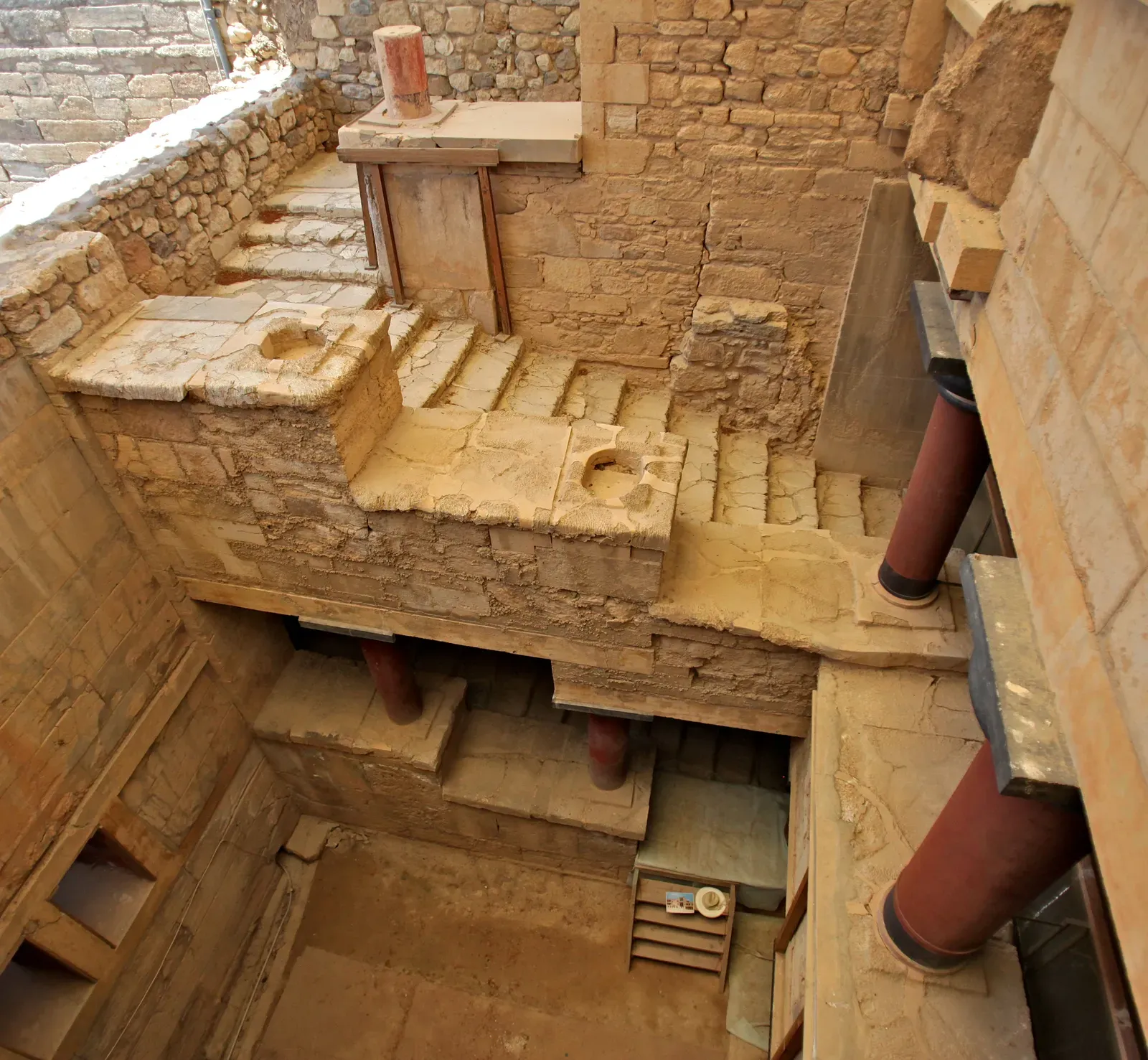
Everyone pictures Knossos as a palace with a bull-headed myth attached to it. Almost nobody pictures it as a library, yet this Bronze Age Cretan powerhouse almost certainly held administrative and religious writings on papyrus or waxed wood – materials that don’t survive fire, floods, or time.
We have thousands of Linear A inscriptions whose language we still can’t fully read, which tells you how thin our grip on this culture really is. Repeated fires and earthquakes tore through the site long before anyone could have compiled a list of what was lost, so archaeologists are left arguing over whether Knossos even counts as a “library” at all. That argument, by itself, tells you everything about how little survived.
12. The Early Library of Mycenae
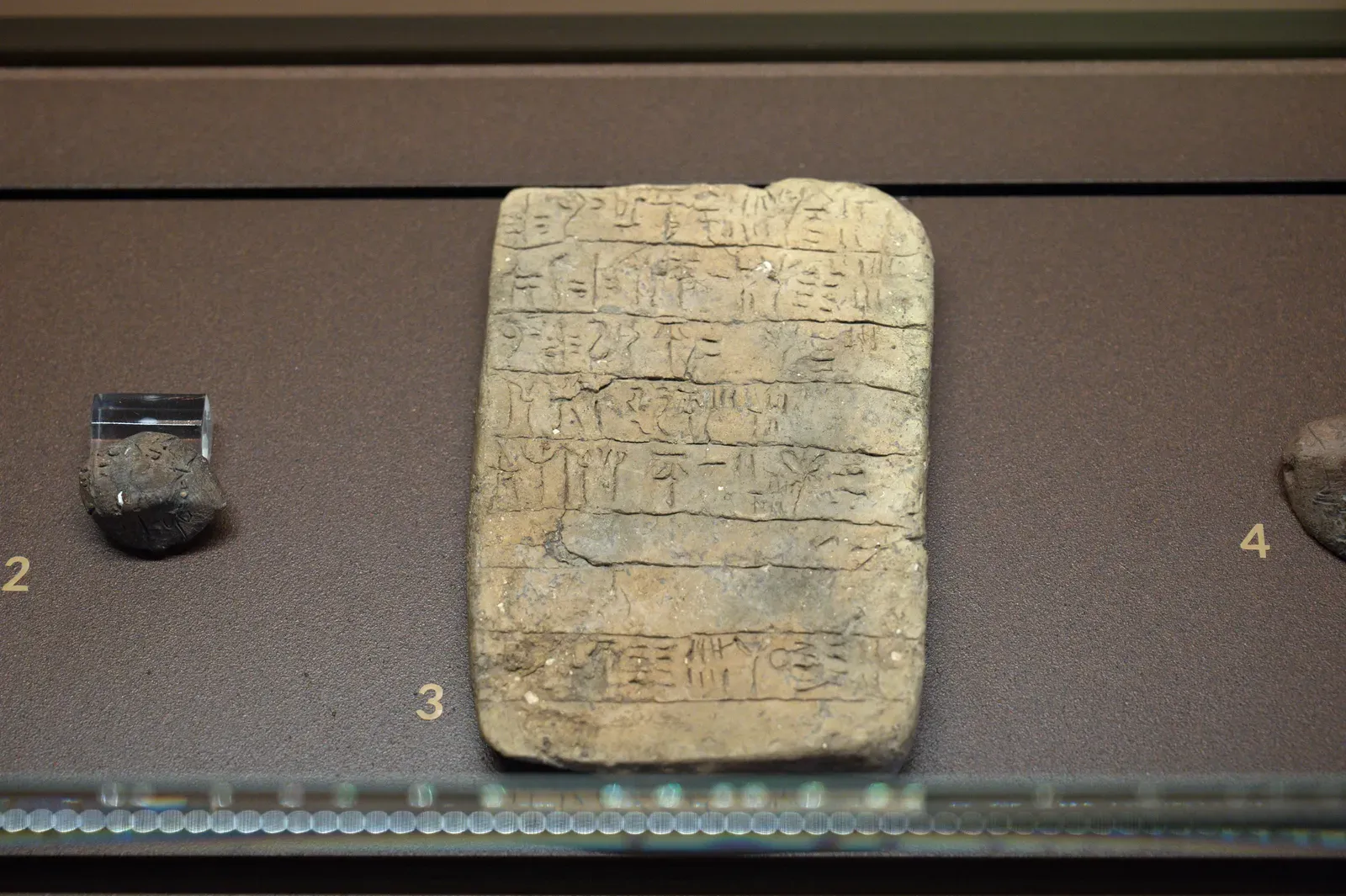
Most people assume Mycenaean Greece is safely documented because we’ve decoded the Linear B tablets found there. That confidence is misplaced. The palace at Mycenae almost certainly stored poetry, legal codes, and dynastic records on organic material that turned to ash the moment the building burned.
Here’s the cruel irony: the only tablets that survived did so because they were accidentally baked hard by the very fires that destroyed the palace. That means everything we “know” is a distorted sliver – mostly boring accounting fragments, not the intellectual heart of the culture. No ancient author ever wrote, “in the library of Mycenae you could find…” because there was no library left standing long enough to describe.
11. The Lost Temple Libraries of Ugarit
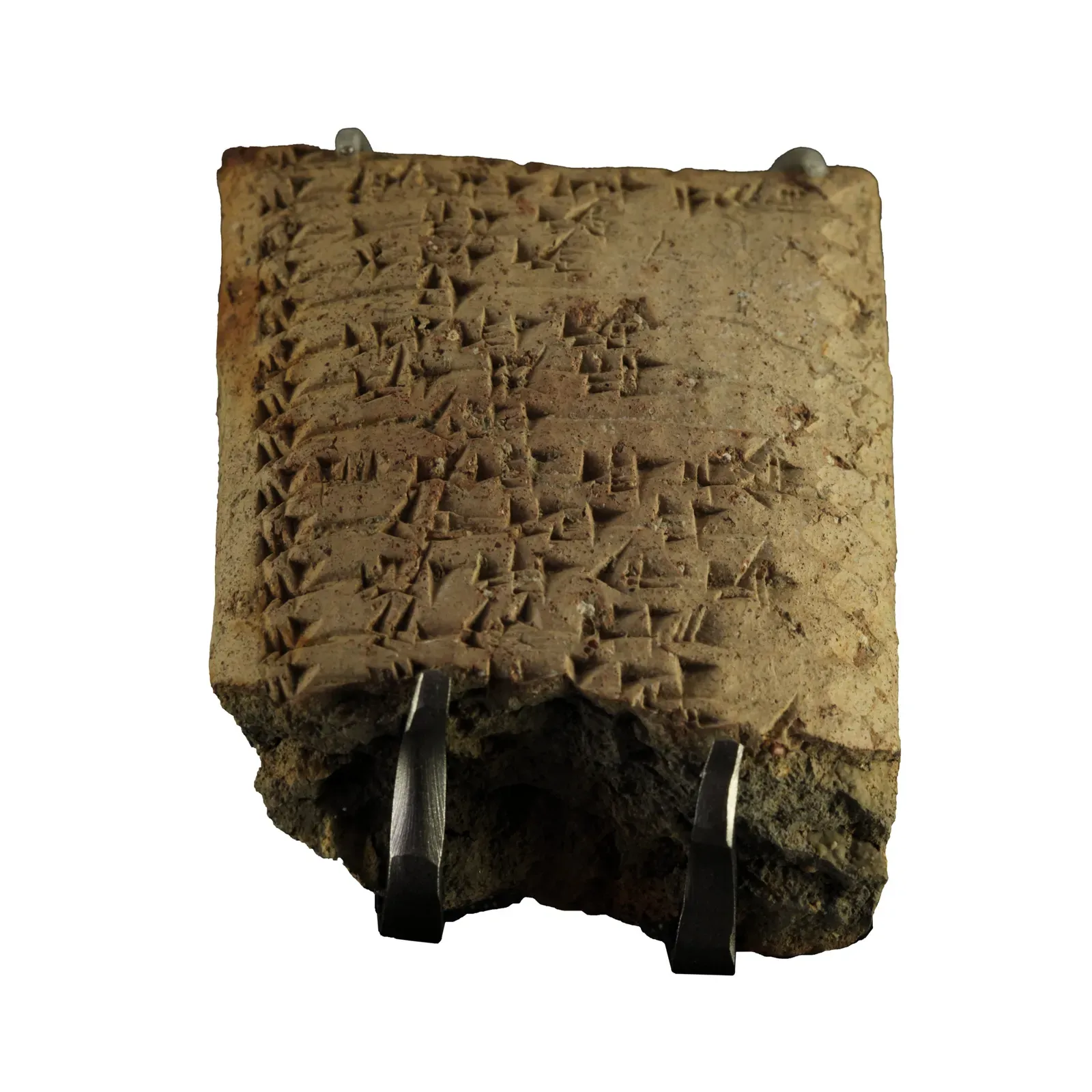
Ugarit looks like a rare success story on paper – thousands of clay tablets in multiple languages, recovered intact from temple and palace ruins. But the twist is brutal once you think it through: the only reason we have these baked-clay texts is that fire ripped through the rooms and hardened them like pottery.
Everything written on wood, leather, or papyrus in those same rooms is simply gone. Scholars can map scribal handwriting and reconstruct shelf arrangements with impressive precision, yet there’s no master inventory listing what was there before the flames. The hymns, rituals, and narrative works that likely existed on perishable scrolls are now just ghost entries – we know something was missing, but never what.
Fast Facts
- Ugarit’s ruins were uncovered in 1928 at Ras Shamra in modern Syria.
- Most tablets date to the Late Bronze Age, roughly the 14th-12th centuries BCE.
- Texts were written in several languages, including Ugaritic, Akkadian, and Hurrian.
- The city was destroyed around 1190 BCE during the wider Bronze Age Collapse.
10. The Royal Archives of the Shang Capital at Yin
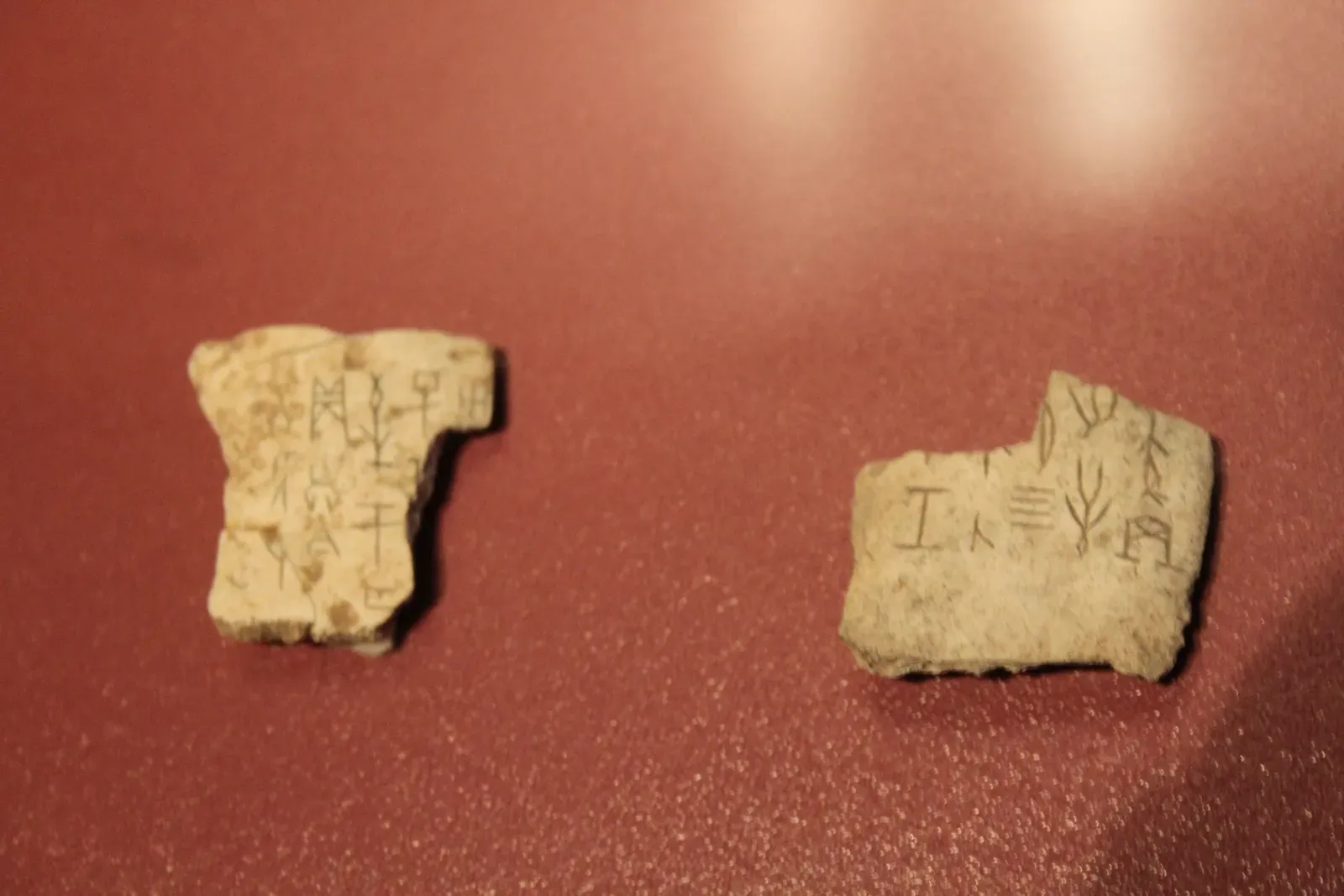
Early Chinese civilization gets treated like it sprang fully formed from oracle bones. That’s survivorship bias talking. At Yin, near modern Anyang, archaeologists found bronze inscriptions and divination bones, but the real prize – a centralized archive of bamboo or wood-strip texts – rotted and burned away without leaving a single catalogue behind.
Later Chinese tradition keeps referencing classics that supposedly trace back to the Shang and early Zhou periods, which strongly suggests an organized body of writing once existed. Bamboo burns fast, and silk scrolls disintegrate in chaos, so when the capital fell, whatever archive the royal court kept was an easy, total loss. We’re left holding the divination questions and guessing at the library that must have stood behind them.
9. The Uncatalogued Dynastic Libraries of the Neo-Assyrian Empire
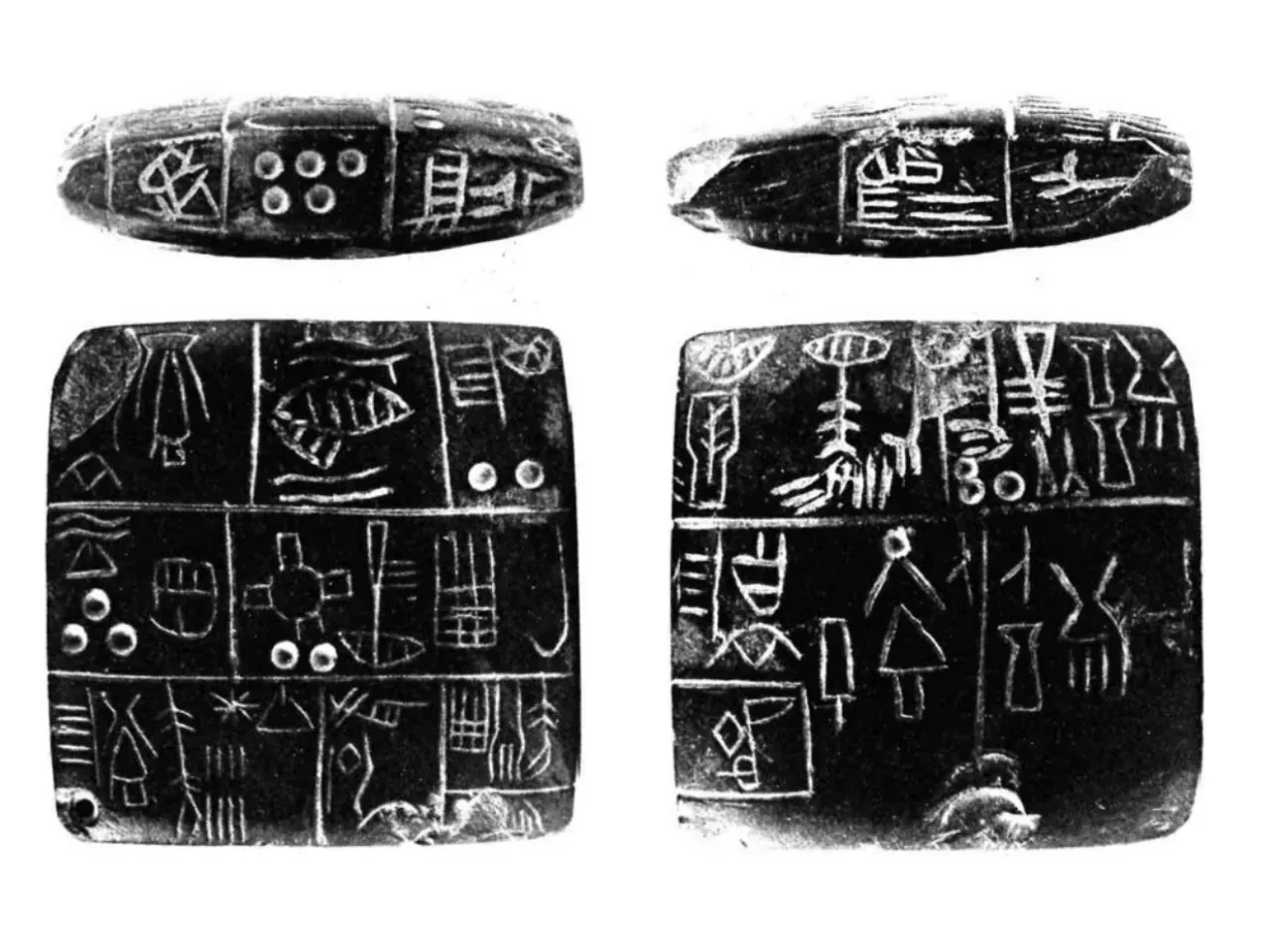
People treat Assyrian libraries as a triumph because Ashurbanipal’s collection from Nineveh survived so famously. That success story hides an awkward truth: for earlier Neo-Assyrian kings, we have almost nothing but scattered tablets, not a defined, catalogued collection.
Royal centers like Kalhu and Dur-Sharrukin almost certainly held literature, omen texts, and medical writings worth curating. But when these cities fell, their libraries didn’t just burn – they got crushed under collapsing debris, looted for scrap, or quietly eroded away. Fire can actually preserve clay tablets under the right conditions, but only if nobody dumps or reuses the rubble first. There’s no ancient “table of contents” for what those palace rooms held when the roofs came down.
8. The Temple Libraries of Pre-Conquest Mesoamerica
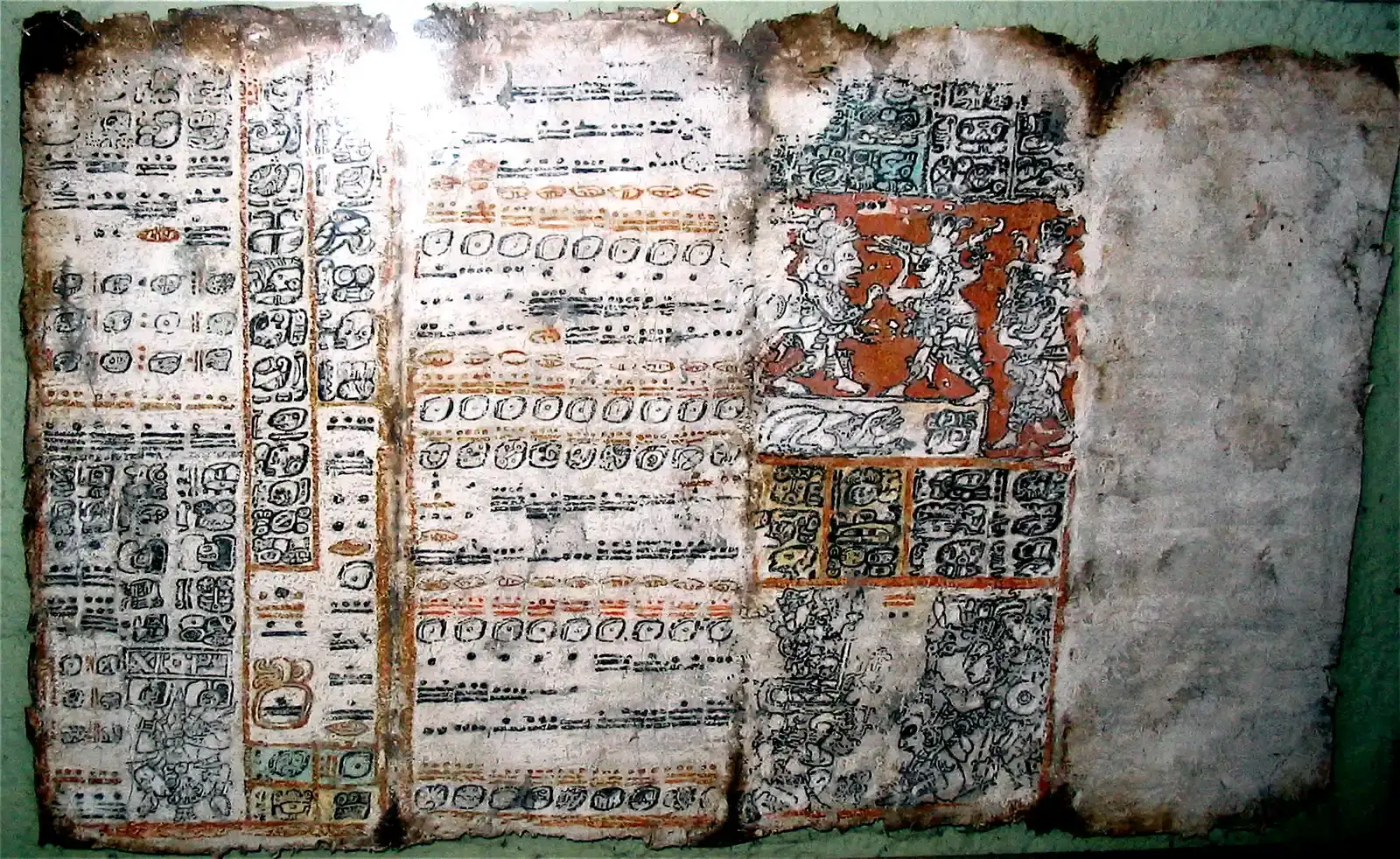
Textbooks love to claim the Maya “barely wrote anything,” which is exactly backwards. The more epigraphers decode, the clearer it becomes that Maya and other Mesoamerican cultures ran full scribal schools and temple libraries – almost completely erased after the Spanish invasions.
Contemporary Spanish accounts describe burning native books by the armload, sometimes noting that local people wept while watching it happen. We know fragments of what survived – astronomy, ritual calendars, dynastic history – from the handful of codices that escaped the fires. But there’s no genuine catalogue of the temple collections systematically destroyed across Yucatán and highland Guatemala; the survivors just prove how advanced the tradition was, while the bonfires prove how much we’ll never recover.
Worth Knowing
- Only four Maya codices are confirmed to survive today: the Dresden, Madrid, Paris, and Grolier.
- The Dresden Codex, now held in Germany, is widely considered the most complete of the four.
- Sixteenth-century missionaries destroyed countless codices, viewing them as works of the devil.
- The survivors mostly cover calendars, astronomy, and ritual – not history or literature.
7. The Early Medieval Cathedral Libraries That Burned Before Anyone Could Catalogue Them

Most people picture medieval libraries as quiet stone rooms carefully inventoried by patient monks. That image belongs to the later Middle Ages, not the fragile early centuries when Viking raids, local wars, or a single stray fire could wipe out a cathedral’s entire collection in an afternoon.
For many of these sites, no booklist had ever been compiled in the first place. Sometimes the only proof a library existed is a chronicler’s throwaway line that “all the books” were lost. Patristic writings? Local annals? Now-forgotten saints’ lives? Nobody can say – historians can only guess at contents by comparing what survived at related institutions elsewhere.
6. The Buddhist Monastery Libraries Destroyed During the Tang Persecutions
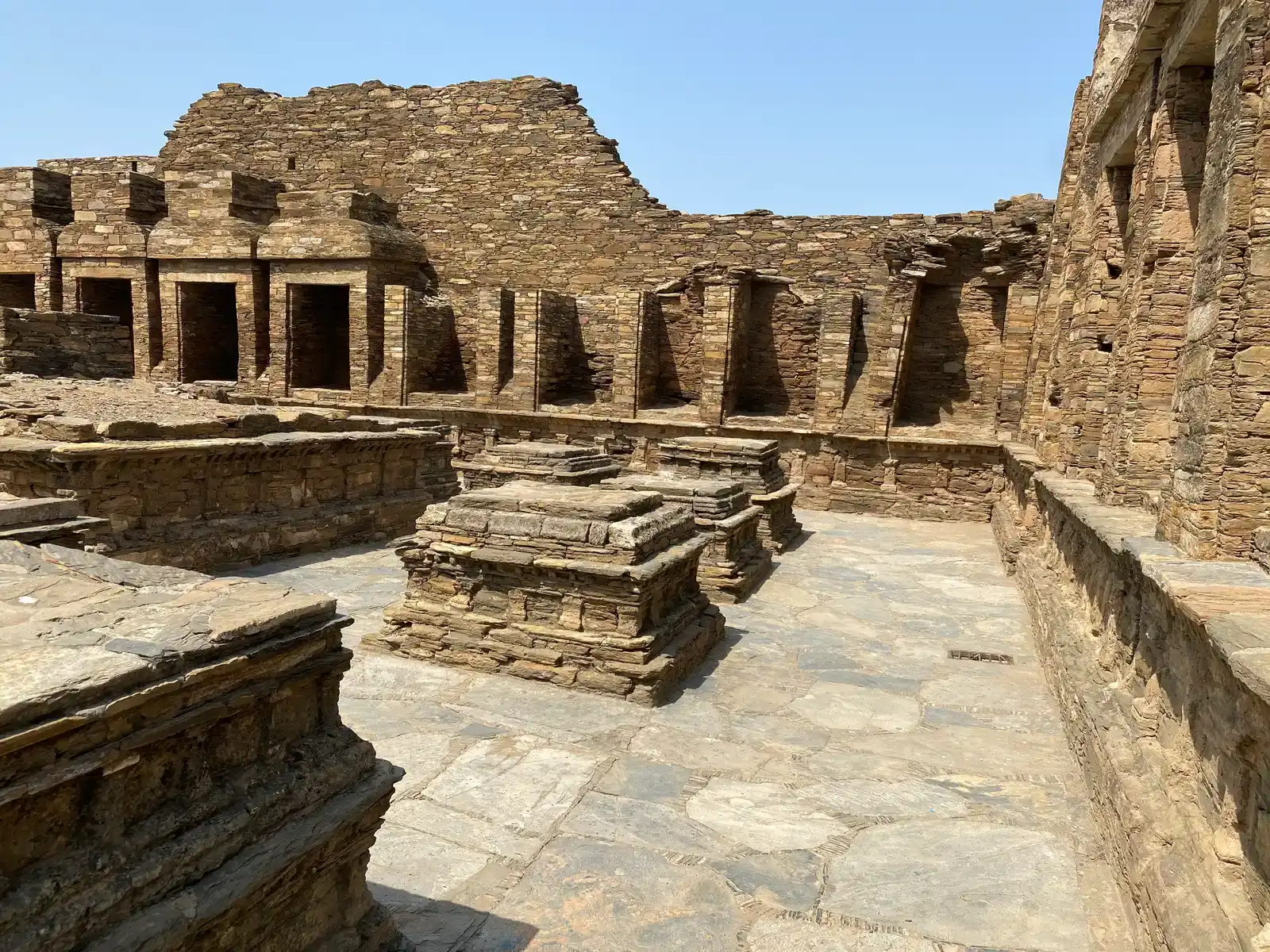
China’s Tang dynasty gets celebrated for its cosmopolitan brilliance, but the 840s brought a brutal crackdown on Buddhism. Imperial edicts closed monasteries, defrocked monks, and destroyed or confiscated vast collections of Buddhist texts – with almost no transparent record of what actually went into the flames.
We know these libraries were enormous: monastic communities copied sutras at an industrial scale, and pilgrims complained about the sheer volume of manuscripts they encountered. But the destruction was framed as moral and fiscal cleansing, not an event worth documenting for posterity. Surviving Buddhist canons were later rebuilt using Korean and Japanese holdings, yet the exact contents of the great Tang-era monastic libraries are simply unrecoverable.
At a Glance
- The Huichang persecution reached its peak with imperial edicts issued in 845 CE.
- Roughly 4,600 major monasteries and more than 40,000 smaller shrines were destroyed.
- An estimated 260,000-plus monks and nuns were forced back into lay life.
- The campaign was driven partly by war debts and a push to seize tax-exempt monastic wealth.
5. The Burned Libraries of the Reformation’s “Purifying” Zeal

There’s a comforting myth that the Protestant Reformation was purely about printing more books and empowering readers. That’s only half the story. Across Germany, England, Scotland, and the Low Countries, religious reform arrived hand-in-hand with iconoclasm – and the systematic destruction of “superstitious” books in monastic and parish libraries.
When monasteries were dissolved, their libraries were pillaged for binding scraps, sold as waste paper, or burned alongside religious images and relics. Smaller houses rarely had the time or incentive to document what was being destroyed. Historians can only reverse-engineer possible holdings from later printed editions and scribal networks – educated guesswork standing in for a real record that no longer exists.
You don’t have to burn books to destroy a culture. Just get people to stop reading them.
Ray Bradbury
4. The Unrecorded Village Libraries Lost in Colonial Conflicts
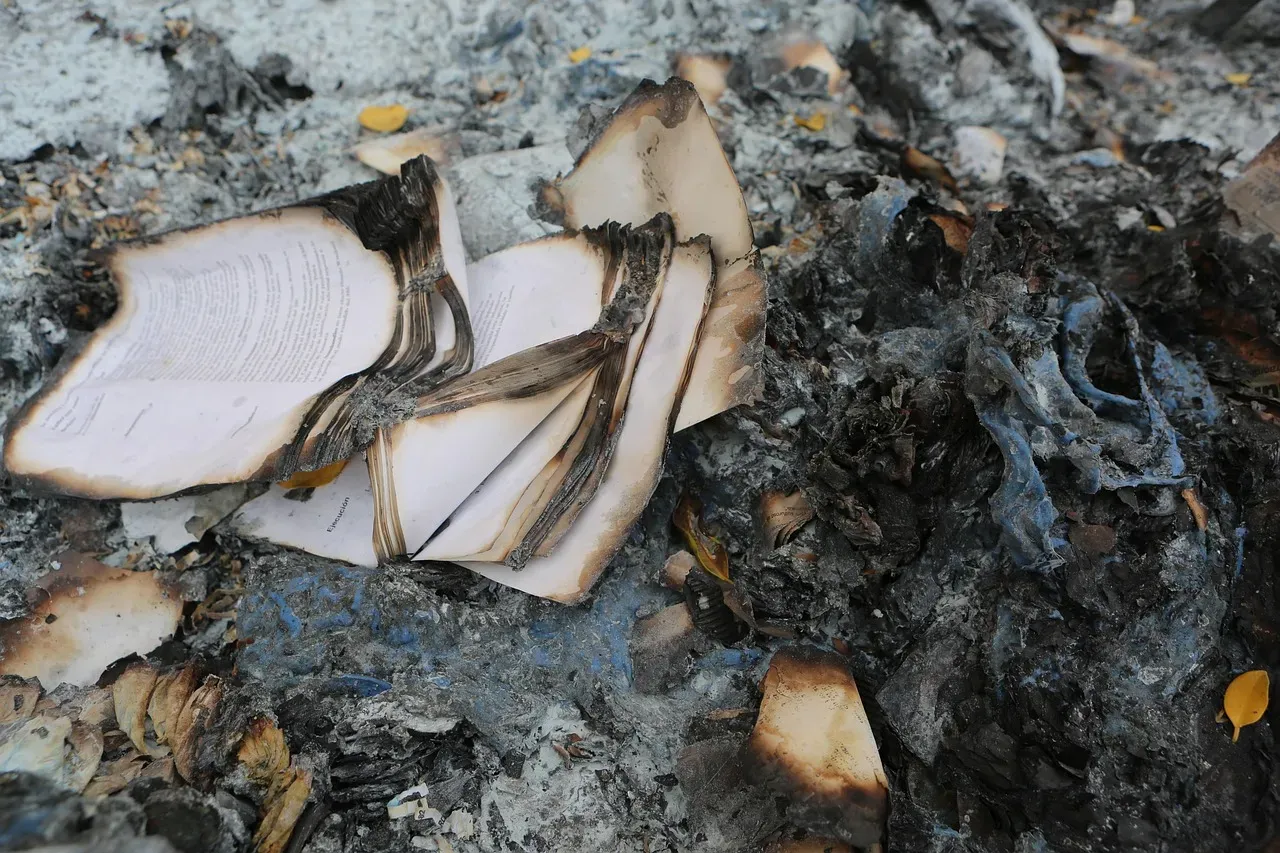
History remembers the big, royal libraries and almost never bothers with the small ones. Across Africa, South Asia, and Southeast Asia, early modern conflicts tied to European colonial expansion destroyed thousands of small mosque, temple, and court libraries without anyone ever writing down what they held.
European records sometimes mention “papers burned” or “native books destroyed” during punitive expeditions, almost as an afterthought. These weren’t glamorous collections that attracted foreign scholars – they were working libraries full of legal opinions, genealogies, land records, and poetry. Their loss is doubly silent: first in the actual flames, then in the historical bias of what got recorded as worth remembering at all.
3. The Destroyed Manuscript Rooms of Timbuktu’s Lesser-Known Families
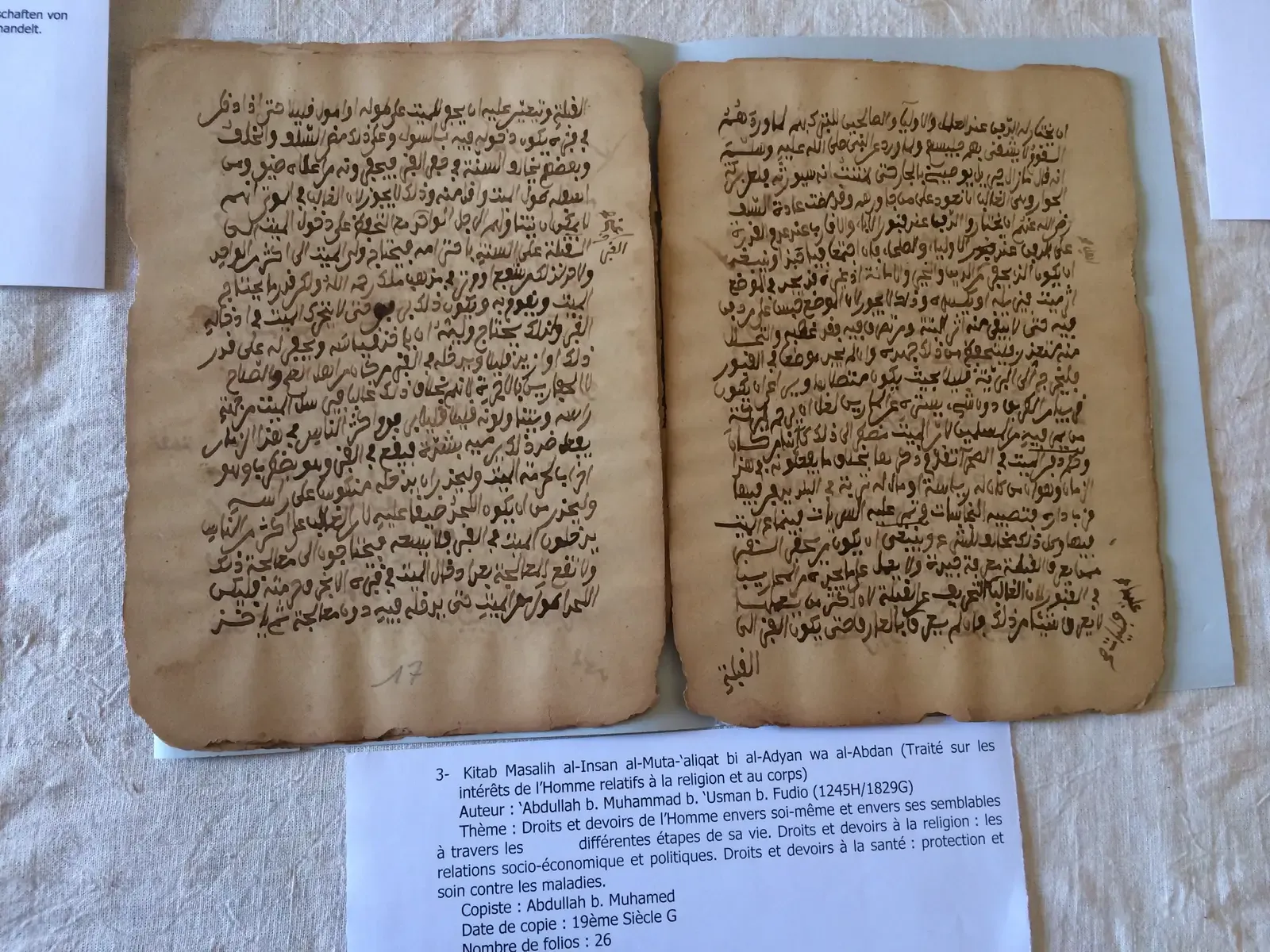
Everyone now repeats the feel-good story that Timbuktu’s manuscripts “were saved” from recent conflict, and for the famous private collections, that’s true. But the comforting headline hides a much deeper, quieter loss that stretches back centuries.
Smaller family libraries and neighborhood collections were burned, looted, or simply left to decay in obscurity, with no full catalogues ever compiled. Twentieth-century researchers occasionally reported entire stacks of manuscripts eaten by termites or discarded as junk, long before anyone thought to list the titles. The “rescue” narrative is inspiring, but it also masks how many lesser-known Saharan and Sahelian libraries had already vanished, leaving nothing behind but scattered titles remembered in oral history.
Quick Compare
- Destroyed in 2012: an estimated 4,000-plus manuscripts burned or stolen at the Ahmed Baba Institute.
- Smuggled to safety: somewhere between 300,000 and 400,000 manuscripts carried out by rice sack, canoe, and motorcycle.
- Survival rate: roughly 90 percent of the city’s known holdings reportedly made it out alive.
2. The Buried and Burned Libraries of Ancient Anatolian Cities
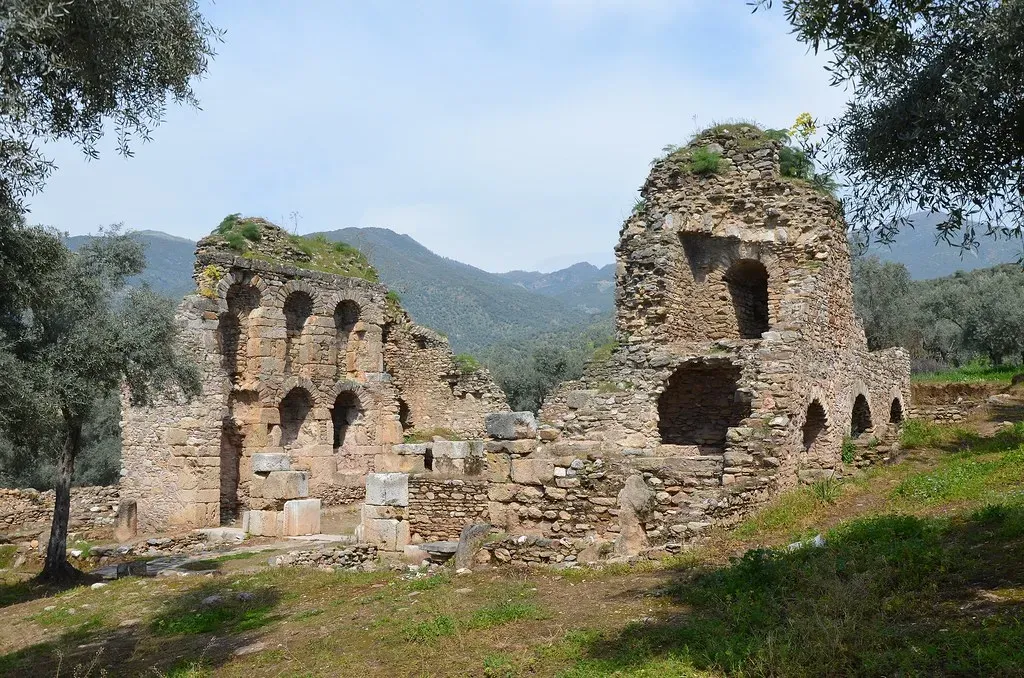
Ancient Anatolia – modern Turkey – was once packed with literate cities: Hittite, Luwian, Greek, Roman, Byzantine, each almost certainly running its own archives and libraries. We know a few headline cases, like Hattusa’s cuneiform tablets. For dozens of other centers, especially in western Anatolia, archaeologists just find scorched layers and collapsed walls with no surviving textual inventory at all.
Classical sources casually record city after city being sacked, burned in civil war, or leveled by disaster – and each time, administrative and religious collections went up with the buildings. Organic writing materials burn and rot fast, and later builders often quarried the ruins for stone, destroying whatever charred fragments remained. Occasionally a single inscription or stray papyrus survives just long enough to prove a literate culture existed, but the libraries themselves – full rooms of ordered texts – vanished without ever being catalogued.
1. The Original Great Library of Alexandria’s Lost Contents
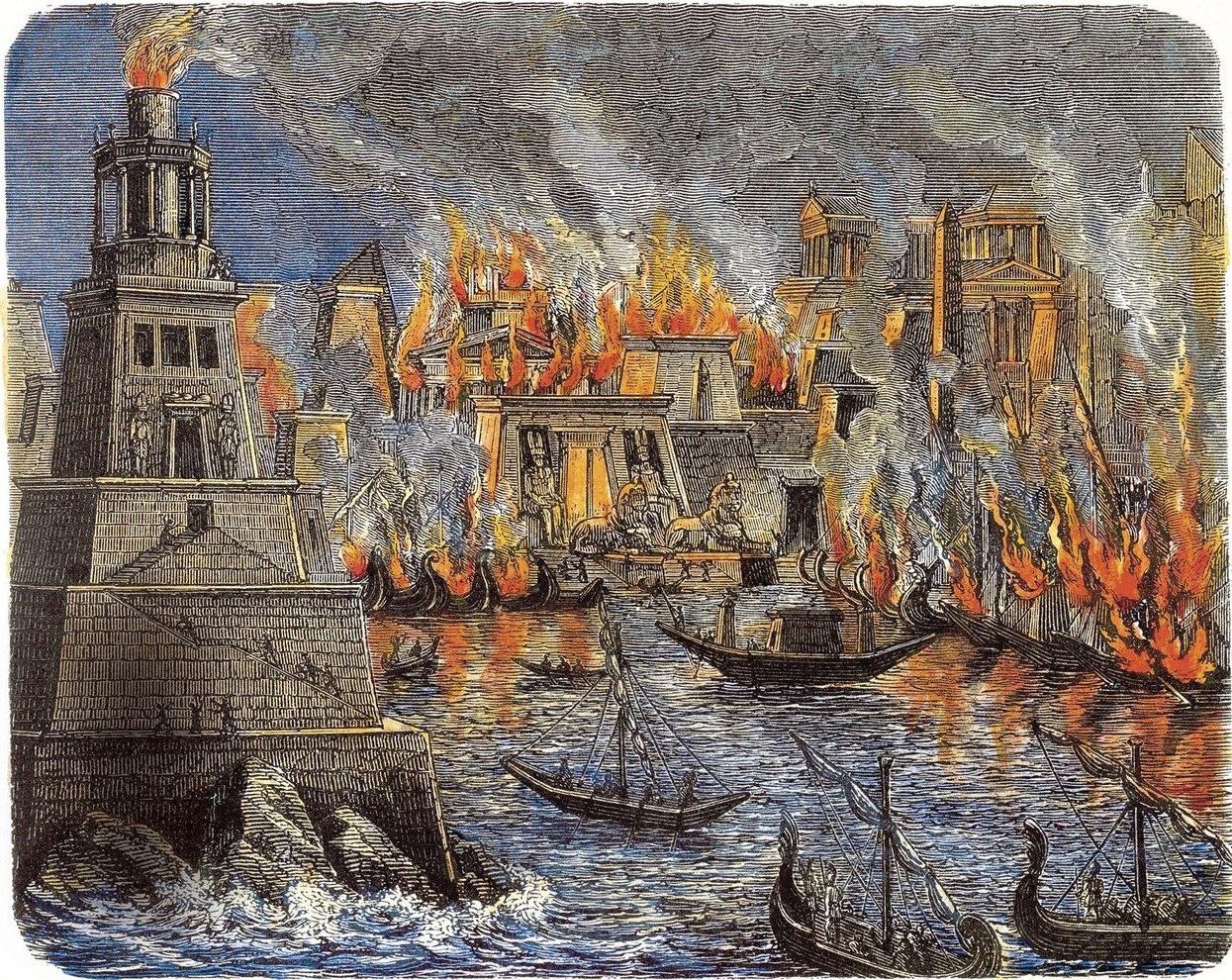
Alexandria is the brand name of lost libraries, and that fame is exactly why people misunderstand it. Everyone argues about how and when the Great Library burned, but the deeper tragedy is much simpler: no complete, trustworthy catalogue of its holdings has ever survived.
We know it existed. We know it was massive, and we know scholars traveled from across the ancient world just to consult its texts. But precisely what sat on those shelves is mostly guesswork stitched together from later authors mentioning individual works and a few surviving author lists. Multiple waves of political, military, and accidental damage almost certainly reshaped the collection long before any final fire finished the job – so when someone claims “this book was lost in the burning of Alexandria,” they’re usually repeating a modern assumption, not a documented fact.
Why It Stands Out
- Likely founded in the early 3rd century BCE under Ptolemy I and expanded by Ptolemy II Philadelphus.
- Ancient estimates of its holdings range wildly, from roughly 40,000 to 700,000 scrolls.
- Any scroll found aboard a docked ship could be confiscated, copied, with only the copy returned to its owner.
- Its end wasn’t one dramatic fire but a slow series of losses stretching across centuries.
The Uncomfortable Pattern Behind All 13 Fires
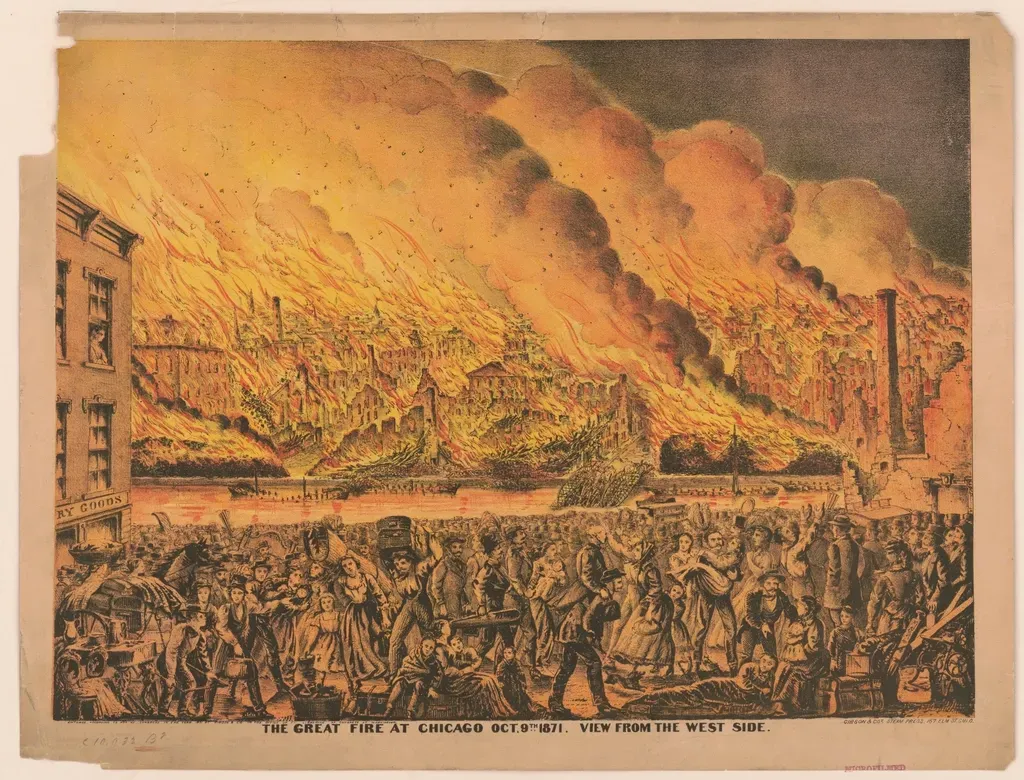
Line these cases up and a pattern emerges that’s more unsettling than any single legendary blaze. The real catastrophe was never just that libraries burned – it’s that they burned before anyone bothered to write down exactly what was being erased.
Knossos, Ugarit, the Tang monasteries, Mesoamerican temples, early medieval cathedrals, colonial-era village collections, even Alexandria itself – again and again, the catalogues either never existed or died the exact same death as the shelves they described.
We like to believe great writing always survives, that brilliance naturally finds a backup copy somewhere. History says the opposite, and it says it loudly. Whole genres, entire local literatures, and unknown authors likely vanished not because their work was mediocre, but because their library happened to stand in the wrong place when the fire came.
If you ask me, the anonymous rooms deserve more grief than Alexandria ever gets. Alexandria at least gets mourned by name. The village libraries, the family manuscript rooms, the monastery archives with no chronicler left to even say “all the books were lost” – those deserve to be missed too, and almost nobody misses what they never knew existed.