
You were taught that history moves in a straight line. Stone Age, then farming, then cities, then kings, then us – each stage unlocking the next like a video game. It’s a clean story. It’s also, according to the dirt itself, mostly wrong.
Archaeologists keep digging up things that shouldn’t be where they are, dated to when they shouldn’t exist, built by people who supposedly weren’t capable of building them yet. Temples before farms. Cities without kings. Cousins we called “dumb” who painted caves before we did. Here are 13 discoveries that quietly rewrite the chart on the classroom wall – starting with a hilltop in Turkey that broke the whole model wide open.
#13 – Göbekli Tepe: The Temple That Broke the “Farms First” Rule
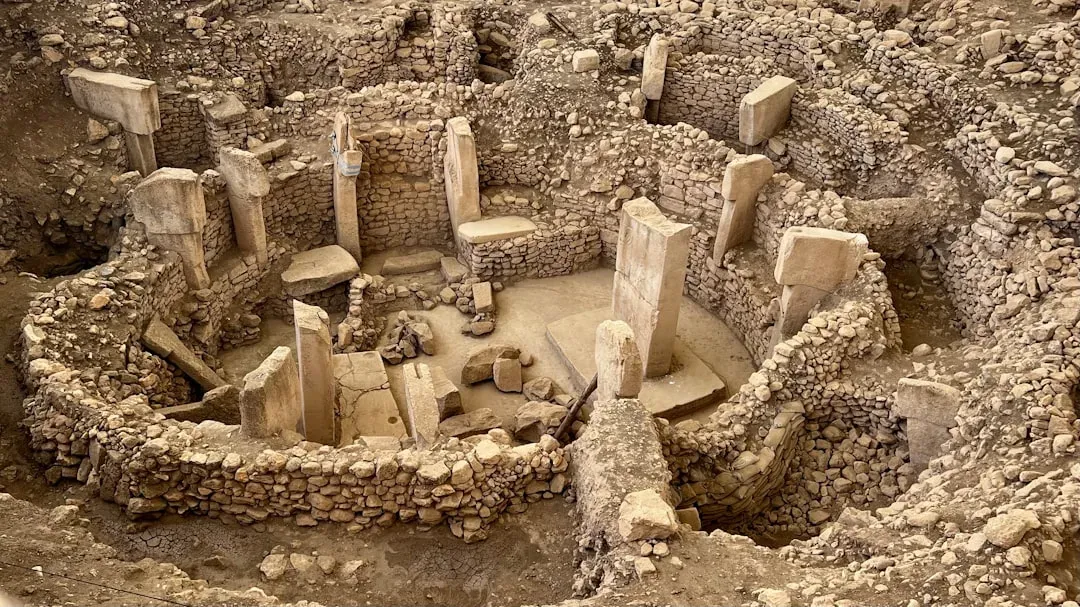
This site in southeastern Türkiye shouldn’t exist, at least not according to the old script. Massive stone circles, T-shaped pillars up to 16 feet tall, and intricate animal carvings were once assumed to be the work of settled farming societies. But radiocarbon dates put Göbekli Tepe around 11,000–9,000 BCE – older than agriculture in the region. That alone shatters the tidy “first farms, then temples, then cities” diagram almost every student memorized.
Instead, hunter-gatherer groups seem to have coordinated labor, stone carving, and ritual gatherings on a scale once thought impossible without villages, bureaucrats, and grain surpluses. Some researchers now argue religion and large ceremonies may have driven people to settle down, not the other way around.
First came the temple, then the city.
Klaus Schmidt, lead archaeologist at Göbekli Tepe
#12 – Çatalhöyük: City Life Centuries Before the “First City”
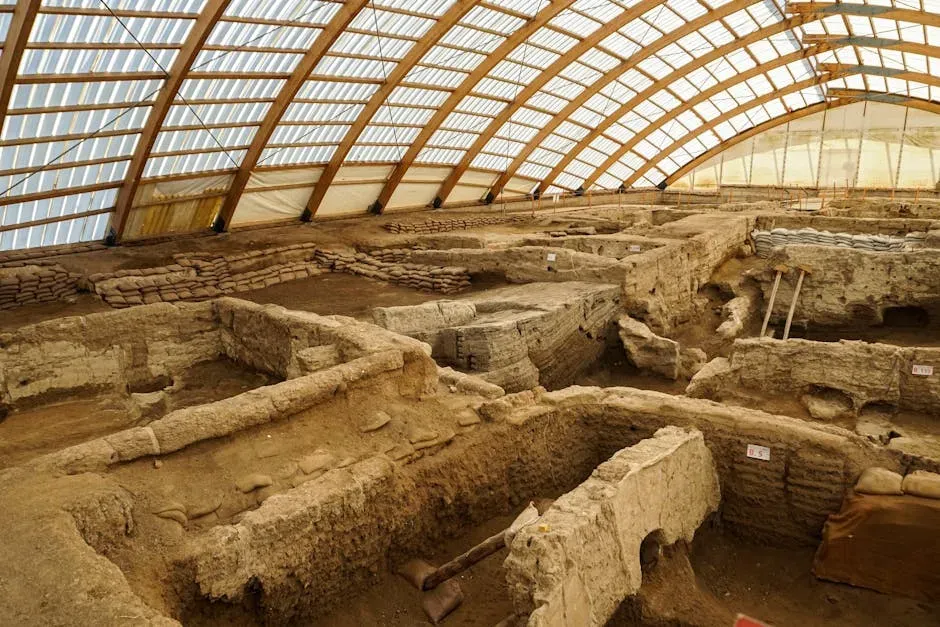
If you imagine early towns as scattered huts around a clearing, Çatalhöyük in central Türkiye feels like a plot twist. Dating back to around 7,500 BCE, this densely packed settlement had multi-room houses jammed together like a honeycomb, with people entering through rooftop ladders instead of doors. There were wall paintings, shrines, and something that looks suspiciously like organized urban life – millennia before the “first cities” chapter most textbooks pin on Mesopotamia around 3,500 BCE.
Residents plastered skulls, buried their dead under house floors, and covered walls with vivid scenes of animals and geometric patterns. There are no streets, no palaces, no obvious kings, which clashes with the classic idea that cities require elites and rigid hierarchies. Some archaeologists still call it a “mega-village” because the word “city” feels too bold here – but functionally, thousands of people were living in a complex, permanent settlement long before the textbook urban starting line.
Fast Facts
- Founded around 7,500 BCE and occupied for well over a thousand years
- Homes were entered through rooftop openings – no doors, no streets
- Walls featured murals of bulls, leopards, and hunting scenes
- Predates Mesopotamia’s “first cities” by roughly 3,000-4,000 years
#11 – The Indus Valley’s Toilets Beat Rome by Thousands of Years
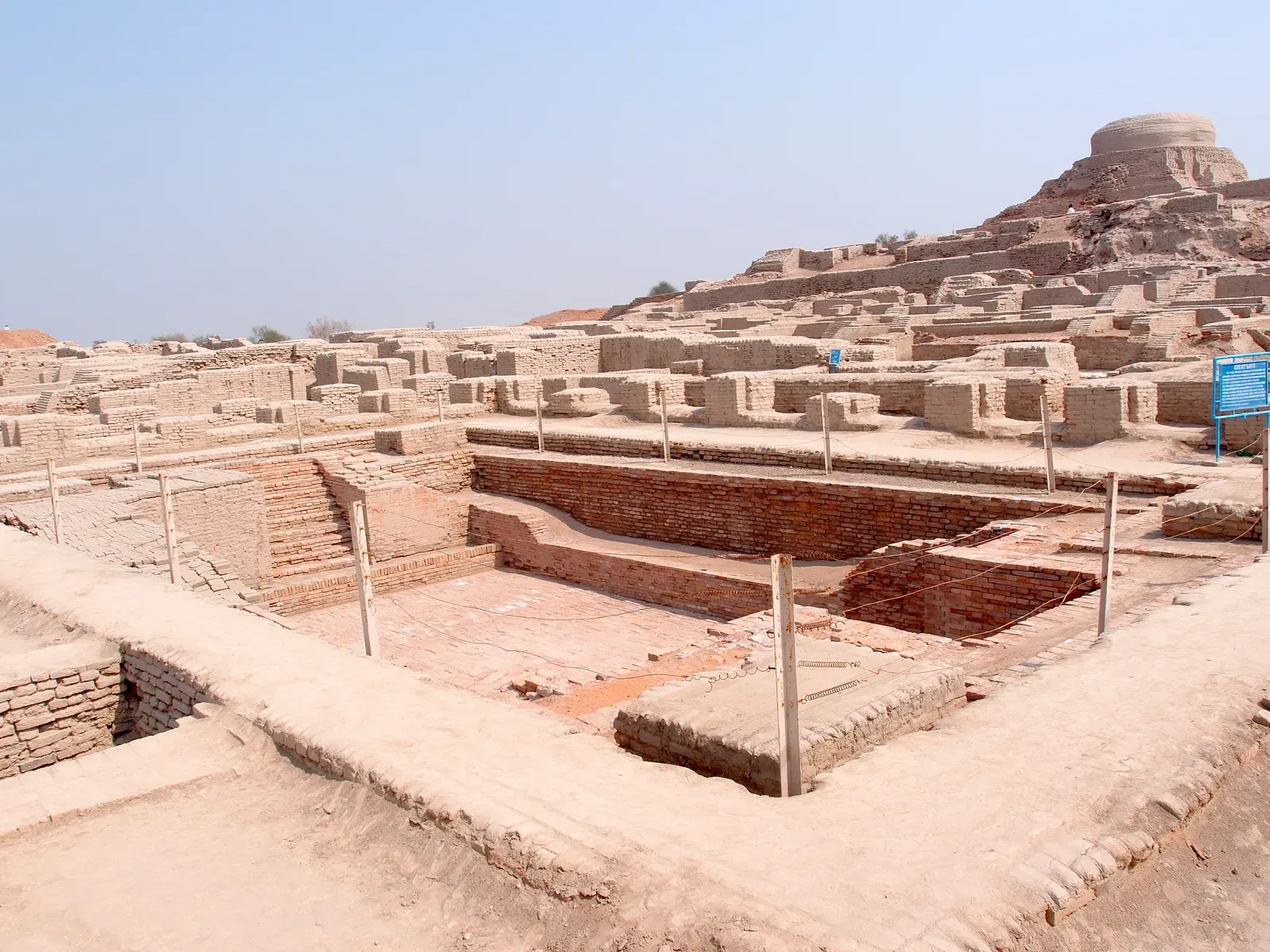
Most school lessons gloss over the Indus Valley Civilization with a line or two, if they mention it at all. That’s wild, because by 2600 BCE, cities like Mohenjo-Daro and Harappa had grid-planned streets, standardized brick sizes, and surprisingly advanced drainage and sewage systems. Many homes had private bathrooms connected to a covered sewer network – something Europe wouldn’t match for thousands of years.
Yet history courses often crown Mesopotamia and Egypt as the only “early urban civilizations that mattered.” Part of the reason is that we still can’t read the Indus script with certainty, which skews our supposed timeline of complex administration toward places we can read rather than where complexity actually appeared first. There’s no clear evidence of giant palaces or pyramids here either, quietly suggesting you can build large, sophisticated cities without kings or ego monuments at all.
#10 – Europe’s Forgotten Mega-Forts That Dwarfed Ancient Cities
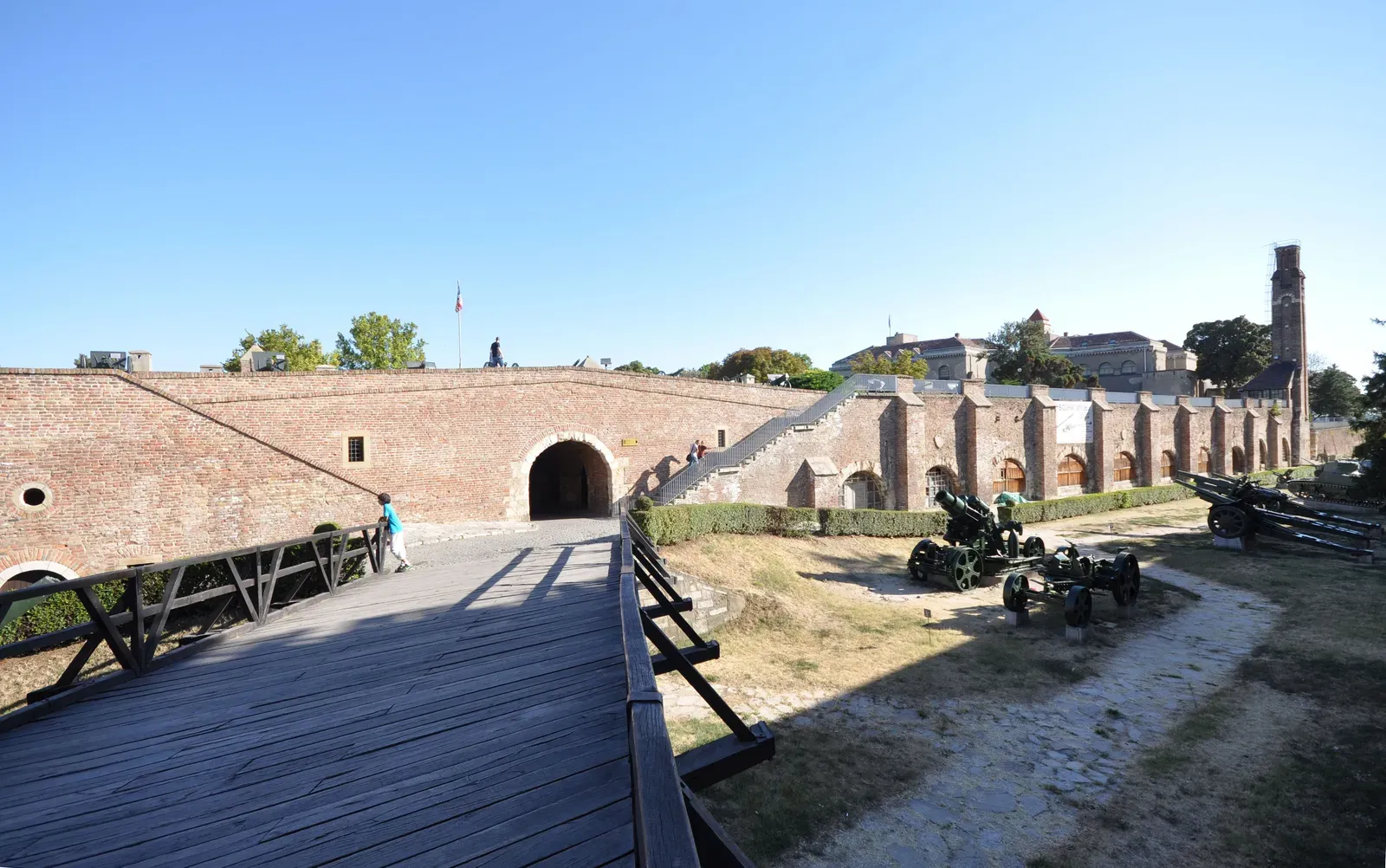
For decades, European prehistory between Stonehenge and classical Greece was painted as simple: scattered tribal groups, small villages, not much large-scale organization. Then archaeologists identified enormous fortified settlements like Corneşti-Iarcuri in Romania and the so-called “mega-forts” of the Carpathian Basin, some dating to around 1600–1200 BCE. These sites stretch over hundreds of hectares, dwarfing many contemporary towns in the Near East.
Satellite surveys reveal multiple defensive ditches, ramparts, and complex layouts – clear evidence of coordination and serious social organization. Yet they barely appear in general histories, contradicting the old idea that “real” complex societies in this era were basically limited to Egypt, Mesopotamia, and later Greece. Were these regional power centers? Proto-states? Scholars are still arguing, and that uncertainty alone blows a hole in the tidy map of where civilization supposedly lived during the Late Bronze Age.
#9 – The Younger Dryas Impact Debate That Could Rewrite Civilization’s Start Date

Almost every textbook ties the birth of civilization to the end of the last Ice Age and the rise of farming around 10,000–8,000 BCE. The climate warmed, humans settled, and history “proper” began. But evidence of a sudden, brief cooling event called the Younger Dryas – about 12,900 to 11,700 years ago – has sparked a controversial idea: that one or more cosmic impacts or airbursts triggered abrupt climate change, widespread fires, and megafauna extinctions.
Supporters point to layers of nanodiamonds, microspherules, and high-temperature minerals at multiple sites as possible impact markers. Critics counter that the data are inconsistent and the mechanisms don’t fully add up. But if some kind of catastrophic event really reset ecosystems just before farming took off, our “smooth” story of gradual development is wrong – we’d be looking at a punctuated, disaster-driven reboot instead, and even the lingering uncertainty contradicts the clean textbook chart.
#8 – Pre-Clovis Americas: Humans Were Here Long Before the “Official” Arrival
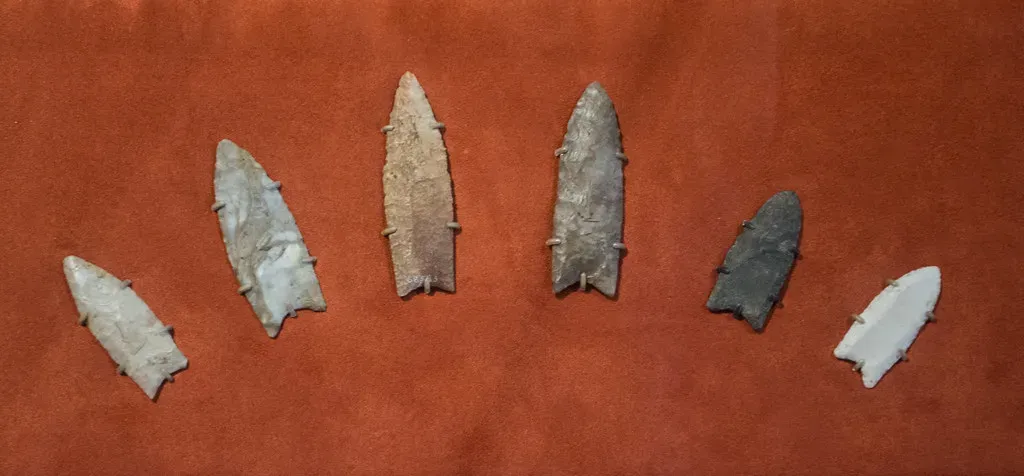
For most of the 20th century, North American archaeology revolved around the “Clovis-first” model: people arrived via Beringia around 13,000 years ago, carried distinctive spear points, and spread south. End of story. Now that story is basically broken. Sites like Monte Verde in Chile, Bluefish Caves in Yukon, and the White Sands footprints in New Mexico point to human presence thousands of years before the supposed starting line.
Monte Verde’s well-dated remains suggest humans in southern Chile by at least 14,500 years ago, and the White Sands tracks, if the oldest dates hold up, could be around 21,000–23,000 years old – a number that rips the migration timeline wide open. Many experts remain cautious and debates over dating methods get heated, but the broad consensus has shifted: Clovis was not first, which means the neat “peopling of the Americas” map in your old textbook is already outdated.
Quick Compare
- Clovis-first model: humans arrive roughly 13,000 years ago
- Monte Verde, Chile: solid evidence of people by at least 14,500 years ago
- White Sands, New Mexico: footprints potentially 21,000-23,000 years old
- Bluefish Caves, Yukon: contested but suggestive of even earlier activity
#7 – The Denisovans: The Lost Human Relatives Living On in Our DNA

Most textbooks used to present human evolution as a simple branching tree: Homo habilis, Homo erectus, Neanderthals, then us, who “replaced” the rest. Then a tiny finger bone and a tooth from Denisova Cave in Siberia were sequenced. The DNA didn’t match Neanderthals or modern humans, and suddenly a previously unknown human group – the Denisovans – was on the map, even though we barely have any of their bones.
Genetic studies show that people in parts of Asia and Oceania carry up to 5% Denisovan ancestry, meaning our species interbred with them, just as we did with Neanderthals. Some high-altitude adaptations in Tibetan populations appear to come straight from Denisovan genes. Instead of a clean replacement story, we now see a tangled web of overlapping, interbreeding human groups – and the old “march of progress” poster is scientifically obsolete, even though it still hangs in classrooms.
#6 – Neanderthal Art That Rewrites the “Dumb Caveman” Myth
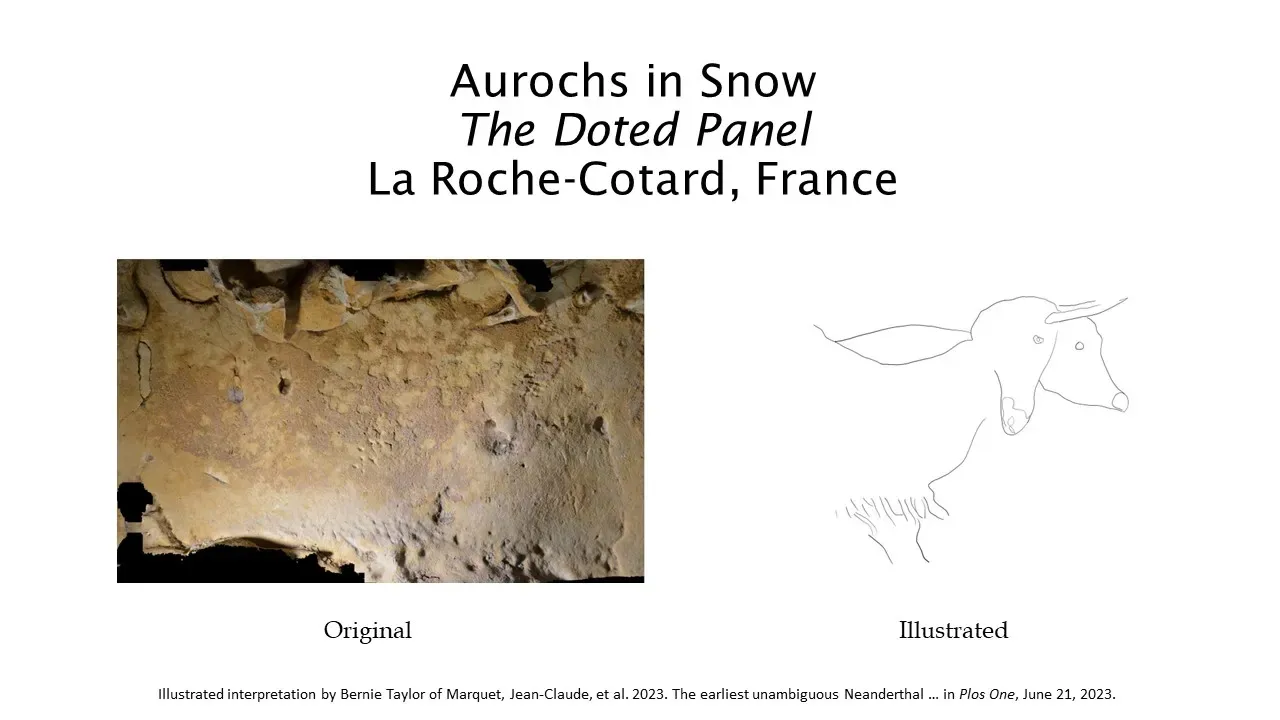
For decades, Neanderthals were cast as the slow, clumsy cousins who vanished because they couldn’t compete with “smarter” Homo sapiens. That stereotype is crumbling fast. Caves in Spain, like La Pasiega and Maltravieso, show painted motifs and hand stencils dated to around 64,000 years ago, predating known modern human art in Europe and strongly suggesting Neanderthals were the artists.
There are also pierced shells, possible pigments, and carefully arranged bird bones hinting at symbolic behavior. Even if individual dates get debated, the trend is clear: they controlled fire, crafted tools with real planning, and likely cared for injured group members. Symbolic thought and aesthetic expression were never uniquely “ours,” which makes the clean, Homo-sapiens-only “creative explosion” around 40,000 years ago look more like a biased oversimplification than an actual turning point.
#5 – Nabta Playa: The Sahara’s Megaliths That Predate Stonehenge
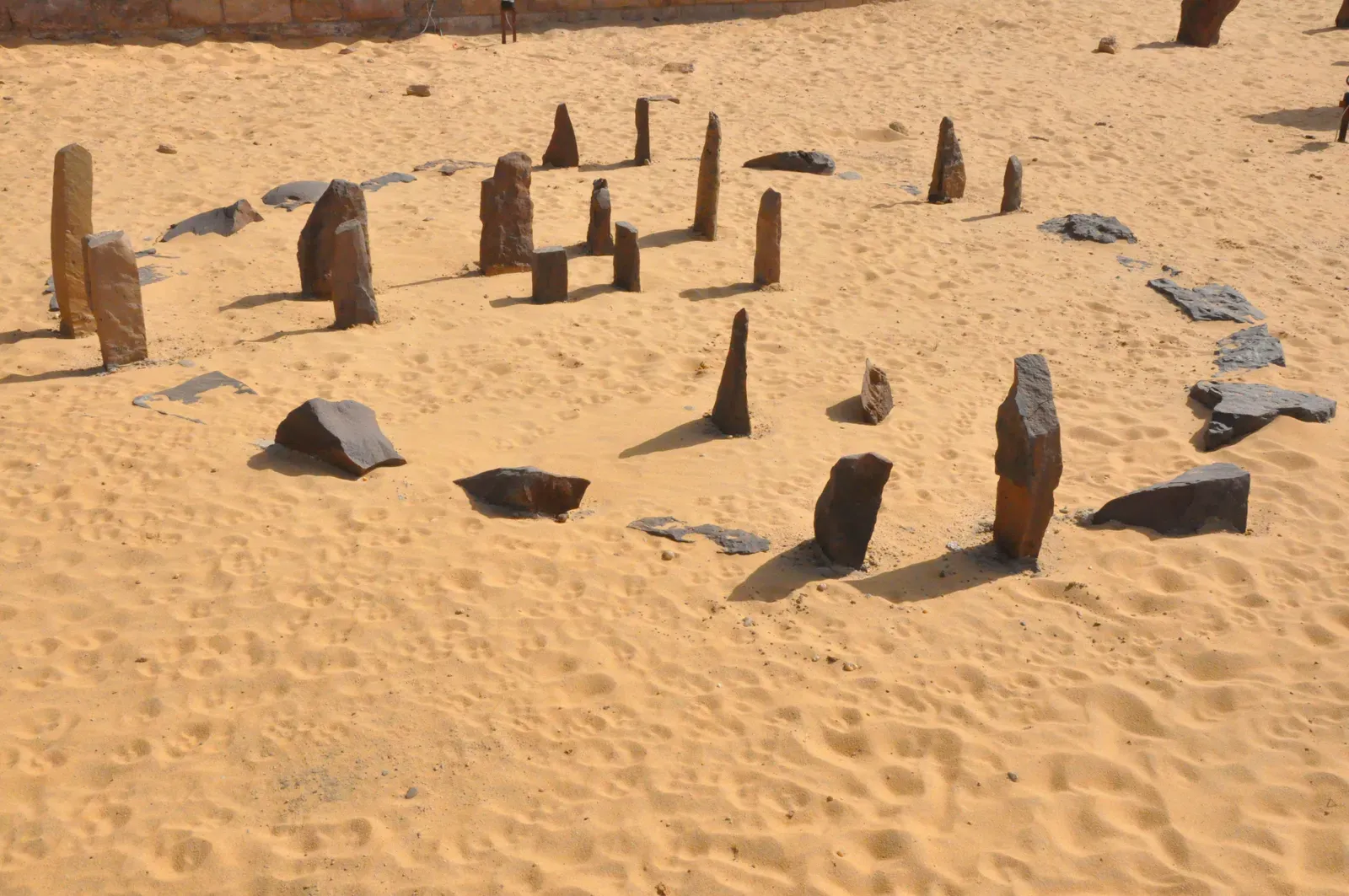
Ask people about ancient stone circles and they’ll say Stonehenge. But deep in what is now the Egyptian Sahara lies Nabta Playa, a seasonal lake basin with stone arrangements dating to around 7,000–6,000 BCE – older than Stonehenge by thousands of years. Some of these stones form alignments that may track solstices and stellar positions.
Even in conservative interpretations, the site shows pastoral groups managing complex rituals in a time and place often dismissed as peripheral. If even part of the archaeoastronomy claims hold up, early African pastoralists weren’t just wandering herders; they may have had structured ritual calendars tied to the stars and seasonal rains. Most textbooks barely mention Nabta Playa, treating prehistoric Africa outside the Nile Valley as blank space – the stones say otherwise.
#4 – Homo Sapiens’ Birth Certificate Keeps Getting Older
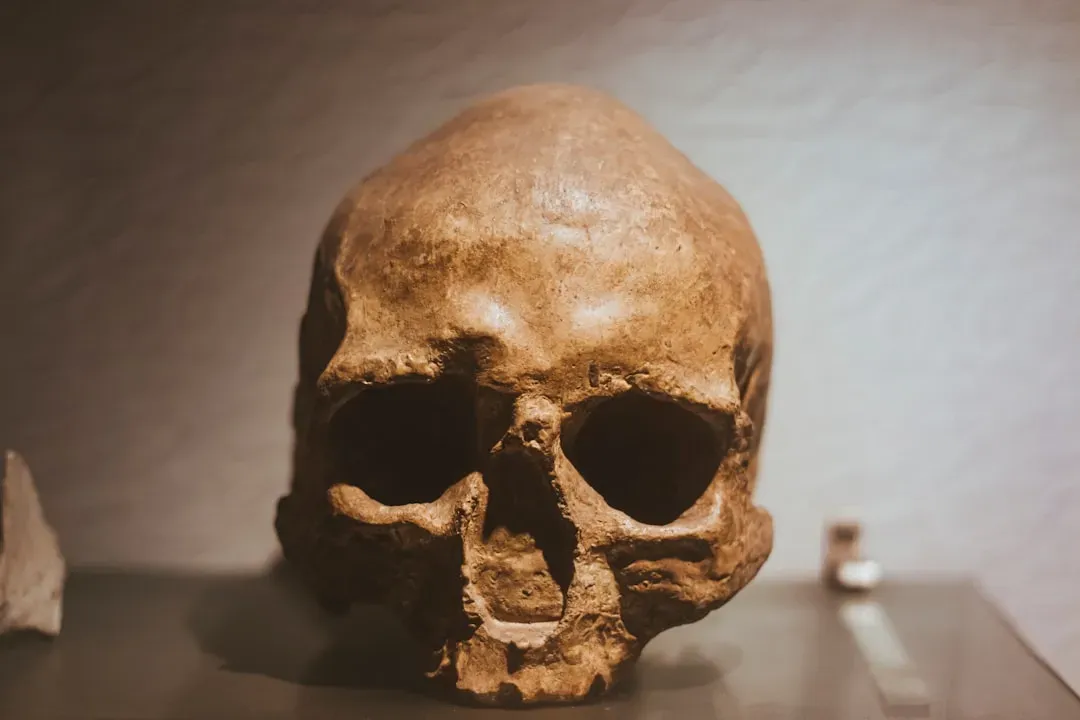
You might remember a neat date from school: Homo sapiens appeared about 200,000 years ago in East Africa. Then in 2017, fossils from Jebel Irhoud in Morocco were redated to about 300,000 years old, showing a mix of modern and archaic traits. That single correction pushed our species’ origin back by a hundred millennia.
Genetic and fossil evidence now point toward a “pan-African” origin scenario, with multiple populations mixing and merging across the continent over hundreds of thousands of years, rather than one clean “Garden of Eden” moment. That undercuts the tidy diagrams in biology textbooks and raises uncomfortable questions about how strongly older, Eurocentric narratives shaped the story we were handed. The birth certificate of our species is older, messier, and more geographically scattered than we were taught.
At a Glance
- Old textbook date: Homo sapiens origin around 200,000 years ago
- 2017 redating of Jebel Irhoud fossils: pushed back to roughly 300,000 years old
- Skulls show a mix of modern and archaic features, not a clean modern form
- Current model favors a pan-African origin over a single “cradle” location
#3 – The Bronze Age Collapse: The Sudden Dark Age Textbooks Rush Past
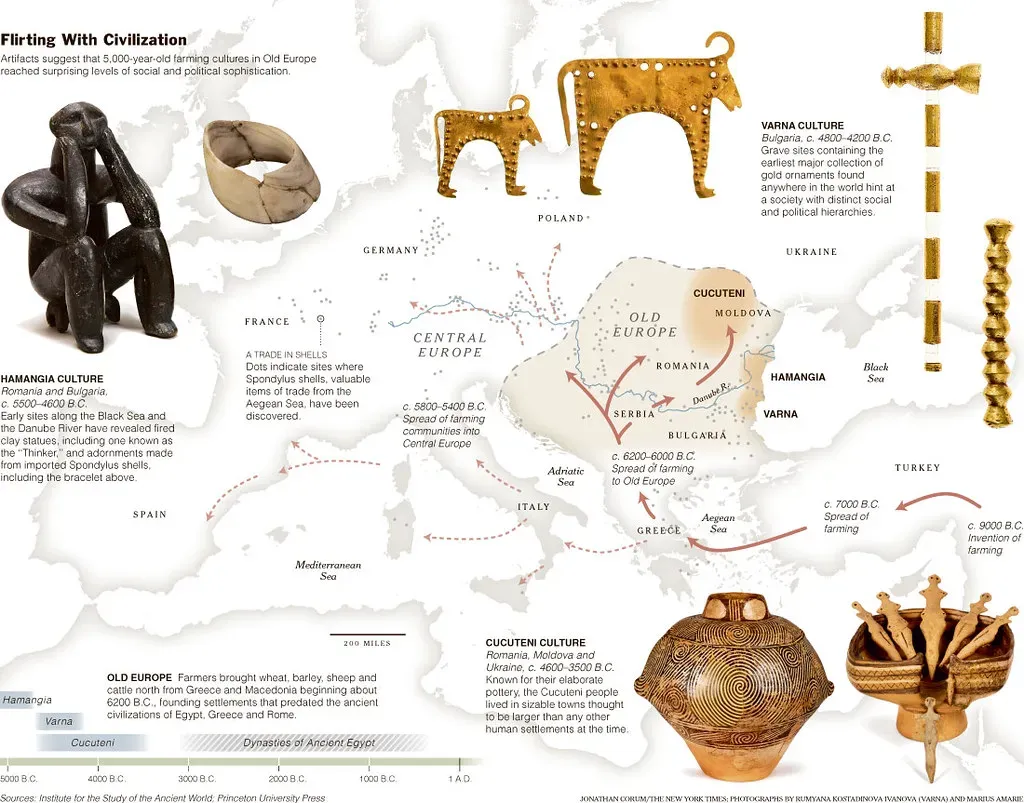
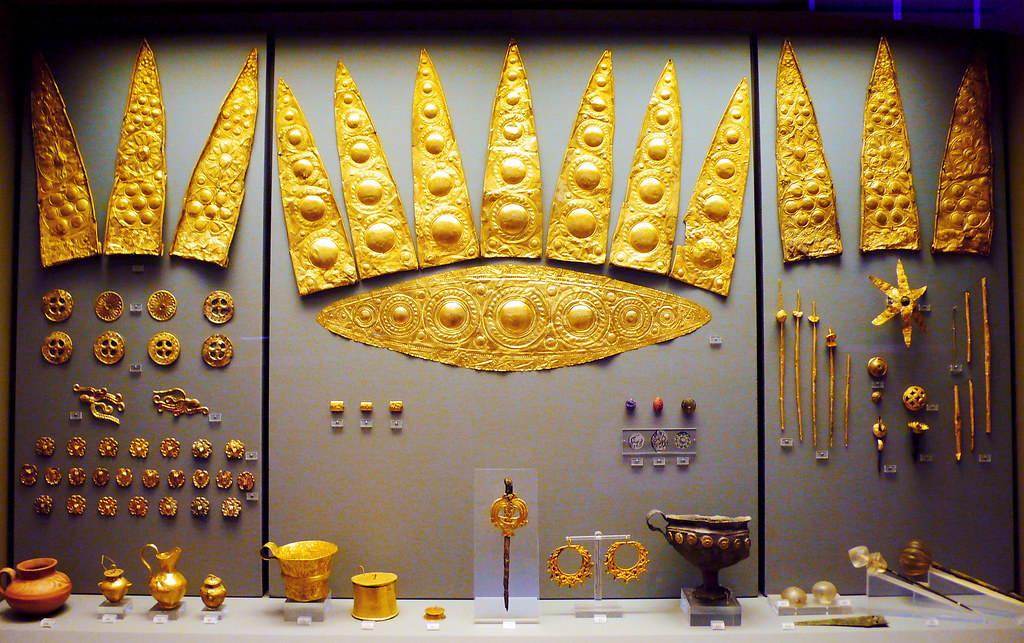
Between about 1200 and 1150 BCE, much of the eastern Mediterranean world unraveled. The Mycenaean palaces in Greece burned. The Hittite Empire in Anatolia fell. Long-distance trade routes shrank or vanished almost overnight. Textbooks often rush from “glorious Bronze Age” straight to “rise of classical Greece” without stressing how violent this collapse really was.
We still don’t have a single agreed explanation, and that uncertainty alone contradicts the neat cause-and-effect stories students usually get. Suspects include climate change, drought, earthquakes, internal rebellions, invading groups known as the “Sea Peoples,” and the sheer fragility of interconnected palace economies. What’s uncomfortable for simple timelines is that an entire literate, urban, sophisticated system collapsed so hard that writing itself disappeared in some regions for centuries – proof that complex civilization doesn’t march forward automatically. It can crash, hard, and stay crashed.
#2 – The Antikythera Mechanism: A Computer That Shouldn’t Exist in Its Century
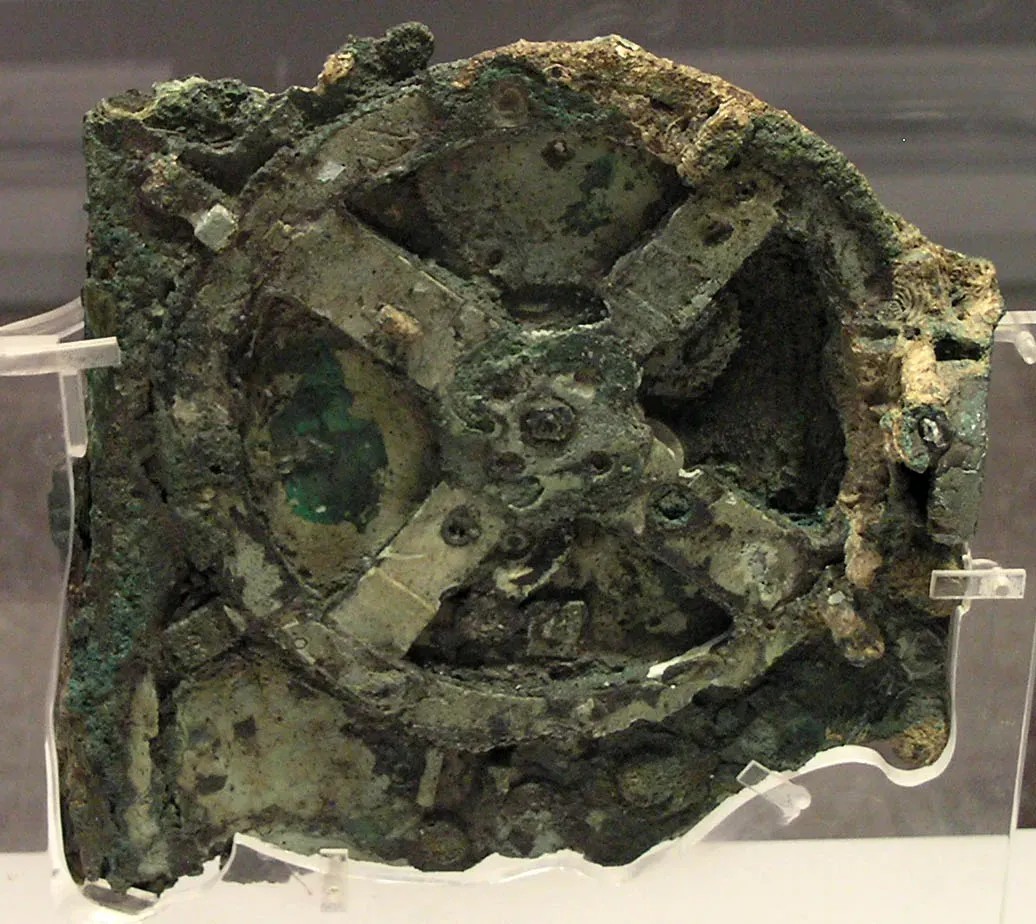
In 1901, sponge divers pulled a corroded lump of bronze from a shipwreck off the Greek island of Antikythera. Decades later, X-rays revealed something no one expected: a complex gear-driven device from around 100–200 BCE that could predict eclipses, track planetary cycles, and model the motions of the Sun and Moon. Today we call it the Antikythera mechanism, often dubbed the world’s first known analog computer.
Textbooks long portrayed ancient technology as fairly basic until the Renaissance, and this device simply doesn’t fit that arc. Its differential gearing and astronomical precision imply a workshop tradition far beyond anything preserved in surviving texts. Some scholars think it’s a one-off marvel; others suspect it’s just the lone survivor of a whole lost class of instruments. Either way, it forces us to admit that Hellenistic engineering was far more advanced – and far more fragile – than the usual “Greek philosophy, Roman roads” summary suggests.
#1 – OOPArts: What Misfit Artifacts Really Reveal About Our Trust in History
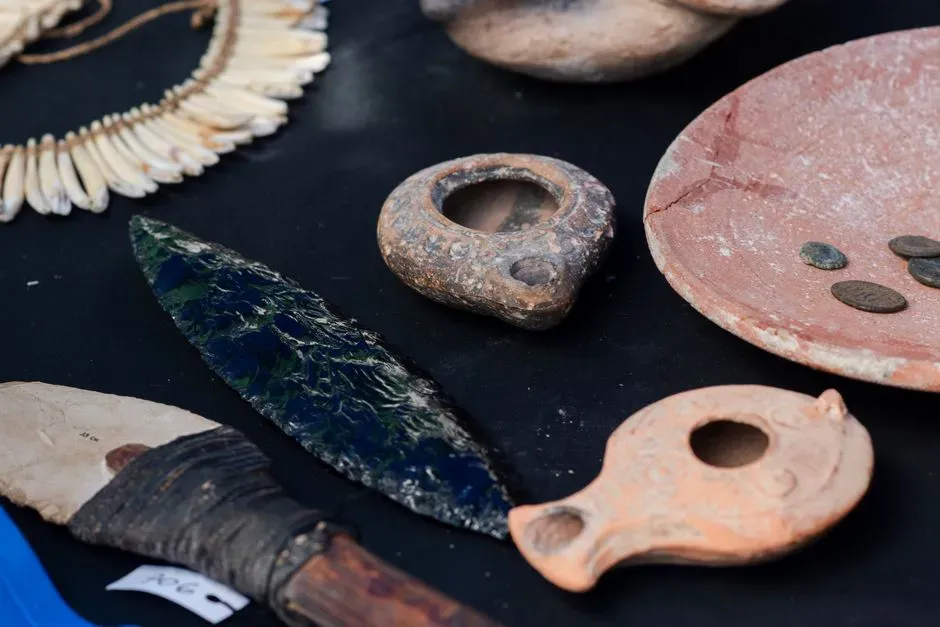
Spend five minutes online and you’ll see viral claims about “out-of-place artifacts,” or OOPArts: the Baghdad battery as proof of ancient electricity, the Piri Reis map supposedly showing Antarctica, random stones touted as evidence of lost super-tech civilizations. Most of these collapse under proper dating, context, and lab analysis. They’re not time travelers’ devices; they’re misinterpreted, misreported, or outright hoaxes.
So why does this category matter on a list about timelines? Because the sheer popularity of OOPArts exposes how fragile public trust in official chronologies has become. People sense that parts of the story are changing – Göbekli Tepe, Denisovans, pre-Clovis sites – and they leap from “the timeline is more complex” to “everything is a lie.” The real contradiction isn’t that a few artifacts prove civilization is 100,000 years older. It’s that our textbooks still pretend the story is simple and settled when professionals know it’s provisional and messy – and that gap is exactly where conspiracies grow.
Worth Knowing
- Baghdad Battery: a ceramic jar often called an ancient battery; most researchers see it as a storage vessel
- Piri Reis Map (1513): a genuine historical map whose “Antarctica” claim relies on a stretched reading of its coastline
- Crystal skulls: once marketed as ancient Mesoamerican relics, later shown to bear modern tool marks
- Coso Artifact: an oddly shaped rock mistaken online for an ancient spark plug
The Bottom Line
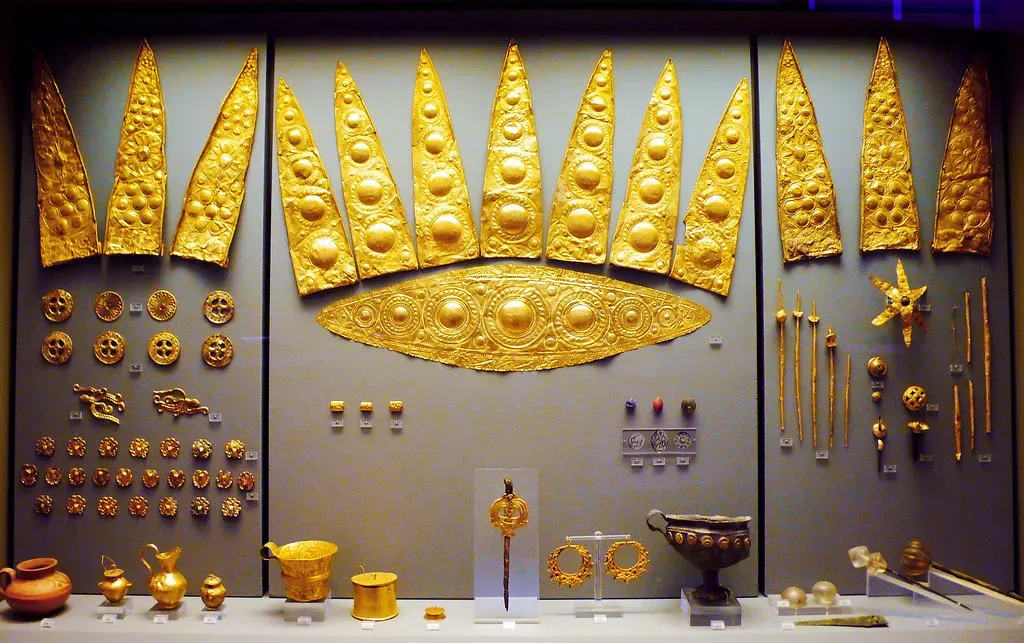
Put all these finds together and the neat, linear timeline we grew up with doesn’t survive contact with the evidence. Hunter-gatherers built megaliths before farming existed. Cities appeared without kings or pyramids. “Primitive” cousins made art and left their DNA in our veins. Entire civilizations collapsed abruptly, and technologies so advanced they look like anachronisms keep washing up from single shipwrecks.
None of this proves secret ancient super-civilizations; that’s wishful thinking dressed up as rebellion. But it does prove that the official story we were handed is too tidy, too Eurocentric, and too afraid of admitting uncertainty out loud. History isn’t a staircase. It’s a tangle of experiments, dead ends, and surprises – and honestly, the mess is a lot more interesting than the chart ever was. Which of these contradictions do you think schools most urgently need to start teaching?