There is something strangely comforting about the idea that life-changing discoveries can happen on an ordinary Tuesday while you are just minding your own business. You go out to walk the dog, clean the attic, scroll your feed, or take a wrong turn in the car, and suddenly you are standing in front of something that changes your day, your career, or, occasionally, the course of history. Serendipity is not just a poetic idea. In science, art, and everyday life, it turns up with suspicious regularity.
What makes these accidental finds so irresistible is the clash between intention and outcome. We are taught to set goals, make plans, and hustle for results, yet some of humanity’s biggest breakthroughs arrived while someone was essentially doing something else. The stories below range from billion‑dollar inventions to quiet personal moments, but they all share one core truth: people stumbled onto them while not really looking.
As you read these 13 finds, you might catch yourself thinking back to your own close calls: the job you got from a random conversation, the partner you met at someone else’s party, the hobby you discovered while procrastinating. That is the hidden power of serendipity; it quietly reminds us that not everything important can be scheduled, optimized, or predicted. And it raises a simple but unsettling question: if you can find so much while not looking, what else might already be sitting in the blind spot of your attention?
#1 Penicillin Discovered in a Dirty Petri Dish
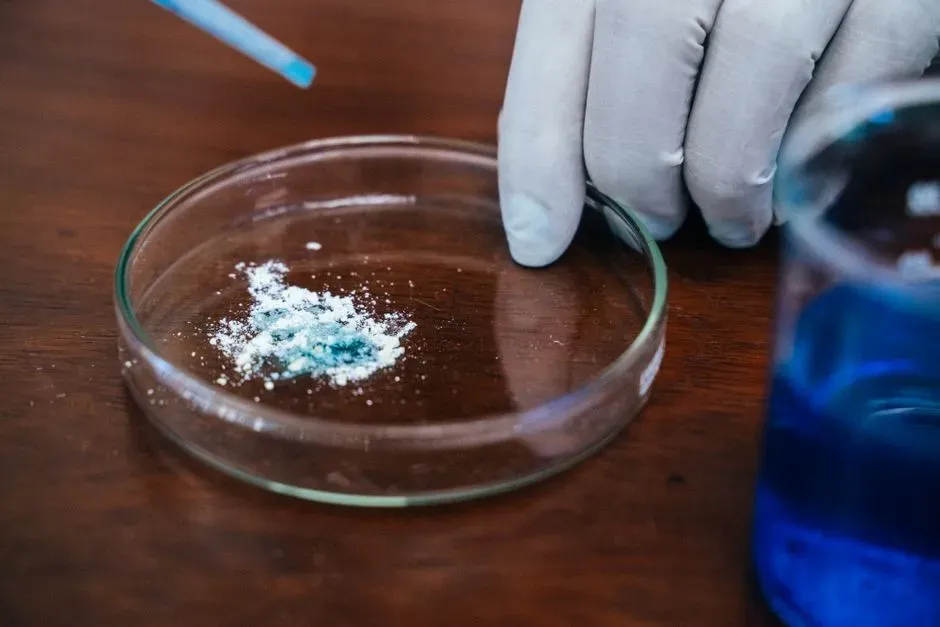
One of the most famous scientific accidents in history started with a messy lab. In 1928, Scottish bacteriologist Alexander Fleming returned from a holiday to find that one of his Petri dishes had been contaminated by mold. He had been studying staphylococcus bacteria, not hunting for a miracle drug, and by most lab standards the plate should have gone straight into the trash.
Instead, Fleming noticed something odd: around the invading mold, the bacteria had been wiped out. The mold, later identified from the Penicillium genus, secreted a substance that prevented bacterial growth. He had not set out to reinvent medicine; he had simply failed to keep his workspace sterile and then paid close attention to the “ruined” experiment sitting in front of him. Many other scientists might have written it off as a spoiled culture and moved on.
Penicillin became the first true antibiotic used on a massive scale, dramatically reducing deaths from infections that had once been routine killers. The discovery itself was not a sudden thunderbolt of genius so much as a quiet moment of curiosity in the middle of everyday lab work. In a sense, Fleming was not searching for anything extraordinary; he just refused to look away from an inconvenient mess that behaved in an unusual way.
#2 The Microwave Oven Born from a Melted Candy Bar

In the early 1940s, engineer Percy Spencer was working on radar technology, specifically magnetrons, which produce high‑powered microwave radiation. His job was military, focused on improving equipment, not on reimagining the future of cooking. One day, standing near an active radar set, he noticed that a chocolate bar in his pocket had started to soften and melt.
Spencer did not immediately know what had happened, but he was intrigued enough to run simple, almost playful experiments. He placed popcorn kernels near the magnetron and watched them pop. He tried an egg, which quickly overheated and exploded. He was not a chef or a home appliance designer; he was just a radar engineer following his curiosity about an odd side effect of his work environment.
The result was the first microwave oven prototype, an enormous and expensive machine compared with the compact devices in kitchens today. Still, this accident laid the groundwork for a global shift in how people heat and prepare food. The key spark was not careful planning but a mundane observation: a pocket full of melted chocolate that refused to be ignored.
- Task at hand: optimizing radar systems.
- Unexpected clue: a melting candy bar near the equipment.
- Lasting impact: a new era of fast, convenient cooking at home.
#3 The Cosmic Background Radiation Found While Fixing “Noise”
In the 1960s, radio engineers Arno Penzias and Robert Wilson were trying to fine‑tune a sensitive antenna in New Jersey. Their goal was simple and very down‑to‑earth: eliminate an annoying persistent hiss in their measurements. They were not hunting for proof of the Big Bang or aiming for a physics revolution; they just wanted cleaner data and quieter equipment.
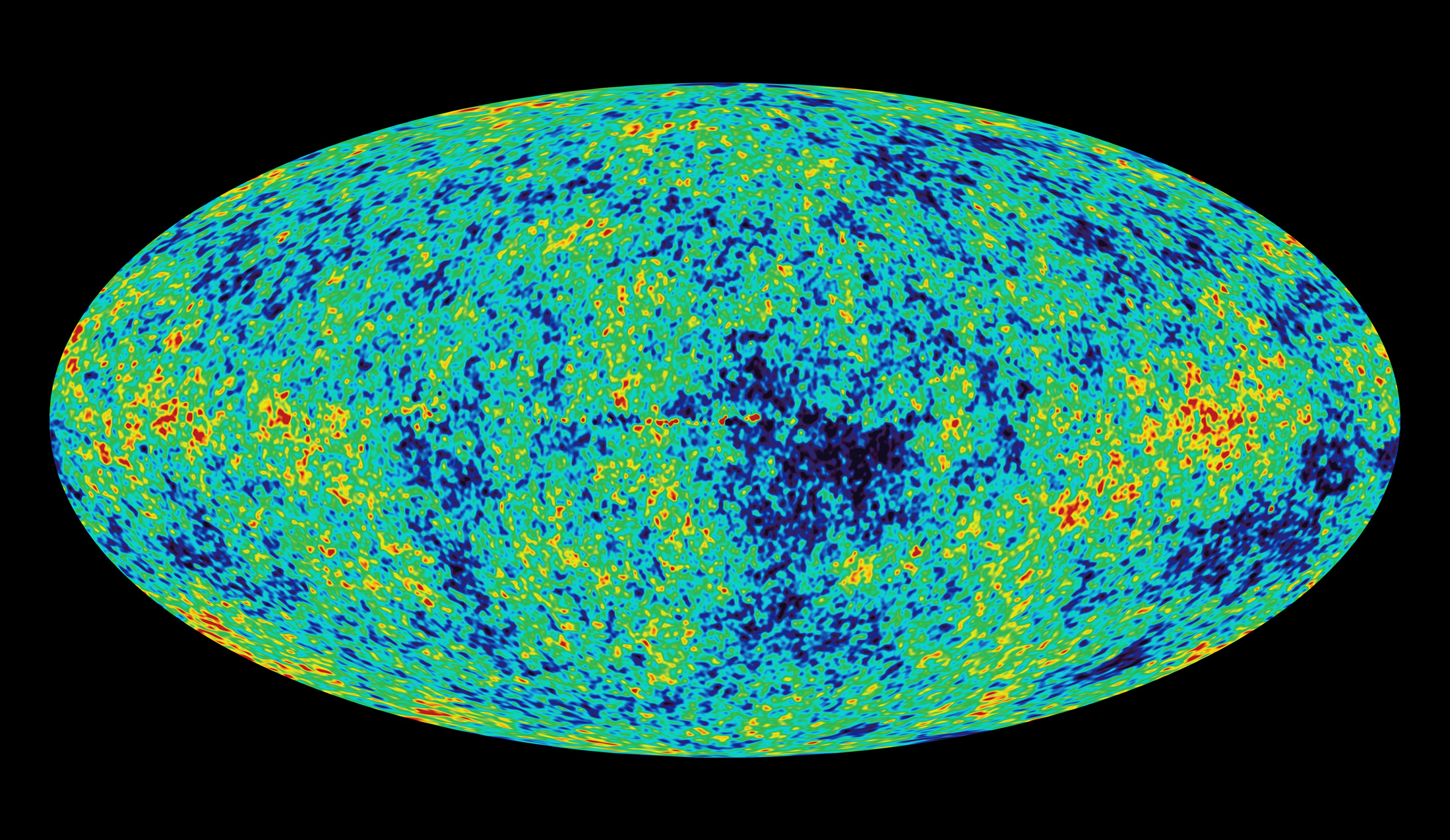
They tried everything. They checked the electronics, recalibrated, and even cleared out pigeon droppings from the antenna, suspecting biological interference. Yet the mysterious background noise stubbornly remained. What they were hearing was not a flaw at all, but the faint afterglow of the early universe, the cosmic microwave background radiation predicted by some cosmological models but not yet clearly observed in this way.
This accidental find became a cornerstone of modern cosmology, offering strong support for the Big Bang theory and reshaping our understanding of the universe’s origins. Penzias and Wilson ended up receiving a Nobel Prize for what had started as a frustrating maintenance problem. The irony is hard to miss: they had stumbled across the whisper of the universe’s birth while trying to wipe out what they thought was technical rubbish.
#4 Safety Glass from a Spilled Chemical

Early glass was notoriously fragile, shattering into dangerous shards that could cause serious injuries. French chemist Édouard Bénédictus did not set out to change this. Around the early twentieth century, he accidentally dropped a glass flask that had previously contained a solution of nitrocellulose. To his surprise, the flask cracked but did not shatter into flying pieces; the thin plastic residue on the inside held the fragments together.
Bénédictus recognized that the dried chemical film behaved like an invisible net. Even though he had not been working on safety materials, the experiment gone wrong became a quiet demonstration of how bonded layers could reinforce fragile glass. Over time, his insight contributed to the development of laminated glass, now commonly used in car windshields and other safety applications.
This is a textbook example of how an accident becomes a discovery only when someone decides it might matter. Many chemists have broken flasks in the lab; very few turned that into a concept that would later protect countless drivers and pedestrians. What changed the outcome was not the spill itself, but the decision to treat it as a starting point rather than a moment of clumsiness.
#5 Post-it Notes from a Failed Super-Glue

In the late 1960s, chemist Spencer Silver at 3M was trying to develop an extremely strong adhesive. What he ended up with was almost the opposite of what the project demanded: a weak, pressure‑sensitive adhesive that stuck lightly to surfaces but could be peeled away without damage. It was, by the standards of the original goal, a failure. Silver was not looking for removable notes; he was trying to improve bonding strength.
For a while, his odd adhesive had no clear home. Then a colleague, Art Fry, grew frustrated when his paper bookmarks fell out of his church hymnal. Remembering Silver’s “failed” glue, Fry realized that a light, repositionable adhesive could anchor his bookmarks without tearing the pages. Suddenly, a discarded side product became the heart of a new kind of office tool.
The now‑ubiquitous Post‑it Note did not emerge from a market survey demanding pastel squares. It came from a mismatch between intention and result, and from someone noticing a use for a substance that seemed almost useless. In a modern world obsessed with efficiency, there is something refreshing about the fact that one of the most familiar productivity tools was born from a chemical misfire and a musician annoyed about losing his place in a book.
- Original mission: create a powerful industrial adhesive.
- Unexpected outcome: a low‑tack, reusable glue with no clear purpose at first.
- Real breakthrough: applying it to bookmarks and office notes many years later.
#6 A New Planet Discovered While Mapping the Sky
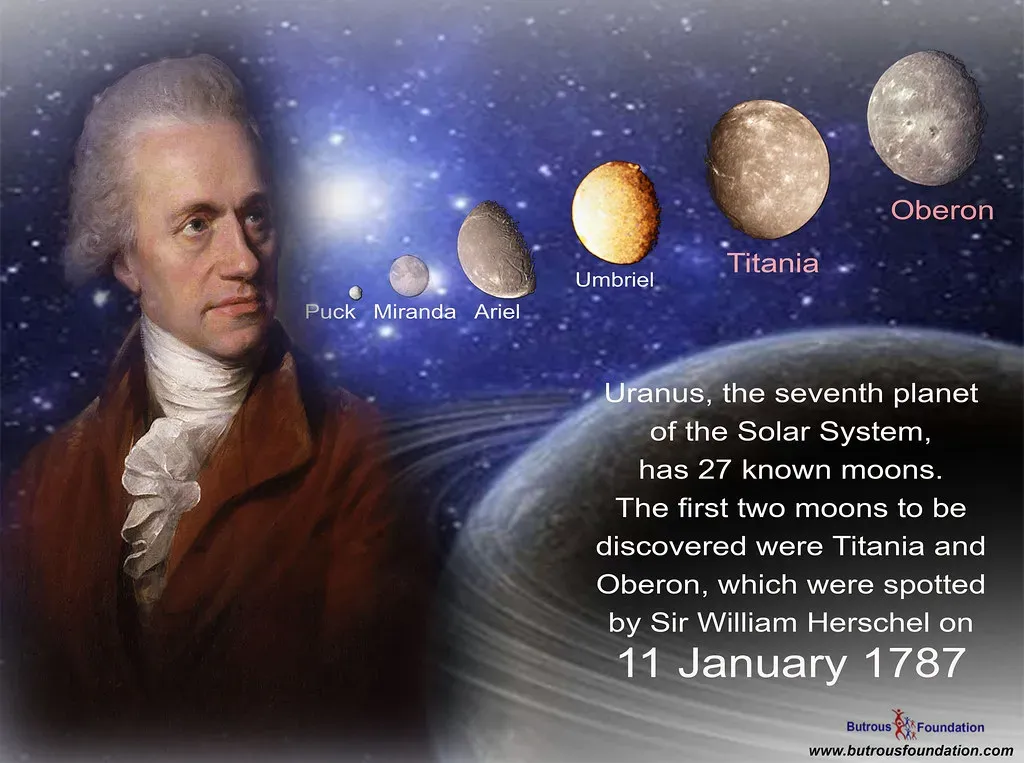
Not all accidental finds are microscopic; some are bigger than our entire planet. In the late eighteenth century, astronomer William Herschel was systematically scanning the night sky, cataloging stars and celestial objects. He was not deliberately hunting for a new planet, especially not one far beyond Saturn; the accepted model of the solar system seemed complete enough to many astronomers of the time.
One evening, Herschel noticed an object that looked suspiciously different from the fixed stars surrounding it. It had a small disc and appeared to move relative to the background over time. At first he thought it might be a comet, but its orbit revealed something more dramatic. The object was eventually recognized as Uranus, the first planet discovered with a telescope.
Herschel’s discovery showed that even in a field defined by careful planning and precise calculations, surprise could still reshuffle the picture. He was not seeking cosmic novelty for its own sake; he was simply paying such close attention that an anomaly could not escape him. The new planet was hiding in plain sight, waiting for an observer whose curiosity extended to what did not quite fit.
#7 X-Rays Seen in a Glowing Screen

In 1895, German physicist Wilhelm Röntgen was experimenting with cathode rays, a hot topic in physics at the time. His lab was filled with vacuum tubes and electrical equipment, and his attention was focused on understanding how these rays behaved. He was not seeking a new form of medical imaging or planning to change how doctors saw inside the human body.
During one experiment, Röntgen noticed a fluorescent screen in his lab glowing even though it was not directly in the path of the visible rays and was shielded by a cardboard barrier. That unexpected glow suggested that some unknown, more penetrating radiation was being produced. He began investigating systematically, placing various objects between the tube and the screen, eventually observing the shadows of bones and metal through flesh.
This unplanned observation opened the door to X‑ray imaging, rapidly adopted in medicine and many areas of research. Again, the crucial moment was not an elaborate experimental plan but an off‑to‑the‑side effect: a screen lighting up where, by the rules of known physics, nothing much should have happened. Röntgen’s decision to explore that strange glow turned a lab curiosity into a foundational tool for diagnosis and science.
- Focus of research: basic properties of cathode rays.
- Surprising clue: a distant screen glowing without direct exposure.
- Transformative result: the birth of X‑ray imaging used worldwide.
#8 Velcro Inspired by Burrs Stuck to a Dog

In the mid‑twentieth century, Swiss engineer George de Mestral went for a walk in nature with his dog, an outing that had nothing to do with industrial design. After the walk, he noticed that burrs from plants had stubbornly attached themselves to his clothes and to the dog’s fur. Annoyed but curious, he examined them under a microscope to see how they clung so effectively.
What he saw were tiny hooks that latched onto loops in fabric and hair. De Mestral realized that this simple natural structure could be turned into a practical fastening system: one surface covered in miniature hooks, the other in soft loops. He was not searching for a new fastener on that walk; he was just dealing with the minor inconvenience of plant debris and chose to treat it as a design lesson from nature.
From that moment of environmental irritation came Velcro, a hook‑and‑loop fastener now used in clothing, shoes, aerospace equipment, and countless everyday products. It is a powerful reminder that nature has already solved many engineering problems and that the path to innovation can start with a muddy dog and a handful of stubborn burrs.
#9 A Hidden Cave of Paleolithic Art Found by Kids and a Dog

In 1940, in the Dordogne region of France, a group of teenagers and their dog were exploring the woods. They were not archaeologists on a formal dig, just curious kids poking around a hole reportedly created by a fallen tree. Their dog disappeared into the opening, and in the process of trying to find it, they discovered a passage leading into a large underground cavern.
Inside, they encountered something extraordinary: vivid prehistoric paintings of animals on the cave walls and ceiling. This site, now known as Lascaux Cave, turned out to be one of the most spectacular examples of Paleolithic art ever found, offering a window into human creativity from tens of thousands of years ago. The boys had set out to have an adventure in the forest, not to rewrite the history of art.
The discovery fueled new debates about the sophistication, symbolism, and purpose of early human artwork. It also highlighted the role of pure, unscripted exploration in finding things that formal institutions have somehow missed. In a very literal sense, the ancient masterpieces were waiting in the dark until a group of kids and a loyal dog decided to crawl just a little farther than most adults would bother to go.
- Actors: local teenagers and their dog on a casual walk.
- Setting: a forest depression hiding a cave entrance.
- Find: one of the richest Paleolithic art sites ever documented.
#10 The First Pacemaker from a Miswired Circuit

Medical technology has its own share of lucky breaks, and the pacemaker story is a striking example. In the 1950s, engineer Wilson Greatbatch was developing a device to record heart sounds. During assembly, he inadvertently picked up the wrong resistor, changing the behavior of the circuit in a way he had not intended. Instead of behaving like a standard recording device, the circuit produced a rhythmic electrical pulse.
Greatbatch noticed that the pulse pattern resembled a human heartbeat. Instead of tossing the faulty component aside, he recognized that a circuit capable of delivering carefully timed pulses might be able to support a failing heart. At that moment, his miswired prototype stopped being a failed recorder and became the seed of an implantable pacemaker.
Refining the technology took years of work, testing, and collaboration with physicians, but the unplanned resistor swap was the initial spark. It came from ordinary human error, the kind of mistake that happens in labs and workshops all the time. What made this case different was Greatbatch’s willingness to treat the mistake as information, not just an obstacle to be quietly corrected. Countless lives have been extended thanks to a device born from that brief, accidental departure from the blueprint.
#11 Plastic Invented While Trying to Imitate Ivory

In the nineteenth century, billiard balls were commonly made of ivory, and the growing demand was putting pressure on elephant populations. An American inventor, John Wesley Hyatt, entered a contest to find an alternative material for billiard balls. He was not out to launch a whole new category of synthetic materials for global industry; he just wanted to win a prize and solve a specific manufacturing problem.
Experimenting with cellulose and camphor, Hyatt produced celluloid, one of the earliest widely used plastics. At first, it found use in everyday items such as combs, buttons, and film stock. The project started with the desire to mimic a natural material, but it ended up laying the groundwork for an entirely new era of synthetic products, for better and for worse.
Today, we recognize both the revolutionary convenience of plastics and their severe environmental consequences. Hyatt did not predict oceans filled with discarded material or the complex debates around microplastics. His real “find” was not just a new billiard ball material but a flexible, moldable substance that industry could adapt to countless purposes. The contest he entered may have faded into obscurity, but the consequences of his side‑effect invention still shape the physical world around us.
- Original brief: replace ivory in billiard balls.
- Immediate result: creation of celluloid, an early plastic.
- Long‑term impact: the rise of a plastic‑based consumer world.
#12 Infrared Astronomy Sparked by a Coincidental Measurement

Sometimes accidental finds come not from dramatic spills or wrong components, but from someone using an instrument in a slightly unusual way. In the early nineteenth century, astronomer William Herschel (the same who discovered Uranus) was measuring the temperature of different colors of sunlight using a prism. He wanted to understand how heat varied across the visible spectrum, not to uncover a new form of radiation.
He placed thermometers in the colored bands produced by the prism and, almost as a control, placed one just beyond the red end where no visible light appeared. To his surprise, the thermometer in the “dark” region registered a higher temperature. That meant there was some form of invisible radiation carrying heat beyond red light, now known as infrared.
This observation opened an entirely new window on the universe. Infrared astronomy today reveals cool stars, dusty regions where new stars are forming, and objects hidden behind cosmic clouds that block visible light. Herschel’s critical thermometer was, in a sense, looking where no one expected anything to be found at all. His curiosity about an empty patch of spectrum turned a simple classroom‑style experiment into a foundational moment for modern astrophysics.
#13 A New Passion or Career Found While Procrastinating
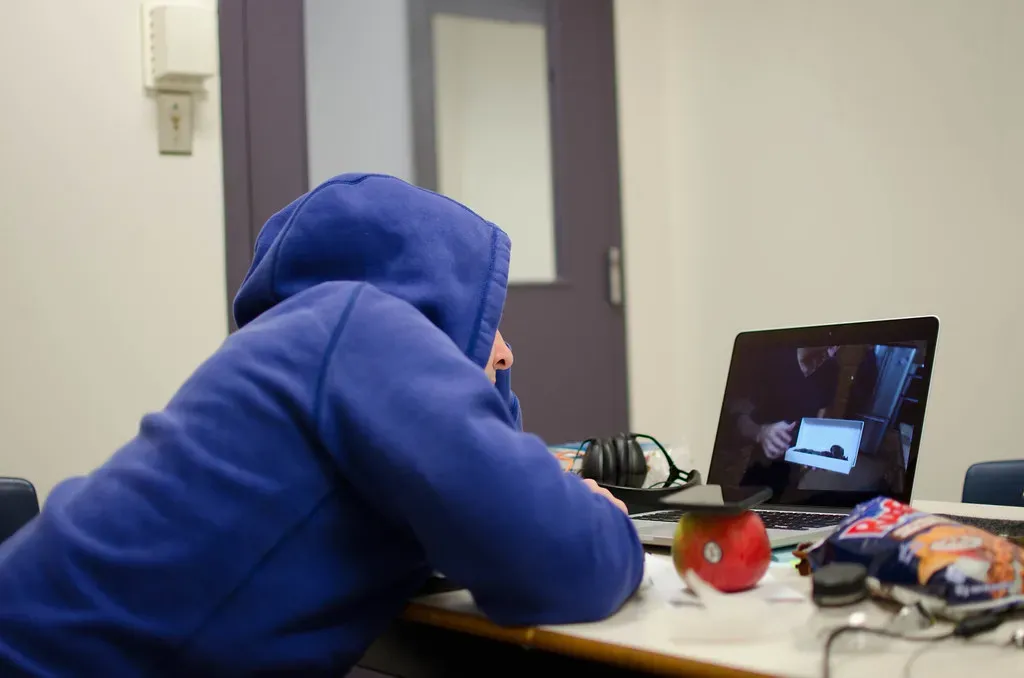
Not every meaningful accidental find makes it into history books. Many of the most important ones are personal: the hobby you discover while avoiding a task, the side project that quietly turns into a new career, the book you pick up because everything else on the shelf is checked out. In everyday life, people often stumble into the activities that define them while genuinely profound at all.
Talk to someone who loves what they do, and you will often hear a story that starts with a detour. Maybe they clicked on a tutorial video while trying to kill time and found themselves unexpectedly absorbed in woodworking, coding, baking, or animation. Or perhaps a casual favor for a friend – designing a flyer, fixing a computer, organizing an event – revealed a talent they had not taken seriously before. The initial action was small and routine, but the emotional impact was huge.
Personally, I have seen this play out among friends who “accidentally” became photographers, therapists, or small business owners. One started taking photos for online auctions and realized the camera felt more natural than any office job ever had. Another volunteered at a community helpline and found that listening to strangers talk about their problems felt more meaningful than their corporate role. None of them woke up that day planning to rewire their lives; they just followed a thread of curiosity when it appeared.
- Everyday serendipity often begins as procrastination or a favor.
- Small, low‑pressure experiments can reveal hidden strengths.
- The most important “finds” may be new versions of yourself.
Conclusion: Learning to Notice What You Were Not Looking For

Looking back at these 13 finds, a pattern emerges that has less to do with luck and more to do with how people respond to surprises. None of these individuals sent out a calendar invite titled “Change the World Today.” They were cleaning up messes, troubleshooting equipment, walking the dog, or trying to fix ordinary problems. The difference was that when something behaved strangely – a dish stayed free of bacteria, a candy bar melted, a screen glowed, a circuit pulsed – they did not rush past it. They lingered, asked questions, and let curiosity override annoyance.
In that sense, serendipity is not just about random chance; it is about a certain stubborn openness. You do not have to romanticize every glitch in your day, but you can treat anomalies as invitations rather than irritations. When a plan misfires, a tool behaves oddly, or a side hobby starts to feel suspiciously like the best part of your week, it might be worth pausing before you hit reset. Some of the most powerful innovations and most fulfilling life shifts begin exactly in those uncomfortable moments where things do not go according to plan.
If there is one opinion I feel strongly about, it is this: we underestimate how much of our progress, both personal and collective, comes from things we never meant to do. We build elaborate roadmaps and then quietly take the most important steps on unmarked side paths. You cannot force serendipity, but you can choose whether to notice it when it knocks. The next time something unexpected gets in your way, will you treat it as a nuisance to eliminate or a clue that something new is trying to get your attention?