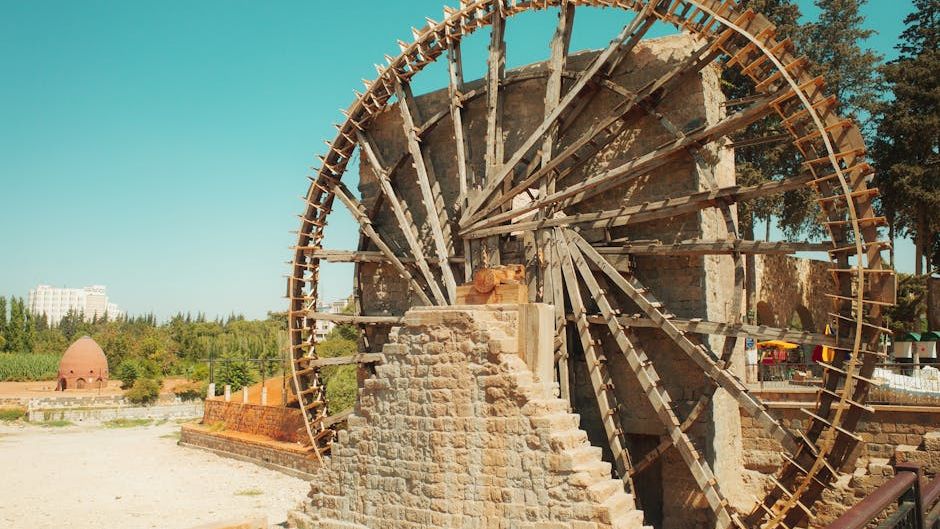
If you think modern skyscrapers and suspension bridges are impressive, wait until you realize what people pulled off thousands of years ago with nothing more than muscle, simple tools, and a stubborn refusal to accept “impossible” as an answer. Some of these ancient structures are so precisely built that engineers with laser scanners and computer models are still scratching their heads, trying to reverse‑engineer the minds behind the stone.
What makes these sites so gripping is not just their age or beauty, but the quiet message they send across time: people who lived without steel, concrete pumps, or CAD software were still obsessing over load paths, tolerances, and long‑term durability. As someone who loves engineering, I find these places humbling. They’re like handwritten letters from history, each one saying, in its own way, “We knew what we were doing.”
1. The Great Pyramid of Giza: Precision in a Sea of Sand

The Great Pyramid of Giza is one of those structures that gets more unbelievable the more you learn about it. Built over four thousand years ago and originally standing about one hundred forty‑six meters tall, it was aligned to the cardinal directions with an accuracy that still impresses surveyors today. The base is almost perfectly level, with variations often described as being on the scale of a few centimeters over more than two hundred thirty meters, which is the kind of thing that makes modern civil engineers pause.
What blows my mind most is that all this was done with copper tools, sledges, ramps, and immense human coordination rather than modern machinery. The internal passages and chambers show deliberate planning, staged construction, and an almost obsessive focus on getting the geometry right. Some of the granite blocks in the King’s Chamber weigh tens of tons and were hauled from quarries hundreds of kilometers away. When engineers talk about constructability, project management, and tolerance stacking, the Great Pyramid is like a case study written in limestone.
2. Stonehenge: Megaliths, Mystery, and Material Transport
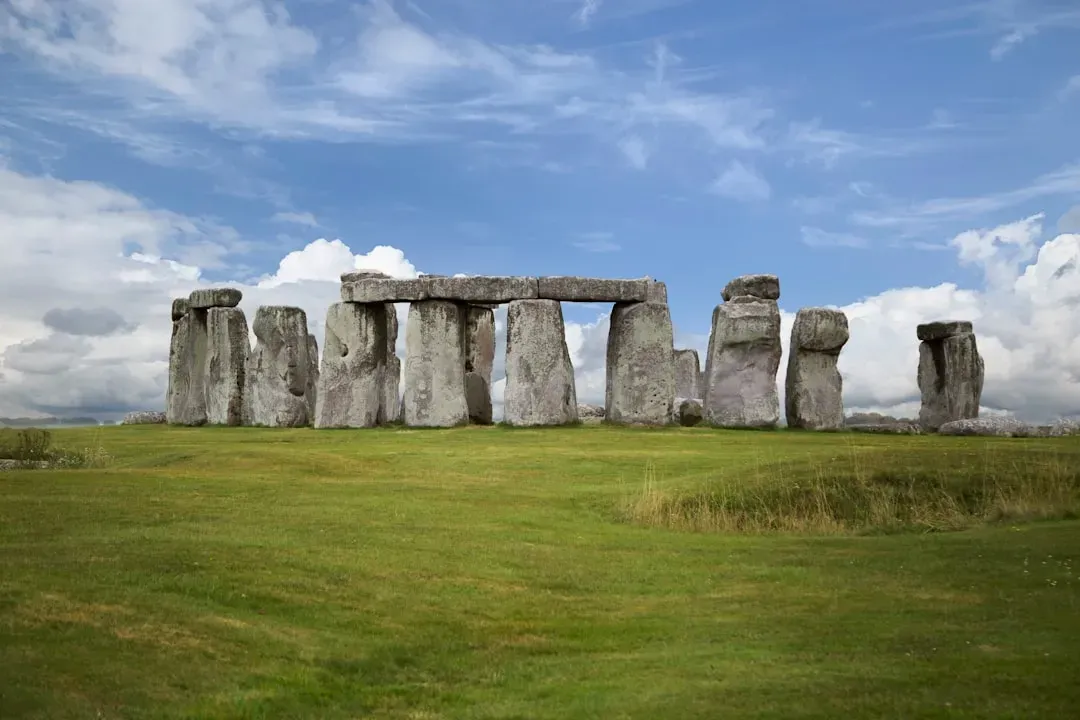
Stonehenge in England looks deceptively simple at first glance: a ring of big stones in a field. Engineers who really study it see something more subtle, a project that combined structural logic with shockingly difficult logistics. The largest sarsen stones weigh on the order of many tens of tons, and the smaller “bluestones” seem to have been transported from what is now Wales over a distance of more than two hundred kilometers, likely on a mix of sledges, rollers, and waterways.
The way those uprights and lintels connect tells another story. The builders used mortise‑and‑tenon joints and tongue‑and‑groove details that are recognizable to any modern carpenter, only scaled up to multi‑ton rock. This suggests they were not randomly stacking stones for drama, but actively thinking about stability, load paths, and how to keep lintels from sliding off in bad weather. No one today can say with certainty why Stonehenge was built, but the how is already enough for engineers to respect the ingenuity and persistence behind it.
3. The Parthenon: Subtle Curves and Optical Engineering
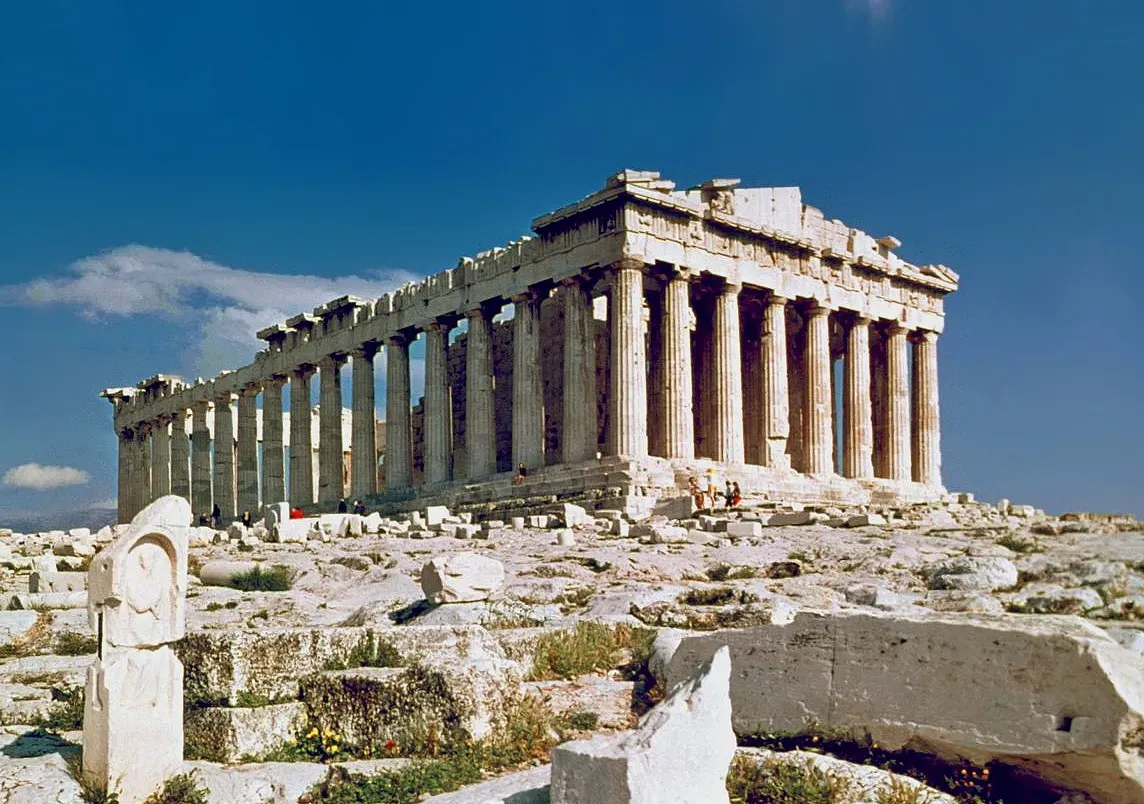
The Parthenon in Athens is often treated as a symbol of classical beauty, but engineers and architects tend to fixate on the details hiding in plain sight. On paper it looks like a crisp, rectilinear temple; in reality, almost nothing is perfectly straight. The stylobate, that top step of the platform, is slightly curved, and the columns subtly lean inward with varying diameters along their height. These refinements appear to correct visual distortions, so the building looks “right” to the human eye.
In technical terms, that means the ancient designers were thinking about perception, not just structure. They understood that if you build a perfect grid at monumental scale, the eye reads it as sagging or distorted, so they pre‑compensated with tiny deviations that would be barely noticeable up close. On top of that, the masonry joints, dowels, and clamps reflect a precise, modular construction logic. Every block had to fit like it belonged there from the start, which is still a core principle in modern structural design and prefabrication.
4. The Roman Colosseum: Load Paths and Crowd Control
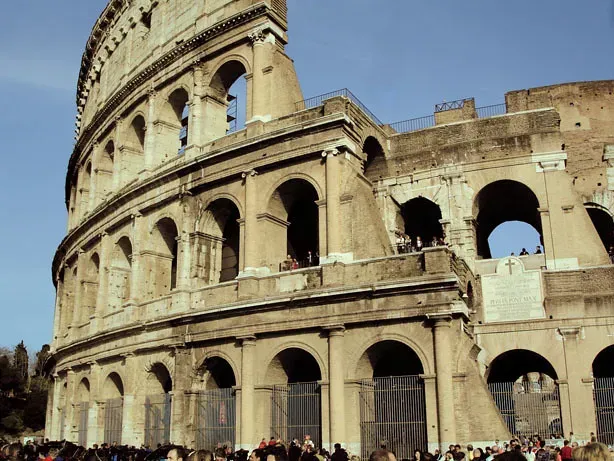
The Colosseum in Rome is basically a masterclass in large‑scale public infrastructure from nearly two thousand years ago. Structurally, it combines arches, vaults, and radial corridors in a way that distributes loads efficiently while creating huge open interior volumes. The use of different materials, including early forms of concrete, brick, and stone, was deliberate: heavier stone where compressive forces were greatest, lighter materials to ease loads elsewhere.
Engineers also love it as an early example of organized crowd flow. Tens of thousands of spectators could enter and exit via a network of staircases, corridors, and numbered entrances that essentially acted like a three‑dimensional traffic system. The design kept people moving and reduced bottlenecks, which is exactly what modern stadium designers still worry about when they model evacuations and peak crowds. The fact that parts of the Colosseum are still standing, despite earthquakes and centuries of repurposing, says a lot about how robust that original design really was.
5. Roman Aqueducts: Gravity Systems That Refuse to Die
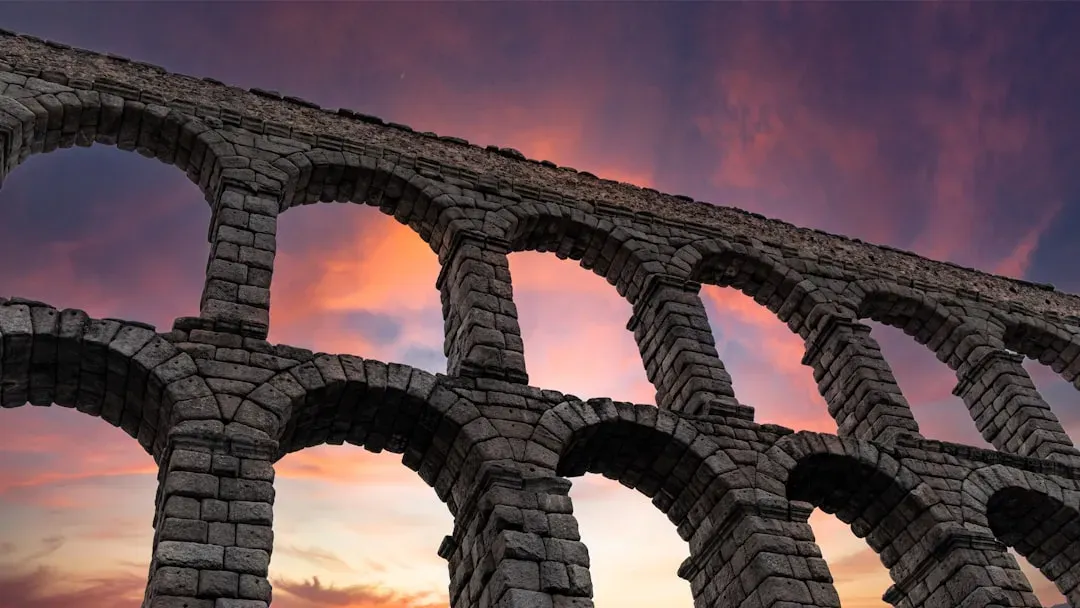
Roman aqueducts might not look as flashy as a pyramid or a temple, but they are engineering in its purest, most practical form. Built to carry water over long distances, often tens of kilometers from mountainous sources to urban centers, these systems relied entirely on gravity. The trick was keeping the slope incredibly gentle and consistent so that water would keep moving without eroding the channel or stagnating along the way.
When you walk along the remains of aqueducts in places like France, Spain, or Italy, you are seeing the result of painstaking surveying and alignment, done without the benefit of modern instruments. The stone arches many people recognize are just the visible portions; much of the channel ran underground, protected from contamination and climate. Some sections of aqueducts, when repaired, have been brought back into service even in relatively recent times, which is a harsh reminder to modern engineers that durability is not a new idea at all.
6. The Great Wall of China: A Megaproject Across Mountains
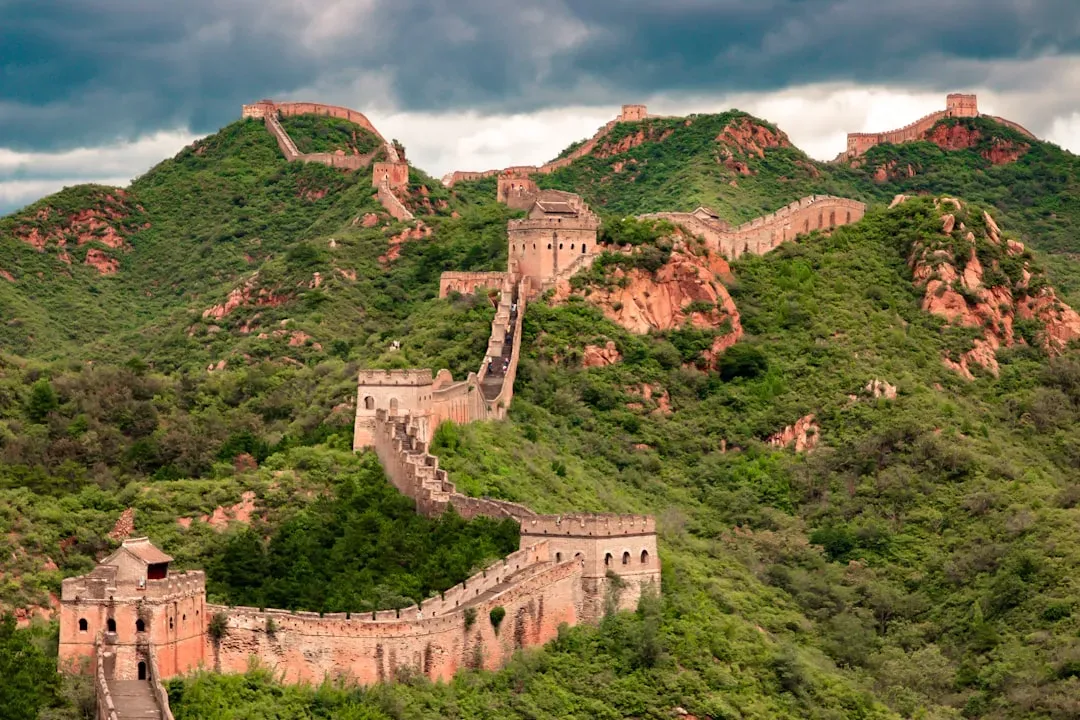
The Great Wall of China is less a single structure and more a family of fortifications spanning thousands of kilometers, evolving over centuries. From an engineering standpoint, the scale alone is staggering: walls, watchtowers, and fortresses running along mountain ridges, through deserts, and across grasslands, all adapted to local terrain and materials. In some places bricks and stone were used; in others, compacted earth and locally available rock formed the core.
What captivates engineers is how this system negotiated landscape and logistics. Building anything along steep ridges at high elevations is challenging even with helicopters and modern vehicles, but much of the wall was built before such conveniences existed. Workers had to move materials manually or with animals, improvise access routes, and stabilize foundations in remote and hostile environments. The Great Wall is not uniform in quality or design, but that is part of its engineering story: it reflects generations of trial, adaptation, and sheer human persistence stretched out over incredible distances.
7. Machu Picchu: Mountain‑Top Mastery and Seismic Smarts
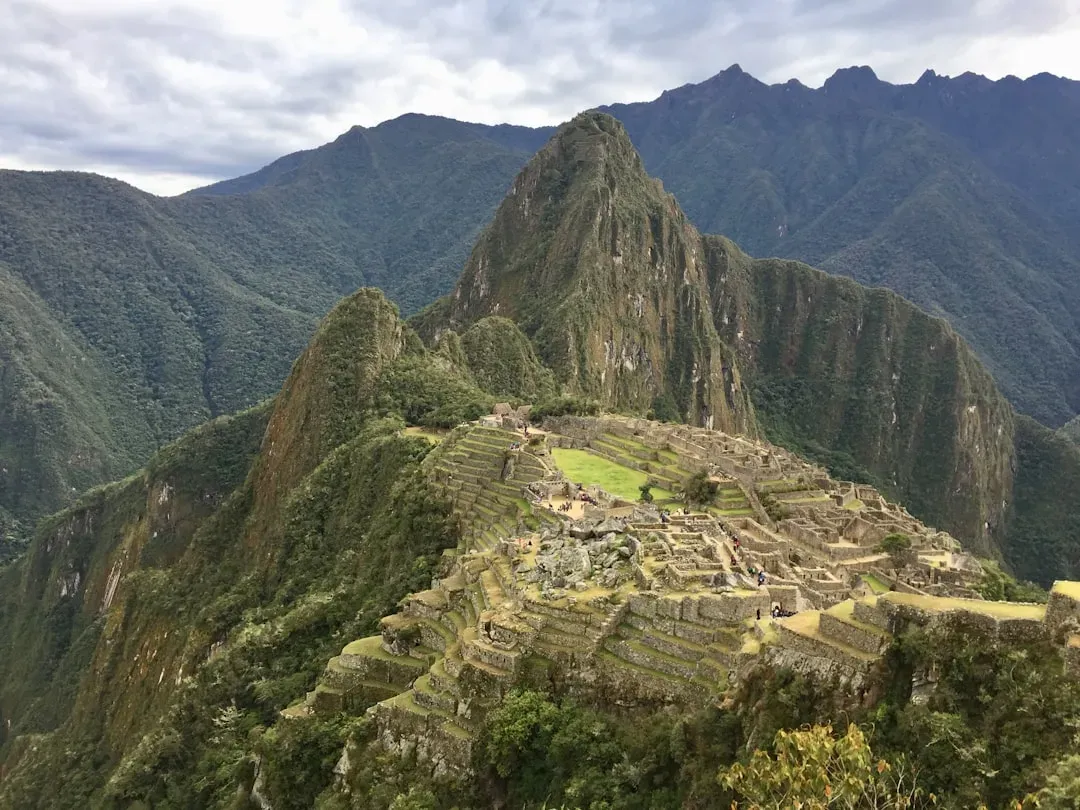
Machu Picchu in Peru looks like a fantasy painting come to life, clinging to a ridge high in the Andes. For engineers, the striking thing is how well the builders worked with such a difficult site. The Inca used terraces not just for agriculture but also as a kind of geotechnical solution, stabilizing slopes and managing water. Those stepped platforms help control runoff, reduce erosion, and distribute loads in a way that makes the whole complex more stable.
Then there is the masonry. Many of the walls use tightly fitted stone blocks arranged without mortar, a technique often described as allowing tiny movements and energy dissipation during earthquakes. In a seismically active region, that is more than an aesthetic choice; it is a deliberate structural strategy. When you stand there and look down at the deep valleys, you realize just how audacious it was to construct anything in that location, let alone a relatively durable, coherent city that still captures the admiration of engineers today.
8. Petra’s Rock‑Cut Architecture: Carving Structures from Living Stone
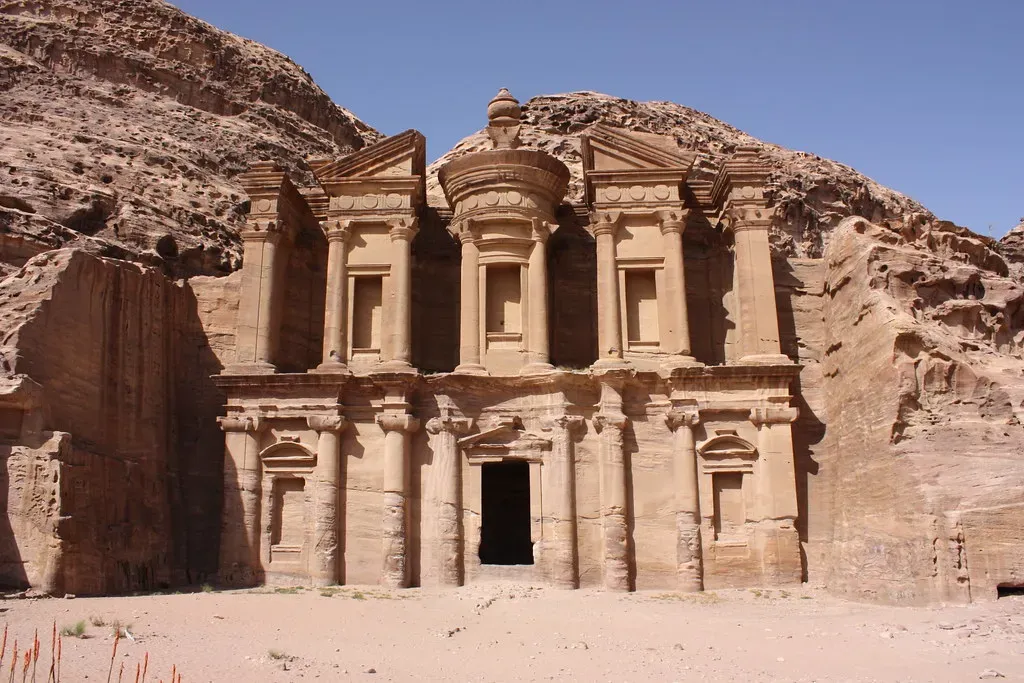
Petra, in modern‑day Jordan, flips the usual building process on its head. Instead of assembling stones into walls, the Nabataean builders carved entire facades, rooms, and complex spaces directly into sandstone cliffs. The famous monumental front known as Al‑Khazneh is not a collection of blocks at all; it is what remains after an enormous amount of stone was carefully removed, following a highly controlled plan.
From an engineering perspective, carving into rock is as much about what you leave as what you remove. The builders had to understand the bedding planes, weaknesses, and weathering patterns of the sandstone so that columns, roofs, and decorative features would not simply crumble away. On top of that, the city’s water management system, which used channels, cisterns, and covered conduits, shows a refined sense of hydraulic design in an arid environment. Petra is a reminder that “building” can mean reshaping the earth itself with almost surgical precision.
9. The Pantheon: A Concrete Dome That Refused to Be Outdone
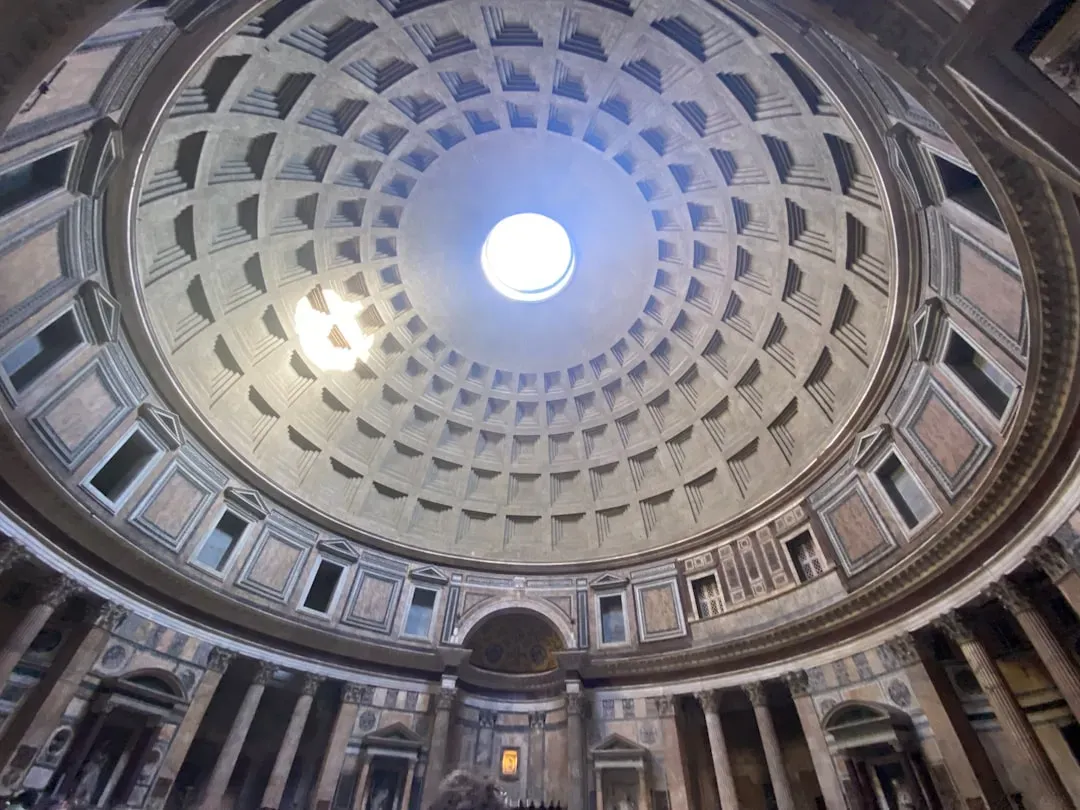
The Pantheon in Rome is one of those structures that engineers and architects never quite get over. Its massive unreinforced concrete dome, with a central opening at the top, was the largest of its kind for an astonishing stretch of history and is still impressive by any standard. The thickness of the dome tapers as it rises, and the builders used progressively lighter aggregates toward the crown to reduce weight while keeping enough mass for stability.
The coffered ceiling patterns are not just decorative; they reduce the amount of material without significantly compromising strength, almost like a very early form of weight optimization. The way the loads are carried down through the drum and into the foundations shows a sophisticated grasp of how to restrain a horizontal thrust and prevent spreading. Modern structural engineers often study the Pantheon as an example of how to exploit material behavior, form, and proportion to solve a very hard problem without the safety net of steel reinforcement.
10. Angkor Wat: Temple as Urban‑Scale Engineering System

Angkor Wat in Cambodia is often introduced as a religious monument, but its engineering is equally striking. The temple complex is integrated with an extensive system of moats, reservoirs, and canals that seem to have been part of a larger hydraulic network serving the broader city. In effect, it was not just a symbolic center but also a node in a massive water management strategy designed to cope with seasonal rains and dry periods.
The precision of its layout, with long axial views and carefully aligned galleries, reflects careful surveying and large‑scale planning. Stone blocks were quarried, transported, and fitted with tight tolerances over a broad site, creating corridors, towers, and platforms that line up in ways that still surprise visitors. When engineers talk about systems thinking, Angkor Wat is a powerful historical example: architecture, infrastructure, and environment treated not as separate issues, but as pieces of one interconnected design.
11. The Moai of Easter Island: Transporting Giants Without Wheels

The moai statues of Easter Island are not buildings in the usual sense, but they are monumental works that demanded serious engineering judgment. Carved from volcanic rock in quarries and then moved over significant distances to their final platforms, these towering figures weigh many tons. The exact transport methods are still debated, but any plausible scenario involves a deep understanding of balance, friction, and coordinated human effort, whether via sledges, rollers, or rocking and walking techniques.
The platforms, called ahu, also deserve attention. They had to support the considerable weight of the moai while dealing with coastal conditions, including waves, wind, and soil movement. Some reconstructions show careful stonework and layering that distribute loads and resist settlement. Modern engineers may use software to simulate these things, but the people of Rapa Nui did it with empirical knowledge, iteration, and an ability to read their environment. That blend of art, ritual, and structural logic is part of why the moai still capture professional curiosity.
12. The Nazca Lines: Giant Geoglyphs and Surveying on a Grand Scale
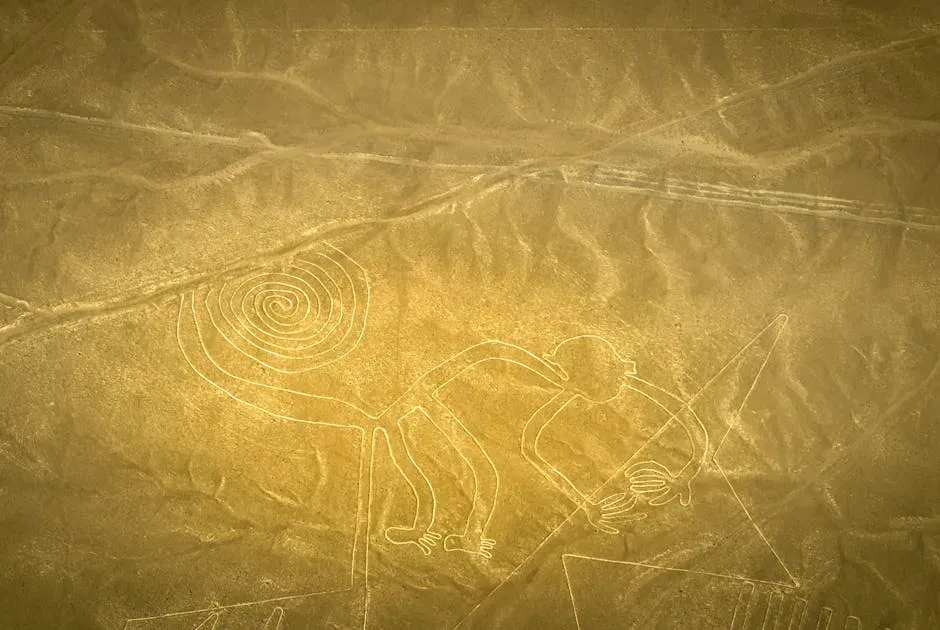
The Nazca Lines in Peru are often discussed in terms of mystery and speculation, but even without any sensational explanations they are stunning examples of large‑scale surveying. Created by removing darker stones to reveal lighter soil beneath, these vast figures and lines stretch across the desert floor and are best appreciated from above. To keep straight lines running for kilometers and shapes proportionally accurate at that size, the builders needed robust methods of alignment and layout.
Engineers and archaeologists have suggested that relatively simple tools, such as stakes, ropes, and sighting devices, could have created these precise patterns. What matters is not whether the tools were simple, but how cleverly they were used to manage scale. When modern engineers set out to lay a road or pipeline across a flat landscape, they still grapple with the same basic issues of reference points, scale, and accuracy. The Nazca Lines prove that you do not need satellites or drones to think in very large formats; you just need a well‑organized method and the patience to see it through.
13. Göbekli Tepe: Complex Stonework at the Dawn of Monumental Building
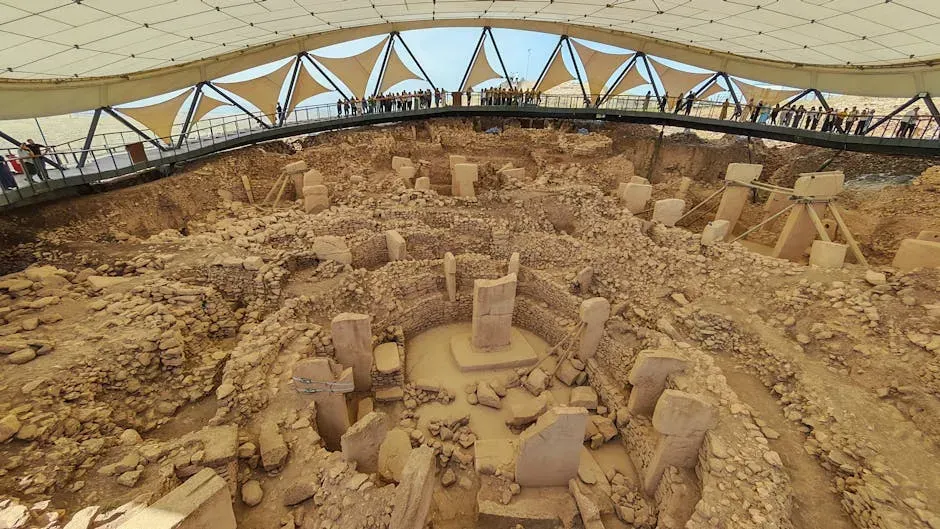
Göbekli Tepe, in what is now southeastern Turkey, has shifted a lot of assumptions about when humans started building at serious scale. Dating back to a time long before metal tools or settled cities were common, it consists of carved stone pillars arranged in circular enclosures, some bearing intricate reliefs of animals. The stones themselves, several meters tall and weighing many tons, were quarried, shaped, and erected with what appears to be deliberate planning rather than random stacking.
For engineers, the site is particularly intriguing because it suggests that even very early societies could mobilize labor, manage heavy materials, and think in terms of space and form beyond immediate shelter. The foundations, postholes, and arrangements imply an understanding of stability and sequence of construction, even if the builders did not think in modern structural formulas. Göbekli Tepe feels like a preview of later monumental traditions, a reminder that the impulse to build ambitiously is baked deep into human history, not just a side effect of modern technology.
Conclusion: What Ancient Engineering Still Gets Right
Looking across these thirteen ancient structures, a pattern emerges that is hard to ignore: great engineering is less about having the latest tools and more about understanding materials, context, and human behavior. These builders learned from their landscapes, from trial and error, and from long‑term thinking in a way that many modern projects could stand to imitate. We might have more powerful machines and advanced software, but we still struggle with durability, sustainability, and respect for place, all areas where these old masters quietly excelled.
My own opinion is that we sometimes underestimate the past because it makes us feel better about the present. Yet the Great Pyramid’s alignment, the Pantheon’s dome, Machu Picchu’s terraces, and Angkor’s water networks suggest that humility would be the more honest response. Instead of seeing these structures as quaint relics, engineers today can treat them as demanding peers, still asking hard questions about how we build and why. When you think about your favorite modern building or bridge, how many centuries do you really expect it to last, and would you bet on it being admired the way these structures are today?