Every now and then, nature throws us a curveball so strange it feels like a prank. A tropical fish turns up in the icy North Sea. A spider from one continent quietly colonizes another. A shark famous for patrolling Arctic waters suddenly shows up where people are sunbathing. These stories sound like tall tales, but they are very real – and they are becoming less rare.
Sometimes it is innocent hitchhiking on ships and planes. Sometimes it is deliberate human releases gone wrong. And sometimes, most unsettling of all, creatures are simply following the shifting temperature lines of a changing climate. The result is a planet where the old wildlife maps are starting to look out of date.
Below are thirteen of the most surprising examples of animals found thousands of miles from “home.” Some are funny, some are sad, and a few are genuinely worrying. Together, they tell a bigger story about how connected, stressed, and unpredictable our world has become.
#1 Lionfish Invasion: Tropical Predators on the Wrong Side of the World
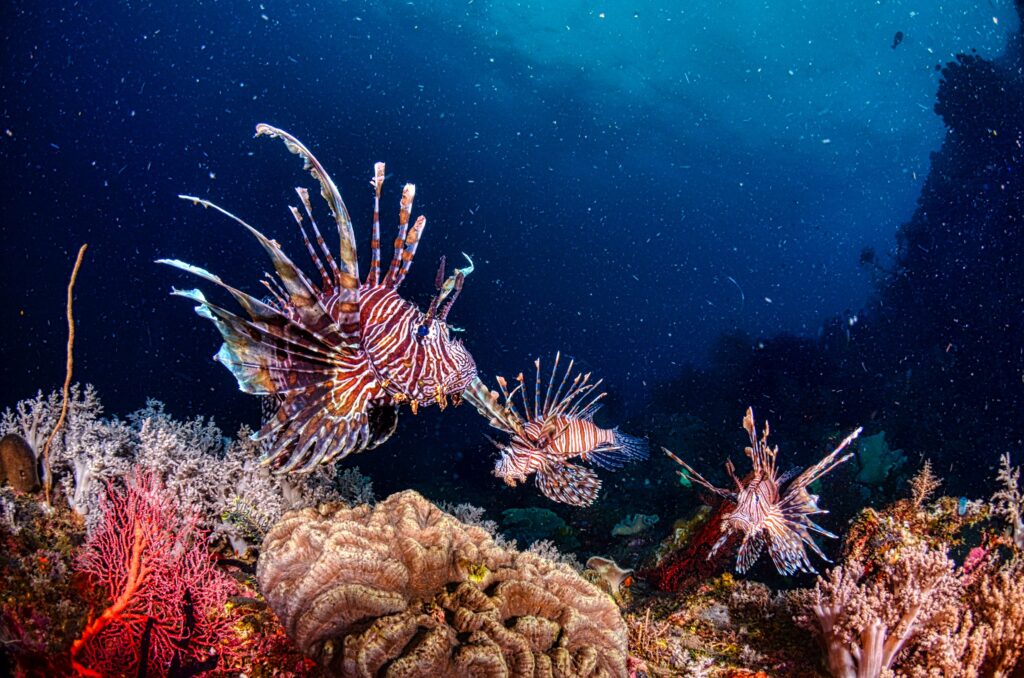
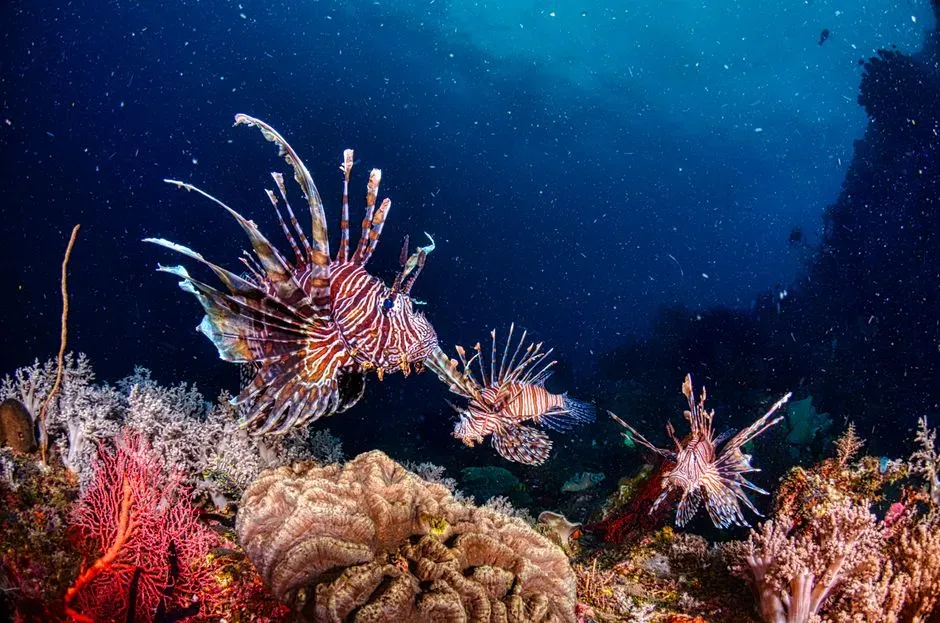
Lionfish look like floating fireworks – elegant fins, bold stripes, and venomous spines that scream do not touch. They evolved in the warm waters of the Indo-Pacific, from the Red Sea to Japan, where local predators and parasites keep them in check. Yet in just a few decades, lionfish have exploded across the western Atlantic, Caribbean, and even into the Gulf of Mexico, thousands of miles from their native range.
Most scientists think the Atlantic invasion started with aquarium releases in the late twentieth century. Once free, lionfish found themselves in a buffet with almost no natural enemies. Females can release tens of thousands of eggs every few days in warm waters, and currents spread their larvae along coastlines and around islands with stunning speed. The result: coral reefs in the Bahamas, Florida, and beyond are now crowded with alien hunters that local prey fish simply do not recognize as a threat.
The ecological damage is serious. Lionfish can vacuum up small reef fishes and invertebrates, including juveniles of important commercial species like groupers and snappers. In heavily invaded areas, scientists have measured steep declines in native fish diversity and abundance. To fight back, divers now organize lionfish derbies, restaurants serve lionfish tacos, and conservation groups promote “eat them to beat them” campaigns. It is one of the few invasions where your dinner order can genuinely help.
- Native region: Indo-Pacific oceans
- New territory: Western Atlantic, Caribbean, Gulf of Mexico
- Main cause: Aquarium releases, then rapid spread via ocean currents
- Main impact: Heavy predation on native reef species, altered reef communities
#2 Burmese Pythons in Florida: Giant Snakes From Half a World Away
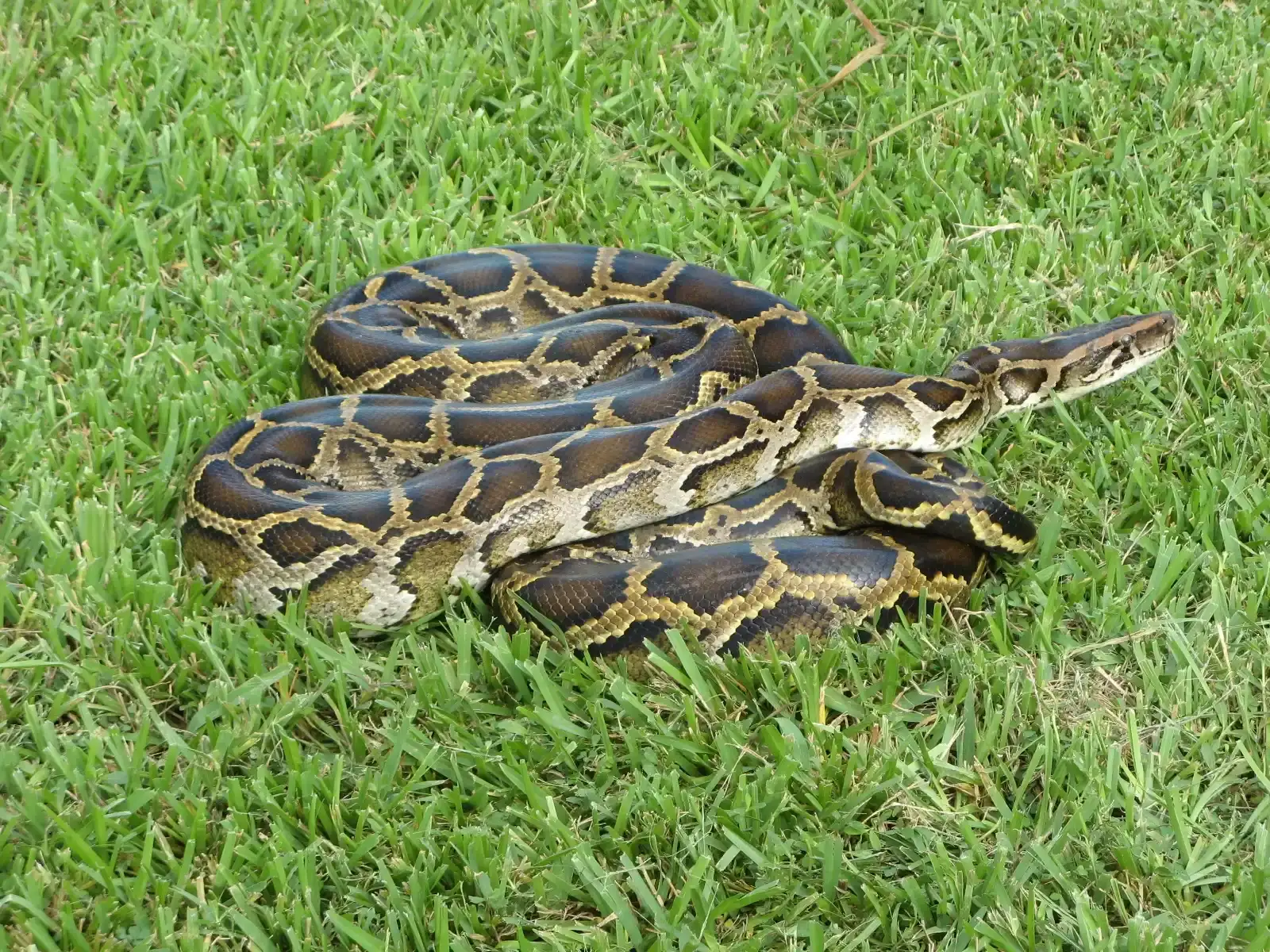
Walk into the Florida Everglades at night and you might meet a creature that belongs in Southeast Asian jungles: the Burmese python. These snakes are native to countries like Myanmar, Thailand, and Vietnam. Yet today, an established breeding population slithers through the swamps of South Florida, roughly halfway around the planet from their ancestral home.
The story begins, unsurprisingly, with the exotic pet trade. For years, baby pythons were sold as impressive but “manageable” pets. Then they grew, reaching several meters in length and dozens of kilograms in weight. When owners could no longer care for them, some illegally released the animals into the wild. Escapes during hurricanes likely added more snakes to the mix. Given the Everglades’ warm climate, abundant prey, and thick vegetation, the pythons did not just survive – they thrived.
Studies of mammal populations in heavily infested areas tell a chilling story. Raccoons, opossums, and rabbits have all but vanished in some regions. Even deer and alligators show up in python stomachs. Ecologists worry that the loss of small mammals will cascade through the ecosystem, affecting plants, predators, and nutrient cycles. Management agencies now organize massive search-and-remove efforts and even public bounty-style hunts, but realistically, completely removing pythons is probably impossible at this stage.
- Native region: Southeast Asia
- New territory: South Florida, especially the Everglades
- Main cause: Pet releases and escapes
- Main impact: Collapses of small mammal populations, major food web shifts
#3 Cane Toads in Australia: Pest Control Gone Catastrophically Wrong
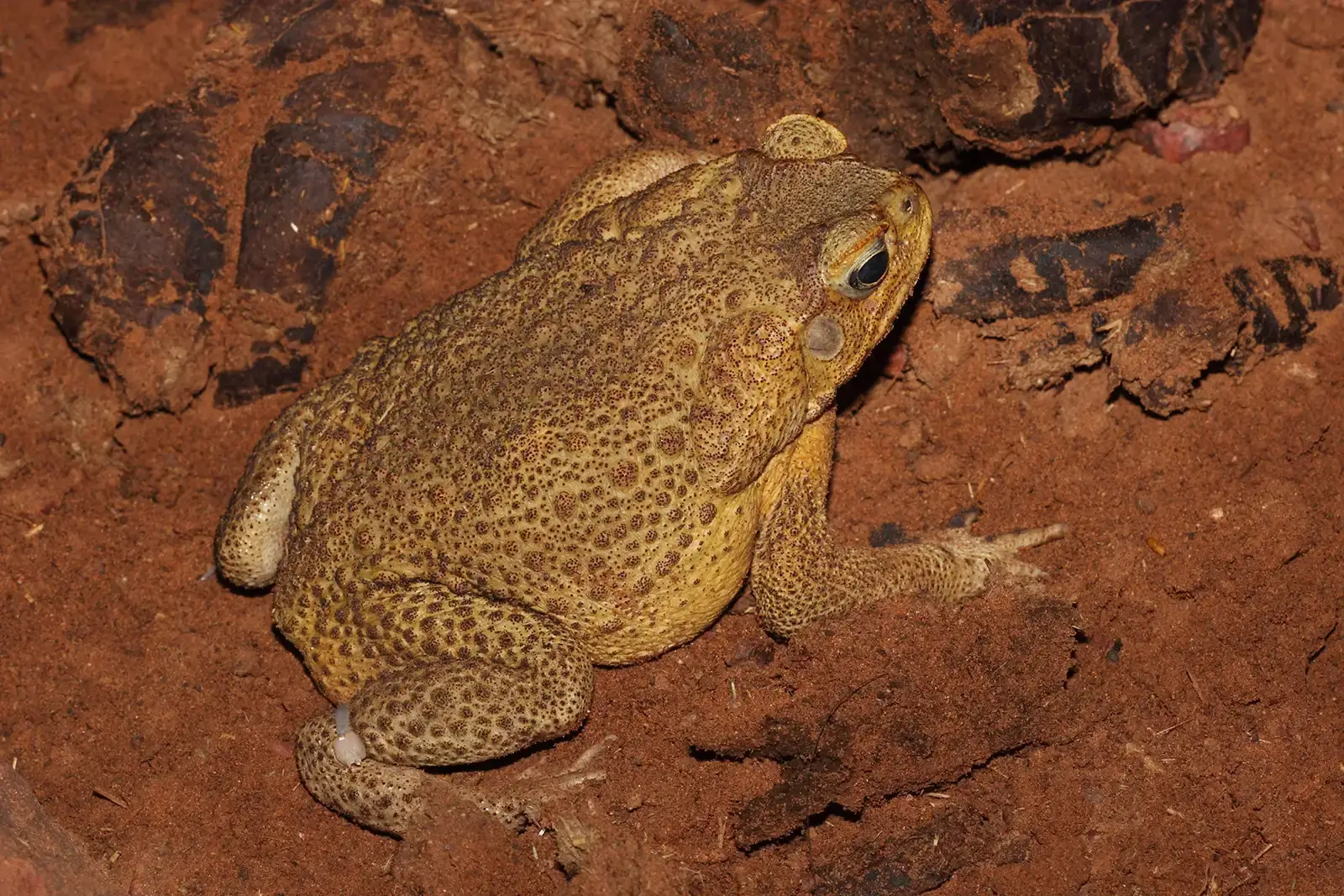
Cane toads might be the poster child for well-meaning biological disasters. They are native to Central and South America, where they live alongside predators and pathogens that limit their numbers. In the 1930s, Australian sugarcane growers imported them to combat crop-eating beetles, expecting a tidy, natural pest control solution. Instead, the toads scattered into the wild and began an ecological takeover.
Today, cane toads have marched across vast stretches of northern and eastern Australia, advancing in a slow but relentless wave. A single female can lay tens of thousands of eggs in a season, and their tadpoles grow rapidly in warm, still waters. Almost every part of the toad’s body is laced with powerful toxins, from skin to eggs, making them deadly snacks for native predators that have never evolved defenses against them. It is as if the landscape was seeded with little biochemical landmines.
The casualties have been sobering. Quolls (a type of native marsupial predator), goannas (large monitor lizards), and many snakes have suffered dramatic population declines after attempting to eat cane toads. Some species are showing early signs of adaptation – for example, learning to avoid the largest, most toxic toads or focusing on less dangerous body parts – but the damage is widespread and ongoing. The toads are not just out of place geographically; they are completely out of context in the Australian evolution story, and that mismatch is exactly what makes them so destructive.
#4 European Green Crabs Across the World’s Coasts
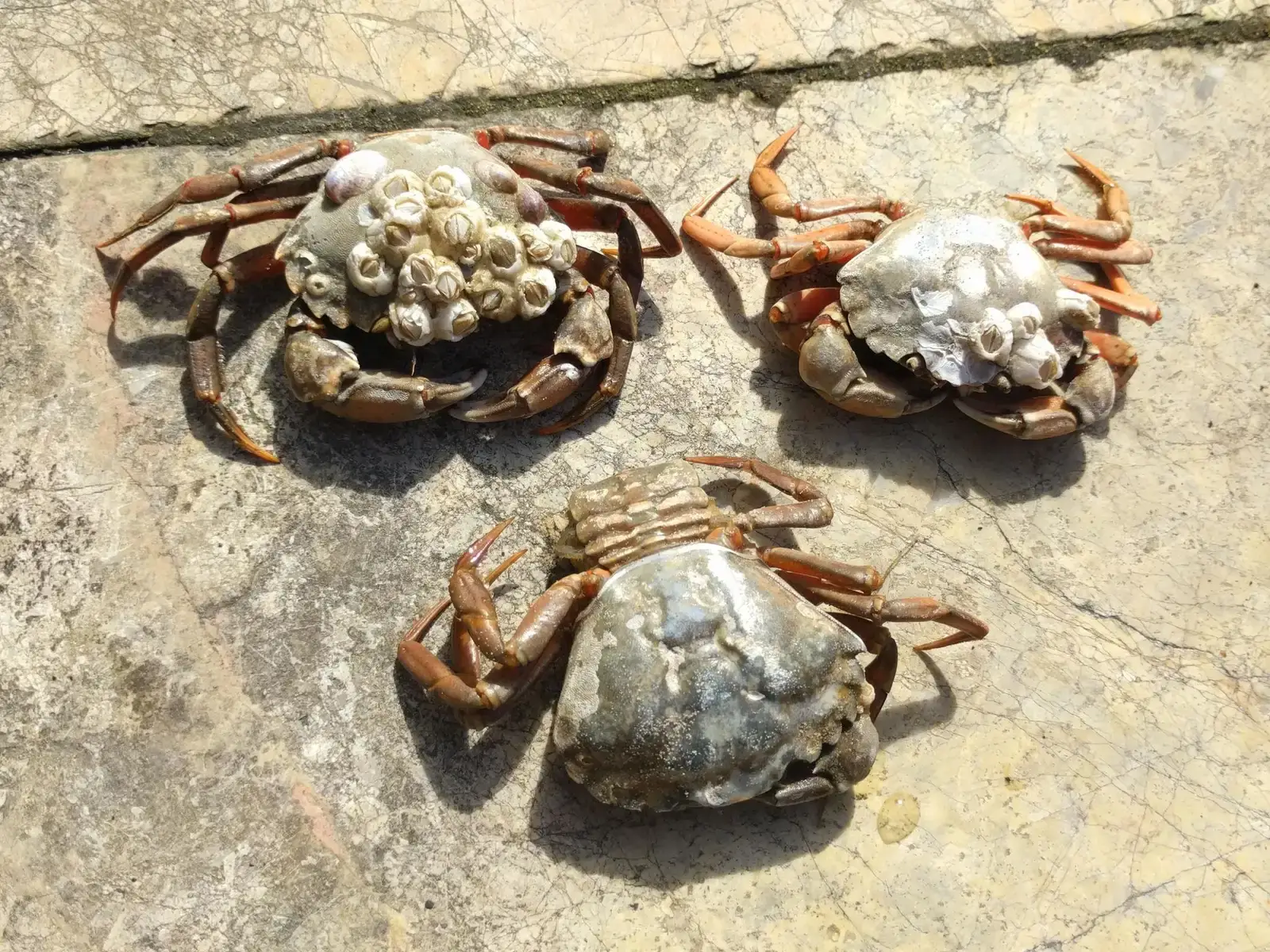
At first glance, the European green crab looks pretty unremarkable – small, mottled, and frankly overshadowed by more charismatic marine invaders like lionfish. But this little crustacean has quietly become one of the most notorious invasive species on Earth. Native to Atlantic coasts of Europe and northern Africa, it has now turned up in North America, South America, South Africa, Australia, and parts of Asia.
How did such a modest creature spread so widely? The main culprits are global shipping and aquaculture. Green crabs hitch rides in ballast water, cling to ship hulls, and move accidentally with shellfish shipments. Once they arrive, they are tough, flexible generalists. They tolerate a wide range of salinities and temperatures and can live in various coastal habitats from estuaries to rocky shores. That resilience has allowed them to set up shop in ecosystems thousands of miles from home.
Their ecological impact is far from modest. Green crabs are aggressive hunters that pry open clams, mussels, and oysters, threatening both wild populations and shellfish farms. They also burrow into saltmarsh banks and disturb eelgrass beds, damaging nursery habitat for fish and invertebrates. Eradicating them from open coasts is nearly impossible, so many management efforts focus on containment and local suppression around high-value areas like aquaculture sites. It is a sobering reminder that even small, plain animals can punch far above their weight when they are moved out of place.
- Native region: European and North African Atlantic coasts
- New territory: Multiple continents, especially temperate shorelines
- Spread by: Ship ballast, hull fouling, aquaculture movements
- Key impacts: Shellfish predation, habitat disruption, economic losses
#5 Africanized “Killer” Bees Crossing Oceans and Borders
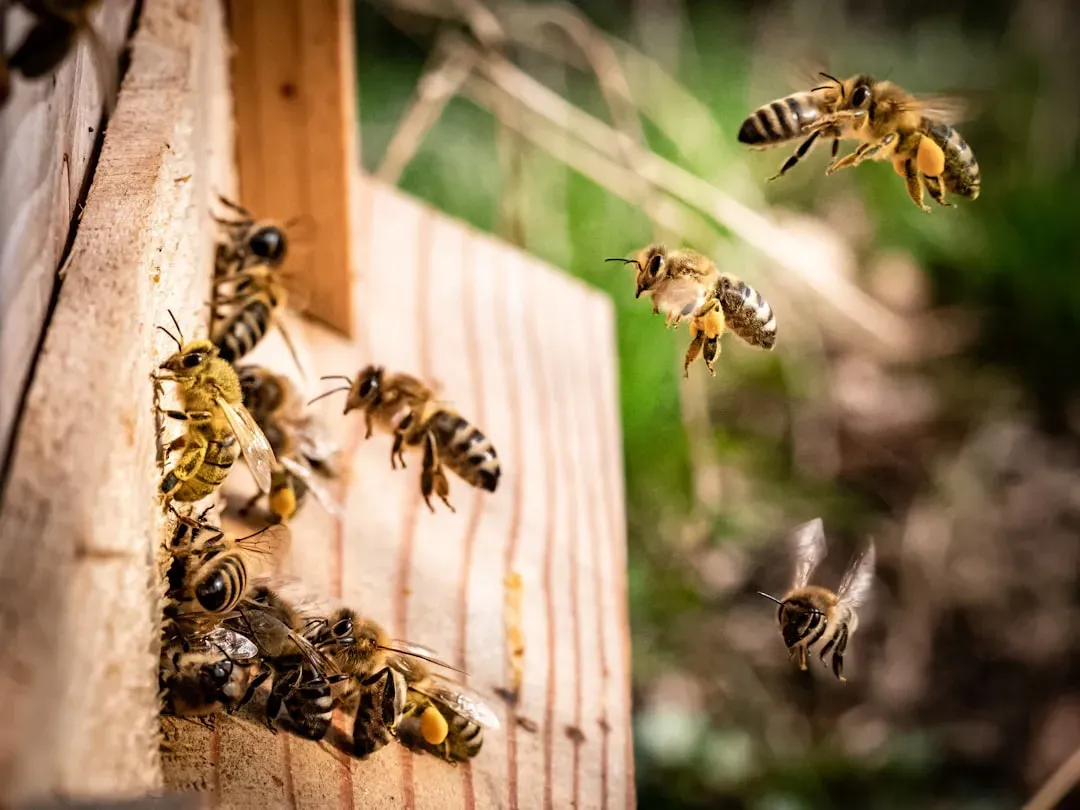
Few creatures have a reputation as dramatic as Africanized honey bees, often labeled “killer bees” in the media. These bees are not a separate species but hybrids between European honey bees and subspecies imported from Africa. The African bees were brought to Brazil in the mid-twentieth century in hopes of boosting honey production in tropical conditions. Some escaped captivity, interbred with local bees, and began an astonishing expansion across the Americas.
From those Brazilian apiaries, Africanized bees spread north and south, crossing thousands of miles in just a few decades. Today, they can be found through much of South and Central America and into parts of North America, including the southern United States. Unlike many other examples in this list, the hybrid bees did not cross an ocean by ship; they simply moved in fits and starts across land, taking advantage of suitable climates and nesting sites as they went.
What makes them so controversial is not that they are alien to the Americas – European honey bees were already non-native – but that they are behaviorally different. Africanized bees tend to defend their hives more aggressively and may respond more quickly and in larger numbers to perceived threats. This has led to highly publicized stinging incidents. At the same time, they are efficient pollinators, and in some regions they now dominate local honey production. It is an uncomfortable example of how a creature can be both a valuable worker and an alarming neighbor, depending on where you stand.
#6 Red Imported Fire Ants Taking Over New Continents
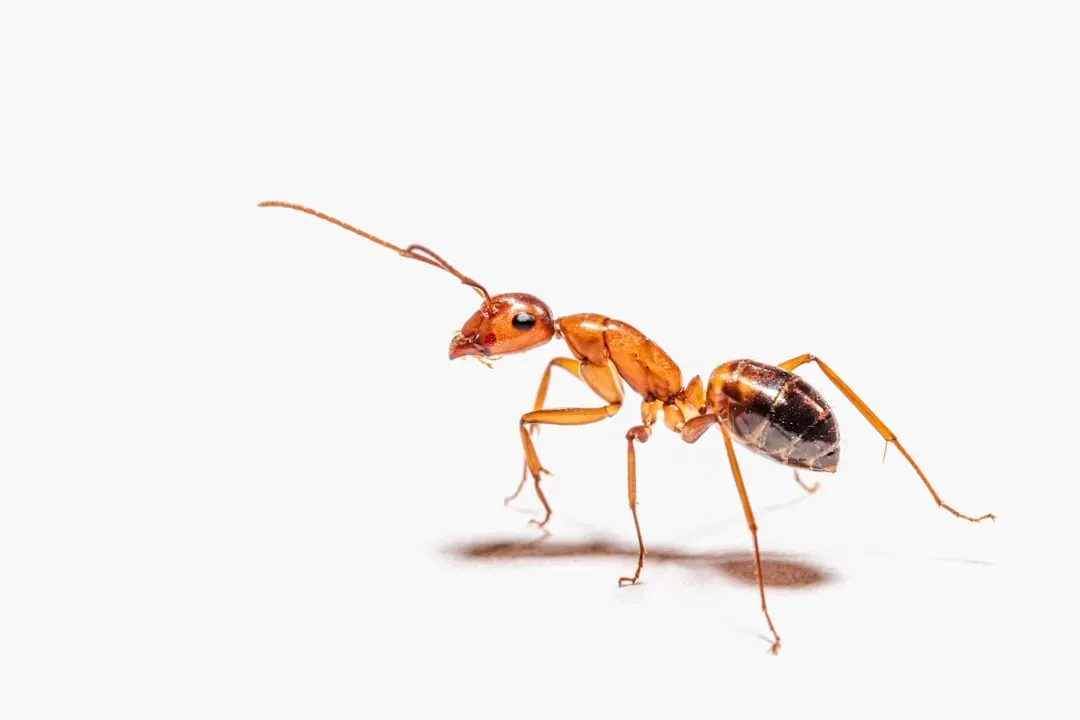
If you live in the southern United States, parts of Australia, or several other regions, you may already know the sharp, burning sting of the red imported fire ant. These ants are native to South America, yet in less than a century they have managed to turn up on multiple continents, transforming lawns, farms, and natural habitats into a mosaic of mounds and defensive territories.
Their global journey started with cargo ships. Fire ants likely arrived in soil and plant material moved through ports, especially in the early twentieth century when biosecurity was far less strict. Once established, they spread locally by forming new colonies near the original nests and by “rafting” during floods – clusters of workers, brood, and queens floating downstream on the water’s surface, ready to colonize new ground.
Ecologically, red imported fire ants are bullies. They aggressively outcompete many native ant species, reducing local diversity. Their stings can kill small animals and are medically significant for humans, especially those with allergies. Farmers struggle with ants that damage crops and harass livestock, and urban residents fight endless battles to keep them out of yards and playgrounds. Eradication at a large scale has proved unrealistic; the focus now lies on localized control and strict regulations to keep them from spreading further into new countries and regions.
- Native region: South America
- New territory: Southern USA, parts of Australia and beyond
- Main pathway: Soil, plants, and cargo in international trade
- Key problems: Painful stings, impacts on wildlife, agricultural and urban damage
#7 Asian Hornets Showing Up in Western Europe and Beyond
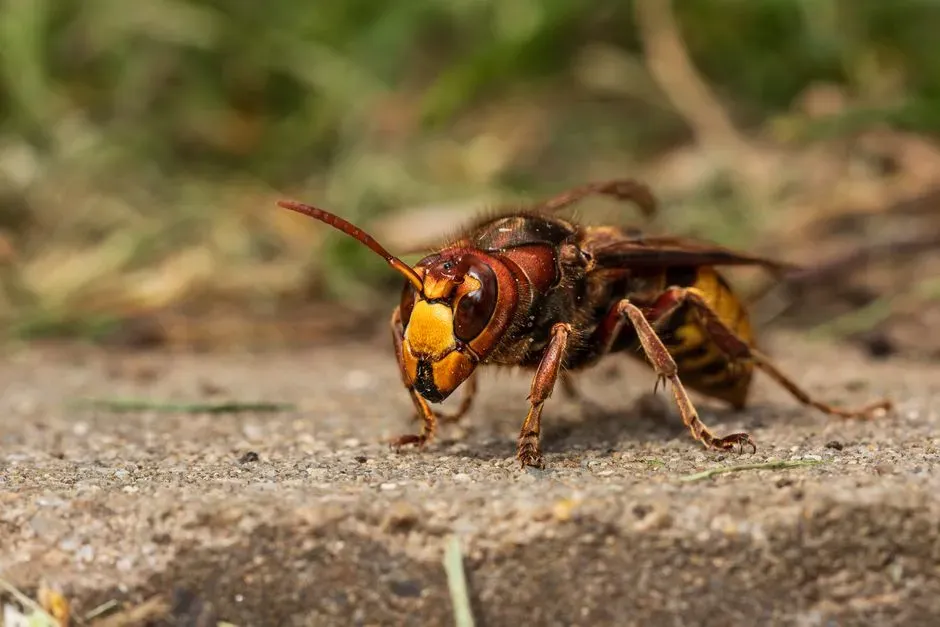
Imagine you are a honey bee and suddenly a much larger, faster hornet starts patrolling your hive’s front door. That is the reality for European bees facing invasive Asian hornets in recent years. The species most often in the spotlight is the yellow-legged hornet from East Asia, which has established populations in several Western European countries after accidentally arriving via trade.
The first confirmed European record came from France in the early twenty-first century, where a single nest was likely introduced with imported pottery or other goods. From there, the hornets spread through the countryside, following rivers, roads, and human settlements. Queens can disperse over significant distances, and accidental human-assisted jumps – for example, nests hidden in transported materials – help the species leapfrog across landscapes and even national borders.
The ecological concern centers on their appetite for other insects, especially honey bees. An Asian hornet can hover outside a hive, catching returning foragers in mid-air and decapitating them to feed their larvae. Beekeepers in affected areas have reported serious losses, adding another stressor to already vulnerable bee populations. Control efforts range from nest detection and destruction to experimental traps, but total eradication over large regions is, yet again, an uphill battle.
#8 Zebra Mussels: Tiny Shells, Massive Distance
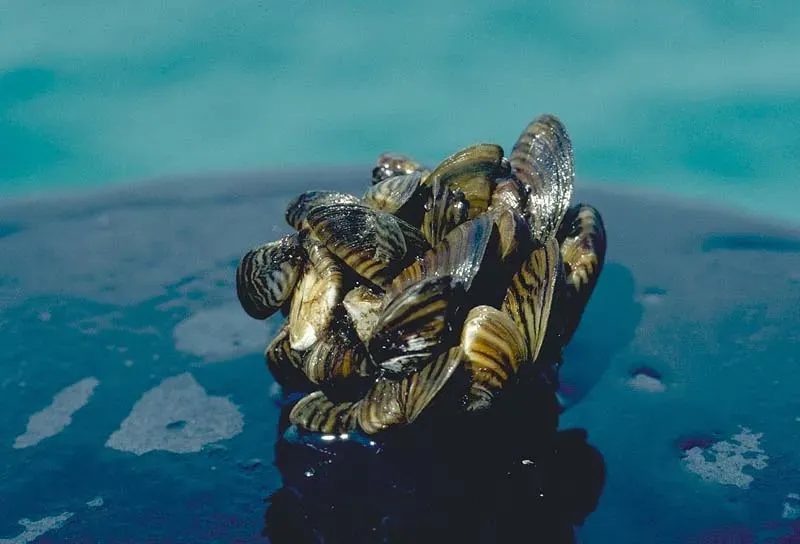
Zebra mussels are small, stripy bivalves native to lakes and rivers in Eastern Europe and Western Asia. Somehow, these unassuming creatures have managed one of the most infamous invasions of freshwater systems in modern history. They now carpet submerged surfaces in North American lakes and rivers, and have spread to new waters across Europe as well.
The vector is no mystery: ships. In the late twentieth century, cargo vessels discharged ballast water from European ports into Great Lakes harbors, releasing zebra mussel larvae into a brand new freshwater world. From there, the mussels spread along connected waterways and, crucially, by hitchhiking on recreational boats and fishing gear. One contaminated boat trailer can seed a pristine lake hundreds of miles away.
Once they arrive, zebra mussels transform ecosystems in several ways. They filter enormous volumes of water, stripping out plankton and increasing clarity. That might sound nice, but it starves native filter feeders and can shift energy flow from open water to the bottom. The mussels also clog intake pipes at power plants and drinking water facilities, encrust docks and hulls, and undercut native mussel species. Managers now emphasize prevention: cleaning boats, inspecting equipment, and educating the public. After the fact, there is no realistic way to pull millions of thumbnail-sized shells off every submerged surface.
- Native region: Eastern Europe and Western Asia
- New territory: North American lakes and rivers, expanded European range
- Transport: Ship ballast water and recreational boats
- Impacts: Ecosystem shifts, infrastructure clogging, native mussel declines
#9 Asian Carp Threatening North America’s Great Lakes
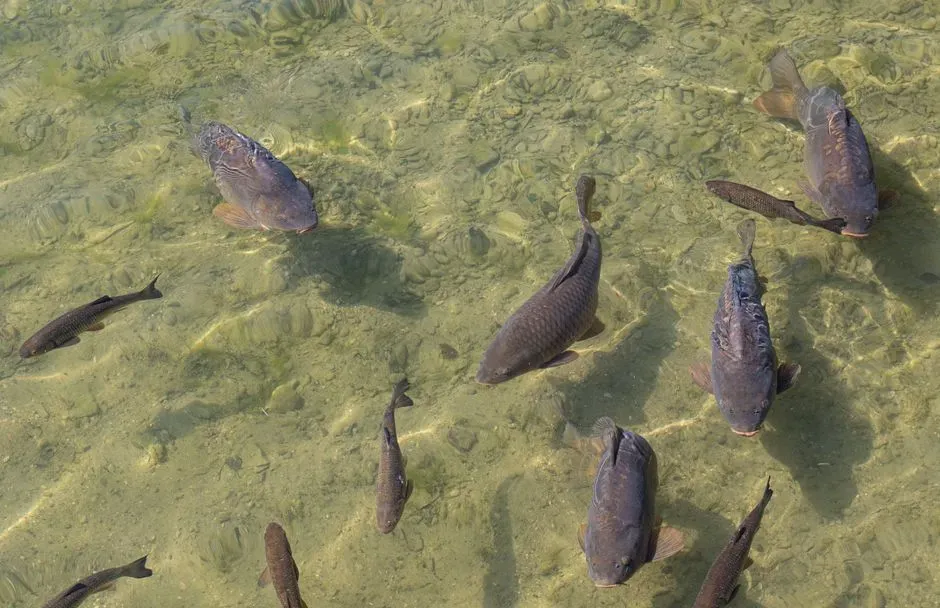
“Asian carp” is a catch-all term for several fish species from East Asia, including bighead and silver carp, that were brought to the United States for aquaculture and algae control in ponds. No one planned for them to colonize some of the continent’s biggest river systems. Yet today, these fish dominate stretches of the Mississippi and its tributaries and have crept dangerously close to the Great Lakes, far from their original ponds and half a world away from their native rivers.
The escape story is almost mundane: flooding allowed carp to move from controlled ponds into nearby waterways. Once free, they found a perfect environment: nutrient-rich, turbid rivers full of plankton. These carp are filter feeders that can consume huge amounts of microscopic life, leaving less food for native fish and altering entire food webs. In some parts of the Mississippi Basin, they account for the majority of fish biomass – a stunning reversal of the original community structure.
Silver carp have a bizarre behavior that made them infamous: when startled by boat engines, they can leap high out of the water, sometimes striking boaters hard enough to injure them. Videos of flying fish hitting people have gone viral, but behind the dark humor is a serious economic and ecological concern. If these carp establish themselves in the Great Lakes, they could disrupt commercial and recreational fisheries worth billions. Authorities have invested heavily in electric barriers, intensive netting, and ongoing surveillance to keep the line from being crossed. It is a rare case where we see an invasion coming and are fighting desperately to prevent the final step.
#10 Green Iguanas Turning Up in Subtropical Cities
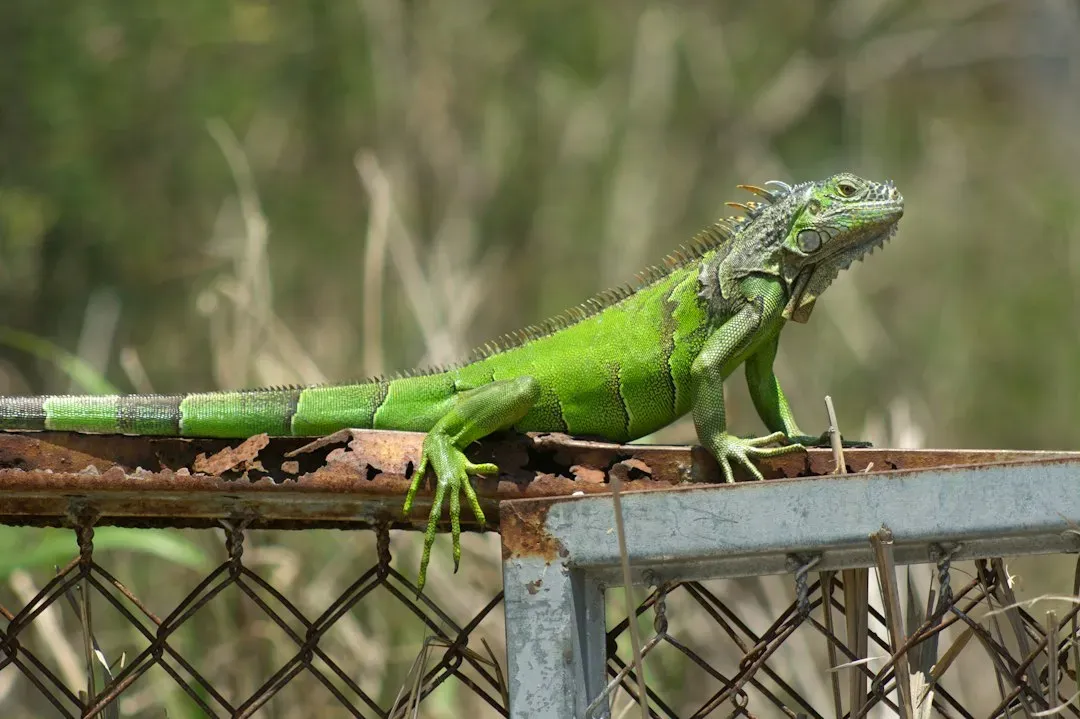
Green iguanas are textbook tropical lizards: tree-loving, plant-munching reptiles native to Central and South America and some Caribbean islands. Yet in the last few decades, they have become a familiar sight in parts of Florida, the Caribbean where they were not originally native, and even in other regions like South Texas and Hawaii. They bask on canal banks, climb onto roofs, and drop from trees when cold snaps briefly stun them – a surreal experience if you did not grow up with wild iguanas.
Again, the pet trade is at the heart of the story. Baby iguanas are cheap and widely sold. Adult iguanas, however, are large, strong, and can be challenging to care for. As with Burmese pythons, many owners have released unwanted pets into the wild. In warm, plant-rich regions, those lizards have established robust breeding populations. Climate change may be quietly extending the areas where they can survive, nudging the boundary of “too cold” farther north over time.
Ecologically and socially, green iguanas are a mixed bag. They eat ornamental plants, dig burrows that can undermine seawalls and sidewalks, and sometimes compete with native species for food and basking sites. At the same time, many residents find them charismatic and enjoy seeing them around. This tension between “nuisance pest” and “urban wildlife mascot” is very human; we brought them, we released them, and now we are deciding, city by city, how to live with them – or whether to try reducing their numbers.
- Native region: Central and South America, some Caribbean islands
- New territory: Florida, parts of the Caribbean, Hawaii, other subtropical areas
- Driver: Pet releases, favorable warm climates
- Issues: Infrastructure damage, garden losses, competition with native species
#11 Grey Reef Sharks and Other Ocean Wanderers Far From Home
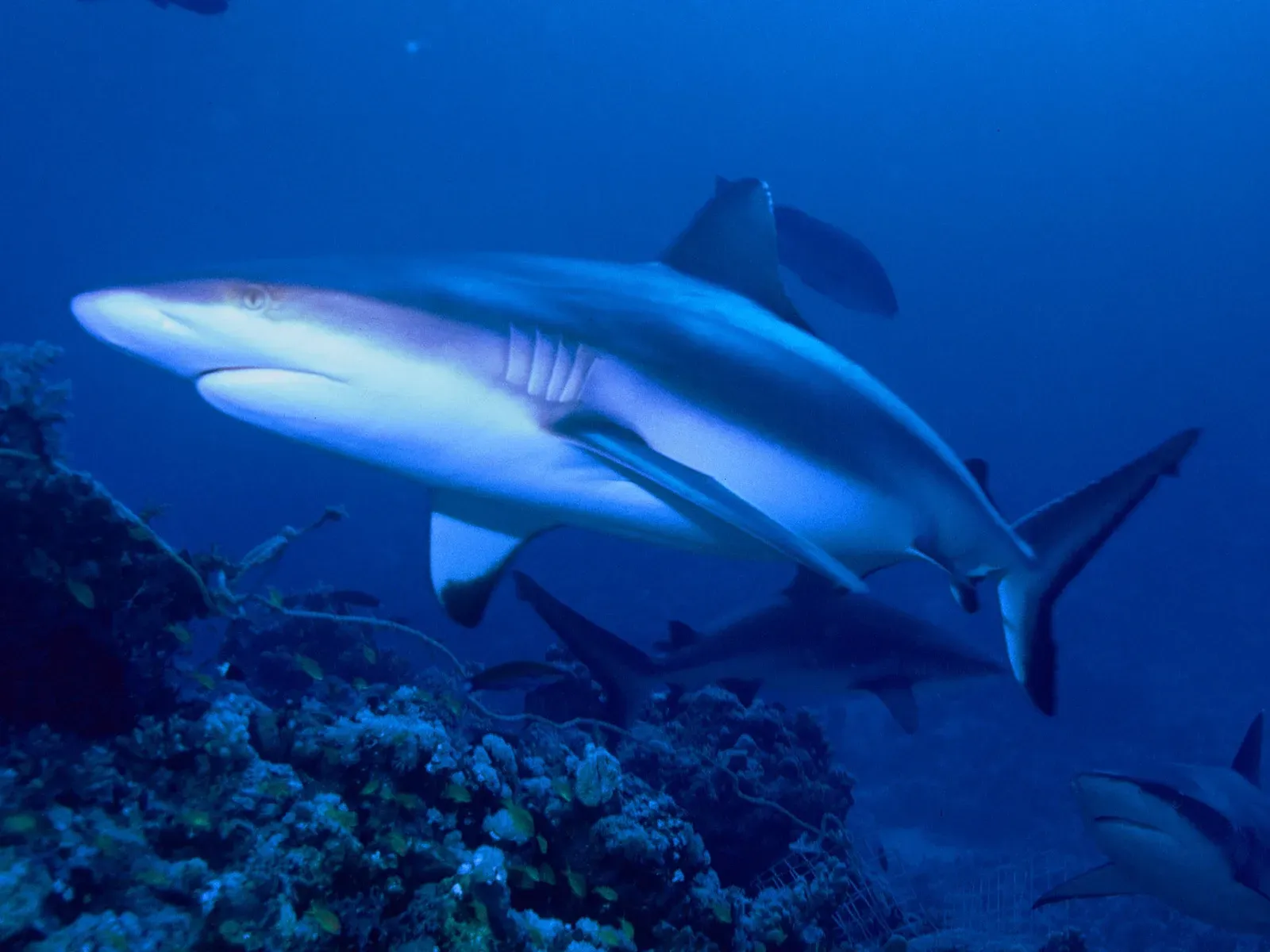
Not every out-of-place animal rode a ship or jumped from someone’s terrarium. Some are simply following gradients of temperature and food in a rapidly changing ocean. Sharks, in particular, are wide-ranging, and in the last couple of decades, scientists and fishers have reported several shark species showing up well beyond their historically documented ranges. Grey reef sharks and other warm-water species, for example, have occasionally been spotted in subtropical or temperate waters that used to be cooler and less hospitable.
These movements are not always as dramatic as a tropical shark suddenly appearing in polar seas. Often, it is more subtle: range edges shifting hundreds or thousands of kilometers over a few decades. As ocean waters warm and currents change, prey species also move, and their predators follow. To a local fisher who has never seen a particular shark species before, the first encounter might feel like a strange, one-off visitor from another planet. To a climatologist, it looks more like a symptom of a planet quietly rearranging the lines on its map.
It is important to be cautious here. Sharks have always been capable of long-distance travel, and occasional strays have probably happened as long as sharks have existed. What is changing is the pattern and frequency. When unusual sightings line up with long-term data showing consistent poleward shifts in marine species, it becomes hard to ignore. In that sense, a grey reef shark in an unexpected bay is more than a curiosity; it is a moving data point in the story of climate disruption.
#12 Raccoons in Europe and Japan: Masked Bandits Abroad
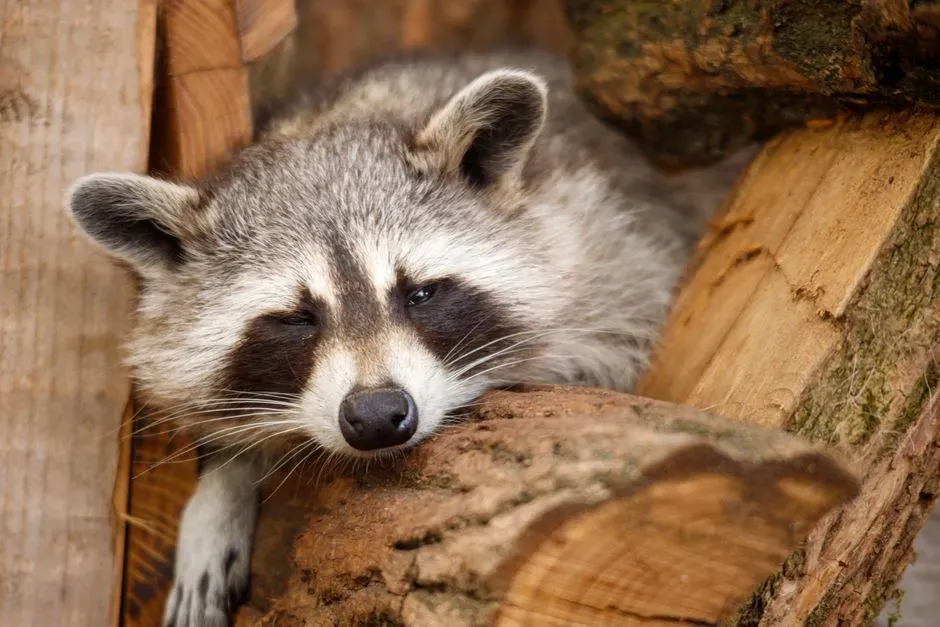
Raccoons look cute and mischievous, and that combination has a strange power over humans. Native to North America, they were exported as fur animals and exotic pets to places like Europe and Japan in the twentieth century. Predictably, some escaped from fur farms, others were deliberately released, and a few pets slipped away from their owners. The outcome: thriving raccoon populations in countries where they had never been seen in the wild before.
Once out, raccoons did what raccoons do best: adapt. They are famously flexible omnivores that can live in forests, farmland, and cities. In parts of Germany, for example, raccoons now breed successfully in natural areas and urban parks alike. They raid garbage, nest in buildings, and snack on everything from bird eggs to fruits. In Japan, imported raccoons inspired by pop culture even led to waves of pet ownership and, consequently, abandonments, which fed wild populations.
Ecologists worry about several things. Raccoons can prey on native amphibians, birds, and invertebrates and may compete with local carnivores. They can also spread diseases and parasites that native wildlife is not adapted to. At the same time, many urban residents view them with a mix of annoyance and affection. For me, raccoons might be the clearest example of how cultural trends, trade, and human decisions create animal migrations that would never have happened naturally.
- Native region: North America
- New territory: Parts of Europe, Japan, and other regions
- Origins abroad: Fur farming, pet trade, intentional and accidental releases
- Concerns: Predation on native species, disease risks, urban conflicts
#13 Brown Tree Snakes on Guam: A Silent, Island-Wide Disaster
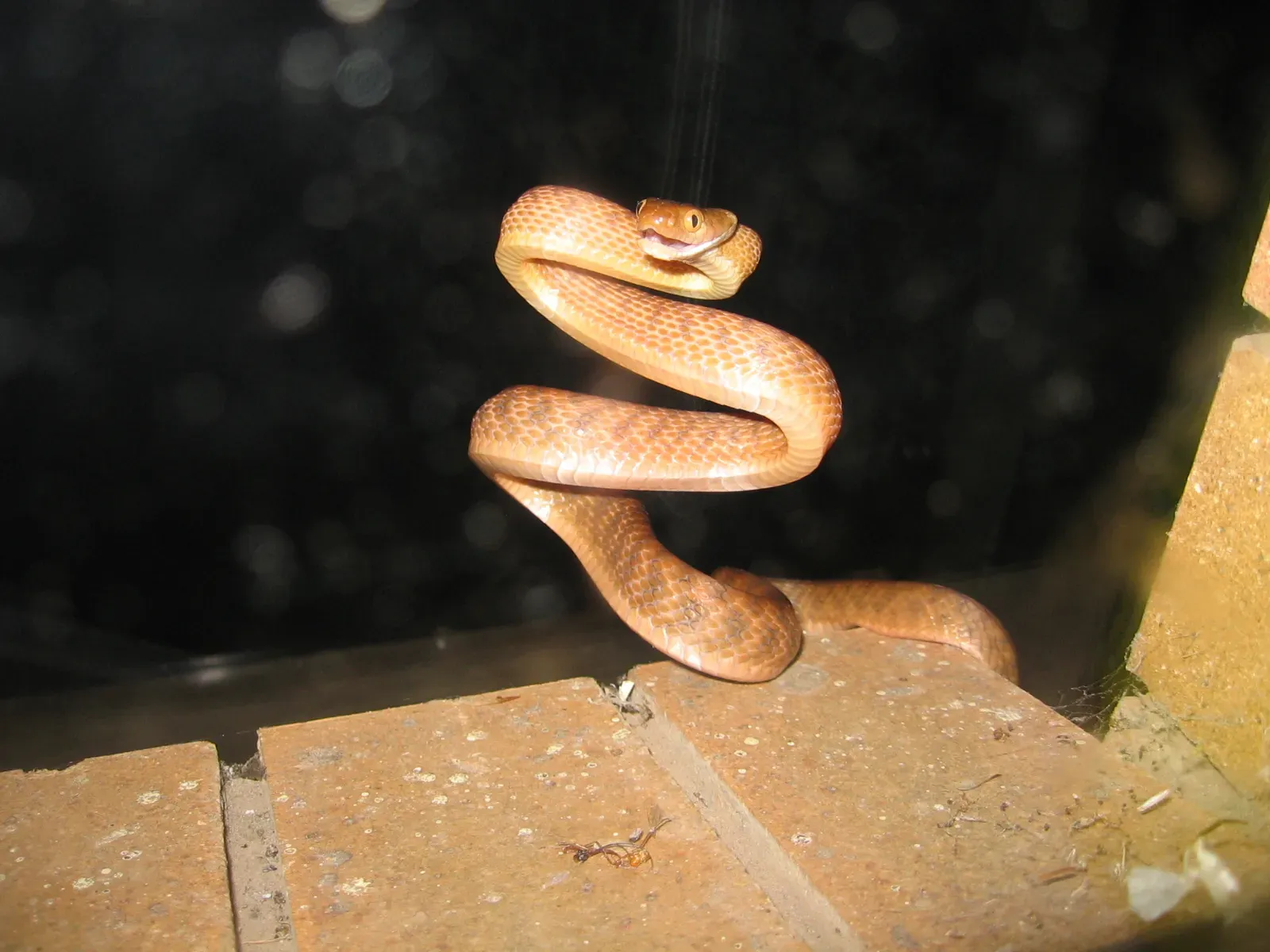
The brown tree snake invasion on Guam reads like a slow-motion horror story. Native to parts of Australia, Papua New Guinea, and nearby islands, these snakes likely reached Guam in the mid-twentieth century, hidden in cargo or military shipments. There were no native snakes on the island, and almost no local predators equipped to handle an arboreal, nocturnal snake of this size. The stage was set for a catastrophe, and most people did not realize it until it was too late.
Over the following decades, brown tree snake numbers exploded. They climbed trees and power lines, slipping into forests and suburbs alike. Their diet was broad: birds, lizards, bats, and small mammals. Guam’s native forest birds, many of which had evolved without any snake predators, were especially vulnerable. As the snakes spread, bird calls fell silent. Several species disappeared from the wild on Guam, including some found nowhere else on Earth.
The damage did not stop at biodiversity. The snakes frequently caused power outages by bridging electrical lines, and their presence raised concerns about potential spread to other Pacific islands. Today, intensive control programs on neighboring islands and strict cargo inspections aim to stop that from happening. It is a haunting example of how one stowaway species can transform an entire island ecosystem – and a stark reminder that the quietest invasions can sometimes be the most devastating.
Conclusion: A Planet of Accidental Travelers
Looking across these thirteen stories, a pattern jumps out: most of these animals did not simply decide to travel thousands of miles for fun. We moved them – in shipping containers, ballast tanks, pet crates, cargo holds, or as part of ambitious but naive biological “solutions.” And when we did not move them directly, we changed the climate beneath their feet or fins, nudging them into new territory whether they wanted to go or not.
To me, the most unsettling part is not the drama of giant pythons or toxic toads, but the realization that the line between native and non-native is being redrawn faster than our laws, our infrastructure, or our ethics can keep up. We are still arguing over whether an iguana on a seawall is charming or harmful while quiet invaders like mussels and crabs rewrite the rules underwater. At the same time, some displaced creatures are more victims than villains, following shifting temperatures or fleeing degraded habitats we helped create.
If there is a hopeful angle, it is that we are getting better at spotting the early warning signs: random lionfish on a reef where they do not belong, a lone hornet far from its normal range, a stray carp turning up in the wrong river. Biosecurity, citizen science, and smarter trade rules really can make a difference, especially when we act early instead of waiting until an invader is everywhere. The bigger question is whether we are willing to change our habits – in trade, in pets, in energy use – to slow the constant shuffling of life across the globe. When you hear about the next creature showing up thousands of miles from home, will you see it as a quirky headline, or as another clue that our world is more fragile and entangled than we like to admit?