

If you grew up believing physics had everything more or less figured out, the universe has some humbling surprises for you. Behind the neat equations and polished theories, there are stubborn mysteries that simply refuse to fit the script, like puzzle pieces from the wrong box that somehow still belong. These are not fringe stories whispered on weird forums, but open questions that many physicists admit keep them awake at night.
As you walk through these twelve phenomena, you’ll notice something unsettling but also exciting: even in 2026, with particle colliders, space telescopes, and supercomputers, the universe still shrugs and says, not yet. Some of these puzzles might one day be solved with a tweak to existing theories, others may demand a full rewrite of the laws you were taught in school. Either way, once you see how deep these questions go, you may never look at “solid” reality the same way again.
1. Quantum Entanglement: Spooky Links Across Space
Imagine you flip a coin in New York, and at the very same instant, a friend in Tokyo sees their coin flip in a way that perfectly matches yours, no matter how far apart you both are. That is a rough metaphor for quantum entanglement, where particles become mysteriously linked so that measuring one seems to instantly affect the other. According to Einstein’s picture of the universe, nothing, not even information, should travel faster than light, yet entanglement correlations appear to ignore that speed limit.
When you look closely, standard quantum theory explains how to calculate these correlations, but it does not tell you a satisfying story of what is actually happening behind the scenes. Are you seeing some hidden variables at work, or are you forced to accept that reality itself is non-local and not fully determined until you look? Experiments keep closing loopholes and ruling out simple hidden-variable explanations, putting more pressure on your intuition about cause and effect. You are left with a choice: either your idea of locality is wrong, or your idea of realism is, and both options feel like breaking the rules of physics you thought were sacred.
2. The Measurement Problem: Does Reality Exist Before You Look?
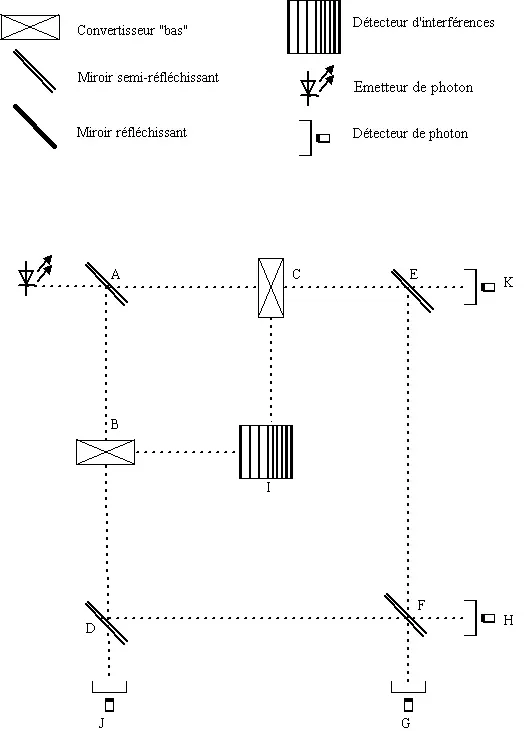
If you have ever heard that a particle can be in “two places at once,” you have brushed up against the measurement problem. Quantum mechanics lets you calculate a wave of possibilities, but the moment you measure, you only ever see one definite outcome. The math tells you the probabilities with stunning accuracy, yet it stays completely silent about how or why a single result pops out when you actually look. It feels like having a perfect recipe that never explains when you are supposed to take the cake out of the oven.
To tame this, you’re offered competing interpretations: maybe the wave function collapses when observed, maybe countless parallel worlds branch off, or maybe you and the measuring device become entangled in a larger quantum state. None of these options changes the predictions you can test in the lab, but each one paints a radically different picture of what is “really” happening. In daily life, everything appears solid and classical, but on the micro-level, your act of measurement seems to participate in creating the very reality you think you’re passively observing. That tension between smooth equations and messy experience is a crack in the foundation that still has not been cleanly sealed.
3. Dark Matter: The Invisible Mass Holding Galaxies Together

When you look at how stars orbit inside galaxies, they behave as if there is far more mass present than what you can see. Instead of slowing down as you move outward, many stars keep orbiting at roughly constant speeds, like a merry-go-round spinning so fast its outer horses should be flung off, but somehow are not. To make sense of this, you are told there must be an unseen form of matter providing the extra gravity, something that does not emit, absorb, or reflect light. This ghostly stuff has been named dark matter, and by current estimates, it makes up most of the matter in the universe.
The strange part is that, despite decades of searching, you still have not directly detected a single dark matter particle in a lab. Detectors buried deep underground, satellites watching cosmic rays, and giant colliders smashing particles together have all come up empty so far. It leaves you with an uncomfortable fork in the road: either dark matter is real but incredibly hard to catch, or your theory of gravity breaks down on galaxy scales. Both possibilities challenge the familiar rules you have been using to understand the cosmos, and until you get a decisive clue, every spinning galaxy is a reminder that something fundamental is missing from the picture.
4. Dark Energy: A Force Pushing the Universe Apart Faster

You might expect that gravity, being always attractive, would gradually slow the expansion of the universe over time. Yet distant supernova measurements showed you the opposite: the expansion is speeding up, as if some unseen energy is pushing space itself apart. To account for this, physicists introduced dark energy, a mysterious component that seems to fill all of space and acts like a built-in anti-gravity. By current models, it makes up the majority of the total energy content of the universe, which is staggering considering you have no idea what it really is.
In equations, dark energy often appears as a cosmological constant, a fixed energy density of empty space. But when you try to calculate that value from known quantum fields, the theoretical answer overshoots reality by a mind-bending amount. That mismatch is sometimes described as one of the worst predictions in theoretical physics. You are effectively forced to accept that the vacuum is not truly empty, yet the best tools you have wildly misjudge how energetic that vacuum should be. Until you can reconcile those numbers, the accelerated expansion of the cosmos stands as a quiet but profound challenge to your understanding of gravity, quantum fields, and the nature of “nothing.”
5. The Arrow of Time: Why the Future Looks Different From the Past

In almost every physics equation you learn, time can run forward or backward without breaking the math. Yet in your everyday life, time clearly has a direction: eggs scramble but never unscramble themselves, smoke disperses but never reassembles into a neat puff. This irreversibility is usually traced to entropy, the idea that systems move from more ordered states to more disordered ones. But if the underlying laws do not care about time’s direction, you are left wondering why the universe started in such an improbably low-entropy, highly ordered state in the first place.
When you look closer, you discover that nobody really knows why the cosmos began with conditions that allow an arrow of time to exist at all. You experience time as a one-way river, but your fundamental theories treat it more like a dimension you could, in principle, traverse either way. Some proposals link the arrow of time to the expansion of the universe, others to deep properties of quantum information, but so far none has become a clear winner. Every time you rewind a mental movie of broken glass reassembling on the floor and feel how wrong it looks, you are sensing a mystery that standard physics still does not neatly explain.
6. Quantum Tunneling: Particles Slipping Through the Impossible
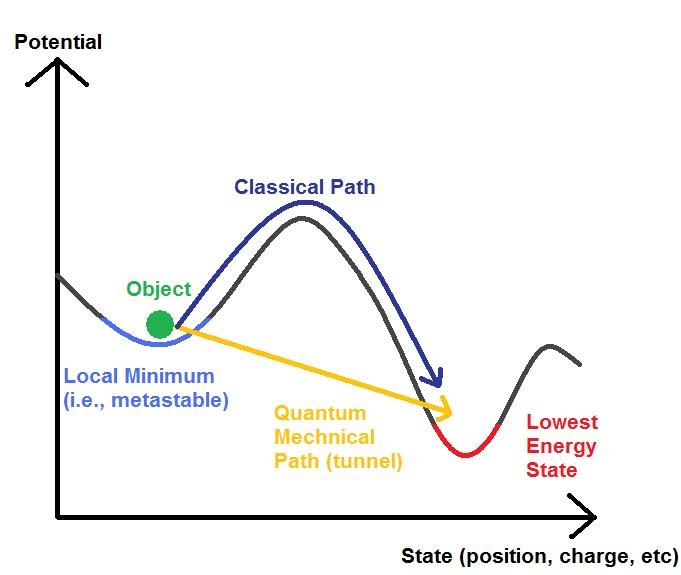
Picture rolling a ball toward a hill that is too high for it to climb; classically, it would just roll back. At the quantum level, particles sometimes do something that seems almost magical: they appear on the other side of a barrier that they should not have enough energy to cross. This effect, called quantum tunneling, is not just a theoretical oddity; it underlies technologies like scanning tunneling microscopes and the nuclear fusion that powers stars. You can calculate the probability that a particle will tunnel by using well-tested equations, and experiments repeatedly match those probabilities.
What you do not really have is an intuitive, classical story for how the particle manages to be both blocked and yet not blocked by the barrier. It is as if your ball sometimes decides to fade through the hill instead of rolling over it, but only with a certain likelihood. On macro scales, the odds of such tunneling are so tiny that objects like you never notice it, which is why your daily experience seems to obey ordinary rules. Still, whenever tunneling shows up in real devices and natural processes, it reminds you that at the deepest level, reality plays by a rulebook that allows moves your classical instincts would have ruled out as impossible.
7. The Double-Slit Experiment: When Observation Changes What You See

If you want to feel your classical worldview dissolve in real time, you can walk through the logic of the double-slit experiment. When particles like electrons or photons pass through two narrow slits and are not observed, they land on a screen in a pattern that screams wave interference, as if each particle somehow passes through both slits at once. But when you try to check which slit each particle goes through, the interference pattern disappears and you instead see a pattern that looks like ordinary particles taking one path or the other. Your attempt to watch the process seems to change the outcome.
Quantum mechanics lets you model all of this with wave functions and probabilities, and countless experiments have confirmed the predictions. What you lack is a comfortable picture of what is actually traversing the apparatus in between source and detector. Are you forced to accept that the act of obtaining information genuinely alters the behavior of the system in a fundamental way, not just in a clumsy, disturbance-based sense? The double-slit setup can be scaled and tweaked in many ways, adding delayed choices and entangled partners, and each variation keeps pushing you toward the unsettling idea that “reality” between measurements may not resemble the solid, path-following world you see at the end.
8. Quantum Vacuum Fluctuations: Something From Supposed Nothing
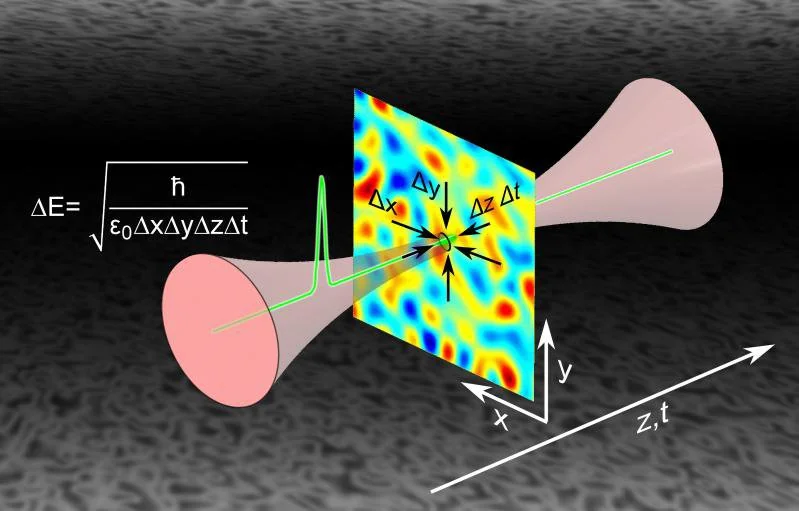
You might imagine a perfect vacuum as absolute emptiness, a region with no particles, no radiation, nothing at all. In quantum field theory, you are forced to abandon that image; even in its lowest-energy state, a field seethes with fleeting fluctuations. Pairs of so-called virtual particles appear and vanish too quickly to be directly observed, yet they leave measurable fingerprints, such as tiny shifts in atomic energy levels and subtle forces between metal plates. The idea that “empty space” is an active, restless medium is one of the most counterintuitive features of modern physics.
These vacuum fluctuations are not just an abstract curiosity; they show up in precision tests of quantum electrodynamics and in the behavior of the early universe. The problem is that when you try to sum up all possible fluctuations, your naive calculations blow up to absurdly huge values for the energy density of the vacuum. The fact that the real universe does not behave that way means something important is missing in your understanding. You are left in a strange position where the vacuum is clearly not nothing, yet you do not know how to reconcile its jittery nature with the relatively calm, large-scale cosmos you observe.
9. High-Temperature Superconductors: Resistance Vanishing in a Flash

In a conventional metal, electrons bump into atoms and each other, producing resistance and heating things up when current flows. Certain materials, however, suddenly drop to zero electrical resistance below a critical temperature, allowing current to flow without loss. For traditional, low-temperature superconductors, you have a well-established explanation based on electrons pairing up in a delicate quantum dance. The shock came when materials were discovered that become superconducting at much higher temperatures than that theory can neatly handle, sometimes close to conditions you can reach with relatively simple cooling.
These high-temperature superconductors, many of them ceramic compounds, behave in ways that do not fit comfortably inside your existing models. You can map out their phases and measure their properties to impressive accuracy, but when you try to write down a single, universally accepted microscopic theory that explains why they superconduct the way they do, the field fragments into competing ideas. For you, this is not just a technical puzzle; room-temperature superconductivity could radically change how you move power around the planet. The fact that you still do not fully understand how these materials pull off their trick shows that emergent quantum behavior in matter has layers you have not yet peeled back.
10. Ultra-High-Energy Cosmic Rays: Particles That Should Not Be Here
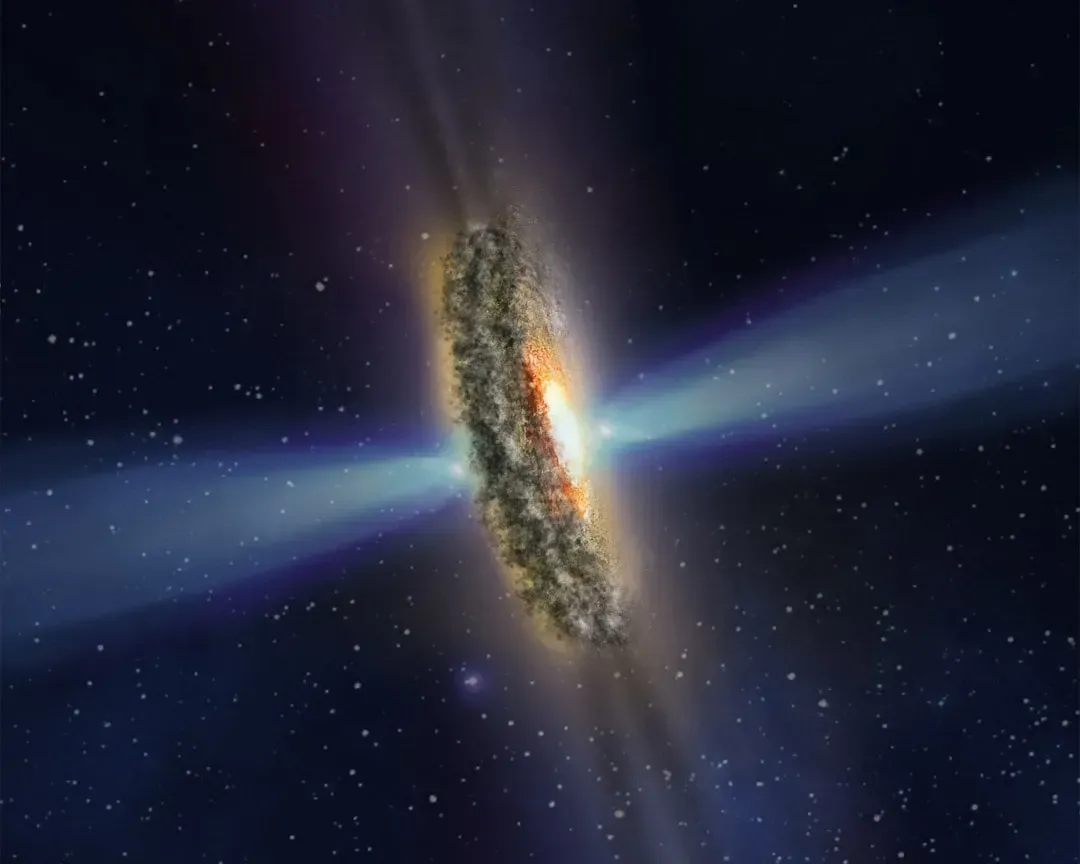
Every so often, the Earth is hit by cosmic rays with energies so extreme that they make your most powerful particle accelerators look modest. These ultra-high-energy cosmic rays carry the kind of punch you would get from a fast-pitched baseball squeezed into a single subatomic particle. According to your current understanding, there should be limits on how energetic such particles can be after traveling through the cosmic background radiation that fills space. Yet detectors have spotted events that seem to flirt with or even exceed those limits, raising awkward questions about where they come from and how they got so energized.
You can point to extreme astrophysical environments like active galactic nuclei or gamma-ray bursts as possible accelerators, but the details often do not quite add up. On top of that, the trajectories of these particles can be scrambled by cosmic magnetic fields, making it hard for you to trace them back to specific sources. Each detection is like receiving a single letter in a language you only half understand, with the return address smudged out. Until you can connect the dots between theory, source candidates, and observed events, ultra-high-energy cosmic rays stand as defiant reminders that the high-energy universe may have tricks you have not yet accounted for.
11. Fast Radio Bursts: Millisecond Signals With Megawatt Mystery
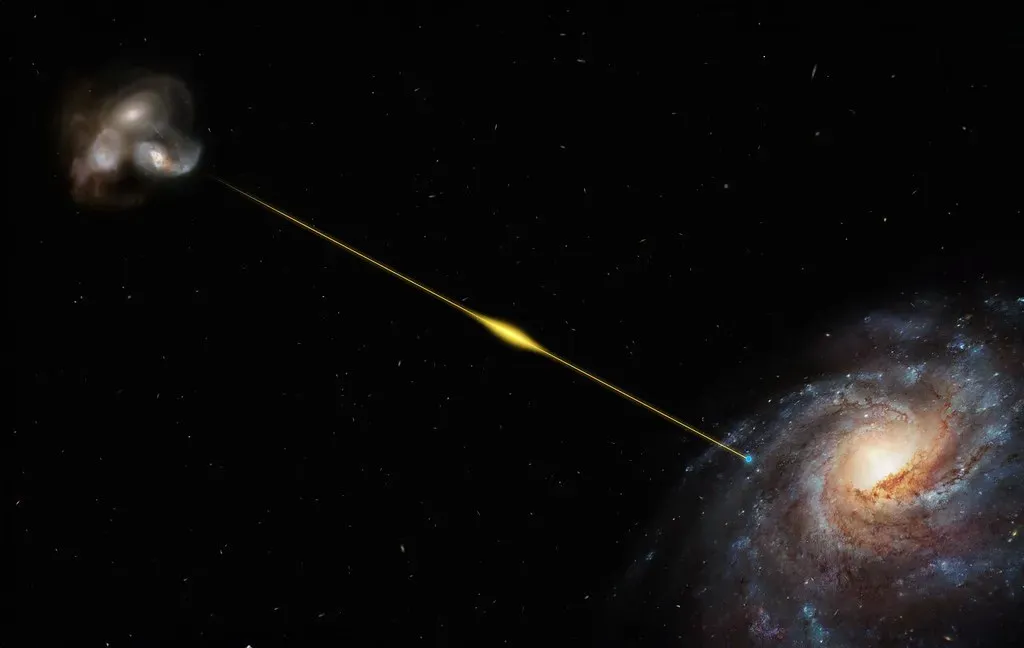
One day astronomers noticed brief, incredibly bright flashes of radio waves that lasted only a few thousandths of a second, coming from far outside our galaxy. These fast radio bursts, or FRBs, pack huge amounts of energy into those tiny slivers of time, suggesting that whatever produces them is both powerful and compact. Some FRBs repeat, while others seem to fire once and never again, hinting at different underlying mechanisms. As more radio telescopes focus on them, you see dozens and now thousands of events, but still no universally accepted explanation.
Proposals range from highly magnetized neutron stars to exotic interactions in extreme gravitational fields, but each idea struggles to comfortably explain all observed behaviors at once. You can measure the dispersion of the radio waves as they travel through space and use that to estimate distances, giving you rough yardsticks to their power. Yet every time you think you see a clear pattern, another burst behaves differently and forces you to revise your mental model. For you, FRBs are a reminder that even in an age of detailed sky surveys, the universe can still surprise you with a completely new class of phenomenon that does not fit neatly into existing categories.
12. The Fine-Tuning of Physical Constants: Why the Numbers Just Happen to Work
When you look at the basic constants of nature – things like the strength of gravity, the charge of the electron, or the ratio of particle masses – you find that if many of these numbers were even slightly different, stars might not form, chemistry might not work, and complex life like you would probably never emerge. This apparent fine-tuning has been pointed out again and again: the universe seems delicately balanced in a way that allows structures, planets, and observers to exist. Physics gives you the values and lets you calculate their consequences, but largely sidesteps the question of why they are what they are.
Some explanations lean on the idea of a multiverse, where many different sets of constants exist in different regions, and you naturally find yourself in a patch where conditions are friendly. Others search for a deeper, unifying theory that would force these values to be what they are, turning apparent coincidence into necessity. But until you have strong empirical evidence for either route, you are left with a nagging feeling that your fundamental laws rest on unexplained numerical choices. For you personally, it can be both unsettling and oddly inspiring to realize that the very possibility of your existence seems to hang on a handful of numbers that no one can yet derive from first principles.
Conclusion: Living With a Universe That Refuses to Sit Still
When you step back from these twelve puzzles, a clear pattern emerges: your best theories are stunningly successful and obviously incomplete at the same time. You can build smartphones, GPS systems, and medical scanners from the parts of physics you do understand, while quantum measurements, dark components of the cosmos, and strange astrophysical signals quietly whisper that the story is not finished. Instead of a neat textbook, the universe hands you a draft manuscript with entire chapters smudged out and sticky notes in the margins saying, “work this out later.”
Living with that tension can feel uncomfortable, but it is also where the real excitement lies. Each unexplained phenomenon is an open invitation for you to rethink what space, time, matter, and even reality itself might be. Maybe future experiments will tame these mysteries with elegant tweaks, or maybe they will force a revolution that makes today’s laws of physics look as quaint as ancient star charts. The next time someone tells you science has everything basically figured out, will you remember just how many deep questions are still hanging in the dark?