

You live in a universe that lets you stream movies on your phone, send rockets to other planets, and tinker with atoms. It feels like physics has everything more or less figured out. But once you scratch the surface, you quickly discover that some of the biggest questions about reality are still totally unresolved. In fact, the more you learn, the weirder the universe starts to look.
In the next twelve questions, you’ll walk right up to the edge of what physicists know in 2026 – and stare into the fog beyond. You’ll see where equations run out of road, where experiments give maddening hints instead of clear answers, and where your everyday intuition completely breaks down. And along the way, you might find yourself quietly wondering: how much of what you call “reality” is actually understood at all?
1. Why Is There Something Rather Than Nothing?
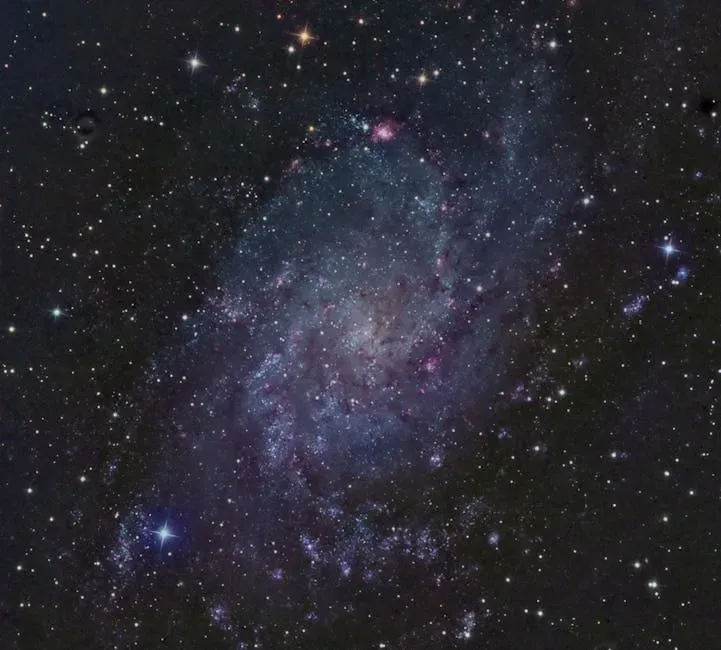
Imagine rewinding the universe all the way back to before the Big Bang. You’d naturally ask yourself: why is there a universe at all, instead of an endless, silent nothing? Physics is very good at describing how things behave once they exist, but when you ask why there is existence in the first place, the usual tools suddenly feel tiny and awkward. You can calculate how particles appear, decay, and interact, but you can’t point to a law that demands the universe must exist instead of remaining empty.
Some ideas suggest that “nothing” might be unstable, so quantum effects would always eventually cause something to pop into existence. Other ideas talk about a multiverse where countless universes appear with different properties, and you just happen to find yourself in one that can host life. But when you strip away the fancy words, you’re left with a stubborn mystery: you have no experimentally tested explanation for why reality exists at all. You can describe the fireworks in stunning detail; you just don’t know who lit the fuse.
2. What Really Happened at the Big Bang?
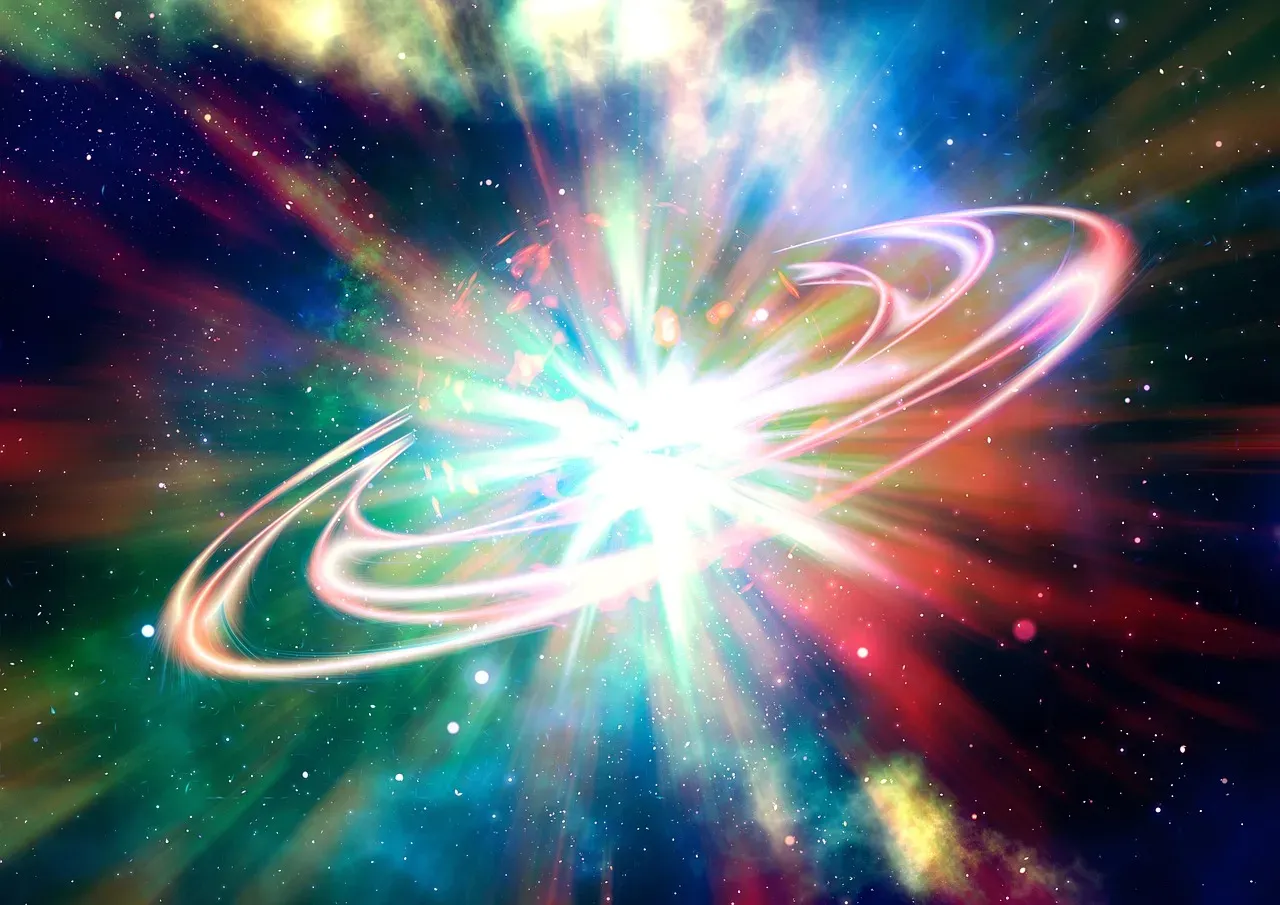
You’ve probably heard that the universe began with the Big Bang, but the phrase itself can be misleading. Physics can roll the tape back to a very early, hot, dense state – fractions of a second after the beginning – and describe how space expanded, particles formed, and light eventually broke free. What you can’t do is push the equations all the way to time zero and say with confidence what, if anything, actually “happened” there. At that extreme, your current understanding of gravity and quantum mechanics simply breaks down.
Right now, you have several competing possibilities. Maybe there was a true beginning: a moment when spacetime came into existence. Maybe the Big Bang was a kind of rebound from a previous collapsing universe. Or maybe the universe existed eternally in some form, and the Big Bang was just a transition. Until you have a successful theory of quantum gravity and new kinds of data, you are stuck staring at a blank spot where the origin story of everything should be. You can see the afterglow clearly; the moment of ignition remains hidden.
3. Why Do You Experience Only One “Now” in Time?

When you look at the equations of physics, past and future are just different directions along a four-dimensional block of spacetime. In that mathematical picture, all moments simply exist, laid out like pages in a book. Yet your actual experience is wildly different: you feel a moving “now” that flows from past to future, as if reality is being written line by line. Physics can model how time works in clocks and particles, but it doesn’t tell you why you feel time as a flow instead of as a static landscape.
You can explain why cups shatter and never unshatter by pointing to entropy and the arrow of time, but that still doesn’t tell you why you are located in one particular instant, experiencing events in order. Some physicists suspect that your sense of flow is an emergent feature of how your brain tracks change, not a fundamental feature of the universe. Others think you might need a deeper link between quantum processes and consciousness to explain it. For now, you live your life one moment at a time, with no firm idea why time feels like a river instead of a frozen map.
4. What Is Time, Really?

On a practical level, you treat time like a parameter: something you plug into equations so you can predict where things will be and how fast they’ll move. Einstein showed you that time stretches and shrinks depending on speed and gravity, which already makes it stranger than your everyday intuition suggests. But when you ask what time actually is at a fundamental level, the answers become frustratingly vague. Is time something that truly flows, or just a way you describe relationships between events?
Some approaches to quantum gravity hint that time might not even be fundamental. In those ideas, space and time emerge from something more basic, a bit like how temperature emerges from the motion of molecules. If that’s true, then what you call “a second” is not an ultimate building block of reality, but a convenient way your mind and your measuring devices summarize deeper processes. Physics, as it stands, lets you measure time with fantastic precision but still leaves you without a clear story of what, at rock bottom, you’re actually measuring.
5. Why Does the Quantum World Look So Weird When You Look at It?

On the quantum level, particles can exist in multiple states at once, like a coin that is heads and tails at the same time. The math describing this is extremely precise and spectacularly successful. But when you actually measure a quantum system, you never see that blurry mixture; you see a single, definite outcome. You press the button and your detector says “this” or “that,” never “both.” The long-standing puzzle is what, exactly, causes that sharp jump from many possibilities to one reality when you look.
You’ll find several interpretations that try to make sense of this. One tells you that the wave of possibilities collapses when a measurement occurs, but doesn’t really explain what counts as a measurement or why it works that way. Another suggests that all outcomes happen in parallel branches of reality, and you just find yourself in one branch. Yet another treats the whole thing as a change in your knowledge, not in the world itself. The disturbing truth is that all of these stories give you the same experimental results so far, which means you still have no widely accepted answer to how the fuzzy quantum world becomes the solid, definite reality you experience.
6. How Many Dimensions Does Reality Actually Have?
In your daily life, you move through three dimensions of space and one of time. That seems obvious: left-right, forward-back, up-down, plus yesterday and tomorrow. But when physicists try to unify gravity with quantum mechanics, extra dimensions sometimes appear naturally in the math. Some versions of string theory, for example, work cleanly only if space has more hidden directions than you can see. In those ideas, the universe might have tiny curled-up dimensions that are real but invisible to you at human scales.
The trouble is, you haven’t actually detected any of these extra dimensions. Experiments at high-energy particle colliders and tests of gravity at small distances keep looking for hints, and so far they’ve only pushed the possible size of any extra dimensions to smaller and smaller scales. That leaves you in an odd position: your best candidate theories suggest that your familiar three-dimensional world may be just a slice of something richer, yet you have no direct evidence for those hidden directions. You live in a house whose blueprint might include secret rooms, but you can’t find the doors.
7. What Is Dark Matter, Really Made Of?
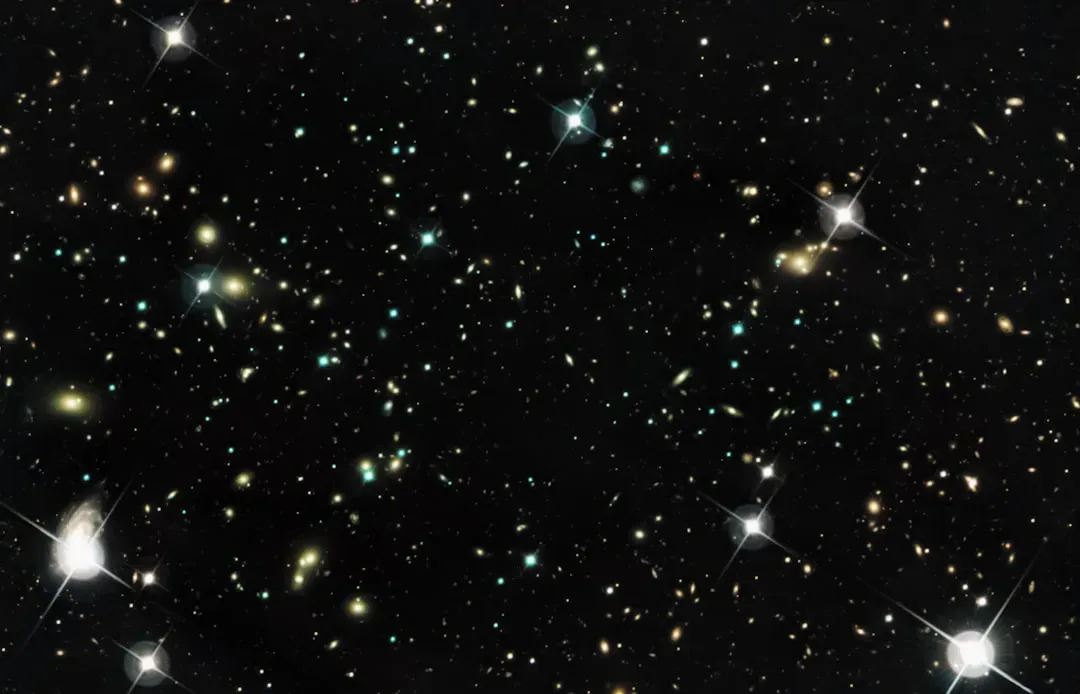
When you look at galaxies, you find stars moving so fast that, by ordinary gravity alone, the galaxies should fly apart. Instead, they hold together, as if they’re surrounded by a huge invisible mass that adds extra gravity. You see similar hints in how galaxies cluster and how light bends around massive objects. Everything points to the same conclusion: most of the matter in the universe is dark, meaning it doesn’t emit or absorb light the way normal matter does. You can map its gravitational fingerprints, but you still don’t know what it actually is.
You’ve built sensitive detectors deep underground to catch hypothetical particles that might make up dark matter. You’ve searched for new particles at colliders and combed through astrophysical data for exotic signals. Yet, despite years of effort, no clear detection has emerged. It’s possible that dark matter is made of some entirely new type of particle; it’s also possible that your understanding of gravity itself needs to be adjusted on very large scales. Until you get a solid experimental hit, you’re effectively watching the shadows of a giant creature moving behind a curtain, with no idea what its true shape might be.
8. Why Is the Expansion of the Universe Accelerating?
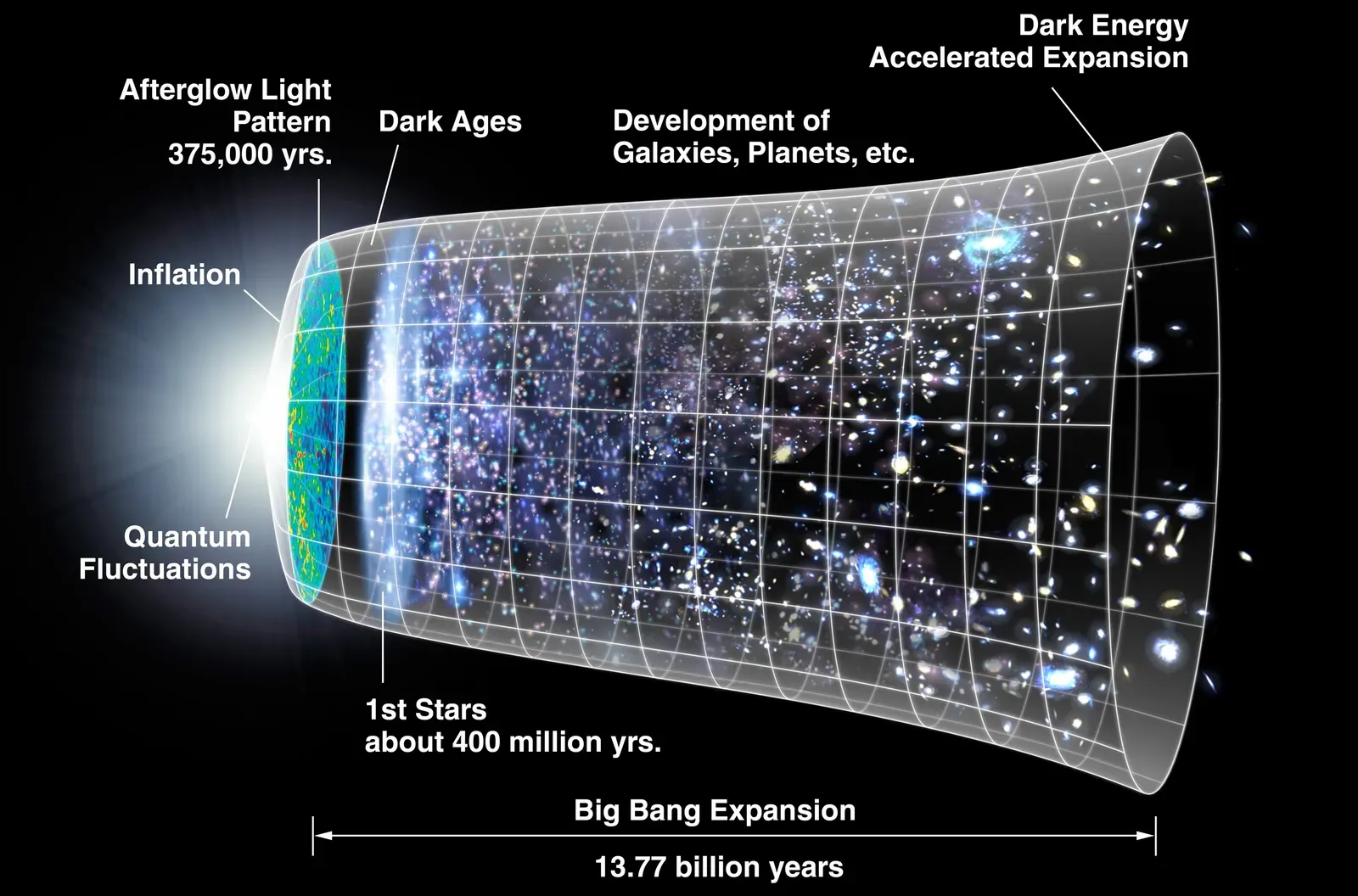
When you measure distant galaxies, you find that the universe isn’t just expanding; the expansion is speeding up over time. That is deeply counterintuitive: you’d expect the mutual gravity of all the matter in the universe to slow the expansion down, not crank it up. To account for this acceleration, you are forced to add something called dark energy, a mysterious component that makes up most of the energy content of the cosmos and acts like a kind of repulsive gravity. You can fit it neatly into your equations by allowing empty space itself to have energy.
The problem is that you have no agreed-upon microscopic explanation for dark energy. When you try to estimate the energy of empty space using quantum theory, you get answers that are wildly too large compared to what you observe. That mismatch isn’t a small technical glitch; it’s one of the worst theoretical failures in modern physics. For now, dark energy remains a placeholder name for “whatever is making the universe accelerate.” You can measure its effects on cosmic scales with growing precision, but you’re still guessing about its actual nature, like a doctor who can chart a fever perfectly but doesn’t know what infection is causing it.
9. Why Does the Universe Prefer Matter Over Antimatter?
According to your best theories, the Big Bang should have created matter and antimatter in almost exactly equal amounts. When matter meets antimatter, the two annihilate in a burst of energy. If the amounts were truly identical, you’d expect the early universe to have wiped itself clean, leaving behind only radiation and no atoms at all. Yet you obviously live in a universe filled with matter: stars, planets, people, pizza. Antimatter exists in tiny quantities you can make in labs or see in cosmic rays, but matter clearly dominates. The question is why reality is so biased.
Experiments have revealed small differences in how matter and antimatter behave, but those differences don’t seem large enough to explain the imbalance you see today. Theories propose extra ingredients – new particles, new interactions, or violent processes in the early universe – that could have tipped the scales. However, you haven’t yet confirmed any of these mechanisms experimentally. So you’re left with a profound puzzle: somewhere in the first instants of cosmic history, something broke the symmetry between matter and antimatter, and you don’t yet know what that something was. Your own existence depends on a cosmic unfairness that physics cannot fully account for.
10. Is Space Itself Smooth or Made of Tiny “Atoms” of Geometry?
When you look around, space feels continuous. You can imagine moving in smaller and smaller steps without limit. But when you combine quantum theory with gravity, it becomes plausible that at extremely small scales – far beyond anything you can currently probe – space and time might be discrete, built from fundamental chunks or patterns. Some ideas suggest that spacetime could be like a fabric woven from microscopic threads, or like a digital screen where reality updates in tiny pixels of geometry.
Different theories of quantum gravity paint very different pictures. Some treat spacetime as made from networks of connections, others as emerging from abstract quantum information, and still others from vibrating strings or membranes. The tricky part is that these models often give similar large-scale predictions, and you don’t yet have clear experimental access to the unimaginably tiny distances where they differ. So while your math strongly hints that the smoothness of space might be an illusion, you can’t yet say what, if anything, lies beneath it. You’re trying to decide whether reality is more like a film reel or a continuous beam of light, but all you have is a blurry trailer.
11. Do You Live in a Multiverse?
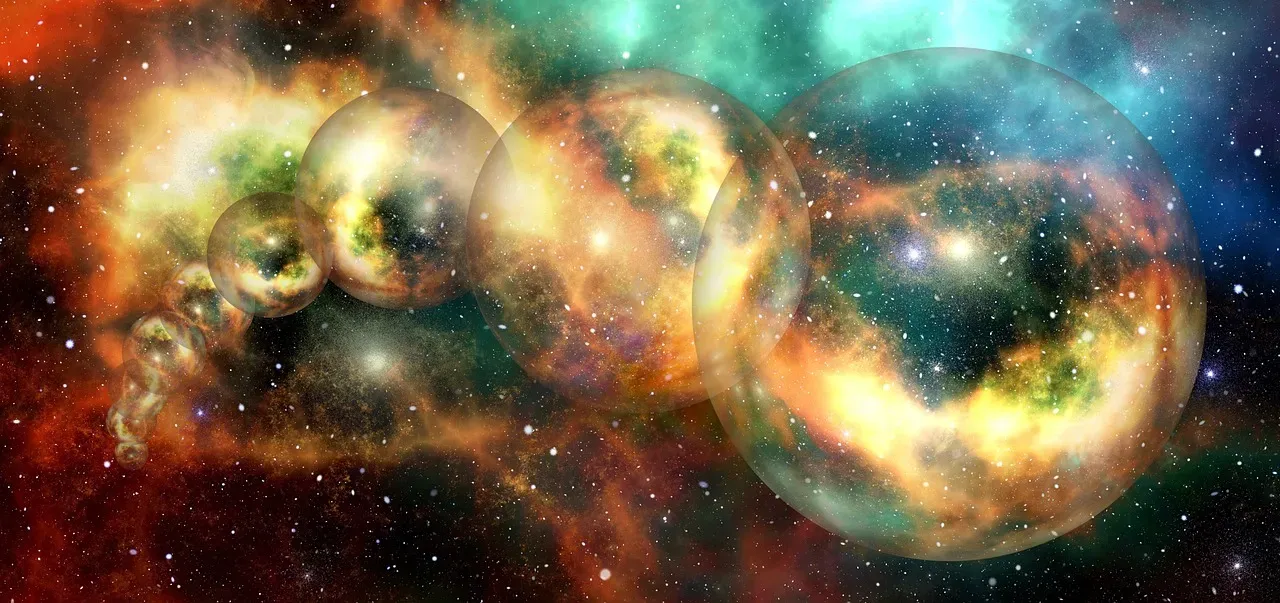
Some of your most ambitious theories quietly imply that your universe might be just one bubble in a vast cosmic foam. In some versions of inflationary cosmology, for instance, the process that made your universe expand could also generate many other regions with different properties. Some versions of quantum theory suggest that all possible outcomes of quantum events might be realized in parallel branches. These ideas are often grouped under the term multiverse, and they radically expand what you mean by “reality.”
The snag is that it’s incredibly hard to test these ideas directly. By definition, other universes – if they exist – might be causally disconnected from you, meaning no signal can ever travel between them and your own. Some physicists argue that you can still treat the multiverse as a scientific hypothesis if it helps explain why your universe has the specific laws and constants that allow life. Others worry that if you can never access these other realms in any way, you’ve stepped outside the bounds of physics into speculation. For now, the multiverse sits at a strange crossroads: tantalizing, mathematically suggestive, and yet frustratingly out of reach of your instruments.
12. What Is Consciousness Doing in a Physical Universe?
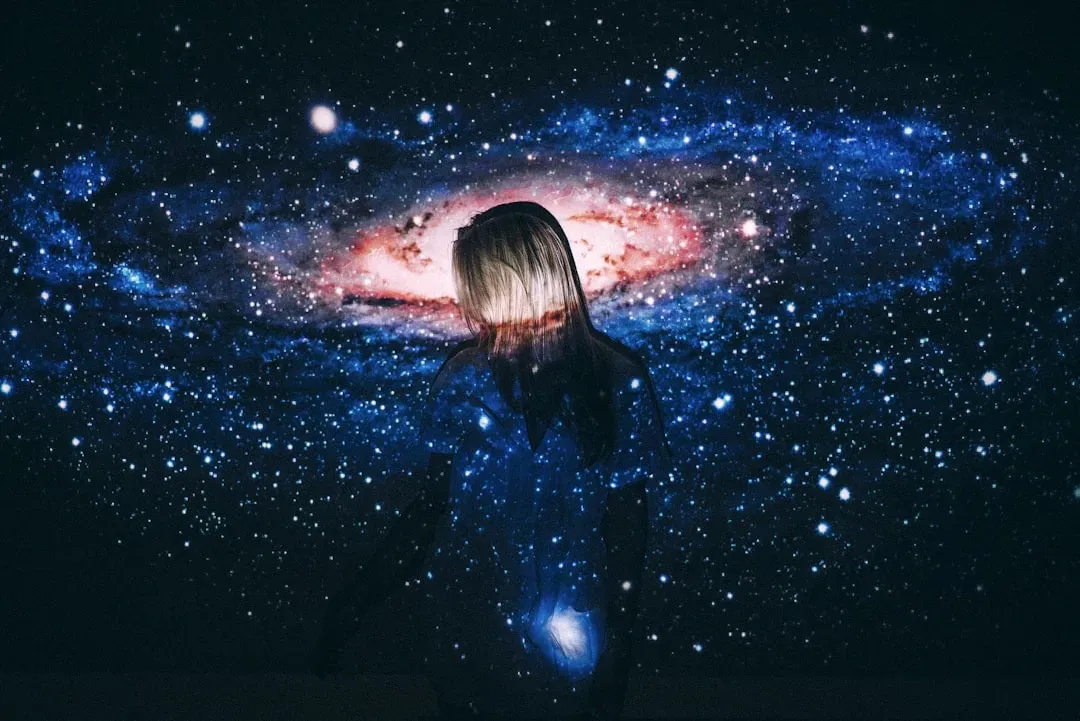
Physics is all about matter, energy, fields, and forces. You can describe particles colliding, stars dying, and black holes merging with exquisite precision. Yet, in the middle of all this machinery, you find something utterly different: conscious experience. You don’t just process information; you feel. You experience colors, sounds, pain, joy, and the simple fact of being an observer. How does that inner world arise from physical processes in the brain, and does it play any fundamental role in the workings of the universe?
Some physicists and philosophers argue that consciousness is entirely emergent: if you understand the brain well enough in physical terms, the mystery will evaporate. Others suspect that consciousness might force you to rethink what you mean by “physical,” perhaps linking it to information or to deep features of quantum theory. Crucially, you don’t yet have a universally accepted theory that connects the firing of neurons to the feeling of being you. Until you can bridge that gap, there’s a lingering sense that your picture of reality is incomplete, like a beautifully detailed map that somehow leaves out the person holding it.
Conclusion: Living Comfortably with the Unknown

When you look at these twelve questions together, a clear pattern emerges: your best physical theories work astonishingly well in the domains where you can test them, yet they leave immense gaps right at the foundations. You can launch spacecraft with centimeter-level accuracy but still have no firm grasp on what time is, why the universe exists, or what most of the cosmos is made of. That contrast can feel unsettling, because it shows you that being technologically advanced is not the same as deeply understanding reality.
At the same time, these unanswered questions are exactly what keeps physics alive and exciting. They’re open invitations for you – or someone like you – to push the boundaries of knowledge, to design new experiments, and to imagine daring new frameworks for reality. You’re living in a moment where the next breakthrough could rewrite your understanding of time, space, or even existence itself. So the real question you might sit with is this: now that you know how much you don’t know, what kind of universe do you hope you’re living in?