Most people think ancient graves hold little more than bones, broken pottery, and maybe a rusted blade. Archaeologists know better, and they’ve stopped bothering to correct you out loud.
Some burials are stuffed with trade goods hauled hundreds, sometimes thousands, of miles from where the person actually lived. These aren’t sentimental keepsakes or lucky souvenirs. They’re receipts from supply chains far more tangled than any textbook chapter on “early man” ever let on.
Here are 12 graves where the grave goods traveled farther than most of us will in a lifetime, the “isolated ancient people” myth collapses on contact, and the dead turn out to have been remarkably well-connected. Here’s what the dirt actually gave up.
#12 – The Red Lady of El Miron: Atlantic Shells in a Mountain Cave
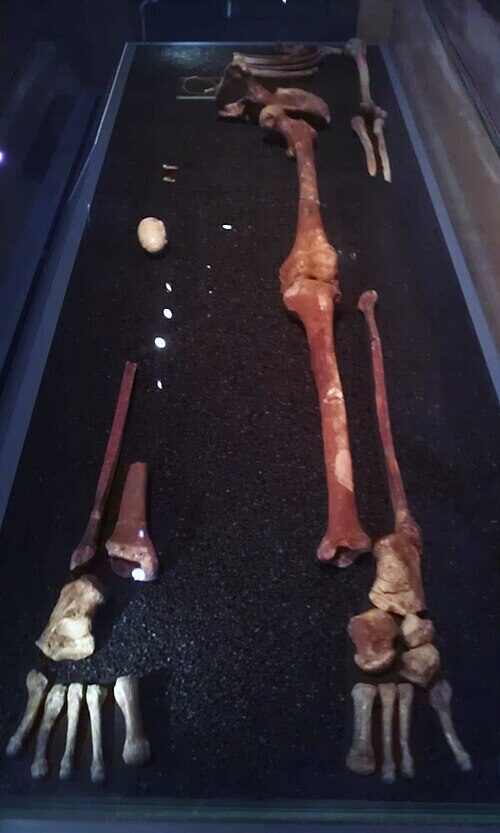
This Paleolithic burial in northern Spain looks simple at first glance. A woman, laid to rest roughly 18,700 years ago in El Miron Cave, coated in red ochre. Case closed, right?
Not quite. She was buried with marine shells and pigments that had no business being in that high mountain valley. The nearest ocean was the Atlantic coast, and getting shell material from there into the Cantabrian Mountains meant crossing serious, punishing terrain – on foot, with intent.
That’s not a casual beachcombing trip. It’s a supply chain, one built specifically to place ocean material inside a grave hundreds of miles inland. In many Paleolithic and later cultures, marine shells worked as portable status symbols, signaling identity, rank, or alliance between groups who otherwise never crossed paths.
Fast Facts
- Age: roughly 18,700 years old, among Europe’s oldest documented ochre burials
- Location: El Miron Cave, Cantabria, northern Spain
- Grave goods: red ochre pigment plus Atlantic marine shell ornaments
- Why it matters: early evidence that shell material moved through hunter-gatherer exchange networks, not just local foraging
The careful ochre treatment and the exotic goods mark the Red Lady as someone important in a hunter-gatherer world people still like to imagine as flat, equal, and simple. It wasn’t. But that’s mild compared to what turned up under the floorboards at #11.
#11 – Catalhoyuk Burials: Obsidian and Shells From Well Beyond the Plain
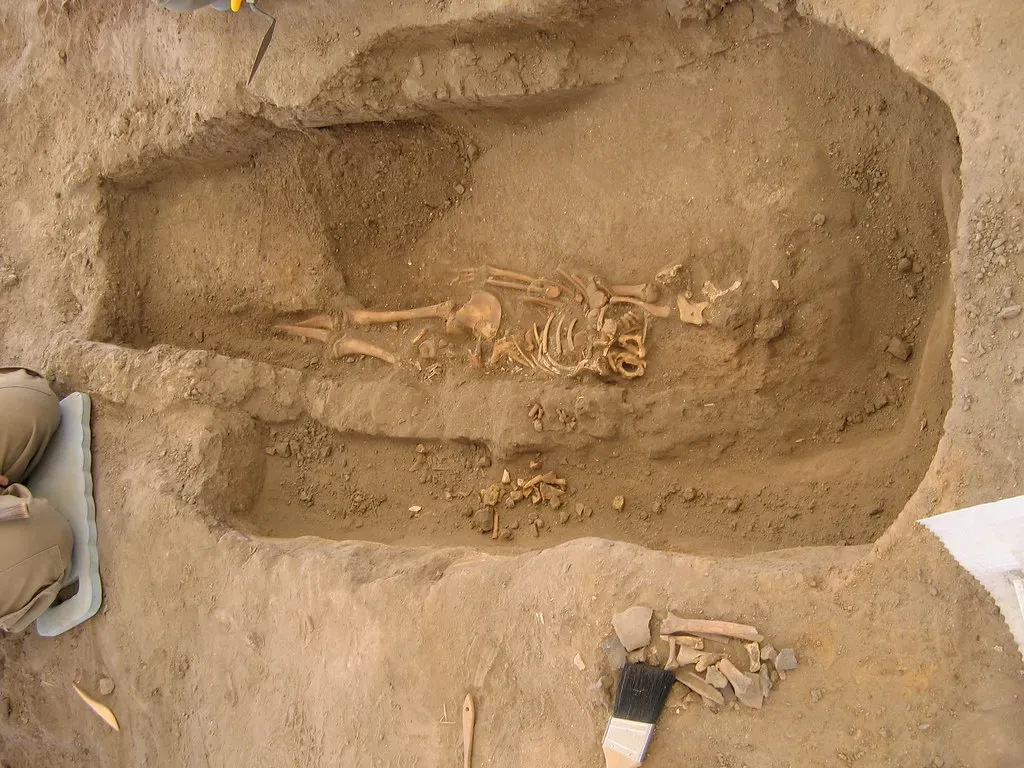
At the Neolithic mega-site of Catalhoyuk in central Turkey, people buried their dead directly under their own house floors. Cozy. Also a little unsettling. But the real surprise isn’t the location – it’s what’s inside some of those graves.
Researchers have pulled obsidian, marine shells, and pigments from burials that sit nowhere near the Mediterranean, the Aegean, or any volcanic source. Someone moved these materials in from far outside the local plain, through several hands, over real distance.
- Beads made from shells that had to pass through multi-step exchange networks to arrive
- Obsidian blades and fragments sourced from volcanic regions over 100 miles away
Obsidian wasn’t decoration – it was the high-tech material of its era, razor-sharp and prized for tools and weapons. Its presence means Neolithic farmers here were wired into long-distance trade webbing stretching across Anatolia and beyond, centuries before anyone built a palace.
Here’s the part that stings for the “Catalhoyuk was a proto-city of equals” crowd: only certain burials got the good stuff. That’s not equality. That’s rank, quietly written into who got buried with imported obsidian and who didn’t. But the distances involved here are nothing next to what shows up in Scandinavian burial mounds at #10.
#10 – Scandinavian Bronze Age Mounds: Baltic Amber and Mediterranean Bling
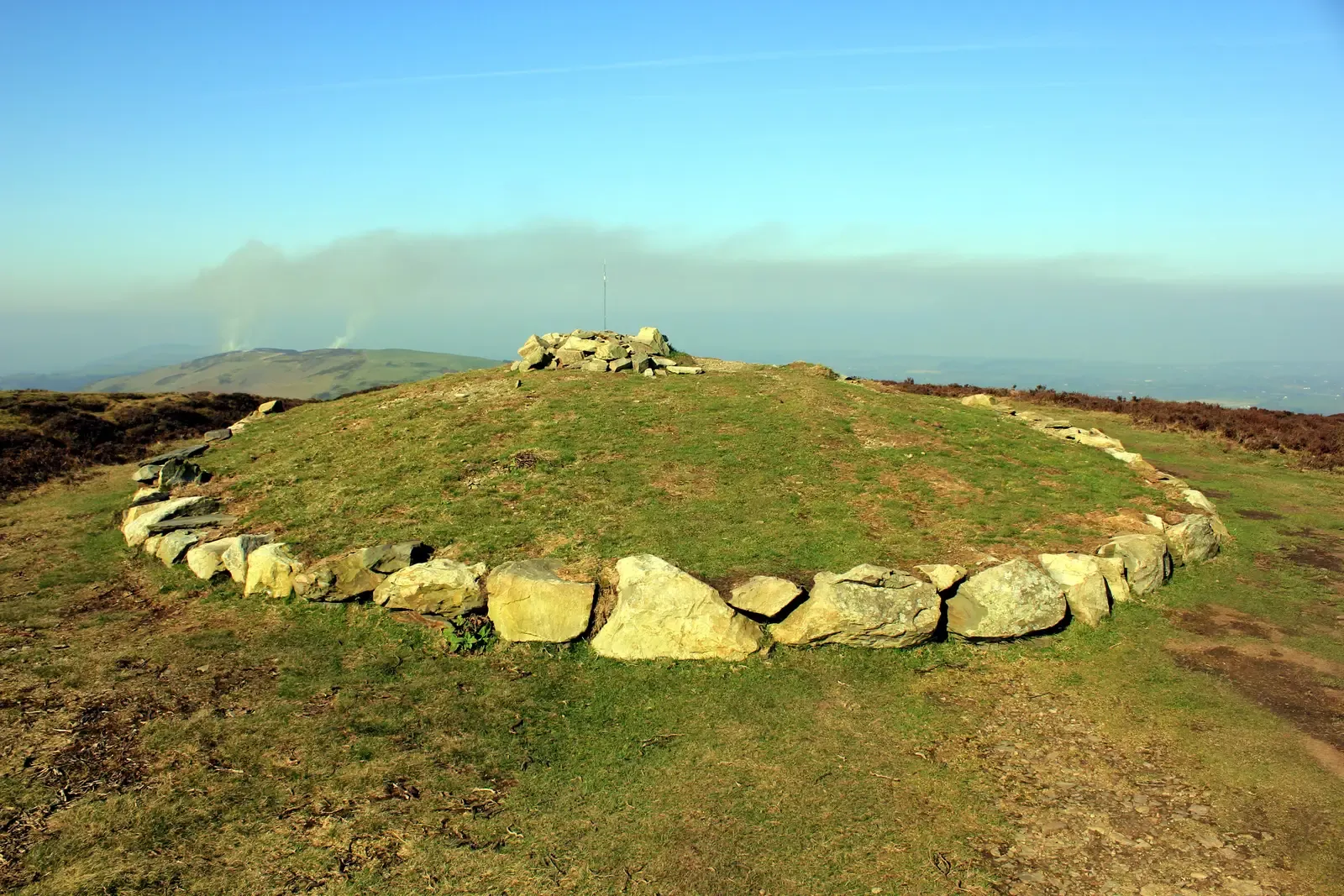
Crack open a Bronze Age burial mound in southern Scandinavia and you’d expect local bronze, maybe a spear, maybe a cloak pin. Instead, archaeologists keep finding Baltic amber that traveled south, Mediterranean glass beads that traveled north, and metalwork built from copper and tin that never came from anywhere nearby.
These graves are essentially maps of a pan-European supply chain, drawn in bone and metal. Take the Egtved Girl, buried in Denmark – we’ll come back to her later – who was interred with a bronze belt plate made from Central European raw materials and a wool garment whose isotopes suggest she spent part of her childhood somewhere else entirely.
- Amber traded all the way down into Mycenaean Greece and back
- Glass and exotic metalwork that moved north through complex, down-the-line exchanges
- Imported razors, pins, and ornaments with clear foreign design influence
This wrecks the tidy story of “isolated northerners” who supposedly didn’t wake up until the Viking Age. Centuries earlier, Scandinavian elites were already buying into a continent-wide prestige economy, using far-traveled goods to broadcast status even after death. But the sheer glitter of what’s buried in Bulgaria at #9 takes this to another level.
#9 – The Varna Necropolis: Gold, Shells, and Copper From Far Beyond the Black Sea
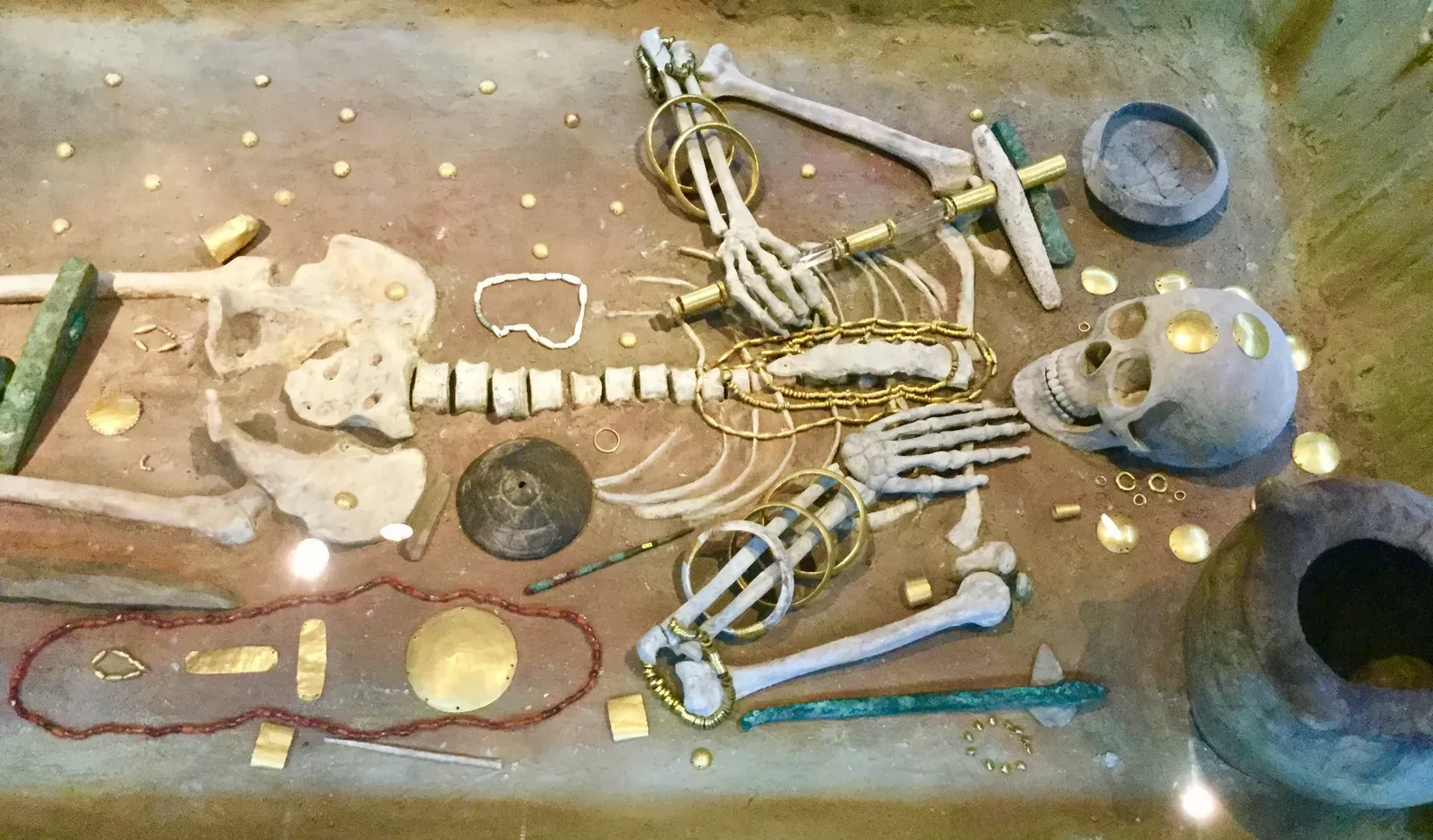
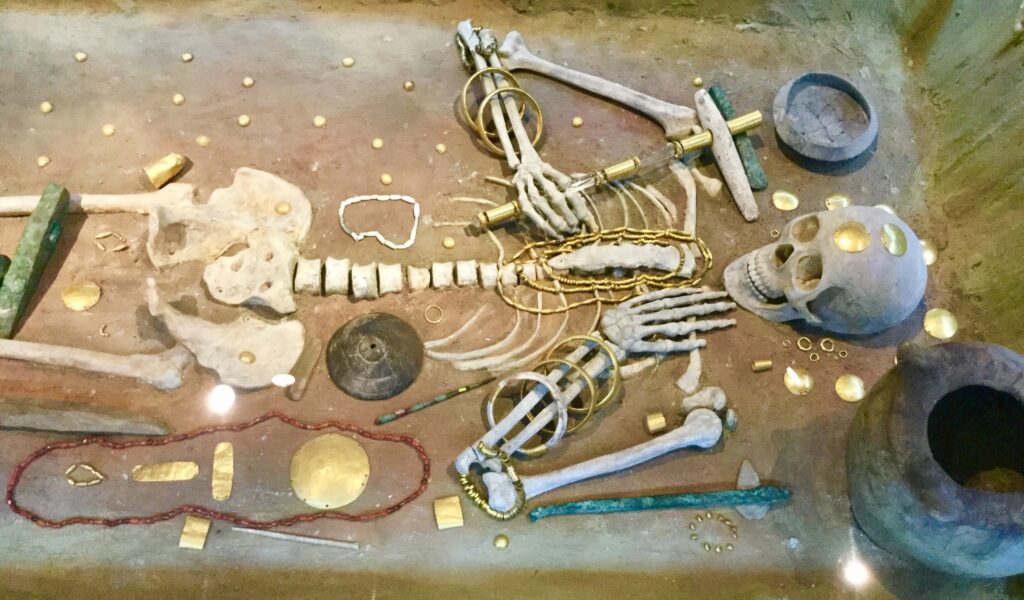
In Bulgaria’s Varna Necropolis, archaeologists uncovered some of the world’s oldest known gold objects, dating to around 4500-4300 BCE. Some of these graves look less like tombs and more like vaults that someone forgot to lock.
Everyone fixates on the gold. The more interesting story is what else got buried alongside it – a mix of local materials and goods that traveled hundreds of miles to get there.
- Gold ornaments so abundant in one single grave that it outweighs entire royal burials from later centuries
- Copper tools and ornaments linked to mining regions far from the Black Sea coast
- Mediterranean shell ornaments and Spondylus shells, dragged in through extended trade networks
Copper, gold, and Spondylus shell likely functioned as status markers and something close to proto-money, moving through specialized traders and local power brokers who controlled access to it. This wasn’t casual gift-giving between neighbors.
The richest Varna graves prove hierarchy, not just wealth. A handful of people got the heavy gold and the far-traveled shell; plenty of others got almost nothing. That’s not a village of equals – it’s a stratified society held together by long-distance value chains. And the goods only get more far-flung once we cross into England at #8.
#8 – Sutton Hoo Ship Burial: Byzantine Silver in an English Mound
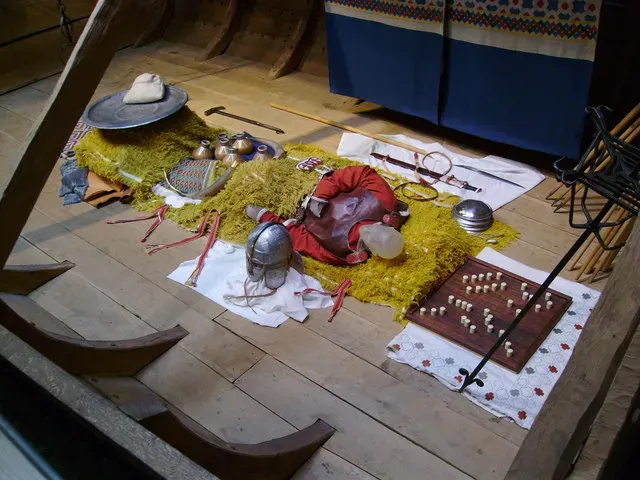
Most people know Sutton Hoo in eastern England for its helmet, the one that’s launched a thousand museum posters. What they usually miss is how aggressively non-local the rest of the grave actually is.
The early 7th-century ship burial, likely belonging to an East Anglian king often linked to Raedwald, is packed with objects whose raw materials and craftsmanship came from hundreds to thousands of miles away.
- A large silver dish stamped with an imperial mark from the Byzantine world, almost certainly made near the Eastern Mediterranean
- Silver spoons carrying Greek inscriptions, tied to Greek-speaking regions
- Garnets in cloisonne jewelry chemically traced to sources as far as India or Sri Lanka
- Weapon fittings and textiles showing close ties to Scandinavian and Frankish craftsmanship
This is not some backwater burial. Sutton Hoo reads like a curated showroom of early medieval globalization, buried whole inside a full-sized ship. The dead man, king or not, was surrounded by prestige goods meant to broadcast alliances, tribute, and possibly even distant religious contacts.
Sutton Hoo isn’t even the most extreme example from early medieval England, though. The hybrid, border-crossing burial goods waiting at #7 make a strong case for that title.
#7 – The Staffordshire Warrior Graves: Anglo-Saxon Elites With Continental Gear
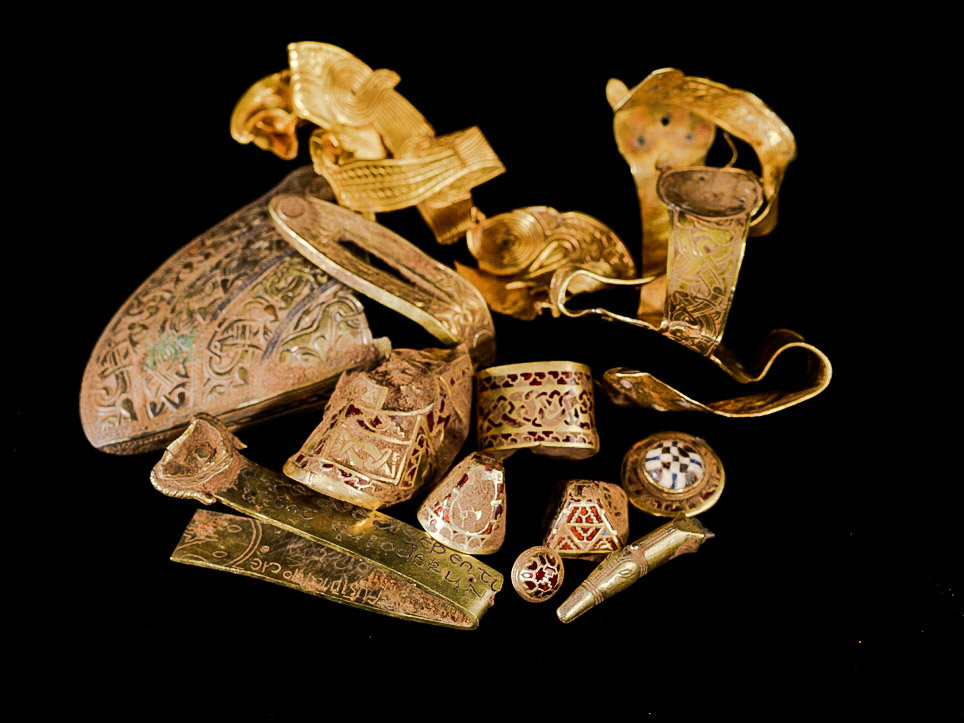
Anglo-Saxon cemeteries across England keep delivering the same quiet shock: elite graves packed with foreign-made weapons, glass, and jewelry linked to the Continent and beyond. Sutton Hoo grabs the headlines, but dozens of lesser-known burials tell an identical story.
Richly furnished warrior burials near the Staffordshire Hoard region, and scattered across Mercian and Kentish territories, show up loaded with imported material.
- Continental brooches and belt fittings, likely Frankish or Alemannic in origin
- Glass vessels and beads whose technology and style scream “import”
- Pattern-welded swords with fittings incorporating garnets from long-distance sources
The point isn’t just that these people had nice things. It’s that the nice things traveled, carried by gift-giving, marriage alliances, and mercenary service that moved objects – and people – across huge distances long before modern borders existed.
Quick Compare
| Grave | Farthest-Traveled Item | Distance Scale |
|---|---|---|
| El Miron (#12) | Atlantic marine shells | Regional |
| Varna (#9) | Spondylus shells & copper | Continental |
| Sutton Hoo (#8) | Garnets, Byzantine silver | Intercontinental |
| Tutankhamun (#1) | Lapis lazuli | Intercontinental |
A warrior buried in central England with a Frankish buckle and Mediterranean glass didn’t just shop overseas once. He was part of a political economy stretching across the Channel and deep into continental Europe. Some archaeologists argue we still underestimate how mobile early medieval elites really were – the graves suggest they’re right. But the geographical spread gets even more dramatic once wine enters the picture at #6.
#6 – The Vix Princess: Greek Wine Gear in a Celtic Tomb
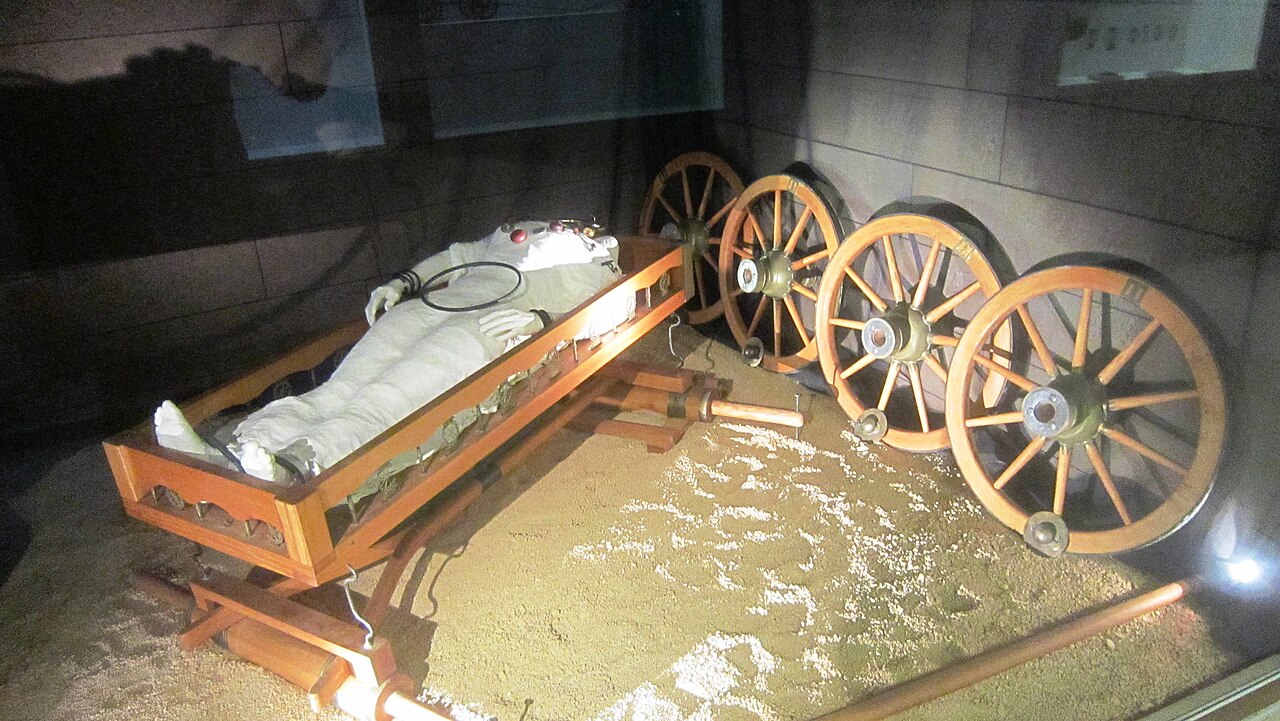
In eastern France, near the village of Vix, sits one of Europe’s most talked-about “Celtic” burials: a woman interred around the 6th century BCE beneath an enormous mound. Everyone talks about the giant bronze krater buried with her. Fewer people stop to think about what it actually means.
This so-called princess was buried with imported Greek banquet equipment that had to travel hundreds of miles from the Mediterranean to reach her.
- A colossal bronze krater, made in a Greek workshop, large enough to hold hundreds of liters of wine
- Attic pottery and Greek drinking vessels with clearly Mediterranean styling
- Local prestige items, including a four-wheeled wagon, built by high-status craftspeople in her own region
Vix sat at a major trade node linking Mediterranean merchants with inland salt, metal, and agricultural producers. Greek traders didn’t just ship wine north – they shipped the entire drinking set, and local elites folded it straight into their own feasting rituals and funerary symbolism.
Forget the old “civilized Greeks versus barbarian Celts” storyline. The Vix grave looks more like a negotiated partnership – Greek hardware, Celtic power, blended into one identity. Even that pales next to the pan-Eurasian tangle waiting in the Altai Mountains at #5.
#5 – Pazyryk Frozen Graves: Chinese Silk in the Siberian Steppe
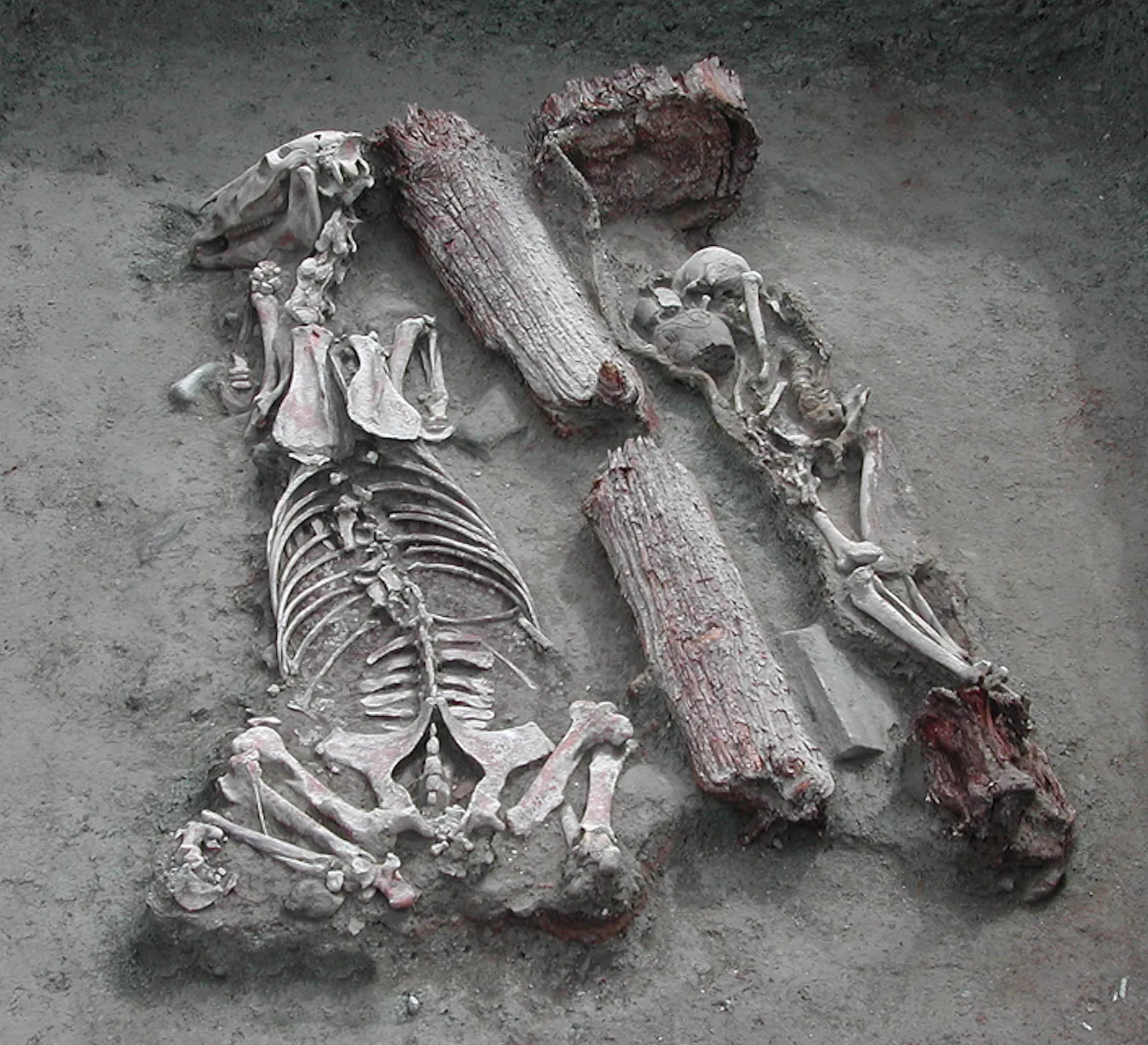
Deep in Siberia’s Altai Mountains, the Pazyryk culture buried their dead in kurgans – massive stone and earth mounds. Thanks to permafrost, several of these 5th-to-3rd-century BCE graves survived in startling condition, right down to the fabric.
And the fabric is the story. These tombs contain Chinese silks and other imported luxuries that crossed vast steppe routes long before anyone coined the phrase “Silk Road.”
- Silk textiles traced stylistically and chemically to ancient China, thousands of kilometers away
- Carpets, appliques, and ornaments with motifs linked to Achaemenid Persia and neighboring regions
- Local felt art depicting fantastical beasts, creatively remixing foreign influences into something new
Greek and Chinese sources both dismissed these mounted nomads as wild steppe raiders. Their graves argue otherwise – they sat right in the middle of a trans-Eurasian exchange web, working as both consumers and middlemen.
Chinese silk, Persian motifs, and local craftsmanship blend together in a frozen record of early globalization that predates the term by two thousand years. If you still picture the Silk Road as merchants ambling between a couple of big cities, Pazyryk burials should wreck that image completely. But the goods get even more unexpected once we cross the ocean to Alabama at #4.
#4 – Moundville’s Mississippian Graves: Gulf Shells Deep in the Interior
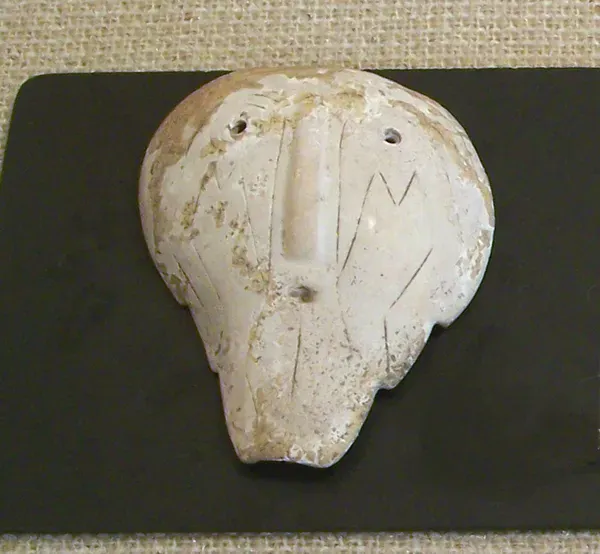
In what’s now Alabama, the Mississippian site of Moundville served as a major political and ritual center between roughly 1200 and 1450 CE. American prehistory used to get taught as “local tribes, local stuff.” Then archaeologists started cataloging the grave goods properly, and that framing fell apart fast.
- Marine shells from the Gulf of Mexico, carved into elaborate gorgets, cups, and ornaments
- Copper plates and ornaments carrying iconography shared across the Southeast and Midwest
- Exotic stones and minerals that clearly originated far from the Black Warrior River valley
Those Gulf shells didn’t walk themselves inland – they moved through extensive riverine and overland trade networks that stretched across huge chunks of the continent. Art styles from the so-called Southeastern Ceremonial Complex show up in graves from Oklahoma to Georgia, suggesting shared religious ideas traveled right alongside the goods.
The dead at Moundville weren’t just local elites showing off. They were plugged into a continent-scale ritual economy, using far-traveled items to stage power, ancestry, and myth in front of entire communities. Historians once downplayed pre-contact trade in North America – the graves make that position look flatly outdated. Nothing here, though, quite matches the shock of actual African ivory showing up at #3.
#3 – Viking Graves With Islamic Silver, Silk, and African Ivory
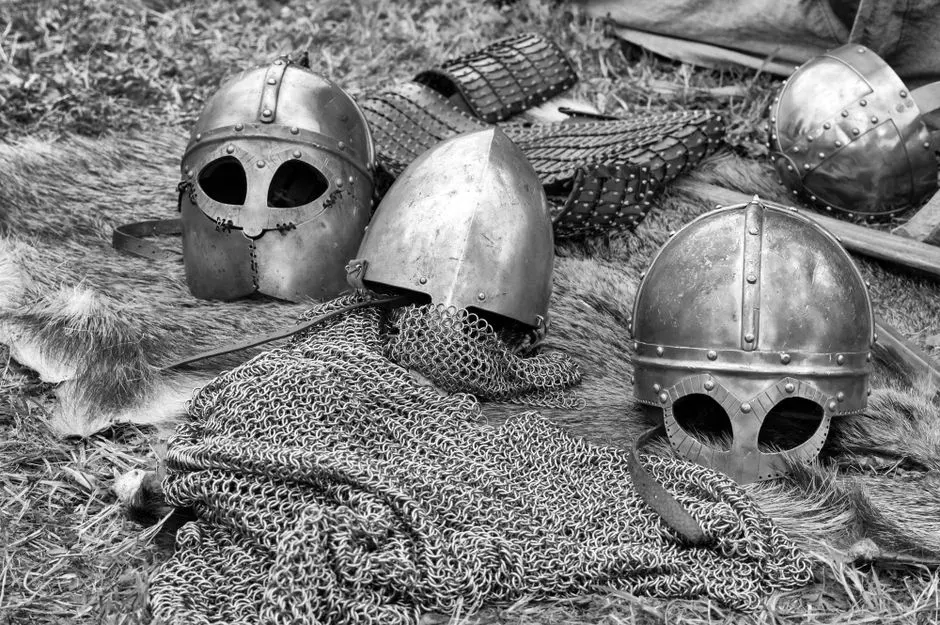
Everyone loves the image of Vikings storming monasteries. Their graves tell a stranger, more interesting story: raiders, traders, and middlemen plugging Scandinavia into an entire Afro-Eurasian economic system.
In elite burial mounds across Sweden, Norway, and Denmark, archaeologists keep pulling out goods from genuinely staggering distances.
- Silver dirhams – Islamic coins minted in places like Baghdad and Samarkand – carried north through river routes into Russia and then Scandinavia
- Silk textiles and fragments from Byzantine or Central Asian workshops
- Beads and ornaments using carnelian or glass with Middle Eastern or Asian origins
- Walrus ivory, and in some cases, likely African elephant ivory
These objects wound through a maze of routes: Islamic mints to Rus trading towns, Constantinople to northern markets, the North Atlantic to continental fairs. Some Viking graves read like curated highlight reels of that entire network, condensed into a single burial mound.
This isn’t just “Vikings got rich raiding.” Many were ruthless logisticians, working the river nodes along the Volga and Dnieper, buying, stealing, and reselling goods across staggering distances. The chiefs and captains buried with Islamic silver and eastern silk died wrapped in the literal evidence of their trade routes. Even they don’t quite match the mythic mix of goods buried with a teenage girl at #2.
#2 – The Egtved Girl: A Teenager Who Traveled Like a Diplomat
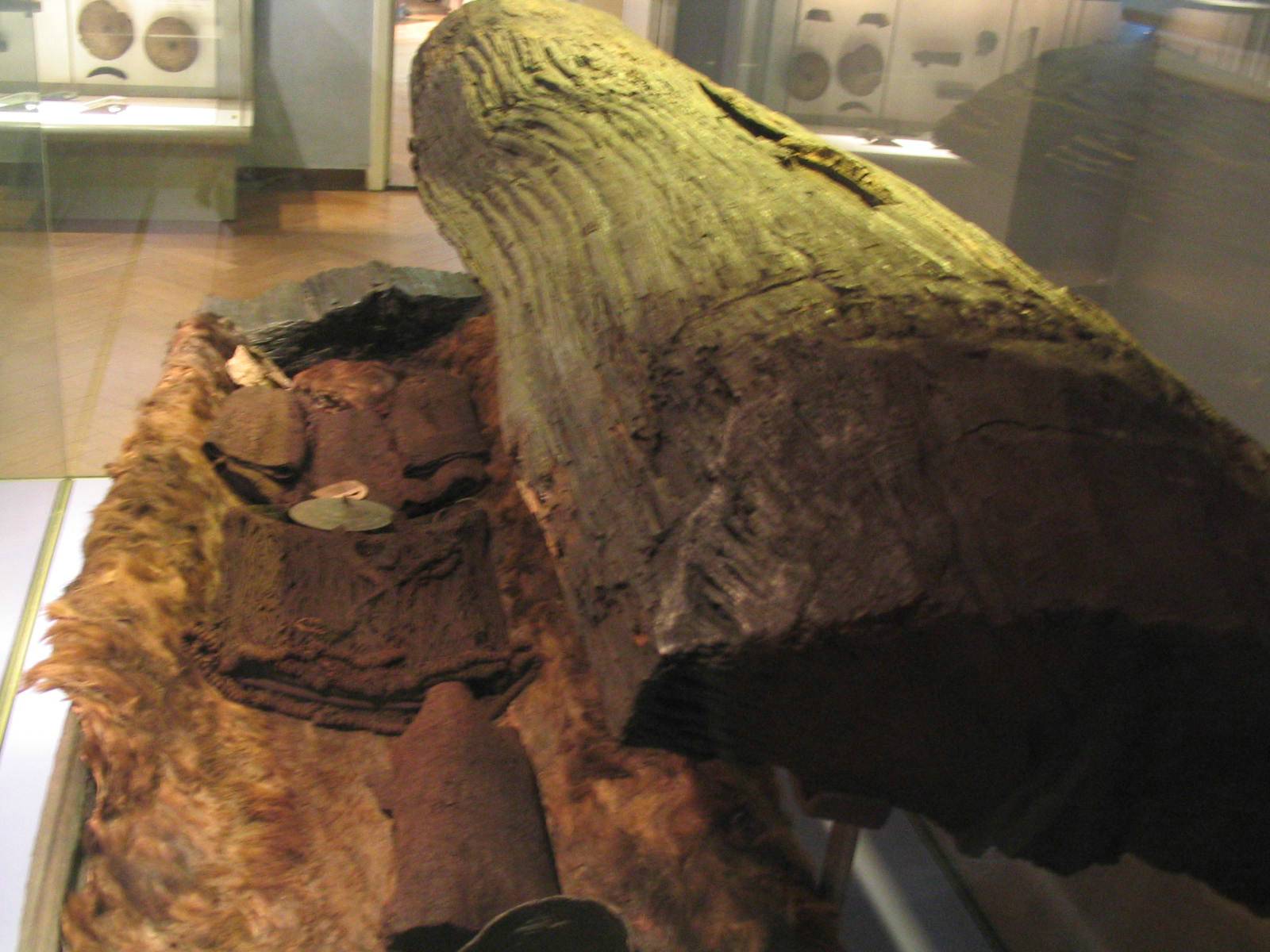
Back to Denmark, and the Egtved Girl, buried around 1370 BCE. At first glance, her grave looks almost humble: a well-preserved oak coffin, a wool skirt, a belt disk, a small bucket of beer-like drink. Then the isotope science kicks in, and the whole story blows open.
Strontium isotope analysis of her teeth and hair shows she didn’t grow up anywhere near where she was buried. Her chemical signature points toward a region likely in southern Germany or nearby. Her hair even records her moving back and forth between regions in the final years of her life – a Bronze Age commuting pattern nobody expected to find.
- A bronze belt plate made from raw materials sourced through Central European metal networks
- A wool garment with an isotopic profile pointing away from local Danish herding lands
- Burial treatment marking her as high status despite being barely out of her teens
One plausible explanation is that she was part of an elite marriage or diplomatic alliance, moving between powerful families or chiefdoms and carrying relationships as much as goods. The imported materials in her grave are the physical leftovers of that role.
Worth Knowing
- Strontium isotopes settle into teeth and hair based on the local water and soil a person consumes
- Matching those ratios to known geological regions can reveal where someone actually grew up
- Hair grows in increments, so it can record travel history almost month by month
- This method now regularly overturns old assumptions about how “stuck in place” ancient people were
While plenty of people still imagine Bronze Age farmers as homebound and rooted to one valley their whole lives, the Egtved Girl’s life and death argue otherwise. She moved. Her belongings moved. And it all ended up in one modest-looking Danish coffin. But nothing on this list beats the sheer volume of far-flung materials waiting in Egypt at #1.
#1 – Tutankhamun’s Tomb: A Globalized Ingredient List Fit for a Boy-King
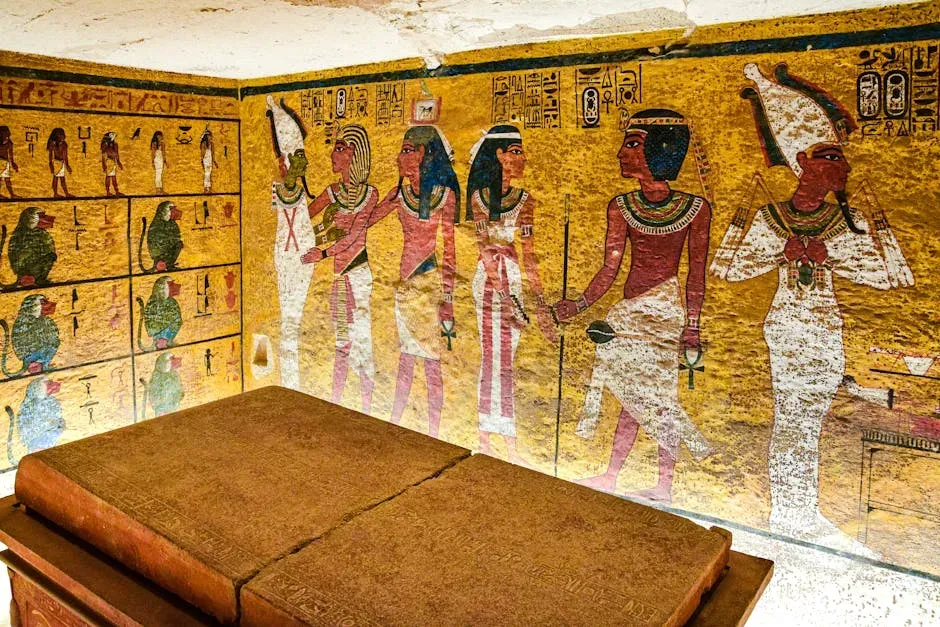
Everyone knows Tutankhamun’s tomb is loaded. Fewer people grasp exactly how far its raw materials traveled to get there. Behind the iconic gold mask and the nested coffins lies a network map of Late Bronze Age trade stretching across Africa, the Near East, and beyond.
- Gold sourced from mines in Nubia and possibly other regions deep in Africa
- Lapis lazuli from Afghanistan, brought in via long-distance overland routes
- Glass and faience objects whose raw ingredients, including cobalt colorants, likely originated far to the north or east
- Cedarwood from Lebanon, ebony from tropical Africa, and resins from Levantine or more distant trees
The boy-king died young, but his burial kit reads like a catalog of everything Egypt’s empire and diplomacy could pull in from every direction at once. Tribute, trade, and conquest all left fingerprints inside that single clustered set of objects.
Tutankhamun’s tomb often gets treated as a uniquely extravagant one-off. In reality, it’s a freakishly well-preserved snapshot of a much wider royal practice: building an afterlife arsenal out of far-traveled, high-value goods, because when your soul expects to live forever, local wood and clay simply don’t cut it. If you want a single grave that proves ancient trade was global in scope, this is the one.
The Verdict: Ancient “Isolation” Was Always a Myth
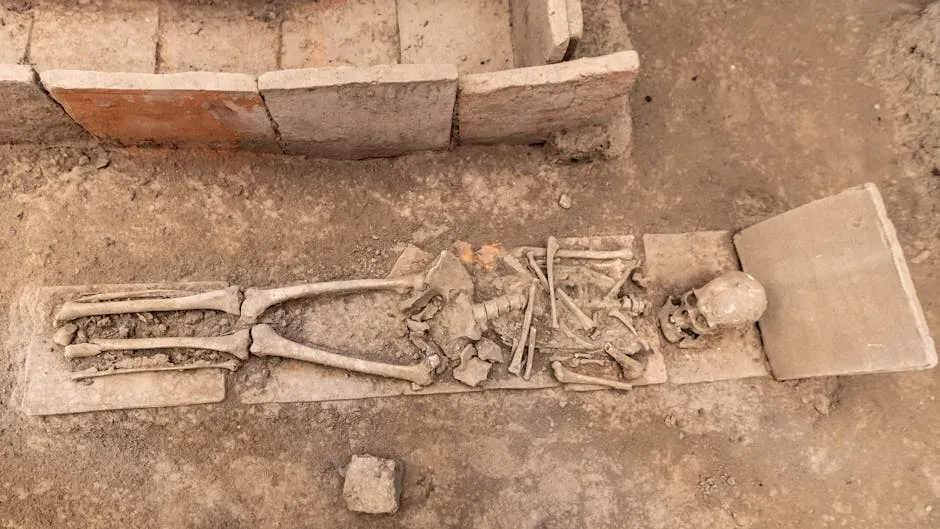
Most people still picture ancient societies as small islands, cautiously trading with one or two neighbors at best. These 12 graves demolish that story completely. From Paleolithic shell beads in a Spanish mountain cave to Chinese silk in Siberian permafrost, from Gulf Coast shells buried deep in Alabama to Islamic coins tucked into Viking ships, the evidence keeps saying the same thing: people have been moving goods, ideas, and identities across enormous distances for a very, very long time.
What’s genuinely uncomfortable – especially for older scholarship – is what that implies. “Simple farmers,” “isolated barbarians,” and “tribes on the edge of civilization” turn out to have been deeply embedded in complex, overlapping trade webs the whole time. Elites flexed with imported gear, sure, but even their graves hint at invisible caravans, marriage alliances, and middlemen whose names we’ll never recover.
If you ask me, the real mistake is treating globalization like a modern invention. It isn’t. It’s ancient, messy, and stubbornly persistent – we just finally have the isotopes, the chemistry, and the excavation records to actually see it. The next “isolated” culture someone tries to sell you on probably has a grave somewhere proving otherwise.