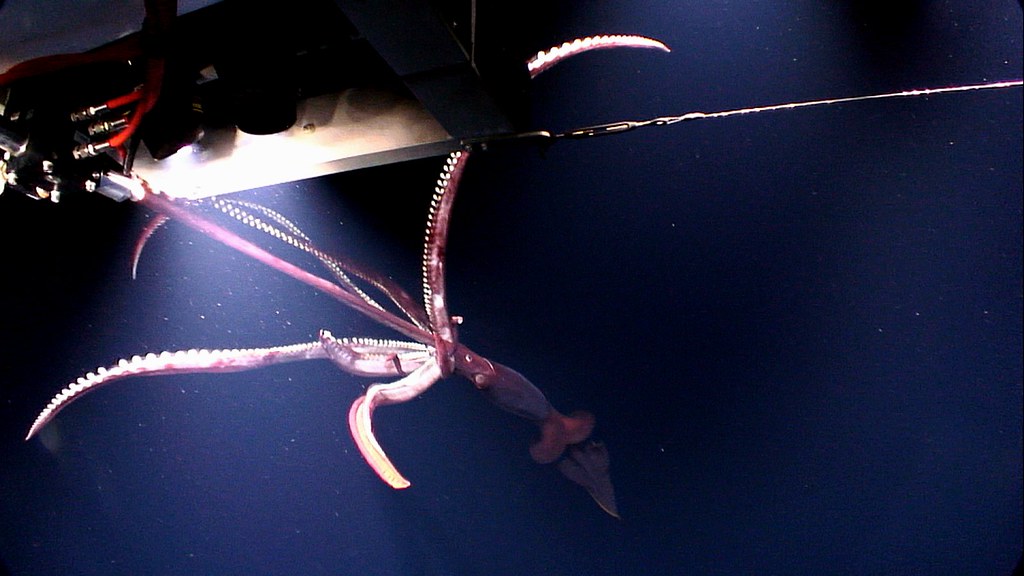
Most people assume the ocean’s mysteries are old news – that we’ve already mapped every reef, tagged every whale, and photographed every strange thing lurking below. That assumption is dead wrong. Some of the most famous deep-sea animals on the planet, creatures whose names show up in textbooks and horror movies alike, were never actually filmed alive until shockingly recently, despite scientists chasing them for generations.
This isn’t a story about scientists lacking curiosity or funding. It’s a story about animals so shy, so pressure-adapted, and so allergic to light and engine noise that our own technology kept scaring them off before anyone got a clean shot. Twelve of those animals finally broke cover in front of a camera – and what showed up on the footage didn’t just confirm old guesses, it quietly rewrote them.
#1 – The Giant Squid (Architeuthis dux)
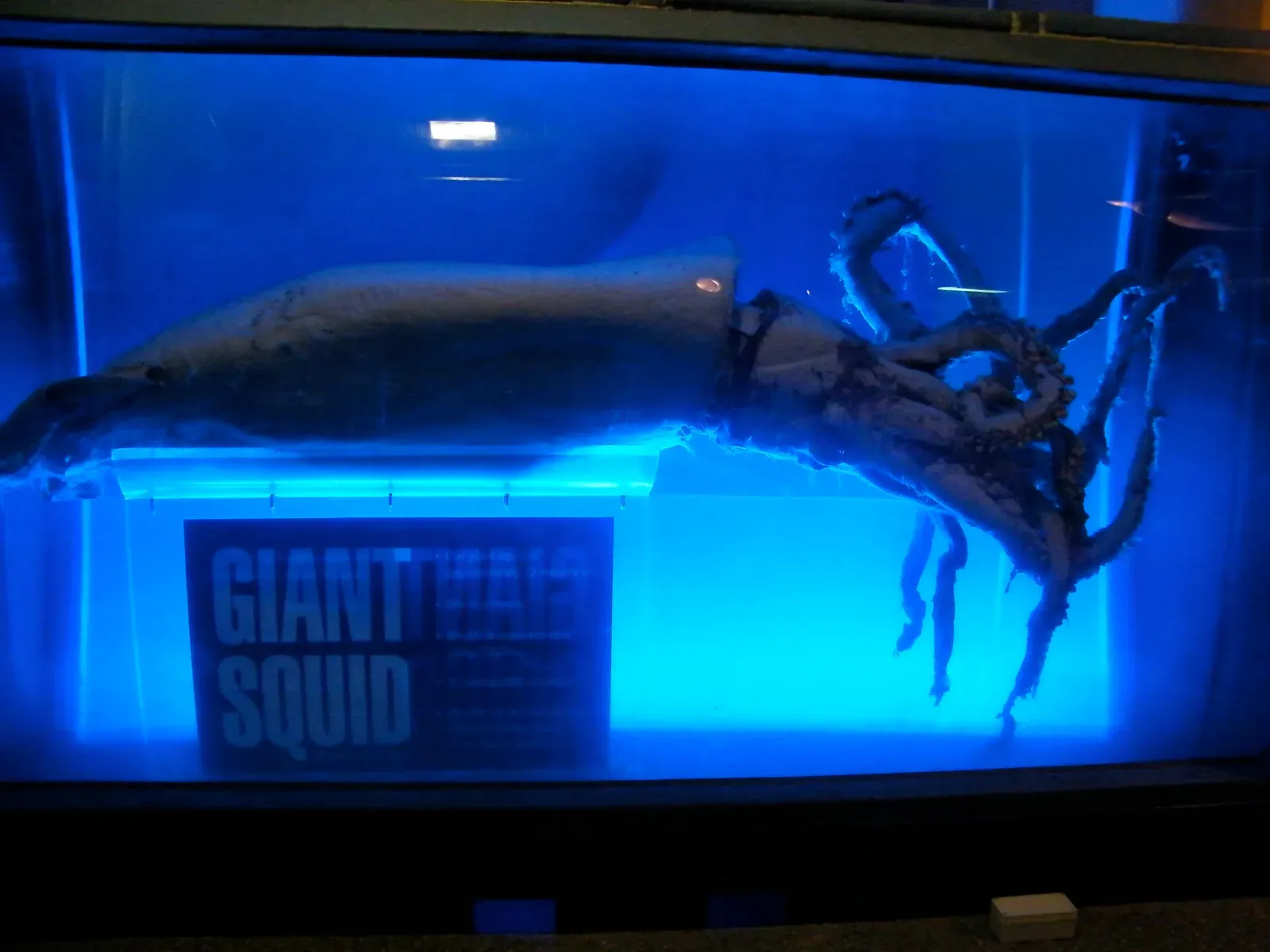
For more than a century, the giant squid was basically a sailor’s ghost story with Latin attached. Scientists had dead bodies, sucker-scarred whale skin, and grainy photos of carcasses on beaches – but no one had ever filmed a healthy giant squid alive in its deep-sea home. For a long time, that led many people to quietly wonder if we’d never really see one in action.
The problem wasn’t rarity, it was noise. Giant squids live hundreds to thousands of feet down and seem to actively avoid bright lights and clanking submersibles. Early expeditions relied on floodlit cameras and roaring metal vehicles, which probably scared these animals off long before the first frame ever recorded them.
Fast Facts
- On September 30, 2004, Kubodera and his team became the first people to photograph a live giant squid in its natural habitat
- Two years later, on December 4, 2006, he also managed to successfully film a live adult giant squid for the first time ever, though the team pulled a live giant squid to the surface, where it subsequently died
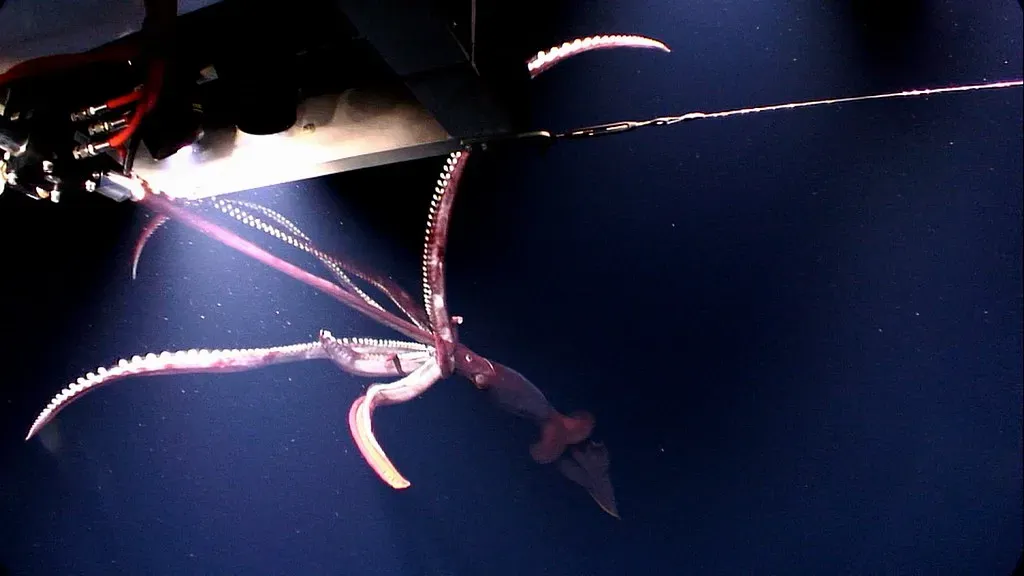
- On July 10, 2012, Kubodera, together with Steve O’Shea and Edith Widder, became the first to film a live giant squid in its natural habitat from a submersible off the Bonin Islands
- Giant squids can grow up to 60 feet in length
The real breakthrough came when researchers finally started thinking like predators instead of tourists. Instead of blasting the water with white light, they used red lights that many deep-sea animals can’t see, paired with a bioluminescent “squid lure” that mimicked the flashes of prey. They deployed it all on quiet, drifting platforms instead of loud submersibles.
Once they stopped announcing their presence, the footage followed – first off Japan, then years later in the Gulf of Mexico. Even now, we only have a handful of short clips of Architeuthis in motion. We still haven’t watched it hunt, mate, or tangle with a sperm whale on camera. Most people assume we’ve “nailed” the giant squid already. But that’s nothing compared to what we found about #2…
#2 – The Colossal Squid (Mesonychoteuthis hamiltoni)
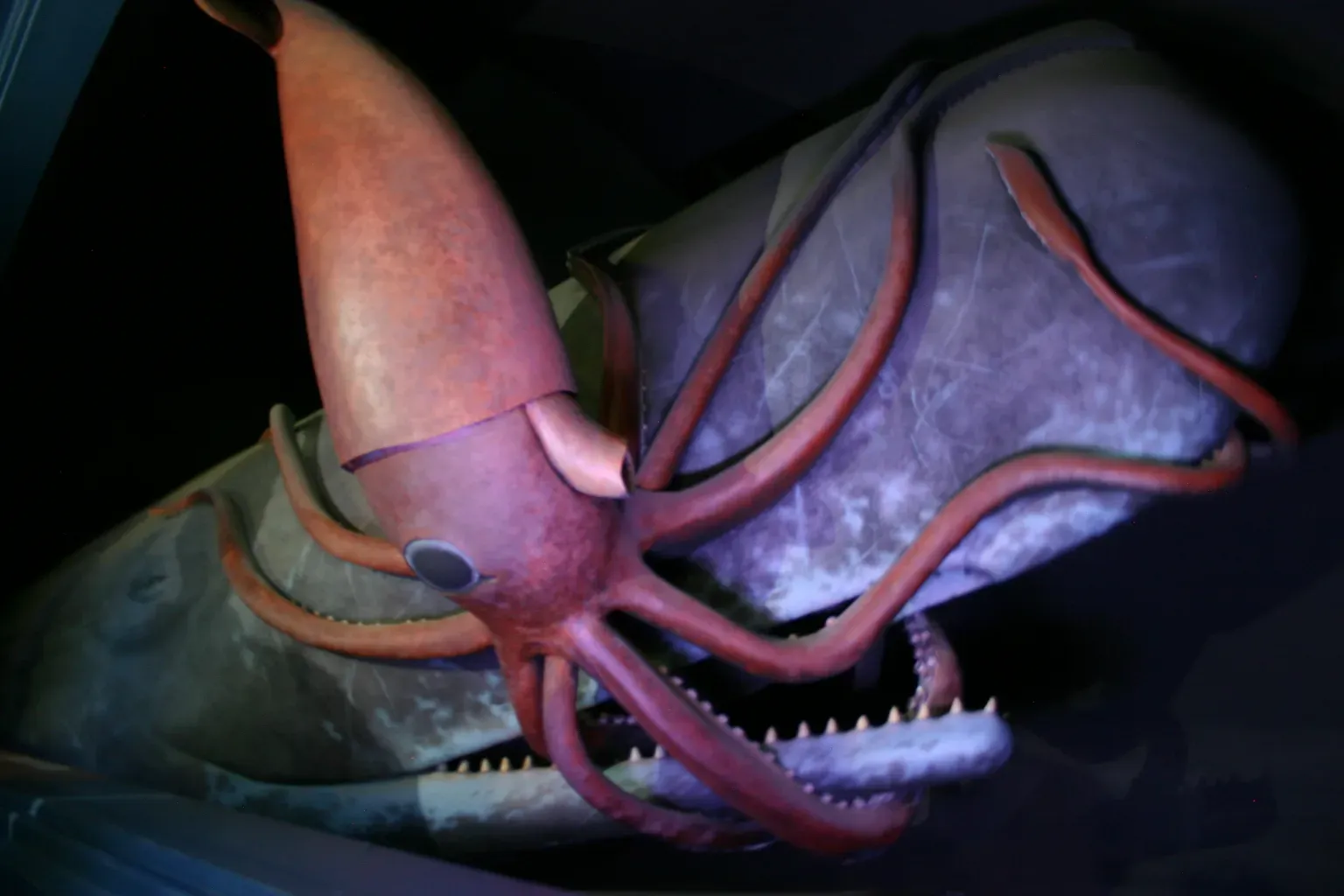
If the giant squid is the celebrity, the colossal squid is its reclusive, bigger, and frankly meaner older cousin. Most people don’t realize this, but the colossal squid is actually heavier and bulkier than the giant squid, even though it’s a bit shorter in length. It has rotating hooks on its tentacles and a thicker, more muscular body built for cold Antarctic waters.
For decades, the only “evidence” of this animal came from two places: damaged sperm whales and mangled remains hauled up by Antarctic fishers. Scientists knew it existed because they had pieces – beaks in whale stomachs, torn tentacles, bodies wrecked by nets. Seeing one alive, swimming under its own power, was another story entirely.
Every early “live” sighting involved an animal near the surface, struggling and disoriented after being hauled up from the deep. That tells you almost nothing about how it actually behaves a thousand meters down in its freezing natural habitat. For years, that distorted, dying version was the best anyone could do.
It took better under-ice ROVs, low-light cameras, and improved Antarctic logistics to even begin capturing usable footage. Even now, most clips online are either a dying squid at the surface or a brief, shadowy pass. Scientists suspect healthy colossal squid rarely come near the top at all, preferring to ambush prey from the cold deep. We’ve finally watched a giant squid in its element; the colossal squid remains mostly a rumor in motion. But that’s nothing compared to what we found about #3…
#3 – The Goblin Shark (Mitsukurina owstoni)
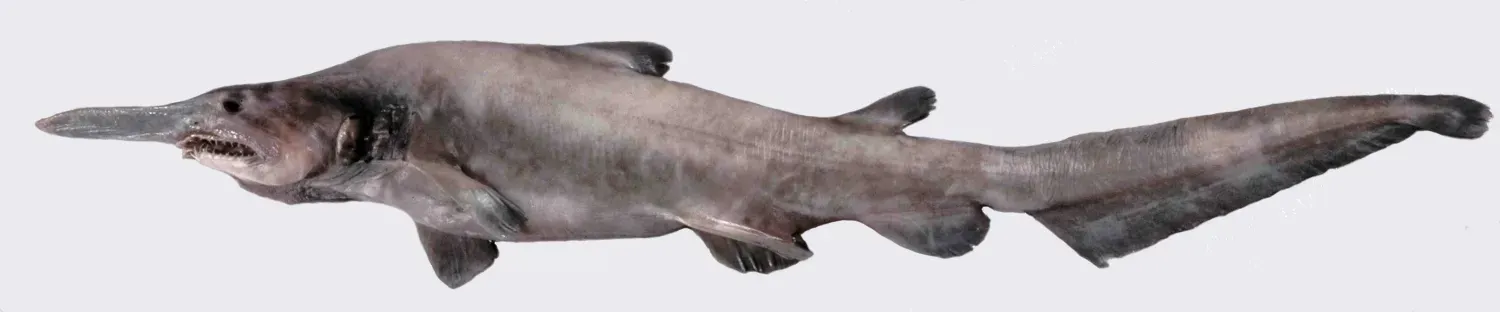
Most sharks look like, well, sharks. The goblin shark looks like something that escaped a 1980s horror movie storyboard. It has a long, flattened snout and a jaw that can sling-shot out of its face in a split-second to grab prey, almost like a spring-loaded trap. Scientists knew the anatomy from dead specimens for years, but how that jaw actually worked in real time was a total mystery.
The goblin shark sticks to deep slopes and offshore canyons, which is exactly why it’s rarely seen. Early records all came from trawlers that accidentally hauled them up, already stressed or dead. Researchers could study the bones and teeth, but they were essentially guessing about its behavior in the wild.
Only with high-speed deep-sea video did scientists finally capture the jaw mechanism in action, and the result shocked even professionals. The goblin shark’s jaws can shoot forward more than 8 to 9 percent of its body length, one of the most extreme jaw protrusions known in any vertebrate on Earth.
That’s like a human launching their entire lower face out past their nose to snag a sandwich. Those slow-motion clips turned the goblin shark from a weird footnote into a biomechanics icon overnight. Yet the shots are still rare, since a relaxed goblin shark at depth is genuinely hard to find on camera. But that’s nothing compared to what we found about #4…
#4 – The Frilled Shark (Chlamydoselachus anguineus)
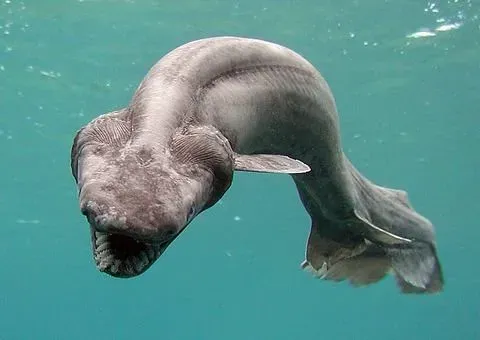
If you wanted a living stand-in for an “ancient eel-dragon,” the frilled shark is it. Long, sinuous, with frill-like gill slits running down its throat, it doesn’t look like a modern shark at all. Fossil relatives stretch back tens of millions of years, which is why it’s often lazily labeled a “living fossil.” But for decades, our only views were rotting specimens and grainy deck photos, never an animal in its cold, dark home.
The frilled shark lives on continental slopes, often 500 to 1,500 meters down, hugging dark trenches and muddy bottoms. Trawlers occasionally brought them up, but by the time they hit the surface, they were dying, decompressed, or stiff. That’s not an animal in its natural state; that’s a biological artifact.
Eventually, deep-towed cameras finally caught frilled sharks gliding in the dark, and the footage changed the story completely. Instead of a lumbering relic, the frilled shark moves with a smooth, eel-like motion and appears capable of quick lunges to grab squid and fish, using backward-pointing teeth arranged in neat rows.
It’s not “stuck in time”; it’s a specialized predator built for ambush in cold, deep water. Experts still rarely spot them on regular surveys – they seem patchy, tied to particular slopes and canyons, and easily startled by noise and light. While social media loves the “dinosaur shark” angle, the real story is how much we still don’t know. But that’s nothing compared to what we found about #5…
#5 – The Megamouth Shark (Megachasma pelagios)
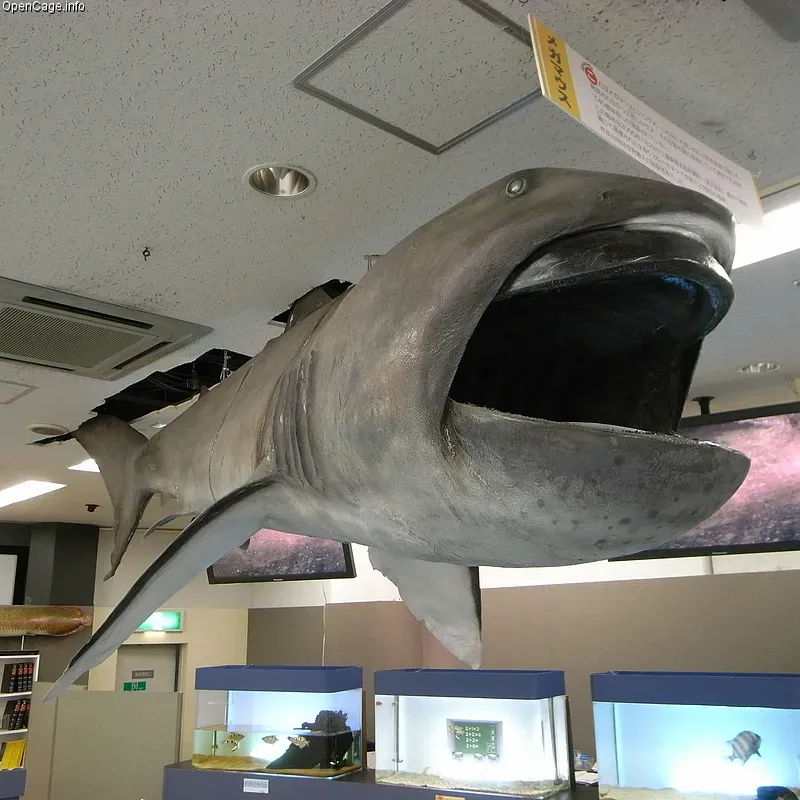
Most shark species we “discover” are small, cryptic bottom-dwellers. The megamouth shark was different: a massive, glowing-mouthed filter feeder more than 5 meters long that somehow evaded science until 1976. Imagine an animal the size of a small car managing to go unnoticed for most of modern marine biology.
At a Glance
- First discovered in 1976, tangled in a U.S. Navy anchor cable off Hawaii
- Grows more than 5 meters (over 16 feet) long, yet stayed hidden from science for decades
- Only a few dozen specimens have ever been documented worldwide
- Mostly nocturnal, rising at night and sinking by day, which makes clean footage rare
After the first specimen tangled in a U.S. Navy anchor cable off Hawaii, scientists scrambled to learn more. Over the next few decades, only a few dozen specimens were ever documented worldwide, many of them dead strandings or accidental catches. Filming a healthy megamouth freely swimming in its midwater world took far longer.
It’s mostly a nocturnal, deep-diving animal, rising up at night and sinking back down by day, which complicates everything about tracking it. Early footage attempts were limited to distressed animals near the surface – interesting, but misleading about its real behavior. Only with dedicated tagging campaigns and coordinated underwater camera work did researchers get better glimpses of megamouths behaving normally.
Those clips showed a slow, almost lazy swimmer, mouth wide, likely following dense patches of plankton and small jellyfish. That glowing-looking mouth lining may help attract prey in low light, though the details are still debated. We’ve seen just enough to prove megamouth is real – and not nearly enough to say we truly know it. But that’s nothing compared to what we found about #6…
#6 – The Barreleye Fish (Macropinna microstoma)
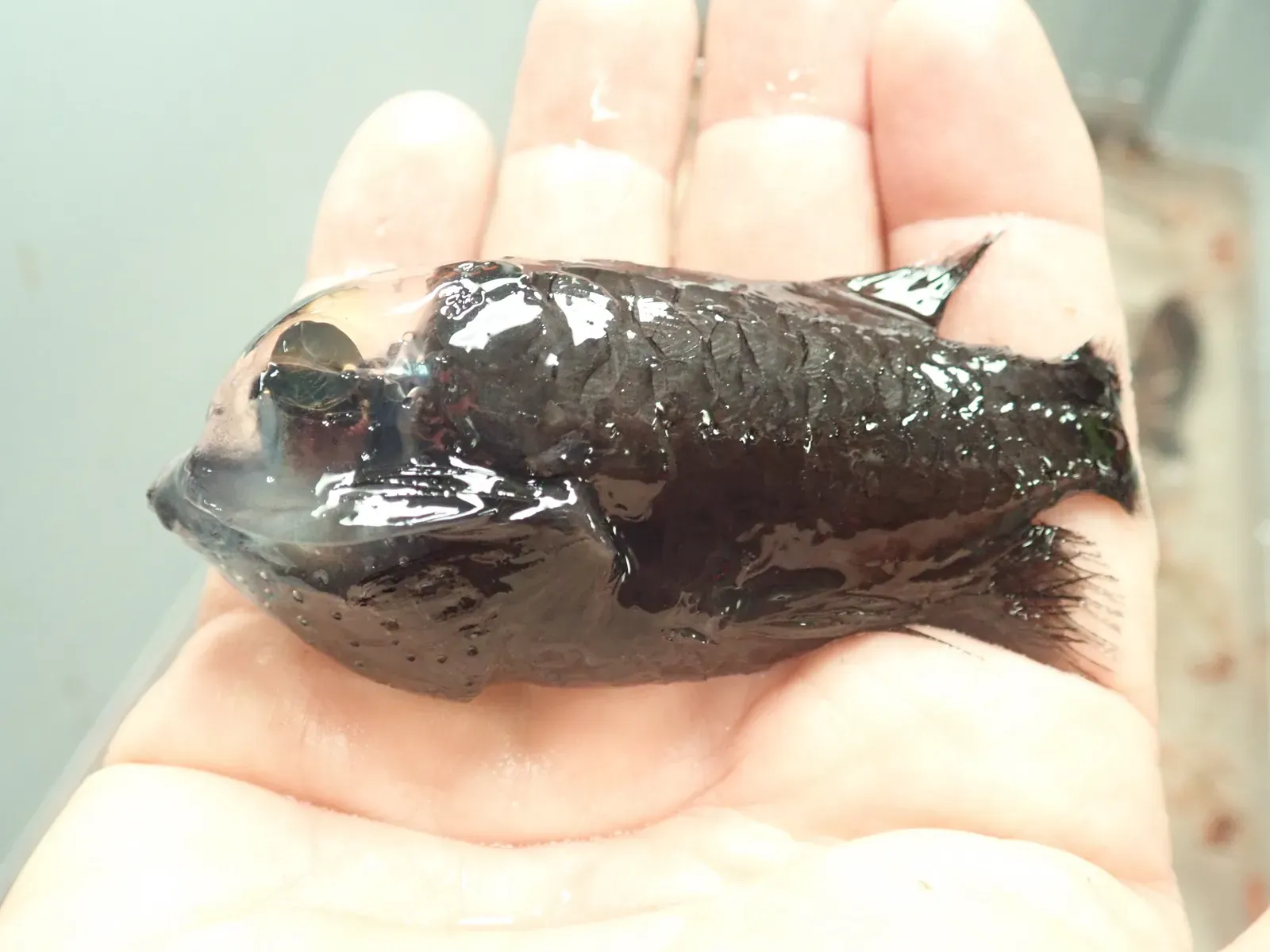
The barreleye might be the single most science-fiction-looking fish ever recorded. On early museum jars, it just looked like a small, unremarkable deep-sea fish. That’s because collecting it destroyed its most bizarre feature: a transparent, fluid-filled head dome with tubular green eyes that can rotate inside the skull.
For decades, every barreleye specimen that came up in nets arrived badly damaged. The pressure change and rough capture shredded the delicate head capsule, leaving behind normal-looking tissue. Scientists literally didn’t realize the head was transparent in life until someone finally saw one calm and undisturbed.
Deep ROV footage changed that. On camera, the barreleye hovers motionless, body stable, while its tubular eyes swivel independently inside that clear dome, looking upward through its own forehead to spot faint silhouettes of prey above.
When it wants to feed, those same eyes rotate forward to track food near its mouth. Most people seeing the viral clips assumed CGI or exaggeration. In reality, the barreleye is proof that gentle, low-impact observation reveals structures that rough collection simply destroys. And if that sounds extreme, wait until you see what was learned about #7…
#7 – The Giant Oarfish (Regalecus glesne)
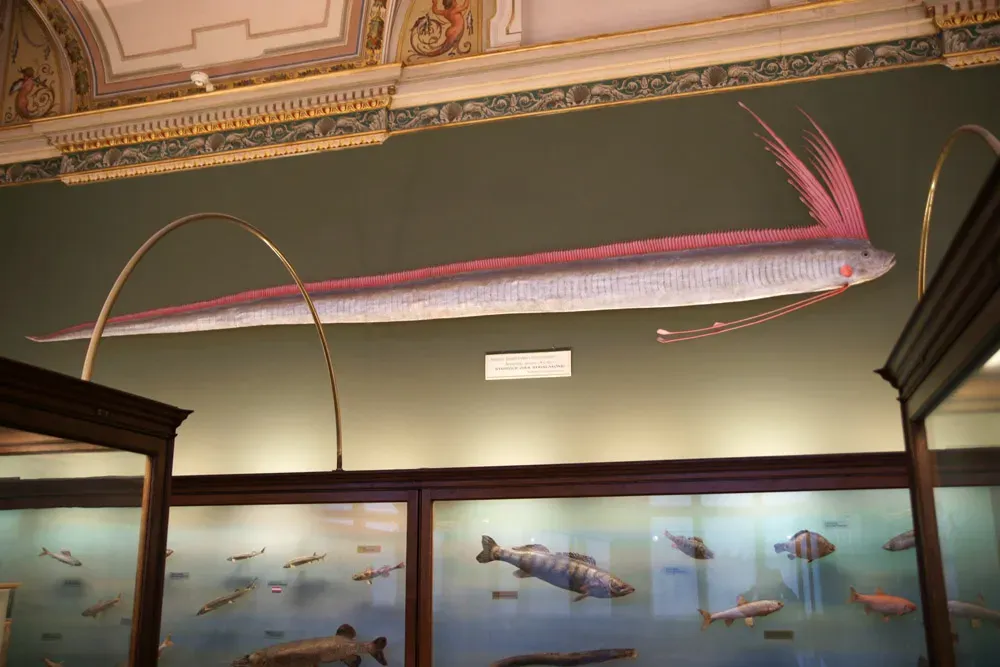
The giant oarfish is the likely source of more than one “sea serpent” legend: a ribbon-like fish that can reach at least 8 meters long, with a bright red crest and a body as thin as a belt in cross-section. For centuries, people only saw them when storms or illness drove them to the surface, where they soon died and washed ashore.
Healthy oarfish usually stay in the mesopelagic zone, a few hundred meters down, where scuba divers almost never go and submersibles rarely just happen to pass by. For much of the 20th century, scientists had to guess from anatomy alone whether it swam like an eel, a ribbon, or something else entirely.
Eventually, underwater video from ROVs and a handful of lucky diver encounters showed something surprisingly elegant. Oarfish can swim vertically, head-up, using undulating waves along their long dorsal fin to precisely control their position, almost like a hovering elevator shaft.
They also sometimes glide horizontally, but that upright stance – eye pointed skyward, long body trailing below – may help them sneak up on prey silhouettes or dodge predators. This looked so odd that some early viewers didn’t even recognize what they were seeing. Even today, clean footage of a relaxed oarfish in deep water is rare; most viral clips are surface-stranded animals near death. But that’s nothing compared to what we found about #8…
#8 – The Dumbo Octopus (Grimpoteuthis spp.)
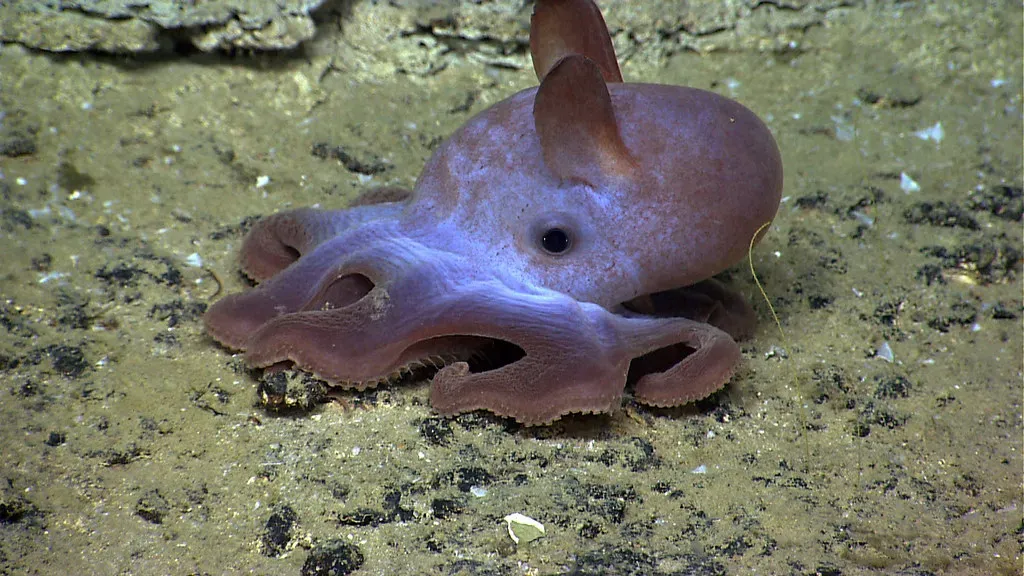
Dumbo octopuses are the deep sea’s strange mix of cute and alien. Named for their ear-like fins that resemble cartoon elephant ears, they live thousands of meters down, often near the abyssal plain. For a long time, almost everything we knew came from damaged specimens hauled up from incredible depths, colors faded and delicate tissues torn.
As deep submersibles improved, divers began seeing them more often, but still only briefly. These octopuses float gently above the seafloor, flapping their fins through the water while their webbed arms trail below. Approach too fast or too bright, and they simply drift off into the dark.
Why It Stands Out
- Observed by HD cameras foraging near the seafloor at a depth of 6,957 metres (22,825 feet) in the Java Trench, the deepest reliable sighting of any octopus on record
- That same sighting was the first irrefutable evidence of a cephalopod living in the hadal zone, the deepest region of the ocean starting at 6,000 metres (19,685 feet) below the surface
- Dumbo octopuses do not have an ink sac and cannot change [color] – likely since these abilities are of no use in their pitch-black habitat
- The largest ever discovered was 6 feet long and weighed around 13 pounds (6 kg)
The first really clear, high-definition recordings stunned viewers. Dumbo octopuses move with a slow, ghost-like grace, flapping their fins and pulsing their body while sometimes curling their arm webbing into a parachute-like shape. Unlike shallow-water octopuses, they don’t dart around rocks; they’re midwater drifters conserving every bit of energy in a food-poor world.
Their skin glows in soft pinks, oranges, and browns under the lights, adding to their oddly endearing look. Some researchers now quietly argue that internet culture has made dumbo octopuses “too cute,” overshadowing the fact that they’re highly specialized, slow-living predators on the abyss. If that rubs you the wrong way, you’re really going to argue with what we learned about #9…
#9 – The Deep-Sea Anglerfish (Ceratiidae and relatives)
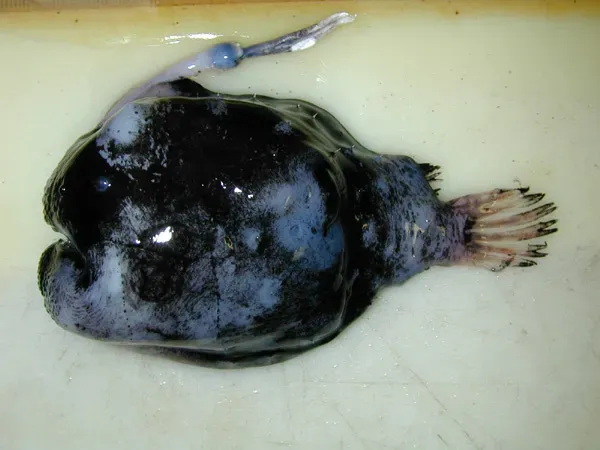
Everyone “knows” anglerfish thanks to dramatic illustrations and animated movies: a spiky, big-mouthed fish with a glowing lure on its head. But that familiar image hides an awkward truth – for decades, almost no one had seen a fully healthy deep-sea anglerfish moving naturally in the wild, especially the bizarre species where the tiny male fuses permanently to the much larger female.
Most anglerfish live in the bathypelagic zone, pitch-black waters hundreds to thousands of meters down. Trawls wrecked their delicate fins and bioluminescent lures. Scientists talked about how they mated, dwarf males fused to females for life, based mostly on preserved specimens and inference.
Over time, low-light cameras and better ROV maneuverability led to rare but precious clips: anglerfish drifting slowly on minimal fin strokes, dangling their luminous lure like a glowing fishing rod right in front of their mouths. Some species appear almost motionless, letting prey come to them rather than chasing anything at all.
One particularly famous sequence, showing a free-swimming female anglerfish with an attached male, effectively confirmed some of the strangest textbook descriptions ever written. Seeing the fused pair alive, rather than as a static museum jar, made it obvious: deep-sea sexual strategies are weirder than most fiction. If you think that’s unsettling, you’ll have feelings about #10…
#10 – The Vampire Squid (Vampyroteuthis infernalis)
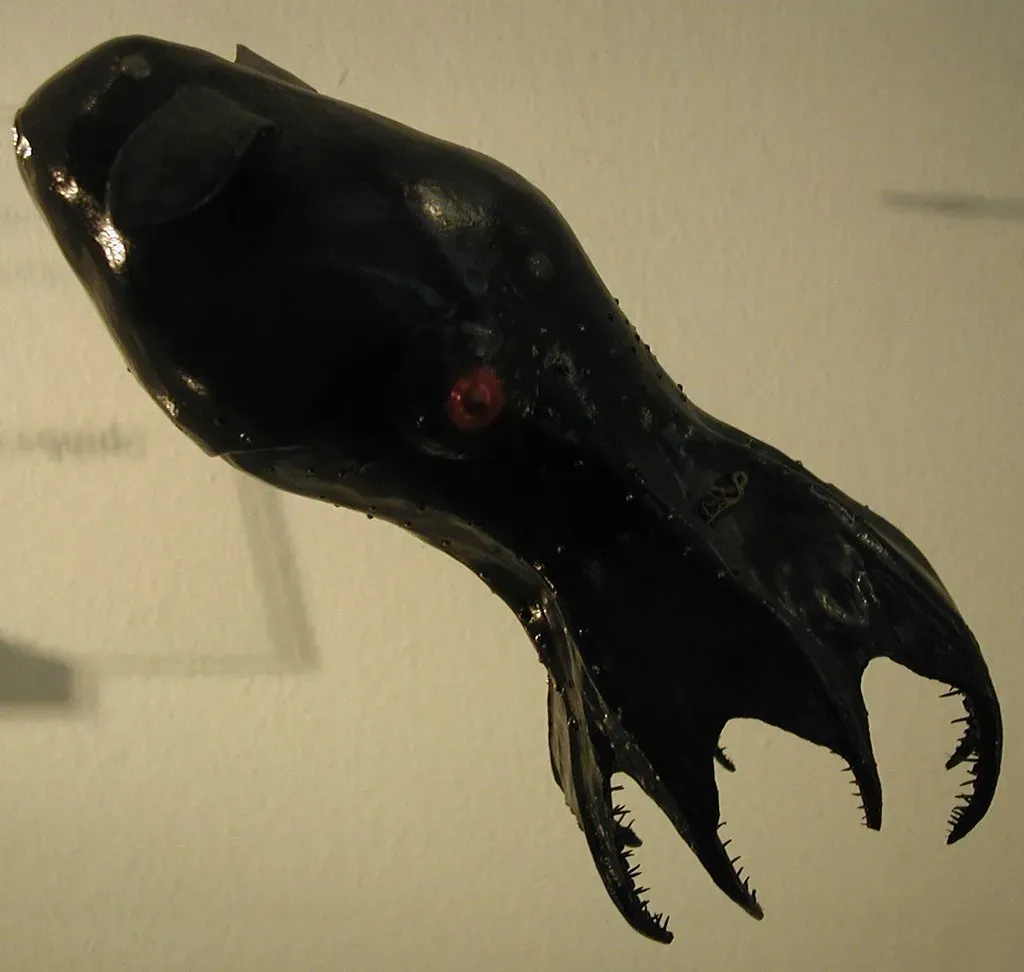
With a name that literally translates to “vampire squid from hell,” you’d expect this animal to be a ferocious predator. Reality is more complicated, and honestly more interesting. For years, the vampire squid was known mainly from netted specimens and dramatic illustrations that depicted it as a nightmarish hunter of the deep.
Vampire squid live in oxygen minimum zones, layers of deep water low in oxygen but not completely dead. Most active predators struggle there, but vampire squid thrive. Early descriptions highlighted their cloak-like webbed arms and spiky-looking structures, which made it easy for artists to imagine a monster.
Modern observations show a very different lifestyle entirely. Vampire squid are remarkably gentle swimmers, drifting with minimal effort and using filament-like feeding appendages to collect “marine snow,” tiny falling particles of organic debris, not large fleeing prey.
When threatened, they invert that webbed cloak over their body, showing off spiny-looking projections, but this looks more like a defense display than an attack. The supposed “hell squid” turned out to be more of a slow-motion recycler, surviving in harsh conditions by eating what everyone else ignores. It’s a good reminder that deep-sea branding can be wildly off-base. Still, the vampire squid looks almost tame next to the alien energy of #11…
#11 – The Giant Isopod (Bathynomus giganteus and relatives)
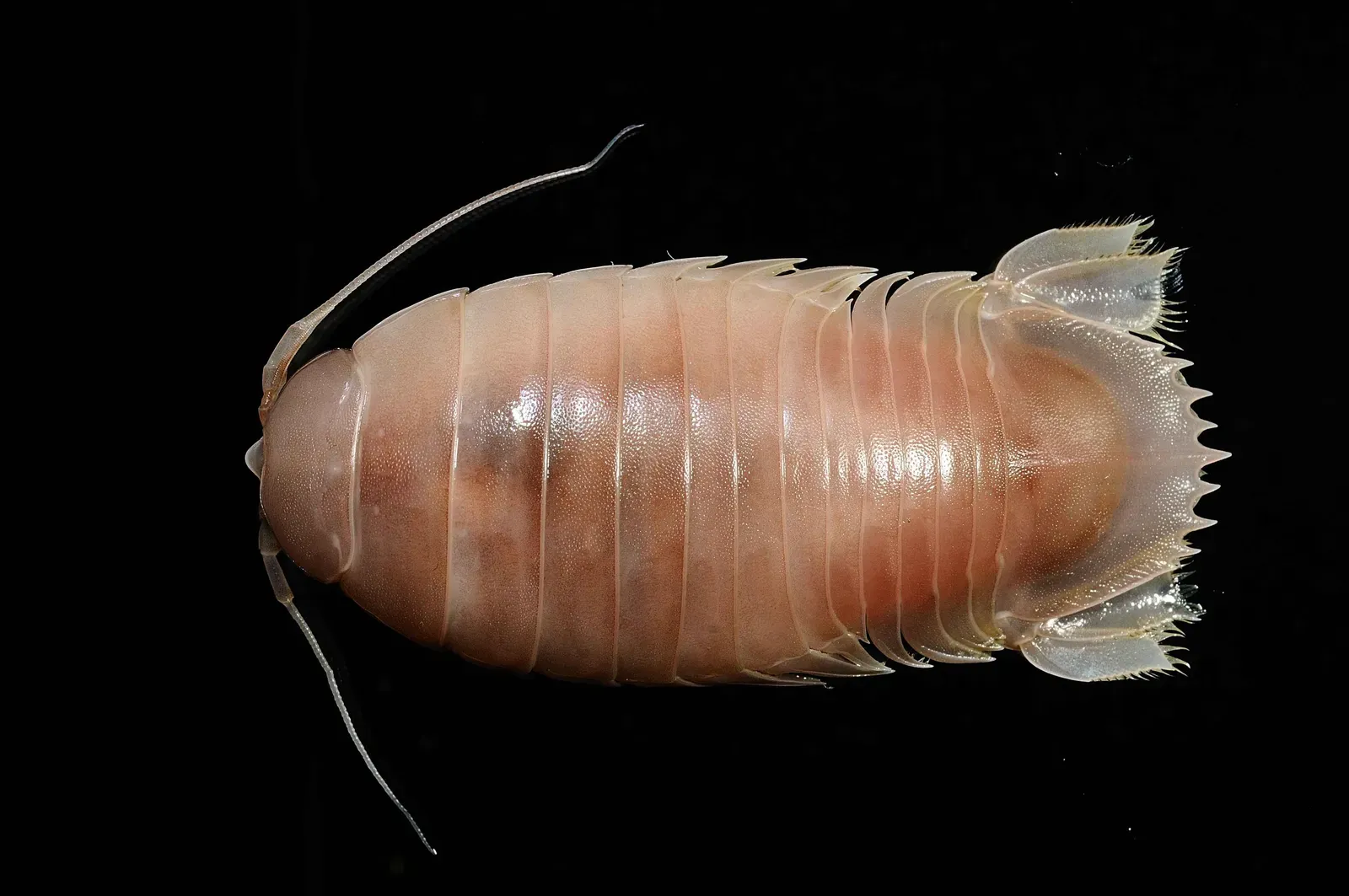
Imagine your backyard pill bug scaled up to the size of a small dog, and you’ve basically met the giant isopod. These deep-sea crustaceans live on the seafloor, sometimes more than a kilometer down, and for a long time they were known almost exclusively from trawl catches and aquarium tanks, not natural behavior on the abyssal plain.
Worth Knowing
- Giant isopods are important scavengers in the deep-sea and are most commonly found 500 to 7000 feet underwater
- In the largest individuals, the stomach occupied nearly two-thirds of the body cavity, far larger than in their shallow-water relatives
- A giant isopod refused to eat for 1,868 days after it was removed from the waters of Baja California – and it still survived
- That slow-burn metabolism stretches that single meal across months or even years in the wild
Giant isopods are classic deep-sea scavengers. Carcasses of whales, fish, or squid that sink to the bottom become rare banquets in a food desert, and isopods flock to them. Early footage attempts were crude – drop a baited camera and see what shows up. The result was often a frenzy of isopods piled on each other, making them look weirdly aggressive.
Higher-resolution, longer-term cameras painted a more nuanced picture. Giant isopods actually spend most of their time slowly trundling along the seabed, conserving energy, and may go weeks or months between large meals. When food finally arrives, they gorge, stretching their bodies in ways that look almost comical.
This feast-or-famine routine is perfectly tuned to the deep sea’s unpredictable food supply. Many people now think of giant isopods as meme animals, thanks to plushies and aquarium exhibits, but some deep-sea researchers quietly roll their eyes at that, arguing it distracts from what’s actually fascinating: a slow metabolism and rugged exoskeleton evolved to survive scarcity. As divisive as that take is, it still doesn’t spark as much debate as #12…
#12 – The Deepstaria Jelly (Deepstaria enigmatica and relatives)
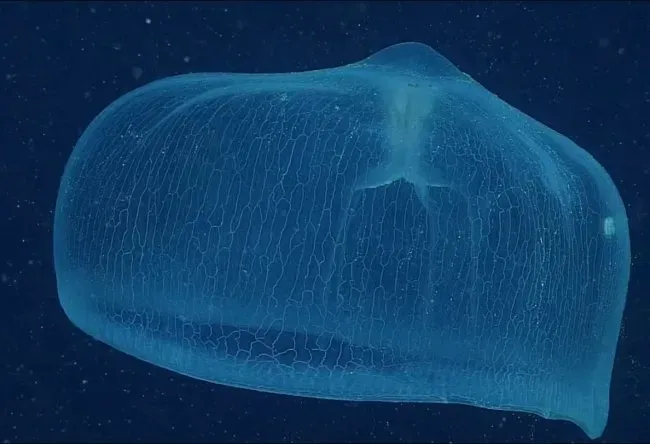
Deepstaria jellies are the perfect example of how the deep sea can trick our eyes. Early ROV videos showed massive, ghostly, bag-like sheets of translucent tissue billowing in the water, sometimes wrapping around the camera lens itself. People online immediately shouted “sea monster” or “alien egg,” because the shape is so different from a typical jellyfish umbrella.
For decades, Deepstaria was rarely seen and mostly known from damaged net samples. Even experienced scientists were puzzled by its strange morphology. The bell is thin and flexible, forming an undulating sac with a complex network of canals, and without footage of a relaxed animal moving in three dimensions, it was genuinely hard to tell normal posture from capture-induced distortion.
Once better footage accumulated, a clearer picture emerged. Deepstaria can expand and contract its enormous sheet-like bell, almost like a giant parachute, potentially trapping prey inside. The slow pulsing motion gives it an eerie grace, as if a ghostly laundry bag is breathing in the water column.
The deep sea is not the world’s last wilderness because it holds treasure. It is the last wilderness because it still holds mystery.
Sylvia Earle
Deepstaria videos still trigger arguments online, with some viewers insisting it “has” to be an unknown monster and others dismissing it as “just a jellyfish.” Both extremes miss the point. The real story is that an entire body plan can go effectively undocumented for decades simply because we lacked the right combination of cameras, patience, and luck.
The Bottom Line
The uncomfortable truth is that many of the deep sea’s most iconic animals were basically rumors, anatomy diagrams, and dead bodies until very recently. It took decades of smarter engineering – quiet ROVs, red lights, baited cameras, drifting platforms – before we finally filmed giant squids hunting, barreleye fish looking through their own transparent heads, and anglerfish drifting with tiny fused mates.
Each “first live footage” moment didn’t just check a box. It forced scientists to tear up assumptions built entirely on preserved specimens and start over with the real, living animal in front of them.
Honestly, that’s the part that should bother us more than it does. If something the size of a car, like the megamouth shark, or something as massive as the colossal squid, can dodge our cameras for generations, it’s a little absurd to keep talking about ocean exploration in the past tense. We haven’t finished mapping the deep. We’ve barely started introducing ourselves to it.
So the next time someone claims the ocean has no secrets left, remember this list. The real question isn’t whether there’s more down there. It’s how many of these animals are swimming past our cameras right now, in the dark, waiting for us to finally get quiet enough to notice.