
You think you know beaches: soft sand, rolling waves, maybe a palm tree or two. Then you stumble on places that look like they belong on another planet. Glowing surf, neon-green sand, shores made of glass or giant spheres of rock – these are not the kind of spots you casually stumble across after brunch. They are the kind of beaches that make you stop, stare, and quietly re-think what Earth is capable of.
In this article, you’re going on a lap of the planet, hopping from one bizarre shoreline to the next. You’ll see how minerals can turn sand pink or green, how tiny plankton can light up the night, and how centuries of erosion can carve puzzles into stone. As you read, imagine what it would actually feel like to stand there – the crunch under your feet, the color of the water, the smell of the air. By the end, you might catch yourself planning a trip you never knew you wanted.
1. Papakōlea Green Sand Beach, Hawaii, USA
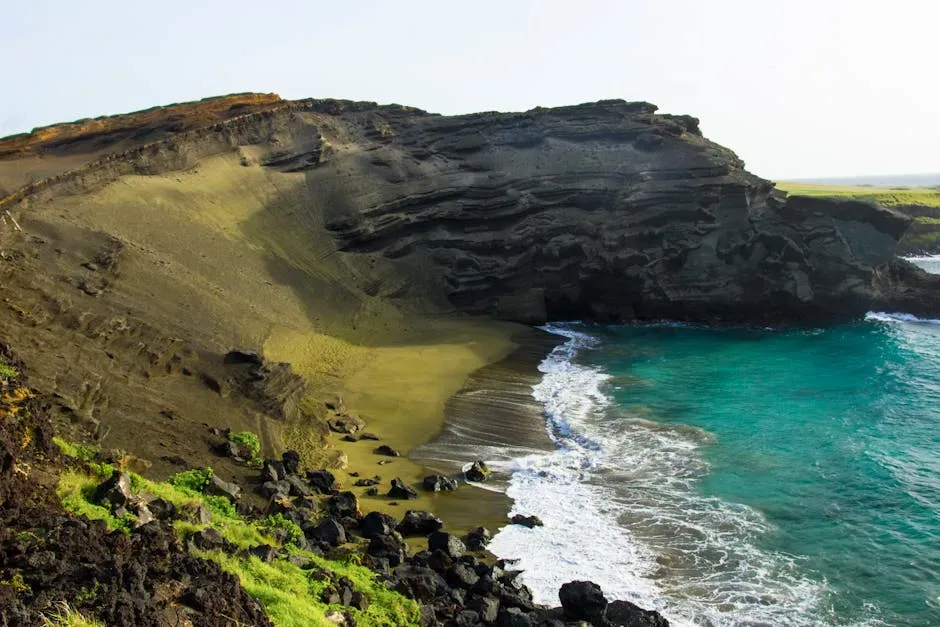
The moment you step onto Papakōlea on Hawaii’s Big Island, you realize your definition of “sand” has been way too narrow. Under your feet is a strange olive-toned grit, colored by tiny crystals of a mineral called olivine, the same green gemstone you might see in jewelry. The beach sits inside an ancient volcanic tuff cone carved open by the ocean, so waves have been grinding this olivine-rich rock for tens of thousands of years and leaving the heavier green grains behind while lighter particles wash away.
Getting here is its own little adventure: you hike across a windswept, sunbaked landscape near South Point, the southernmost tip of the United States, before dropping down a steep sandy slope into the crater-like bay. When you finally reach the water, the contrast of olive-green sand, dark lava cliffs, and deep blue Pacific feels surreal. You quickly notice there are no facilities, shade, or easy exits, so you have to come prepared with water, sun protection, and respect for the fragile environment – including leaving the sand exactly where you found it.
2. Bioluminescent Bays and Beaches, Puerto Rico
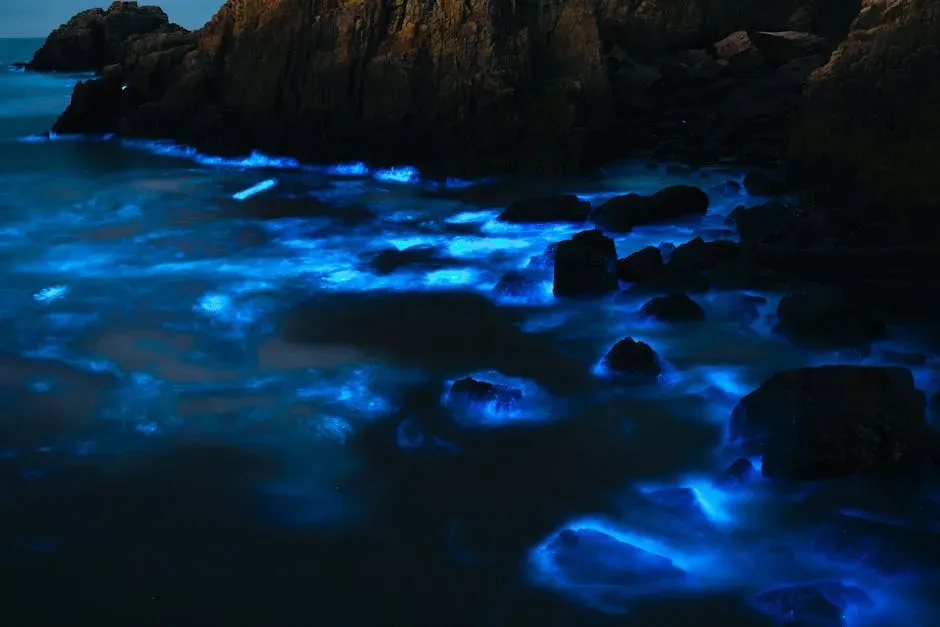
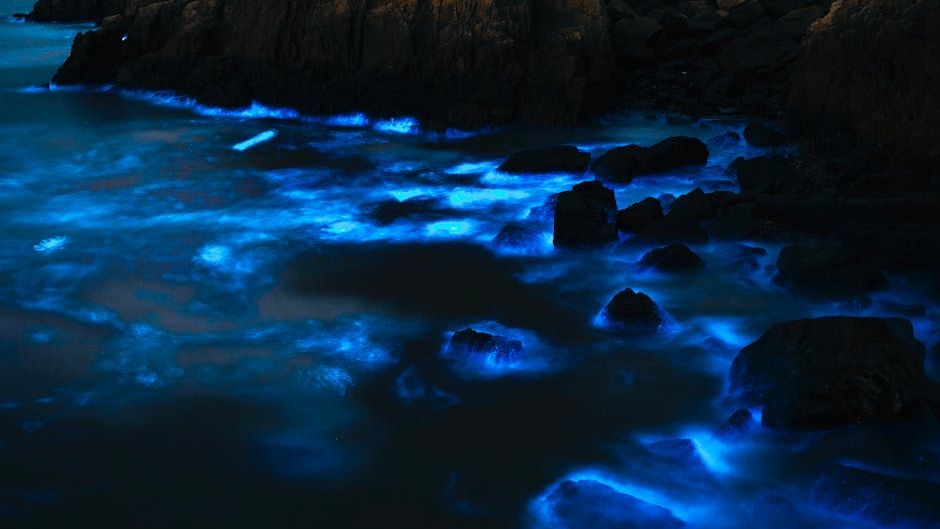
Imagine wading into warm, inky-black water and watching your footsteps explode in electric blue light. In Puerto Rico’s famous bioluminescent bays and nearby beaches, that’s exactly what happens on the right night. Tiny organisms in the water, called dinoflagellates, give off light when they’re disturbed, so every splash, paddle stroke, or sweep of your hand sends out ghostly, glowing trails that look like something out of science fiction. You end up giggling like a kid because it feels impossible that this is just biology doing its thing.
To really see the glow, you time your visit for a dark, moonless night and avoid light pollution, bright screens, and big crowds. Local guides usually paddle you out in kayaks so you can drift quietly and watch the show without disturbing the ecosystem too much. When conditions are perfect, even a simple swirl of your fingers in the water can look like you’re casting spells. It’s romantic, a little eerie, and unforgettable, especially when you realize that you’re witnessing a living light show powered by microscopic life.
3. Glass Beach, Fort Bragg, California, USA
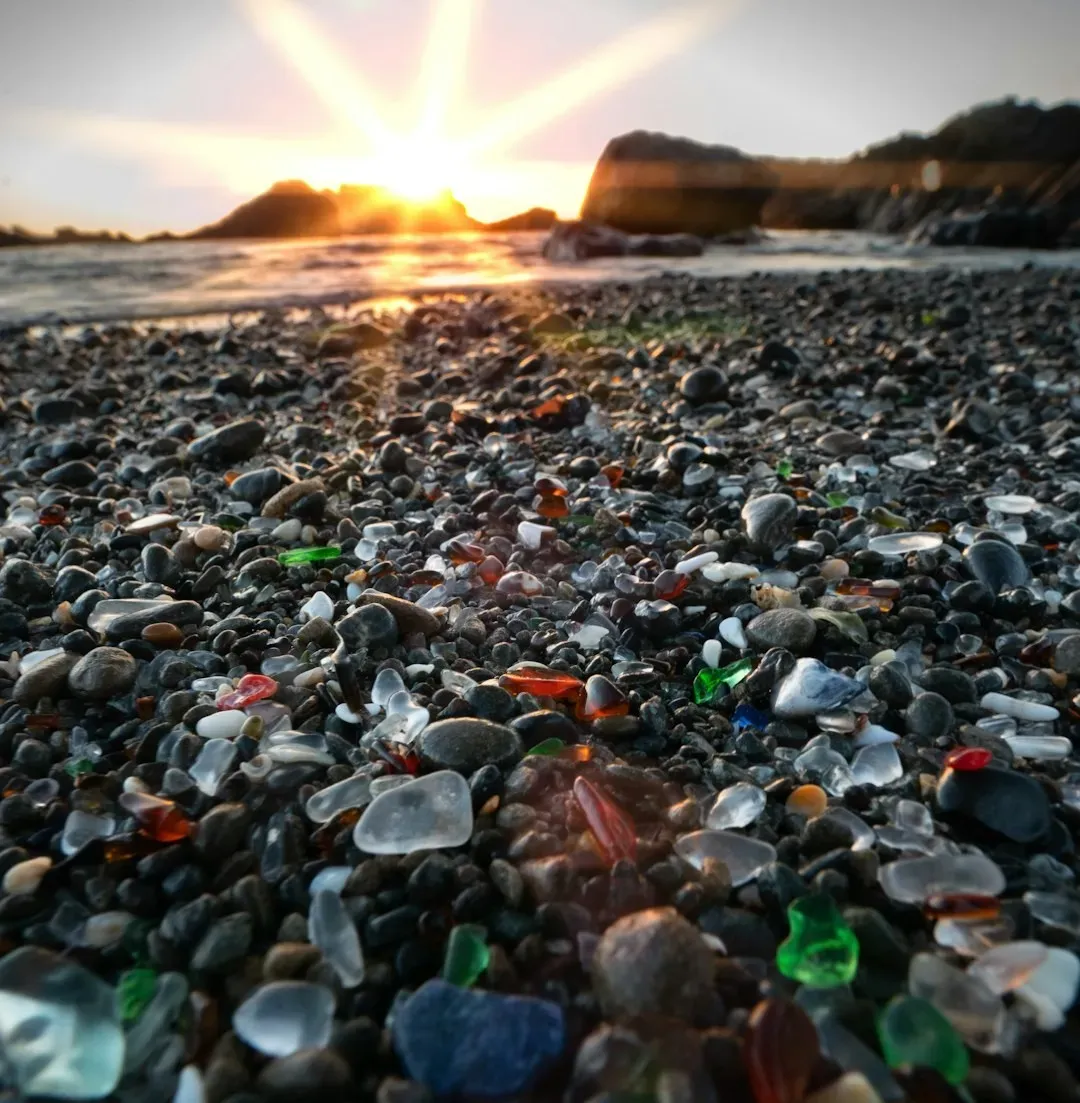
At Glass Beach in Northern California, you don’t sink into soft sand – you crunch across a carpet of smooth, colorful glass pebbles. For decades in the twentieth century, this stretch of coastline was used as an informal dump, and broken bottles, jars, and other glass debris were tossed straight into the ocean. Over time, relentless waves tumbled all that trash, grinding sharp shards into rounded, frosted “sea glass” in every shade from clear and amber to deep green and the occasional blue.
When you walk here today, you’re literally walking on transformed garbage, an unsettling but strangely hopeful reminder of how nature can soften the scars you leave behind if you give it enough time. The glass pebbles look like candy scattered across the shore, and it’s tempting to pocket a handful, but taking glass is strongly discouraged because it depletes what’s left of this already diminished curiosity. Instead, you treat the place like an open-air gallery: you wander, you look closely, you take photos, and you leave with the uneasy lesson that “out of sight” never really means “gone.”
4. Reynisfjara Black Sand Beach, Iceland
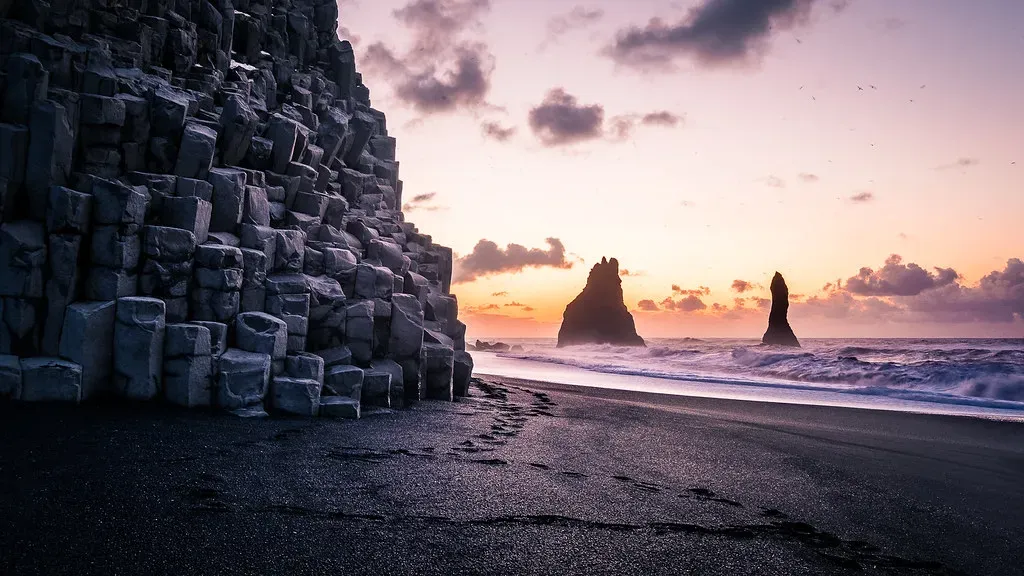
Reynisfjara feels more like the edge of a myth than a holiday beach. The sand is jet black, made from pulverized volcanic rock, and the waves of the North Atlantic arrive with a force that quickly teaches you not to turn your back on the ocean. Above you, hexagonal basalt columns rise like an organ in a cathedral, stacked in geometric patterns that look almost too precise to be natural. When the skies are moody and gray, which they often are in Iceland, the whole scene feels dramatic and slightly menacing.
Here, you’re not really coming to swim or sunbathe; you’re coming to stand in awe of geology. The black sand comes from lava that cooled, fractured, and eventually got ground down by the sea, while the towering columns formed as basalt contracted and cracked in cooling patterns. You stay well away from the shoreline because of powerful “sneaker waves” that have swept careless visitors out to sea. Instead, you wander along the base of the cliffs, watch seabirds circle sea stacks offshore, and feel like you have stepped into the opening scene of a dark fantasy film.
5. Jokulsárlón Diamond Beach, Iceland
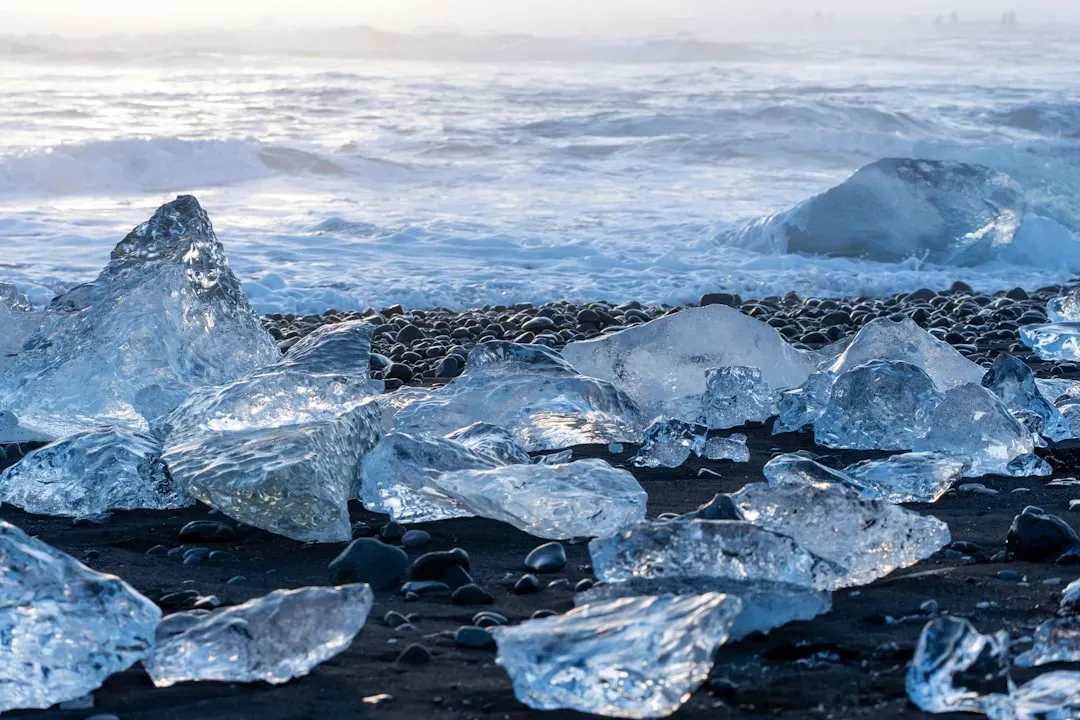
A short drive from Reynisfjara, you find another Icelandic oddity: a black sand beach strewn with chunks of glittering ice. At Diamond Beach, pieces of ice break off from a nearby glacier, float through a lagoon, and eventually wash up on shore. When they land on the dark volcanic sand, they look like scattered gemstones, some the size of your hand, others as big as a sofa. In the low sun, especially at dawn or dusk, they glow and sparkle in a way that makes the whole place feel otherworldly.
As you pick your way between the ice blocks, you see intricate patterns frozen inside them – bubbles, cracks, and layers that tell stories of years spent compacted in a glacier. The constant movement keeps the scene changing: one day the beach may be loaded with icy “diamonds,” the next it might be nearly bare if tides and weather shift. You learn quickly how fragile they are: touch one, and it starts melting under your fingers; stay too long, and your own hands go numb, reminding you that this beauty exists on a knife-edge of cold.
6. Whitehaven Beach, Whitsunday Island, Australia
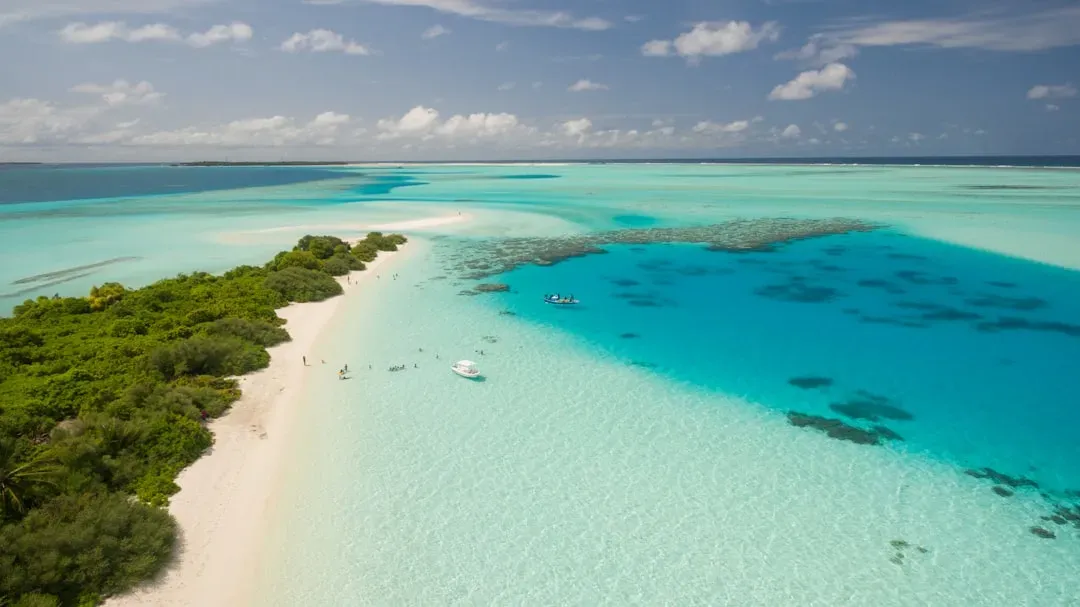
When you first land on Whitehaven Beach in Queensland’s Whitsundays, the whiteness of the sand almost hurts your eyes. It’s composed mostly of silica, which gives it that brilliant, powdery, almost squeaky texture under your feet. Because the grains are so pure and fine, they do not hold heat the way many other sands do, so you can walk barefoot midday without performing a frantic dance. Paired with the turquoise shallows swirling around nearby shoals and channels, it looks like someone turned the saturation setting on reality up a notch.
You also notice how the sand behaves differently from what you’re used to: it packs tightly, rinses clean in the waves, and makes intricate swirling patterns when tides mix it with the shallow water. Locals often point out that you should not take it home, both out of respect for environmental regulations and because even removing a little can add up when thousands of visitors think the same way. Instead, you get your thrill from climbing to viewpoints to watch the tidal colors shift below, then sinking your toes into the cool, flour-fine sand as long as you can.
7. Pink Sands Beach, Harbour Island, Bahamas
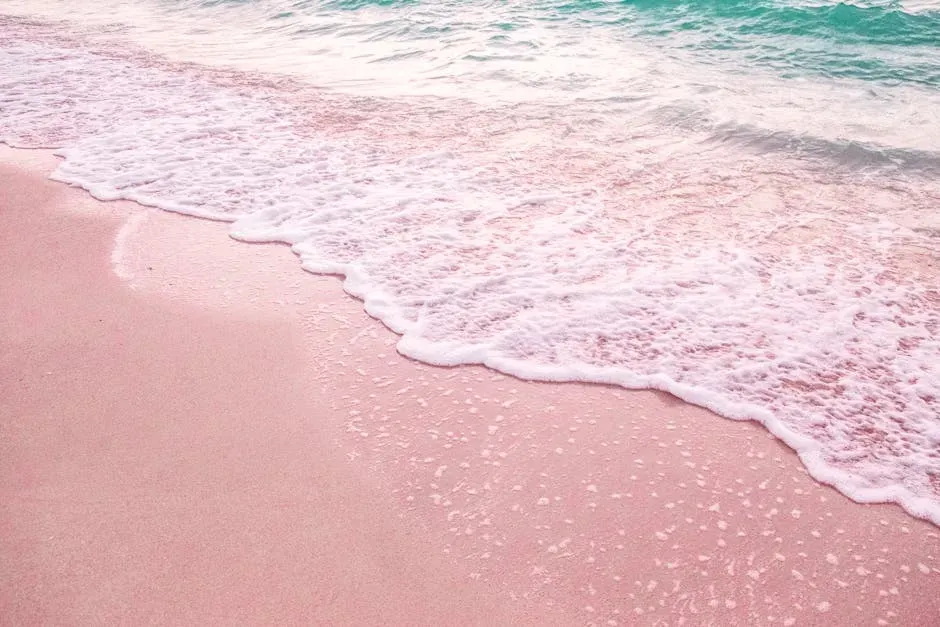
On Harbour Island in the Bahamas, you wander down to the shore and realize the sand isn’t white or yellow at all – it has a blush, like someone dusted it with rose-colored powder. That subtle pink tint comes from tiny fragments of shells and coral, especially from microscopic organisms with reddish-pink skeletons that mix into the regular sand. When the sun is low, the color is more pronounced, and the whole beach takes on a romantic, softly glowing hue that feels made for slow walks and long, lazy swims.
You notice the texture, too: the sand is fine and smooth, often feeling almost silky underfoot, and the gentle slope of the shoreline makes the water shallows inviting for paddling or floating for long stretches. On calm days, the sea looks like a giant, clear swimming pool edged by this delicate pink ribbon. The effect is strange because it’s not neon or artificial-looking; it’s understated, the kind of thing you might miss at midday if you’re not paying attention. Once you see it, though, you find yourself scanning the sand constantly, looking for those tiny flecks of color and marveling at how something so small can transform an entire landscape.
8. Punaluʻu Black Sand Beach, Hawaii, USA
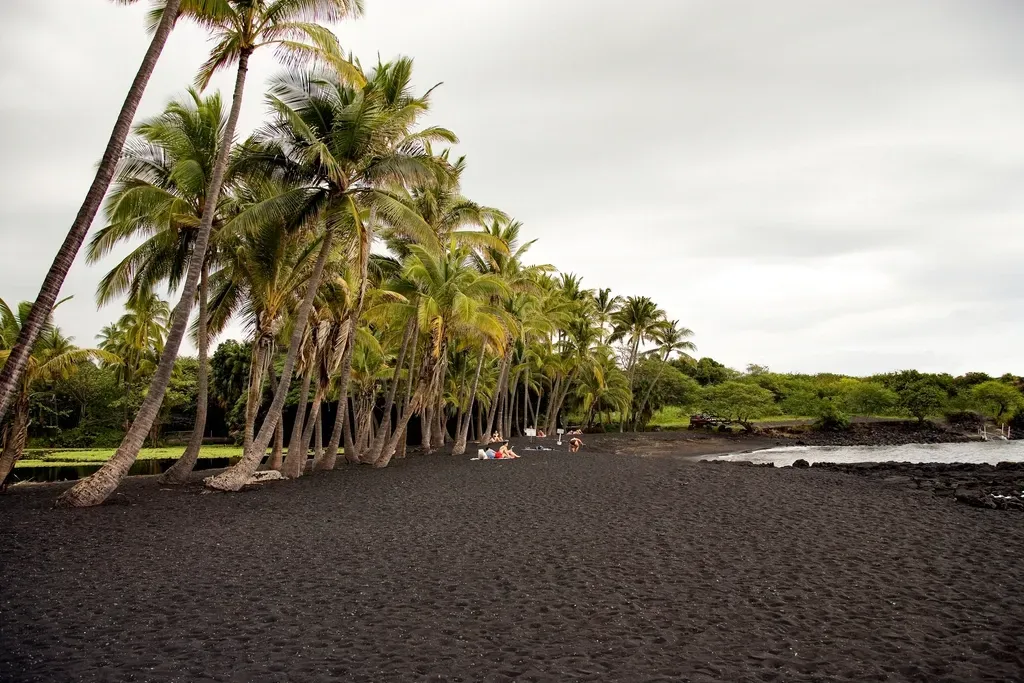
On the southeastern coast of Hawaii’s Big Island, you step out of your car and immediately see why Punaluʻu is special: the sand is deep, glossy black, made from shattered lava that cooled quickly in the ocean and broke apart into tiny fragments. Against that dark background, the bright green of the coconut palms and the blue of the waves look almost artificial, like a high-contrast photograph. When the sun is strong, the sand can get surprisingly hot, reminding you that you are literally walking on volcanic leftovers.
What really takes your breath away, though, is when you spot Hawaiian green sea turtles hauled out on the warm black sand, resting like ancient guardians of the beach. The rules here are strict: you keep a respectful distance, you do not touch them, and you avoid trampling the fragile shoreline vegetation. As you stand and watch the surf roll in, it hits you how quickly this island can shift from lush greens to this stark volcanic palette. Punaluʻu drives home that Hawaii is still a living, changing volcanic landscape, not just a string of postcard-perfect resorts.
9. Giant’s Causeway Coastal Beach, Northern Ireland
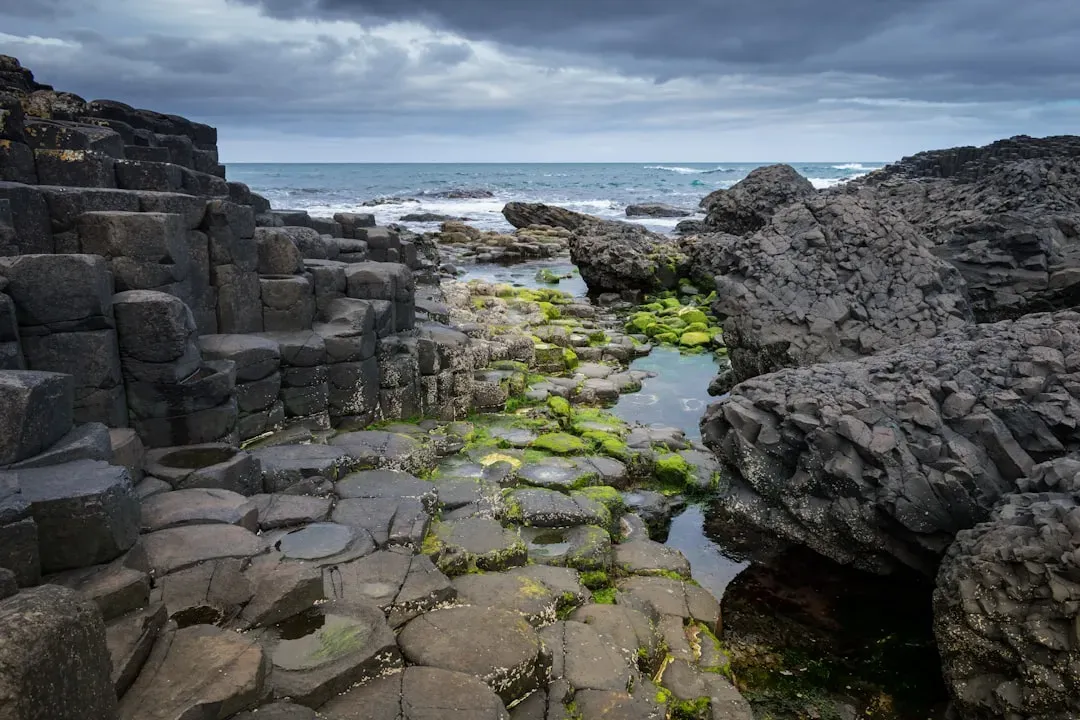
When you approach the shore at Giant’s Causeway, it feels like you’ve stumbled onto a broken stone puzzle. The beach is lined not with smooth sand but with tens of thousands of interlocking basalt columns formed from ancient volcanic lava that cooled and cracked into mostly hexagonal shapes. Some rise as tall as a small building, others sit at ankle height, creating natural stepping stones that lead you right out toward the waves. From a distance, the whole thing looks engineered, as though some long-forgotten civilization laid out a massive stone pathway into the sea.
Walking here is both fun and a little disorienting: you hop from column to column, sit on natural stone steps, and feel the spray from the North Atlantic as it crashes against the rocks. On stormy days, it can feel wild and unforgiving; on calm days, you get a clearer look at the geometric patterns and the way the columns fit together like a honeycomb turned into solid rock. You learn that all of this comes from simple physics – the way cooling magma contracts – but standing there, with the wind in your face, it is hard not to let your imagination run straight to giants, legends, and impossible stories.
10. Moeraki Boulders Beach, South Island, New Zealand
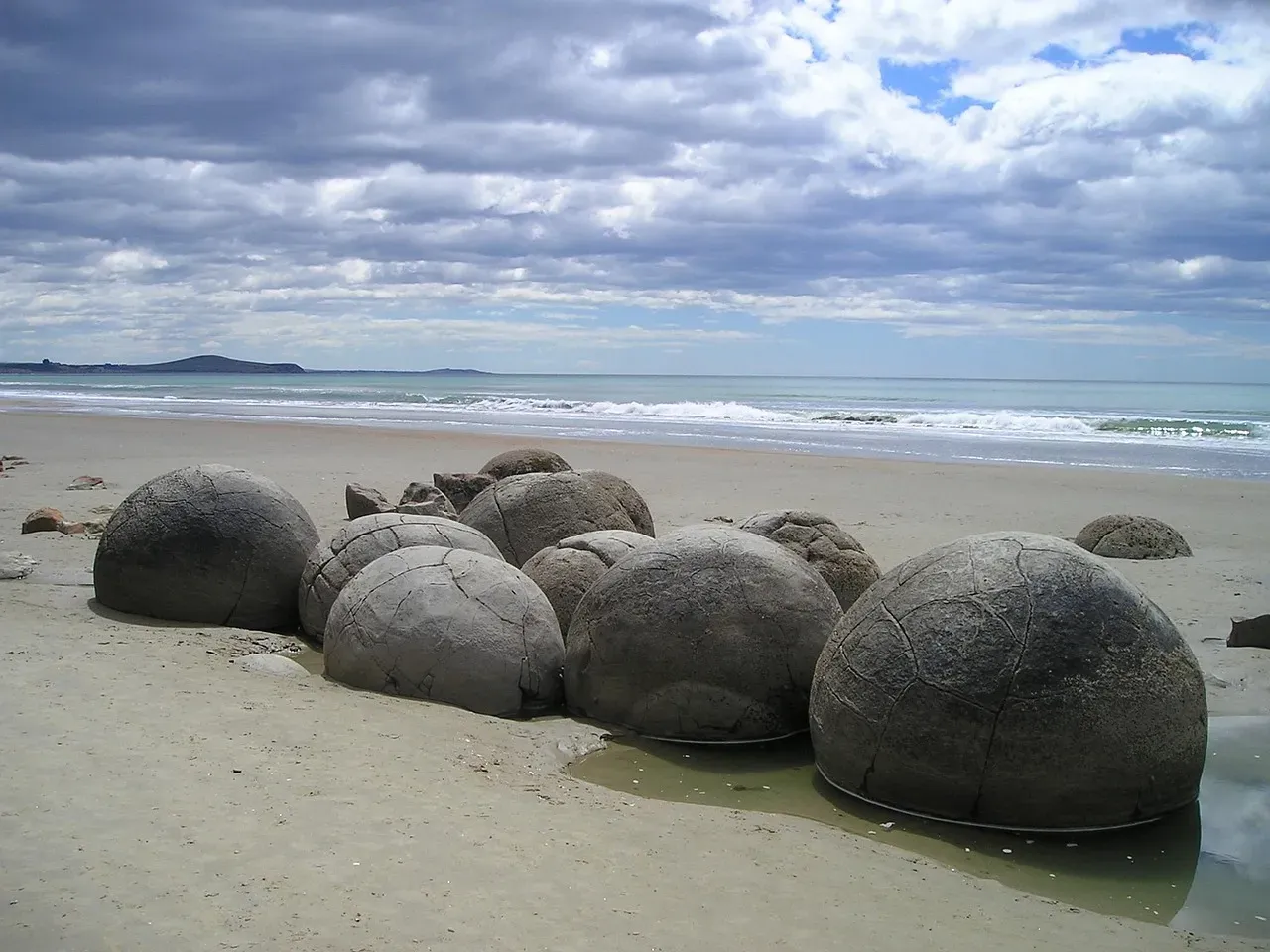
On Koekohe Beach on New Zealand’s South Island, you may find yourself slowing down not because of the waves, but because of the perfectly round rocks scattered along the shore. The Moeraki Boulders look like enormous marbles or dinosaur eggs, some taller than you are, sitting half-buried in the sand. These spherical stones formed slowly underground over millions of years as minerals built up around a core, almost like oysters creating pearls, before erosion finally exposed them and let the waves sculpt them further.
As you walk among them at low tide, you see that many are cracked or broken open, revealing intricate inner patterns that look like natural mosaics. Their placement feels random and deliberate at the same time, as if the ocean rolled them out for inspection. On misty mornings, the scene can feel quiet and almost sacred, while at sunset, the silhouettes of the boulders against the glowing sky make for one of those simple but powerful travel memories. The best part is that you are free to wander among them at your own pace, getting close enough to run your hands over the smooth and weathered surfaces and feel how solid time can become.
11. Dragon Eggs Beach (Playa de Gueirúa), Asturias, Spain
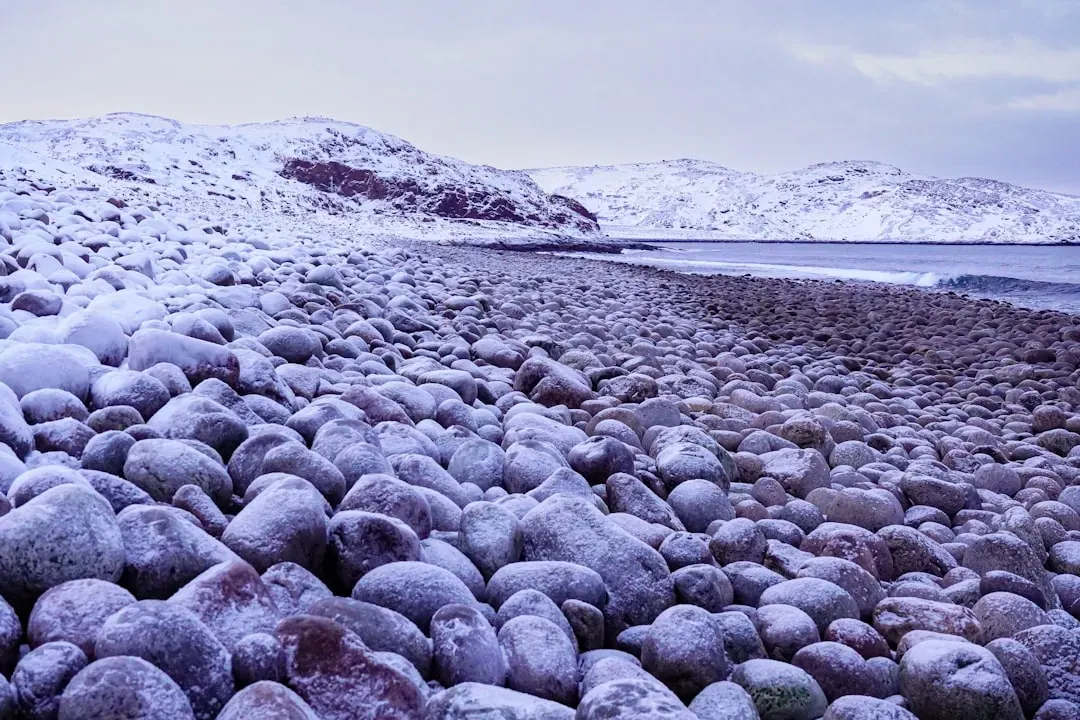
On the rugged northern coast of Spain, you hike down a narrow path and arrive at a beach that feels more like a fantasy novel setting than a European shoreline. At Playa de Gueirúa, sometimes nicknamed “Dragon Eggs Beach,” the sand gives way to clusters of smooth, rounded stones and jagged rock ridges that jut out into the sea like broken dinosaur spines. At low tide, sandy patches mix with these strange rock formations, creating tidal pools and channels that look like scaled backs frozen in stone.
You quickly realize this is not a lounge-and-umbrella kind of place. You pick your way carefully among wet stones, listening to pebbles rattle in the surf and watching waves crashing through sharp, needle-like rock fins just offshore. The colors are moody – gray rock, deep green sea, and often a cloudy sky overhead – and that drama is exactly what makes it unforgettable. Standing here, with Atlantic spray on your face and ancient rock shattering the waves in front of you, you feel like you have stumbled into a dragon’s lair that time slowly turned to stone.
Beaches like these prove that the world’s shorelines are far more than simple strips of sand and water. Each one tells a different story: of volcanoes grinding minerals into green and black sand, of glaciers breaking their ice into sparkling shards, of tiny creatures painting shores pink or lighting up the waves at night. When you go beyond the usual sun-and-surf spots and seek out places like this, you aren’t just chasing a good photo; you’re putting yourself face to face with deep time and wild chemistry playing out in plain sight.
Next time you think about a beach getaway, you might ask yourself a different question: do you just want to lie in the sun, or do you want to stand on a shoreline that makes you feel like you’ve landed on another world?