Forget the torch-wielding grave robbers and cursed sarcophagi from the movies. The real reason so many ancient tombs survived for thousands of years is stranger, and honestly a little unsettling: the best security system was never a warning inscription or a priest’s blessing. It was the ground itself, giving way at exactly the right moment.
Rockfalls, mudslides, sinking city streets, and clumsy ancient construction crews did more to protect the dead than any curse ever managed. In the ten cases below, a later disaster – sometimes centuries after the original burial – sealed a tomb so completely that nobody, not even the most determined looter, could get back in. What’s waiting behind each of these accidental vaults is stranger than fiction, and the last one on this list is about as close as archaeology gets to a genuine miracle.
#10 – The Egyptian Tomb that Vanished Under Its Own Rubble
Picture a rock-cut tomb, not a picture-book pyramid, but a set of chambers carved into soft limestone somewhere in the Theban cliffs near Luxor. Real rock fails the way old buildings fail: it cracks, sags, and eventually gives up entirely. In several Egyptian necropolises, whole side chambers survived only because their entrances got choked by a ceiling failure that happened long after the burial was finished.
Here’s the typical chain of events. Centuries of minor earthquakes and daily temperature swings open hairline fractures around a doorway, and small chunks of ceiling start flaking off. Then one ordinary day, a slab finally lets go and crashes into the entrance corridor, burying it under tons of jagged stone in seconds. Robbers can’t squeeze through, and later generations don’t even register a doorway – just a blank, blocked niche in the rock face.
Archaeologists have learned to recognize these “self-sealed” tombs by a jarring contrast between outside and inside:
- The outer passage is a chaotic jumble of fallen blocks.
- The deeper rooms are pristine, pigments still bright, offerings still sitting exactly where they were placed.
In a few cases, the burial wrappings looked so fresh that early excavators genuinely mistook them for a few hundred years old, not three thousand. While looters worked the obvious, open corridors, these accidentally sealed side suites simply disappeared from memory, hiding in plain sight for millennia.
#9 – When a Pharaoh’s Workmen Accidentally Saved an Older Burial
Most people assume ancient cemeteries were carefully mapped and respected. In reality, Egypt’s crowded cliffs and wadis got reused, re-cut, and built over constantly, and that construction chaos sometimes created perfect time capsules.
Imagine a crew of New Kingdom workmen hacking a fresh tomb into the rock for a high official. They need somewhere to dump the spoil, so they pile it into a convenient low spot nearby – which happens to be the partially collapsed entrance of an older, shallower shaft. Basket-load by basket-load, over just a few weeks, the opening disappears completely. To the next generation walking past, there’s no doorway, no shaft, just solid ground.
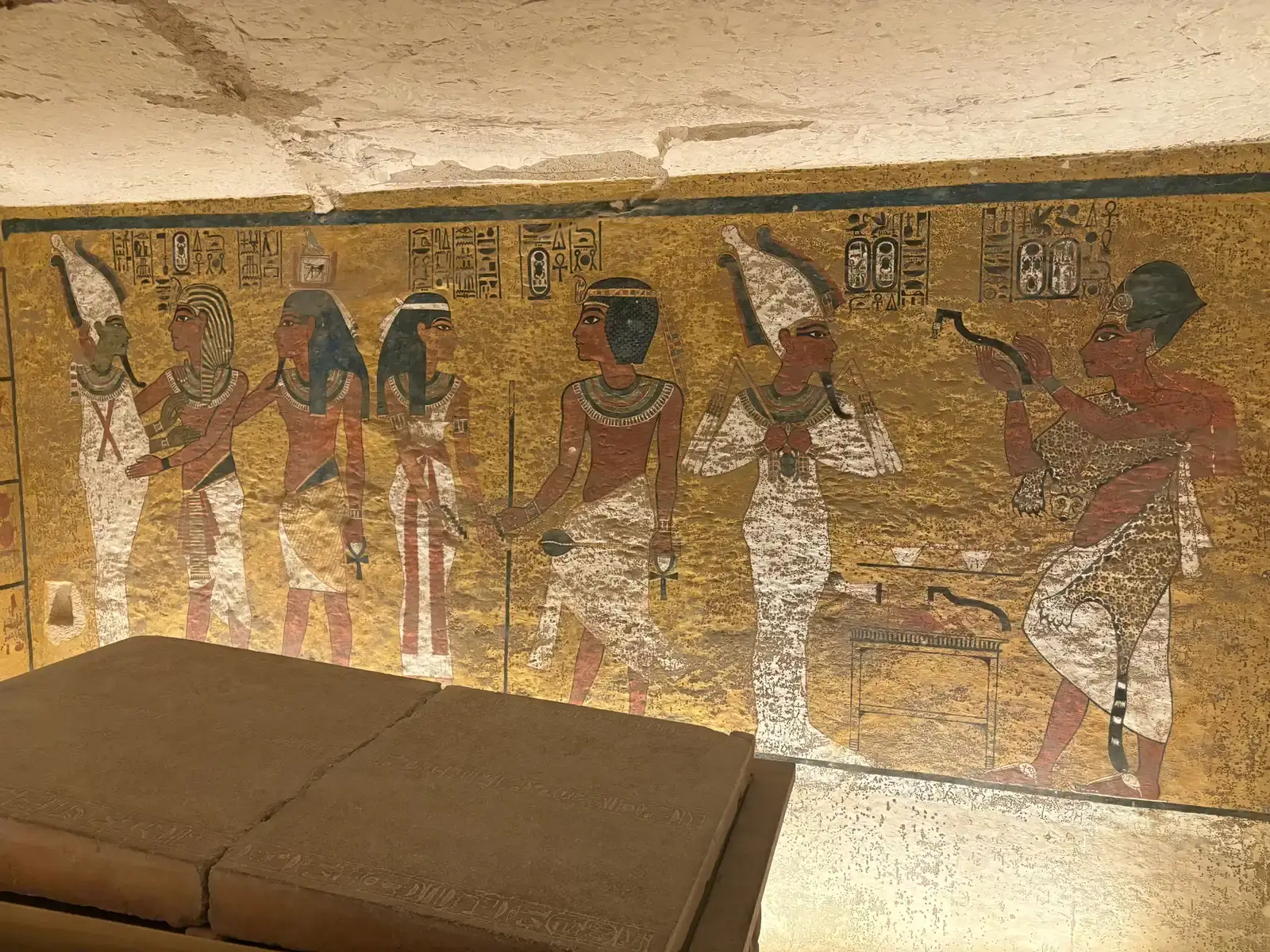
This is essentially what happened around the tomb of Tutankhamun, whose entrance ended up buried under debris and workmen’s huts from the construction of a much later royal tomb above it. That accident of geography is a major reason it survived relatively intact into the twentieth century, while its grander neighbors were stripped bare centuries earlier by professional grave robbers.
Yes, wonderful things.
Howard Carter, on first looking into Tutankhamun’s tomb
Fast Facts
- Discovered: November 1922, in the Valley of the Kings, Egypt.
- Found by: British archaeologist Howard Carter, working for patron Lord Carnarvon.
- Contents: Thousands of objects packed into just four small chambers.
- Why it lasted: Buried under debris and workers’ huts from a later royal tomb built directly above it.
Modern archaeologists sometimes hit these “ghost tombs” by accident, mid-excavation. They’re cutting a trench through a slope of ancient quarry waste when the stratigraphy suddenly changes – mudbrick, smooth-cut limestone, flecks of paint. What saved these burials wasn’t reverence. It was indifference: the later builders had no idea anything was underneath them at all.
#8 – Cliff Tombs Hidden by Landslides
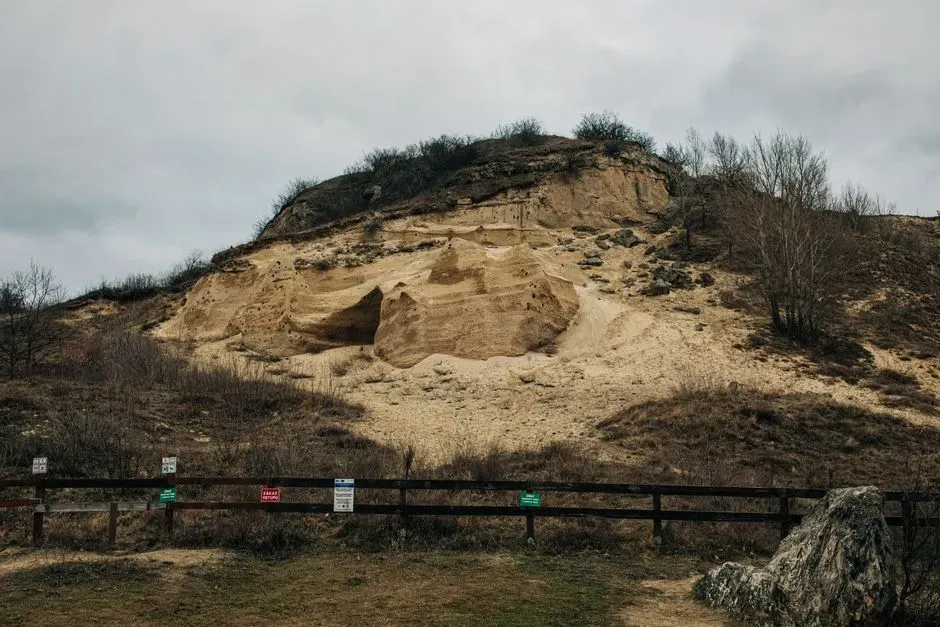
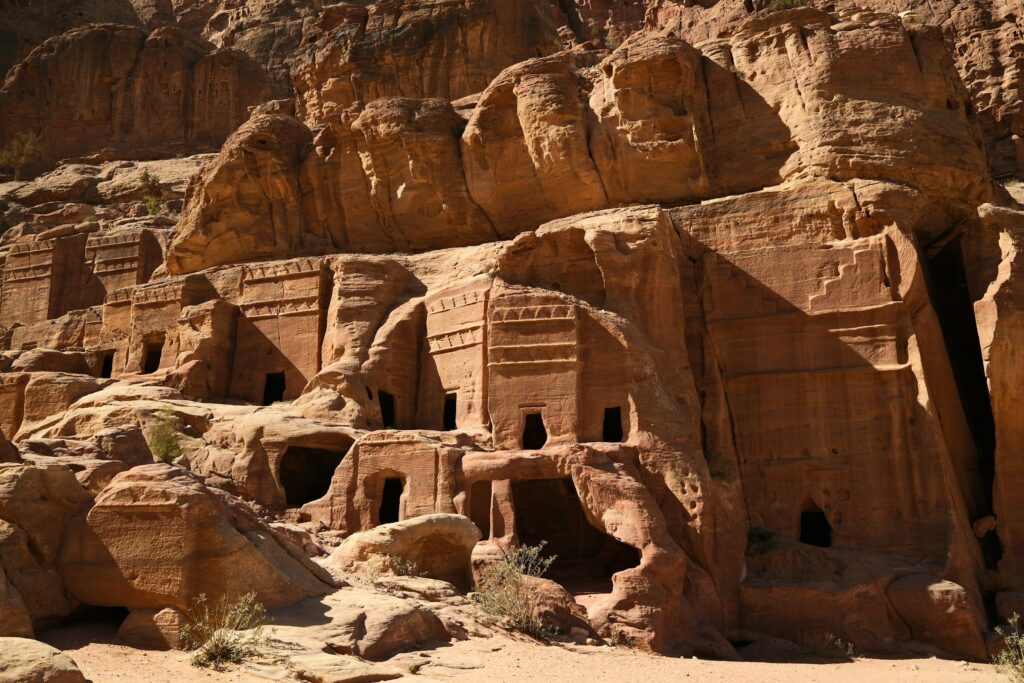
Cliffside tombs look dramatic and permanent, but geologically they’re fragile. Slopes fail over time – rock spalls off, soil liquefies in heavy rain, entire faces slump downhill. Most people would call that destruction. Archaeologists often call it the best preservation environment they could ask for.
From the Levant to Central Asia, wealthy families carved tombs directly into cliff faces, with entrances visible from the valley floor as a permanent status symbol. As erosion undercut the façade over generations, overhangs loosened until a rockfall finally thundered down. Instead of exposing the tomb, the collapse usually smashed the façade and buried the doorway under a cone of shattered stone, wiping out every visible trace of the entrance.
Under that rubble, humidity stays stable and oxygen is limited – miserable conditions for looters, but ideal for fragile organic material like textiles and wooden coffins, which normally rot fast in open air. Archaeologists working through landslide-sealed tombs have recovered:
- Wooden biers with the original paint still visible.
- Delicate inlay work that would have been stripped within days if anyone had ever gotten inside.
It’s a strange rule of thumb in the field now: the more wrecked a cliff face looks from below, the more excited excavators get. A smashed façade with no visible doorway often means the chambers behind it are untouched, sealed behind a rockfall too massive for any ancient looter to move.
#7 – The Shaft Graves Protected by Collapsing Ceilings
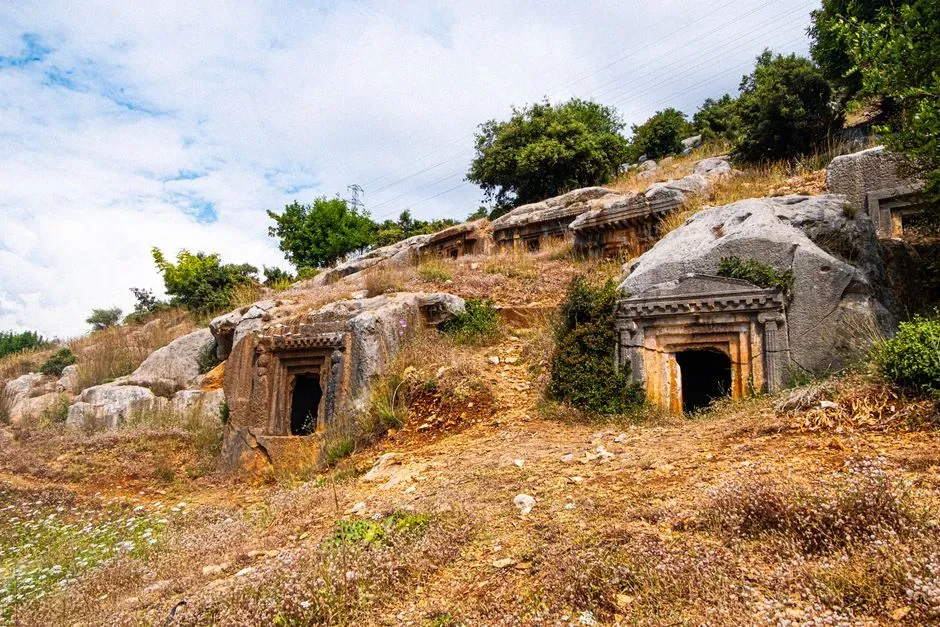
Vertical shaft tombs sound secure in theory – climb down, tunnel sideways, grab what you can. In practice, they’re a looter’s dream, which is exactly why nature sometimes had to step in and close them more brutally than any stone plug ever could.
Here’s the usual sequence around the Mediterranean and Near East. A family cuts a vertical shaft, carves a horizontal chamber at the bottom, places the dead, seals the door with stone or mudbrick, and loosely backfills the shaft with soil. For years, that fill quietly settles and voids open up underground. Eventually the unsupported roof slabs above the shaft crack and drop, and what was once a navigable opening becomes a dense, interlocked cone of rock.
The depth and instability of these collapsed shafts make them genuinely dangerous to dig, even now. Archaeologists have found that clearing the original entrance is risky even with modern shoring and equipment – which tells you everything about what ancient looters were up against. Some research teams have simply chosen to tunnel in from the side instead, rather than disturb a precarious ancient stack of collapsed stone.
There’s a dark irony here: a half-collapsed shaft is often more dangerous to rob than a wide-open one. It looks tempting, but one wrong step can bring the whole unstable cone down on top of you. That built-in terror probably preserved more grave goods over the centuries than any curse inscription ever managed.
#6 – Mudbrick Temples That Accidentally Entombed Older Graves
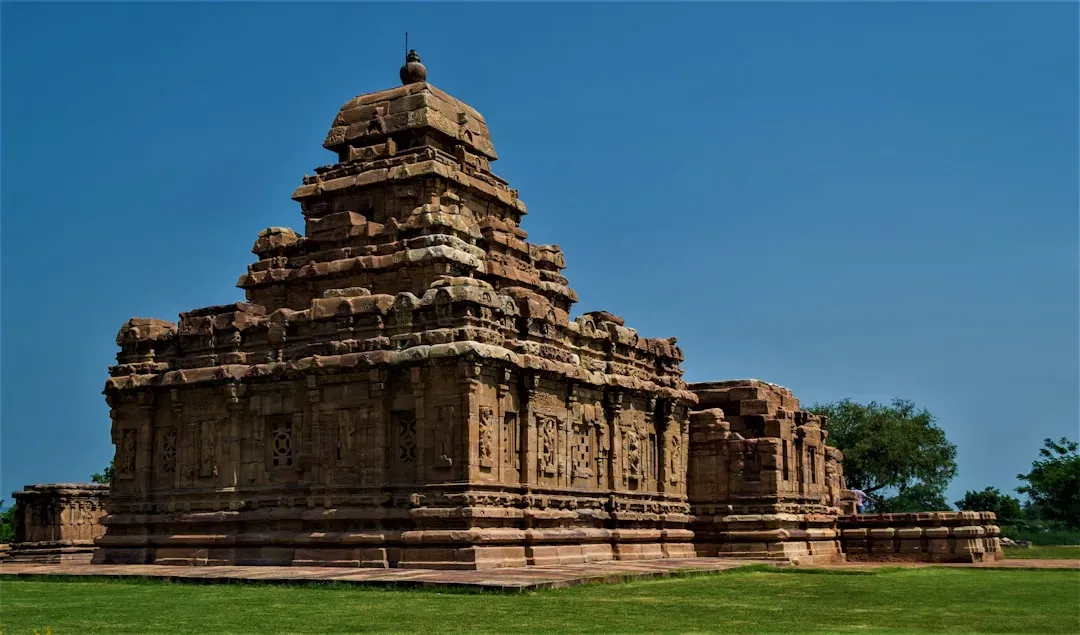
Tourists obsess over stone monuments, but most of the ancient world was built in mudbrick, and mudbrick is constantly slumping, melting, and being rebuilt. That endless cycle quietly swallowed older graves and small tombs under later construction phases, sealing them so thoroughly that even local memory of them vanished.
Picture an early cemetery on the edge of a growing city. Centuries later, a mudbrick temple or administrative complex rises directly over it. Builders level the ground, cutting down high spots and dumping fill into low ones – broken brick, construction debris, household trash, whatever’s on hand. Over time, the sheer weight of new walls compresses that fill, crushing shallow grave markers and collapsing the roofs of the smaller tomb chambers below.
To a modern excavator peeling back these layers, it can look like someone deliberately buried the old cemetery under a platform. In reality, the process was almost certainly unplanned, but the effect is identical: older burials sealed beneath dense, compacted layers no casual looter would ever bother digging through, protected further by the simple fact that nobody disturbs a working temple floor.
In several sites, researchers have found grave groups sitting directly under later temple floors with even the most fragile items still in place – cosmetic spoons, faience jewelry, children’s toys. A religious structure built to honor an entirely different set of gods ended up being the best protection those earlier dead ever received, purely by accident.
#5 – Hilltop Tombs Buried by Their Own Defensive Walls
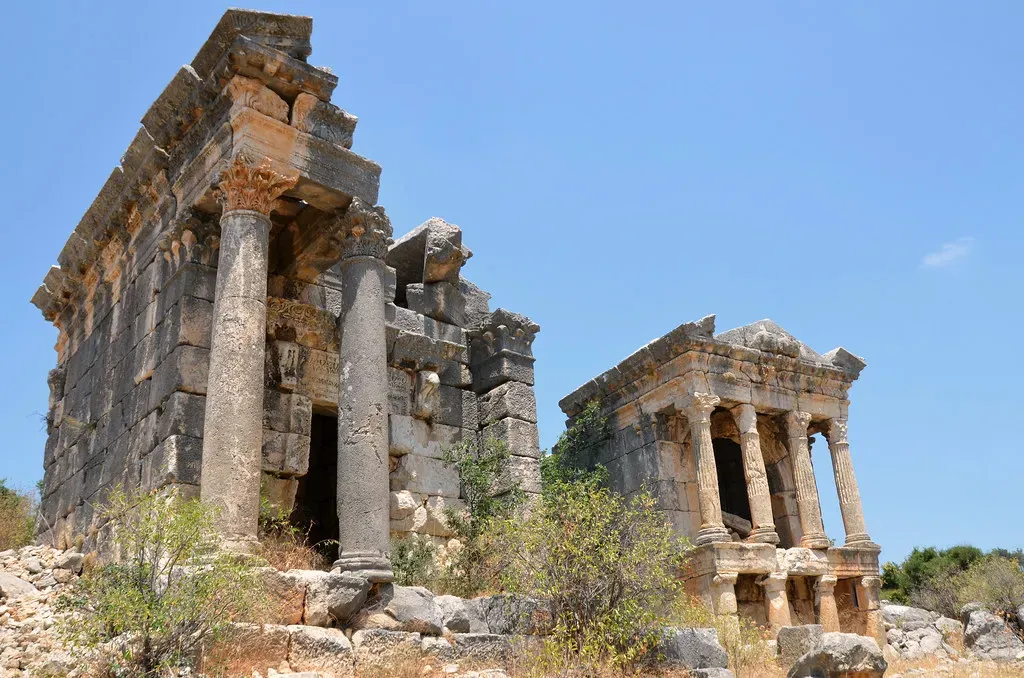
Fortified hilltops and acropolises usually get studied for their ramparts and bastions, not their burials. But in more than one ancient city, archaeologists have found early elite tombs on a ridge that were literally buried alive when later generations decided to beef up their defenses.
At a Glance
- Ceiling collapses sealed rock-cut chambers from within.
- Construction spoil buried older shaft entrances completely.
- Landslides smashed cliff façades and hid the doorways beneath them.
- Settling backfill caused shaft roofs to cave in on their own.
- Mudbrick platforms slowly compacted over forgotten graves.
The logic was brutal but practical. A later ruler wants stronger walls, and the highest point of the settlement – originally used as a prestigious family burial ground – is now the best real estate for a massive bastion. Engineers haul in earth and stone to build embankments and platforms, and as fill gets dumped against the slope, small rock-cut chambers that once opened onto the hillside disappear completely under it.
From a military standpoint, that’s ideal: compacted rampart material has no hidden voids for enemies to exploit. From a preservation standpoint, it’s even better. The new fortifications locked in a stable microclimate around the tomb and created overburden so heavy that tunneling down from above became exhausting and dangerous for anyone who somehow knew to try.
When modern teams strip away these later defensive layers, they occasionally find burial chambers untouched since antiquity, though grave goods are sometimes jumbled – not from robbery, but from centuries of settling and vibration as siege engines and earthquakes rattled the walls overhead. It’s a strange thought: what later rulers considered dead, useless space under their walls was, quite literally, packed with the previous city’s dead.
#4 – Tombs Sealed by Earthquake-Induced Rockfalls
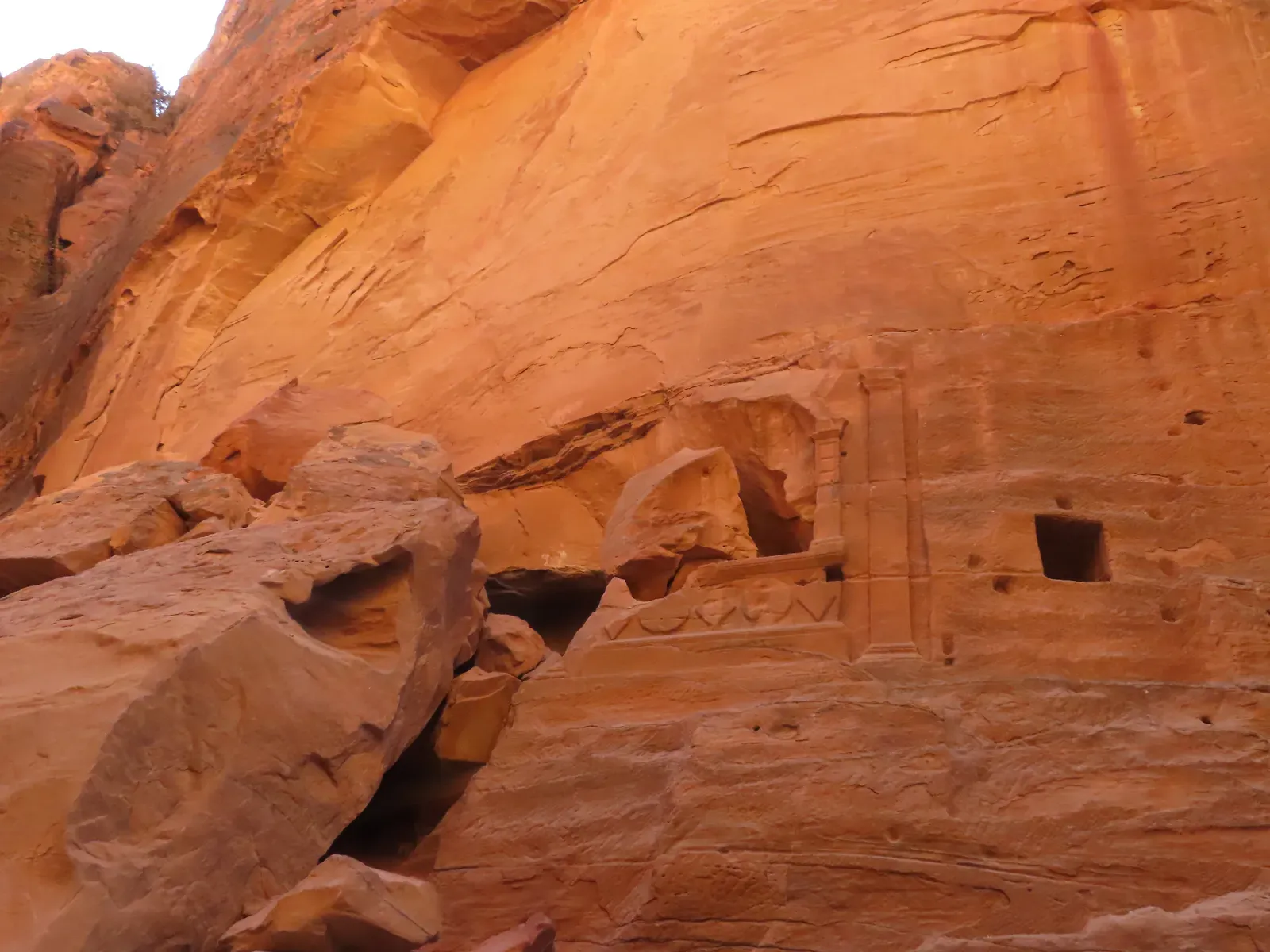
Earthquakes get blamed, fairly, for destroying enormous amounts of heritage. But they also created some of the best-sealed tomb contexts on record. A seismic shock through a rocky necropolis can shift entire cliffs, dropping boulders across tomb entrances and ventilation shafts in a matter of seconds.
Unlike slow erosion, which looters can adapt to over generations, earthquakes are sudden and terrifying, and the aftermath is chaotic. Historical records from many regions describe fires, aftershocks, and social disorder following major quakes, during which tending a distant family tomb simply stopped being a priority. A family might return one week to find the entire path to the necropolis buried under a fresh landslide, the ancestor’s façade shattered beyond recognition, the route itself too dangerous to walk.
Worth Knowing
- Seismic collapses happen in seconds, unlike slow, generations-long erosion.
- Post-quake chaos often meant grave visits stopped for good, not just for a season.
- Some skeletons were found still partly fleshed, proving the collapse followed burial almost immediately.
- Usually only the façade and first stretch of corridor took damage, leaving deeper chambers untouched.
To later generations, the whole cemetery becomes a tangle of dangerous boulders and cracked cliff face – no easy access, no obvious door to pry open. When archaeologists eventually clear the debris, it’s common to find that only the façade and the first few meters of corridor took damage, while the deeper chambers sat completely undisturbed for the rest of history.
In a few documented cases, skeletal analysis suggests some bodies were still partially fleshed when the quake struck, meaning the collapse happened very soon after burial. That timing matters enormously: it means the tomb was sealed before anyone had the chance to quietly slip back in and remove valuables, a practice that was depressingly common across many ancient cultures even without organized professional tomb robbery.
#3 – Rock-Cut Chambers Encased by Later Quarrying
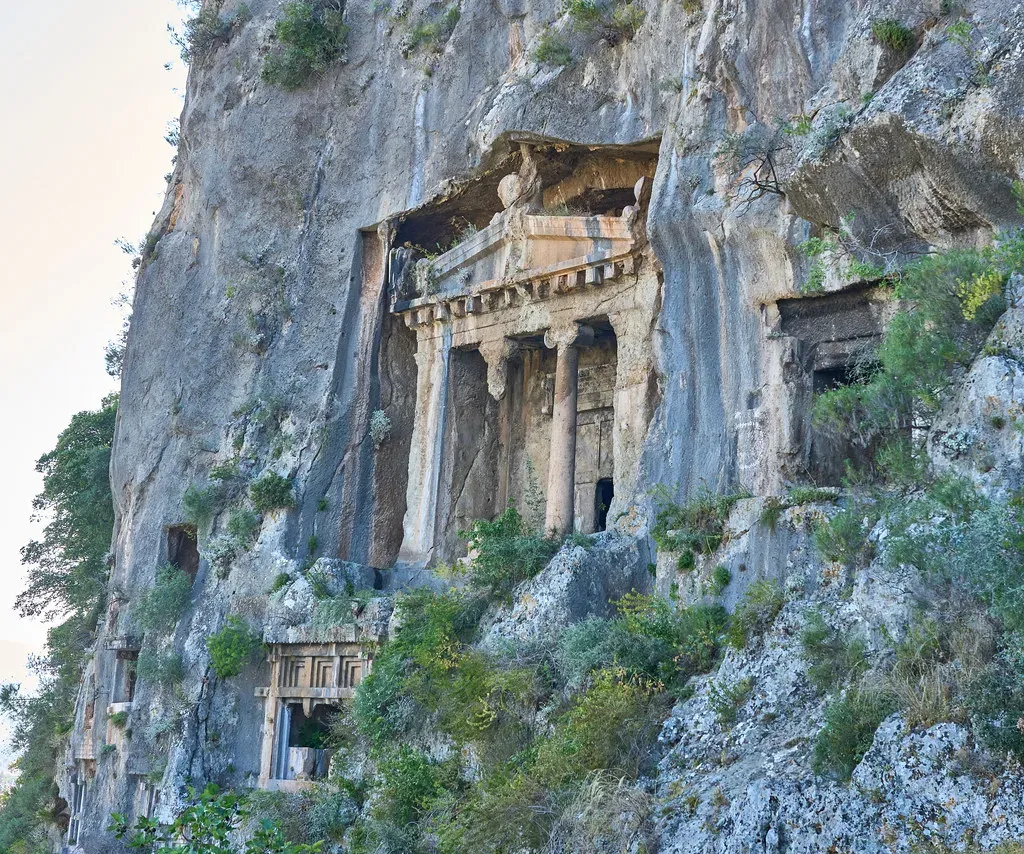
Quarries sound like the enemy of archaeology – ripping stone straight out of the landscape without a second thought for what’s underneath. Yet quarrymen also created strange pockets of preservation, especially when they cut around, but not into, older burial chambers.
Here’s how the paradox plays out. A later building project, maybe a temple or a palace, needs stone, so workers open a quarry face near a rocky slope that once held a few small private tombs generations earlier. They don’t recognize the subtle cuttings as graves, or simply don’t care, and advance the quarry face anyway, leaving awkward pillars of rock standing wherever it’s structurally useful to leave support.
Inside some of those untouched stone pillars sit earlier tombs. From the outside, nothing hints at an entrance, since the original façade has been sliced away entirely by quarrying. The chamber ends up marooned inside a freestanding mass of rock, inaccessible to anyone without careful modern excavation. To ancient looters, it was just a lump of unremarkable stone. To a surveyor with ground-penetrating radar, it’s a sealed vault waiting to be mapped.
The double accident here is almost poetic: the earlier tomb needed to sit in exactly that geological layer, and the later quarrymen needed to stop just short of destroying it, usually for purely practical reasons. When these isolated chambers finally get opened, the assemblages inside can look almost staged – intact vessels standing upright, tiny beads still lying in perfect strings where they fell from long-decayed textiles.
#2 – Underground Chamber Tombs Locked by Subsiding Streets
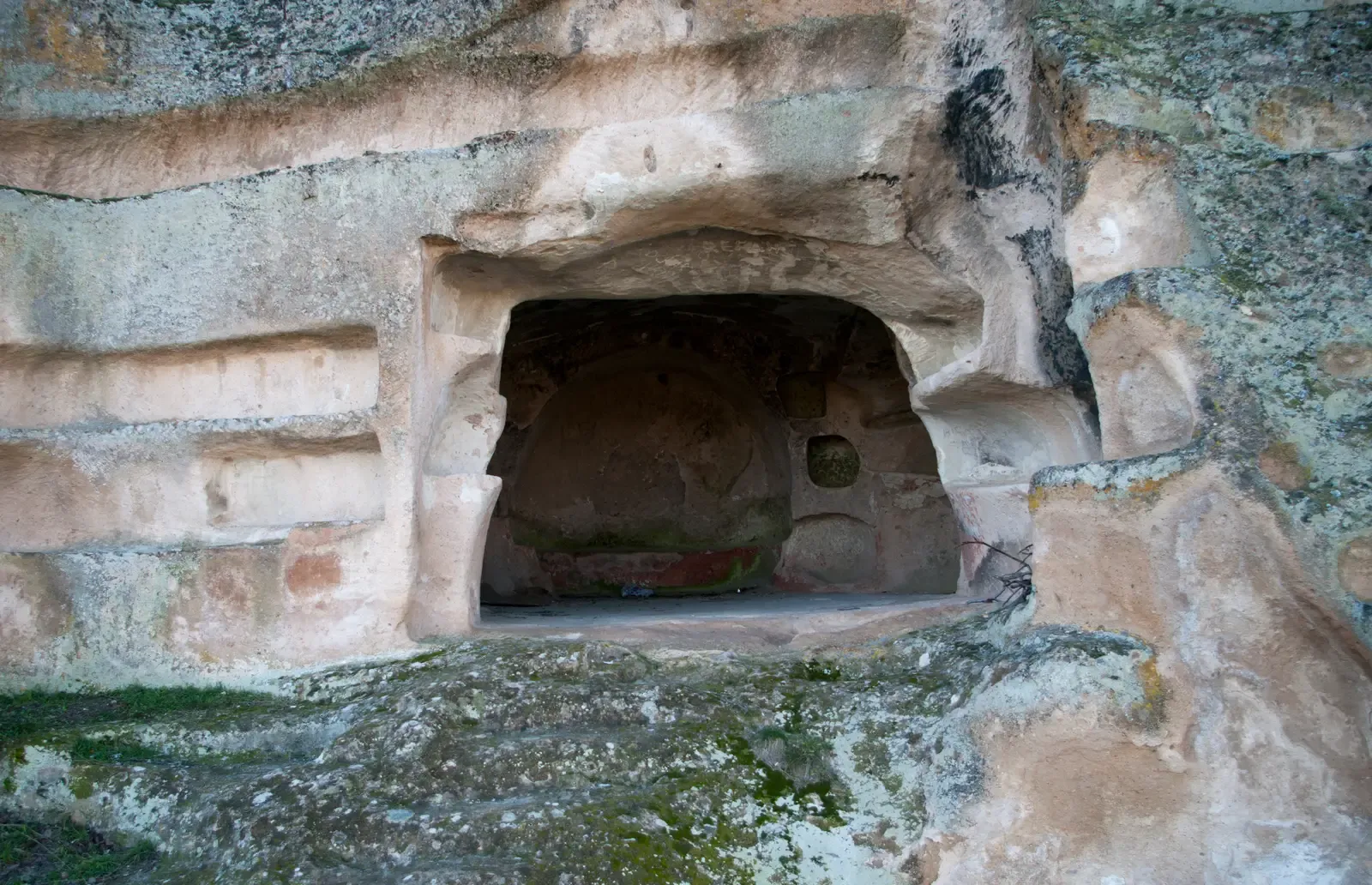
Urban archaeology is brutally vertical – cities build on top of themselves, layer after layer, century after century. In some ancient towns, rock-cut chamber tombs on the outskirts got gradually swallowed by urban sprawl as streets, houses, and drains rose above them, subsiding and fracturing over centuries in ways nobody planned or wanted.
Initially, a family tomb might open onto an open field. A few generations later, that field is a suburb. A dirt path becomes a paved street, foundations go in, heavier masonry compresses the ground beneath it, and the shaft leading down to the family’s burial chamber starts to deform – sidewalls leaning inward, the upper mouth narrowing, capstones eventually shearing off and dropping into the shaft below.
By the time medieval or early modern residents were walking those same streets, nobody had any idea a rock-cut complex sat just a few meters below their feet. It was simply solid ground. Modern archaeologists often stumble onto these voids while laying utility trenches or subway tunnels, probing to find narrow, nearly inaccessible shafts filled with broken stone, and beyond them, larger stable chambers still holding benches, offerings, and human remains close to their original positions.
Because the shaft is so structurally compromised, even professional excavation teams have to stabilize it carefully before going further. Ironically, that’s precisely why ancient looters left it alone too – the labor and risk simply weren’t worth whatever might or might not be down there. The slow, quiet subsidence of an urban street ended up doing more to protect the dead than any law ever written.
#1 – The “Perfect Storm” Tombs: Multiple Collapses, Zero Looters
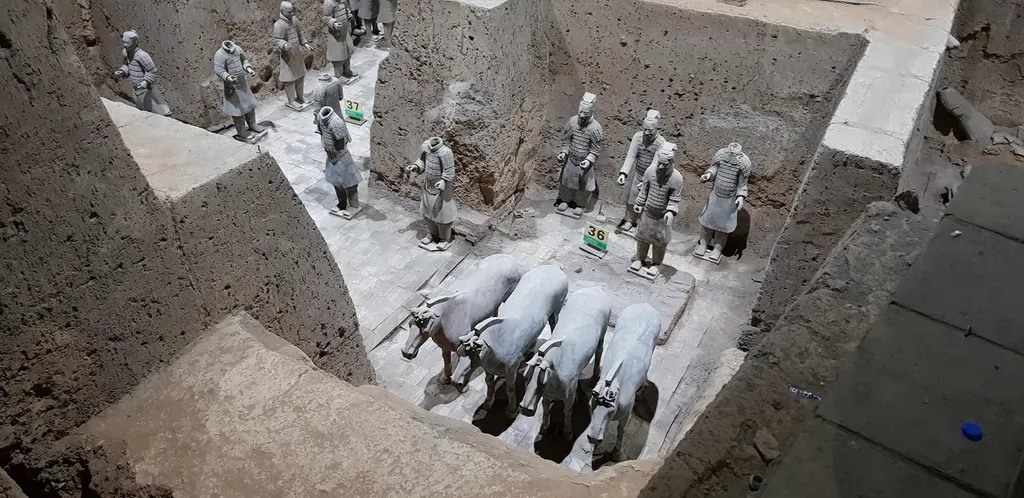
Every so often, archaeologists stumble on a burial that feels almost miraculously intact – not just sealed, but untouched at a level that borders on eerie. These are the rare “perfect storm” cases, where multiple independent collapse events layered over each other across centuries, building a barrier no premodern looter could plausibly overcome.
Why It Stands Out
- Multiple, unrelated collapses stack on top of each other across centuries.
- No surface clues survive – no depressions, no cut rock, no old robber pits.
- Organic material like textiles and garlands can survive intact when other tombs lose it fast.
- These finds preserve behavior and ritual detail, not just objects.
The sequence usually goes something like this. A rock-cut or shaft tomb gets sealed the normal way. A minor roof collapse partially blocks the entrance sometime later. Decades or centuries after that, a bigger geological event – a landslide, an earthquake, or a construction project – buries the entire entrance zone under meters of debris. Later still, new structures or terraces rise above the now-invisible necropolis, adding even more weight on top of everything below.
From the surface, there’s zero sign anything is there – no depressions, no cut rock, no telltale robber pits from earlier failed attempts. Only deep excavation, sometimes triggered by a modern construction project, reveals the full stacked history of collapses. When the burial chamber is finally breached, excavators can find:
- Vessels with residue still clinging to the interior, allowing chemical analysis of ancient food and drink.
- Organic remains – textiles, garlands, even traces of skin – that only survive in the most stable, sealed environments.
- Tool marks on the walls so sharp they could have been carved last year.
These are the contexts that rewrite textbooks, because they preserve behavior, not just objects: how offerings were arranged, how bodies were positioned, what last-minute changes were made before the final sealing. Every one of those details survived for one blunt reason – the tomb was unlucky enough to sit in a geologically unstable spot, and lucky enough that the resulting chaos scared everyone else away for good.
The Bottom Line
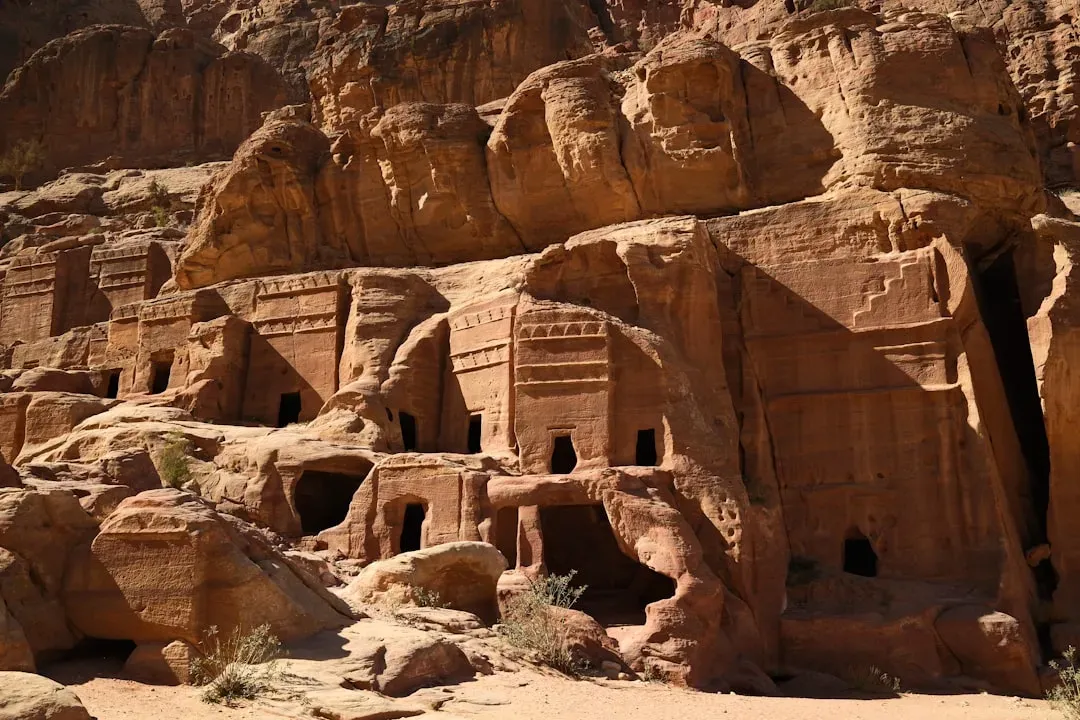
The romantic version of this story says respect for the dead, or fear of a curse, kept certain tombs safe. The evidence says something blunter and, frankly, more interesting: geology, bad construction planning, and plain structural failure did most of the actual work.
Collapsing ceilings, sinking streets, fortification fill, temple platforms, rockfalls, and quarry faces turned perfectly accessible burials into invisible voids – places so hard to reach that even the most determined ancient robbers eventually just walked away. In a strange sense, the living abandoned these graves twice: first socially, as memory faded, then physically, as nature and later builders erased them from the map entirely.
That’s precisely why the most intact tombs on Earth tend to look the least glamorous from the outside – broken cliffs, warped pavement, ugly retaining walls hiding a perfect time capsule underneath. I’d trust a random rockfall over a curse inscription any day; stone doesn’t care about superstition, it just falls, and falls hard enough to keep everyone out for three thousand years. The next great discovery almost certainly won’t come from a famous pyramid. It’ll come from a construction trench, a crumbling hillside, or a street that finally decides to cave in.