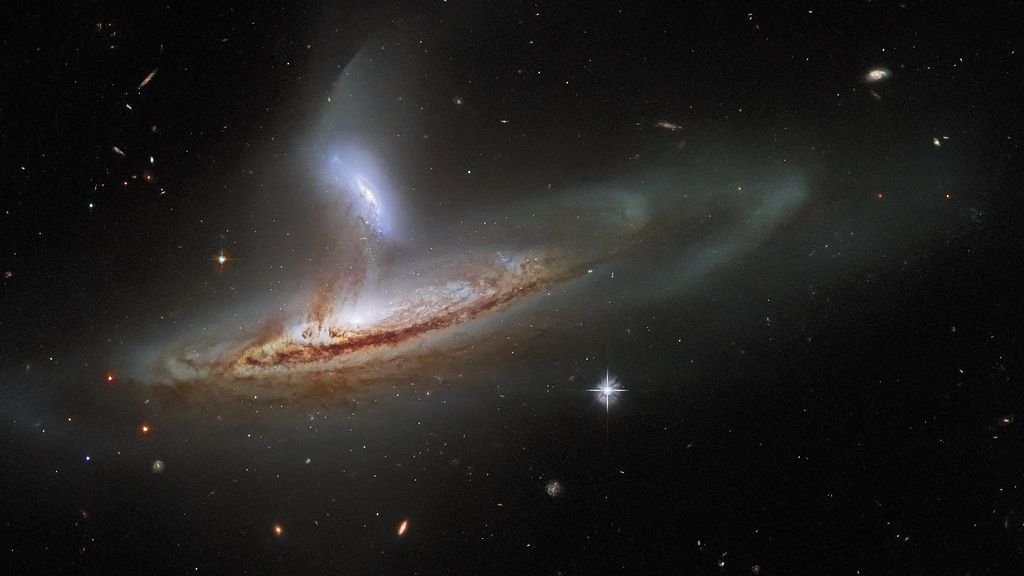
If you think you live in a normal, sensible universe, you’re in for a shock. The more you zoom out to the cosmic scale, the more reality behaves like a fever dream written by a physicist who never sleeps. You grow up with this quiet assumption that space is just empty darkness and stars are just distant suns. Then you start digging, and suddenly you’re dealing with invisible matter, backward time, cosmic mirages, and regions of space that behave more like mathematics than anything you’d ever call “real life.”
As you walk through these ten phenomena, you’ll notice something unsettling: the universe doesn’t seem particularly interested in fitting inside your intuition. The rules you rely on down here – about cause and effect, about objects being solid, about up and down even meaning anything – begin to fall apart. That might sound intimidating, but it’s also thrilling. You’re about to tour a universe that is far weirder, more beautiful, and more unsettling than the one you casually imagine when you look up at the night sky.
1. Quantum Entanglement: When Particles Act Like They Share a Secret
Imagine you have two coins that always land on opposite sides: if one is heads, the other is instantly tails, no matter how far apart you flip them. That’s roughly the feeling you get when you first encounter quantum entanglement. In the quantum world, you can prepare two particles so that their properties are deeply linked; when you measure one, you instantly know the result of the other, even if it’s on the opposite side of the galaxy. You’re not sending a signal faster than light, but the connection between them just refuses to care about distance in the way you’re used to.
What really warps your mind is that before you measure them, the particles don’t even have definite values in the ordinary sense. They live in a fuzzy cloud of probabilities, and your act of measuring one seems to “collapse” that cloud for both. You’re pushed into a world where reality is not fully determined until you look, and where “separate” things can behave as if they’re a single, shared system. If you’re honest, your everyday notion of locality – things only affecting their neighbors – is never quite the same again.
2. Black Holes: Places Where Space and Time Fall Off a Cliff
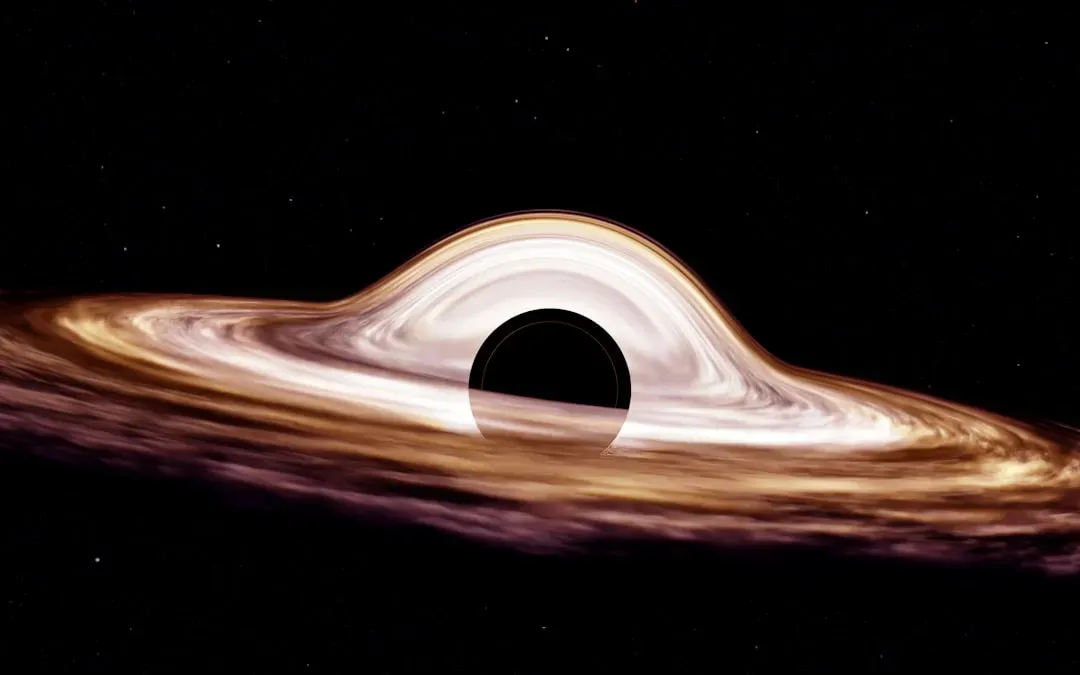
When you hear “black hole,” it’s easy to picture a kind of cosmic drain sucking in everything nearby. But what you’re really dealing with is a region where gravity is so extreme that space and time themselves are radically distorted. If you drift toward a black hole’s event horizon – the ultimate point of no return – you’d see the outside universe speed up, lights stretch to red, and time for you slow down relative to distant observers. From far away, someone watching you fall would see you freeze and fade at the edge, never quite crossing over.
Inside, your normal sense of direction breaks completely. Space and time swap roles in a way that defies ordinary intuition: falling inward becomes as unavoidable as moving forward in time. At the center, current theories predict a singularity – a place where density becomes so extreme that your known laws of physics simply stop making sense. When you realize there are likely billions of these objects lurking in galaxies, including a supermassive one in your own, you start to understand just how alien the universe really is, even in your cosmic backyard.
3. Dark Matter: The Invisible Skeleton of the Cosmos
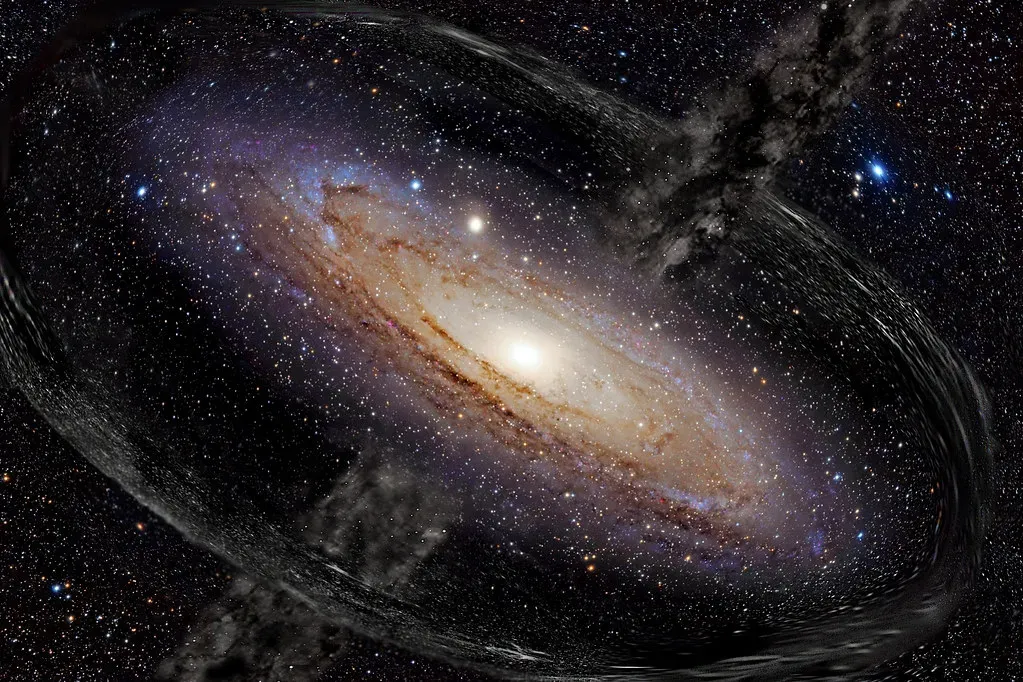
When you look at a picture of a galaxy, you see elegant spiral arms glittering with stars and dust. It feels complete, like you’re seeing the whole thing. But you’re not. When astronomers carefully measure how galaxies rotate, you find a big mismatch: there isn’t nearly enough visible matter to explain why they don’t fly apart. The simplest explanation is that galaxies are embedded in vast halos of unseen mass – dark matter – that doesn’t glow, reflect, or absorb light the way ordinary matter does. You literally see its fingerprints in the motions of stars and the bending of light, while the thing itself remains invisible.
If you could somehow “turn on” dark matter so your eyes could see it, the night sky would look unrecognizable. You’d suddenly notice that the luminous parts of galaxies are just the barest skin over enormous dark structures that hold everything together. You live in a universe where the vast majority of matter doesn’t interact with you in any familiar way, and yet quietly shapes the large-scale structure of everything. You walk around made of the rare, visible stuff, surrounded and stabilized by a hidden cosmic scaffolding you can’t touch or see directly.
4. Dark Energy: A Mysterious Force Making Space Itself Accelerate

You probably grew up with the idea that the universe began with a Big Bang and has been expanding ever since, gradually slowing down under the pull of gravity. That story made sense for a long time, until astronomers started measuring distant exploding stars and found something deeply unsettling. Instead of slowing, the expansion of the universe is speeding up, as if some unknown ingredient is pushing galaxies apart faster and faster over time. To account for this, you’re forced to introduce dark energy, a strange form of energy tied to space itself.
The weirdness ramps up when you realize what this implies for the far future. If dark energy keeps dominating, distant galaxies will drift away beyond your cosmic horizon, effectively vanishing from view. The observable universe shrinks to a lonely island of local galaxies, while everything else slips beyond reach forever. You live in a brief era when the night sky still tells you the true story of a rich, crowded cosmos. Billions of years from now, a curious observer might look up and conclude, wrongly, that the universe is small and static – because dark energy has hidden almost everything from sight.
5. Time Dilation: When Time Really Does Run Slower for You

You have a gut feeling that time is universal, ticking along steadily for everyone, everywhere. Relativity shreds that assumption. If you move very fast, close to the speed of light, or you sit deep in a gravitational field, time for you runs more slowly compared with someone far away or moving more gently. This is not a metaphor or a trick of perception; it’s a measurable difference. Your heartbeats, your thoughts, the decay of particles, even your aging process – all of it slows relative to others in different conditions.
You might think this only matters in extreme situations, but you quietly rely on it every time you use satellite navigation. Satellites orbiting Earth experience slightly different rates of time because they are moving quickly and feel weaker gravity than you do on the ground. Engineers have to correct their onboard clocks for both special and general relativistic time dilation, or your positioning would drift badly. The fact that your phone works at all is a daily reminder that time is not absolute, that your “now” is local and stretchy, and that the universe plays much looser with time than your everyday life suggests.
6. Quantum Vacuum Fluctuations: Empty Space That Never Sits Still
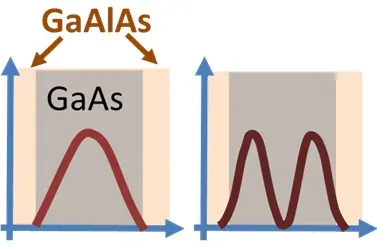
When you hear the phrase “empty space,” you probably picture a complete nothingness – no particles, no light, nothing happening. Quantum physics laughs at that image. Even what you call a vacuum is seething with activity. Pairs of particles and antiparticles can briefly pop into existence and then annihilate each other, borrowing energy from the vacuum as long as they repay it quickly enough. You end up with a picture of space where “nothing” is actually a restless, flickering ocean of potential, constantly churning just below the threshold of what you normally notice.
You see the effects of this strange vacuum in subtle but real ways. Certain atomic energy levels shift slightly because of the fluctuations in the surrounding space, and the famous Casimir effect – where two uncharged metal plates placed very close together feel an attractive force – arises from changes to these quantum fields between and around the plates. Once you accept that even empty space is alive with invisible fields and brief, ghostly particles, your old idea of “nothing” breaks down completely. The universe refuses to grant you a truly empty stage; the background itself is part of the play.
7. Neutron Stars: City-Sized Objects Heavier Than the Sun
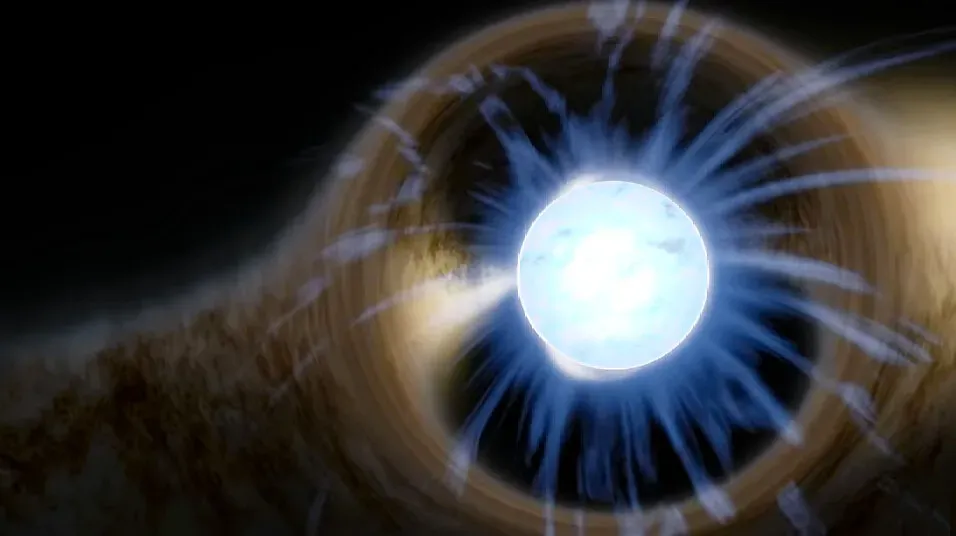
Picture crushing a star many times the mass of the Sun down until it’s roughly the size of a city. That’s what you’re dealing with when you meet a neutron star. After a massive star exhausts its fuel and explodes as a supernova, its core can collapse into an object so dense that a teaspoon of its material would outweigh mountains. Inside, atoms are squeezed so fiercely that electrons and protons merge into neutrons, creating a gigantic nuclear object held up by quantum forces instead of the chemical and thermal pressures you’re used to.
As if the density alone weren’t strange enough, many neutron stars spin rapidly and carry magnetic fields trillions of times stronger than Earth’s. When beams of radiation sweep across your line of sight, you detect them as pulsars, cosmic lighthouses ticking with clocklike precision. Some neutron stars orbit each other and gradually spiral inward, radiating gravitational waves that ripple through spacetime itself. When you look at these objects, you’re staring at matter pushed almost as far as it can go without collapsing into a black hole – a reminder that the ordinary stuff you’re made of can behave in wildly unfamiliar ways under extreme conditions.
8. Gravitational Lensing: When Gravity Turns Space Into a Funhouse Mirror
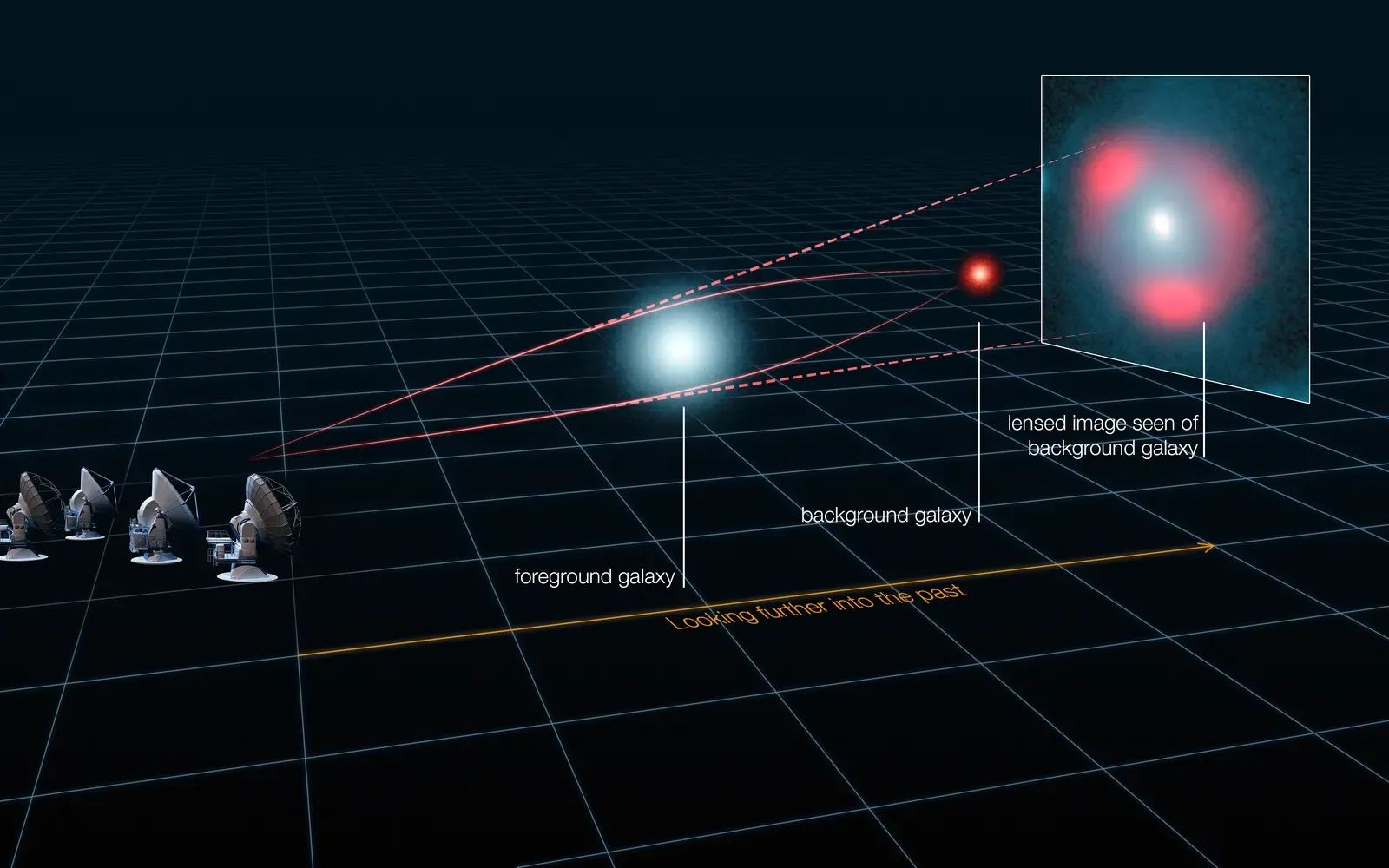
You usually think of gravity as a force that pulls objects toward each other: apples to the ground, planets around the Sun. General relativity asks you to see it differently. Mass and energy curve spacetime, and light follows the curves. When a massive object like a galaxy or a cluster of galaxies sits between you and something even farther away, its gravity bends the light from the background object, acting like a lens. You end up seeing stretched arcs, rings, or multiple images of the same distant galaxy – cosmic mirages sculpted purely by warped spacetime.
What makes gravitational lensing especially wild is that it lets you “see” things you otherwise couldn’t. When you measure how strong the lensing is and compare it to the visible matter, you often find you’re missing huge amounts of mass – evidence once again for dark matter. In effect, you’re using the universe itself as a giant optical instrument, with galaxies and clusters playing the role of glass. The sky you look at is not just a straightforward snapshot; it’s a layered, distorted projection passing through a curved, flexible spacetime that quietly rearranges how you see distant objects.
9. Cosmic Inflation and the Multiverse Idea: A Universe That Might Be One of Many
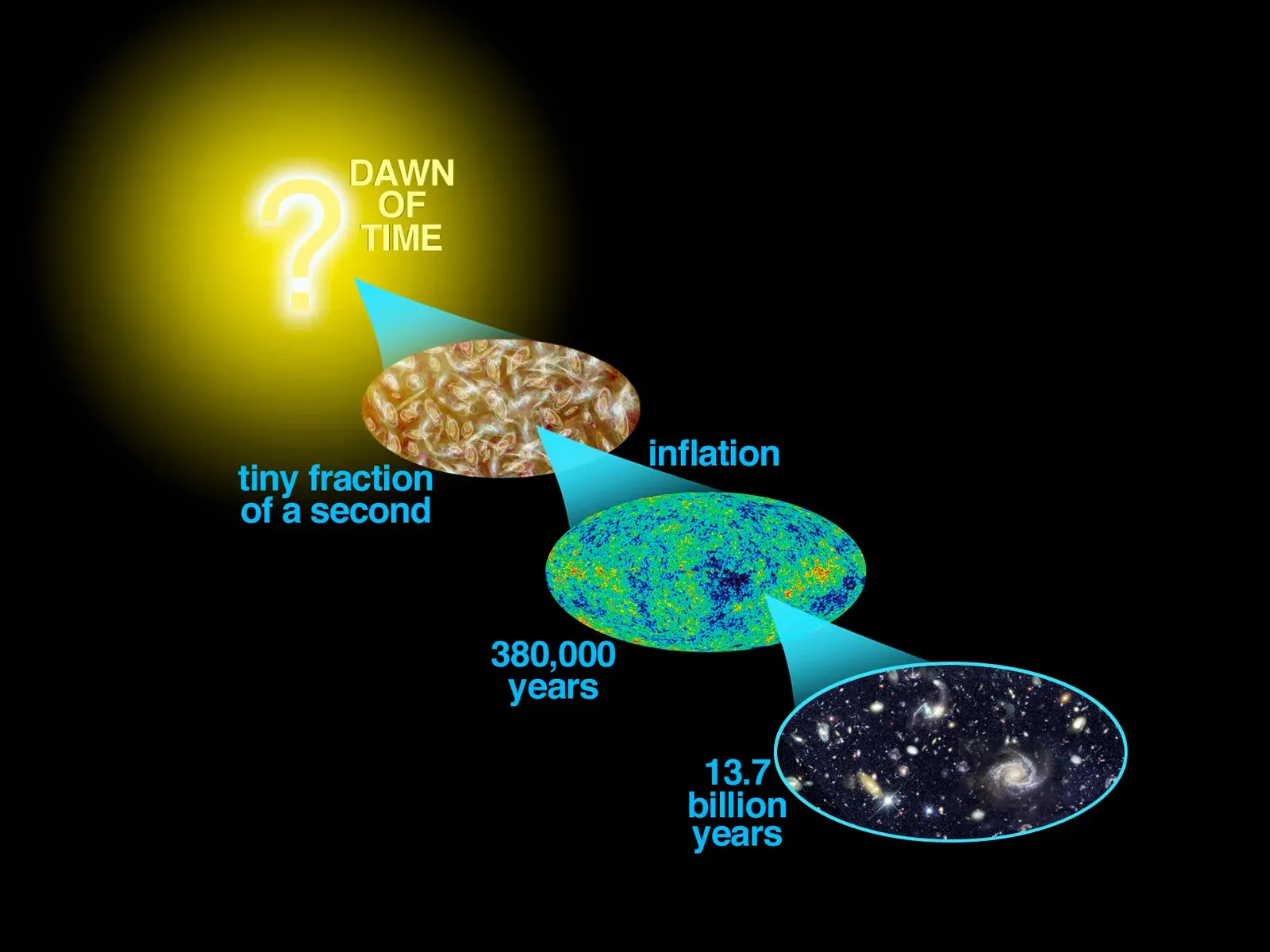
When you look at the universe on its largest scales, you see remarkable uniformity: matter and radiation are spread out in nearly the same way in every direction, and space looks geometrically flat to a high degree of accuracy. One way to explain this is to say that in the earliest fraction of a second after the Big Bang, the universe went through a brief but incredibly rapid expansion called inflation. During this phase, tiny quantum fluctuations were stretched to cosmic sizes, seeding the galaxies and clusters you see today, while smoothing out irregularities.
Some versions of inflation suggest an even stranger picture: regions of space could stop inflating and form “bubble” universes like yours, while other regions keep inflating endlessly. In that scenario, your observable universe might be only one bubble in a vast multiverse, each with potentially different properties or physical constants. You can’t directly test most of these other bubbles, at least with current knowledge, but the idea forces you to reconsider what you mean by “the universe.” Instead of everything that exists, your universe might just be your local patch – one snowflake in a blizzard of realities you’ll never reach.
10. The Arrow of Time: Why You Remember the Past but Not the Future

In your everyday experience, time has a clear direction. You remember yesterday, not tomorrow. Eggs crack but never spontaneously un-crack. You grow older, never younger. Yet when you look at the fundamental laws of physics, many of them do not care about this direction. If you ran the equations forward or backward, they would still work. The big exception is the second law of thermodynamics, which says that in a closed system, disorder – entropy – tends to increase. That statistical tendency seems to give you your arrow of time, but it raises a nagging question: why was the universe so improbably ordered in the first place?
As you follow this thread, you’re pushed toward unsettling possibilities. Maybe the direction of time you experience is tied to the expansion of the universe and the way structures form and decay. Maybe there are deeper connections between cosmology and your own sense of memory and cause and effect. You live in a reality where the basic equations do not strongly prefer past over future, yet your consciousness rides one direction only, anchored to a cosmic history that began in a surprisingly low-entropy state. The fact that your morning coffee cools down instead of heating up on its own might be whispering secrets about the birth of the entire universe.
Conclusion: Living in a Universe That Refuses to Be Simple
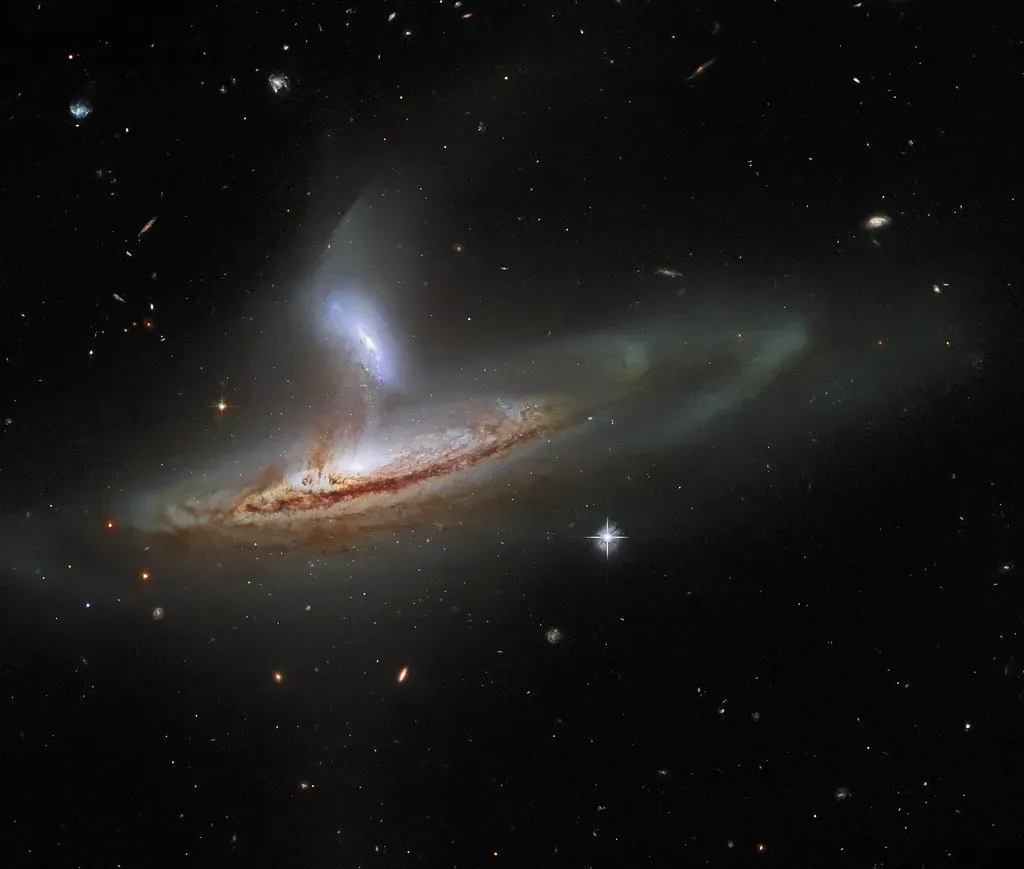
When you step back from these phenomena – entanglement, black holes, dark matter, dark energy, time dilation, quantum vacuums, neutron stars, gravitational lenses, inflation, and the arrow of time – you start to see a pattern. The universe you move through every day is just the thin, familiar crust of something far stranger. Your intuitions evolved to handle falling apples, flowing rivers, and blue skies, not spinning neutron stars or accelerating spacetime. Yet here you are, a conscious creature on a small planet, slowly decoding rules that feel more like abstract mathematics than like common sense.
If you let that sink in, it’s both humbling and exhilarating. You’re not stuck in a dull, predictable cosmos; you’re embedded in a reality that consistently outpaces your imagination and then dares you to catch up. Every time you think you’ve wrapped your head around how things work, the universe reveals another layer of weirdness that forces you to stretch your mind a bit further. Maybe that’s the real gift here: not just that the universe is stranger than you imagine, but that, step by step, you can learn to imagine a little more. So as you look up at the night sky, you might quietly ask yourself: if this is what you already know, what strangeness is still waiting just beyond your current understanding?