You like to think you’ve got a decent handle on how nature works: animals eat, sleep, hunt, migrate, repeat. But every now and then, you stumble across a story about some creature doing something so strange that it makes you pause and wonder if the rulebook of biology is missing a few pages. That’s the territory you’re about to walk into here: the weird, wild edge of what science can explain.
In this article, you’ll meet five animals whose abilities push right up against the limits of current scientific understanding. These are not fairy tales or internet myths; they’re grounded in real observations, serious research, and, in some cases, uncomfortable mysteries. As you read, you might catch yourself feeling a mix of awe, disbelief, and a slightly unnerving realization: you still don’t fully grasp what life on this planet is capable of.
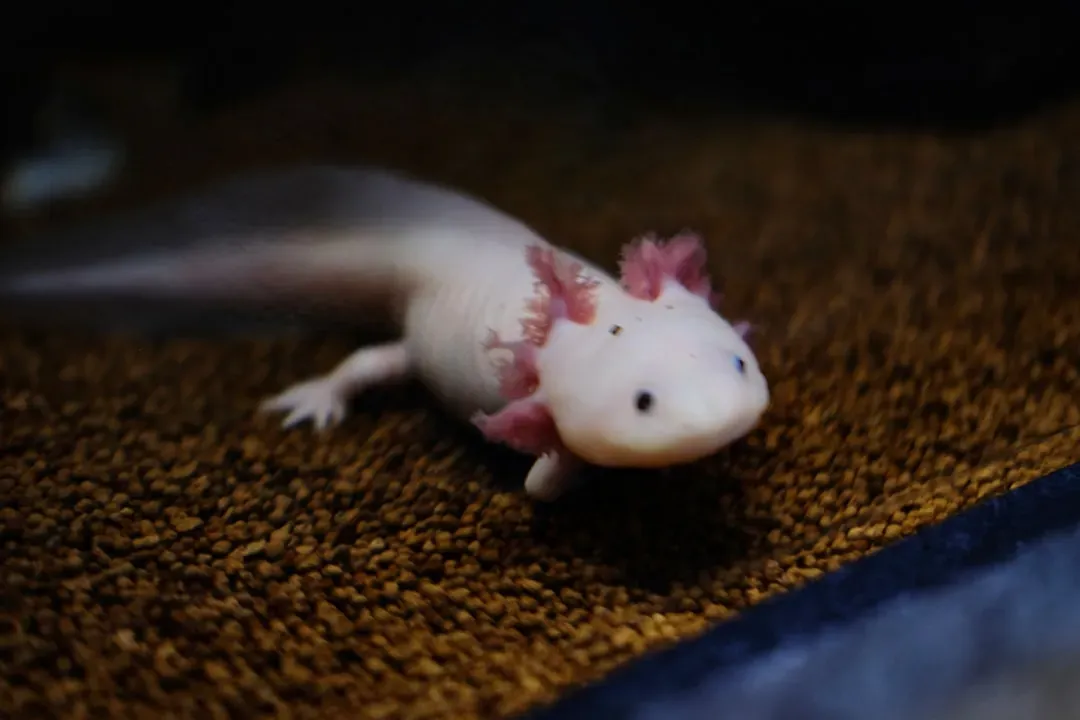
1. The Axolotl: The Salamander That Regrows Body Parts Like It Hit Undo
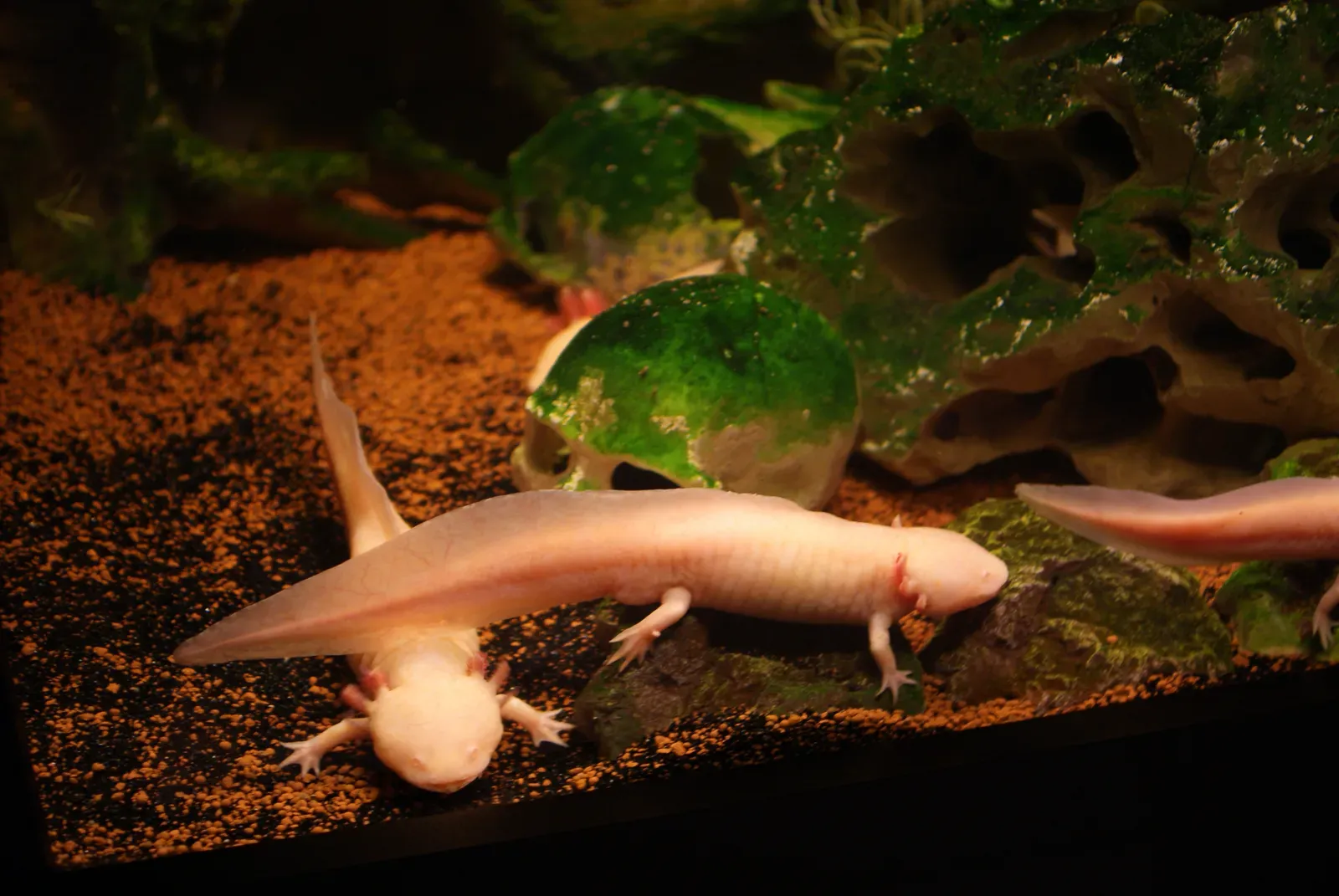
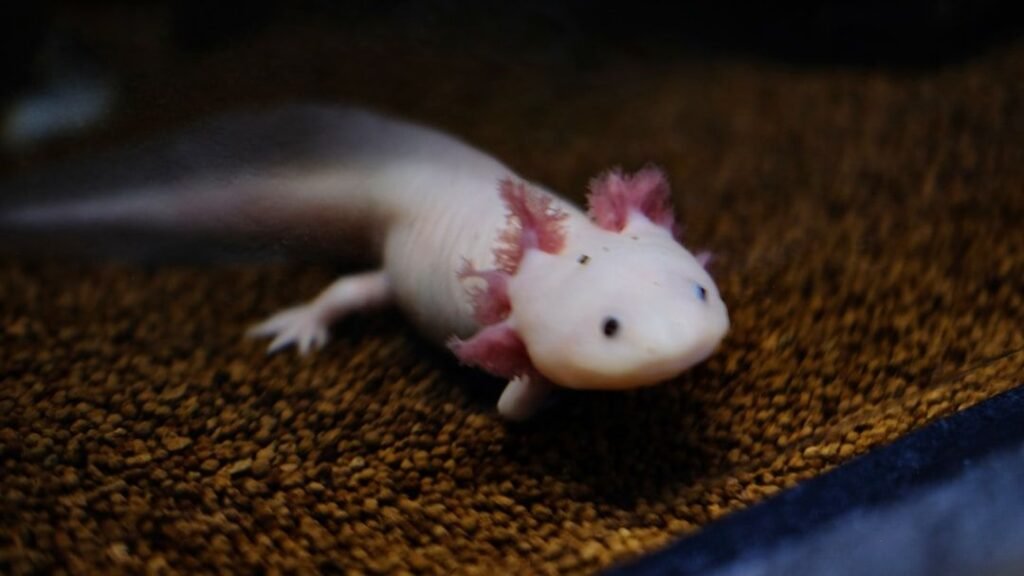
Imagine if you lost a finger, damaged your spinal cord, or even suffered a stroke, and your body calmly rebuilt everything, leaving no scar behind. That’s everyday life for the axolotl, a strange, permanently “teenage” salamander that lives in the waterways around Mexico City. You’re used to the idea that a lizard can regrow a tail, but an axolotl goes much further: it can regenerate entire limbs, parts of its heart, its eyes, chunks of its brain, and even segments of its spinal cord, all while returning those tissues to full function rather than just slapping on a biological patch.
What makes this so baffling is that, as a human, you have many of the same basic genes and cell types, yet your body slams on the brakes when it comes to this level of regrowth. In an axolotl, cells at the site of an injury de-differentiate, almost rolling back their biological identity so they can become a kind of flexible, embryonic-like mass that rebuilds what was lost with a detailed blueprint. In you, similar processes tend to lead to scar tissue or, if they go rogue, to cancer, not a perfectly rebuilt limb. Scientists are digging into how the axolotl balances aggressive regrowth with tight control, and while they’ve mapped large portions of its genome and identified some key signaling pathways, they still can’t fully explain why this animal gets full regeneration while you get stuck with scars.
2. Migratory Birds: Navigating the Planet with an Invisible Internal Compass
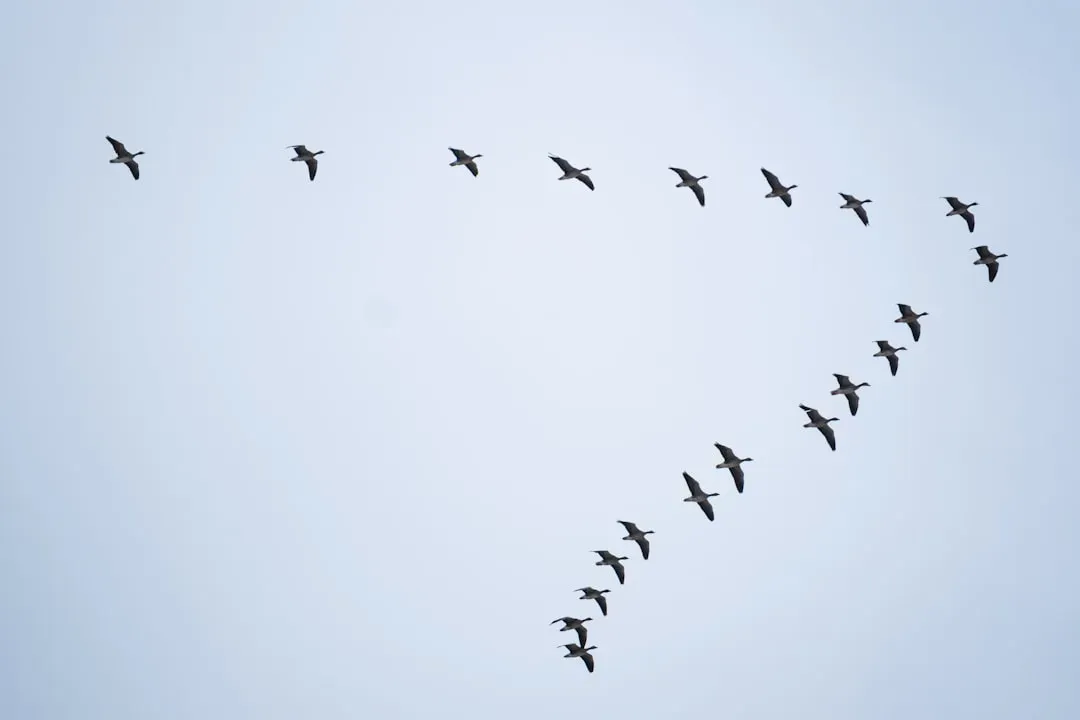
You probably rely on your phone’s GPS to find a new café across town, yet tiny birds that weigh less than a letter can cross entire oceans and continents with astonishing accuracy. Species like the European robin, the Arctic tern, and many warblers can travel thousands of miles, often at night, and still show up in the same breeding spot or wintering ground year after year. They’re not using road signs, star charts, or weather apps. Instead, they appear to sense something you never directly feel: the Earth’s magnetic field.
The wild part is that scientists suspect at least two different systems may be at work in these birds, and neither is fully nailed down. One idea is that you’re looking at a sort of biological compass in their eyes involving special light-sensitive molecules that respond to magnetic fields, letting the bird “see” a faint pattern overlaying the world. Another proposes iron-based particles in specific tissues that could act like microscopic compass needles. Experiments show birds get disoriented when magnetic fields are artificially altered, which supports the idea that they truly perceive magnetism. But how your brain would even process a sense like that, and how a bird’s brain converts it into a detailed map that works over entire hemispheres, is still only partially understood. When you think about it, these birds make your best navigation apps look clumsy.
3. The Electric Eel: Generating Lightning-Like Voltage Inside a Living Body
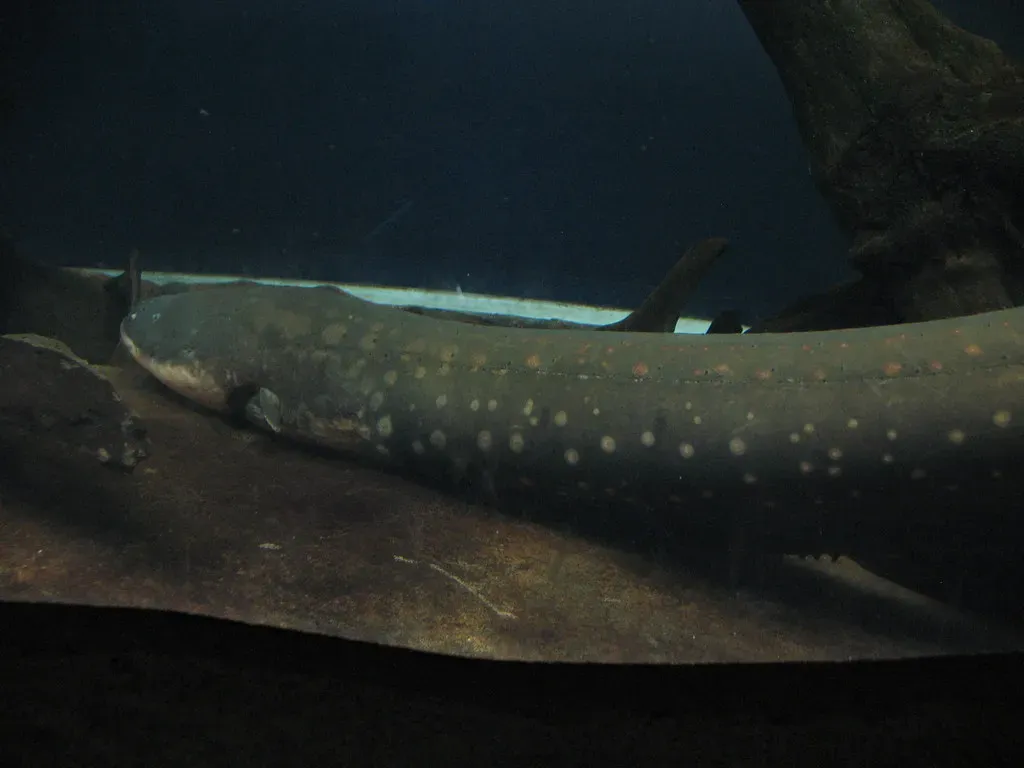
If you’ve ever gotten zapped by static, you know electricity can be startling, but imagine being able to summon a shock strong enough to stun prey, deter a predator, or explore your surroundings in murky water. Electric eels, which are actually a type of knifefish, can generate powerful electric discharges using specialized cells called electrocytes arranged in series, like stacks of tiny biological batteries. A big individual can produce a burst reaching several hundred volts in a split second, enough to cause substantial pain, muscle contraction, and confusion in other animals.
On paper, you can describe the electrocytes in terms of ion channels, voltage differences, and neural control, and that gives you a basic engineering-style explanation. But when you look closer, the whole system still feels improbable: an animal that safely carries, controls, and precisely targets large electric discharges inside a body packed with water and salt, which normally conduct electricity freely. You also see lower-level, continuous discharges used almost like a radar, letting the eel sense nearby objects and other animals through distortions in its self-generated electric field. Instead of just one trick, you’re looking at a living creature that has turned physics itself into a multi-purpose tool: a weapon, a sensor, and a communication channel. The way all of this evolved step by step from ordinary muscle cells is a question researchers are still piecing together.
4. The Tardigrade: Surviving Conditions That Would Shred Almost Any Other Life
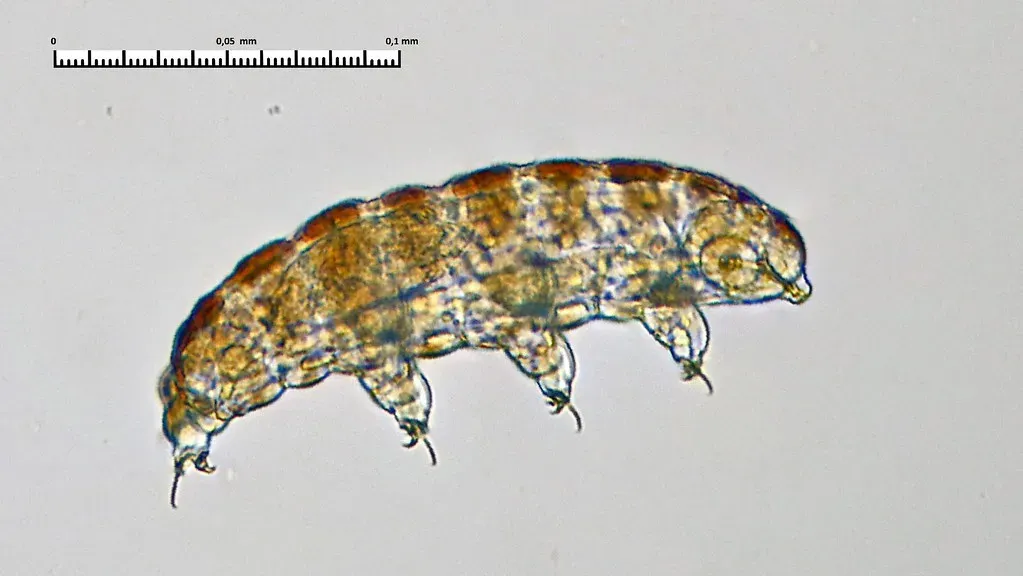
When you think of the toughest animals on Earth, you probably imagine something big and armored, maybe a rhino or a crocodile. In reality, one of the strongest survivors is a tiny, chubby, eight-legged creature you can barely see with your naked eye: the tardigrade, sometimes called a water bear. Under normal conditions, it just crawls around in moss, soil, or freshwater film, living a fairly ordinary microbial-scale life. But when things go bad – extreme dryness, freezing, intense radiation, or even the vacuum of space – this miniature animal does something extraordinary: it shuts almost everything down and enters a kind of suspended animation.
In this state, your typical concept of “alive” and “dead” starts to blur. Tardigrades can lose almost all of their body water, fold into a tough little form, and drastically slow their metabolism until it is nearly undetectable. Inside, they ramp up special molecules and proteins that protect DNA and other critical cell structures from damage. Strangely, you have no equivalent level of defense; radiation or extreme dehydration tears your cells apart in ways you simply cannot reverse. Despite years of research and even experiments sending tardigrades into orbit, scientists still don’t have a complete, unified explanation of how they prevent and repair damage so effectively across so many different kinds of stress. You’re left with an uncomfortable realization: this squishy speck is playing survival on a difficulty level your species cannot even attempt.
5. The Mantis Shrimp: Seeing a World of Color and Detail You Can’t Even Imagine
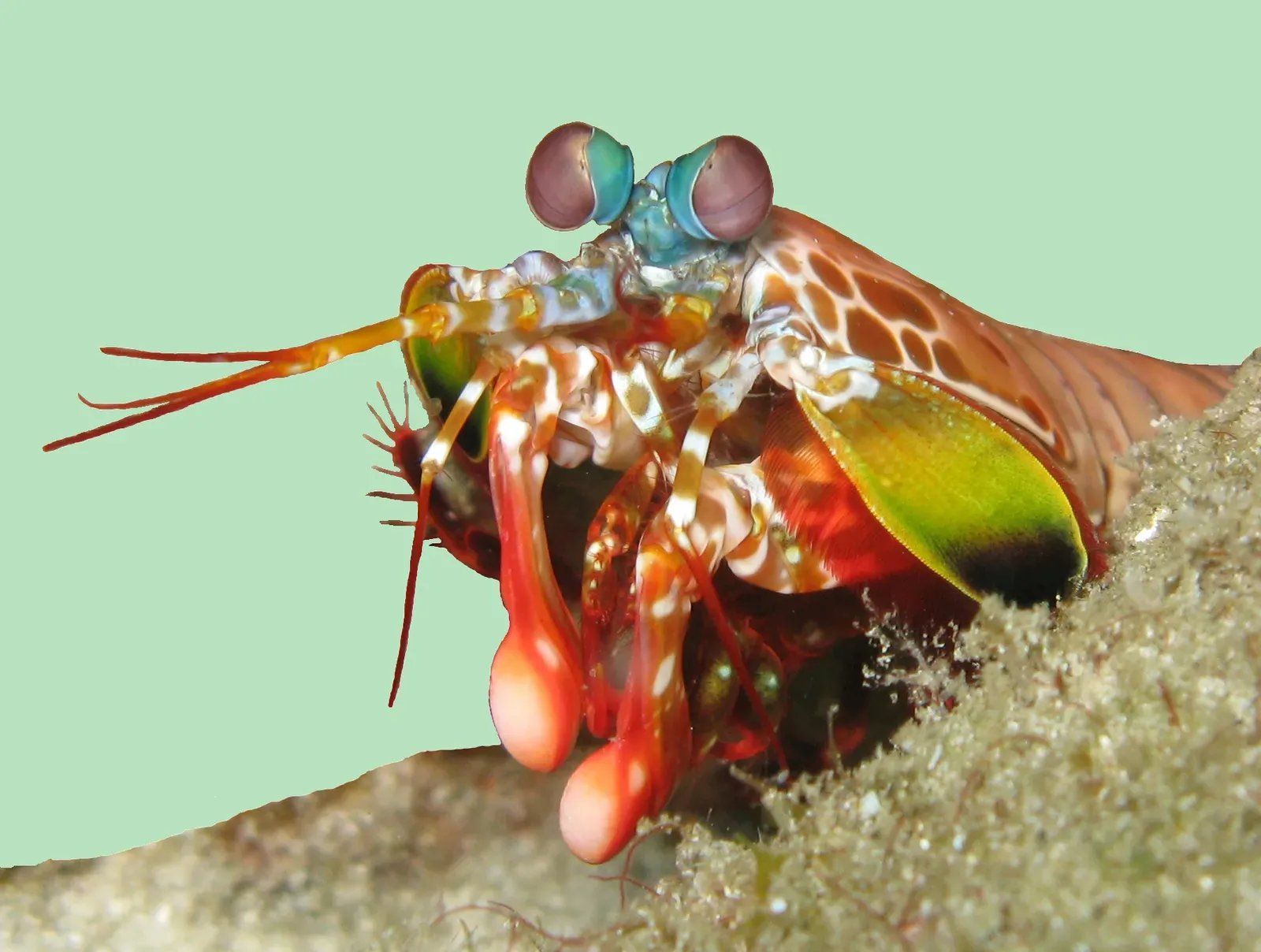
You think your eyes are pretty good: you can appreciate sunsets, read tiny text, and spot a friend across a crowded room. But from the perspective of a mantis shrimp, your vision looks almost primitive. These marine crustaceans have some of the most complex eyes known in the animal kingdom. While you rely on three types of color receptors, they carry many more, arranged in intricate rows that can detect subtle differences in color, polarization, and in some species even ultraviolet light. To you, a coral reef might look bright and lively; to a mantis shrimp, it likely appears as an insanely detailed, information-rich landscape bursting with cues you simply do not see.
Here’s where it gets strange: when scientists test how finely mantis shrimp can distinguish between slightly different colors, the results are not always as extreme as you’d expect from the complexity of their eyes. That suggests you might be thinking about vision all wrong. Instead of analyzing and comparing colors the way you do, the mantis shrimp may be using its receptors more like a fast, direct labeling system, instantly tagging signals that matter for hunting, communication, or mating. In other words, they might not be “seeing” a psychedelic masterpiece so much as reading a visual code hidden in the light, one that is largely invisible to you. You are still far from fully understanding how their brains interpret what those eyes pick up, which leaves you guessing about what their world truly looks like.
Conclusion: Living With the Mystery Instead of Pretending You’ve Solved It
When you step back and look at these five animals together, you start to see a pattern that is both humbling and exciting. You like to believe that science has already mapped out most of what nature can do, but these creatures quietly prove that there are entire layers of biological possibility you barely grasp: regeneration that feels like science fiction, navigation using senses you do not have, survival strategies that bend your definition of life, and sensory worlds that make yours look flat. Each of these abilities is grounded in real, observed phenomena, yet every one of them still comes with a long list of unanswered questions and “how is that even possible?” moments.
If you care about where medicine, technology, or your understanding of consciousness might go in the future, this is where your curiosity should keep circling back. The axolotl hints at new ways to heal, birds and electric eels hint at novel interfaces with physics, tardigrades challenge your assumptions about resilience, and mantis shrimp suggest entirely new forms of information processing. You do not need to pretend you have all the answers; in fact, the most honest response is to admit how much remains unexplained and let that fuel your sense of wonder. So the next time you catch yourself thinking humans sit at the top of some neat, ordered pyramid of abilities, ask yourself: are you sure you’ve really seen what the rest of life can do?