If you could peel the Earth like an onion, layer by layer, what you’d find at the very center would be far stranger than anything you see on the surface. You live your whole life walking around on crust that is thinner than an eggshell compared to the planet’s true bulk, and yet most of what keeps your world alive is happening thousands of miles beneath your feet. The wild part is that no one has ever been there, and probably never will; everything you know about the core comes from clever detective work, not direct exploration.
As scientists keep sharpening their tools and techniques, the picture of the Earth’s core has gone from a simple glowing ball of metal to a complex, restless, almost alien world. You’re about to see how it spins at its own pace, grows and shrinks in uneven ways, and even leaks heat and particles that quietly shape your everyday life. Some of these discoveries are so counter‑intuitive that they’ll probably change how you think about the planet you stand on every single day.
1. You Live Above a Solid Iron “Planet” Wrapped in a Liquid Ocean of Metal
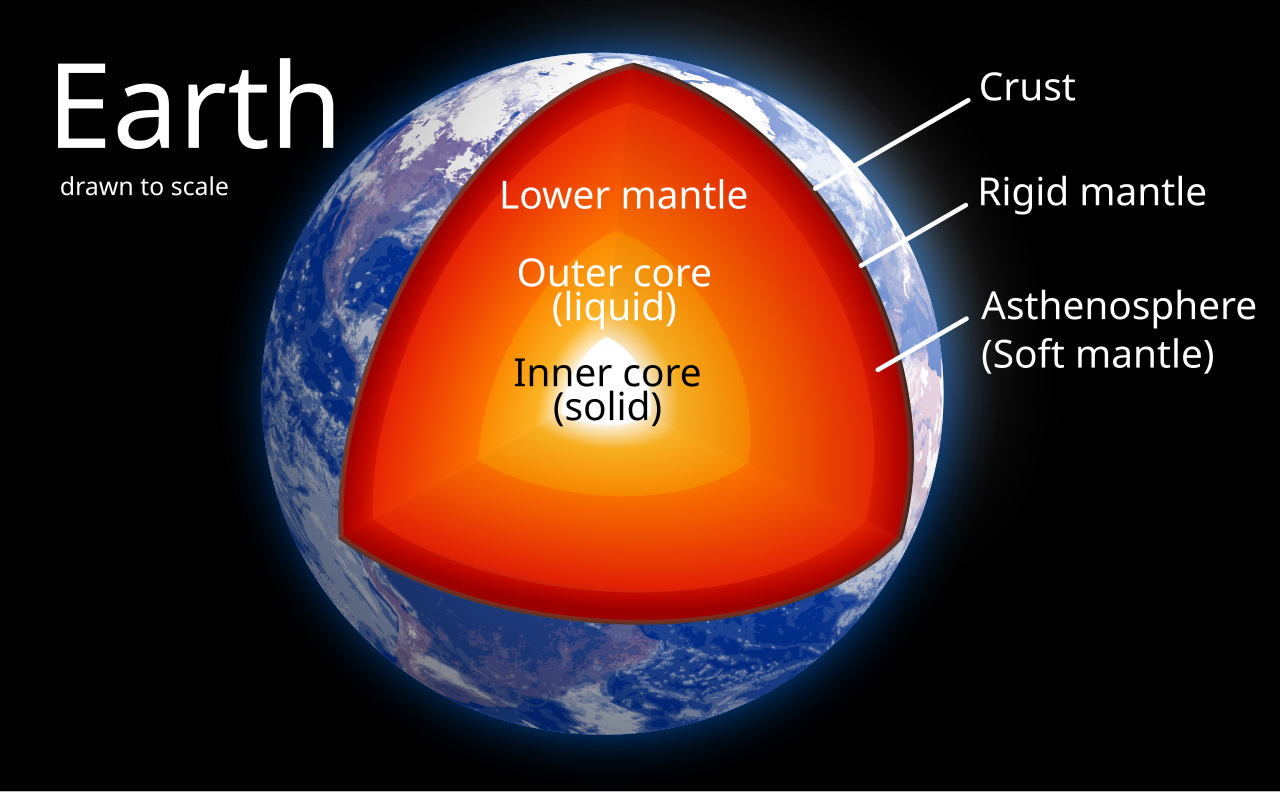
You might picture the Earth’s core as one giant molten ball, but that’s not what sits under you. Deep down, you actually have a solid inner core made mostly of iron and nickel, about the size of the Moon, wrapped in a vast outer core of liquid metal. Think of it like a metal jawbreaker: a hard center surrounded by a swirling metallic ocean, all buried under thousands of kilometers of rock.
Because you can’t drill anywhere near it, you only know this structure exists thanks to seismic waves from earthquakes. As those waves travel through the planet, they speed up, slow down, and even disappear depending on whether they pass through solid or liquid. When you look at how those waves behave, they basically sketch an X‑ray of the planet, clearly showing a solid inner core and a liquid outer core, both far more extreme than lava in a volcano could ever be.
2. The Core Is Hotter Than the Surface of the Sun in Places
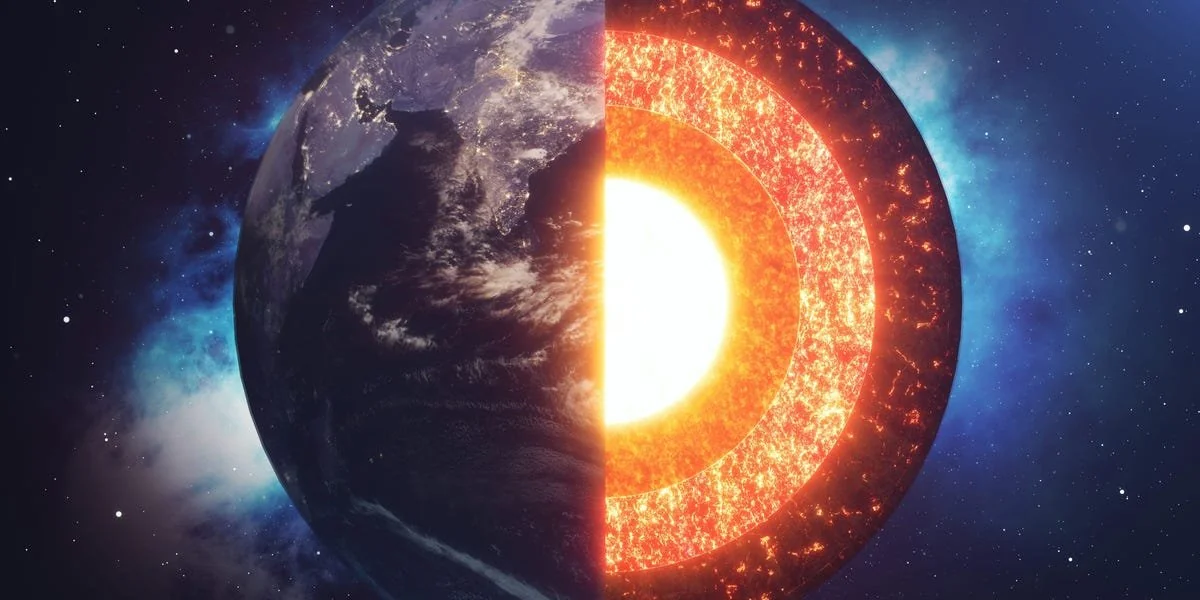
It sounds impossible at first, but the temperature at the very center of the Earth rivals and may even exceed the visible surface of the Sun. You’re talking about conditions of several thousand degrees Celsius, pushed toward the kind of heat you’d see on the solar photosphere. At those pressures, iron behaves in ways you never experience in daily life, jammed together so tightly that it becomes an exotic kind of solid even at insane temperatures.
You don’t measure that heat with a thermometer; you infer it from lab experiments and physics. Scientists squeeze tiny samples of iron between diamond anvils and blast them with lasers to copy the extreme pressures and temperatures of the deep interior, then match how they behave to the way seismic waves move through the core. When you put all of that together, you’re left with the surreal fact that Earth is colder at its sunlit surface than in the pitch‑black depths of its own heart.
3. The Core Spins at Its Own Speed, Sometimes Faster or Slower Than the Rest of Earth
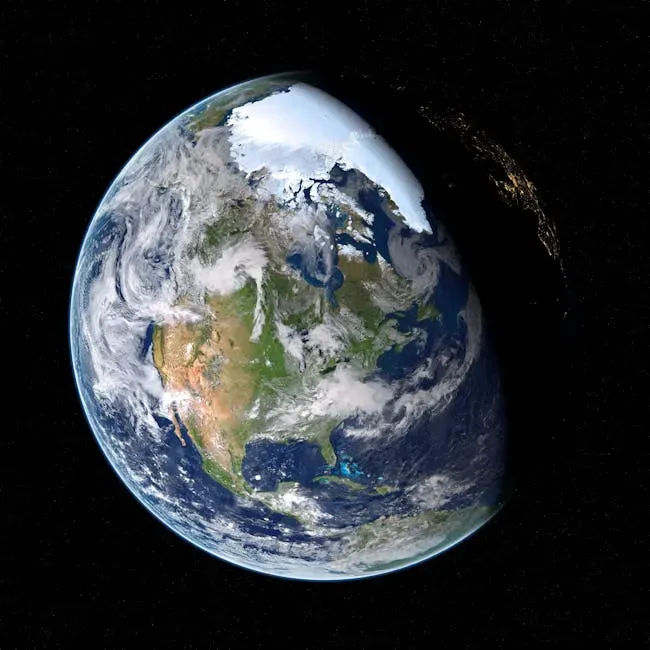
You probably assume the whole planet spins like a single solid ball, but the inner core has a mind of its own. Evidence from seismic waves suggests that the solid inner core can rotate slightly faster or slower than the mantle and crust above it, a phenomenon scientists call differential rotation. In other words, there is a hidden world at the center of Earth that quietly turns at a slightly different pace than the ground you stand on.
Over the past few decades, researchers have noticed small changes in travel times of seismic waves that can only be explained if the inner core shifts its rotation relative to the rest. Some studies point to periods where it seemed to spin ahead, and others hint that it may slow down or even swing back toward sync. For you, this means your planet is not a rigid spinning rock but a layered, dynamic system where its metallic heart can slip and drift inside like the spinning yolk inside a shaken egg.
4. The Core Acts Like a Giant Dynamo, Creating the Magnetic Shield That Lets You Live Here
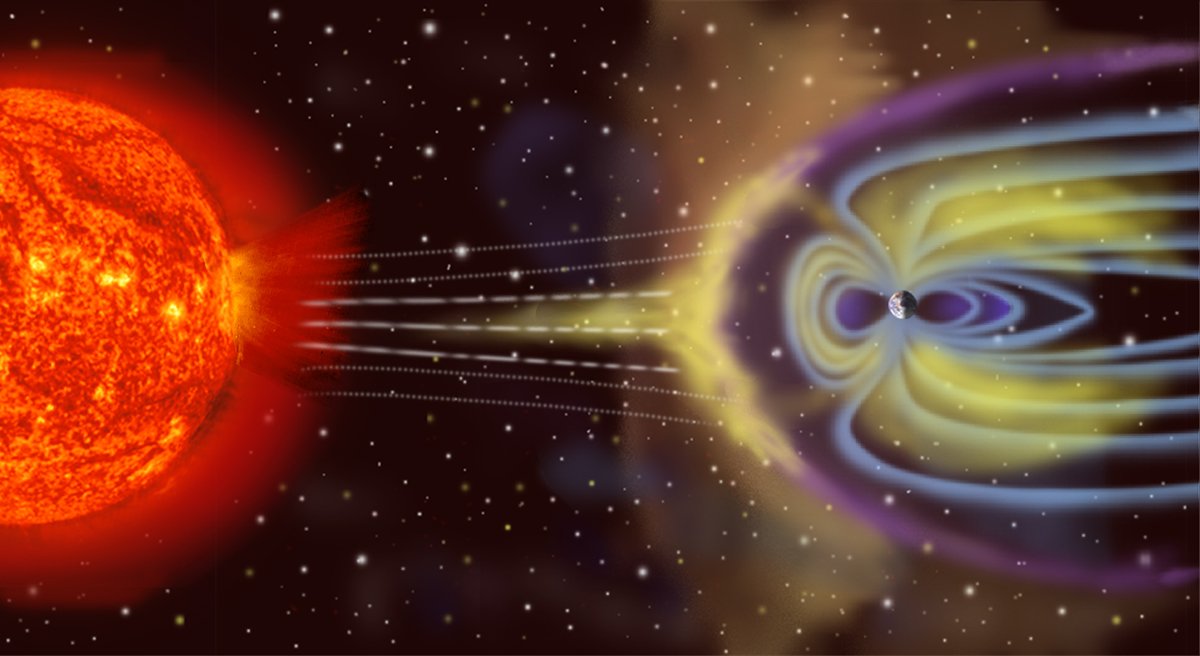
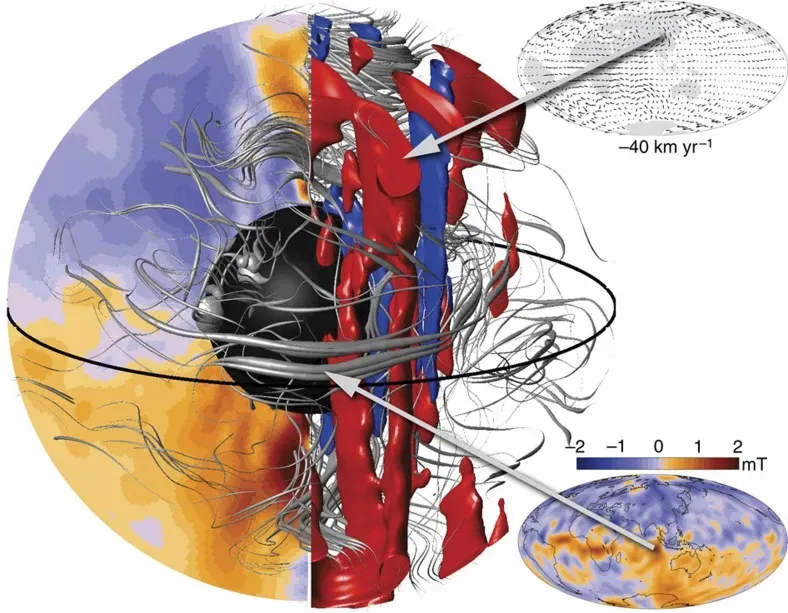
If you use a compass or enjoy watching the northern lights, you’re seeing the work of the core in real time. The liquid outer core is constantly in motion, with molten iron flowing, swirling, and rising as heat escapes from below. Because that iron is electrically conductive, those flows act like a gigantic planetary generator, or dynamo, that creates Earth’s magnetic field.
That invisible magnetic bubble is one of the main reasons you can live on this planet. It deflects most of the charged particles streaming from the Sun that would otherwise strip away the atmosphere and hammer the surface with radiation. When you see auroras shimmering at high latitudes, you’re really watching the solar wind crashing into your planetary shield, a shield powered by a raging metallic ocean thousands of kilometers below your feet.
5. The Magnetic Field Flips… and the Core Is Behind Those Planet‑Scale Reversals

You might think the north pole of a compass has always pointed roughly toward the Arctic, but the planet has a dramatic history of flipping its magnetic poles. Over millions of years, north and south have swapped places many times, and the evidence is frozen into rocks on the seafloor that recorded the direction of the magnetic field as they formed. These global flips trace back to changes in the convective flows and patterns inside the liquid outer core.
During a reversal, the magnetic field weakens, becomes more chaotic, and then re‑establishes itself with opposite polarity. You would not see compasses spinning wildly from one day to the next; it happens over thousands of years. But if you could watch it like a time‑lapse, you’d see your planetary shield reorganizing itself because the metal currents in the core decided to rearrange. The idea that your planet’s “north” is not permanent but a temporary outcome of churning metal far underground is one of those quiet facts that reshapes how you think about stability.
6. One Side of the Inner Core Seems Different From the Other, Like a Lopsided Metal Heart
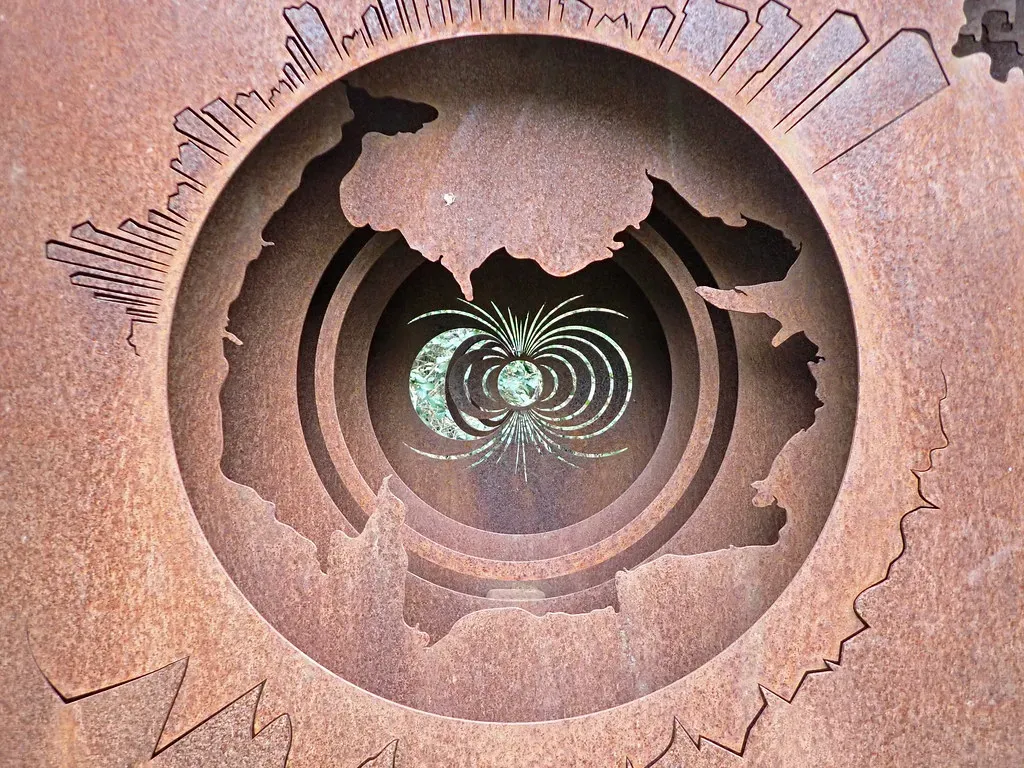
You might imagine the inner core as a perfectly symmetric iron sphere, but subtle measurements tell a stranger story. Seismic waves pass through one side of the inner core slightly differently than through the opposite side, hinting that the structure or crystal alignment of the iron is not the same all the way around. That means the deepest part of your planet is a little bit lopsided, like a heart that has grown unevenly.
Some researchers think the inner core is slowly freezing from the outer core, but more rapidly on one side than the other, possibly the side under the Pacific or under Asia depending on how you interpret the data. If that’s true, the growth of the core is not uniform, and that uneven growth feeds back into convection patterns in the liquid outer core. For you, this implies the planet’s most protected, hidden region is not a simple uniform sphere but a place with “hemispheres” and preferences, quietly shaping the magnetic behavior you experience at the surface.
7. Heat Escaping From the Core Powers Volcanoes, Plate Tectonics, and Even Mountain Building
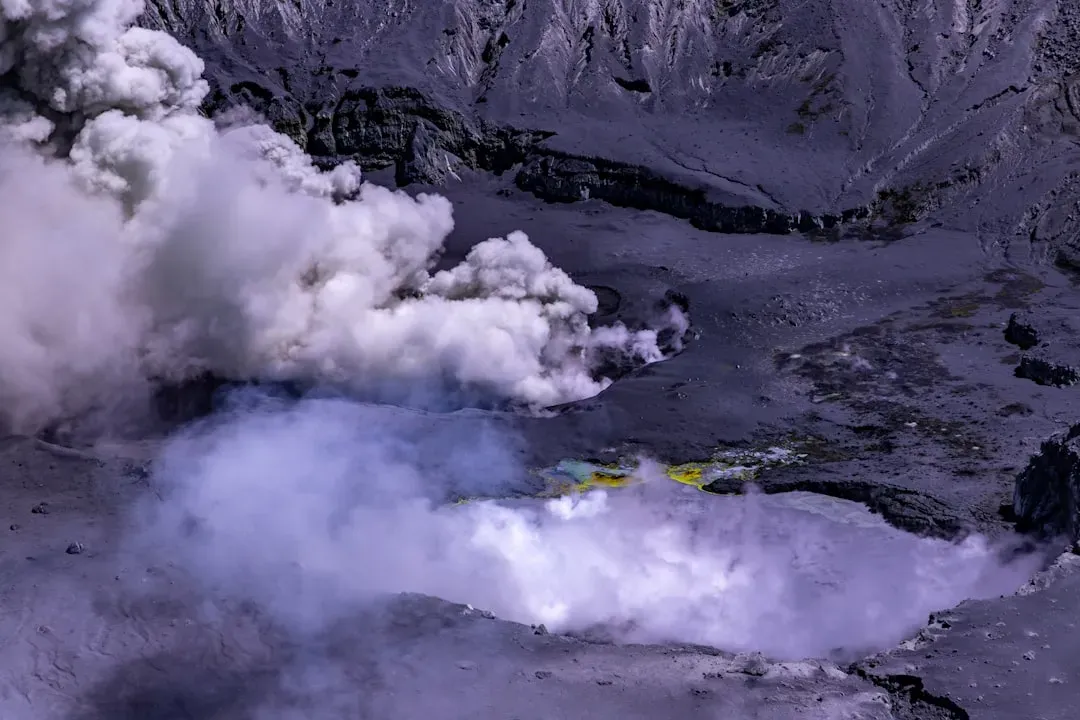
When you look at a mountain range or feel the ground tremble in an earthquake, you’re ultimately seeing energy that started near the core. Heat rising from the core into the mantle drives slow, creeping convection that drags the tectonic plates around. As those plates collide, pull apart, and grind past each other, you get continents shifting, oceans opening and closing, volcanoes erupting, and mountain ranges being pushed skyward.
If the core were cold and dead, Earth’s surface would be far more stagnant and lifeless, more like a frozen Moon than a living planet. The long‑term carbon cycle that stabilizes climate, the recycling of nutrients from deep inside to the surface, and even the creation of new crust at mid‑ocean ridges are all tied to that deep heat engine. So every time you see images of glowing lava or dramatic cliffs, you’re really catching a brief glimpse of the core’s energy trying to escape to space.
8. The Core Is Slowly Solidifying, and That Changes Earth Over Geologic Time
You live on a planet that is still cooling off from its violent birth billions of years ago. As it loses heat to space, the liquid outer core gradually freezes onto the inner core, which means the solid inner part is slowly growing. You won’t notice this in a human lifetime, but over hundreds of millions or billions of years, it reshapes the balance between liquid and solid deep inside.
That slow freezing is not just a passive process; it releases heat and lighter elements into the outer core, stirring it and helping to maintain the dynamo that powers the magnetic field. At some distant future point, when enough of the core solidifies, that dynamo may weaken or even shut down. For you, that means the core is not static; it’s on a long, slow journey from fiery youth toward eventual stillness, and you happen to live in a window where it’s still energetic enough to shield and shape your world.
9. You Can “See” the Core Using Earthquakes Like Ultrasound for the Planet

Even though you can’t visit the core, you are not blind to it. Every time a big earthquake goes off, it sends waves through the planet that bounce, bend, and scatter as they move through each layer. By measuring how long those waves take to reach different seismometers and how they change along the way, you essentially run a global scan of the interior, similar to how doctors use ultrasound or CT scans to see inside a human body.
You can tell the core is partly liquid because certain shear waves simply stop when they hit it, and you can judge its size, structure, and even texture from the timing and strength of the waves that pass through and around it. With more instruments and powerful computers, scientists keep refining this picture, turning blurry outlines into sharper maps. So, paradoxically, you know more about the deep unseen core than you do about many places on the surface of the ocean, all thanks to the planet’s own shudders and rumbles.
10. Studying Earth’s Core Helps You Understand Other Worlds – and Your Own Future
Once you grasp how much the core shapes your magnetic field, tectonics, and atmosphere, you can start using Earth as a template to understand other planets. When you see that Mars lost most of its global magnetic field long ago and has a thin atmosphere today, you can guess that its core cooled and slowed, letting the solar wind strip it more easily. When you look at giant planets or rocky exoplanets, you can ask whether they have the right ingredients and energy in their cores to sustain protective fields and active geology.
For your own planet, this matters more than you might think. The future habitability of Earth over very long timescales is tied to how the core evolves: how fast it cools, how its dynamo behaves, and how long it keeps helping regulate the atmosphere and climate. By paying attention to the rhythms of the core today, you’re really reading a long, slow clock ticking beneath your feet, hinting at how your planet will change over the eons ahead.
Conclusion: The Hidden Heart That Quietly Runs Your World
When you step outside and look at the sky, it’s easy to feel like everything important is above you – in the clouds, in space, in the Sun. But the more you learn, the clearer it becomes that a huge part of your existence depends on what’s happening far below, in a place you will never see. The core spins at its own pace, grows unevenly, freezes and stirs, and cranks out the magnetic field and deep heat that make your planet such a rare, restless, habitable world.
Once you start thinking this way, everyday things feel different: a compass needle becomes a message from the core, an earthquake becomes a fleeting echo of its structure, and a volcano becomes a vent for its buried energy. You are living on the thin, cool rind of a much more extreme object, carried through space by a roaring metallic heart. Knowing that, how can you ever look at the ground beneath your feet the same way again?