When you stand on the rim of the Grand Canyon for the first time, it can feel less like sightseeing and more like time travel. You are not just looking at pretty colored rocks and a deep chasm; you are staring straight into a ripped-open archive of Earth’s most turbulent moods. Layer by layer, cliff by cliff, the canyon tells you stories of vanished oceans, exploding volcanoes, and rivers that cut like knives for millions of years.
What makes the Grand Canyon so powerful is not just its size, but its honesty. It does not hide the scars, collisions, and catastrophes that shaped our planet. Instead, it lays them bare, inviting you to read them like pages in an ancient book. Once you know what you are looking at, you never see the canyon – or Earth – in the same way again.
The Canyon as a Window Into Deep Time
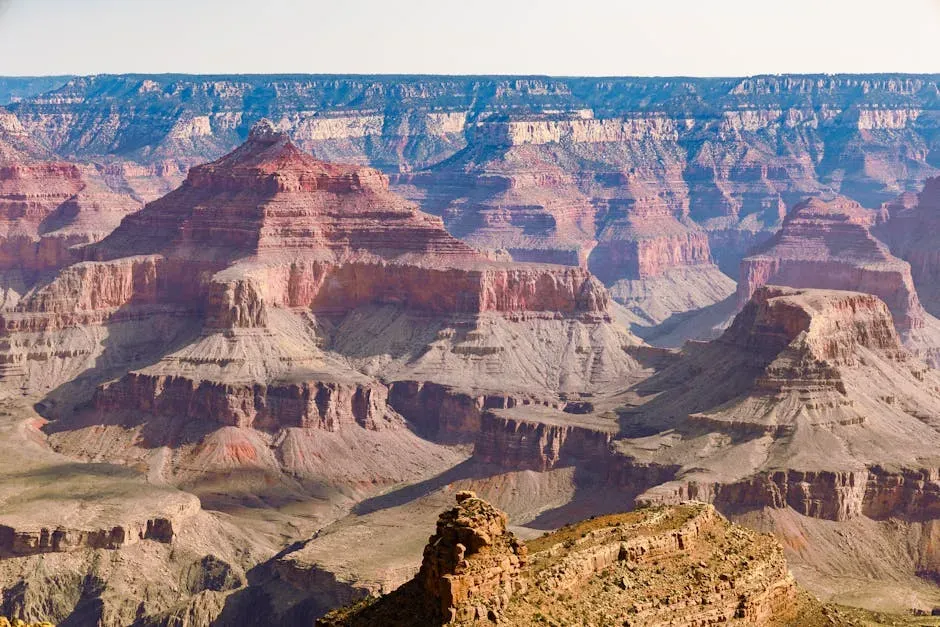
The most shocking thing about the Grand Canyon is not how deep it is, but how far back in time it lets you see. When you gaze from the rim to the river, you are looking down through roughly about one third of Earth’s entire history, exposed in rock. The youngest rocks near the top are still hundreds of millions of years old, and the oldest basement rocks at the bottom formed nearly two billion years ago. That means you are looking at stone that was already ancient long before dinosaurs ever existed.
If you hike from the rim to the river, you are doing more than just losing elevation – you are traveling back through deep time, step by step. Imagine a timeline where every few meters down marks tens of millions of years slipping away beneath your feet. It is like scrolling backward through a cosmic photo album, except you are walking inside it, touching rocks that remember a world without trees, without animals on land, and without the continents in their current places.
Layer Cake of Catastrophe: Reading the Rock Stripes
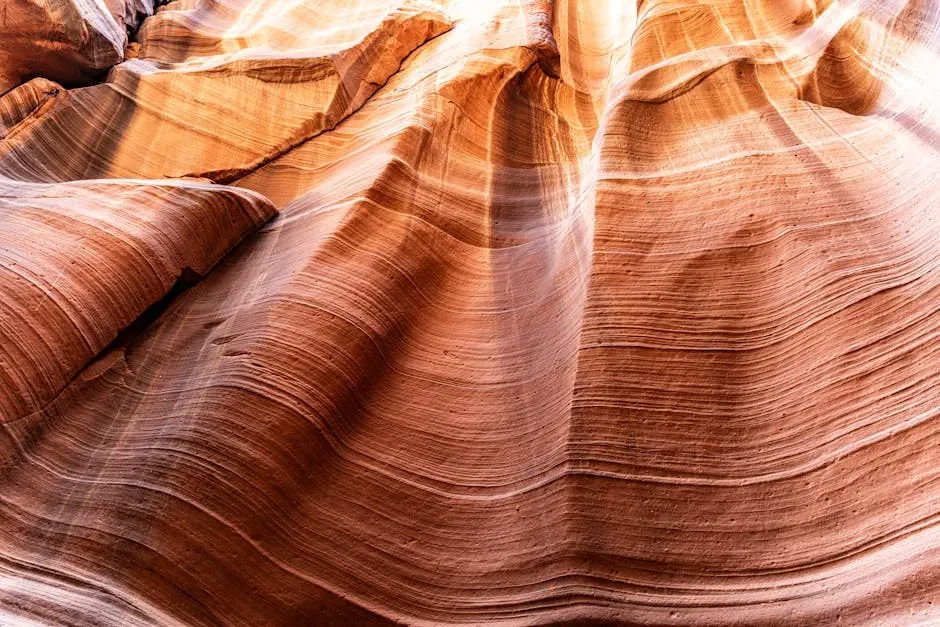
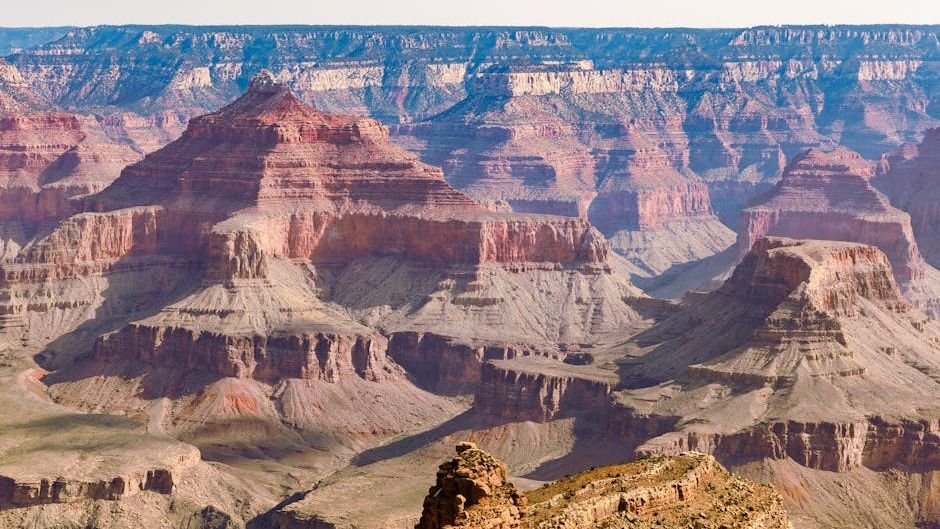
At first glance, the canyon’s horizontal stripes just look pretty: reds, oranges, whites, and purples stacked like a geological layer cake. But when you look closely, you realize those stripes are records of wildly different worlds. Some layers formed on the floor of warm, shallow seas. Others came from coastal dunes whipped by ancient winds. Some contain hints of river floodplains, swamps, or tidal flats. Each color band is like a paused moment in a very long, very chaotic movie.
You can literally put your hand on a boundary where one ancient environment ended and another began, often abruptly. One layer might hold fossils of marine creatures, while the layer above records a sudden shift to desert conditions. These sharp changes tell you about rising and falling sea levels, shifting climates, and continents drifting into new positions. The canyon does not give you a calm, stable Earth; it gives you an Earth that was constantly rearranging itself.
Drowned by Seas, Buried by Sand: Ancient Environments on Display
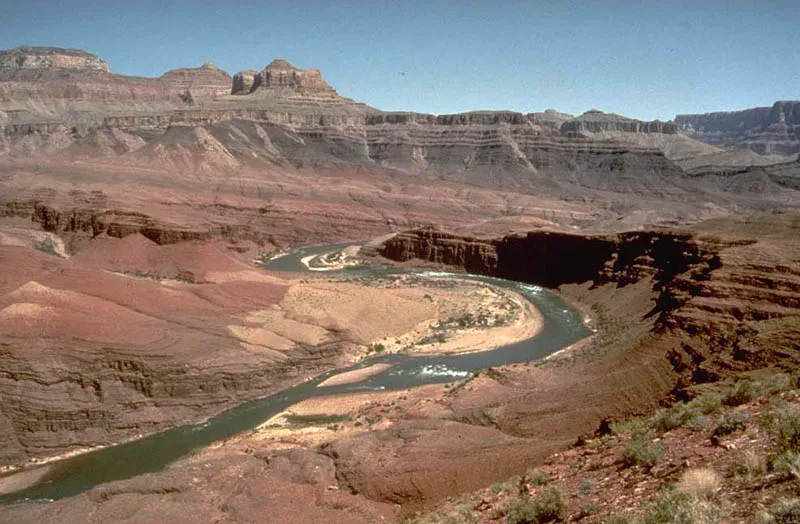
When you look at the canyon walls, you are seeing stacked ghosts of long-lost landscapes. Some limestones formed when this region lay under warm inland seas, filled with marine life that would eventually become rock. Other layers, like prominent sandstones, record vast deserts, where towering dunes marched across the land under relentless winds. Still others show muddy tidal flats or coastal plains, trampled by ancient rivers that no longer exist.
What makes this especially wild is that you can stand in the blazing Arizona sun and realize you are standing where whales could once have swum – if whales had existed yet. In one direction you can trace a layer that is pure ocean story; a few layers up, you are suddenly in the fossil memory of a desert. It hammers home the idea that continents wander, sea levels rise and fall, and today’s solid-looking landscapes are only temporary arrangements in a restless system.
Violent Uplift: How a Flat Plain Became a High Plateau
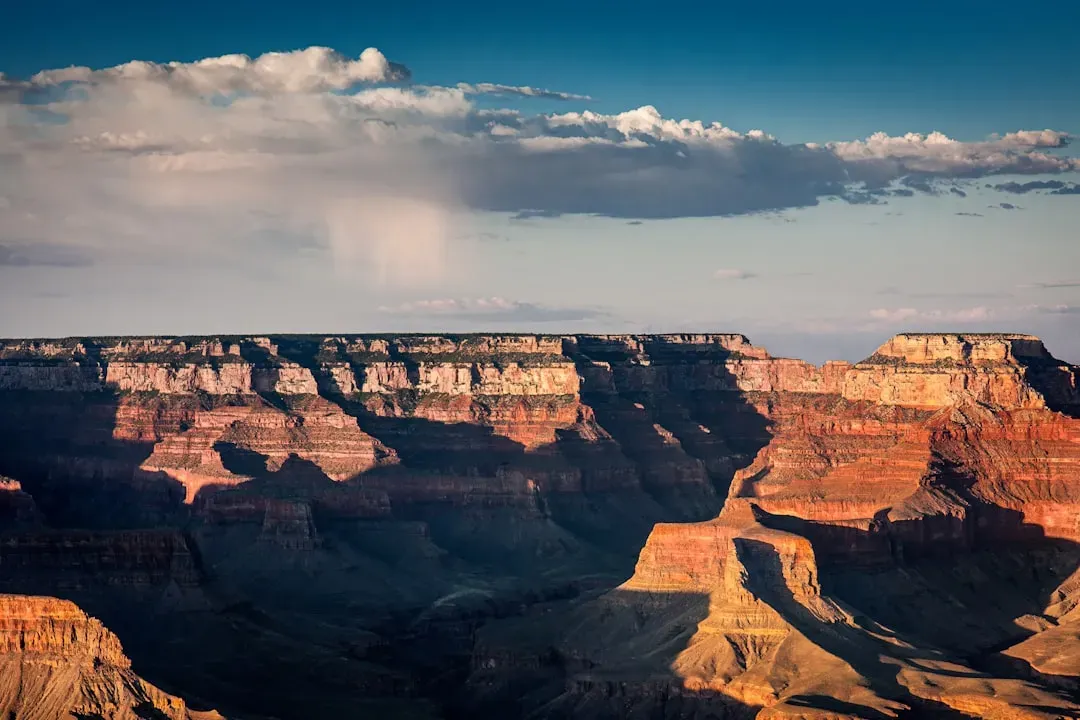
If you had seen this region before the canyon formed, you would not have been very impressed. Picture a broad, relatively flat landscape, more like a worn-down high plain than a dramatic mountain range. The key twist is that this plain did not stay where it was. Tectonic forces slowly lifted it upward, raising the Colorado Plateau thousands of feet while keeping many of the rock layers surprisingly level. This quiet-looking uplift was actually a powerful, long-lasting act of violence on the crust.
That uplift gave the Colorado River a massive amount of potential energy. Once the land was raised, the river suddenly had a lot more gravity-driven force to carve downward. It is like raising the starting gate on a roller coaster: the higher you lift it, the more energy you release when it drops. Without that tectonic upheaval, the region might still be a modest landscape. With it, you get a platform of high rock just begging to be sliced open by water.
The Colorado River: A Relentless Geological Scalpel
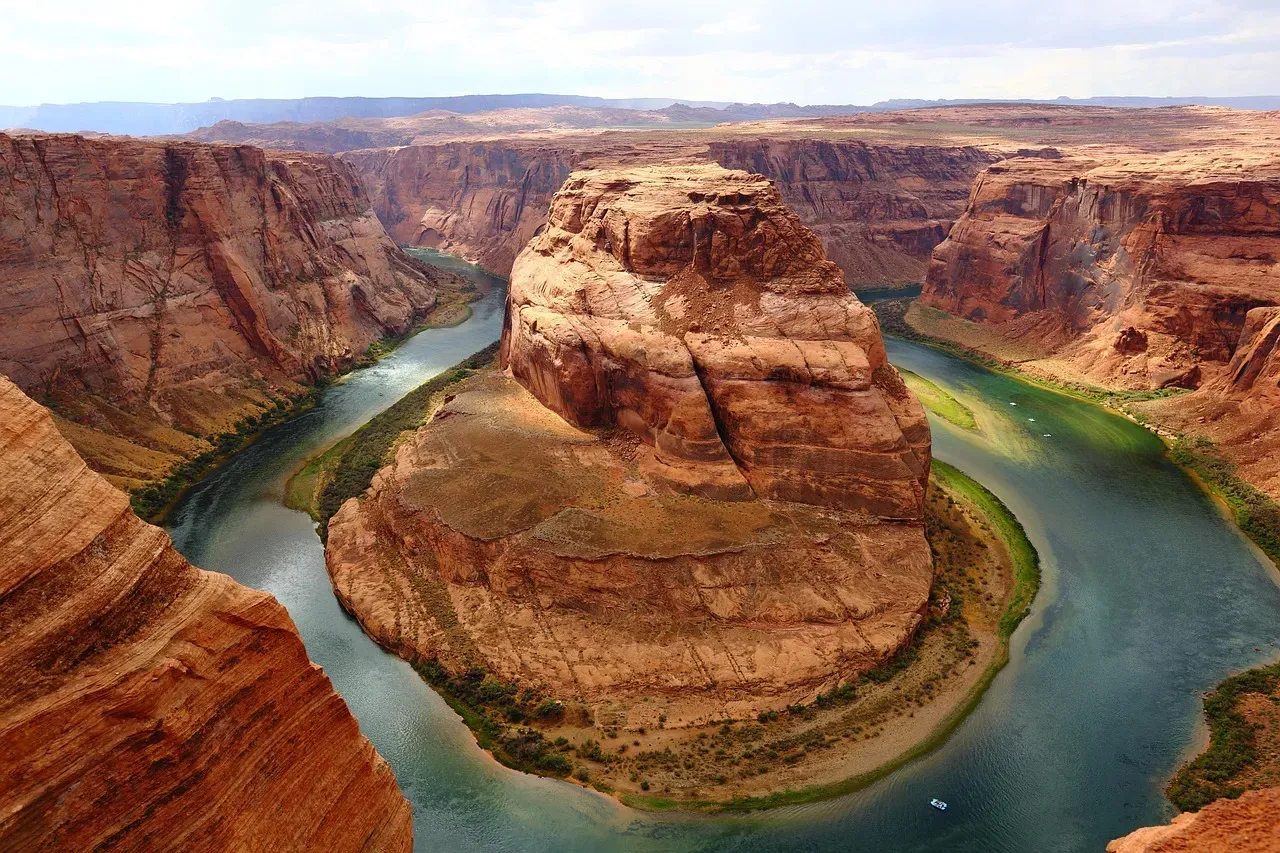
When you look at the Colorado River today, it does not seem like an unstoppable monster. In places it looks narrow, even calm. But over millions of years, that flow has acted like a scalpel, cutting down through the elevated plateau. Every grain of sediment it carries is like sandpaper, grinding away at the bedrock. Floods, seasonal variations, and long-term climate shifts have all given that river extra bursts of power to deepen and widen the canyon.
You can think of the river as an artist that works only with subtraction. It never adds rock; it only removes it, grain by grain. Over astonishingly long timescales, this quiet erosion can slice through thousands of feet of solid stone. The cliffs and buttes you admire today are the leftovers – the stubborn pillars that have not yet been worn away. When you realize the scale of what has been removed, the canyon becomes less a hole in the ground and more a negative sculpture carved by time and water.
Unconformities: The Missing Chapters in Earth’s Story
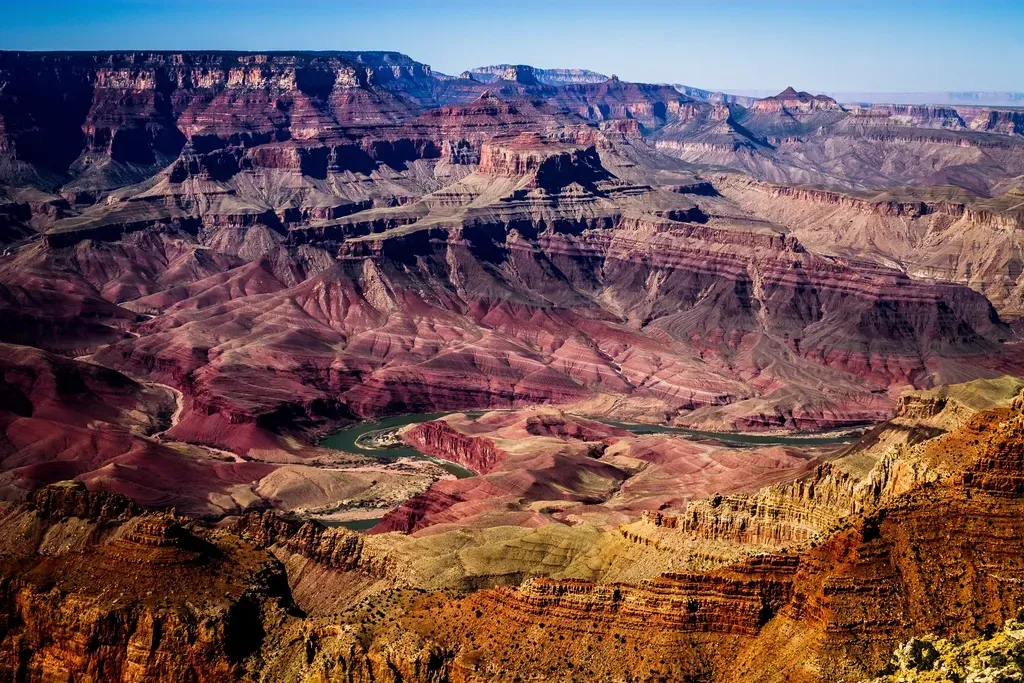
One of the most unsettling things you learn when you study the Grand Canyon is that huge chunks of time are simply missing from the rock record. In some places, you can put your hand on an unconformity, a surface where younger rocks lie directly on much older ones, with hundreds of millions of years gone in between. It is as if someone ripped out a thick section of pages from Earth’s diary and tossed them away.
These gaps are not just random accidents; they tell you that erosion once outpaced deposition for very long periods. Instead of new sediments piling up, older rocks were being stripped off and carried elsewhere. When you understand this, the canyon stops feeling like a complete record and starts feeling like a heavily edited one. You are left to imagine what violent events, shifting climates, and lost landscapes might have filled those erased intervals.
Ancient Life and Extinction Written in Stone
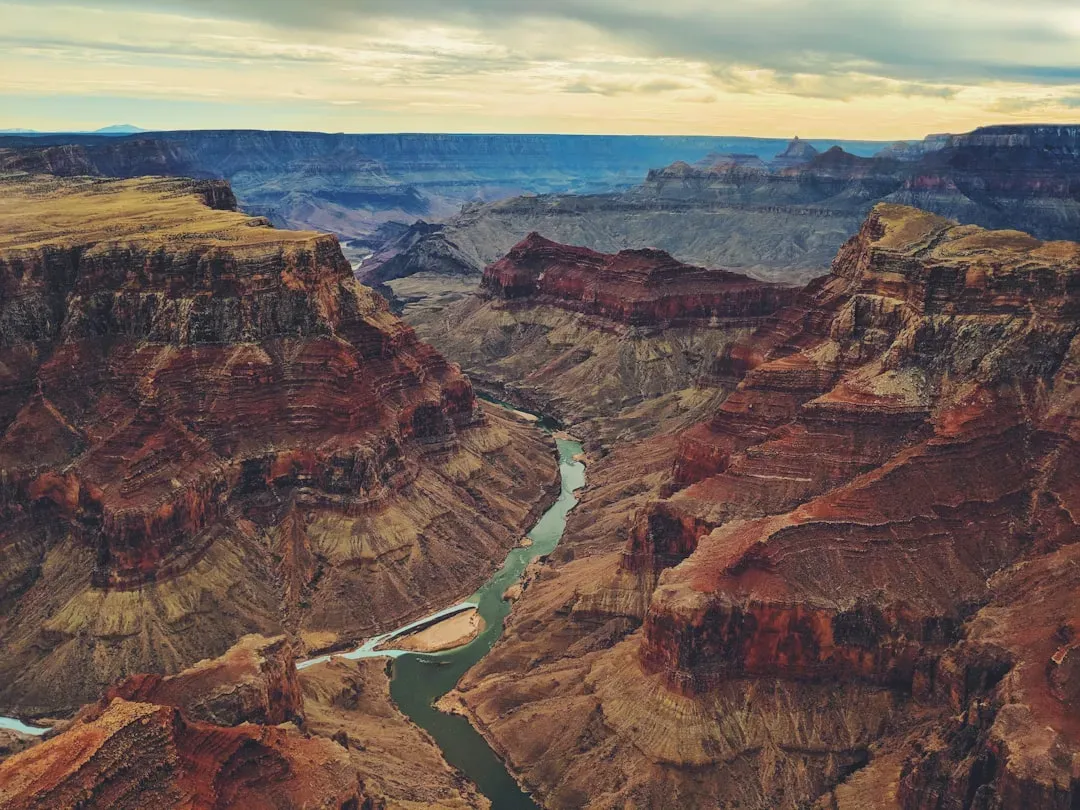
As you trace the canyon’s layers, you are also tracing the rise and fall of entire ecosystems. Some strata are packed with fossils of marine organisms from long-vanished seas. Others preserve traces of early life that wandered along shorelines or lived in shallow waters. By walking along the trail, you are essentially walking through different chapters of life’s story, from simple organisms toward increasingly complex worlds that have all disappeared.
The brutal part is that you can also sense where extinction events and environmental shocks must have hit. Entire fossil communities appear in one layer and vanish in the next, replaced by different species or by sediment that suggests a dramatically changed environment. You may not see a sign that says “mass extinction happened here,” but the silence of missing familiar fossils in higher layers can be just as loud. The canyon quietly reminds you that life on Earth has never had a guaranteed, gentle ride.
Modern Erosion: The Canyon Is Still Changing Under Your Feet
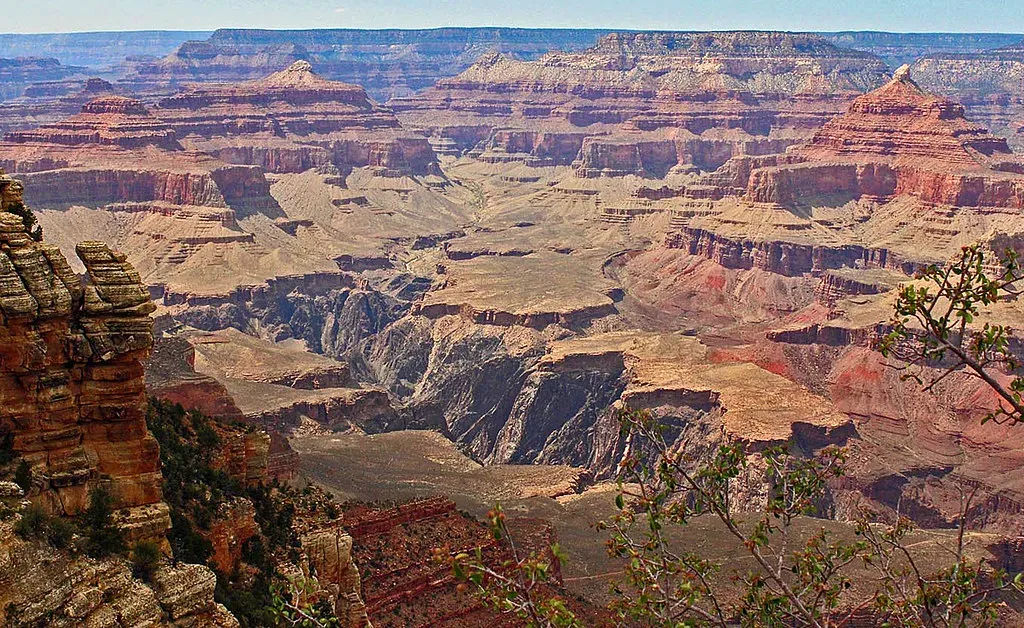
It is easy to think of the Grand Canyon as finished, like a completed sculpture in a museum, but it is still very much a work in progress. Rockfalls, landslides, and flash floods continue to reshape the walls and side canyons. Trails you hike today might be rerouted a decade from now because a cliff collapsed or a slope gave way. Even tiny grains of sand, moved by wind and water, are participating in the slow but ongoing destruction of the current landscape.
When storms sweep across the plateau or snowmelt surges into the river, the canyon’s erosive engines briefly roar to life. You may not notice a big difference in your lifetime, but over thousands or millions of years, these events will keep deepening and widening the chasm. In other words, you are not just visiting a monument to past violence – you are walking through an active zone where Earth is still tearing itself apart, just at a pace too slow for your eyes to see directly.
What the Canyon Ultimately Tells You About Earth
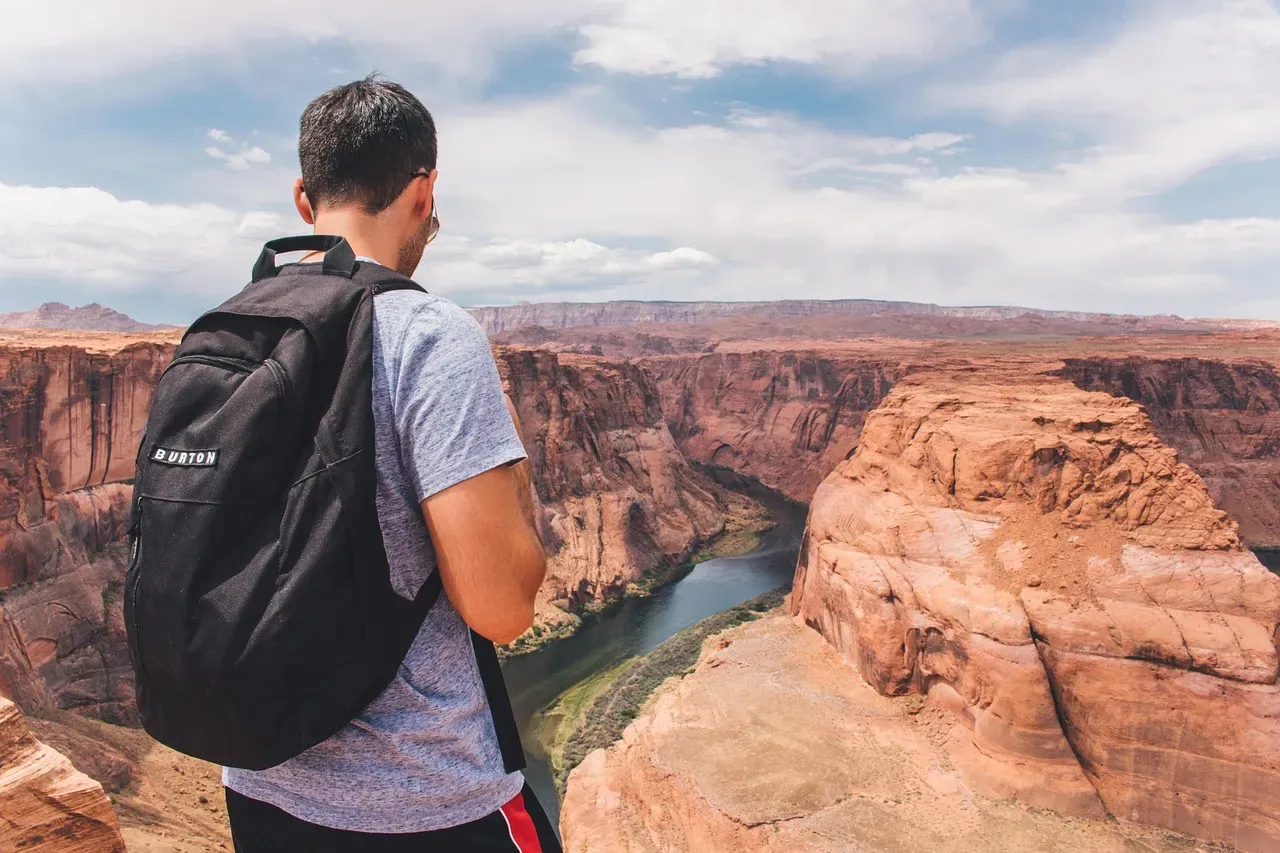
Once you understand even a little of the Grand Canyon’s story, it quietly rewires how you think about the planet under your feet. You realize that what looks stable and calm is usually just a snapshot in a long, chaotic slideshow. Oceans can flood continents and then retreat. Deserts can rise where seafloors once lay. Mountains can be lifted and then ground back down into sand. The canyon proves that the Earth you know is only the latest version of a planet that constantly remakes itself.
On a more personal level, the canyon confronts you with the scale of time and change in a way that is both humbling and oddly comforting. Your entire lifetime would barely register as a faint scratch in one thin layer of rock. Yet, at the same time, you get to stand there, alive in this instant, reading a story nearly two billion years in the making. The next time you look out across that vast, carved landscape, you might find yourself asking: if the Earth can change this much, what else in your life might be less permanent than it seems – and what, if anything, did you expect to stay the same?