Some animals don’t just stretch our imagination; they punch holes right through what we thought biology could do. Just when we think we’ve got evolution figured out, a creature shows up that heals itself, senses electric fields, or survives in outer space like it’s no big deal. These are the animals that make even scientists stop and say: wait, how is that even possible?
What follows isn’t a list of “cool pets” or random fun facts. These are real, well-studied animals whose abilities still raise more questions than answers. We know the basics of how some of these powers work, but the deeper “why” and “how far could this go?” parts are still wide open. And that’s where it gets really interesting.
1. Tardigrades: The Tiny Animals That Can Almost Laugh at Death
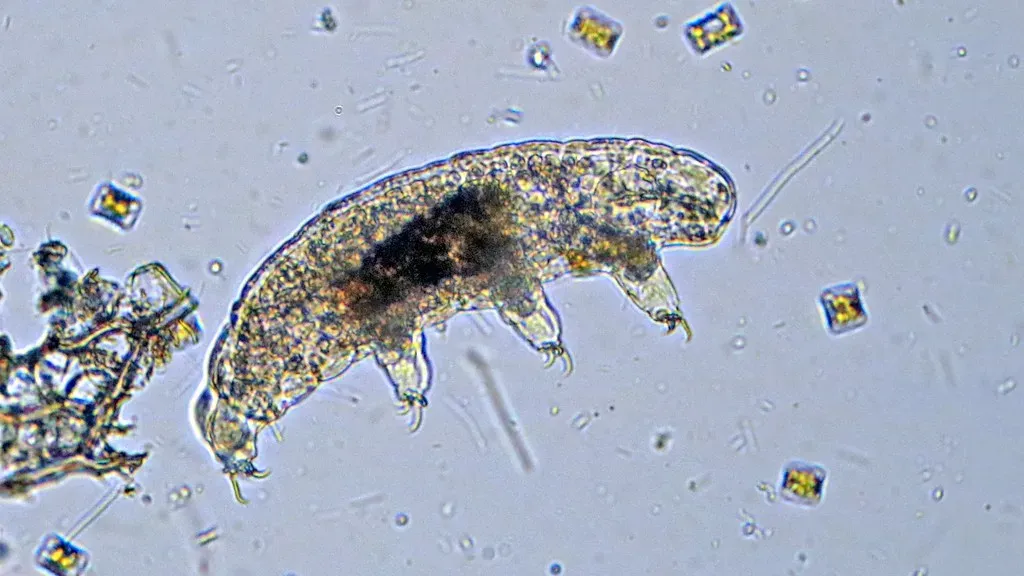
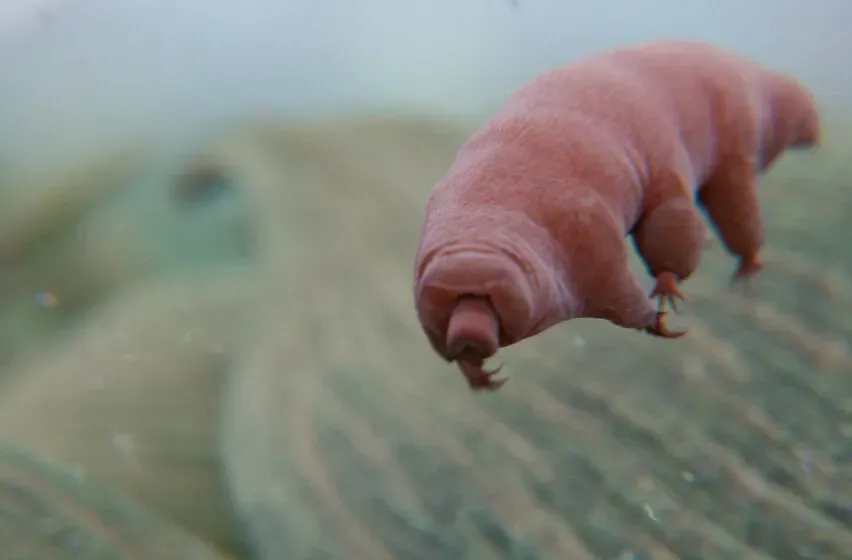
If life had a cheat code, tardigrades would be using it. These microscopic “water bears” can survive boiling heat, freezing cold, crushing pressure, and even the vacuum of outer space, and then just… come back to life. They don’t do it with magic, but with a bizarre survival trick called cryptobiosis, where they basically dry up, shut down almost all activity, and become an almost glass-like husk.
Scientists have shown that tardigrades can survive temperatures well below freezing and higher than the boiling point of water, as well as intense levels of radiation that would be instantly lethal to humans. They do this by protecting their DNA and cellular machinery with special proteins and sugars that act like shields and stabilizers. We understand pieces of the puzzle, but we still don’t fully know how they avoid long-term damage or how their systems “reboot” so cleanly after such extreme conditions. It’s like your computer being smashed, frozen, microwaved, then turning on again as if nothing happened.
2. The Axolotl: The Salamander That Regrows Its Own Body Parts
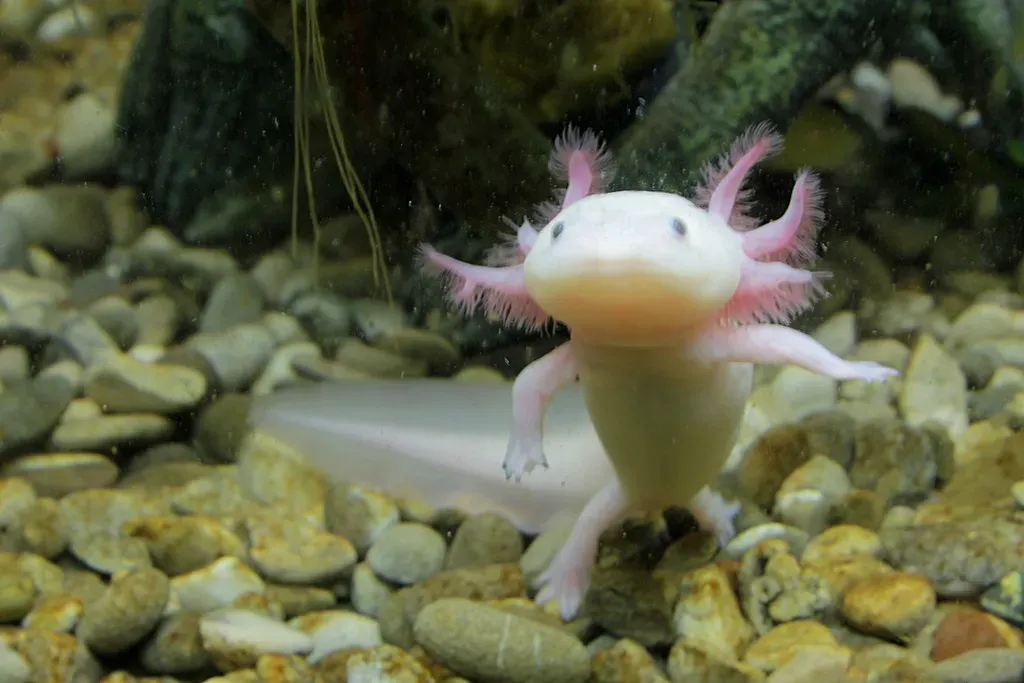
Most animals deal with injury by scarring. The axolotl, a strange-looking salamander from Mexico, deals with it by rebuilding. If it loses a limb, part of its spinal cord, bits of its heart, or even chunks of its brain, it can regrow the lost structure with surprising precision. And it doesn’t just patch things up; it grows fully functional replacements that actually work.
What really stuns researchers is that axolotls regenerate without the massive scarring and chaos you’d expect from such extreme healing. Their cells seem to “remember” what they’re supposed to become, rewind themselves to a more flexible state, and then follow a careful blueprint to rebuild. We know some of the genes and signals involved, but we still don’t fully understand why axolotls can do this so easily while mammals like us absolutely cannot. It’s like watching a living hint that advanced regeneration might not be impossible for other animals someday.
3. The Mantis Shrimp: Seeing a World We Can’t Even Imagine
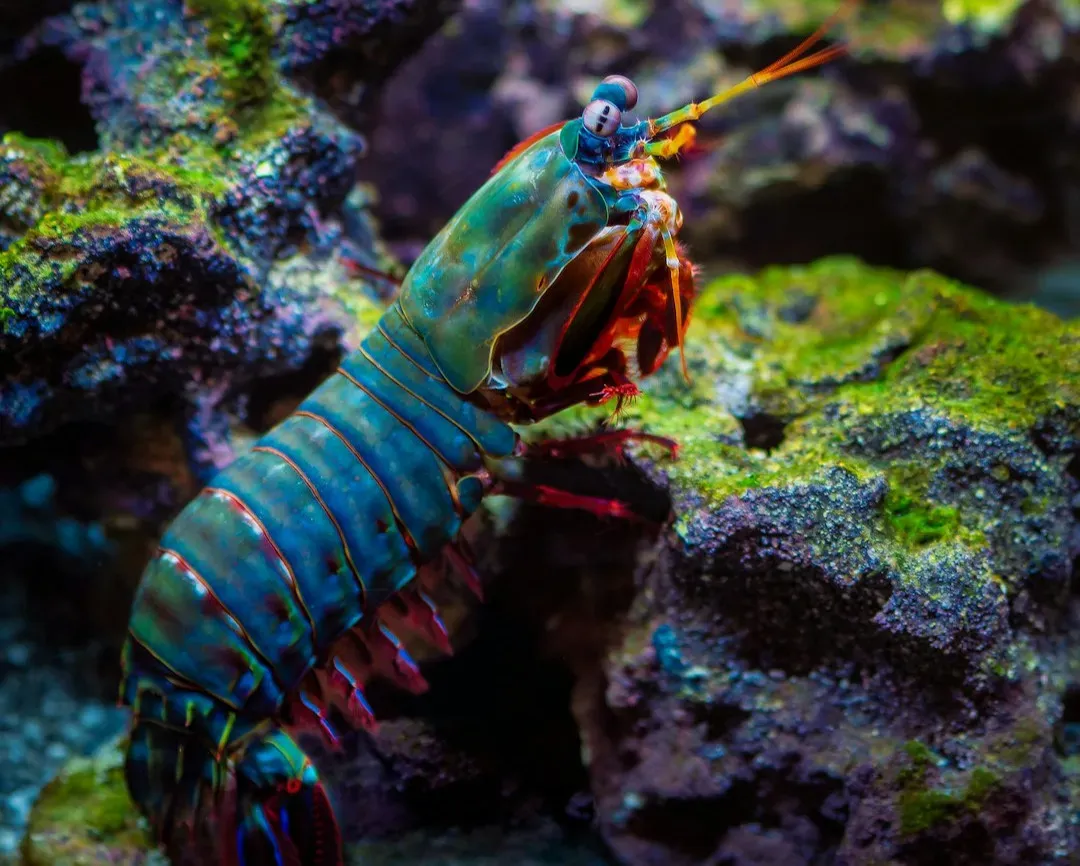
Mantis shrimp look like small, bright, slightly unhinged lobsters, but their eyes are where things get wild. Humans have three types of color receptors in our eyes; mantis shrimp have more than a dozen, and their eyes are split into zones that can move independently. They don’t just see more colors than we do; they can detect polarized light and tiny changes in light that are invisible to us.
On top of their alien-level vision, mantis shrimp also have one of the fastest and most powerful punches in the animal kingdom. Their club-like limbs accelerate so fast they briefly create tiny bubbles that collapse with shockwaves strong enough to crack aquarium glass. We have decent models for the mechanics behind their strike and the basics of their vision, but we still don’t really know what the world looks like to them. To a mantis shrimp, our reality is probably as dull and flat as a black-and-white TV.
4. Electric Eels: Living High-Voltage Generators
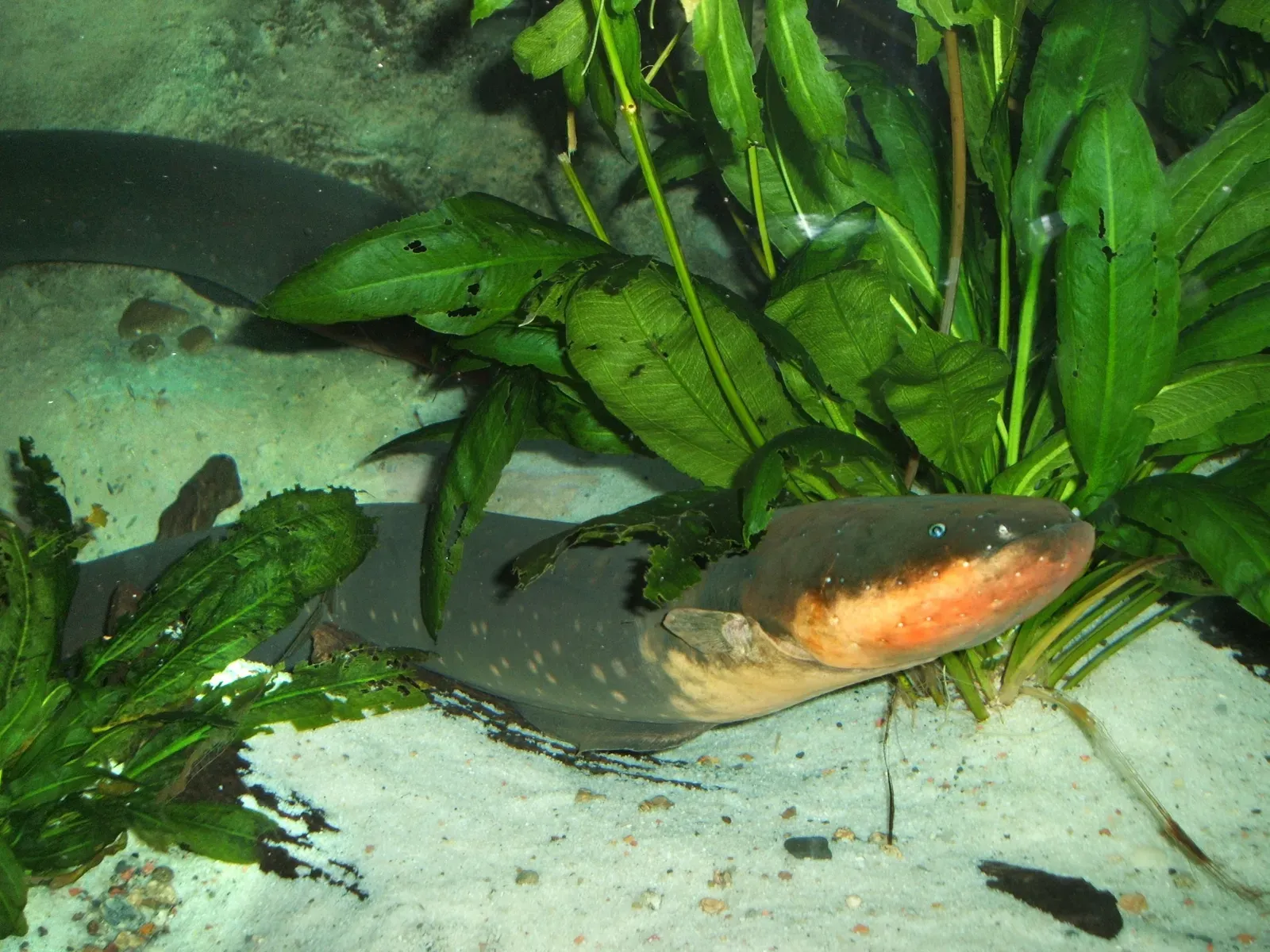
Electric eels are not actually eels, but that’s honestly the least surprising thing about them. These fish can generate powerful electric shocks strong enough to stun prey or deter predators, reaching hundreds of volts from a body not much longer than a person. Their entire body is basically wired like a living battery, with specialized cells called electrocytes stacked in series to create high voltage.
Even stranger, electric eels seem to use electricity like a multi-tool: low-voltage pulses for navigation and sensing, and high-voltage blasts for attack. Some research suggests they can remotely make prey twitch with small electric bursts to reveal their position in murky water, like forcing a hiding fish to flinch. We understand the broad strokes of the biology, but the precision and control of these electric discharges – and how the eel’s own nervous system isn’t fried in the process – still raises big questions. It’s like carrying around a taser that’s somehow wired into your brain without ever short-circuiting it.
5. Platypus: A Mammal With a Built-In Sixth Sense
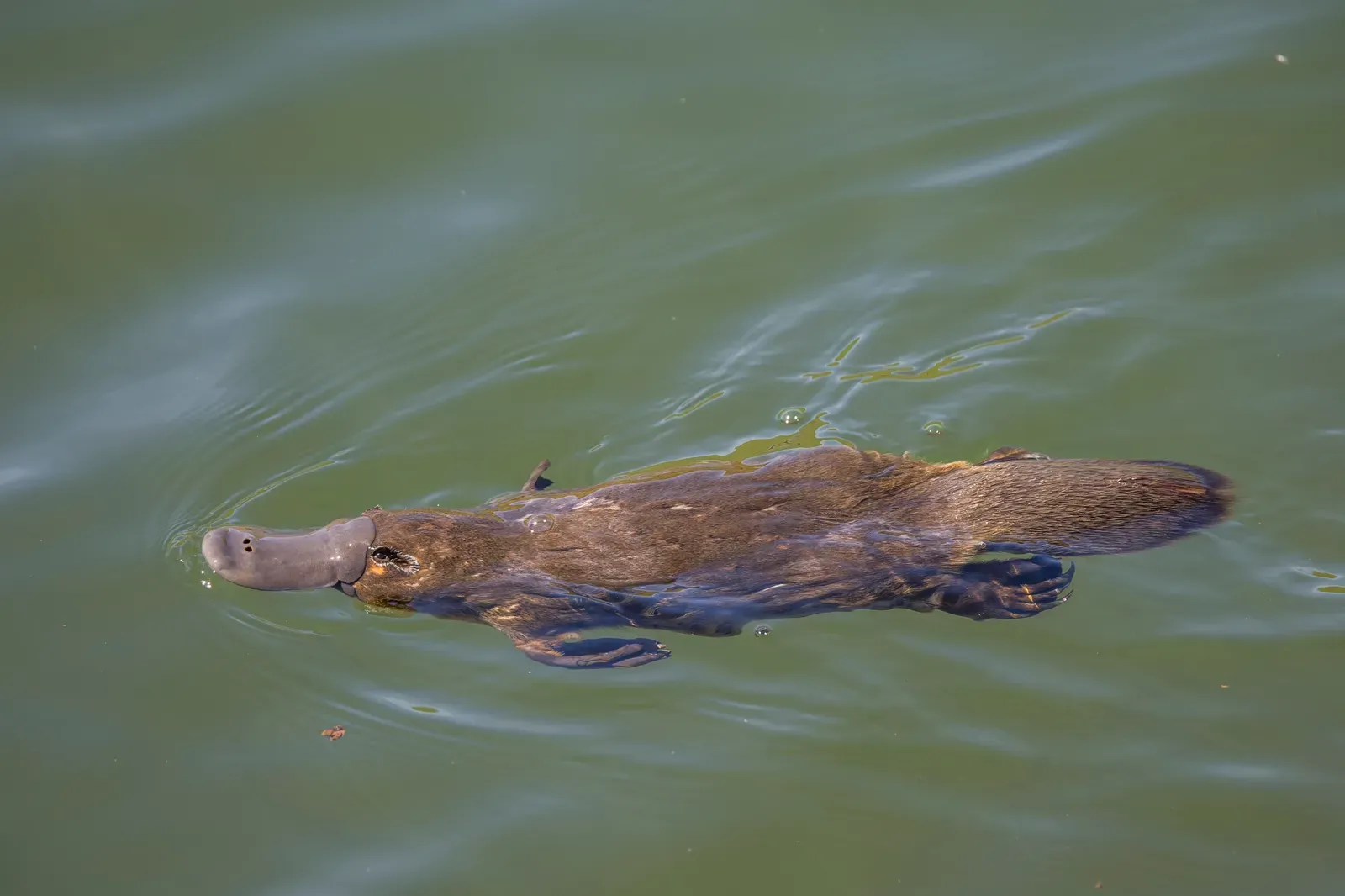
The platypus already looks like a prank: duck bill, beaver tail, webbed feet, and it lays eggs despite being a mammal. But the most astonishing thing about it is something you can’t see from photos. That odd-looking bill is packed with electroreceptors that can detect tiny electric fields produced by the muscles and nerves of other animals. In muddy rivers where vision is useless, a platypus can hunt with its eyes, ears, and nostrils closed, guided mainly by this invisible electrical sense.
Each time a shrimp wiggles or a small fish moves, it sends out faint electric signals through the water, and the platypus reads those signals like a map. We know they combine this input with touch sensors in the bill to create a detailed picture of what’s around them. But the exact way their brain merges all this information into a clear “image” of the world is still not fully understood. It’s as if you could close your eyes in a dark room and still know where everyone is just from the electricity running through their bodies.
6. Pistol Shrimp: The Tiny Gun With a Sonic Bullet
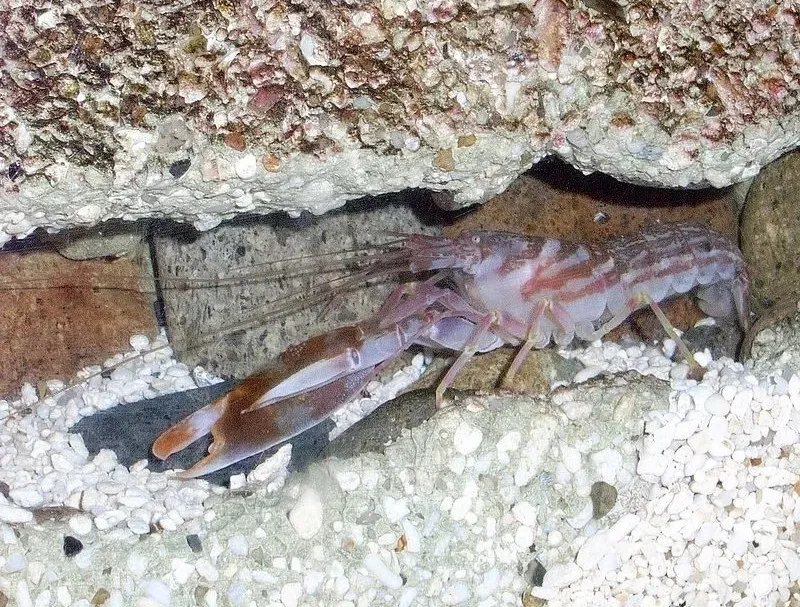
The pistol shrimp looks harmless enough, until you watch it fire. One of its claws has evolved into a sort of biological snap-gun that closes so fast it shoots out a high-speed jet of water. That jet creates a bubble that collapses almost instantly, generating a shockwave and a burst of heat and light strong enough to stun or kill small prey.
This whole process happens in milliseconds, and the sound is loud enough to be heard clearly underwater, sometimes rivaling noises from much larger animals. The physics involved are extreme: local temperatures around the collapsing bubble briefly spike to levels hotter than the surface of the sun, although only in a tiny area and for a tiny moment. We’ve modeled this phenomenon, but how such a small creature evolved to consistently harness this kind of violent physics without destroying itself is still a massive evolutionary puzzle. It’s like a pea-sized creature casually firing microscopic cannons all day long.
7. Cuttlefish: Masters of Instant Camouflage
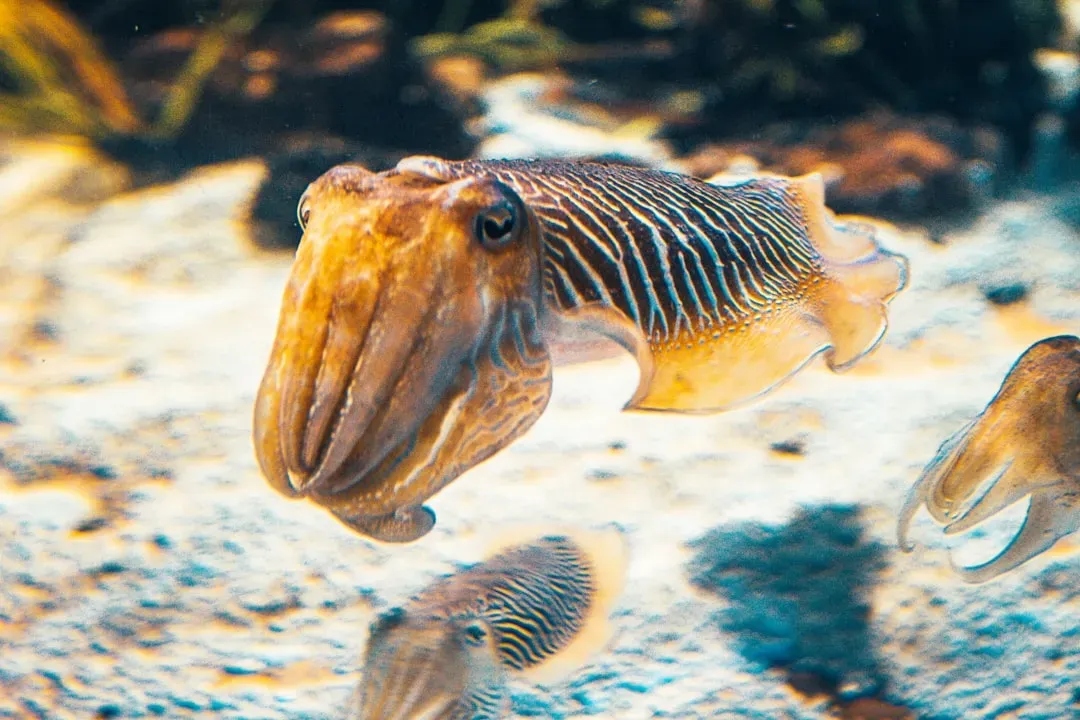
Cuttlefish might be the closest thing we have to real-life shapeshifters. In an instant, they can change their skin color, brightness, and even texture to blend into rocks, sand, coral, or dramatic undersea patterns. They do this with layers of specialized skin cells that expand and contract like living pixels, controlling pigments and reflecting light in different ways.
Here’s the part that really twists the brain: cuttlefish are colorblind, at least in the way we normally think about color. They can’t see the full range of colors that they themselves can produce. Yet they still match their surroundings with eerie accuracy, and can produce precise warning patterns and mimicry displays. We’ve learned a lot about the mechanics of their skin, but how their brains decide which pattern to show without seeing color the way we do remains deeply mysterious. It’s like a painter unable to see red or blue still creating a perfect color photo.
8. Naked Mole-Rats: The Mammals That Ignore Pain and Aging Rules
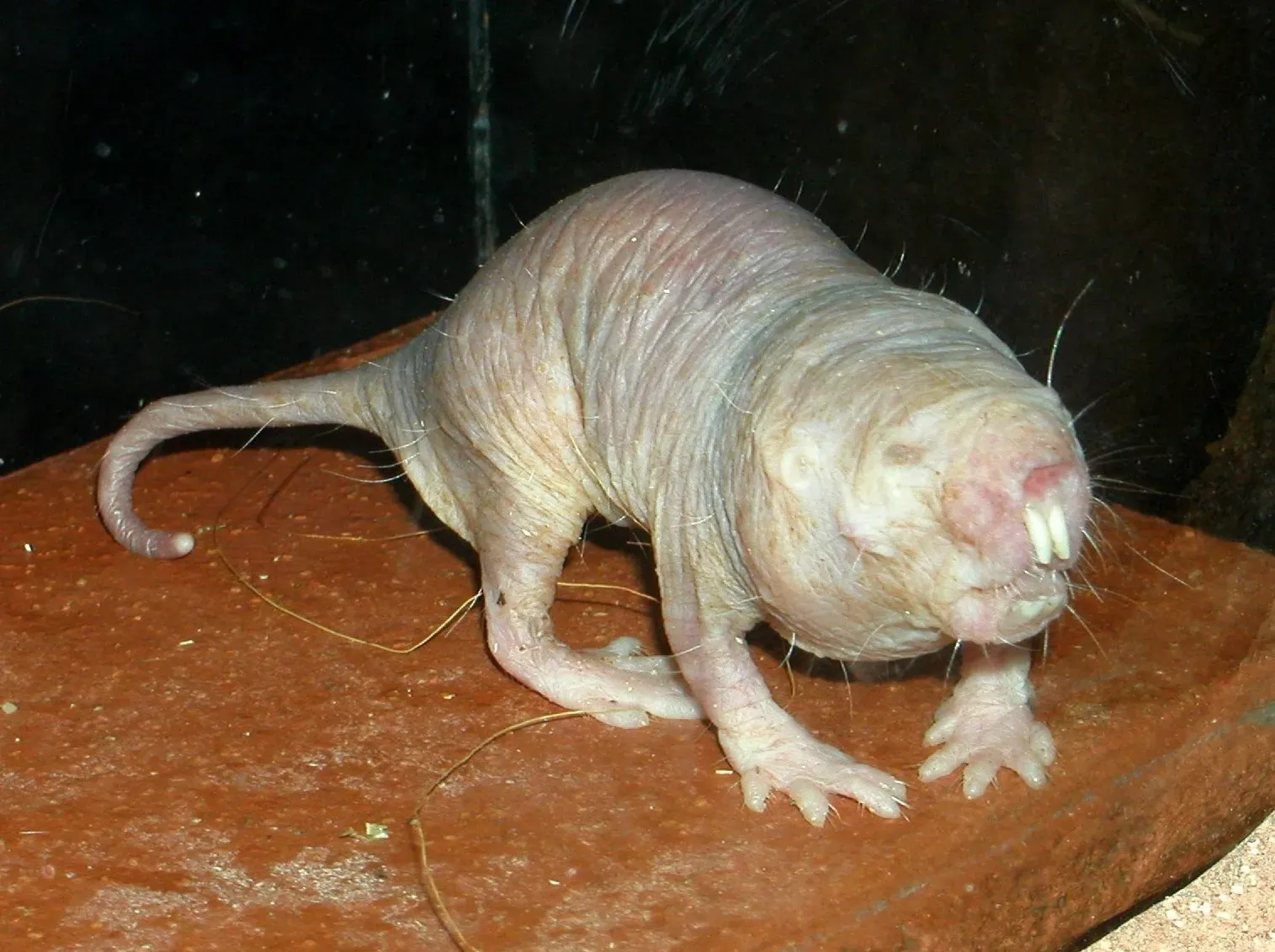
Naked mole-rats are not winning any beauty contests, but biologically they’re rock stars. These underground rodents from East Africa can live far longer than most mammals their size, with lifespans stretching many times beyond what you’d expect for a small rodent. Even more surprising, they show a very low rate of age-related diseases, including certain cancers, and their bodies seem strangely resistant to many forms of cellular damage.
On top of that, naked mole-rats barely react to some types of pain, including pain from acidic environments and certain inflammatory signals. They live in low-oxygen tunnels that would make most mammals sick, yet their brains and organs keep working smoothly. We’ve discovered unusual features in their biology, from extra-robust cellular repair systems to unique sugars in their tissues, but the full picture of why they age so slowly and shrug off stress so well is still incomplete. It’s like nature quietly ran a longevity experiment underground and is still keeping some of the results to itself.
9. Pigeons: Navigators With Built-In GPS (That We Still Don’t Fully Get)
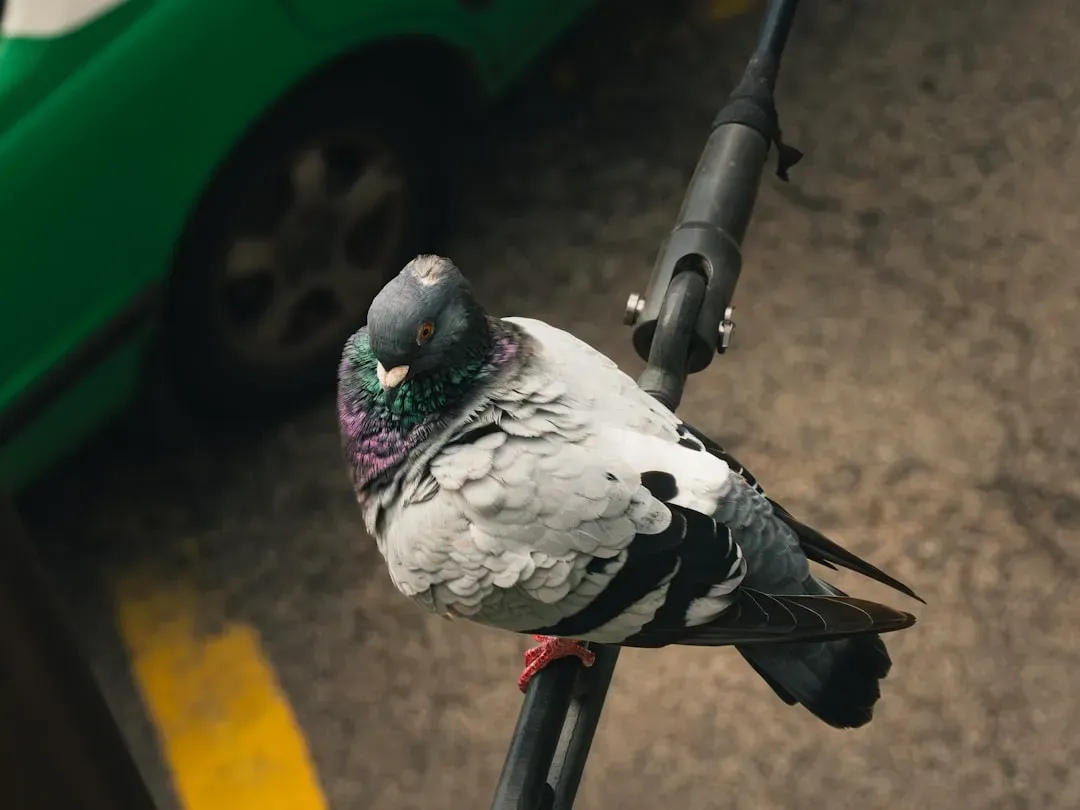
Pigeons are so common in cities that it’s easy to forget how incredible their navigation skills are. Homing pigeons, in particular, can be taken hundreds of kilometers away to places they’ve never seen and still find their way back home with impressive accuracy. They seem to combine visual landmarks, the position of the sun, smells in the air, and possibly even Earth’s magnetic field to orient themselves.
Researchers have gathered evidence that pigeons may have magnetic sensors in their bodies, perhaps in their beaks or eyes, that help them detect the planet’s magnetic field. They likely also build a sort of “smell map” of their surroundings over time, associating wind-borne odors with directions. But even after decades of study, there’s still no single, clean explanation that covers all their navigation feats. Their internal guidance system is more like a mysterious mash-up of senses pieced together so well that we still can’t replicate it in a simple, foolproof machine.
10. Bombardier Beetles: Living Chemical Reaction Chambers
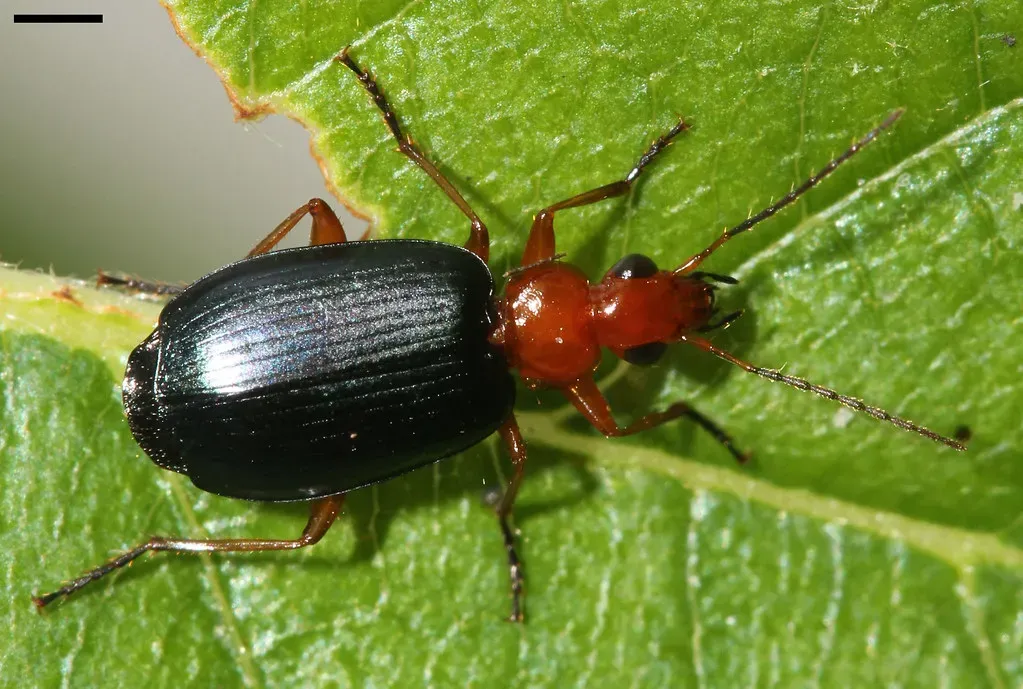
Bombardier beetles are tiny, but their defense system reads like something out of a chemistry textbook. When threatened, they mix two otherwise harmless chemicals inside a specialized chamber in their abdomen. This mixture reacts violently, heating rapidly and turning into a boiling, irritating spray that the beetle fires out of a small nozzle toward its attacker.
The beetle can aim this spray with surprising precision, and it does not just explode once; it can fire repeated controlled bursts without blowing itself apart. The timing, structure, and safety mechanisms of this internal reaction system are incredibly intricate for such a small creature. We understand the basic chemistry involved, but the evolutionary path that produced such a complex, finely tuned defense in a bug you could flick off your sleeve is still hard to wrap your head around. It’s like carrying a miniature, reusable chemical reactor safely inside your body.
The Strangest Abilities Might Be Just the Beginning
These ten animals don’t just show off quirky biological tricks; they quietly rewrite what we thought life was capable of. From near-indestructible water bears to salamanders that rebuild their own bodies and shrimp that weaponize physics, each one forces us to widen the limits of what seems possible. They remind us that evolution is not tidy or predictable, and that nature has already tested ideas that sound more like science fiction than reality.
What’s maybe most unsettling – and exciting – is how much we still don’t understand. Each of these creatures is both an answer and a question, a clue to healing, sensing, surviving, or adapting in ways we can barely copy. The next time someone says we’ve already discovered all the important things about animals, it’s worth thinking about the platypus, the cuttlefish, or the tardigrade and asking: are we even close?