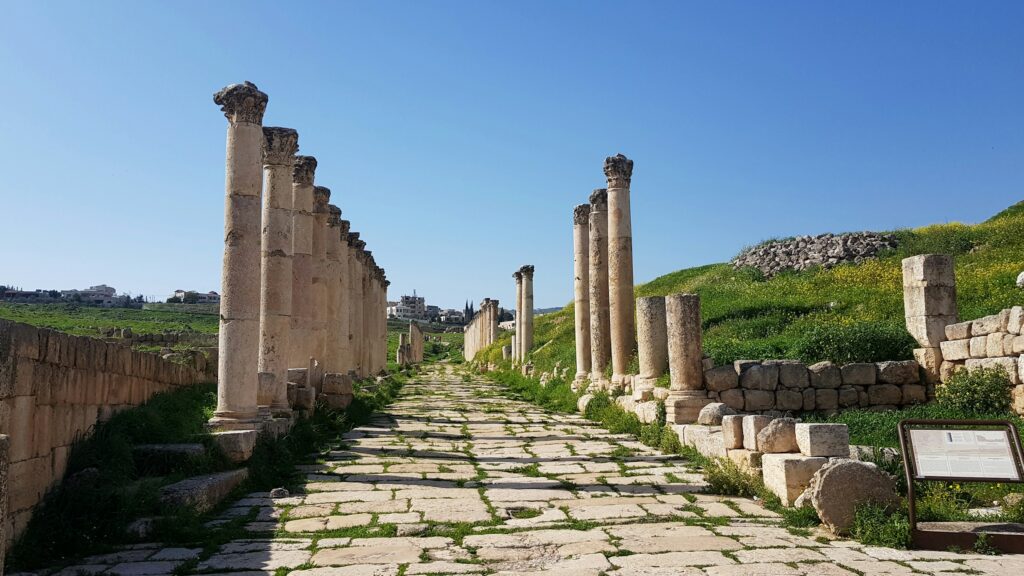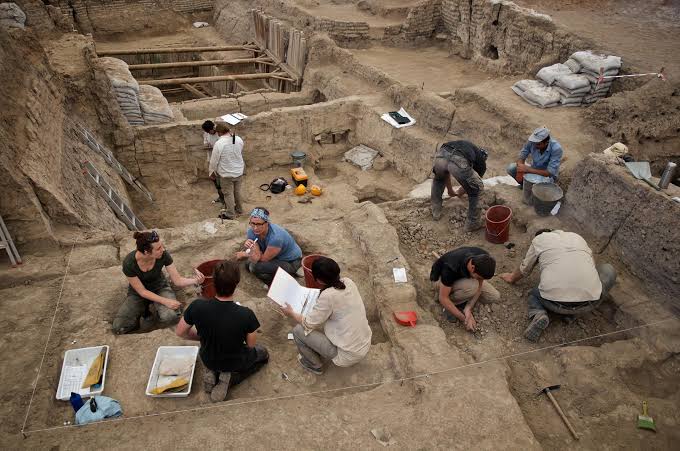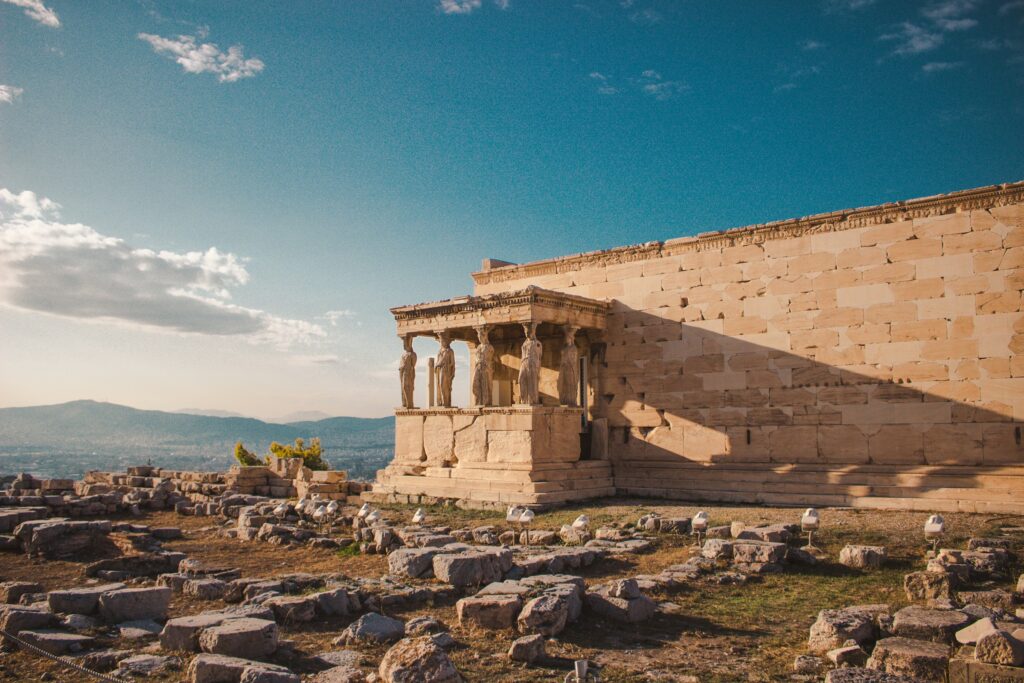
Every time we think we’ve got history neatly mapped out, some stubborn block of stone quietly disagrees. You stand in front of a temple, a stepped pyramid, or a perfectly drilled granite column, and a little voice in the back of your mind says: how on earth did they pull this off with what they were supposed to have? That tension between what the textbooks say and what the stones suggest is where things get very, very interesting.
This article is not about aliens, magic, or rewriting everything we know overnight. It is about ten ancient structures that push uncomfortably close to the edge of the accepted technological timeline. In each case, mainstream archaeology has working explanations, but the level of precision, logistics, or material science feels oddly ahead of the tools and techniques those cultures are thought to have had. Let’s walk through these sites as if we were there, and look honestly at what seems firmly explained, what is still shaky, and where our story of human ingenuity might be missing a few chapters.
1. The Great Pyramid of Giza: Precision Masonry on an Industrial Scale

The Great Pyramid looks simple from far away: a big stone mountain in the sand. Up close, it becomes deeply uncomfortable. The original casing stones, where they survive, show joints that are hair-thin, with blocks weighing several tons fitted together so tightly that even modern visitors are amazed at the near-machined quality of the seams. The base is astonishingly level over a huge footprint, with orientation to true north that rivals modern constructions done with precision instruments.
On paper, the Egyptians around the middle of the third millennium BCE are said to have had copper tools, stone hammers, wooden sledges, and a lot of manpower. That is the orthodox toolkit. Engineers today, though, often point out that achieving such large-scale precision alignment, controlling cumulative error across millions of blocks, and coordinating supply chains for stone, food, and labor, looks like project management on a surprisingly advanced level. There are proposed solutions – ramps, levers, and clever surveying – but the gap between what is theoretically possible and what has been experimentally demonstrated at scale still fuels the sense that their practical engineering knowledge outpaced the simple picture we paint of “Bronze Age builders with rope and sweat.”
2. Puma Punku: Interlocking Stone Blocks With Almost Mechanical Tolerances
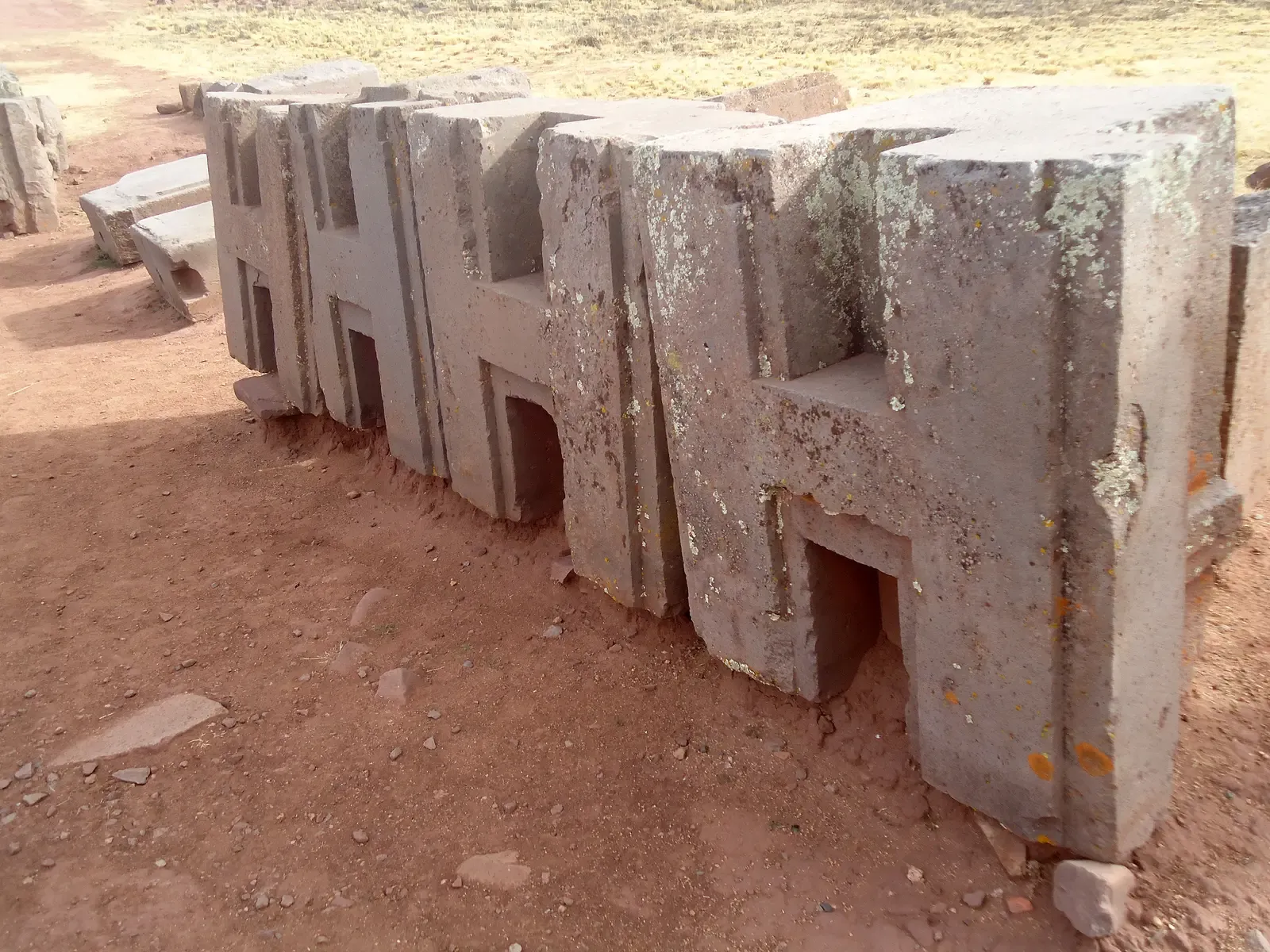
High on the Andean plateau, the ruins of Puma Punku are only a fragment of what once stood there, but the surviving blocks are enough to unsettle even the most skeptical visitor. The site is famous for its H-shaped and intricately cut stones, some with sharp internal corners and grooves that look like they were planned as modular components rather than rough blocks. The stone itself is often dense and hard, like andesite, which is significantly tougher to work than softer limestones or sandstones.
According to the conventional timeline, the builders of Puma Punku were part of a pre-Inca culture without evidence of steel tooling or advanced machine tools. Yet many surfaces appear astonishingly flat, and some cuts run straight for long distances with a regularity that suggests guided tooling rather than freehand chisel work. Mainstream explanations lean on abrasives, patience, templates, and high craftsmanship, which are all credible, but we still lack fully replicated demonstrations that match the tightest examples from the site. This is one of those cases where you can accept the broad strokes of the official view and still feel that the finer details of their engineering processes are largely missing from the record.
3. Baalbek’s Trilithon: Moving Stones That Modern Cranes Would Struggle With
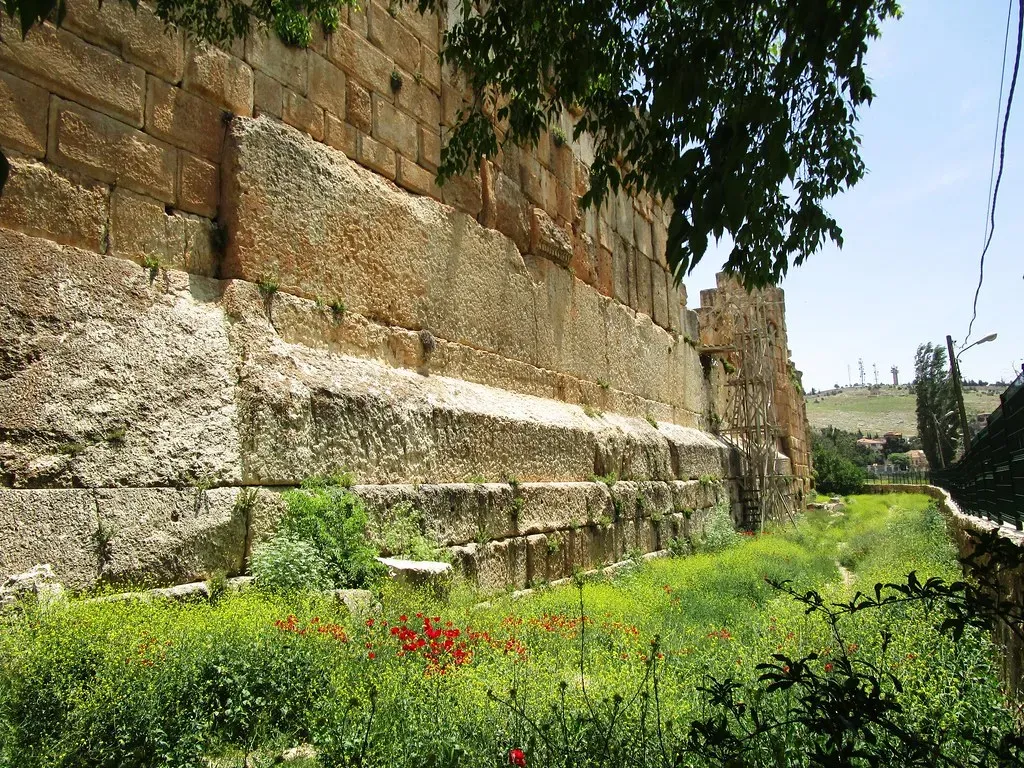
At Baalbek in Lebanon, the Roman temple complex already shows impressive imperial architecture, but it is the older, massive foundation blocks that really twist the knife. The famous “Trilithon” consists of three gigantic stones, each weighing hundreds of tons, precisely placed into a foundation wall. Nearby in the quarry lies an even larger worked stone that was never moved, weighing so much that many modern cranes would not be able to shift it in one piece.
Our accepted timeline gives the Roman world advanced engineering, no doubt, but typical construction relies on more manageable block sizes and modular building. To place the Trilithon stones, builders would have needed a combination of earthworks, temporary ramps, rollers or sledges, and remarkable control over friction and stability. The methods proposed are plausible physics, but what is striking is the deliberate decision to use blocks of such extreme mass at all, when smaller segments could have achieved similar structural results with less risk. That design choice hints at a construction philosophy and a mastery of heavy-lift logistics that we still do not fully understand, and it nudges uncomfortably close to techniques we only re-mastered with industrial steel and powered machinery.
4. The Osirion at Abydos: Granite Work That Feels Out of Place in Time
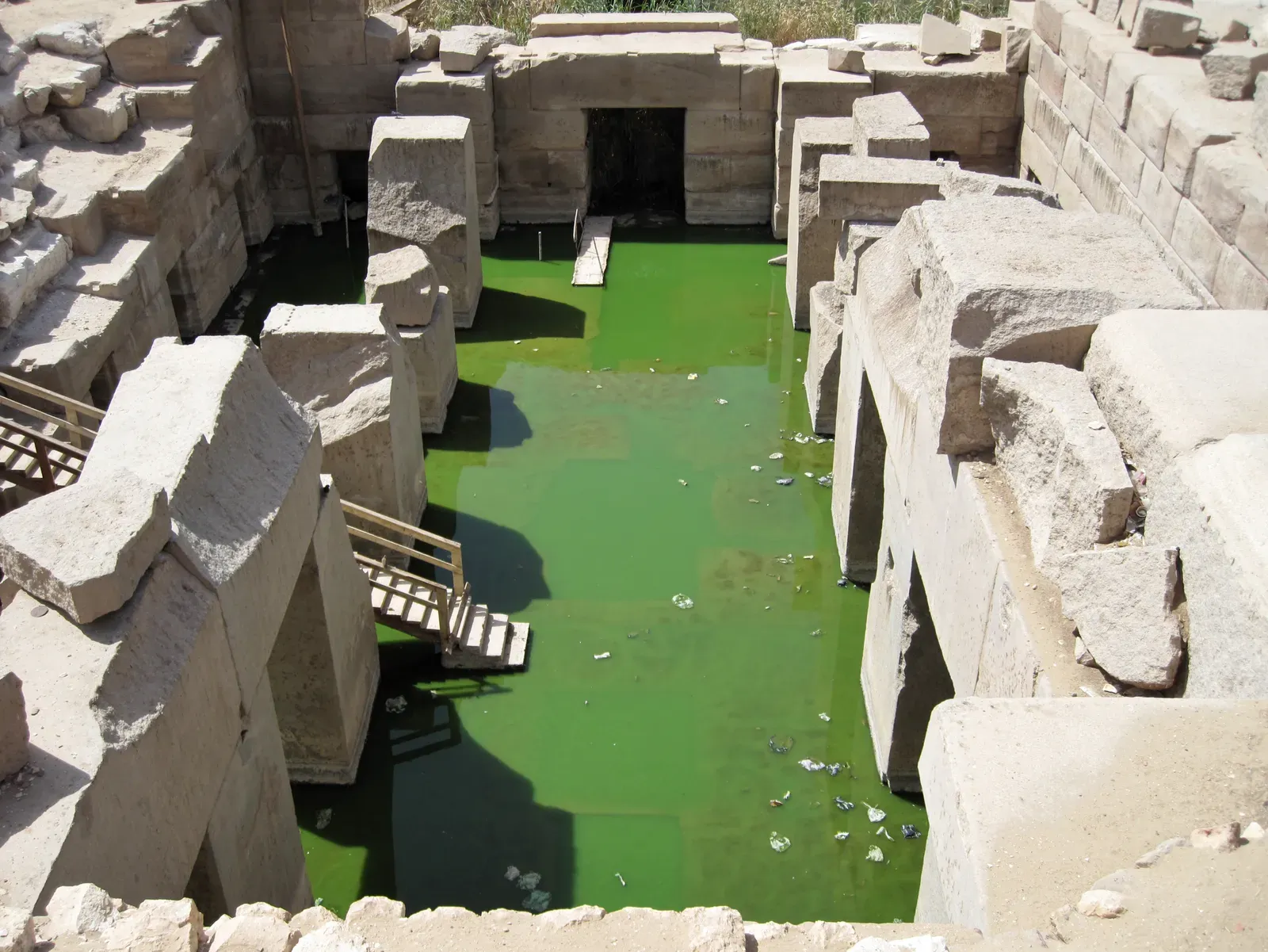
Hidden below ground level behind the more decorated temple of Seti I at Abydos lies the Osirion, a stark, almost megalithic structure built of huge granite blocks. The style looks older and more austere than the surrounding temple reliefs, leading some researchers to argue that portions of it might predate the conventional New Kingdom attribution. The stone blocks are enormous, with tight joints and a simplicity that makes each interface stand out.
Working granite on this scale demands more than casual hammering; it requires consistent techniques for shaping and smoothing a very hard rock. The orthodox toolkit again involves pounding stones, copper chisels used with abrasives, and a lot of perseverance. That may be enough in theory, but the Osirion presses the question of why such monumental granite engineering would appear in a seemingly subterranean, ritual context that does not quite match the decorative sophistication of surrounding structures. It feels like someone suddenly dropped a heavy, technically confident style into a timeline where the main story focuses on decorated sandstone and carved reliefs, and that mismatch keeps fuelling debates about lost phases of experimentation in Egyptian stone engineering.
5. Sacsayhuamán: Polygonal Walls That Lock Like 3D Jigsaw Puzzles

Overlooking Cusco in Peru, the fortress-like walls of Sacsayhuamán are famous for their jagged, interlocking stonework. These are not neat, rectangular blocks but complex polygons, some with many faces, sitting together so snugly that there is barely a hairline gap between them. The stones vary massively in size, including some multi-ton monsters fitted into oddly curved or stepped joints, as if each piece was custom modeled for its exact position.
According to the accepted timeline, the Inca did not use iron tools, wheels for transport, or written blueprints in the sense we understand them. Yet the layout of these walls implies a three-dimensional planning ability and an understanding of seismic stability that is extremely sophisticated. Modern engineers admire how the irregular, interlocking blocks can dissipate earthquake energy better than rigid, grid-like masonry. How those stones were shaped, moved up steep terrain, and locked together with such confidence remains only partially explained by current reconstructions, making Sacsayhuamán a prime example of ancient builders behaving like highly trained structural engineers without the documented development curve we would expect.
6. The Hypogeum of Ħal Saflieni: Underground Acoustics on Neolithic Malta
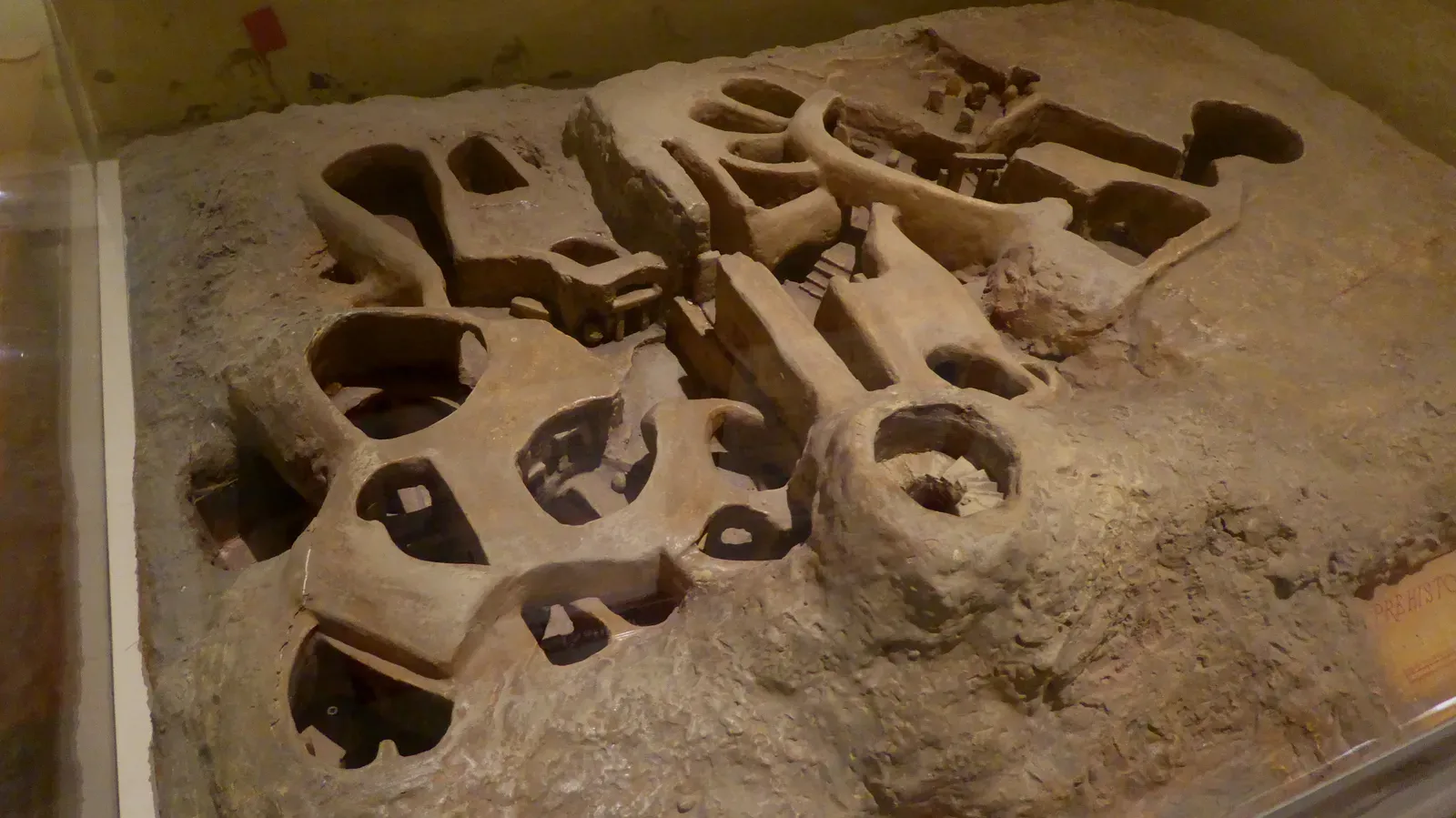
On Malta, the underground complex known as Ħal Saflieni Hypogeum was carved by a Neolithic culture that predates metal tools on the islands. The site is a series of rock-cut chambers and passages, but what catches modern researchers off guard is its acoustic behavior. Certain niches and rooms, especially a small chamber often called the “oracle room,” respond to human voices with eerie amplification and resonance, as if the space had been tuned like an instrument.
The accepted timeline gives these builders basic stone tools and simple social organization, yet they somehow created a multi-level complex with features that strongly suggest deliberate acoustic planning. While it is possible that some of the sonic effects are a lucky outcome of the rock type and room shapes, tests with sound frequencies suggest that the space behaves in ways that feel too optimized to be pure accident. It might not require advanced mathematics or modern acoustic software, but it does hint that these people experimented systematically with sound in architecture in a way we rarely credit to societies classed as “early farmers with primitive tools.”
7. Göbekli Tepe: Monumental Stonework Before Agriculture Was Supposed to Be Ready
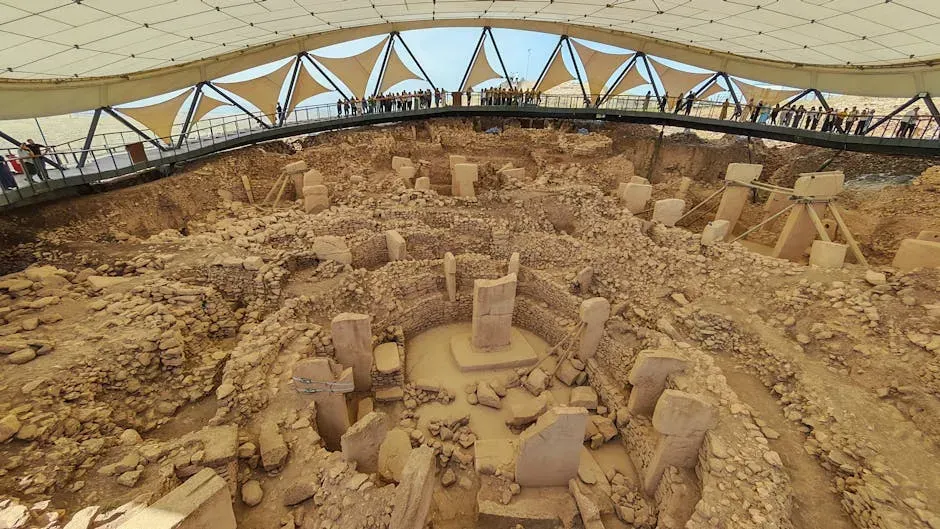
When Göbekli Tepe in southeastern Turkey was first dated to the early Holocene, long before the classic agricultural revolution, it scrambled a comfortable narrative: monuments, we thought, required settled farming and complex hierarchies. Instead, here was a pre-pottery site with massive T-shaped pillars, some carved with intricate animal reliefs, erected by hunter-gatherer groups. The construction demands coordination, planning, and knowledge of stone quarrying that were not expected for that period.
These people did not have metal tools, wheeled vehicles, or domesticated draft animals in the conventional timeline, yet they moved and raised pillars weighing many tons and organized them into circular enclosures with apparent symbolic or ritual functions. The engineering challenge is not just lifting stones but sustaining the labor force and knowledge transmission across generations. That kind of organizational and technical competence looks a lot like an early form of civil engineering, centuries or even millennia before we thought such projects were feasible. Göbekli Tepe forces us to accept that “simple hunter-gatherers” were capable of large-scale design and execution that edges into what we would call architectural engineering.
8. The Nabatean Water Systems of Petra: Hidden Hydraulics in the Desert

The ancient city of Petra in Jordan is famous for its rock-cut facades, but behind the carved monuments lies another achievement: a remarkably sophisticated water management system. The Nabateans designed channels, covered conduits, terracotta pipes, and rock-cut cisterns to capture and distribute scarce rainfall through a harsh desert environment. They controlled flow rates and pressure with a finesse that modern hydrologists respect, integrating the system into both the public and private fabric of the city.
On the standard timeline, Petra flourished in the centuries around the turn of the first millennium, which already allows for advanced Hellenistic and Roman influences. Even so, the way water channels hug rock faces, transition from open to closed sections, and feed reservoirs placed for both practicality and protection, feels ahead of what we would expect for a semi-nomadic trading culture turned urban power. It suggests the Nabateans were quietly operating at a level of hydraulic engineering that could stand beside the best of their contemporaries, but without leaving the same written treatises or formal manuals. The stones record a level of applied fluid dynamics that looks anything but improvised.
9. The Kailasa Temple at Ellora: Carving Down Instead of Building Up
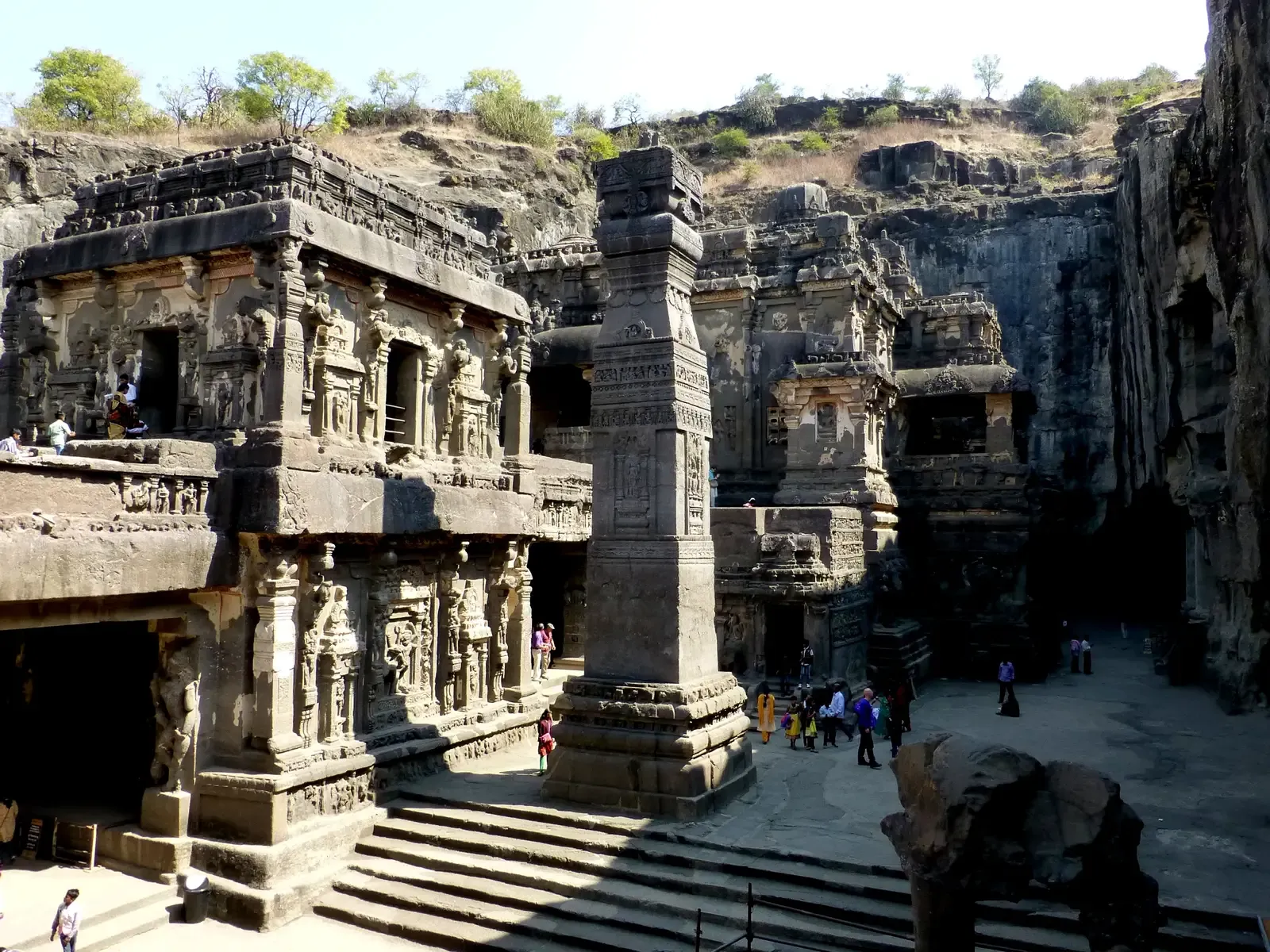
In India, the Kailasa Temple at Ellora is a structural paradox: it is not built in the conventional sense, but carved downward from a single rock face, effectively “excavated into existence.” Builders had to plan the final shape in three dimensions before removing huge volumes of basalt, because major mistakes could not be patched with added blocks. The result is a multi-story complex of halls, columns, and sculptures that functions as a freestanding temple yet remains part of the living rock.
The accepted timeline places Kailasa in the early medieval period, when stone carving and temple architecture were already well established on the subcontinent. What strains the imagination is less the dating and more the project management: coordinating workers, ensuring symmetry and structural integrity while always working from the top down, and predicting stresses in the rock in the absence of modern geological modeling. The techniques implied here flirt with a level of conceptual planning and spatial visualization that we often associate with survey instruments and mathematical drafting, yet the surviving record is mostly the temple itself, standing as its own silent engineering document.
10. Roman Concrete and the Pantheon Dome: Material Science Ahead of Its Time

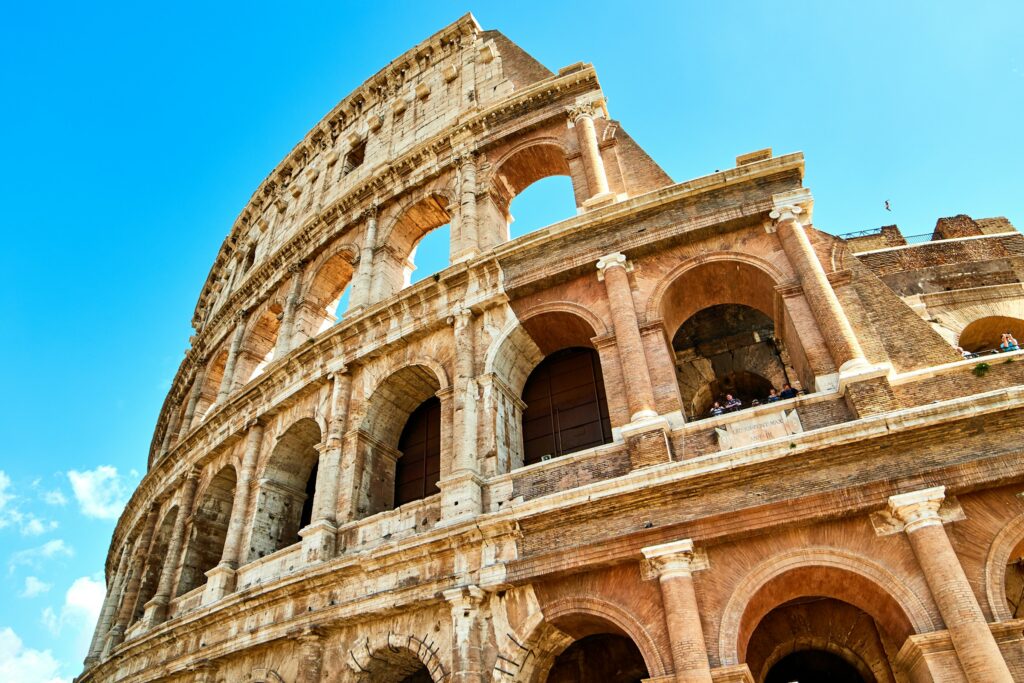
The Pantheon in Rome is one of those buildings you can stare at for hours and still not quite accept its age. Its giant unreinforced concrete dome, with the famous central opening, remains one of the largest of its kind. The remarkable part is not only the shape but the material itself: Roman concrete that has survived for nearly two thousand years, often outperforming some modern mixes in durability, especially in marine environments where ancient harbor structures still stubbornly hold together.
Our timeline fully credits the Romans with impressive engineering, but only in recent decades have scientists started to uncover the complex chemistry behind their concrete, including volcanic ash, lime, and clever aggregate choices that allowed for self-healing microcracks over time. In other words, they were practicing a form of empirical material science that anticipates some of our modern concerns about durability and resilience, but without the theoretical framework we use today. It is a strange feeling to realize that in certain very practical ways, their formulae were better optimized for longevity than many twentieth-century concretes, raising the unsettling possibility that some knowledge was refined, lost, and is only now being reverse-engineered.
Conclusion: Are We Underestimating Ancient Engineers More Than We Admit?
When you line up these sites – from Giza’s razor-thin joints to Baalbek’s mega-blocks, from Göbekli Tepe’s hunter-gatherer monumentality to Petra’s desert hydraulics – a pattern starts to emerge. It is not that the official timelines are completely wrong, but that our mental picture of what people “at that level” of technology could do is often embarrassingly shallow. We tend to imagine early societies as clumsy experimenters, slowly fumbling toward complexity, while the actual stones show long leaps of applied know-how that look suspiciously like the work of confident specialists and highly tuned traditions.
My own view is that we do not need lost civilizations or exotic interventions to explain these achievements, but we do need to seriously expand our respect for how fast practical knowledge can evolve, how much can be transmitted through apprenticeship instead of writing, and how easily entire constellations of techniques can vanish when a culture collapses or shifts. These structures are less proof of impossible technology and more evidence that human engineering genius has flared up, gone quiet, and flared up again across deep time. The real mystery is not whether they had advanced methods, but how many such peaks of skill we have forgotten – and how much more patiently we should read the stones before deciding what our ancestors could and could not do. What assumptions of yours feel a little less solid after walking through these ruins in your mind?