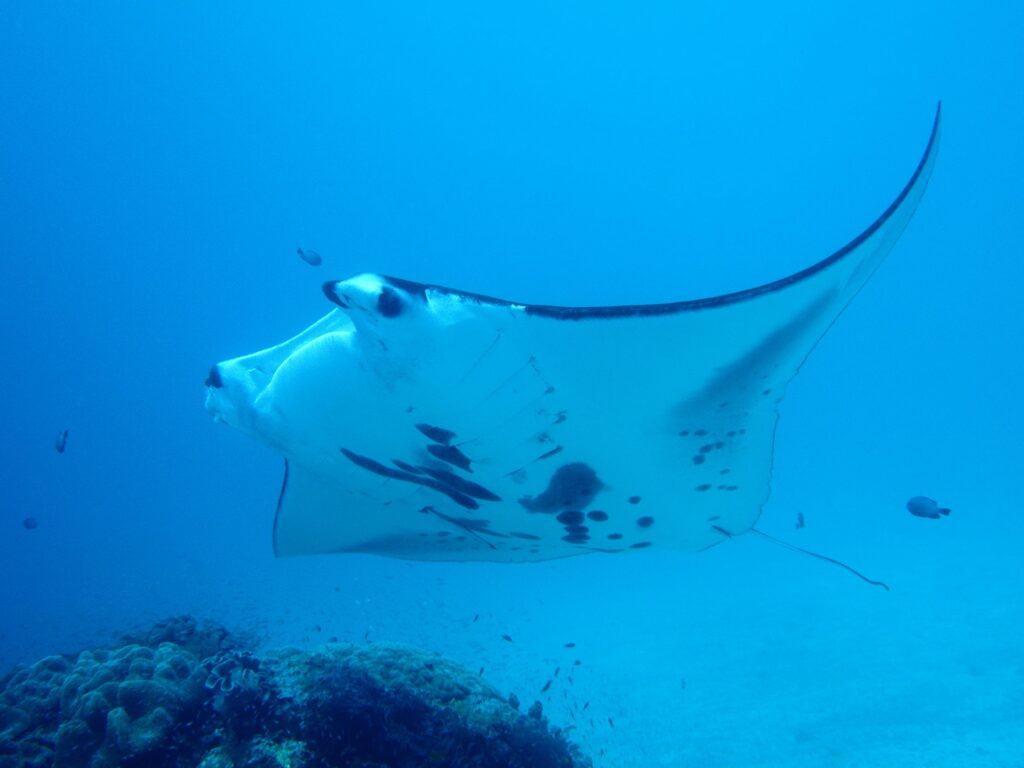
Manta rays look like they’re flying underwater, all graceful wings and quiet power. Then, out of nowhere, one of these ocean giants flips into an underwater cartwheel, spiraling through the blue like a slow-motion tornado. If you have ever seen that on video, it feels almost unreal, like a glitch in the matrix or a dance move from a creature that forgot it lives in three dimensions, not two. That spinning move is not random, not playful showing off, and definitely not clumsiness. Those somersaults are part of a remarkably smart strategy, evolved over millions of years in a world where every mouthful of food is tiny and every bit of energy spent matters. Once you realize how fine-tuned this behavior is, the manta’s slow flip stops looking like a trick and starts looking like a precise, elegant solution to a very real survival problem: how to make a living on clouds of microscopic prey.
The Plankton Problem: Eating Tiny Things When You Are Huge
The first surprising thing about manta rays is that they are enormous animals that feed on some of the smallest creatures in the ocean. Their diet is built mostly around zooplankton and tiny fish larvae drifting in the water, more like dust in the air than like solid food. To survive, a single manta has to filter a staggering volume of water every day, turning invisible clouds of life into enough calories to power a body that can span several meters across. Now imagine trying to live on dust in a windy field: you would not just grab it with your hands, you would have to position yourself where that dust naturally concentrates, then move in a way that keeps it in front of you instead of losing it. That is essentially what mantas are doing. Their somersaults are one of several strategies to stay with dense patches of plankton as long as possible, squeezing the most food out of each hard-won encounter with a rich plankton layer.
How Filter Feeding Works in a Manta’s Mouth
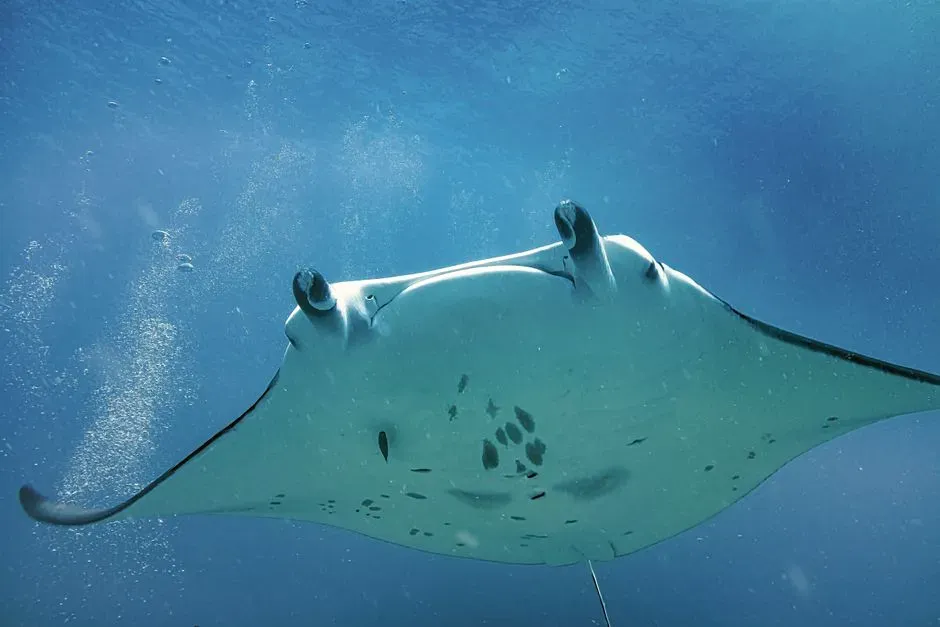
To understand why a manta spins, it helps to picture what is going on in its mouth. Mantas are filter feeders: they swim forward, open their mouths widely, and funnel water through specialized filter structures inside that trap plankton while letting the water flow out. Instead of snapping or biting like a shark, they are basically running a living conveyor belt that strains the sea. Those famous cephalic fins – the horn-like flaps on either side of their mouth – act like adjustable scoops. When mantas somersault, they can curl and flare these fins to tighten the flow and keep the plankton-heavy water directed into the mouth opening, even as their body rotates. It is a bit like turning your head while drinking from a hose but keeping the stream perfectly aimed at your lips; the rotation is not chaos, it is a controlled way of feeding from the same dense packet of food for longer.
Somersaults as a Way to Stay in the “Buffet Cloud”
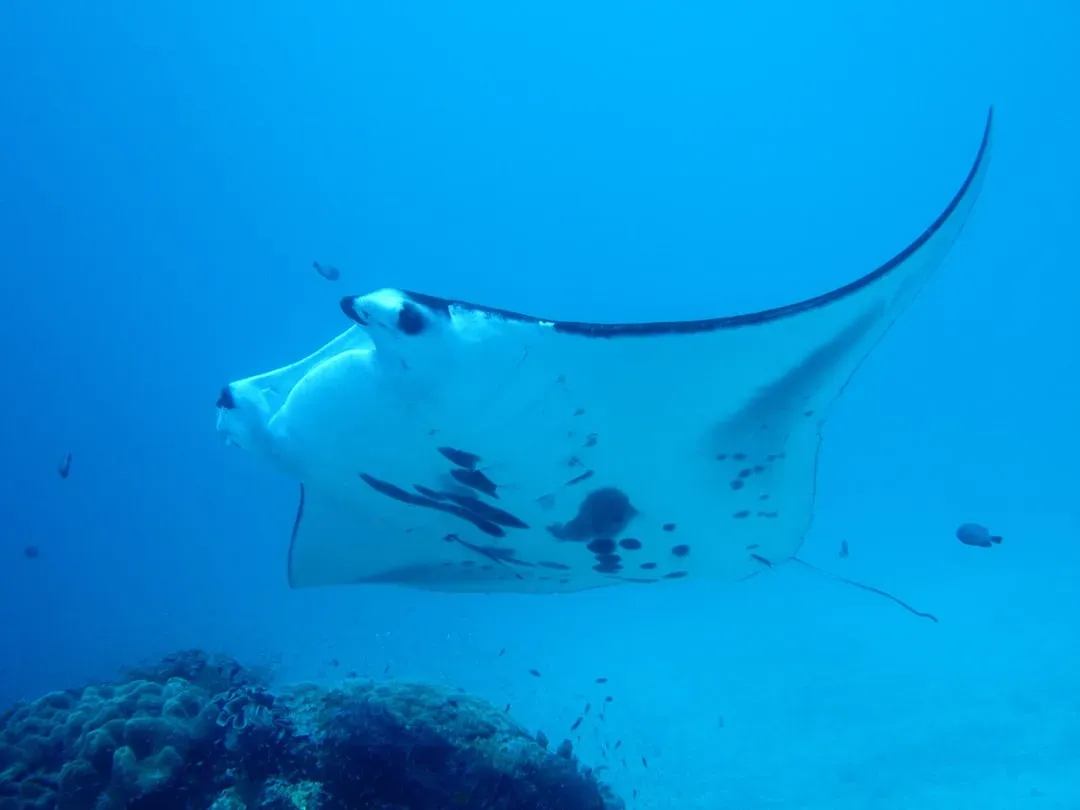
Mantas do not just flip for fun – they somersault inside dense “clouds” of plankton that form when currents, tides, or upwelling stack microscopic life into layers or patches. Once a manta finds one of these buffet clouds, leaving it would be wasteful. Swimming straight through means you pass the good stuff and then you are back in relatively empty water again, forced to search. By looping in a tight circle, the manta can stay right inside that high-density patch, re-filtering the same volume from different angles as water and plankton swirl around. It is like walking through an all-you-can-eat buffet only once versus circling the same loaded table again and again. Every somersault buys the manta more time in the richest spot, and when you live on food this small, that extra time is everything.
Hydrodynamics: Turning a Big Body in Tight Spaces
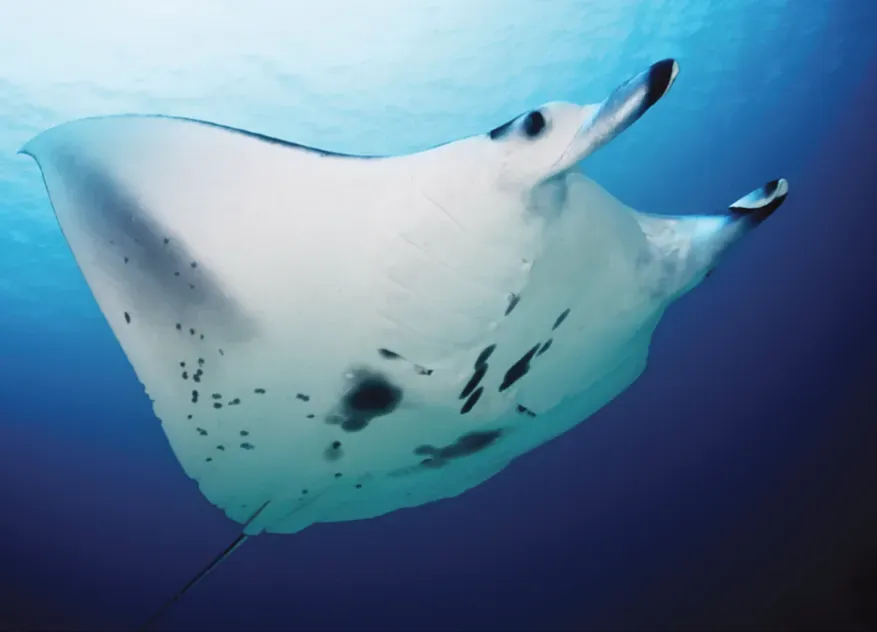
There is also a physics side to this story. Mantas are big, but water is thick and heavy to move through, and swimming fast in straight lines takes a lot of energy. Somersaulting lets them exploit their own momentum and body shape in a surprisingly efficient way. When they tuck and turn, their large wings create controlled lift and drag, allowing a slow, spiraling loop that minimizes wasted effort while constantly moving fresh plankton past their filters. Think about a figure skater pulling in their arms to spin faster: the manta is doing an underwater version of conserving and redirecting motion, not just flailing around. Instead of having to speed off in a new direction every time they pass through the plankton patch, they “roll back” into it. This is especially useful when a rich layer of plankton is relatively thin or localized; a tight looping motion maximizes feeding time while keeping travel costs low.
Vertical Layers and the Three-Dimensional Buffet
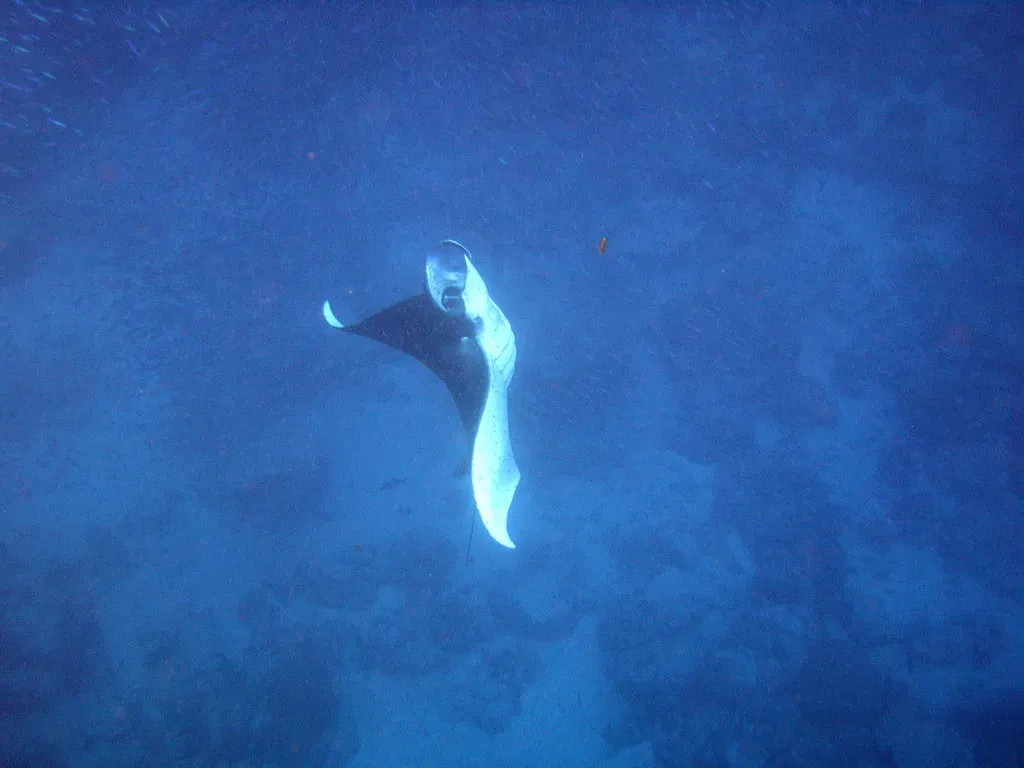
The ocean is not a flat plate of food; it is more like a layered cake where different depths hold different densities of plankton. In many places, the richest layers form narrow bands in the water column, only a few meters thick. If a manta only swam straight through horizontally, it would pass from rich to poor layers in seconds and then have to waste energy repositioning itself again. Somersaulting allows the manta to work vertically through that layer, hovering and looping in a way that keeps most of its movement confined to the best zone. Each spin lets it sample slightly different heights and angles while staying broadly anchored to the same productive slice of water. It is a clever, three-dimensional feeding dance: not just swimming forward, but sliding, rolling, and pivoting through an invisible layer of food that a less flexible animal might simply overshoot.
Group Feeding: When One Flip Becomes a Chain Reaction
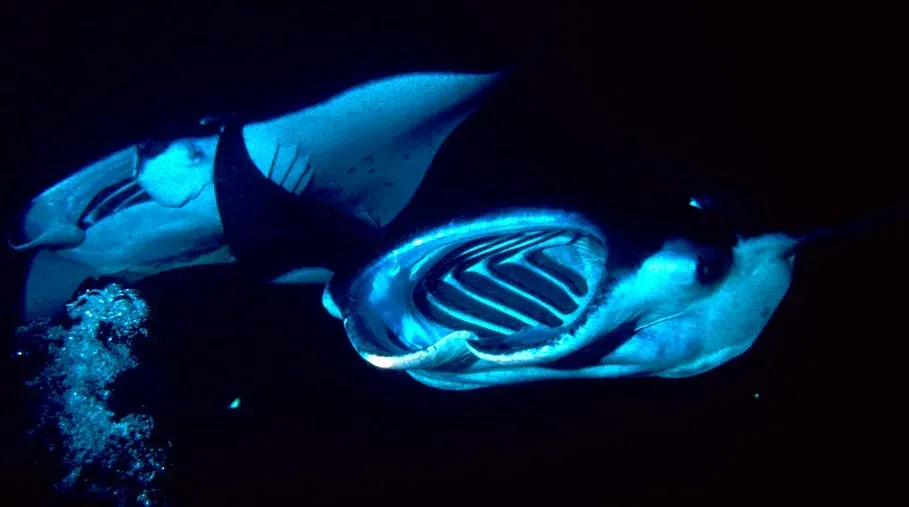
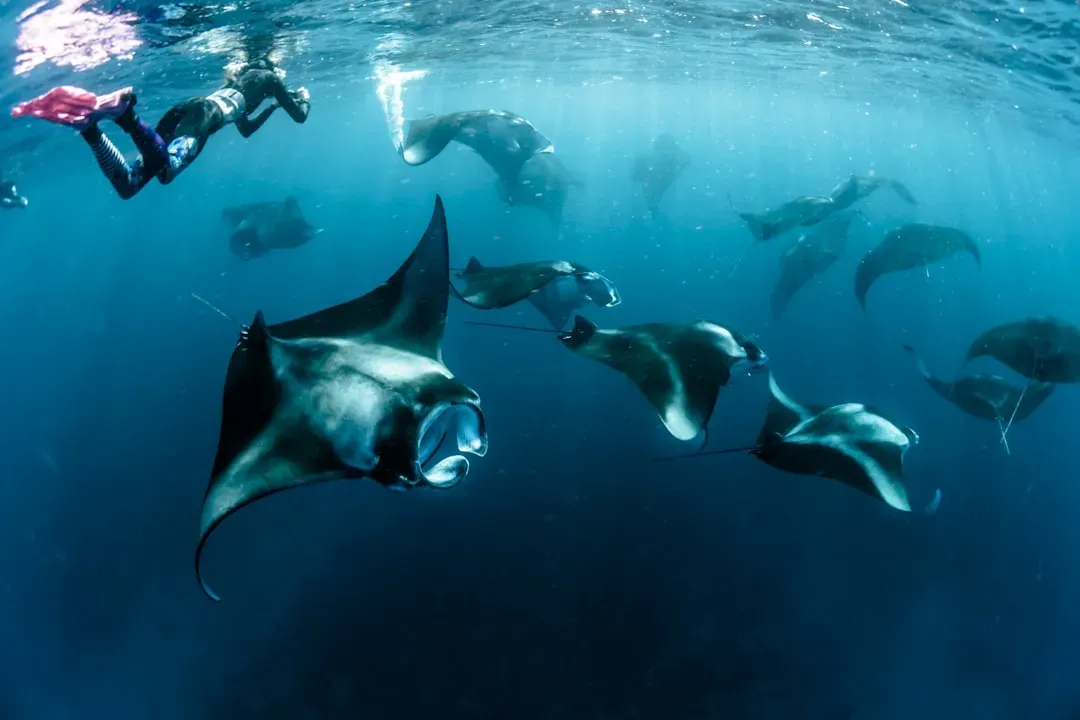
Manta rays often gather in groups at productive feeding hotspots, where currents reliably concentrate plankton. In these situations, you might see several mantas somersaulting in overlapping paths, almost like synchronized swimmers that forgot to rehearse. It can look messy, but there is a loose structure: each animal is trying to hold onto a good plankton patch without colliding, adjusting its loops and direction as it tracks shifting currents and the movements of its neighbors. This semi-coordinated chaos can have side benefits. By moving through the water in different directions, the mantas may be stirring and redistributing plankton in ways that keep it suspended and available instead of sinking or dispersing too quickly. Even if that effect is small, the end result is a kind of improvised, communal feeding choreography – no strict formation like whales bubble-netting, but a flexible, responsive crowd strategy where somersaulting is one of several tricks used to keep everyone near the action.
Learning, Flexibility, and Individual Style
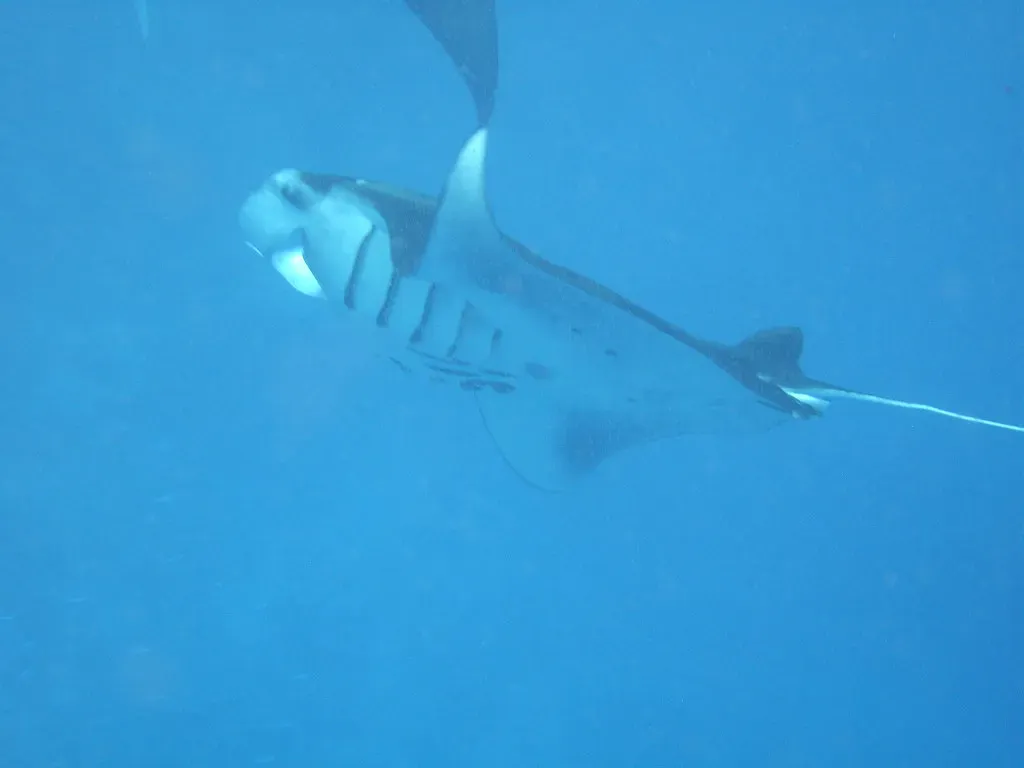
Not every manta somersaults in the exact same way or in the same situations. Some individuals seem to rely more on straight-line feeding, while others turn and loop more often, almost like they have slightly different personalities or preferences in how they tackle a plankton patch. That suggests there might be a learning component, where experience shapes when and how an animal uses these spinning moves. From a human perspective, that gives the behavior a strangely relatable feel. Just as different people develop their own “style” of doing the same task – whether it is cooking, driving, or swimming – mantas may refine their own feeding style over time. Somersaulting is one tool in their toolkit, and some appear to lean on it more heavily than others, especially in conditions where plankton is patchy and the usual straight-line strategy is less efficient.
Why It Matters: Somersaults, Survival, and a Changing Ocean
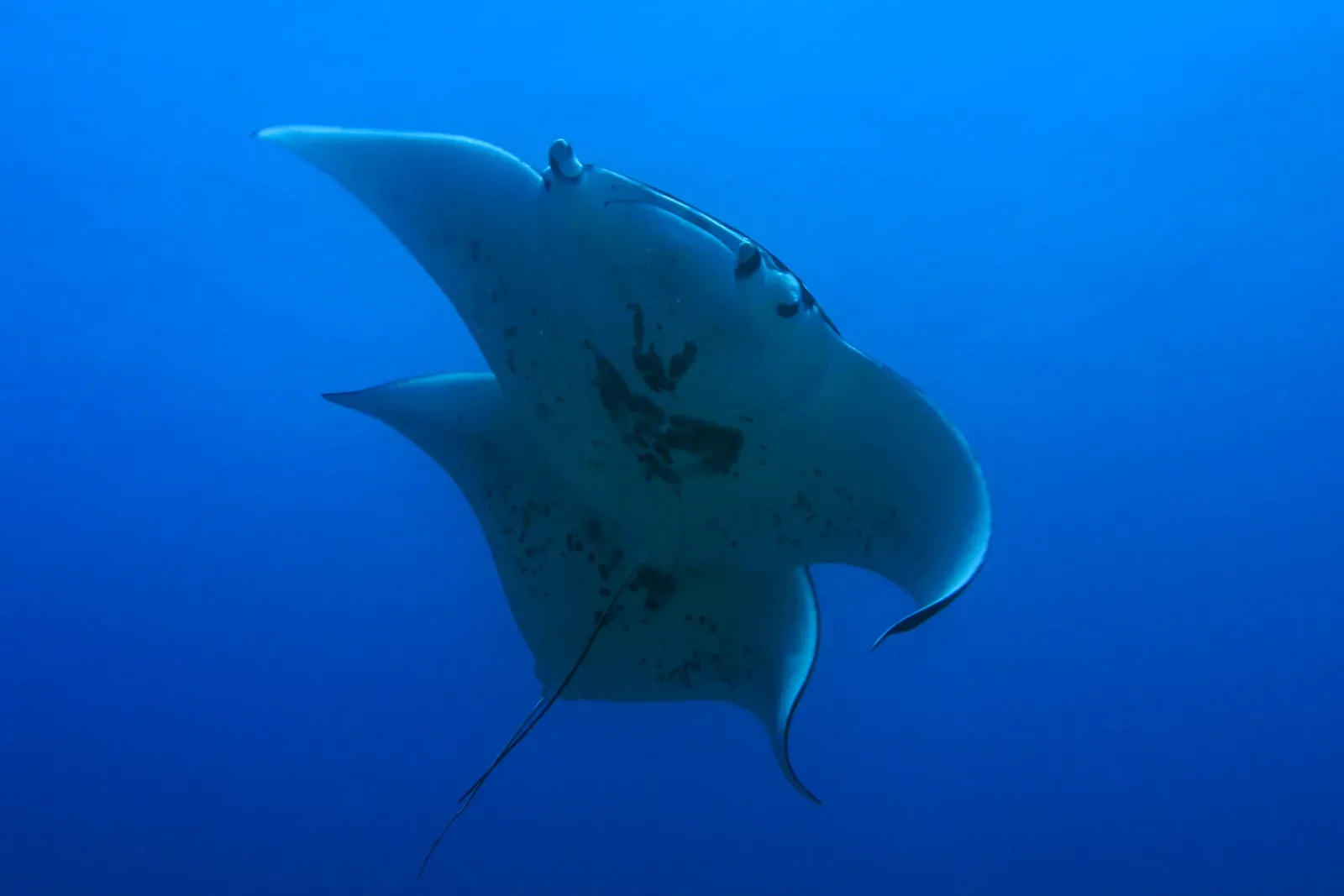
At first glance, manta somersaults look like a charming curiosity, something to share in a short video clip and then forget. But when you think about how tightly their future is tied to the availability of dense plankton patches, those flips start to look like a survival skill. Any behavior that lets a manta squeeze more energy out of each patch of food becomes crucial when human-driven changes – like warming waters and altered currents – are already reshaping where and when plankton blooms happen. If the ocean’s “buffet clouds” become less predictable, mantas will have to work harder and travel farther to find them. Their somersaults show just how finely adapted they are to a world where food is small, unevenly distributed, and invisible to us, but they also underline how vulnerable that system is. In my view, the elegance of that underwater spin is a strong argument for protecting the conditions that make it possible in the first place: intact plankton communities, healthy currents, and the right kind of productive chaos in the sea.
Conclusion: The Underwater Flip That Is Anything but Fancy Flair
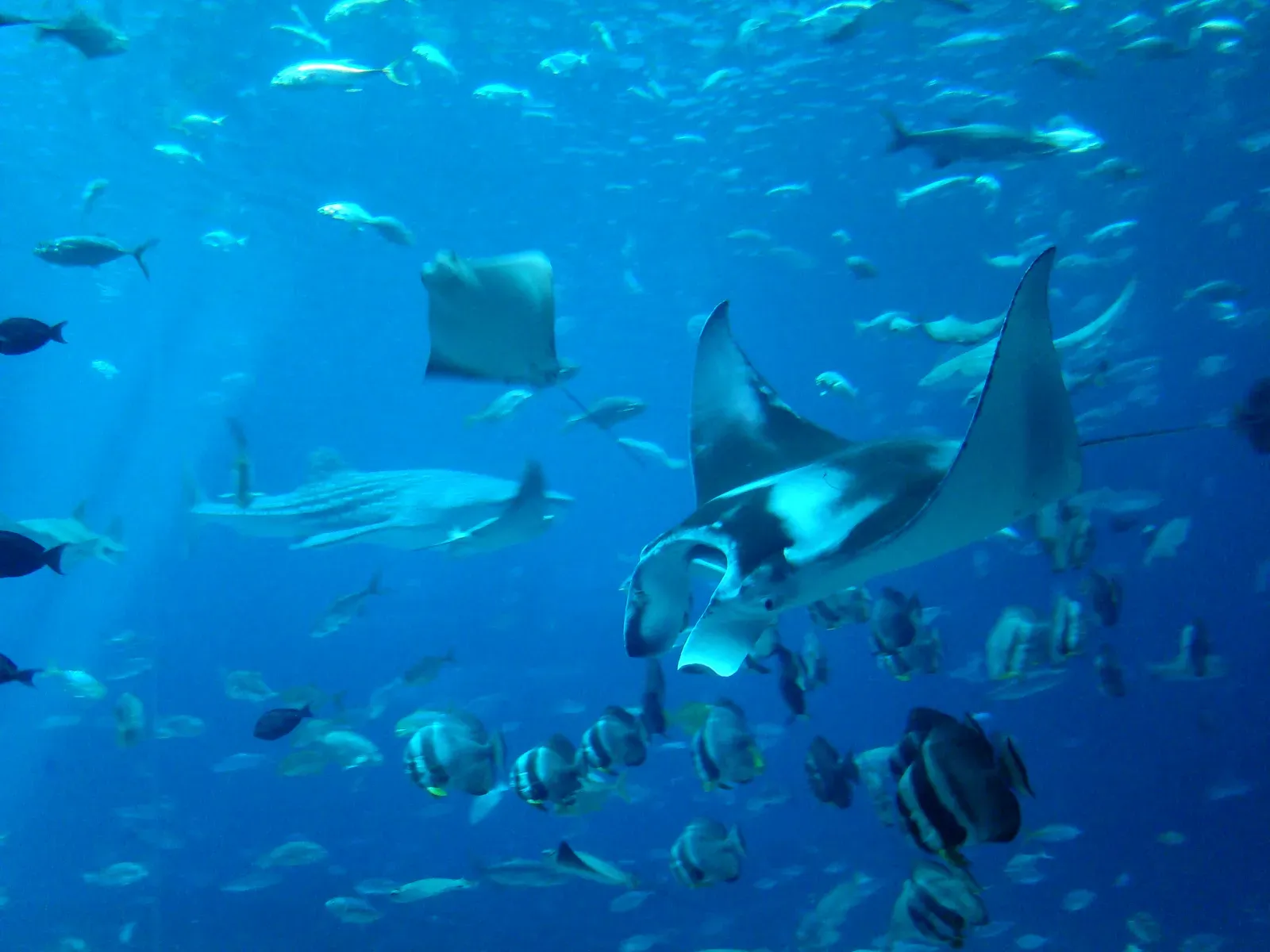
When you zoom out, manta rays somersaulting is not a random quirk or a cute party trick – it is a logical response to a tough ecological puzzle. Large bodies, tiny prey, shifting currents, layered food: the physics and the biology all push mantas toward behaviors that keep them glued to the best water for as long as they can manage. The spin is simply what optimization looks like when you are built like a flying carpet and live inside a moving, three-dimensional soup. Personally, I find it hard not to take sides here: calling manta somersaults “just behavior” undersells them. They are proof that evolution can write complex, elegant solutions into bodies without ever drafting a plan on paper, and they turn feeding into something that looks suspiciously like art. Next time you see a manta roll in the blue, maybe ask yourself: if this is what it takes just to eat in the ocean, what else is going on out there that we have barely started to notice?