
You have probably felt it at least once: that strange sense of being part of something much bigger than your everyday life. Maybe it was while staring at a night sky packed with stars, during a deep meditation, or even in a hospital room after a difficult moment. You might have brushed it off as imagination, yet modern neuroscience and psychology are quietly taking these experiences more seriously than ever before.
When you hear that universe, it sounds dramatic, almost mystical. But behind the dramatic language, there is a growing body of research showing that your brain is wired to blur the line between “you” and “everything else” under certain conditions. You are not being told that you can magically control galaxies with your thoughts; you are being invited to understand how your mind, body, and the cosmos are more entangled than you were taught in school.
The Bold Claim: What “Connecting With the Universe” Really Means
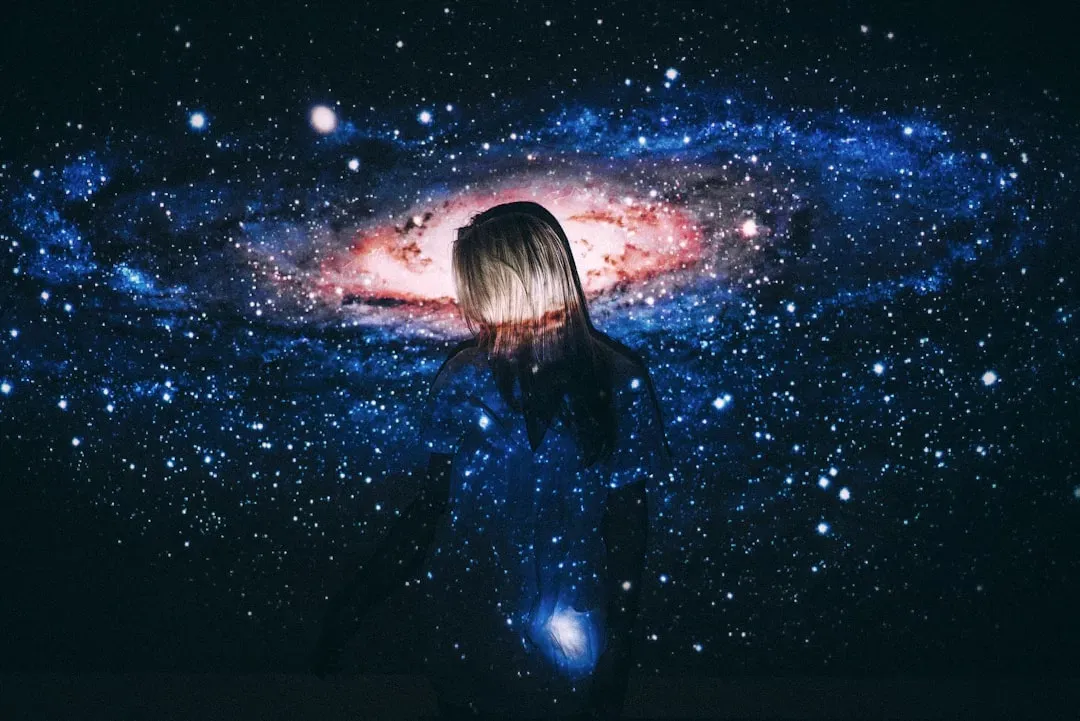
At first glance, the idea that your consciousness can connect with the whole universe sounds like something from a spiritual retreat brochure, not a scientific journal. When you dig into the research, though, you find that scientists are not saying you literally beam thoughts across the cosmos. Instead, they are describing how your sense of self can temporarily expand so much that the boundary between “me in here” and “world out there” feels like it dissolves. You experience yourself as woven into a larger whole rather than standing apart from it.
Researchers often describe this as a state of self-transcendence or unity experience, and you can reach it through meditation, deep prayer, psychedelic substances in controlled settings, intense awe in nature, or sometimes spontaneously. In brain scans, these states show measurable patterns, especially in networks involved in self-referential thinking. So while the language of “connecting with the universe” sounds poetic, what you are really dealing with is a deeply altered, yet trackable, way your mind can model reality – one where the universe stops being just “out there” and is felt as part of you.
The Science of Self-Transcendence: When “You” Expand Beyond “You”

If you have ever lost yourself completely in music, sports, or a breathtaking view, you have already touched a mild form of self-transcendence. Scientists use that term when your usual sense of being a separate ego loosens, and you feel merged with something bigger: a crowd, a landscape, a spiritual presence, or even the universe itself. You are not hallucinating a new world; you are experiencing the same world with a radically expanded sense of identity. In psychological studies, people who report these experiences often describe lasting boosts in life satisfaction, purpose, and compassion.
What makes this more than soft philosophy is that self-transcendent states leave fingerprints in your brain activity. Research using functional MRI and EEG has found that networks related to your narrative self – especially parts of the so-called default mode network – can quiet down or reorganize during these unity experiences. You are not shutting your brain off; you are shifting how it integrates information about “you” versus “everything else.” In a way, your mind is stepping back from your personal story and letting a bigger, more universal story take center stage.
What Brain Scans Reveal When You Feel One With Everything
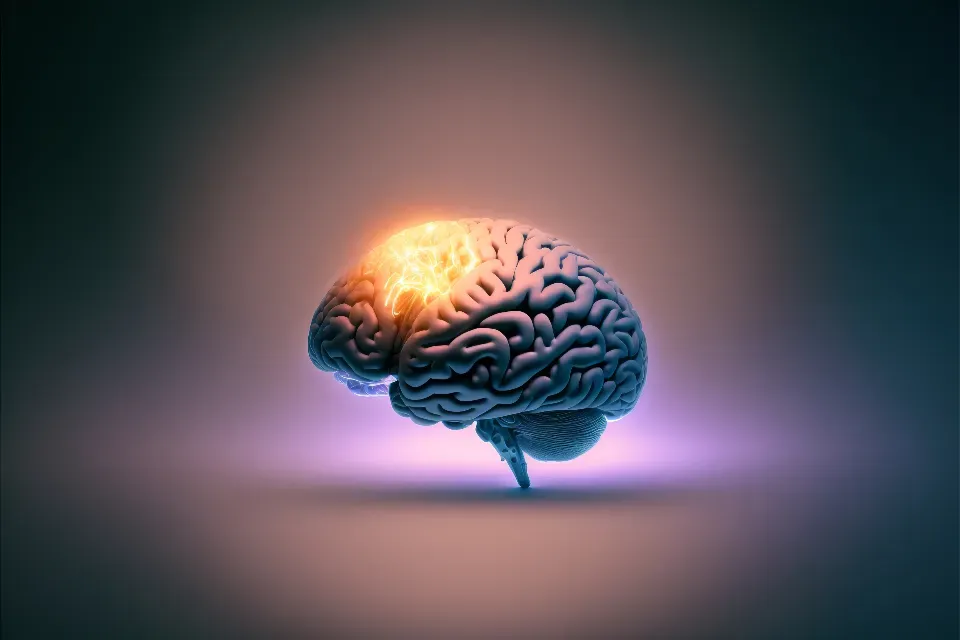
When you slip into a feeling of oneness, your experience might seem mysterious, but your brain is not hiding. Neuroimaging studies on experienced meditators, people in awe-inducing environments, and volunteers in carefully supervised psychedelic research all show similar trends: parts of the brain that constantly monitor your identity and your place in the world begin to relax. The volume of your inner commentator drops, making room for a more direct, less filtered perception of reality.
At the same time, other networks involved in attention, emotion, and sensory processing can become more synchronized, as if different regions of your brain are playing in tighter rhythm. You may feel more present, more connected, and strangely more “real” than in your everyday mental chatter. From the outside, a researcher sees shifting patterns of blood flow and electrical activity; on the inside, you feel a deep, sometimes overwhelming sense that you and the universe are not separate teams but one playing field.
From Mysticism to Lab Data: Why Scientists Now Take This Seriously

For most of modern science, experiences of cosmic unity were dismissed as religious fantasies, poetic exaggerations, or signs of mental instability. But you live in a time when scientists are finally willing to measure what used to be laughed off. Large studies now track how meditation, breathwork, carefully administered psychedelics, and intense awe can change your brain function, personality traits, and even your long-term mental health. Instead of treating mystical experiences as noise, researchers are treating them as data.
You see this shift in how major universities and medical centers now run clinical trials on spiritual-type experiences, studying their effects on depression, addiction, anxiety, and well-being. When participants describe feeling connected to all of existence, they are not just filling in a spiritual survey; their reports are compared with brain scans, physiological markers, and follow-up outcomes months or even years later. The pattern that keeps emerging is that this sense of universal connection is not just emotionally dramatic – it can be psychologically transformative in ways that scientists can measure and track over time.
Consciousness as More Than a Brain Bubble

Traditional materialist thinking teaches you that your mind is like a private movie playing inside your skull, fully sealed off from everything else. Newer perspectives in neuroscience and philosophy of mind are not so sure anymore. While your brain is clearly crucial, some researchers argue that consciousness might be better understood as a relational process: your awareness arises in constant interaction with your body, your environment, other people, and the physical universe. In that view, you are less a closed bubble and more a living intersection of countless influences.
Approaches like embodied cognition and enactive mind theories say that what you experience as “you” is deeply shaped by your posture, breathing, surroundings, and sensory engagement. When you feel merged with the universe, you might simply be tuning into that relational truth more directly than usual. You are always entangled with the world – breathing its air, absorbing its light, moving through its gravitational field. Unity experiences do not create a new connection; they let you feel a connection that has been there all along but usually hides behind your mental to-do lists and self-focused worries.
Practices That Help You Feel Connected (Without Losing Your Grip)

You do not need a lab or a monastery to explore a deeper sense of connection; you can start small and stay grounded. Mindfulness meditation, slow breathwork, or even a daily walk where you actually pay attention to your surroundings can soften the hard edges of your mental boundaries. When you let your attention rest on your breath, the wind, the sounds around you, and the subtle sensations in your body, you are training your mind to experience reality as a continuous flow rather than isolated chunks.
Practices that cultivate awe are especially powerful. You might listen to music that gives you chills, sit under a big night sky, stand near the ocean, or explore art that feels bigger than words. You are not forcing a mystical state; you are allowing your sense of self to stretch beyond its normal size. Over time, these practices can make it easier for you to feel part of a wider tapestry, while still keeping enough ordinary awareness to function in everyday life. You are expanding your circle of identity, not abandoning your sanity.
Staying Sane: How to Balance Cosmic Insight With Everyday Life

Feeling connected to the whole universe can be beautiful, but you still need to pay your bills and answer messages. The trick is not to treat unity experiences as an escape from your life, but as a lens that can enrich it. You can honor those expansive moments while still holding onto basic psychological boundaries, like knowing where your responsibilities begin and end. When you ground yourself in routines – sleep, movement, nutrition, and supportive relationships – you give your nervous system a stable base to process big experiences without spinning out.
At the same time, you need to stay cautious about magical thinking. Feeling one with the universe does not mean you can bypass medical advice, ignore evidence, or assume your intuition is always right. If anything, a genuine sense of connection should make you more humble, not less, because you recognize how small your individual perspective is compared with the whole. When you combine cosmic openness with critical thinking, you are far more likely to grow from these states instead of getting lost in them.
How Cosmic Connection Can Change Your Relationships and Values

When you start to feel that you are not separate from the wider web of life, your relationships can shift in surprising ways. You may find it harder to dehumanize people you disagree with, because some part of you senses that they are expressions of the same larger reality you are. Conflicts will not vanish, but you might engage them with a little more curiosity and a little less automatic hostility. Your compassion can stretch beyond your immediate tribe and include strangers, other species, and even future generations you will never meet.
This sense of connection often reshapes your values. You may care more about the environment, social justice, or the long-term consequences of your actions, because you no longer feel like a lone individual playing a short private game. You feel like a temporary wave in a much larger ocean, and that changes how you treat the water. In practical terms, you might make different choices about how you work, what you buy, how you vote, and where you invest your time, simply because your identity is now big enough to include more than just your personal comfort.
Bridging the Gap Between Science and Spirituality in Your Own Life

If you grew up thinking science and spirituality are enemies, the current research on consciousness and cosmic connection might feel confusing. Yet you are now living in a moment where brain scanners and meditation cushions are quietly sharing a table. You do not have to choose between being rational and being open to mystery; you can investigate your own experiences with the same curiosity that a scientist brings to a lab. You can ask what a unity experience does to your perception, your behavior, your relationships, and your long-term well-being.
In your daily life, you might treat spiritual practices as experiments rather than dogmas. You can try meditation, nature immersion, contemplative prayer, or other techniques and observe how they affect your mood, clarity, and sense of connection. You can read the research, but more importantly, you can notice your own data: Do you become kinder? Less reactive? More grounded? When you blend inner exploration with outer evidence, you build a personal bridge between the measurable and the mysterious – a bridge where your consciousness can feel both deeply human and quietly universal.
In the end, the claim that your consciousness can connect with the whole universe is less about gaining a supernatural power and more about remembering a natural truth: you were never as separate as you were taught. You are built from stardust, sustained by sunlight, shaped by gravity, and wired to sense meaning in connection. When you allow your awareness to stretch beyond your usual story, you are not leaving reality – you are stepping more fully into it. The question is not whether you are connected, but how consciously you choose to live that connection.