
Every so often, usually late at night or after some brush with mortality, a strange thought creeps in: you try to imagine not existing, and you simply cannot do it. Something always sneaks back into the picture, a faint awareness watching the darkness, a “you” observing the absence of you. That failure is not a personal quirk. It appears to be baked into the architecture of the brain itself, and it raises an odd question that scientists and philosophers keep circling back to. What if the very organ we use to understand everything else is structurally unequipped to understand its own ending?
The brain has no working model for nonexistence
Every thought you have ever had required a thinker. Every memory, plan, or daydream needs a mind running in the background to generate it, which means the brain is, by design, always simulating an experiencer. Psychologist Jesse Bering built much of his research around this idea, proposing what he called the simulation constraint: it is epistemologically impossible to know what it is like to be dead, so individuals will be most likely to attribute to dead agents those types of mental states that they cannot imagine being without.
In one striking study, Bering asked undergraduates to think about a man who had just been killed. Most answered as if the man was still aware, despite his death, including some who had earlier answered that the soul ceases upon death. The contradiction is not stupidity. It is a glitch that shows up because the machinery generating the thought experiment cannot represent its own shutdown without smuggling in a leftover observer. Try picturing “nothing” and notice how a faint sense of you, watching that nothing, tends to sneak back in.
Theory of mind keeps projecting a mind that isn’t there

Humans are relentless mind readers. We infer intentions, beliefs, and feelings in other people almost automatically, and that same machinery does not politely switch off once someone has died. Some researchers argue this is why belief in an afterlife shows up across cultures that otherwise have little in common, since theory of mind gives the illusion that minds are immortal.
There is a strange logical wrinkle buried in here too. You will never know you have died, since you’re not around to be aware of it, which means for as long as you’re alive, you’re immortal from the inside. That is not a comforting platitude so much as a description of a cognitive dead end. The brain that tries to model its own absence keeps running into a mirror instead, reflecting an observer back at itself no matter which angle it approaches from.
Terror management and the cultural scaffolding built to cope

Long before neuroscience had the tools to study any of this, anthropologist Ernest Becker argued that an enormous amount of human behavior exists to manage the fear that comes with knowing we will die. His 1973 book laid the groundwork for what psychologists later called terror management theory, built on the idea that humans are unique among life forms in their capacity for symbolic thought, which fosters self-awareness and the realization that death is inevitable and can occur at any time, engendering a potentially debilitating terror that is managed through cultural worldviews that confer meaning and value.
Decades of experiments since then have tested this idea by making mortality salient to people, subtly or overtly, and watching what changes. According to terror management theory, death anxiety drives people to adopt worldviews that protect their self-esteem, worthiness, and sustainability and allow them to believe that they play an important role in a meaningful world. Religion, nationalism, legacy projects, even the urge to have children can all be read partly through this lens. The theory does not claim the brain cannot think about death at all. It claims the brain works overtime to avoid sitting with that thought for very long, wrapping it instead in layers of meaning that make the unbearable feel manageable.
Children build the concept of death in pieces, slowly

Watching how kids come to understand death offers a kind of slow motion replay of how tricky the concept really is for any human mind. Researchers typically break the adult concept of death into four components, and partial understanding of universality, irreversibility, and nonfunctionality usually develops between the ages of 5 and 7 years, but a more complete understanding of death concepts, including causality, is not generally seen until around age 10. Before that, a young child might grasp that a goldfish is not moving anymore without grasping that this state is permanent or that it applies to everyone, including themselves and the people they love.
What is notable is how uneven this learning process is, and how it does not simply end once adulthood arrives. By 10 years, many children’s explanations reflected not an improved biological understanding but rather the coexistence of apparently contradictory biological and supernatural reasoning about what happens to a person after death. In other words, kids do not graduate from magical thinking into pure biology in some tidy line. They often hold both frameworks at once, and honestly, so do most adults, whether they admit it or not.
The dying brain still lights up, and nobody fully knows why
If understanding death intellectually is hard, understanding what actually happens inside a dying brain turns out to be its own scientific puzzle. The AWARE II study, led by physician Sam Parnia and published in 2023, monitored brain activity in hundreds of cardiac arrest patients as their hearts stopped and medical teams attempted resuscitation. Medical staff managed to gather usable brain oxygen and activity data from 53 of these patients, most of whom showed an electrical flatline state on EEG monitors, but about 40 percent then experienced electrical activity that reemerged at some point with normal to near-normal brain waves consistent with consciousness, sometimes restored up to 60 minutes into CPR.
Some survivors later described vivid, structured experiences during that window, including what researchers described as a kind of moral life review. As the brain is shutting down, many of its natural braking systems are released, a process known as disinhibition, which may provide access to the depths of a person’s consciousness, including stored memories from early childhood to death. The findings do not prove consciousness survives the body, and the researchers are careful not to claim that. What they do show is that the boundary between alive and not-quite-gone is messier, and biologically stranger, than most people assume.
Rare neurological conditions expose how fragile the sense of “existing” really is

Occasionally the brain’s error checking around life, death, and selfhood breaks down entirely, and the results are unsettling in an instructive way. Cotard’s syndrome is a rare neuropsychiatric condition in which a person becomes convinced they are already dead, or that parts of their body no longer exist, despite being very much alive. It sounds absurd from the outside, yet it demonstrates that the feeling of being alive is not some fixed, guaranteed background hum. It is a construction, generated moment to moment, and like any construction it can misfire.
What makes conditions like this genuinely useful to scientists is that they act like natural experiments the brain runs on itself. If a stroke, injury, or psychiatric disorder can convince someone they have died while their heart is still beating, then the sense of being alive and the sense of understanding death are clearly handled by fragile, separable neural processes rather than some single, stable faculty. That fragility cuts both ways. It suggests our ordinary confidence about grasping what death means might be resting on shakier cognitive ground than it feels like from the inside.
Language keeps borrowing metaphors because literal words run out
Notice how almost nobody talks about death directly for very long before reaching for a metaphor. People “pass,” “depart,” “go to sleep,” or take a “final journey.” This is not just poetic softening for the sake of comfort, though it does serve that purpose too. It may reflect a deeper limitation, because a mind that cannot directly simulate nonexistence has to reach for images borrowed from experiences it can simulate, like sleep, distance, or travel, none of which actually resemble ceasing to exist.
This linguistic workaround shows up early and never really goes away. Young children commonly describe death using sleep imagery long before they grasp its permanence, and adults, for all their intellectual sophistication, still lean on the same borrowed vocabulary. Philosophers have pointed out for centuries that death cannot be experienced from the inside the way other events can, which leaves language chasing a concept it was never really built to describe. The words are not failing us out of laziness. They are failing because the thing they are pointing at has no direct analog anywhere else in conscious life.
A conclusion worth sitting with
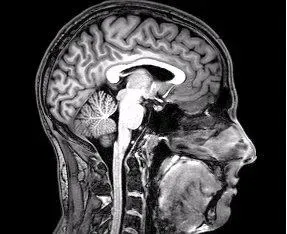
Taken together, these threads point toward a conclusion that feels less like bad news and more like an honest description of what we are. The brain is a phenomenal machine for modeling minds, futures, and other people’s inner lives, but it was never built with a module for representing its own absence, and no amount of scientific progress seems likely to install one. Terror management theory, the developmental research on children, the strange data from dying brains, and even rare neurological conditions all point in the same direction. Understanding death completely may simply not be available to a system whose entire job is generating experience.
If there is an opinion worth stating plainly here, it is this: the persistent human urge to “solve” death intellectually, whether through religion, philosophy, or someday through neuroscience, may be chasing a category error. Death might not be a puzzle waiting for a clever enough mind to crack it. It might be the one boundary condition that defines what a mind is, which would make the not knowing less of a failure and more of a fundamental feature. That is a strange kind of comfort, but it may be the most honest one available.