
You probably know someone who swears they can remember every second of a car crash, a medical emergency, or a moment when they thought they were about to die. Those stories tend to be rich in detail: the sound of metal, the color of the sky, a strange sense of calm, or a life review that seems to unfold in an instant. What makes these moments so unforgettable, even when your normal day-to-day memories fade?
When you look at what scientists have discovered so far, you see a surprisingly practical brain at work. Instead of treating near-death memories as something mystical or untouchable, you can understand them as extreme versions of processes your brain uses every day to keep you alive. The picture that emerges is powerful, emotional, and also a bit humbling: in your final moments, your brain may be doing exactly what it has always done best – trying very hard to help you survive and make sense of your world.
The Survival Mode Switch: When Your Brain Thinks Time Is Running Out
Imagine you are driving and a truck suddenly swerves into your lane. In less than a heartbeat, your brain flips into survival mode. Stress hormones like adrenaline surge, your heart races, your attention narrows, and your body prepares for impact. You might feel as if everything slows down, but what is really happening is that your brain is taking in a flood of information and processing it at high speed.
When you are close to death, that survival system is pushed to its absolute limit. Instead of calmly filtering out most of what is happening, your brain stops being picky and starts grabbing everything it can – sounds, images, smells, thoughts, sensations. This “all hands on deck” reaction can burn the moment into your memory with unusual force, because your brain treats it as the ultimate “do not forget this” situation. Even if you later walk away unharmed, your nervous system has already decided that this was a moment that mattered for your survival story.
Adrenaline, Stress Hormones, and Why Terror Feels So Vivid

If you have ever noticed that you remember the worst parts of an emergency more clearly than the boring parts, you have already seen this system in action. Under intense fear, your body releases a cocktail of stress hormones that sharpen some forms of memory while blurring others. You might recall the exact expression on someone’s face, but have no idea what day of the week it was or what you had for breakfast. Your brain is prioritizing emotional and sensory details over trivia.
Near-death moments crank this process up. The mix of fear, shock, and sometimes pain tells your brain that this is a turning point, possibly the last one. Those hormones strengthen the links in memory circuits related to emotion and threat. The result for you is a memory that feels unusually bright, sticky, and hard to shake. You may not want to relive it, but your brain filed it away as if it were preparing to warn you about similar dangers in the future, even if no similar danger ever comes.
The Hippocampus on Overdrive: Turning Seconds Into Lifelong Memories

Deep inside your brain sits the hippocampus, a structure that acts like a master organizer for your memories. Most of the time, it quietly decides what gets stored long term and what gets tossed. When you are near death, the hippocampus does not get much of a gentle ramp-up. It gets slammed with high emotion, intense sensory input, and a strong chemical signal that says “this is critical.” Under those conditions, it can link together tiny slices of time into a single, powerful memory trace.
That is one reason a few actual seconds can feel like minutes in your recollection. Your brain has carved the moment into multiple snapshots and stitched them into a narrative your conscious mind can replay. Later, when you remember the event, it feels like you are scrolling through high-resolution images, not a fuzzy blur. This is not magic; it is what happens when your memory machinery is pushed into an extreme state and forced to make fast, high-stakes decisions about what to keep.
Why Pain, Fear, and Even Peace All Burn Into Your Mind

It is tempting to think that only terror creates strong near-death memories, but that is not what people consistently report. Some describe overwhelming fear; others recall surprising calm, acceptance, or even a sense of peace. Either way, the common thread is intensity. Your brain is especially good at remembering emotionally charged experiences, whether the charge is negative or strangely soothing.
If you have ever had a moment where the world suddenly felt very quiet and you thought, “This might be it,” your mind might have locked that feeling in. Strong emotional states send signals into brain areas that tag memories as important. When you come back from the edge, you may find that both the panic and the peace are equally unforgettable. In a way, your emotional brain does not care whether you were afraid or calm; it only cares that you were at an extreme.
The “Life Review” Sensation: Your Brain Compressing a Whole Story
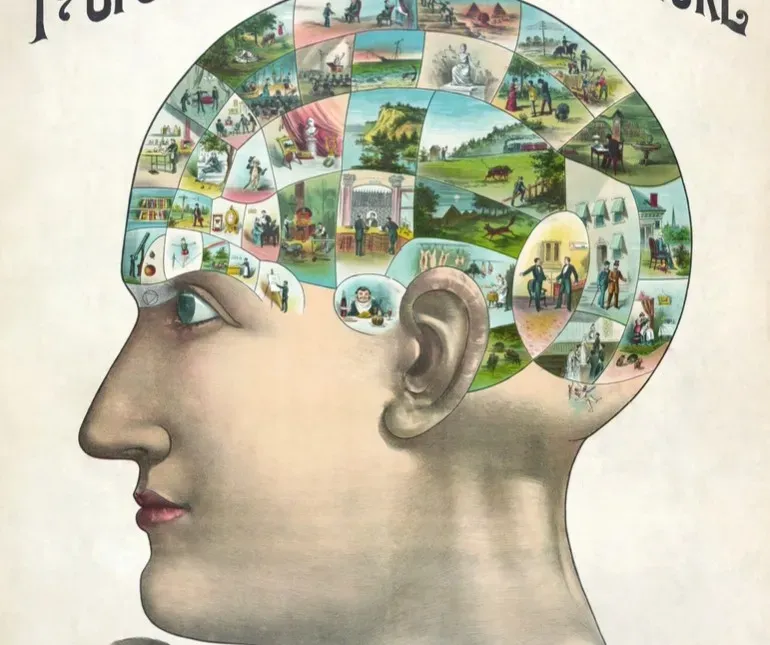
Many people say that in a near-death moment, their life seemed to flash before their eyes. You might imagine this as a literal movie of your entire past, but the brain does not work like a streaming service. Instead, it is more likely pulling up a rapid-fire series of key scenes – big decisions, close relationships, turning points – that define how you understand yourself. These are the memories with the strongest emotional and personal weight, so they are the easiest for your brain to grab in a crisis.
From your point of view inside that experience, it can feel as if years are unfolding in an instant. In reality, your brain may be rapidly accessing a network of important memories at once, creating the sense of a complete life story rushing up to meet you. That might be your mind’s last-ditch attempt to search for solutions, comfort, or meaning. Whether you see it as spiritual or biological, your brain is acting like someone scrolling through a photo album at fast speed, landing only on the pages that matter most.
Out-of-Body Feelings and Vivid Imagery: When Reality Blurs at the Edge

Another powerful near-death memory many people describe is the feeling of leaving their body, watching themselves from above, or moving through a tunnel of light. You may never have experienced this, but you can picture how disorienting and unforgettable it would be. Scientists think that when your brain is under extreme stress, the normal signals that tell you where your body is in space can break down. At the same time, visual and memory areas may start firing without their usual grounding in real-time input.
For you, that mix can create an intensely realistic scene that your brain later treats much like a vivid waking memory. The emotional weight of feeling detached from your own body or pulled toward something bright and comforting gives it an extra layer of sticking power. Even if parts of the experience come from brain misfires or protective illusions, they still get stored in the same deep memory systems. That is why, years later, people can describe the colors, sensations, and perspective as if it happened yesterday.
Near-Death, Not Quite Death: What Your Brain Can Still Do on the Edge
One key detail that often gets lost is that these powerful memories are created when you are near death, not in a state of complete brain shutdown. For any experience to be encoded as a lasting memory, at least some parts of your brain need to be active and communicating. That means your most intense recollections usually come from the window just before things get truly critical, or from the early stages of recovery as your brain comes back online.
That is also why you do not remember the moment you actually lost consciousness, or what happened during a deep coma, in the same detailed way. Your brain simply cannot record when it is completely offline. The memories you do keep sit around the edges of that blackout, like the last and first frames of a film reel. When you piece them together afterward, it can feel like you remember going further than your brain was actually capable of tracking in real time.
How These Memories Shape You Long After the Crisis

Surviving a near-death event does not just give you a wild story. It can change the entire way you see your life. Many people report being more grateful, less afraid of everyday problems, or more focused on relationships and meaning. You might find that the memory of that one intense moment becomes a reference point you return to when you make choices, argue with someone, or decide what really matters to you. Sometimes that feels empowering; other times it can be heavy.
There is a darker side too. Those same powerful memories can fuel nightmares, flashbacks, or ongoing anxiety if your brain keeps replaying them as if the danger is still present. In that case, what once served as a survival advantage can turn into a burden. If you have gone through something like this, talking about it and making sense of it with others can help your brain file the memory differently. You might never erase it, but you can soften the grip it has on your day-to-day life.
Conclusion: What Your Most Intense Memories Are Really Telling You
When you step back and look at all of this, near-death memories stop feeling random and start looking like the logical, if dramatic, output of a brain fighting for you. In those moments, your mind throws everything it has at the problem: flooding you with emotion, pulling up your life story, warping your sense of time, and stamping the whole experience deep into your memory circuits. Whether you interpret that as a biological reflex, a glimpse of something beyond, or a bit of both, you can see that your brain is not indifferent. It is deeply invested in your survival and your story, right up to the edge.
If you carry one of these memories with you, it is not a sign that something went wrong in your mind; it is proof of how hard your brain worked when it believed everything was on the line. You might never fully explain every detail, and science still has a lot to learn, but you can recognize the pattern: under extreme threat, your brain does what it always does – tries to protect you, teach you, and help you make meaning out of chaos. Knowing that, how differently do you look at the memories that have marked you the most?