If you have ever watched a video of an octopus suddenly flashing colors and twitching while it sleeps, you probably felt that creeping question: is something actually happening in there? You are looking at an animal with three hearts, blue blood, and neurons spread through its arms, yet it seems to dream, remember, and maybe even imagine. That combination should make you pause, because it challenges a quiet assumption you may carry without noticing: that human-style brains are the default template for consciousness.
When you follow the science on sleeping octopuses, you do not just learn a weird fact about marine life; you get a pressure test for your ideas about awareness itself. You are forced to face a simple but unsettling possibility: if a creature so alien from you can cycle through sleep stages that look a lot like yours, then maybe consciousness is not tied to any one kind of brain at all. It might be a pattern, a process, a way information moves and loops, and not a specific piece of biology.
When an Octopus “Dreams” in Color Right in Front of You
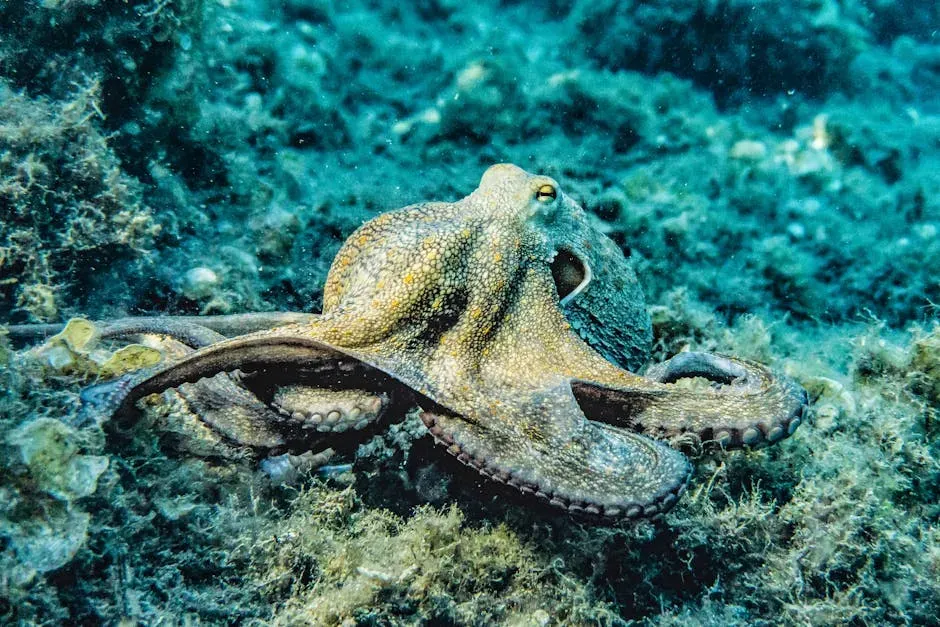
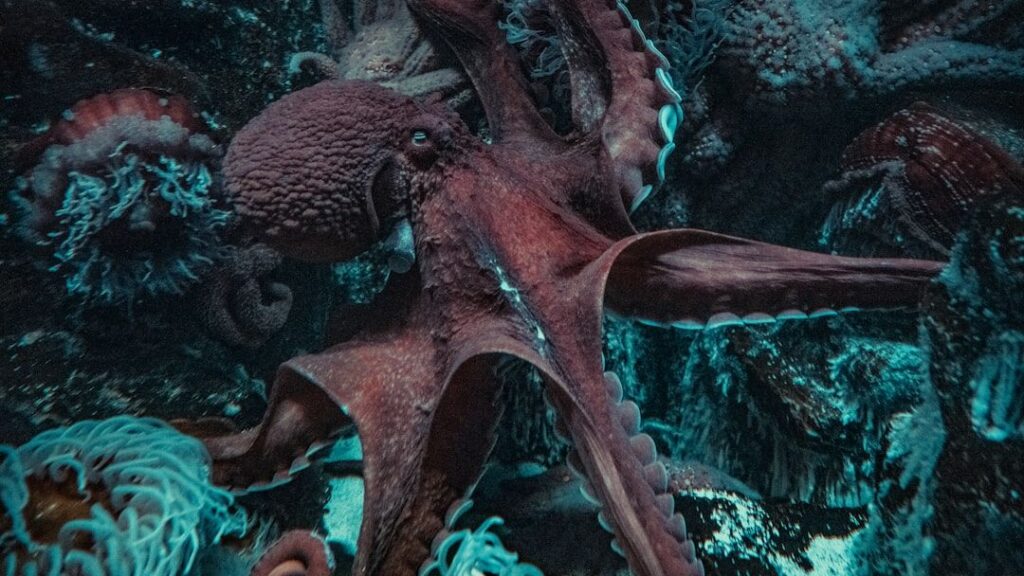
Imagine you are looking at an octopus resting in a tank. For a while, it is pale and still, eyes half-closed, body relaxed. Then, out of nowhere, its skin ripples with dark stripes, pale patches, and sudden flashes, as if it is replaying a hunt. Its arms twitch, its suckers flex, and for 30 or 40 seconds, this quiet animal turns into a living mood ring. If you have ever watched a sleeping dog paddle its legs, you already know how hard it is not to call this dreaming.
Researchers now talk about two broad sleep states in octopuses: a quiet, motionless phase and an active one full of color changes, muscle twitches, and eye movements. The active phase is short and bursts in cycles, a bit like how your REM sleep appears in repeating episodes during the night. You are seeing something that looks eerily similar to a dream state, but happening in a body that evolved along a totally different path than yours.
Two-Stage Sleep in a Brain Built Nothing Like Yours
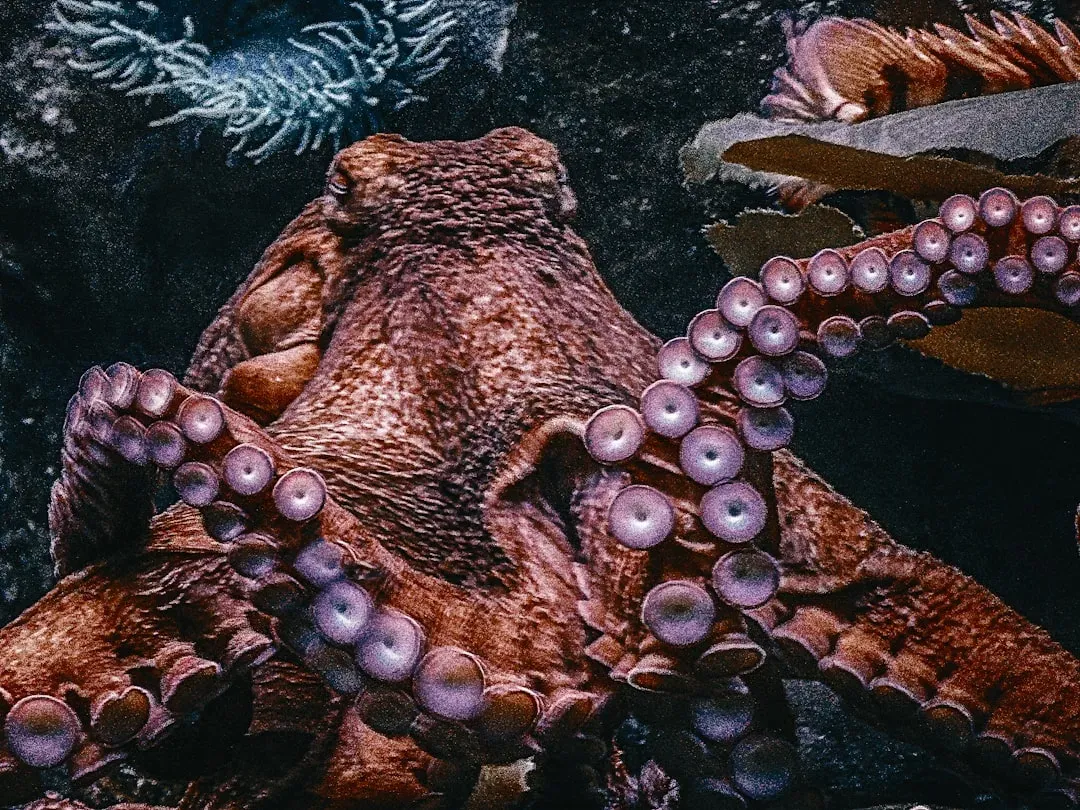
You probably take for granted that deep sleep and REM sleep belong to animals with big, layered brains like you. Yet octopuses have a brain wrapped around their esophagus and a nervous system that spills into their arms, with large clusters of neurons outside the central brain. Still, they show a recurring pattern: long stretches of quiet sleep followed by short, intense bursts of active sleep with color and movement. That rhythm suggests you are not looking at random rest, but at distinct internal states.
Scientists have recorded these cycles repeating regularly, like a pattern the brain is following, not a simple “on-off” switch. If you zoomed out from a human EEG and an octopus sleep recording, the details would not match, but you would still recognize that both are alternating between two modes. That is important for you because it hints that once nervous systems become complex enough, they may naturally fall into this kind of structured rest-and-replay rhythm, no matter how their circuits are wired.
Memory, Learning, and Why Sleep Might Matter Underwater
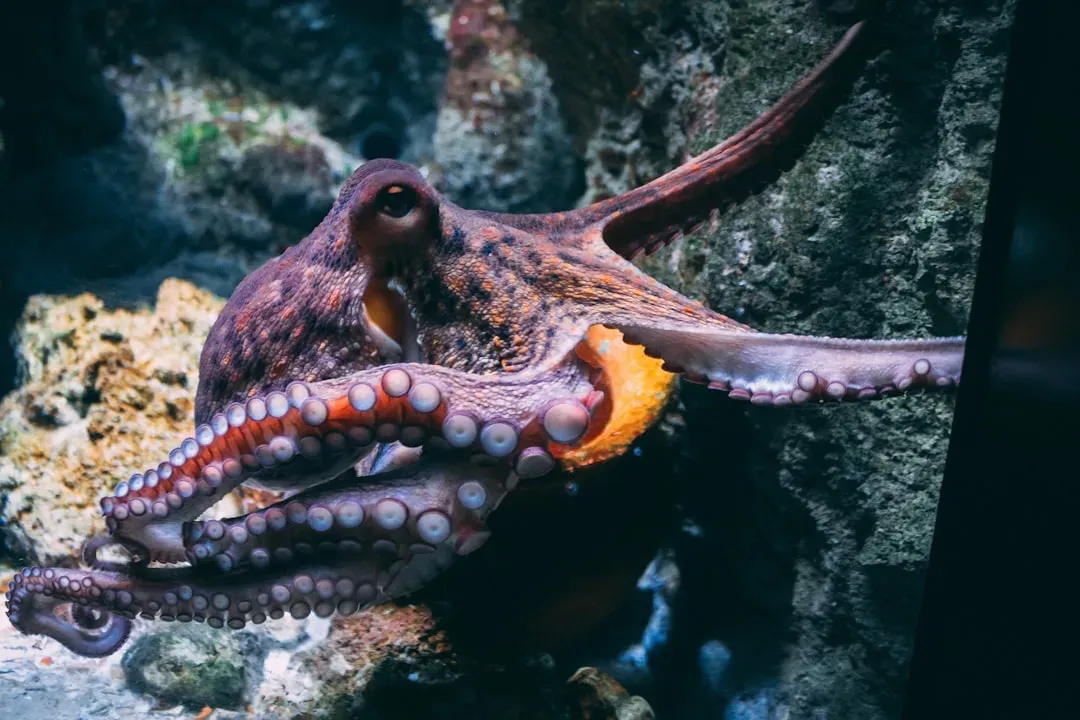
If you train an octopus to solve a task, such as opening a box or choosing the right pattern to get food, it can learn quickly and remember the trick later. You already know from your own life that good sleep makes your memory stronger, and lack of sleep makes your thinking fuzzy. In many animals, sleep helps consolidate memories, turning short-term experiences into more stable long-term patterns. With octopuses, scientists are beginning to see signs that something similar might be going on after learning.
Although the research is still young, there are hints that octopuses change their sleep behavior after facing challenging tasks, just as you might sleep differently after an intense day of learning. If their active sleep is replaying patterns of neural activity, it could be strengthening the circuits that helped them solve problems earlier. That idea matters for you because it connects a simple behavior – resting in a den – to a deeper function: shaping a flexible, learning mind beneath the waves.
Consciousness Without a Vertebrate Blueprint
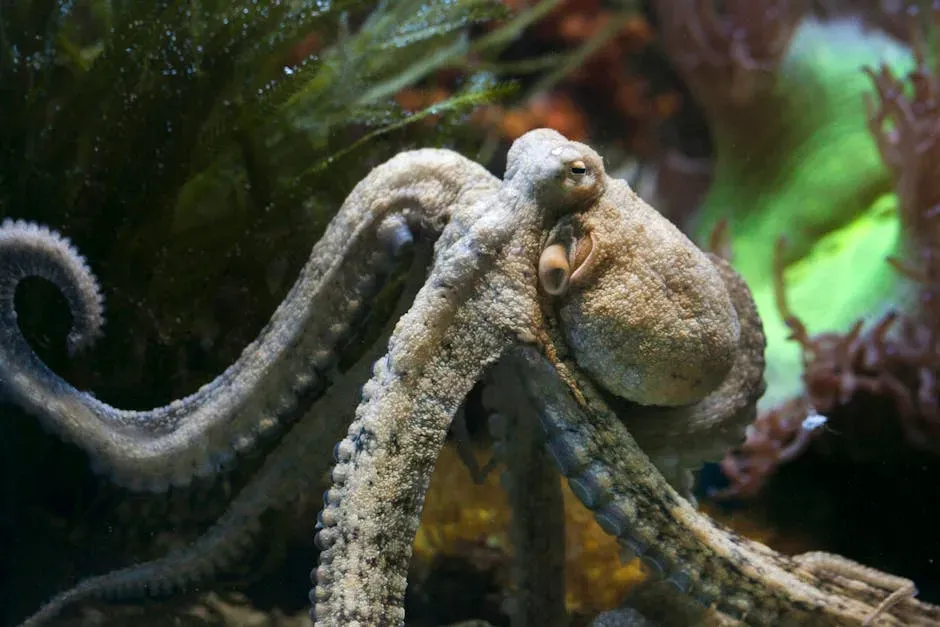
You are used to thinking of consciousness through the lens of mammals: humans, primates, maybe dolphins or dogs. All of them share the same basic recipe: a spine, a skull, and a layered cortex wrapping the brain. Octopuses broke away from your evolutionary lineage hundreds of millions of years ago and built a completely different nervous system, yet they still show problem-solving, play, and complex sleep. That divergence gives you a rare natural experiment: can something that looks like consciousness arise on a totally different blueprint?
When you see octopuses move through two-stage sleep, play with objects, recognize individuals, and adapt their tricks, it becomes harder to treat consciousness as a special gift reserved for animals shaped like you. Instead, you start seeing it as a particular style of information processing that might emerge whenever an animal has a rich body, a demanding environment, and a big enough nervous system to learn from its mistakes. For you, that shifts the question from who has consciousness to how many different ways it can be built.
Are You Watching Dreams, or Just Fancy Reflexes?
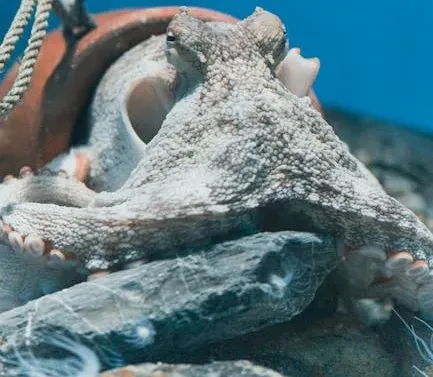
As tempting as it is to say that sleeping octopuses dream like you do, you have to be careful. Their changing skin patterns might be replayed hunting scenes – or they might be internally generated noise in the circuits that control camouflage, like a screensaver running without supervision. You do not get to ask an octopus what it experienced, so you are stuck with indirect clues: the timing of sleep stages, the link to learning, and the structure of their brain activity during rest.
Some researchers warn you not to jump from surface similarity to deep equivalence. Just because something looks like REM sleep does not guarantee that there is a rich inner movie playing. At the same time, if you insist on waiting for human-style proof, you may never recognize forms of experience that do not talk back in your language. So you are balancing two risks: inflating animal minds into mirror images of your own, or shrinking them down because they cannot explain themselves.
What Octopus Sleep Forces You to Rethink About “Being Aware”
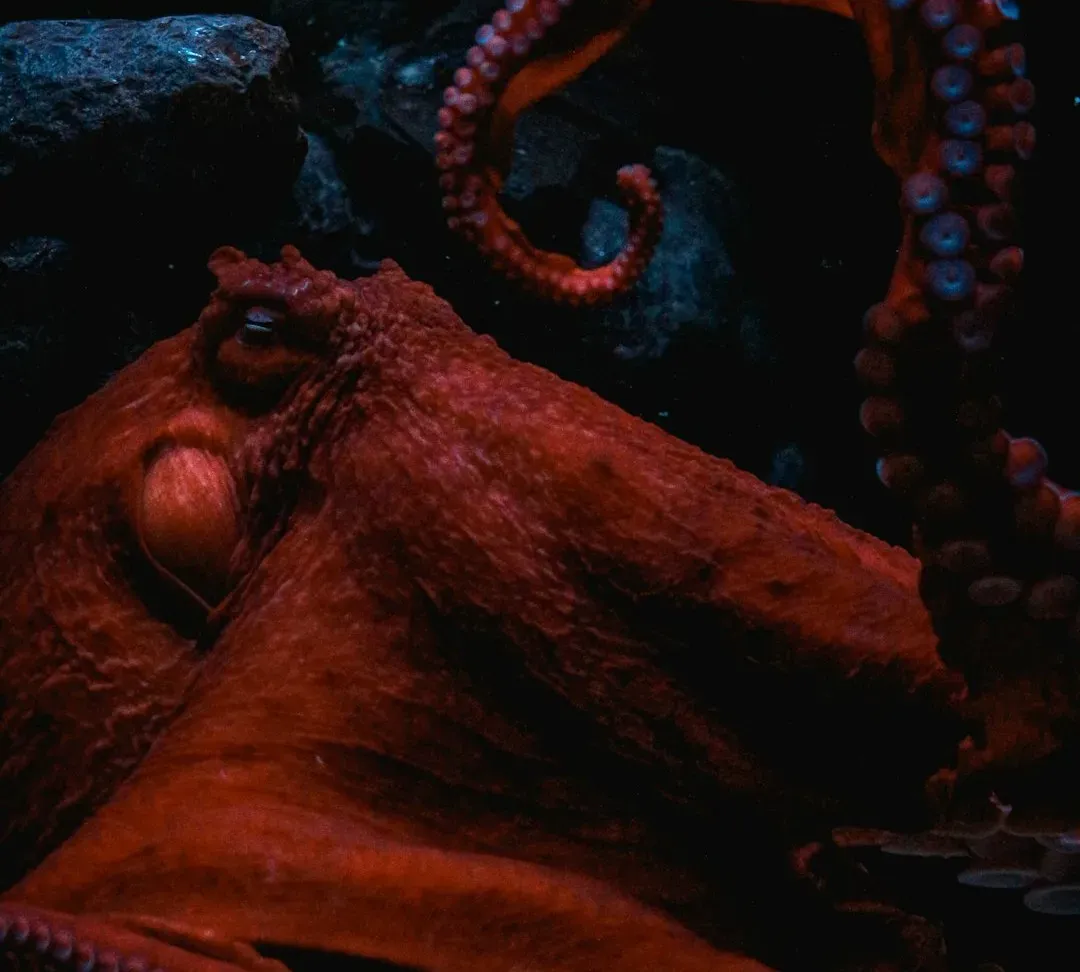
Once you see a color-flashing, twitching octopus in active sleep, your simple picture of consciousness starts to feel a bit too tidy. You probably grew up with the idea that there is a sharp line between awake and asleep, conscious and unconscious, human and animal. Octopus sleep pushes you toward a more graded view: awareness might dim and brighten, fragment and fuse, across different states and species. Instead of an on-off light switch, you are looking at a dimmer knob and a room with many lamps.
This matters for how you think about minds in general – animal, artificial, and maybe even future synthetic ones. If a creature with a distributed nervous system and a soft body can slip into structured sleep that looks adaptive and memory-linked, then maybe consciousness is less about having a particular organ and more about how information loops and reenters itself. You are invited to see awareness as a family of related processes rather than a single, all-or-nothing property that only looks like your own.
The Emotional Jolt of Meeting an Alien Mind in the Water
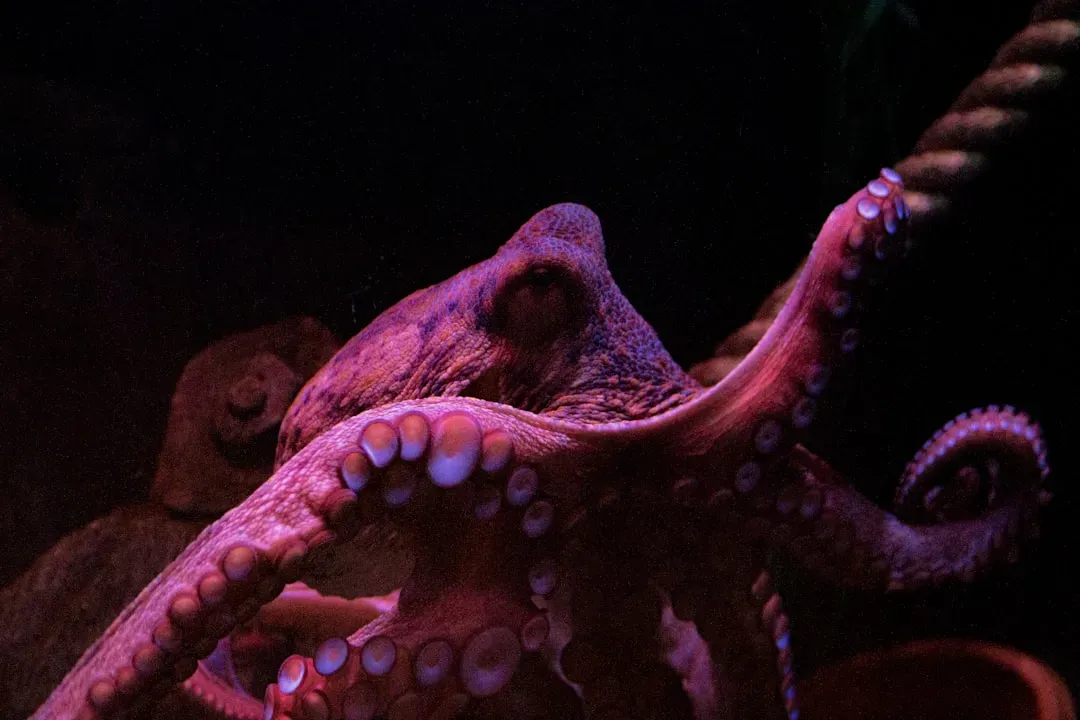
It is one thing to read about octopus sleep on a page; it is another to look one in the eye. When you do, you feel a strange recognition mixed with a difference you cannot easily explain. You are facing a creature that can solve puzzles, escape tanks, and now, apparently, pass through sleep cycles that echo your dreams. That realization can be quietly unsettling, because it blurs the border you might prefer to keep between your inner world and the rest of nature.
Instead of seeing the ocean as filled with instinctive machines, you begin to sense pockets of subjective life, each with its own style of experiencing. You do not know what it is like to be an octopus, but you can no longer comfortably assume there is nothing it is like at all. The sleeping animal in its den becomes a reminder that consciousness may show up in many guises, some of them so alien that you only recognize them when they flicker in color in the dark.
Conclusion: A Messier, Richer Picture of Minds Than You Expected
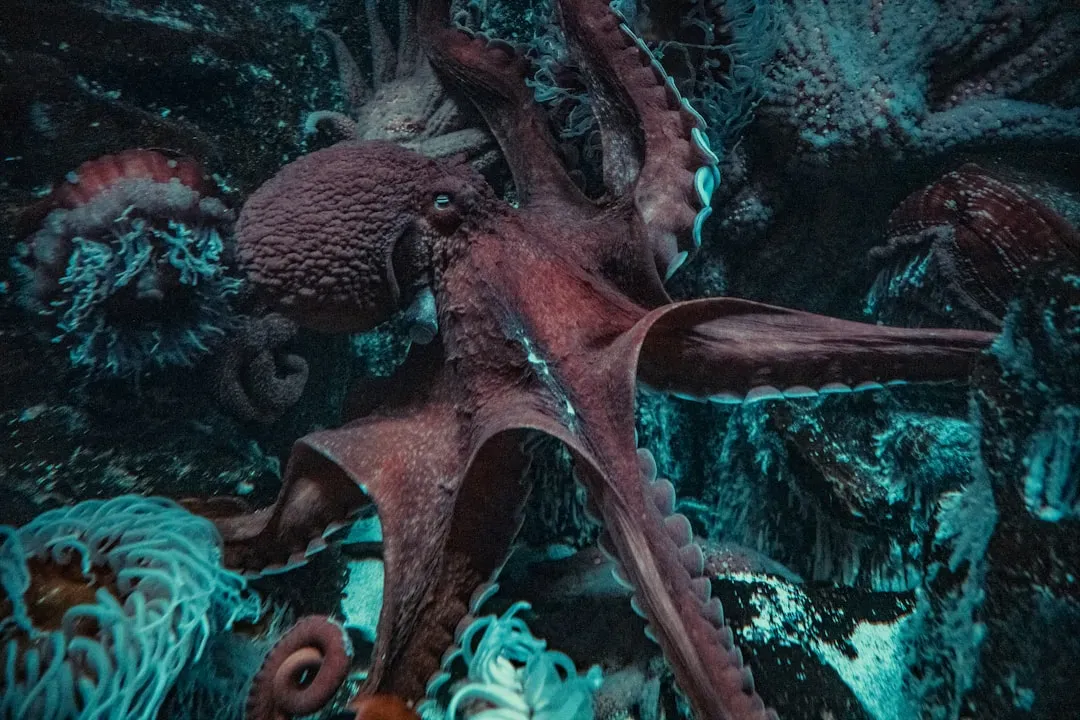
Watching a sleeping octopus forces you to loosen your grip on simple stories about consciousness. You see cycles that look like your own REM and deep sleep, linked to an animal that learns, remembers, and navigates a complex world with a distributed nervous system. You cannot honestly claim to know what it experiences, but you also cannot pretend that nothing interesting is happening when its skin ripples with silent color. You are left occupying an uncomfortable but fruitful middle ground: cautiously open, but not credulous.
If you let that discomfort do its work, you end up with a more flexible model of minds – one that makes room for alien nervous systems, future machines, and maybe even unexpected forms of awareness you have not imagined yet. Octopus sleep does not hand you a neat answer about who is conscious; it hands you a better set of questions and a humbling sense that your inner life might be just one variation in a much wider landscape. When you picture that octopus tucked in its den tonight, flashing through its active sleep, what do you think is really going on in there?