
Every morning you wake up, and there it is again: that quiet, undeniable sense of being you. You open your eyes, and the entire universe seems to light up from the inside, as if someone flipped a switch labeled “me.” For all our progress in neuroscience and artificial intelligence, science still has no agreed‑upon explanation for why there is anything it feels like to be you, instead of just a collection of cells following chemical rules in the dark.
We can map brain regions, track neurons firing, and even predict decisions before people are consciously aware of them. Yet the basic fact of awareness itself still hangs in the air like a riddle science has not solved. Researchers argue, build models, and publish theories, but no one can yet show how a lump of biological tissue gives rise to the vivid, private world you carry around every second. That open question is not just technical; it is deeply personal. It asks, at the end of the day, what you actually are.
The Hard Problem: Why Does Experience Exist At All?

Here’s the most unsettling question in this whole field: why is there any experience happening in the first place? In principle, a brain could process information, move muscles, and react to the world like an incredibly sophisticated machine, all without there being anything it feels like from the inside. Yet you do not just compute; you taste coffee, feel embarrassment, and see the color red as something intensely specific and real.
Science is very good at the so‑called easy problems of consciousness: explaining how we discriminate sounds, integrate information, or control behavior. Those are about functions. The hard problem is about what it is like. No brain scan, chemical formula, or wiring diagram so far contains a clear bridge from physical stuff to subjective experience. We can point at correlations all day long, but why those correlations should light up into a conscious world is still, frankly, a mystery.
How Brain Activity Becomes a Unified Inner World
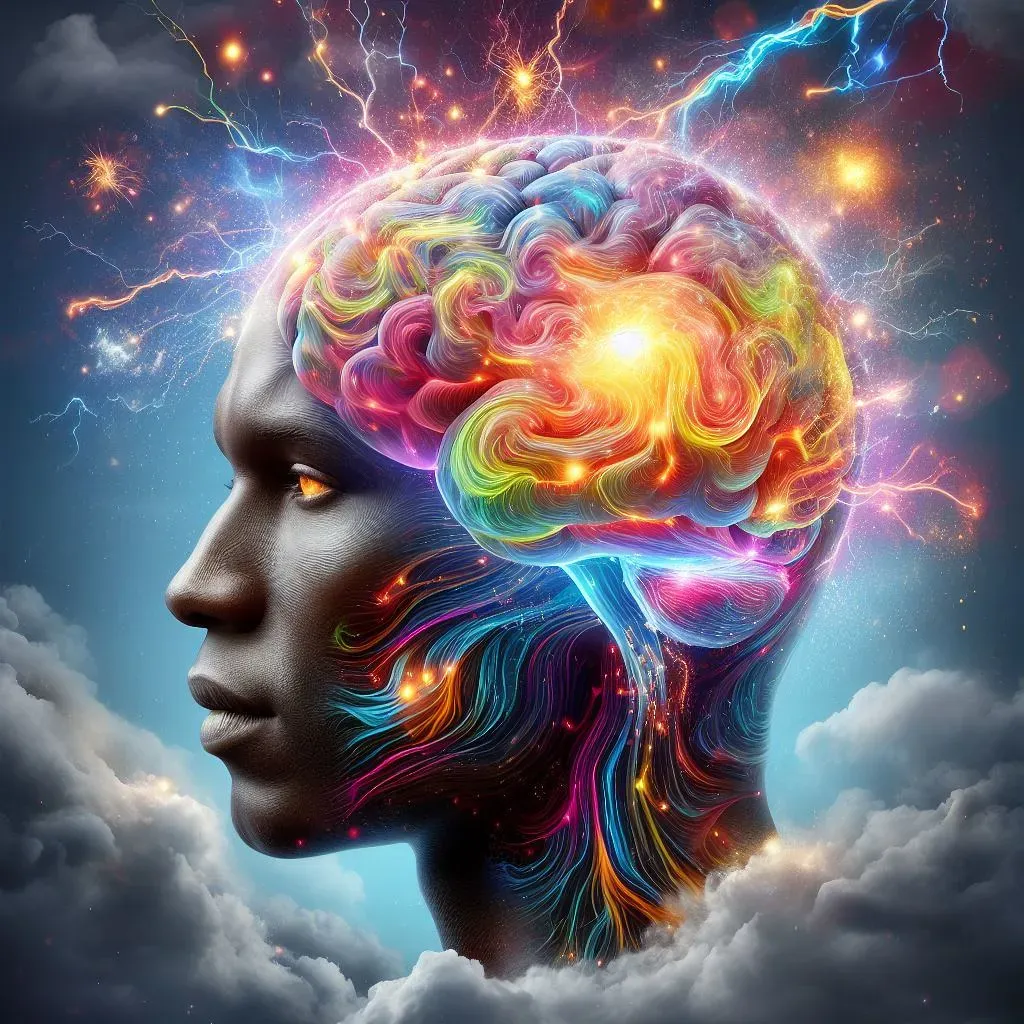
Your brain is a chaotic festival of simultaneous events: billions of neurons firing in parallel, each tuned to tiny slices of reality. And yet, when you look around, you do not experience a noisy mess; you experience one smooth, coherent scene. The sound of the fan, the weight of your body in the chair, your thoughts about tomorrow’s meeting – somehow, awareness pulls this all together into a single “now.” How that unity arises from scattered electrical storms is something science still struggles to pin down.
Several theories try to capture this. Some suggest that when information is globally available across brain networks, it becomes conscious. Others claim that specific patterns of integrated complexity mark the presence of awareness. These are promising, but they are still sketches, not final answers. We can say which brain regions seem involved when experience is rich or dimmed, but how the bits and pieces are knitted into the seamless movie of your life is still mostly described in metaphors, not fully understood mechanisms.
The Mystery of the “Self” That Feels Aware

Human awareness is not just raw experience; it is experience that seems to belong to someone. You do not just feel a pain; you feel that it is happening to you. Neuroscience can show brain systems that track your body, your memories, and your preferences, and it can even disrupt your sense of ownership with certain injuries or experiments. Still, the quiet sense of being a single, enduring “I” remains stubbornly hard to explain.
Some researchers argue that the self is basically a story the brain tells, a constantly updated narrative about the organism and its place in the world. Others claim that beneath the storytelling, there is a more basic, pre‑verbal sense of presence that science has barely begun to describe. Personally, I lean toward the idea that the feeling of being someone is a constructed model, but it is a model that feels so real we mistake it for a simple fact. Science can track the edges of this model, but how the brain’s self‑portrait turns into the intimate feeling of “me, right here” is still beyond any settled theory.
Time, Memory, and the Illusion of a Continuous Stream

Our awareness feels like a river: continuous, flowing, never really broken. But when scientists look closely, this picture begins to crack. Experiments hint that consciousness may be more like a flipbook, built from discrete moments that the brain stitches together into a story of smooth time. You feel as if you live in the present, but that “present” might be a constructed window, slightly delayed and edited before you ever sense it.
Memory makes this even stranger. You think you have direct access to your past, yet each recall is a reconstruction, not a replay. Your awareness of who you were blends with who you think you are now. In my own life, I have looked back on old journal entries and barely recognized the person who wrote them, yet I still feel like the same self stretching across those years. Science can track how memories form and fade, but how all those scattered fragments and momentary snapshots combine into a felt timeline – a life story that seems to hang together – remains something we cannot fully unpack.
Can Awareness Exist Without a Human Brain?
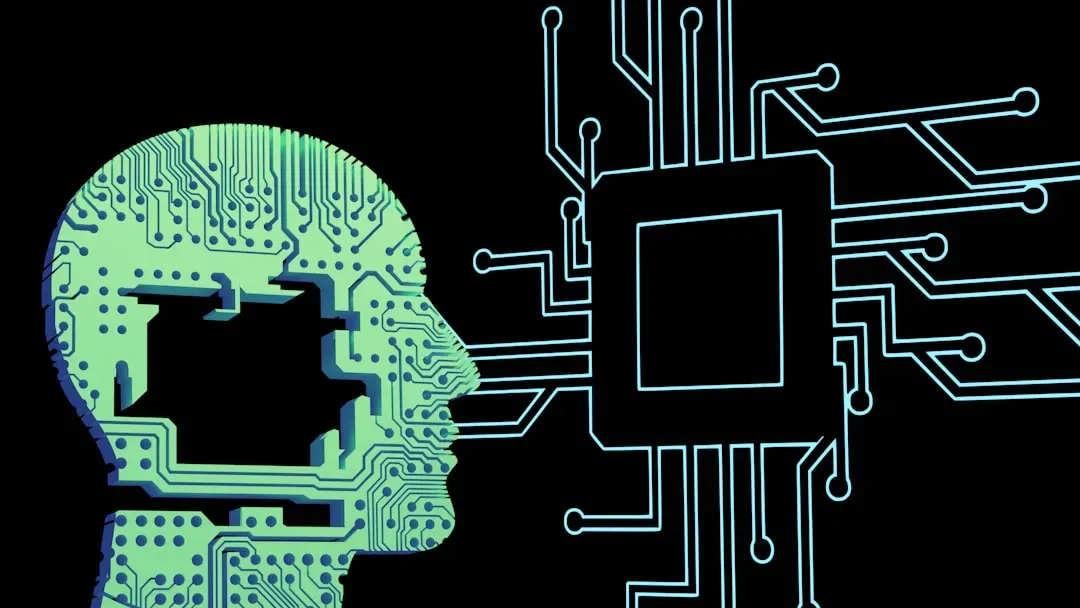
Another question science cannot yet answer is whether human‑like awareness could exist in something radically different from a human brain. Could a sufficiently complex AI system ever truly have experiences, or would it only behave as if it does? We can build machines that recognize faces, write essays, and play strategy games better than many humans, but whether any of that involves a real inner life is still an open debate, not a solved problem.
Some researchers think that certain patterns of information processing, if arranged the right way, will automatically generate consciousness, regardless of whether the material is biological or silicon. Others suspect that there might be subtle, biologically specific features – maybe at the level of living cells or even quantum effects – that current machines simply lack. The truth is, we do not have a reliable test for awareness beyond behavior and self‑report, and those can be imitated. Until we understand what awareness fundamentally is, we cannot confidently say who or what has it.
Where in the Brain Is Consciousness “Located”?
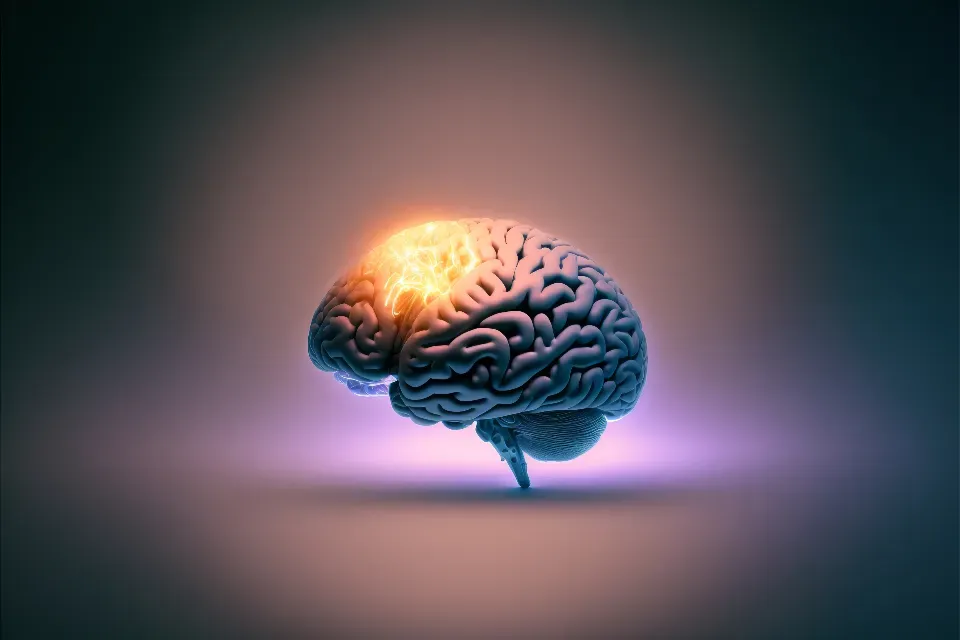
Modern imaging has completely changed how we think about the brain, but even with all those colorful scans, there is still no universally agreed “seat” of consciousness. Some evidence points to thalamocortical loops, others to particular regions in the back of the brain, others to frontal networks involved in attention and report. Researchers can reduce or alter consciousness by interfering with certain areas, yet no single spot lights up as “here is where awareness lives.”
More likely, awareness depends on patterns across multiple networks, with different areas contributing different ingredients: sensory details, emotional tone, self‑monitoring, and so on. But that answer is still quite vague. If someone asked you to put your finger on where your experience is happening in your head, you could not do it, and science cannot either. We can say that damaged regions change awareness, that drugs modulate wide‑spread connectivity, and that sleep reduces certain signals, but a precise map from brain structure to felt experience remains out of reach.
Why Some States Feel Deeper, Higher, or More “Real”

Not all awareness feels the same. Think about the difference between scrolling your phone half‑asleep, being fully absorbed in a creative flow, having a powerful meditative insight, or going through a psychedelic experience. Many people report that some altered states feel more meaningful or “truer” than everyday consciousness, even when those states are clearly shaped by brain chemistry. Science can measure changes in activity and connectivity, but it struggles to explain why certain configurations feel profound while others feel flat.
This matters because humans build entire belief systems around these inner states. If a quiet, expansive awareness feels more real than normal thinking, we naturally treat it as revealing something deep about ourselves or the universe. Yet from a scientific perspective, we do not yet know whether these are just unusual brain modes or windows into aspects of mind we barely understand. I am inclined to think that at least some of these states show us how flexible our awareness is – how our sense of reality can be tuned like a radio – but why one station feels closer to the truth than another is still an unanswered question.
Awareness, Meaning, and Why the Mystery Still Matters

For all its progress, science still circles around the most basic questions about awareness without landing. We know more than ever about neural signals, brain rhythms, and behavior, but the leap from physical process to lived experience is still a gap, not a bridge. In my view, this is not a failure of science so much as a sign that we are early in a project that will probably reshape how we think about mind, life, and even what counts as an explanation.
Awareness is not just a puzzle for labs; it is the background of everything you care about. Love, fear, ambition, boredom, wonder – none of these would exist without that inner glow of experience. So the fact that we cannot yet say why it is there, or what exactly it is, should be both humbling and thrilling. Maybe the mystery will eventually dissolve into clear mechanisms, or maybe we will need new concepts that do not even exist yet. Either way, the question of why it feels like something to be you is one of the few scientific questions that is also unavoidably personal. When you really sit with that, does it make the world feel a little stranger than you expected?