

You have probably heard that famous line about quantum physics: the observer changes reality by looking at it. It sounds mystical, almost magical, like your gaze alone is rewriting the universe. Then, at some point, someone told you it was just a misunderstanding, that it only meant measurement involves clumsy equipment bumping into tiny particles. The truth sits uncomfortably between those two extremes: far less mystical than pop spirituality, but far more literal than the watered‑down explanation you were likely given.
If you look closely at how modern physics treats “observers,” you find a very concrete, technical idea hiding behind the philosophical fog. You are not waving your consciousness at electrons to bend reality with sheer will, but you also are not just passively watching a pre‑existing movie play out. In quantum mechanics and even in precise classical experiments, you are part of the script. When you measure, you do something to the system, and the theory takes that “doing” very seriously. Once you see how this works, the phrase “the observer changes what is being observed” stops being a slogan and starts feeling like a rule you can almost touch.
How Physicists Actually Use the Word “Observer”
When a physicist says “observer,” they usually do not mean a wise person stroking their chin and pondering the cosmos. They mean you as a physical system that interacts with another physical system in a very specific way. In equations, you are not a mind hovering above matter; you are another chunk of matter that couples to the thing you are measuring, like a camera sensor absorbing light or an atom detector clicking when a particle hits it. In that language, observing is not looking, it is interacting.
This is why, in practice, you never have a truly detached viewpoint. If you want to know the position of an electron, you have to bounce something off it (like a photon), and that collision is built into the way the theory works. You are forced to think of an observation as a physical event in the chain of cause and effect, not a ghostly process happening outside the universe. Once you accept that, you start to see that the observer is always in the story, written right into the math, not lounging in some safe balcony above it.
Why Measurement Is Not Just “Reading Off” Reality

In your everyday life, you act as if measurements simply reveal what is already there. You read the temperature on a thermometer, glance at a speedometer, or check the time, and you assume those numbers were quietly waiting to be discovered. In the microscopic world, that intuition breaks down. To measure something small, you must disturb it, and the disturbance is not just an annoying side effect; it is the core of the process. The act of measuring is less like reading a page and more like poking a delicate, spinning mobile and then inferring something from the wobble.
In quantum theory, this is taken so far that you cannot even talk about certain properties having definite values before you measure them. For some pairs of properties, like position and momentum, the math tells you that the sharper you pin down one, the more blurred the other becomes. That is not a problem with your tools; it is a feature of how the world behaves at that scale. So when you measure, you are not uncovering a hidden number so much as forcing the system to pick an outcome from a spread of possibilities. Your measurement is like a question that nature answers by changing state on the spot.
The Heisenberg Uncertainty Principle: A Built‑In Limit, Not a Technical Glitch
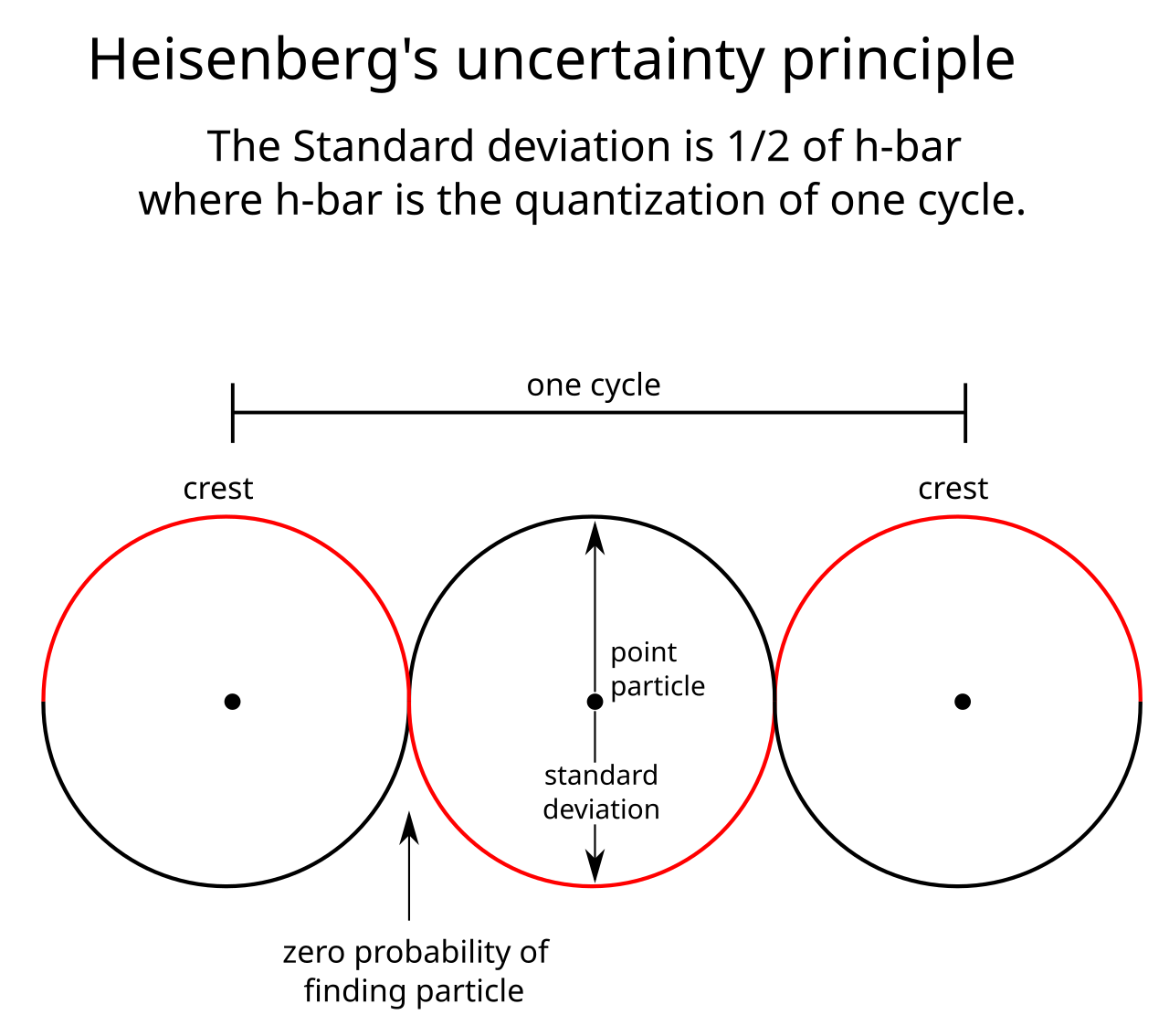
You may have heard that the Heisenberg uncertainty principle just says, “We cannot measure perfectly because our instruments are too crude.” That story sounds reasonable but it is wrong in an important way. The principle is not about bad technology; it is about a fundamental tradeoff baked into the structure of the theory itself. When you try to know exactly where a particle is and exactly how fast it is moving, quantum mechanics tells you that nature does not support that level of detail simultaneously, no matter how clever or gentle your devices become.
In more concrete terms, if you design an experiment that pins down position very sharply, the range of possible momenta spreads out, and if you design an experiment that nails momentum, the particle’s position becomes inherently fuzzy. You are not just messing things up; you are up against a limit that no future engineering will beat. This is one of the clearest places where the observer’s influence is literal: the kind of question you choose to ask, and the way you physically ask it, reshapes which aspects of the system can even have sharply defined answers at all.
The Double‑Slit Experiment: When Your Question Reshapes Reality
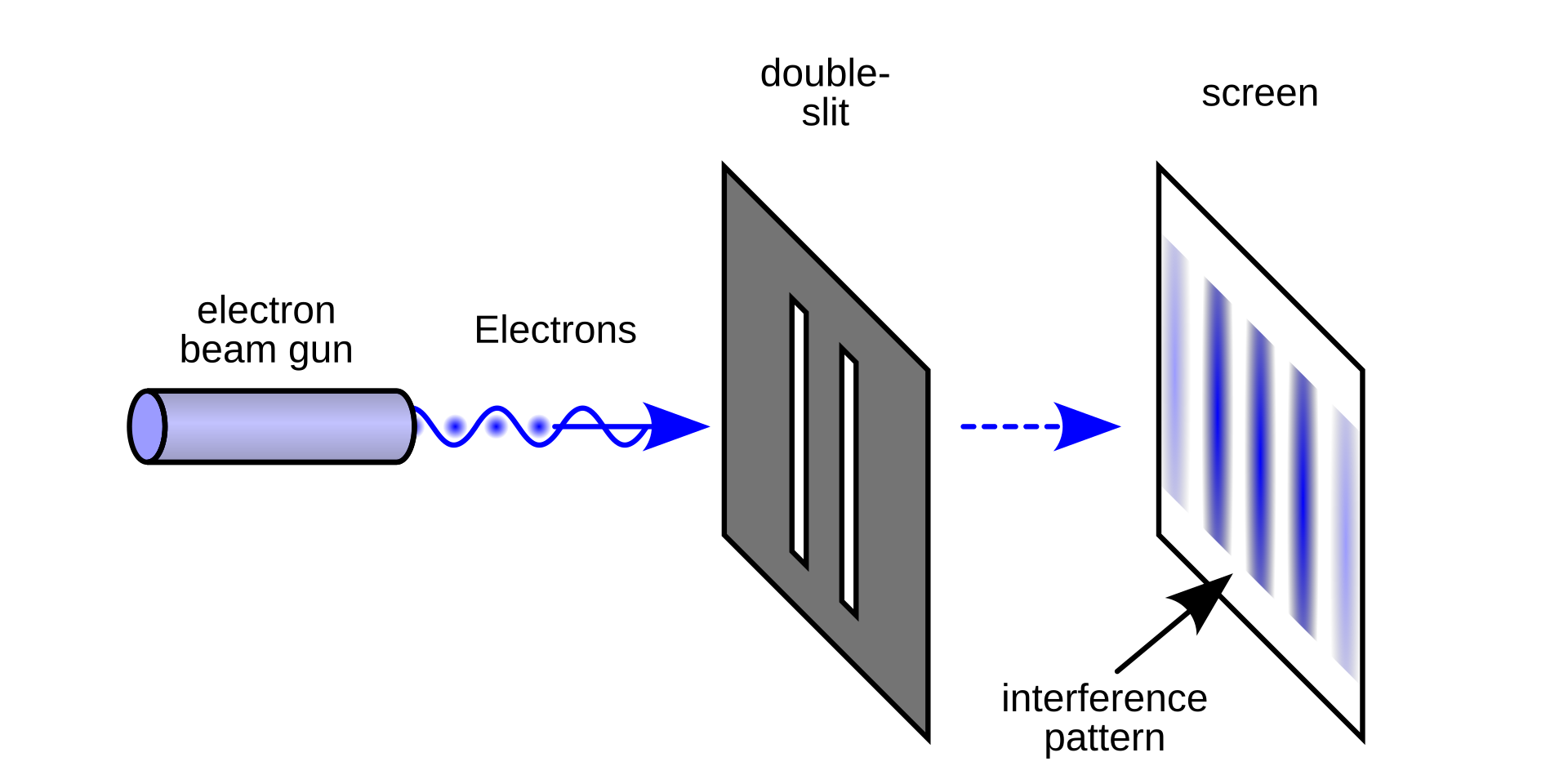
The classic double‑slit experiment is where this all hits you in the gut. If you send particles like electrons or photons through two tiny slits and do not check which slit each one passes through, you see an interference pattern build up, as if each particle behaved like a wave passing through both slits at once. But if you set up a device to find out which slit each particle took, that wavelike pattern disappears, and the results look more like ordinary bullets passing through one hole or the other. Change the way you observe, and you literally change what pattern shows up.
From your perspective, the only difference between these two setups is the choice to ask, “Which path did you take?” That question requires extra interaction, extra coupling between the particle and your detector, and the math predicts that this interaction changes the outcomes you can see. You are not just revealing a pre‑existing path; the moment you insist on a path, you enforce behavior that is incompatible with the delicate interference you saw before. The phrase “the observer changes what is being observed” is not a metaphor here. Your decision about what to measure rewrites the menu of possible patterns that reality can show you.
Consciousness vs. Interaction: What You Do (and Don’t) Need for Collapse

This is where a lot of confusion creeps in. You might have been told that human consciousness somehow collapses the wavefunction, as if the universe were waiting for a mind like yours to make it real. Most working physicists do not use that idea in their day‑to‑day calculations. In the standard approaches, what matters is physical interaction and information flow, not whether a conscious brain is nearby. A Geiger counter in deep space can register a radioactive decay and alter the state of its circuitry long before any person ever looks at the readout.
From your perspective, this means that “observation” is not an inner mental act but a physical coupling that leaves behind a durable record somewhere in the world. Your awareness enters later, when you open the lab notebook or read the screen, but the crucial quantum event already happened when the system and measuring device became entangled and then decohered with the environment. So yes, the observer changes what is being observed, but the observer in the equations could just as well be a detector or a dust grain as a human. Your consciousness is part of the story only in the sense that you are yet another complex physical system reading that record.
Why This Also Matters in “Ordinary” Physics, Not Just Quantum Weirdness

It is tempting to think that this whole observer issue only matters in exotic, microscopic experiments. But even in classical physics, once you look closely, you see a milder version of the same idea. When you weigh yourself on a scale, you compress springs or strain sensors; when you measure temperature, you shuffle energy around between your thermometer and the system. You often get away with ignoring these effects because they are small, yet they are not zero. Your measurement is always some kind of gentle nudge, and if the system is sensitive enough, that nudge can matter a lot.
Think about climate measurements, medical scans, or financial markets. In each case, once people start measuring and reacting, the system changes in response. Traders who watch a price chart influence the very prices they observe; doctors who screen more aggressively change disease statistics by finding conditions earlier. While this is not quantum mechanics, it shares the same core lesson you see there: once you are part of the feedback loop, you stop being a passive spectator. In practice, your attempts to observe and control always become part of the dynamics you are trying to understand.
So What Does This Really Say About Your Place in the Universe?

When you put all this together, you get a picture that is at once humbling and strangely empowering. You are not a magician collapsing reality with thought alone, but you are also not a ghost watching a fixed film of events. You, your instruments, and your questions are woven directly into how phenomena show up. Every time you choose what to measure, you are choosing which aspects of the world can crystallize into definite, recorded outcomes, and which remain in the realm of unrealized possibilities.
On a more personal level, this can change how you think about knowledge itself. Instead of imagining truth as a pre‑written list that you simply uncover, you can see it as something that emerges from a dance between you and nature, structured by the questions you ask and the ways you are capable of interacting. The observer changing what is being observed is not a mystical slogan once you understand it; it is a sober description of how inquiry actually works in a universe where interactions matter. The real question is: now that you know how literal this is, how will it change the way you look at the world next time you decide to measure something?