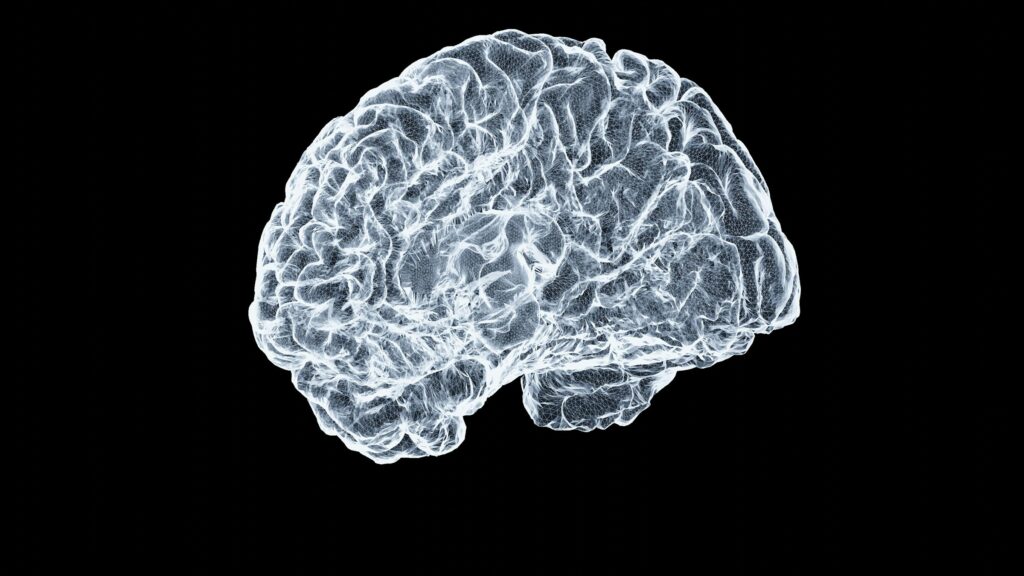
You know that strange jolt when you suddenly “wake up” and realize you have no clear memory of the last ten minutes of driving, or you’ve been scrolling, walking, or eating without really being there for it? One second you’re just doing, the next second you’re thinking, “Wait… where was I just now?” That flicker of awareness can feel unsettling, almost like catching yourself sleepwalking with your eyes open. But it is not a glitch or proof that something is wrong with you. It is your brain doing exactly what it evolved to do: automate the boring stuff and flag it only when something important changes.
Under the surface, that sudden snap from autopilot into awareness is a surprisingly complex brain event. Different neural networks hand off control like relay runners: habit circuits in your basal ganglia, attention systems in your parietal and frontal lobes, and a kind of internal narrator network that lights up when you start thinking about yourself again. Once you see how all of this works, that eerie “wow, I was not here for a bit” moment starts to look less like a failure and more like a fascinating design choice.
The Shift From Controlled to Automatic: How Habits Take the Wheel

When you first learn to drive, cook a new recipe, or navigate a fresh route to work, your brain is buzzing with effort. Regions in the prefrontal cortex work hard to keep track of steps, decisions, and possible mistakes. You feel the strain: you have to think about every lane change, every measurement, every turn. Over time, though, repetition trains your basal ganglia, a set of deep brain structures that specialize in patterns and routines, to handle the sequence with far less conscious effort.
Once that habit loop is firmly laid down, control naturally drifts from deliberate, effortful processing to automatic scripts. Instead of consciously choosing every action, your brain runs ready-made programs triggered by context: same road, same time, same coffee cup in hand, same phone in your pocket. That is “autopilot” in action. It is efficient, which your brain loves, because the conscious, analytical circuits are metabolically expensive and your nervous system would rather reserve them for surprises or problems.
The Moment of Realization: Attention Networks Crash the Party

That jarring instant when you notice you have been on autopilot is basically your attention system barging into the room and turning on the lights. Networks that involve the parietal cortex and frontal regions suddenly re-engage, shifting resources from routine execution back toward monitoring and evaluation. You become aware of your body in the seat, the feel of the steering wheel, the last message you just typed, or the fact that you are already at your usual exit without vividly recalling the drive there.
This jump in awareness usually happens when something slightly unexpected trips your attention – an unusual sound, a small mistake, a question like “Wait, did I lock the door?” Even subtle internal changes, like a flicker of anxiety or boredom, can act as a wake-up call. In that moment, your brain stops trusting the autopilot entirely and starts running a quick status check. It is a bit like suddenly waking up in a plane mid-flight and mentally checking where you are, even though the systems have been humming along just fine.
Default Mode Network: The Brain’s Background Narrator

One reason autopilot sneaks up on you is that your conscious mind is usually not “off” while your body is doing routine tasks; it has simply wandered elsewhere. When you are driving a familiar route or doing the dishes, your default mode network – regions in the medial prefrontal cortex, posterior cingulate cortex, and parts of the temporal lobes – often ramps up. That network is heavily involved in daydreaming, replaying memories, rehearsing conversations, and spinning little movies about your future.
So while your habit circuits keep your hands, feet, and eyes doing what they have done a thousand times before, your internal narrator drifts into reflection mode. You might be reliving something you said last week, imagining how a meeting tomorrow might go, or even constructing elaborate what-if scenarios that will never happen. The “autopilot moment” is really the instant you notice that your mind has been away on that private mental vacation while your body carried on without you.
Prediction and Efficiency: Why the Brain Loves Running on Autopilot

At the core, your brain is a prediction machine that is constantly trying to guess what will happen next. When life is predictable – same hallway, same keyboard, same supermarket layout – it learns those patterns and caches them like shortcuts. That is why you sometimes end up taking your usual route home by mistake, even when you meant to drive somewhere else. The prediction systems decide, mostly correctly, that this is just another instance of the usual routine and fire the corresponding sequence automatically.
This is not laziness; it is strategy. Conscious, focused attention is a limited resource, and the brain treats it like a scarce currency. By putting well-learned behaviors under the control of habit circuits and predictive models, it frees up your higher-order systems to think longer-term, plan, imagine, or simply rest. The trade-off is that your experience of the present can become hazy, which is why the later realization – “I have been on autopilot” – can feel so disorienting. You were there, but your awareness was invested elsewhere.
Dissociation, Zoning Out, or Just Normal Cognition?

When people notice they have been on autopilot a lot, they sometimes worry it means something is seriously wrong – like they are dissociating in a clinical sense. In most everyday cases, though, drifting into routine behavior while your mind wanders is completely normal. It shows up more when you are tired, stressed, or preoccupied, because the brain is trying even harder to conserve energy and offload as much as it can to automatic processes.
That said, there is a spectrum. Mild zoning out during repetitive tasks is one thing; frequently losing chunks of time, not remembering important events, or feeling detached from your own body or emotions is something different and can be a sign that it is worth talking to a professional. The key is impact: if autopilot moments leave you mostly amused or mildly unsettled, they are likely just part of how a human brain handles repetition. If they disrupt work, relationships, or safety, that is not just autopilot; that is a signal that deserves real attention.
Emotion and Memory: Why Autopilot Moments Feel So Strange
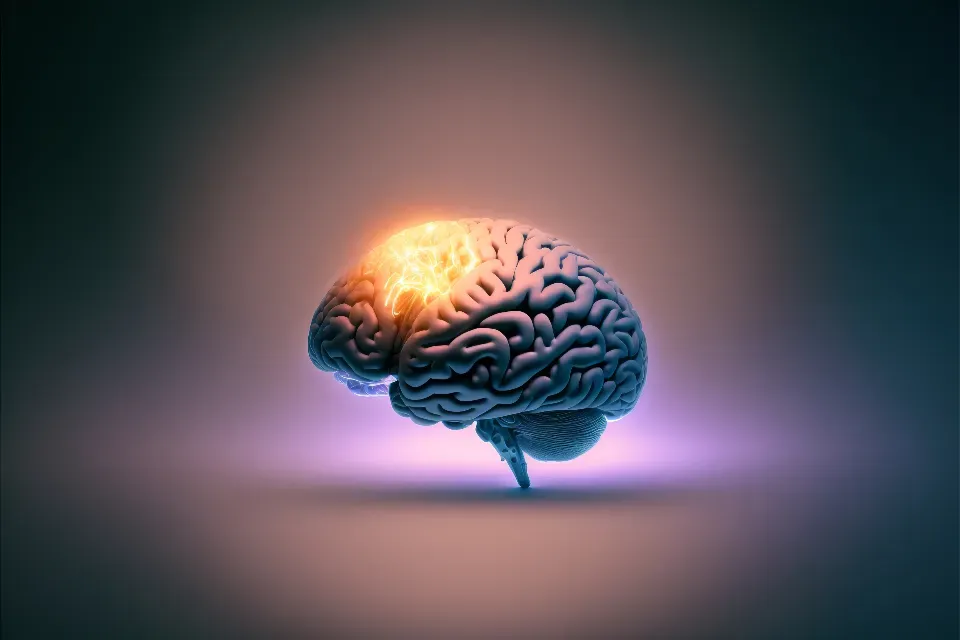
Part of why it is unsettling to realize you have been on autopilot is that memory and emotion are tightly linked. We tend to remember things that feel novel, emotional, or meaningful, and we barely log repetitive, neutral events. Habitual actions handled by autopilot simply do not get tagged as special, so your brain stores fewer vivid snapshots of them. Later, when you look back and fail to find a clear record, it can feel like you were not fully present, even though you were functioning just fine.
This memory gap can trigger guilt or anxiety: “Have I been missing my whole life?” That reaction is understandable, but it is also a bit unfair to yourself. Your brain cannot treat every commute or every dish you wash like a once-in-a-lifetime concert. If it did, you would be overwhelmed. Instead, it creates a kind of highlight reel of moments that matter most. Autopilot often lives in the unremarkable in-between spaces that hold your life together but do not always stand out on their own.
Snapping Out of It: The Role of Metacognition and Self-Awareness

The very fact that you notice you were on autopilot means another system has kicked in: metacognition, your capacity to step back and observe your own mind. Brain regions in the frontal lobes, especially parts linked to self-monitoring and error detection, help generate that “Oh, I was not really here a second ago” insight. It is your inner observer waking up and taking stock, almost like a backstage manager suddenly stepping out to inspect the performance.
That snap into awareness can be powerful if you choose to work with it instead of just brushing it off. You can treat those moments as little invitations to come back into your body: noticing your breath, the weight of your feet on the floor, the texture of what you are holding. Over time, that habit of checking in builds a stronger bridge between your automatic behaviors and your conscious values. Autopilot does not vanish – it never will – but you become better at gently taking the wheel back when it truly matters.
Can We Hack Autopilot? Mindfulness, Design, and Intentional Routines

Once you recognize how much of your life runs on autopilot, you can either feel slightly horrified or quietly empowered. Personally, I lean toward empowered. You can redesign the cues and environments that your habit circuits respond to: moving your phone charger out of the bedroom so your nighttime scrolling autopilot has to work harder, or putting a water bottle on your desk so drinking more is the easiest default. You are not reprogramming neurons one by one; you are nudging the system by changing what it repeatedly encounters.
Practices like mindfulness are basically training for that transition moment between autopilot and awareness. Instead of only noticing after long stretches of absence, you get quicker at catching yourself drifting and returning to what you are doing. It is not about being hyper-vigilant or painfully present for every second – that is impossible and honestly exhausting. It is about building just enough awareness to ensure your routines serve you, rather than silently dragging you in directions you never consciously chose.
Conclusion: Autopilot Is Not the Enemy – Unquestioned Autopilot Is

That eerie beat when you realize you have been running on autopilot is not proof that your brain is broken; it is proof that it is complicated, efficient, and a little too good at saving effort. Habit circuits, prediction systems, and your wandering default mode network team up to keep you going with minimal conscious input. The real question is not whether autopilot is bad – it is whether you are okay with where it is quietly taking you when you are not looking.
In my view, the most honest stance is somewhere in the middle: trust your brain’s autopilot for the repetitive, low-stakes parts of life, but refuse to let it fully run the show on things that actually matter. Use those “wake-up” moments as gentle alarms, not reasons to panic. Ask yourself now and then: if my current habits played on repeat for the next few years, would I like where I end up? If the answer feels even slightly uncomfortable, that flicker of unease might be the most valuable signal your autopilot ever sent you – what will you do with it the next time you suddenly realize you have been on cruise control?