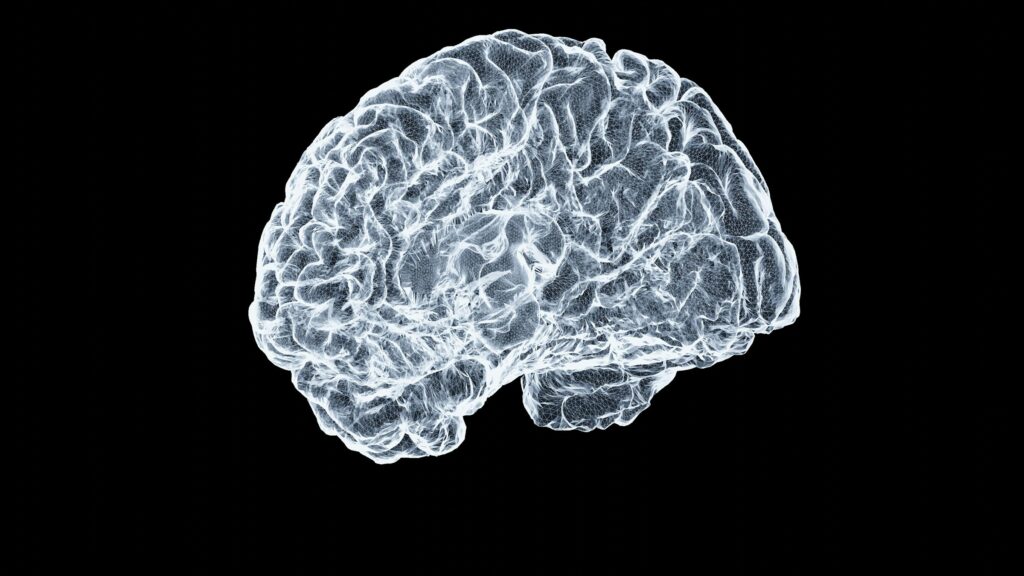
You like to think of yourself as a clear-eyed, rational observer of reality. But the weird truth is: your brain is quietly editing, guessing, and filling in the gaps all the time, and you almost never notice it. It is less like a camera and more like an overconfident storyteller that hates awkward silences, so it just makes things up to keep the narrative smooth.
Once you see how often this happens, everyday life starts to look very different. That moment you were sure someone said your name, the time you misread a text, the argument you “remember” perfectly even though the other person remembers the opposite – a lot of that is your brain auto-completing reality. Let’s pull back the curtain on ten of the sneakiest ways your mind fills in missing information, often without asking your permission.
1. The Blind Spot Your Brain Pretends Isn’t There

There is a literal hole in your vision where the optic nerve leaves each eye, and yet you don’t see a black patch floating around in front of you. Your brain just calmly fills in the missing piece with whatever it thinks should be there, like a clumsy photo-editing tool that copies nearby pixels to cover up a flaw. If you’ve ever done the classic “blind spot” test with a dot disappearing when you close one eye, you’ve seen this glitch in action.
What fascinates me is how confidently the brain does this job. It does not flag the filled-in area as “uncertain” or show a fuzzy border where it guessed. You just see a continuous scene and trust it completely. That means every time you look at the world, a small part of what you “see” is actually a best guess – and your mind doesn’t bother telling you which part.
2. Change Blindness: Missing the Obvious Right in Front of You

Change blindness is the eerie phenomenon where big, obvious changes happen in your field of vision and you simply don’t notice. In classic experiments, a person starts a conversation with a stranger, someone walks between them, and the original person is secretly swapped with a different person – and many people carry on talking as if nothing happened. Your brain assumes continuity, so if it is not paying close attention, it just pastes the new scene over the old one and tells you it has been stable all along.
In everyday life, this is exactly why you can stare at your phone, set your keys down, then “suddenly” not know where they are seconds later. Your attention never actually encoded where you placed them, but your brain still gives you the comforting sense that you were “seeing everything.” The scary part is how sure you feel that you would have noticed a change, even when the science says you often wouldn’t.
3. The Brain’s Autocomplete: Pattern Completion and Guessing the Whole from a Part
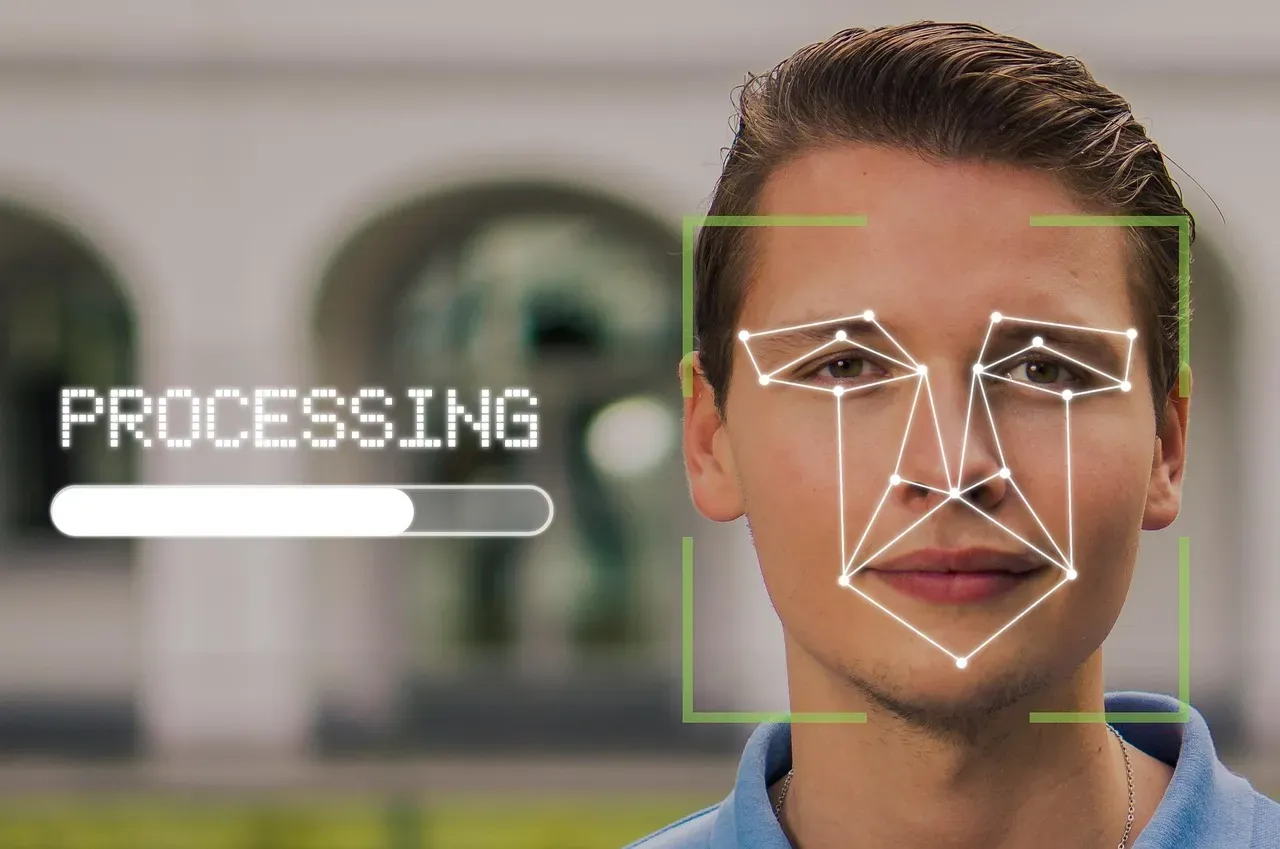
When you see half a logo, a few letters of a word, or a familiar face behind a mask, your brain rushes to complete the pattern before you’re even aware of it. Neural networks in visual areas are wired to perform “pattern completion”: they store typical combinations of features, so when they get a partial input, they activate the full pattern as if it were really there. That’s why you can recognize a friend from just their walk or a single eye peeking through a door.
This is incredibly useful, but it also backfires. You may think you read an entire sentence when you only glanced at a few words and your brain auto-completed the rest, sometimes incorrectly. I catch myself doing this with messages all the time: I respond to what I thought someone wrote, not what they actually typed. It feels like perception, but a surprising amount of it is prediction.
4. Memory Gaps and the Smooth, Convincing Story You Tell Yourself

We like to imagine memory as a recording we can rewind, but it is more like a patchwork quilt you keep stitching together. When parts of an event are fuzzy or missing, your brain quietly fills in the blanks with guesses that feel true. Over time, the story gets polished: small details are added, timelines shift, and conflicting moments are edited out so that everything feels coherent.
I still remember an argument from years ago where I was absolutely convinced I never raised my voice. Later, a recording proved that I did. My brain had essentially removed the parts that didn’t fit the image I had of myself. That is the unsettling reality: your memories can feel emotionally vivid and still contain details your brain invented just to make the narrative hang together.
5. Hearing What You Expect, Not What Was Said

Your ears are not just passively receiving sounds; your brain is heavily predicting what comes next based on context, language patterns, and your expectations. In noisy rooms, you often “hear” full sentences even when parts of the sound signal are missing or buried in background noise. The brain uses prior knowledge to fill in the unheard syllables, so you experience a smooth, continuous conversation.
This top-down prediction is so strong that it can make you mishear things, especially when you already have a guess in mind. Ever listened to a song and been sure the lyrics said one thing, only to realize much later that you had invented a completely different line? Your brain had taken a mushy, ambiguous signal and snapped it to the nearest meaningful phrase, and then presented it to you as though it were an accurate perception.
6. The Perception of Motion: Your Brain Editing Time Itself

When something moves quickly – like a ball flying across your visual field or a car zipping by – your brain does not simply show you a frame-by-frame replay. Instead, it uses prior knowledge about motion to estimate where the object should be a fraction of a second into the future and then aligns your perception with that prediction. In a sense, you are not seeing the present; you are seeing a corrected, smoothed version of events that your brain has pre-processed.
This is one reason fast-moving things feel continuous instead of jittery, even though your eyes and neurons react in bursts. It is also why some visual illusions involving moving dots or flashing lights can feel so unsettling: they expose the brain’s timing tricks. Your mind is not a neutral stopwatch; it is a time editor, cutting and stitching together tiny scenes so you experience one flowing moment.
7. The Power of Context: How Surroundings Rewrite What You See

The same object can look dramatically different depending on what surrounds it, and your brain happily adjusts its interpretation to match the scene. Think of the classic illusions where a gray square looks dark in one setting and light in another, or where letters that are exactly the same shape get read as different depending on whether they are in a word. Your visual system uses clues from lighting, shadows, and background to “fix” the raw input and give you what it thinks is the most likely reality.
In real life, this means the brain is constantly filling in information about color, size, and even meaning. That slightly off-color wall? Your brain may correct it to match what it “should” look like under typical lighting. That barely legible handwriting? Context from the rest of the sentence pushes your brain into interpreting the squiggle as one specific word. You don’t see pixels; you see a story shaped by its surroundings.
8. Confirmation Bias: Filling in Gaps With What You Already Believe

When information is incomplete or ambiguous, one of the strongest forces shaping how you fill the gaps is what you already believe. Confirmation bias nudges you to notice details that support your views and quietly ignore or reinterpret those that challenge them. If you think someone dislikes you, a neutral facial expression might be automatically read as hostile or dismissive, because your brain completes the emotional picture to match your expectation.
I notice this most in how I interpret online comments. If I’m in a defensive mood, a short, blunt message feels like an attack, and my brain helpfully adds tone and intent that are not actually there. The words are incomplete data, and my mind rushes to color them based on past experiences and assumptions. The cruel twist is that these mental auto-fills feel like reality, not like guesses, which makes them harder to question.
9. Social Perception: Inventing Motives and Emotions on Sparse Cues

Humans are wired to read other people, but we often have far less information than we think. A tiny change in posture, a brief pause, or a half-second glance is enough for your brain to construct a whole story about someone’s mood, intentions, or character. When you walk into a room and “just know” there is tension, what is really happening is that your brain is stitching together micro-signals and previous experiences into a rapid, mostly unconscious guess.
The problem is that in social situations, we almost never label these judgments as guesses. We assume we can see straight into other people’s minds and hearts, even though we are filling huge gaps with our own fears, hopes, and cultural expectations. That friend you were sure was mad at you might simply have been tired. But by the time you realize it, your brain has already filled in the missing motives and filed them under truth.
10. The Narrative Self: How You Backfill Reasons for Your Own Behavior
One of the most radical ideas in modern psychology and neuroscience is that the “self” you feel is partly a story being told after the fact. When you act on impulse or habit, your brain often decides first and then, milliseconds or seconds later, creates a tidy explanation for why you did what you did. You experience that explanation as if it were the original cause, not a reconstruction layered on top of the action.
This means your mind is constantly filling in missing reasons and motives so you feel consistent and in control. You buy something on a whim, then later describe it as a carefully planned purchase. You lash out in frustration, then explain it as a principled stand. I find this both unsettling and strangely freeing: if the story is always being edited, you can choose to question it, rewrite parts of it, and stop believing every explanation your mind hands you on a silver platter.
Conclusion: Living With a Brain That Edits Reality
Once you see how aggressively your brain fills in gaps, it becomes hard to keep pretending you are an objective camera pointed at the world. You are more like an overworked movie editor, splicing together fragments, patching holes, and adding voice-overs so the final cut makes emotional sense. That does not mean you are broken; it means you are human. This kind of smart, biased shortcutting is what lets you function in a chaotic, noisy world without freezing every two seconds.
Personally, I think the honest move is not to panic about these glitches, but to get curious about them. When you feel absolutely certain about a perception, a memory, or a snap judgment about someone, pause and ask: what might my brain be filling in here? You cannot stop your mind from auto-completing reality, but you can hold your stories a little more lightly – and that tiny bit of humility might be the most powerful correction of all. How differently would you move through the world if you knew, moment to moment, that your brain is always guessing just a little?