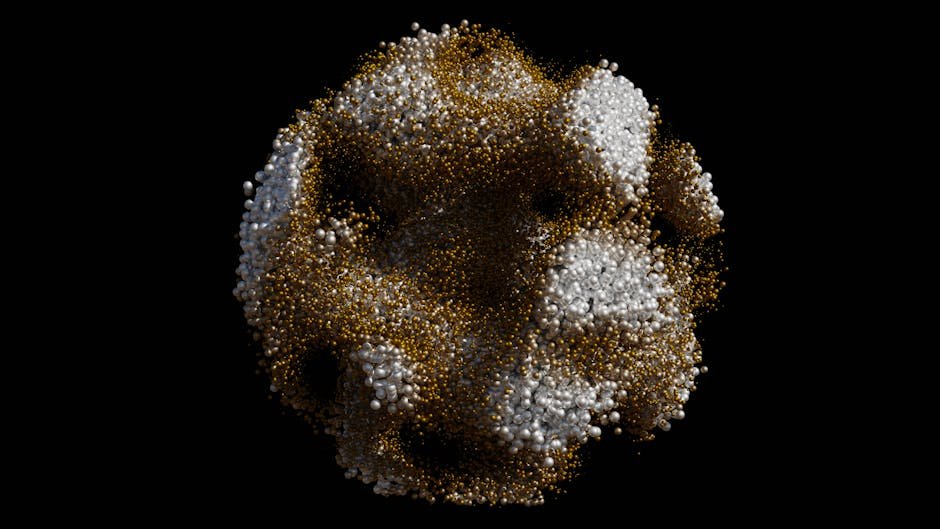
A Novel Form of Matter Emerges (Image Credits: Pexels)
Physicists have identified evidence of an unusual state of matter in which a short-lived particle becomes confined within an atomic nucleus. This finding from a significant experiment points to potential shifts in how particles acquire their mass amid dense nuclear conditions. The results align with established ideas about the quantum vacuum’s role in generating mass, offering a glimpse into fundamental forces at play.
A Novel Form of Matter Emerges
Researchers conducting a key physics experiment observed a fleeting particle captured inside a nucleus, creating what they describe as a strange new configuration of matter. This exotic state differs from typical atomic structures, where particles interact more freely. The discovery highlights behaviors not previously confirmed in laboratory settings.
The particle’s entrapment suggests interactions within the nucleus alter its fundamental properties. Scientists noted this phenomenon during precise measurements designed to probe nuclear interiors. Such observations require advanced detectors capable of capturing ephemeral events. The experiment’s success marks a step forward in exploring extreme matter conditions.
Mass Behavior in Nuclear Density
In this dense environment, the trapped particle appeared to carry less mass than expected in isolation. This reduction challenges conventional understanding of particle weights, implying that surrounding nuclear matter influences intrinsic properties. The effect becomes pronounced where particles pack tightly, mimicking conditions inside neutron stars or heavy atomic cores.
Traditional models assumed mass remained constant regardless of context, but these results indicate variability. The nucleus acts like a modifier, potentially stripping away components of mass through interactions. This insight stems directly from the experiment’s data, which captured the particle’s altered state with high fidelity.
Key Observations:
- Fleeting particle confined in nucleus.
- Apparent mass decrease in dense matter.
- Alignment with vacuum influence theories.
The Quantum Vacuum’s Hidden Influence
Long-held theories posit that the vacuum of space actively contributes to particle mass, rather than serving as empty backdrop. Empty space teems with virtual particles that flicker in and out of existence, affecting real particles nearby. The new evidence bolsters these concepts by showing how nuclear density disrupts this vacuum dynamic.
When the particle entered the nucleus, the surrounding vacuum likely compressed or altered, leading to the observed mass shift. This supports models where mass arises not solely from inherent traits but from environmental interplay. Physicists have pursued such explanations for decades, and this experiment provides empirical backing. Still, broader confirmation remains needed to solidify the connection.
Pathways to Deeper Understanding
The discovery opens avenues for refining theories on mass generation, particularly in high-density regimes. Future experiments could target similar particles under varied conditions to test the effect’s consistency. Collaborations among international labs may accelerate progress, building on this foundational result.
Uncertainties persist, including the exact mechanisms of entrapment and mass alteration. Researchers emphasize that while promising, the findings represent an initial step. Ongoing analysis will clarify limitations and potential applications, from cosmology to materials science. This work underscores the nucleus as a natural laboratory for probing nature’s deepest secrets.