If you ever thought taking a long solo hike or driving into the desert was the ultimate escape, you’re about to have your sense of “remote” completely rewritten. Out in the South Pacific there’s a point so isolated that, at certain moments, the closest people to you would not be on Earth at all, but orbiting hundreds of kilometers above your head on the International Space Station.
This place has no island, no rock, no buoy, no platform – just coordinates floating in the middle of a vast, empty ocean. Sailors rarely see it. Planes avoid it. Most people will never go anywhere near it, and honestly, you probably wouldn’t want to. Yet understanding this strange, lonely point on the map tells you something profound about how big your planet really is – and how small you are on it.
Meet Point Nemo: The Ocean’s Most Lonely Coordinate
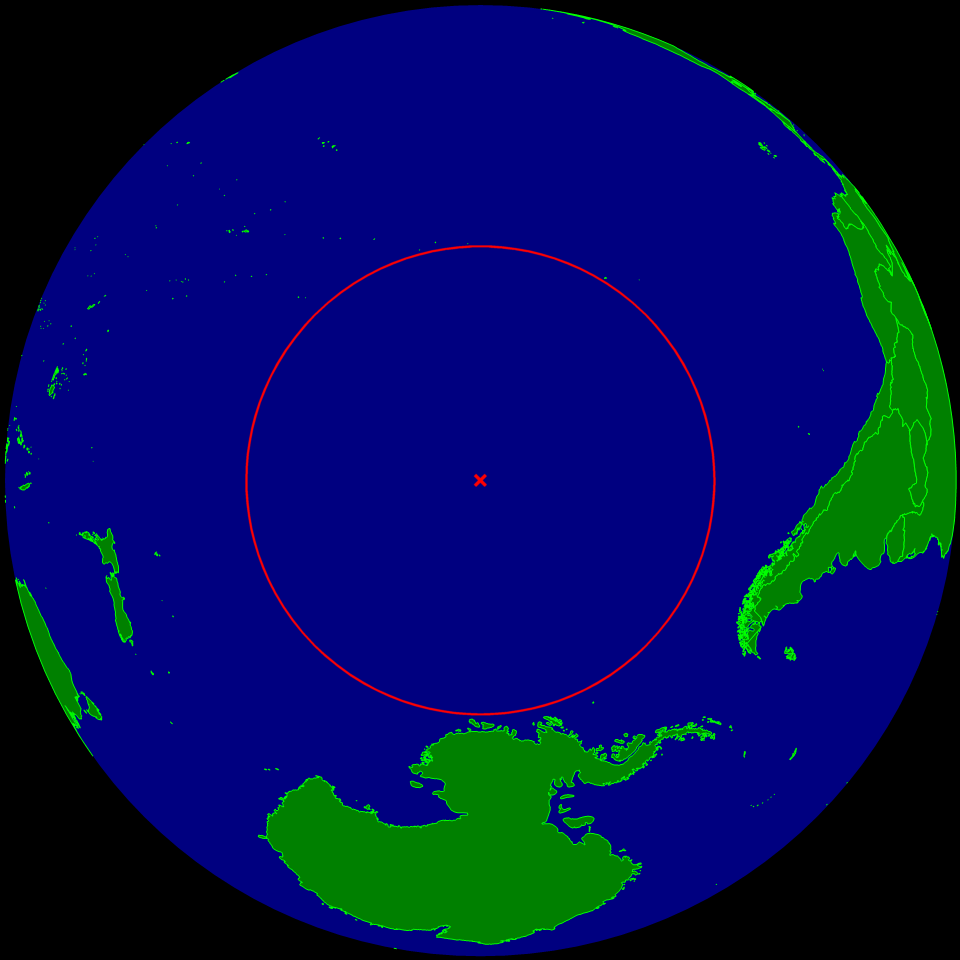
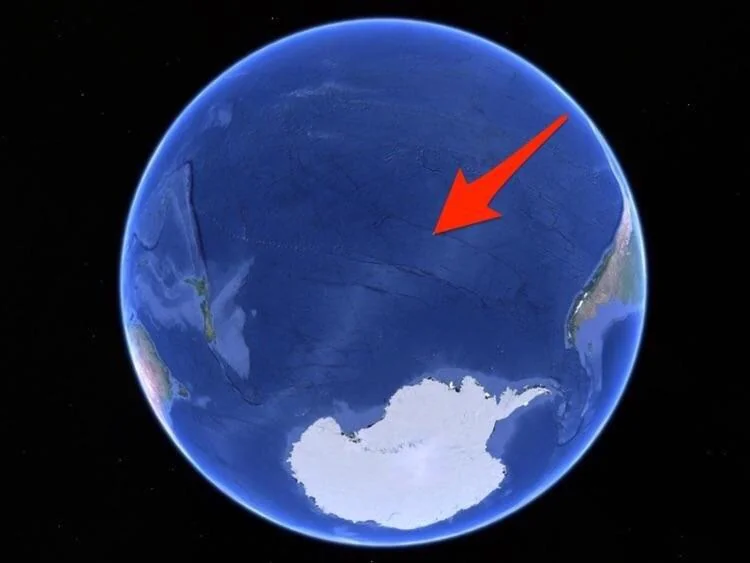
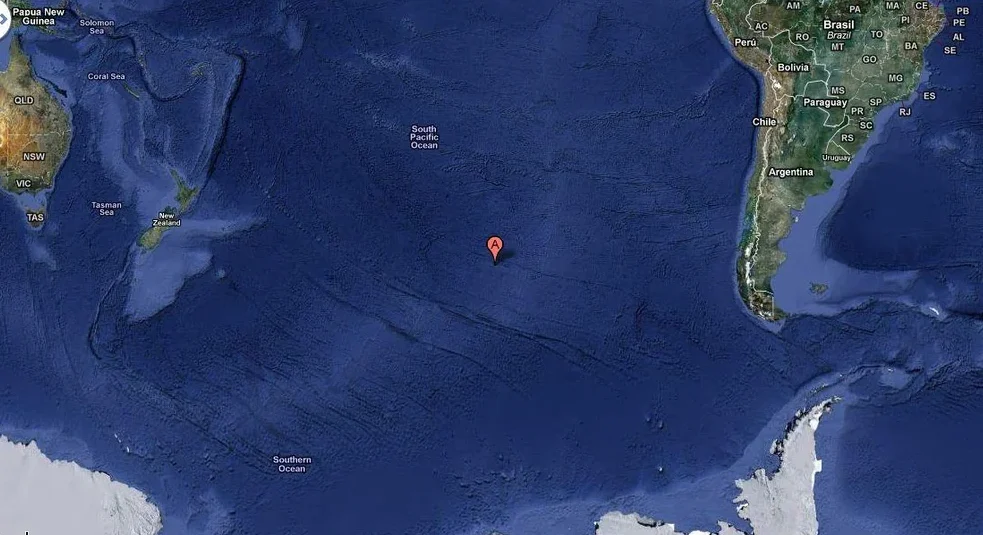
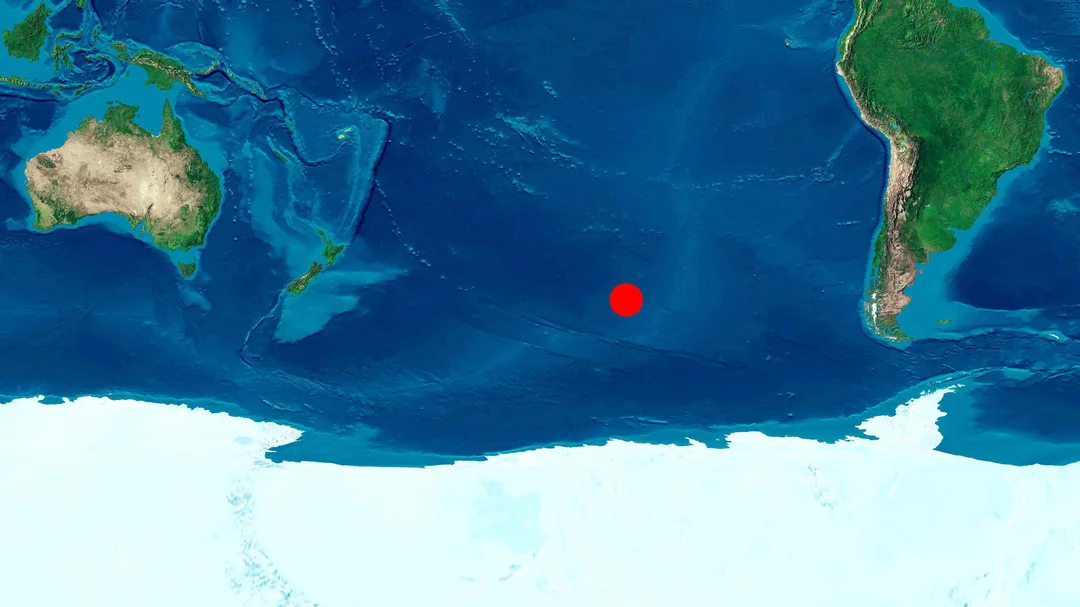
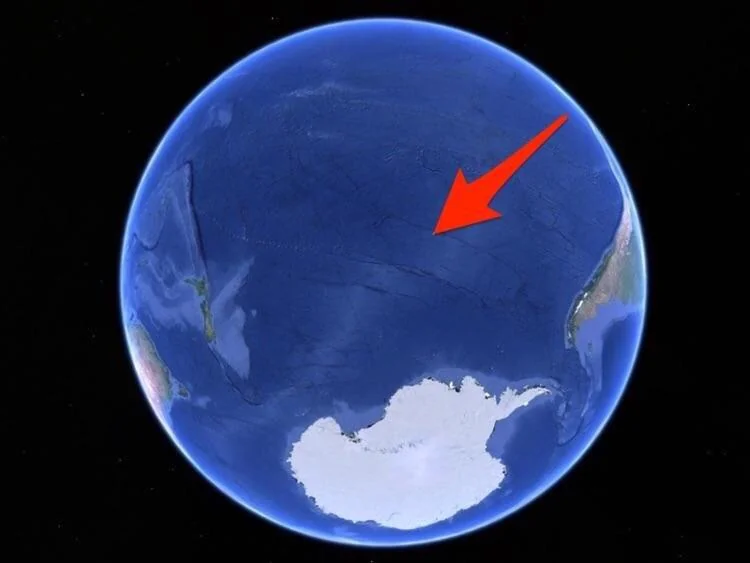
You might never stand on Point Nemo, because there’s literally nothing there to stand on. It’s not an island or even a visible feature – it’s just a calculated point in the South Pacific Ocean known as the oceanic pole of inaccessibility, the spot farthest from any land in any direction. Its coordinates are roughly 48.9 degrees south and 123.4 degrees west, drifting in a part of the world where the horizon is nothing but water in every direction.
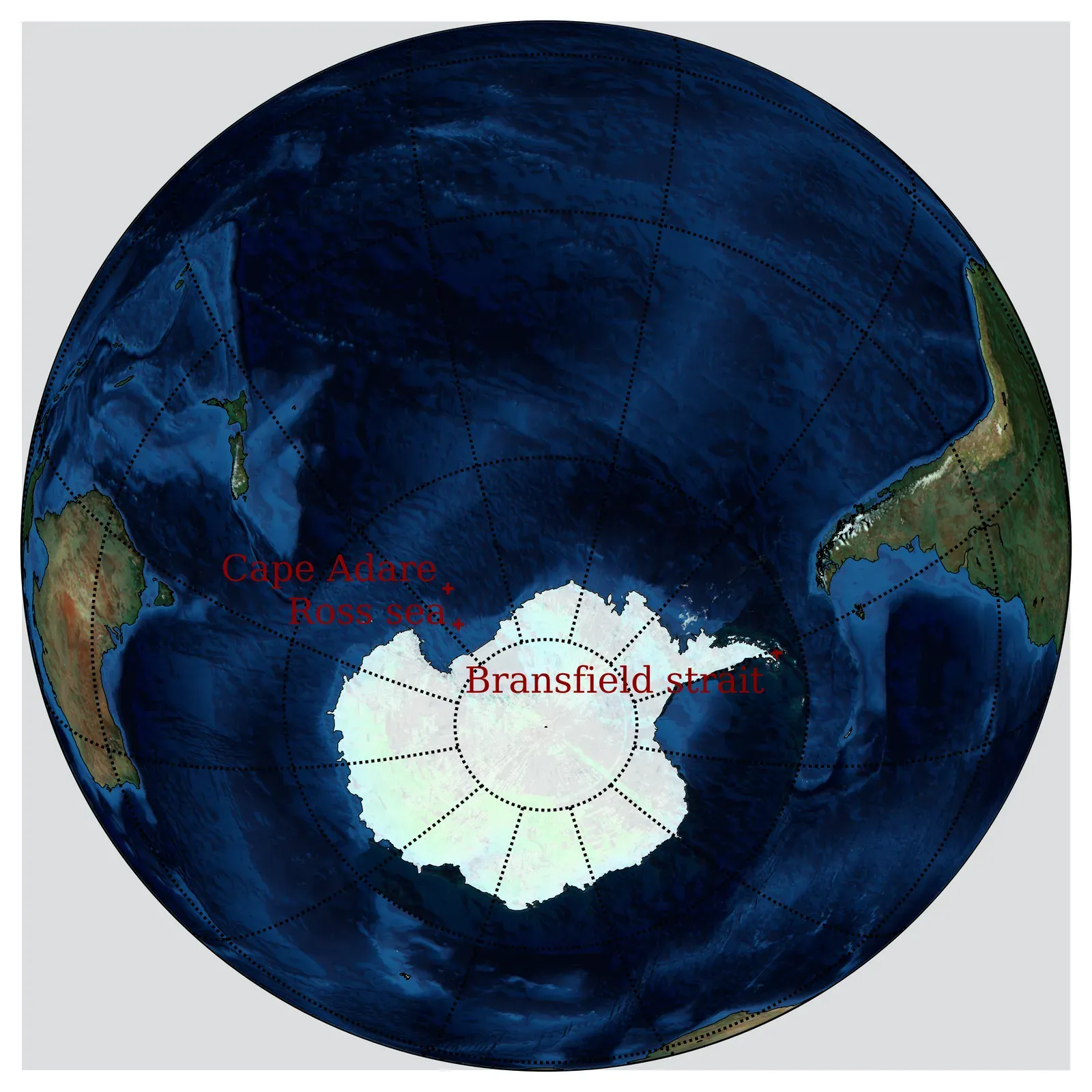
If you could somehow teleport yourself there, you’d be about 2,688 kilometers – over sixteen hundred miles – from the nearest bits of land. Those nearest “neighbors” are tiny and obscure: Ducie Island in the Pitcairn Islands to the north, Motu Nui near Easter Island to the northeast, and Maher Island off Antarctica to the south. You’d be surrounded by an enormous circle of ocean, bigger than many countries, with no shore anywhere inside it.
Why Astronauts Can Be Your Closest Neighbors Here
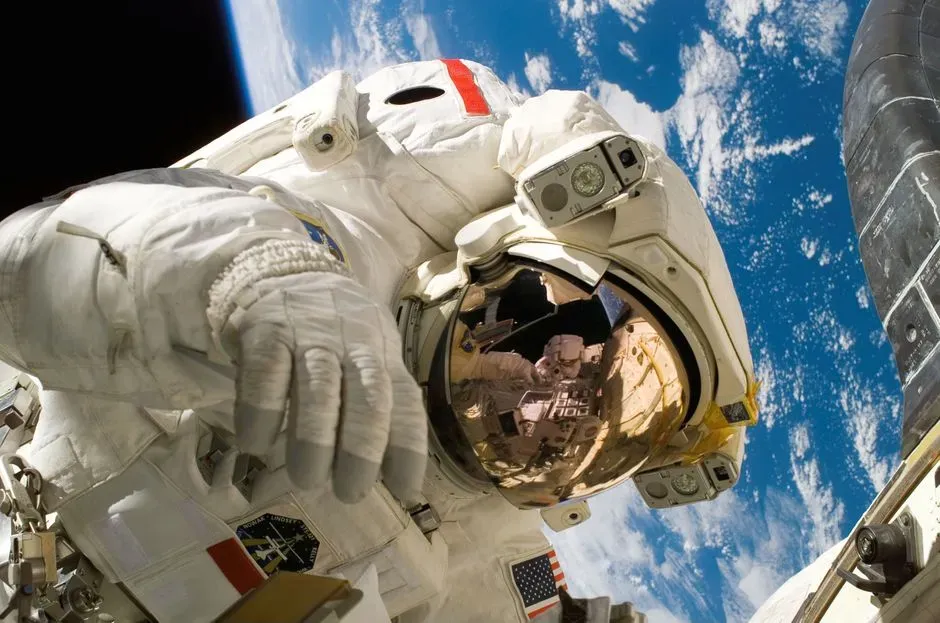
The wildest detail about Point Nemo is this: sometimes the people closest to you are not on ships or islands but in space. The International Space Station orbits Earth at roughly four hundred kilometers above the surface, which is far less than the two thousand six hundred plus kilometers separating you from the nearest land. When the ISS flies overhead, its crew in low Earth orbit are, in pure distance terms, closer to you than any human standing on solid ground.
That comparison flips your everyday sense of distance on its head. You’re used to thinking of space as unimaginably far away, but at this one point, the tiny metal habitat zipping around the planet is closer than your own species on Earth. It’s like being alone in a giant empty stadium while your only neighbors are in a blimp circling above – only the “stadium” is the Pacific Ocean, and the blimp is a multimillion-kilogram space laboratory traveling faster than a rifle bullet.
How Scientists Found the Most Inaccessible Point on the Ocean
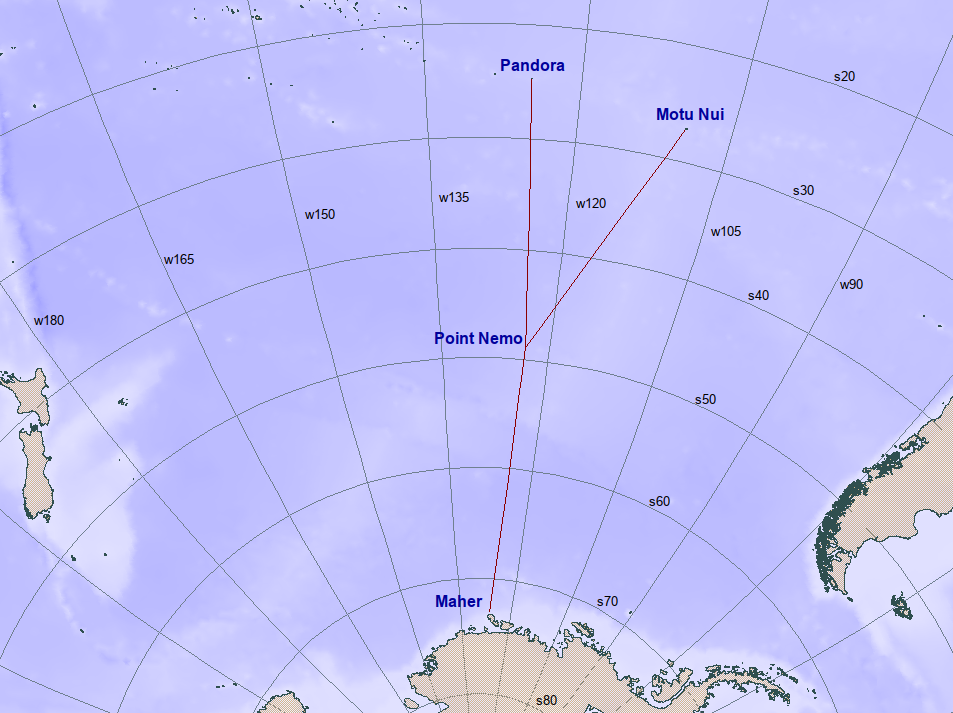
Point Nemo wasn’t discovered by sailors stumbling across it; you can’t “see” it. It was calculated in the 1990s by a Croatian-Canadian survey engineer named Hrvoje Lukatela, who used computer modeling and geodesy – the science of measuring Earth – to find the place in the ocean farthest from any coastline. He fed the coordinates of thousands of points of land into software to determine which single point on the water’s surface had the greatest distance to all of them.
The result was this lonely coordinate in the South Pacific, which earned the nickname “Point Nemo,” a nod to the mysterious submarine captain from Jules Verne’s classic novel about roaming the deep sea. You could think of it as the ocean’s equivalent of the geographic South Pole or the farthest point from any city, but instead of flags and research stations, you have waves and wind and a GPS reading that quietly tells you: you have never been this alone before.
Inside the South Pacific Gyre: An Ocean Desert
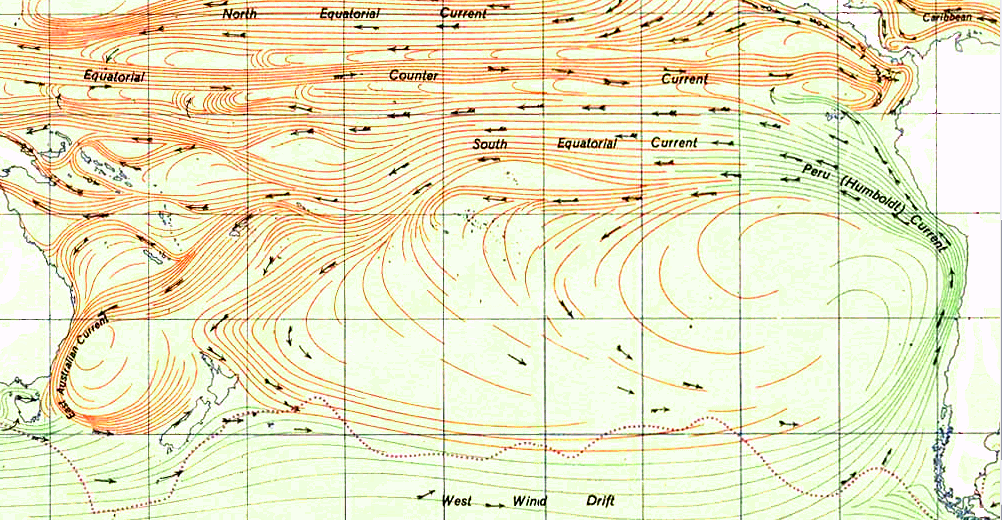
Point Nemo sits inside the South Pacific Gyre, a massive slow-spinning whirlpool of currents that keeps the surrounding waters isolated from the rest of the ocean. Because fresh, nutrient-rich water rarely flows in, this area is often described as an oceanic desert. Compared to coastal zones or upwelling regions, there’s far less plankton, fewer fish, and very little large marine life passing through.
If you picture the ocean as a huge, beating blue heart, the South Pacific Gyre around Point Nemo is more like a quiet, still backwater pool. The currents circulate lazily, trapping the same water for long periods and limiting the flow of nutrients that would otherwise feed a rich food web. That doesn’t mean it’s lifeless – microbes and hardy organisms still exist – but you won’t find the teeming coral reefs or dense shoals of fish you see in nature documentaries. It’s a stark kind of emptiness that would feel eerie if you were floating there alone.
Earth’s Spacecraft Cemetery Hidden Beneath the Waves
There’s another reason Point Nemo matters, and it’s not about geography – it’s about space junk. Because this spot is so far from any land and major shipping lanes, space agencies use the region around it as a kind of “spacecraft cemetery.” When large satellites, cargo vessels, or even space stations reach the end of their life and must be deorbited, mission planners often steer them toward this remote patch of ocean so that any surviving debris splashes down far from people and infrastructure.
Over the past few decades, dozens of spacecraft have been guided to their watery graves in this general area. The logic is simple: if you have to drop a bus-sized object from orbit, you want it falling where it’s almost impossible to hit anyone. Plans even call for the International Space Station itself to be deliberately deorbited into this region in the early 2030s, sending one of humanity’s most ambitious engineering projects to disintegrate and sink into some of the quietest waters on the planet. It’s a strangely poetic end – our outpost in space returning to one of the most unreachable corners of Earth.
Why So Few Ships – or People – Ever Go Near It
You might assume that with GPS and modern shipping routes, ships must pass near Point Nemo all the time, but they mostly don’t. Major trade routes follow paths that make economic and practical sense: connecting ports, hugging coastlines for safety, and crossing where winds and currents are favorable. Point Nemo sits well off those lanes, in a place with little reason for commercial traffic to bother visiting.
If you somehow sailed there, you’d likely spend days – maybe weeks – without crossing another vessel’s path or seeing another light on the horizon. It’s not that getting there is impossible; it’s that almost nobody has a reason to go. Even scientific expeditions visit only occasionally because time and funding are limited, and there are many other ocean regions with richer ecosystems or more urgent research questions. So the world’s most remote point just sits there, unmarked and almost always unseen, like a blank page in the atlas.
What It Would Feel Like to Be Alone at Point Nemo
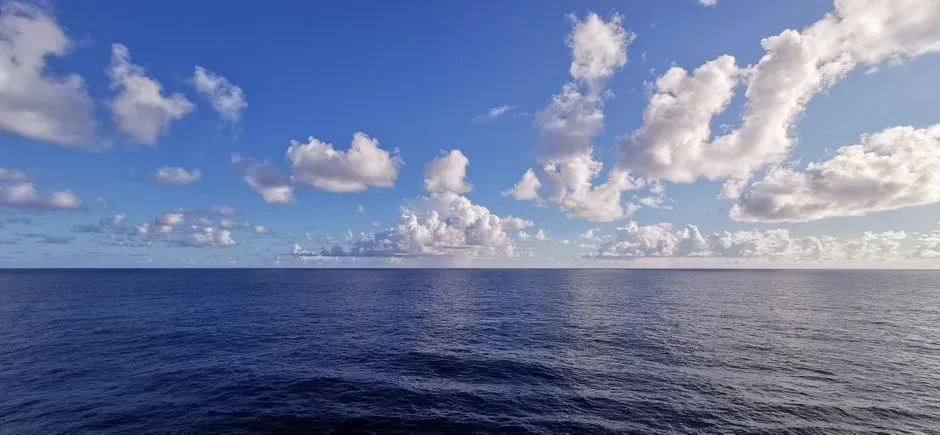
Imagine you’re on a small sailboat, engines off, drifting at Point Nemo. The ocean rolls under you in long, heavy swells, and every direction you look, you see the same endless horizon. Your navigation screen says you are thousands of kilometers from land, and the nearest humans might be orbiting above you. Suddenly the idea of “alone” stops being romantic and starts feeling like standing on the edge of a cliff you can’t see the bottom of.
In that moment, you’d probably feel a mix of awe and unease. You’d know intellectually that you are still on the same planet as everyone else, but emotionally it might feel like another world entirely. The distances involved are so extreme that if something went wrong, rescue could be days away at best. And yet, overhead, people in the International Space Station would be circling the globe every ninety minutes, glancing down at the same empty patch of sea. It’s a humbling reminder that you live on a world that can still swallow you with its scale.
What Point Nemo Really Says About Your Planet
When you hear that the nearest humans to a point on Earth are sometimes in space, it sounds like a weird trivia fact, the kind of thing that shows up in a quiz night. But if you sit with it for a second, it tells you something deeper about your relationship with the planet. Despite satellite internet and global flights, there are still places so far from your daily life that, functionally, they might as well be on another planet.
Point Nemo is a kind of mirror held up to human civilization. You tend to cluster on coasts, build cities around harbors, and fill shorelines with lights, roads, and noise, leaving vast interiors of ocean almost untouched. That emptiness has value: it gives space agencies a safe place to drop dead spacecraft, and it preserves an environment that has barely felt your direct presence. But it also raises uncomfortable questions about how casually you treat areas simply because no one is there to see what happens in them.
Conclusion: Finding Perspective at the End of the Map
You’ll probably never see Point Nemo, and honestly, that’s fine. Yet just knowing it exists changes how you picture your planet. Somewhere right now in the South Pacific, waves are rolling and winds are blowing over a spot so empty that your closest neighbors might be strapped into a space station, flying overhead at incredible speed while you bob alone in the water.
When you think about that, everyday distances – your commute, your flight time, the “far side” of town – start to feel comically small. Point Nemo reminds you that Earth is still capable of making you feel tiny, humbled, and a little bit stunned by its scale. So next time you look up at the night sky and spot a bright dot moving steadily across, you might wonder: for a few moments, are those astronauts actually someone’s closest neighbors on Earth right now – and could that someone, in another life, have been you?