
You know that weird shiver you get when you suddenly just know someone is watching you? You turn around, and sure enough, there they are, eyes locked on you. For years people have brushed this off as superstition or coincidence, the kind of thing only belongs in thrillers and ghost stories. But modern psychology and neuroscience suggest there is something real happening under the surface, and it is a lot more interesting than simple imagination.
The twist is this: the effect is not magic, and it is not mind reading. It is your brain doing what it does best, quietly crunching subtle signals before you are even aware of them. Researchers have actually measured parts of this mechanism, from tiny eye movements to patterns of attention in the brain. When you feel eyes on the back of your head, you are usually picking up on real information, just processed so fast and so quietly that it feels like a sixth sense.
The Science Behind “Feeling Watched” Is Less Mystical Than It Feels

The experience feels spooky, but the underlying mechanism is surprisingly down to earth. Your brain is a prediction machine, constantly scanning the world for patterns that matter to your safety, status, and relationships. Faces and eyes are at the top of that list, because for our ancestors, knowing who was looking at whom could literally be the difference between life and death.
Long before you consciously notice anything, your visual system and attention networks are flagging changes in your environment. A quiet shift in posture, a tiny reflection in a window, a slight darkening in your peripheral vision where someone’s gaze happens to align with you – your brain registers all of this at lightning speed. By the time the feeling surfaces as, “Someone’s staring at me,” your nervous system has already done the math and delivered its verdict.
Peripheral Vision: Your Built‑In Early Warning Radar
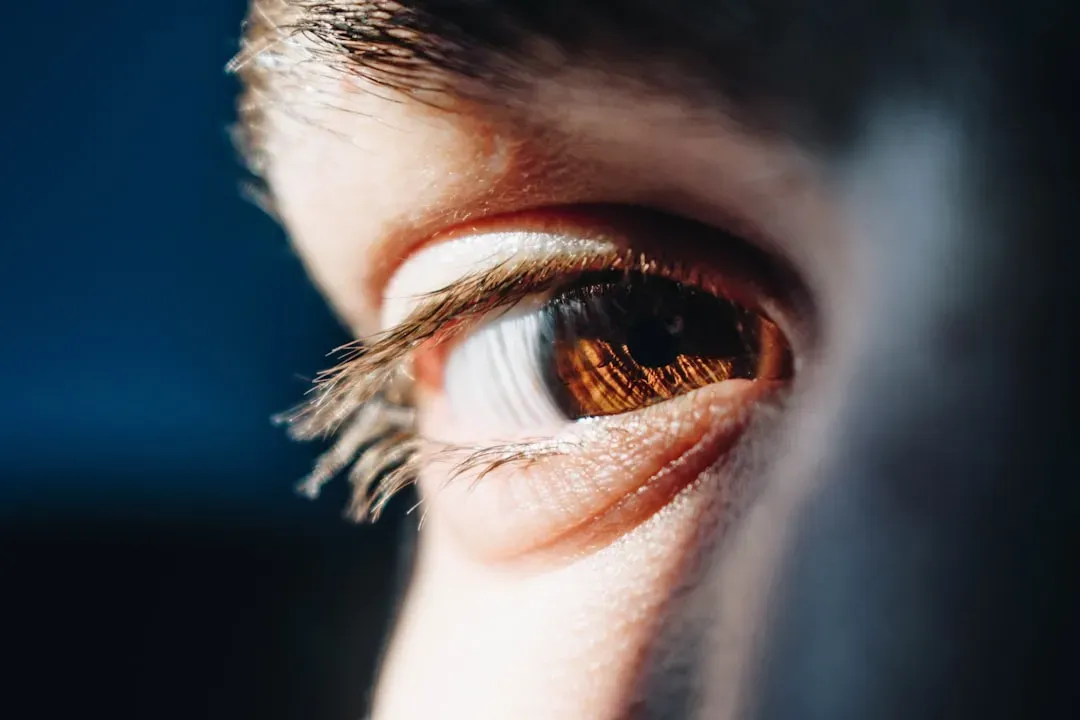
What makes the sensation feel almost supernatural is that it often happens when someone is behind you or outside your direct line of sight. But your conscious focus – the narrow beam you use to read a screen or look at a face – is only a small slice of your visual system. Peripheral vision, the wide blurry halo around what you are directly looking at, is constantly monitoring motion, contrast, and general layout, even when you are not paying attention to it.
This wide-angle “radar” is particularly sensitive to human shapes and eye direction. A figure shifting, a head turning, or a subtle alignment of a person’s body with yours can all be picked up from the side of your vision or off reflective surfaces like glass or phone screens. You may never remember seeing it, but the information gets in. The result is that strange tug, that urge to turn around, which only later becomes a story you tell yourself about feeling watched.
Micro‑Cues and Unconscious Clues: Your Brain Is Always Listening

We like to think of perception as a clean, conscious process: you look, you see, you know. In reality, most of what drives your instincts happens under the hood. Tiny sounds, chair movements, breathing patterns, the way a room suddenly feels “different” when someone enters or shifts their attention toward you – your sensory systems are picking up far more than your conscious mind can handle. So the brain compresses, filters, and sends you the final summary as a gut feeling.
When someone stares at you, they often freeze a little, change their breathing, or pause mid-conversation without realizing it. People nearby might glance briefly toward you and then away. The overall tension in the air changes just enough to stand out against the background hum of everyday life. Your brain stitches these micro‑cues together into a signal that something in your social environment just sharpened its focus on you, and that is precisely when the hairs on your neck rise.
The Gaze Detection System: Specialized Brain Circuits for Being Seen

Humans and other primates have specialized brain areas that respond strongly to faces and, even more specifically, to eyes and gaze direction. It is not just that we like looking at people; our brains are wired to track who is looking at whom, for how long, and with what emotional tone. This built‑in gaze detection system is so sensitive that even stylized eyes or simple shapes resembling eyes can trigger it.
Because attention and gaze are deeply social signals, the brain treats them as high priority. Activity in visual and social brain regions ramps up when someone looks directly at you compared with when their eyes are a little off to the side. Over a lifetime, you learn, mostly unconsciously, what it feels like to be the object of someone’s attention. The “feeling watched” moment is that system firing, often before you have any crisp, conscious picture of what is going on around you.
Why Experiments Sometimes Say “You Can’t Actually Feel It”
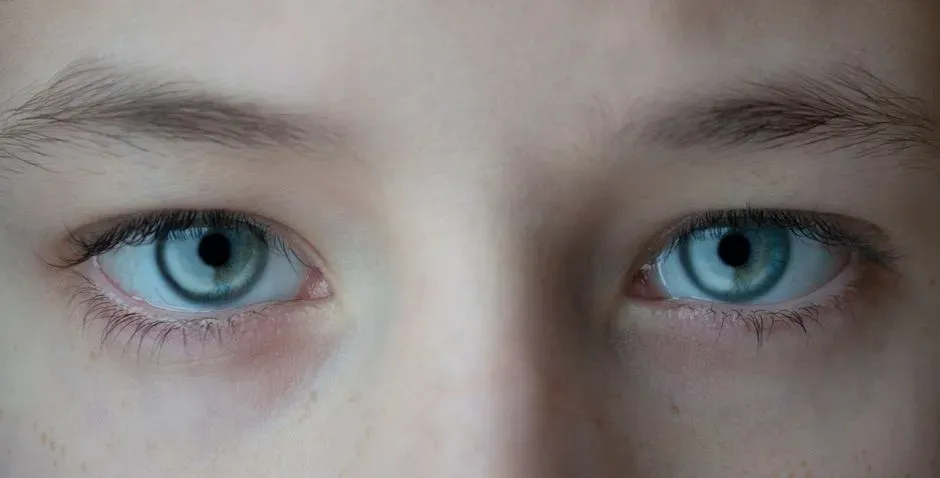
If you dig around, you will find simple lab experiments where people try to guess whether someone behind them is staring, and the results look close to chance. On the surface, that sounds like proof the whole feeling is just in your head. But those experiments typically strip away the very things that make the experience work in the real world: natural movement, background sounds, changing light, and all the messy context your brain quietly uses as input.
In highly controlled conditions, the watcher is told to sit motionless, avoid sounds, and keep everything constant except the direction of their eyes. That is almost the opposite of a normal social setting, where tension, interest, and posture all shift together when someone stares. In other words, many studies have tested a narrow piece of the puzzle and then tried to generalize to the whole. The more modern view is that the feeling is real, but it is a mix of multiple subtle cues rather than a magic sense that detects eyeballs.
When Instincts Go Wrong: False Alarms and Hyper‑Vigilance

Just because the mechanism is real does not mean it is perfect. A system tuned to detect social attention and possible threat is, by nature, biased to err on the side of safety. Your brain would rather give you ten false alarms – the sense of being watched when nobody actually is – than miss the one time someone’s focus really matters. That is why anxious people, or those who have been through trauma, often feel like they are under scrutiny even in neutral situations.
Context matters too. If you already feel out of place, self‑conscious, or judged, your internal radar turns up its sensitivity. A random laugh behind you, a whisper, or someone shifting in their seat can be easily misread as targeted attention. The same brain circuits that can save you in a threatening setting can also exhaust you in a safe one. Recognizing that both things can be true – the system is real, and it sometimes overfires – is key to understanding your own reactions instead of either dismissing them or blindly trusting them.
How to Use This “Sixth Sense” Without Letting It Control You

Once you accept that your sense of being watched is built on real, measurable mechanisms, you can relate to it differently. Instead of telling yourself you are paranoid or, on the other side, imagining you are psychic, you can treat that feeling as a useful but imperfect notification. It is a nudge to check your surroundings, not proof of anything by itself. Think of it like a car’s motion sensor: good to take seriously, but still worth verifying before you panic.
In practical terms, when you feel that familiar prickle, you can pause, breathe, and look around with curiosity rather than immediate fear. Notice what you actually see and hear, and how your body responds. Over time, you start to distinguish between genuine signals – someone clearly focused on you – and echoes from your own stress or assumptions. Personally, I have learned to treat that neck‑tingle as a conversation starter with my own nervous system: What did you just pick up that I was too distracted to notice?
Conclusion: A Real Mechanism, Not a Superpower – And That Is More Interesting

The idea that you can feel eyes on the back of your head sounds like it belongs in a superhero origin story, but the truth is quieter and, in many ways, more impressive. Your brain is constantly reading the room, integrating flickers of motion, posture changes, and social tension into a single, simple message: pay attention. When you spin around and catch someone staring, you are not summoning secret powers; you are witnessing how finely tuned your everyday perception really is.
I think we underestimate how remarkable that is because it does not come wrapped in special effects or mystical language. The mechanism has been studied, its pieces measured, and that makes it more real, not less magical. Instead of arguing about whether the feeling is fake or supernatural, it makes more sense to respect it as a smart but fallible signal from a brain that wants to keep you safe and socially aware. The next time that shiver runs down your spine and you turn to meet someone’s gaze, you might ask yourself: knowing what you know now, does it feel a little different?