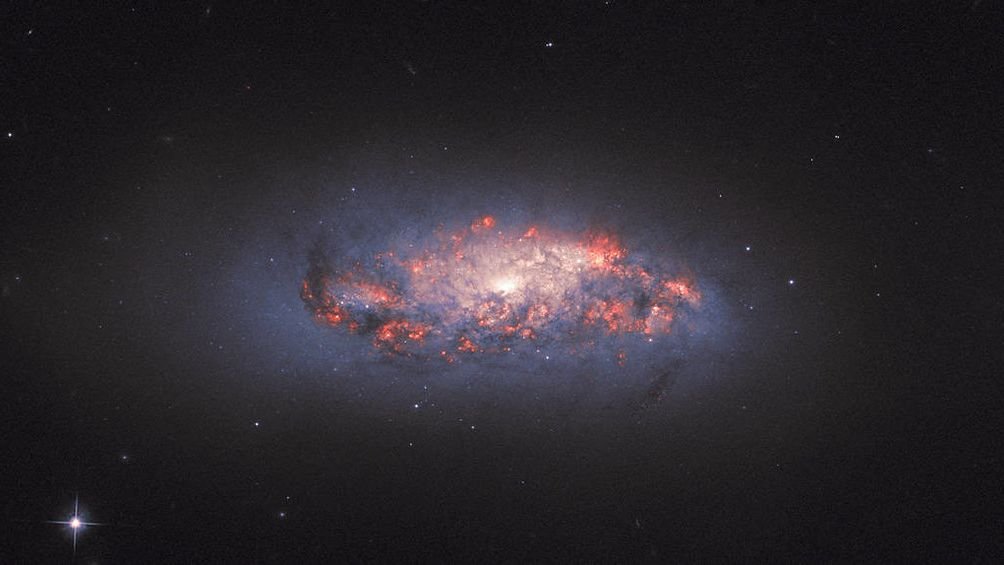
You live in a universe that is, in a very real sense, mostly invisible to you. When you look up at the night sky, you see stars, galaxies, and glowing clouds of gas, but all of that gorgeous scenery makes up only a small fraction of what is actually out there. Most of the cosmos, by mass, is tied up in something you cannot see, cannot touch, and cannot shine a light on: dark matter.
This idea sounds like science fiction at first, almost like a cosmic magic trick. Yet dark matter is one of the best-tested, most carefully studied mysteries in modern physics and astronomy. You are surrounded by it, your galaxy is held together by it, and without it, you probably would not exist in anything like the form you know. Once you start to see how scientists figured that out, the universe begins to feel stranger, deeper, and more beautiful than it did before.
The Clue Hidden in Spinning Galaxies
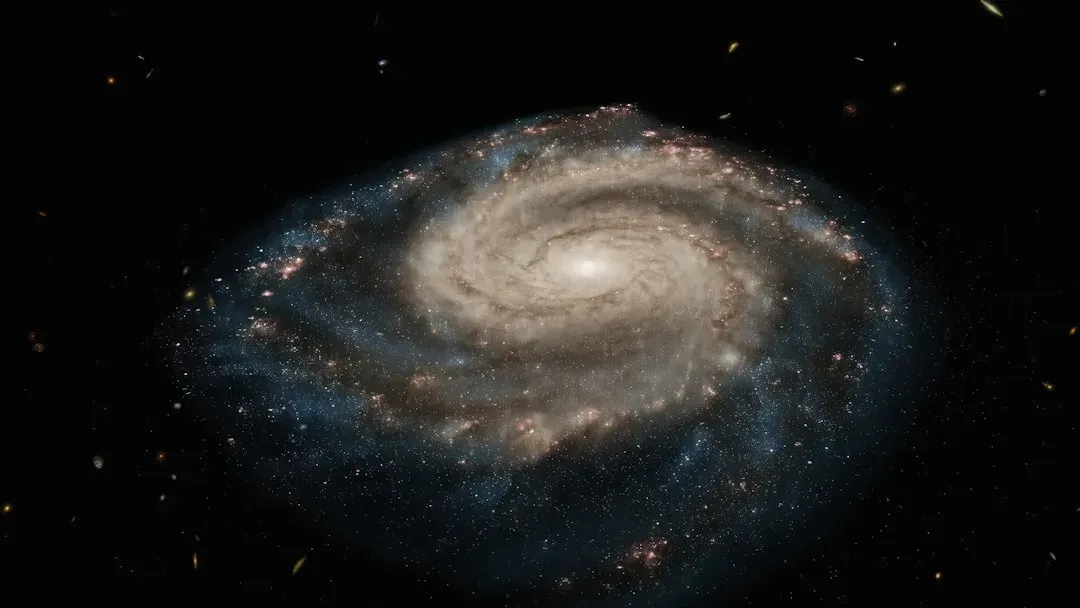
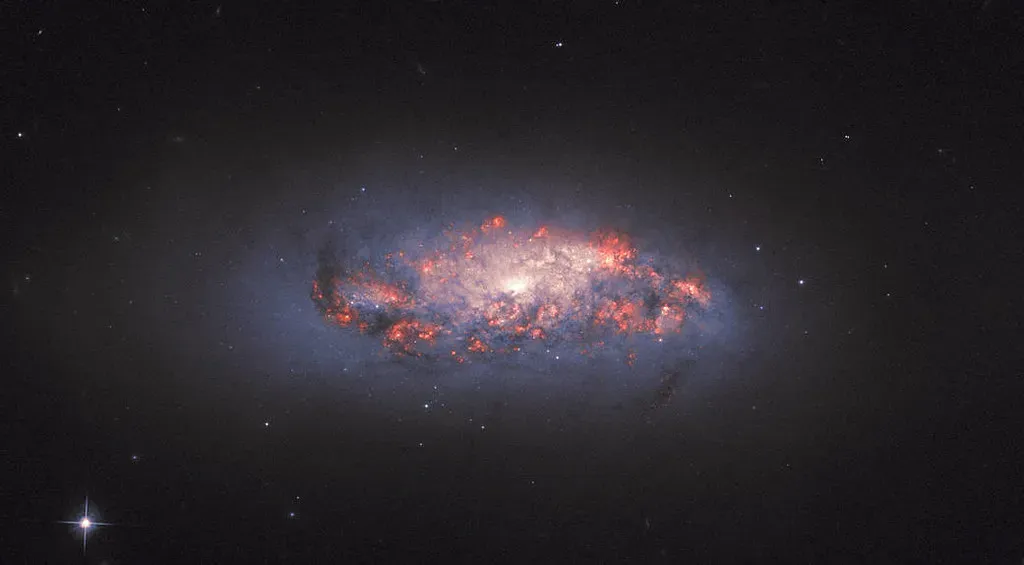
If you could sit far above a galaxy and watch it spin, you might expect the stars near the center to orbit faster and the ones at the edge to move more slowly, the way planets behave in our solar system. When astronomers actually measured these speeds, though, they found something shocking: stars way out in the suburbs of a galaxy were whipping around almost as quickly as those near the core. That should not happen if only the matter you can see is there.
For those outer stars to move so fast without flying off into space, there has to be much more mass tugging on them than the visible stars and gas account for. You can think of it like watching leaves swirling around in a whirlwind; you might not see the air doing the pushing, but you know it has to be there from the motion of the leaves. In the same way, when you trace the speeds of stars and gas in galaxy after galaxy, the pattern screams that an enormous, invisible halo of matter is holding everything together.
How You Know It Is Not Just “Hidden Normal Stuff”
You might reasonably wonder if this supposed dark matter is just regular matter hiding in tricky ways: cold gas, faint stars, black holes, or other objects that do not shine brightly. For a while, that was a serious possibility. But as astronomers sharpened their measurements, the numbers stopped adding up. Even if you packed in every plausible bit of faint, normal matter, you still fell far short of the mass needed to explain how galaxies move and how they formed.
There is another problem: normal matter interacts strongly with light and with itself. It heats up, cools down, clumps together, and radiates energy. The extra mass you need behaves differently. It does not seem to collide and stick the way clouds of gas do, and it does not radiate light or absorb it in the ways you know from everyday physics. The simplest explanation that fits the evidence is that dark matter is made of some new type of particle that is not just a dim or hidden version of the stuff you already know.
Why You Cannot See Dark Matter (Even with Fancy Telescopes)
Dark matter is called “dark” for a very literal reason: it does not emit, absorb, or reflect light in any way you have been able to detect. All of your telescopes, from backyard instruments to billion-dollar space observatories, rely on some form of light or other electromagnetic radiation. If something does not interact with light at all, it simply does not show up as a bright spot, a shadow, or even a faint smudge in the image.
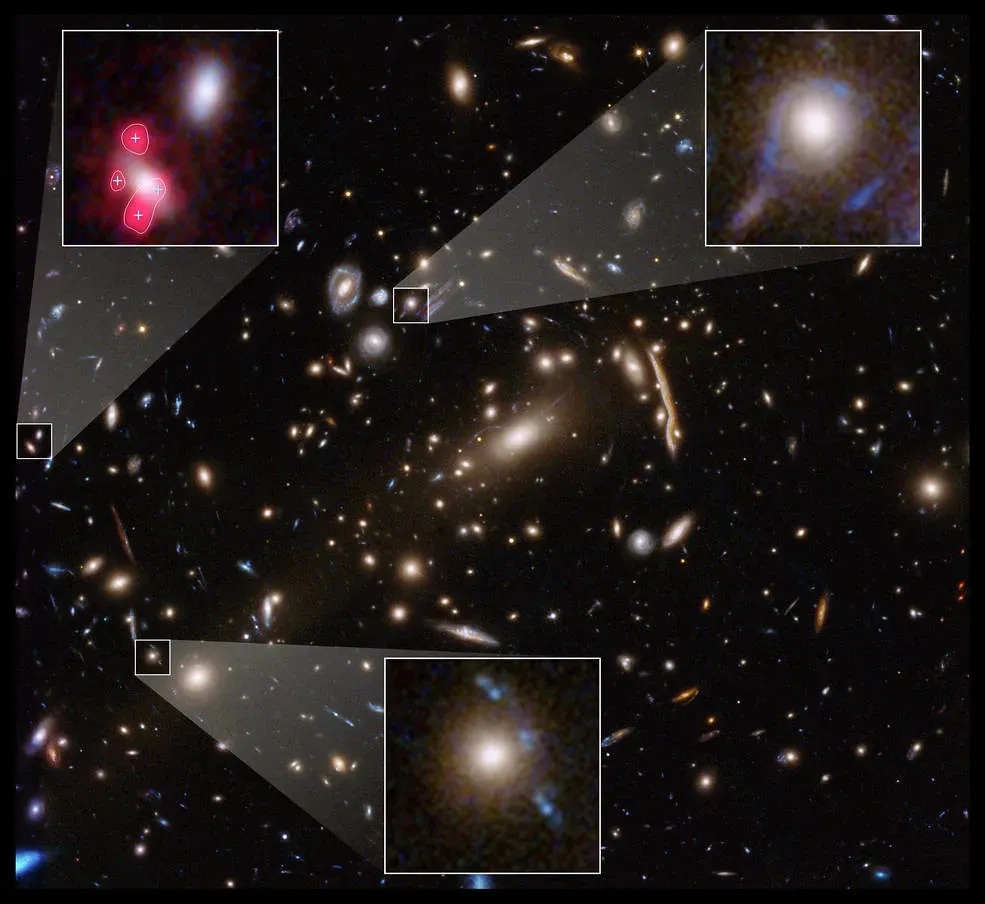
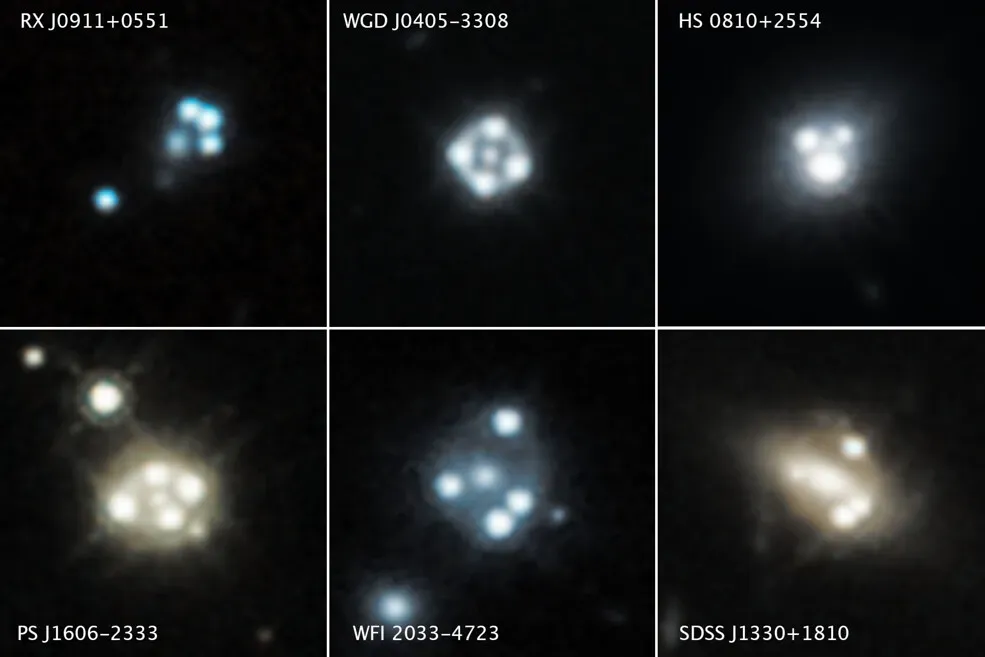
Instead, you have to watch for gravity doing the talking. Dark matter participates in gravity, and gravity shapes the paths of stars, gas, and even light itself. When light from distant galaxies passes by a massive clump of matter on its way to you, its path gets bent, like a beam passing through a glass lens. By measuring how that background light is distorted, you can map out mass you cannot otherwise see. Again and again, those “gravitational lens” maps reveal huge pools of invisible mass exactly where dark matter is expected to be.
The Strange Ways You Can “See” the Unseen
Even though you cannot take a direct picture of dark matter, you are not completely in the dark. One clever method uses the way large clusters of galaxies bend and stretch the images of more distant galaxies behind them. When astronomers analyze those subtle stretches and smears, they can reconstruct a kind of shadow map of where the mass in the cluster is concentrated. Over and over, those mass maps are dominated by regions that do not line up with the bright galaxies or the hot gas that telescopes directly detect.
In some galaxy clusters that have collided with each other, you can see the normal matter and the dark matter part ways. The hot gas clouds, made of ordinary particles, slam together and slow down, while the bulk of the mass sails through more easily. When you compare X-ray images of the hot gas with gravitational maps of total mass, you find that most of the mass is offset from the glowing gas. This is strong evidence that the dominant unseen component is something different from familiar matter, gliding through with minimal friction.
What Dark Matter Might Actually Be
At this point, you know dark matter is real enough to shape galaxies and bend light, but you still do not know what it is made of. The leading idea is that it consists of some kind of particle that rarely interacts with normal matter, far more weakly than even neutrinos do. Many physicists have focused on candidates like weakly interacting massive particles or lighter, wave-like possibilities such as axions, each with different properties and ways to potentially detect them.
To test these ideas, sensitive experiments are buried deep underground, placed in abandoned mines, and shielded from cosmic rays. Some devices wait in the dark for the tiniest nudge from a passing dark matter particle bumping into an atomic nucleus. Others listen for faint signals that could come from dark matter particles interacting with each other or with magnetic fields in subtle ways. So far, you have not seen a definitive signal, which is frustrating but also exciting, because it keeps pushing you toward new ideas and more inventive approaches.
Why Dark Matter Matters for Your Existence
Dark matter is not just an abstract curiosity; it shapes the cosmic environment you live in. Shortly after the Big Bang, tiny fluctuations in density rippled through the young universe. Dark matter, because it does not interact strongly with light, began clumping under gravity very early, forming a kind of invisible scaffolding. Normal matter then fell into these dark matter wells, pooled there, and eventually cooled enough to form stars, galaxies, and clusters.
If dark matter had not been there to amplify those tiny initial ripples, the universe would have expanded too smoothly for structures like the Milky Way to form in time. You might have ended up in a cold, diffuse universe where gas never gathered into dense enough clouds to ignite stars and forge heavy elements. In that sense, dark matter is one of the quiet architects of your existence. The galaxies you admire and the atoms in your body owe a lot to this unseen foundation.
How Dark Matter Fits into the Bigger Cosmic Picture
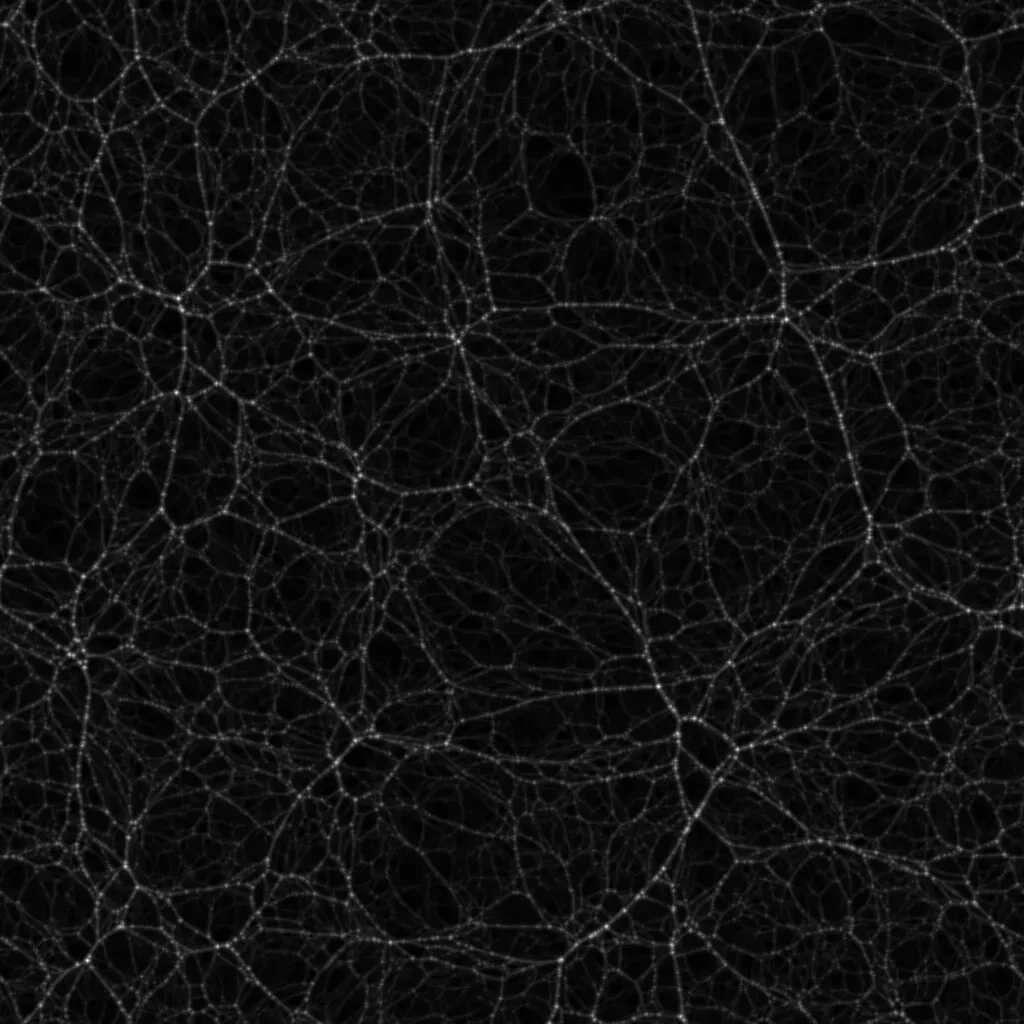
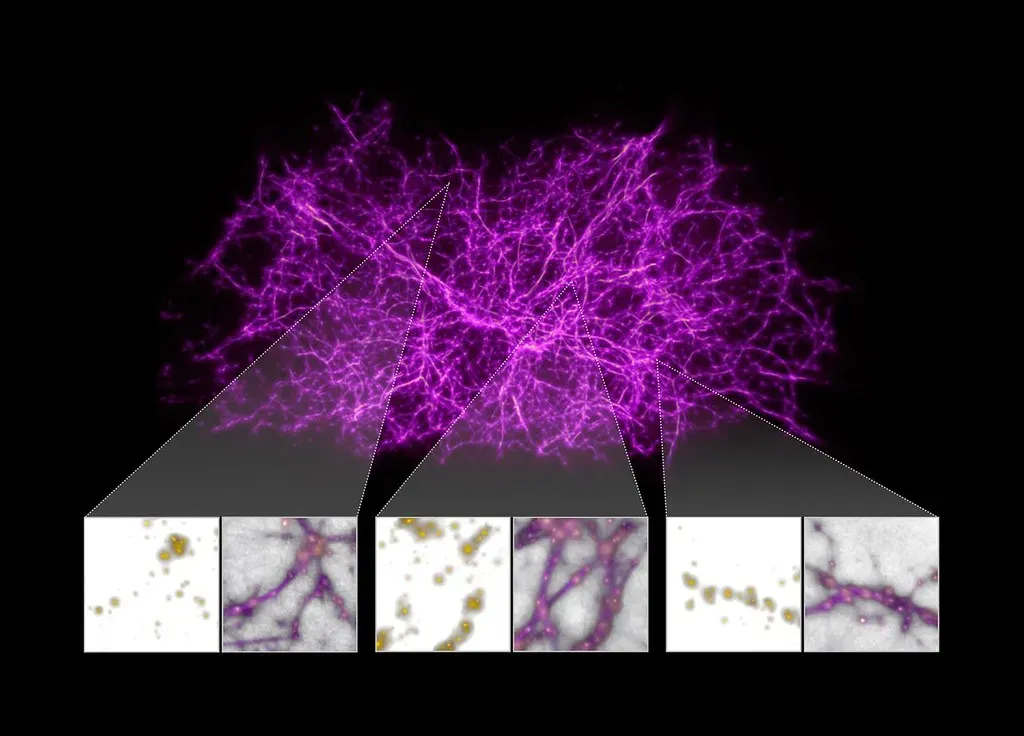
When you zoom out to the largest scales, dark matter helps weave the cosmic web. In computer simulations that include dark matter, you watch filaments of invisible mass grow and braid together over billions of years, with galaxies lighting up along those threads like dewdrops on an enormous spiderweb. When you compare those simulations with galaxy surveys that map out where real galaxies are in the sky, the match is striking. The big-picture structure of the universe makes sense only if dark matter is there in roughly the amount inferred from other measurements.
Dark matter also has to play nicely with other pieces of your cosmological model, like dark energy and the detailed pattern of the cosmic microwave background. Measurements of that ancient afterglow let you estimate how much of the universe is made of normal matter, dark matter, and dark energy. The story that emerges is oddly lopsided: only a small slice is made of the everyday atoms you know, a much larger slice is dark matter, and an even bigger share is dark energy. You are a minor player in a universe whose budget is dominated by things you cannot see directly.
The Frontier: What You Still Do Not Know
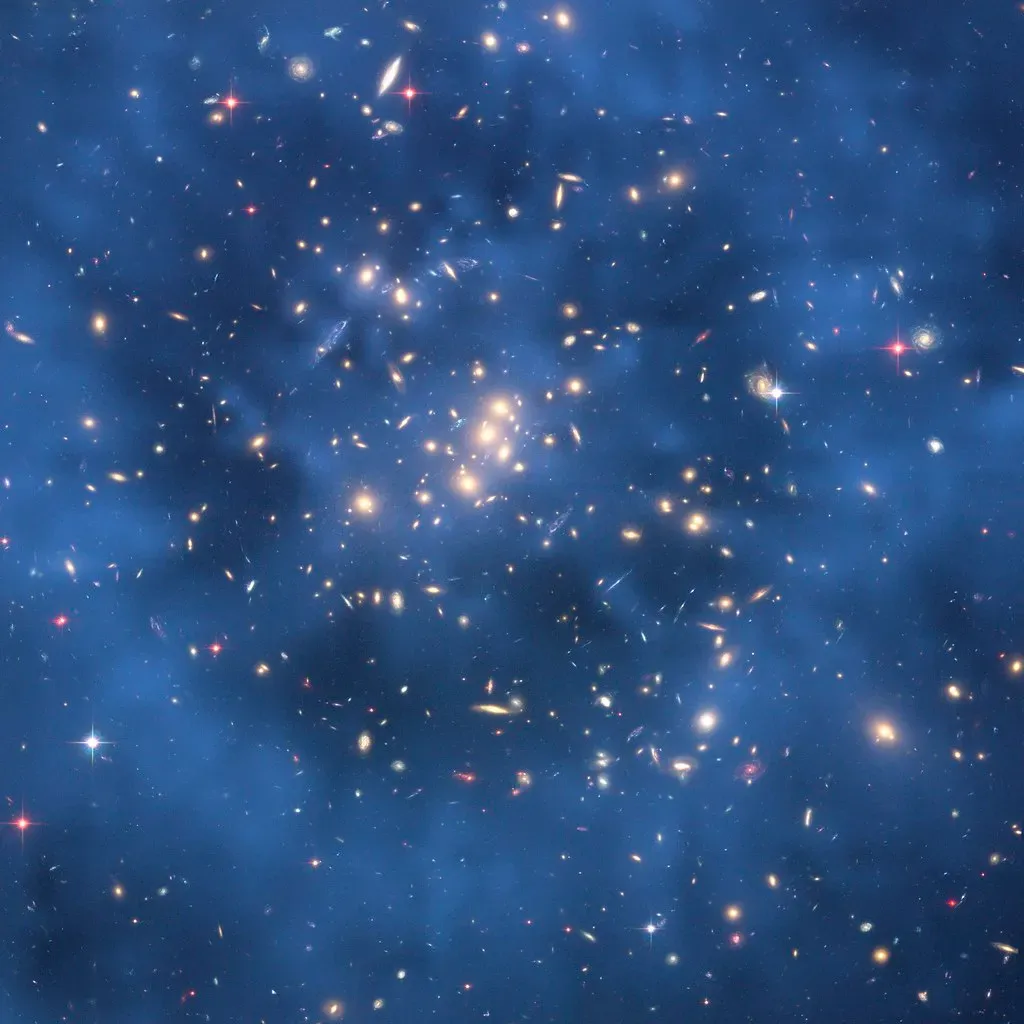
For all the progress you have made, dark matter is still an open wound in your understanding of nature. You know it tugs with gravity, you know roughly how much of it there is, and you know it does not behave like normal matter or light. Yet you do not know if it is a single kind of particle or a family of them, whether it has its own forces and interactions, or whether it is pointing you toward a deeper layer of physics beyond what your current theories describe.
There is also a small but persistent minority of researchers exploring whether you might be misreading gravity itself instead of missing mass. Some modified gravity theories try to explain galaxy motions without invoking dark matter, and they have had partial successes as well as serious challenges. For now, the weight of evidence strongly favors dark matter as a real, separate ingredient, but part of doing science honestly is keeping alternative ideas on the table and letting future data decide which picture survives.
Conclusion: Living in a Universe You Cannot Fully See
When you think about dark matter, you are forced to admit something humbling: most of your universe is invisible, and yet its fingerprints are everywhere. You feel its presence in the way galaxies spin, in the way light bends across cosmic distances, and in the very fact that complex structures like you had time to form. The darkness in this case is not a lack of knowledge so much as an invitation to keep asking better questions.
The search for dark matter turns the night sky into a kind of puzzle you are still learning how to read. Every new observation, every failed experiment, and every refined theory brings you a little closer to understanding what is holding the cosmos together. As you look up, knowing that an unseen sea of matter is silently shaping everything you see, it is hard not to feel a mix of awe and curiosity: if this is what you have discovered so far, what other secrets is the universe still keeping from you?